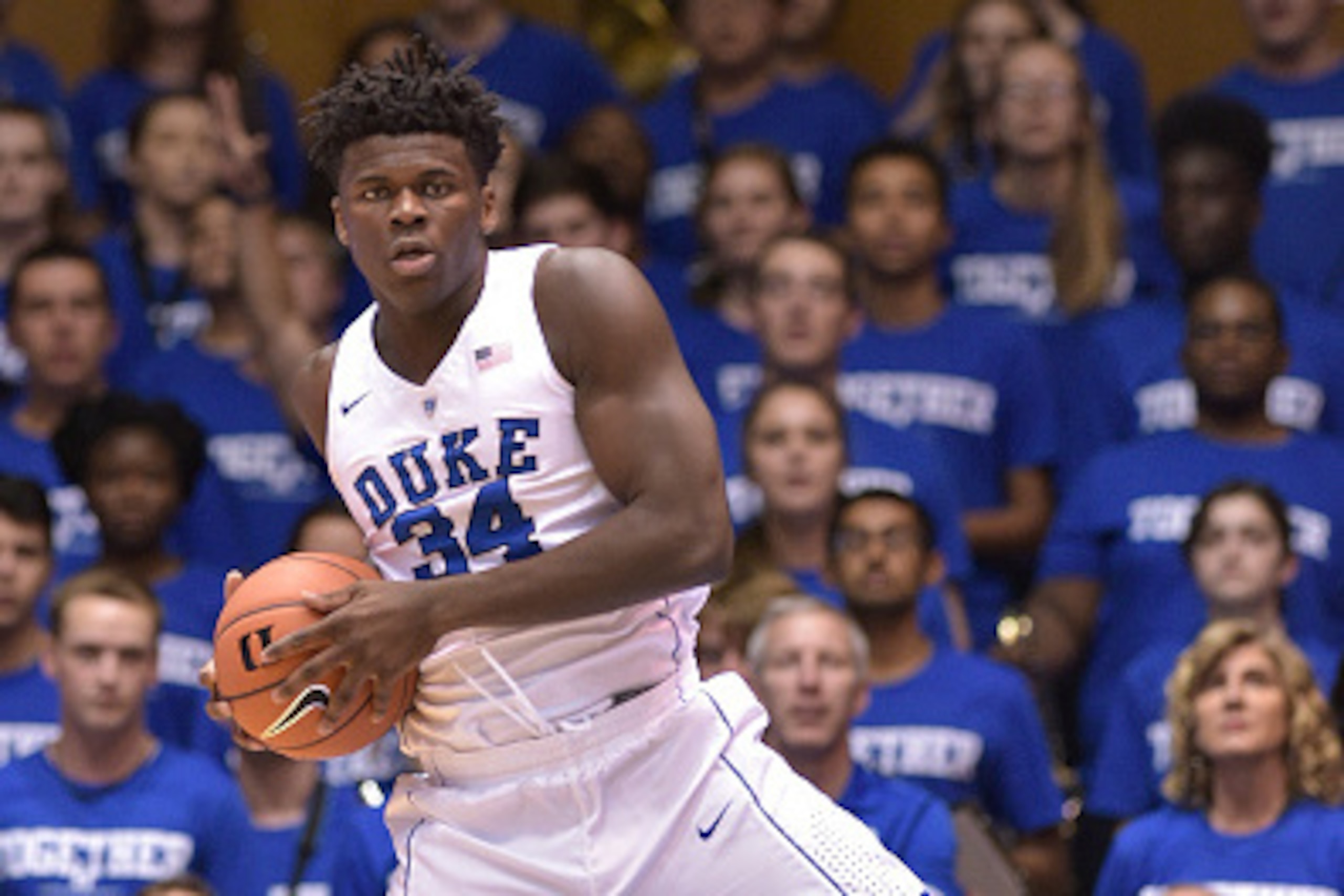

Instead of college basketball players transferring schools, what if players could simply be traded between programs?
It would never happen—players will get paid before they get traded, and who knows if we'll ever see that day—but it's fun to pretend, especially as we reach the midpoint of the 2015-16 season. It's becoming clear which teams have deficiencies in certain areas, and we came up with 10 trades to help fix them.
A few things to note about this fictitious universe where trades are perfectly legal:
- Unlike nongraduate transfers, traded players are instantly eligible to play for their new teams.
- Only players who are currently eligible and healthy were considered for trades. One example where this came into play is that Gonzaga wouldn't be allowed to trade Nigel Williams-Goss (currently sitting out a season after transferring) in order to acquire a point guard who can play immediately.
- Trades are permanent, so freshmen with 3.5 years of eligibility remaining are inherently and drastically more valuable than equally talented seniors with just two months left on their "contracts."
- Players do not have no-trade clauses. I fully appreciate that these guys are at schools like Florida, Purdue and Kansas State because they don't want to be at schools like Denver, Dartmouth and Jacksonville, but too bad if it helps both teams.
Many of the teams in these trades would be improving immediately to contend in 2015-16. Others would be selling high on upperclassmen in order to both speed up and enhance what looks like a rebuilding situation.
These trades have nothing to do with locker room chemistry, academics, off-the-court issues, etc. It's all about looking to improve the on-court product in a vacuum.
As always with hypothetical trades, the big question is "who says no?" As such, let us know in the comments section which of these trades would never happen in a million years and which trade proposals you think would help better your favorite program.
Duke and New Mexico State
1 of 10
Duke Receives: Pascal Siakam
New Mexico State Receives: Sean Obi, Antonio Vrankovic and choice of Matt Jones or Luke Kennard
In the past three games of adjusting to life without Amile Jefferson, Duke has more than just tread water. The Blue Devils beat Elon, Long Beach State and Boston College by a combined total of 78 points. And it's not hard to argue that they would have also comfortably beaten Utah if Grayson Allen and Derryck Thornton hadn't both put forth subpar efforts.
Still, this team is desperately lacking a true power forward.
Brandon Ingram has done a phenomenal job of duplicating what Justise Winslow did last season as Duke's stretch 4, but Winslow had Jahlil Okafor and Jefferson as running mates and security blankets. Given how minimally Chase Jeter and Sean Obi have played since Jefferson's injury, Ingram has Marshall Plumlee, and that's about it.
Adding a guy like Pascal Siakam could make a humongous difference.
Duke doesn't need Siakam to be anywhere near the scoring presence that New Mexico State has needed him to be, but the big man has scored at least 14 points in every game this season and has already recorded 13 double-doubles. All told, he's averaging 23.5 points, 11.6 rebounds and 1.9 blocks per game. There isn't a more dominant player in the country that fewer people are talking about.
Obviously, the Aggies aren't just going to give him away.
Duke would need to part with two of the big men from its bench—one of which (Obi) averaged 11.4 points and 9.3 rebounds per game in 2013-14 with Rice and the other (Vrankovic) was a 3-star recruit in this year's class. Neither one is doing anything for Duke, but both could be stars in the WAC.
But even that wouldn't be enough to get Siakam. The Blue Devils would also need to give up one of their three-point shooting wings to help out a New Mexico State team that can't buy a bucket from the perimeter.
At that point, Duke is giving up way more talent than it is receiving, but both teams are winning in that trade, considering Duke could still roll out a starting five of Thornton, Allen, Ingram, Siakam and Plumlee with Jeter and either Kennard or Jones coming off the bench. Plus, Duke already has one of the top recruiting classes in the country for next season, so it's not like there's going to be much room next year for guys like Obi and Vrankovic who aren't touching the court this year.
Florida and Denver
2 of 10
Florida Receives: Nate Engesser
Denver Receives: Kevarrius Hayes
Florida desperately needs help from beyond the arc. Brandone Francis-Ramirez and KeVaughn Allen were supposed to fix the problem, but they've exacerbated it instead.
At least Allen can occasionally hit shots. He's shooting 27.1 percent from three-point range, but has made 13 triples and is shooting 50.0 percent inside the arc. Francis-Ramirez is 7-of-26 inside the arc and 4-of-33 behind it. He has missed 16 three-point attempts in a row dating back to Thanksgiving.
As an entire team, the Gators have shot 15 of 75 (20.0 percent) from downtown in their four losses. It might not have made much of a difference in the 15-point loss to Purdue, but shooting 1 of 12 at Miami and 4 of 25 against Florida State was most certainly the reason Florida lost those games.
Enter Nate Engesser.
Denver's shooting guard has hit 48.5 percent of his long-range attempts this season, has shot at least 41.7 percent from three-point range in each of his four seasons and already has four games with at least five made triples. He would be a crucial addition to a roster that doesn't have a true shooting guard right now.
To part with their reliable senior, the Pioneers would require some serious help in a frontcourt that currently ranks dead last in the nation in offensive rebounding percentage. Freshman Kevarrius Hayes could really help them there for several years to come, as he has the highest individual offensive rebounding percentage on Florida's roster, yet can't seem to get much playing time.
The 4-star center would almost certainly be Denver's best catch in more than a decade, and it's hard to see him playing much at Florida over the next two-plus years with sophomore John Egbunu blocking his path to the starting lineup. Talented as he may be, Hayes would be a pretty small price for Florida to pay to become a much more multidimensional offense.
Harvard and New Hampshire
3 of 10
Harvard Receives: Jaleen Smith
New Hampshire Receives: Chris Egi and Andre Chatfield
Proof that you don't need to be smart to make free throws, Harvard is one of the worst free-throw shooting teams in the entire country.
Led into the abyss by Zena Edosomwan (36-of-73 on the year), the Crimson are converting on just 59.6 percent of their freebies. They were 3-of-8 from the charity stripe in the one-point loss to Holy Cross and an absolutely dreadful 9-of-23 in the loss to Boston College.
The irony here is that Harvard is 13th in the nation in three-point percentage. Head coach Tommy Amaker has plenty of guys who can shoot, but they aren't the ones getting hacked.
Meanwhile, just 65 miles up the road, New Hampshire has one of the nation's best free-throw shooters in Jaleen Smith. He entered the season an 80.4 percent one-point shooter, but he is 37-of-39 (94.9 percent) thus far this year.
And New Hampshire is in dire need of some rim protection, as the Wildcats are dead last in the nation in block percentage. In fact, they've blocked just seven shots in 11 games against D-I opponents.
No one is confusing Chris Egi with Dikembe Mutombo, but the 6'9" sophomore does have 10 blocks in just 160 minutes of action this season. He could be exactly the frontcourt weapon New Hampshire needs to legitimately compete in the America East Conference.
New Hampshire would also request 6'4" Andre Chatfield in hopes of adding a wing that would even begin to replace all that Smith does for this team.

.jpg?w=2560 "Rams Raiders Football")

Butler and Maryland
4 of 10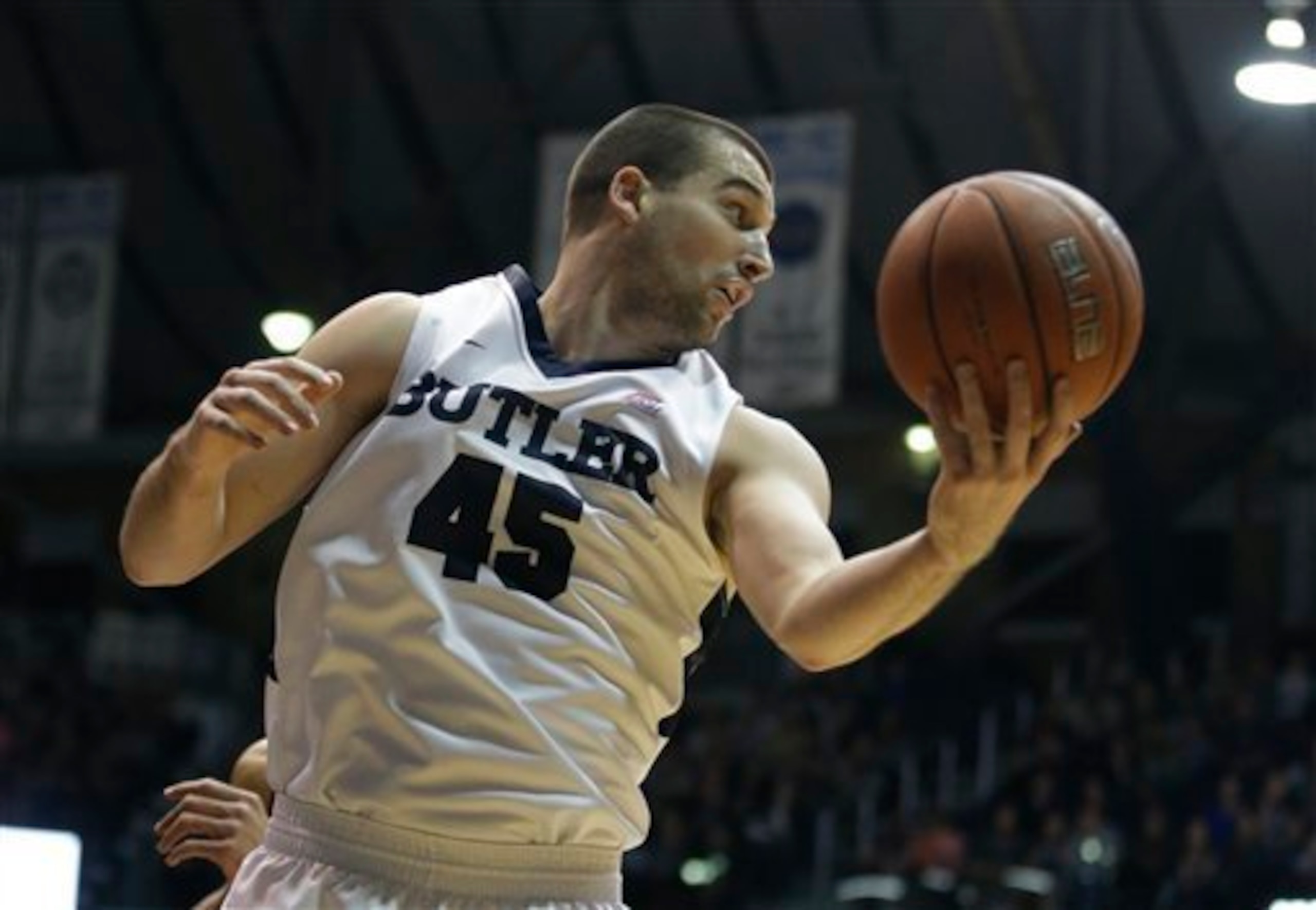
Butler Receives: Damonte Dodd
Maryland Receives: Andrew Chrabascz
It was tough to find a good trading partner for Maryland, as the Terrapins don't need much of anything. Even after losing Dion Wiley for the year before it began, they still have a strong starter and reserve at every position.
But if we look ahead to next season and assume that both Melo Trimble and Diamond Stone go pro after this one, Maryland is going to need a veteran scoring presence aside from Robert Carter. Perhaps Jared Nickens or Jaylen Brantley can fill that role, but why not trade out of excess to get a surefire replacement for when Jake Layman graduates?
Damonte Dodd has been a valuable asset over the past two seasons, but with Stone clearly deserving of a bigger role in this offense and Michal Cekovsky and Ivan Bender available as frontcourt backups, Dodd would be available for the right price.
If the Terrapins were to put him on the trading block, Butler would be extremely interested in those negotiations.
The Bulldogs were destroyed in the paint in their three losses this season. They blocked a total of eight shots in those games and had 19 of their own rejected. Miami shot 56.2 percent inside the arc against Butler, and Xavier went one step further Saturday by making 61.8 percent of its two-point attempts.
Long story short: The frontcourt of Andrew Chrabascz and Tyler Wideman simply isn't cutting it. Bring in Dodd and slide Wideman to the 4, though, and suddenly the Bulldogs have an interior presence good enough to do some serious damage alongside a backcourt of Tyler Lewis, Kellen Dunham, Roosevelt Jones and Kelan Martin.
Chrabascz certainly isn't a guy they're looking to get rid of, but he does become expendable if it means getting that six-man rotation. And while it doesn't do much to help Maryland this season, the junior forward would be the perfect replacement for Layman in what could be a quest for back-to-back NCAA titles next year.
Purdue and Dartmouth
5 of 10
Purdue Receives: Malik Gill
Dartmouth Receives: Dakota Mathias and Grady Eifert
I see some form of this argument at least once a day: If Purdue had a more reliable point guard, it could be a Final Four team.
That's pretty disrespectful of the job P.J. Thompson has done this season, but given his struggles in the past few games, it's a stance that does have some merit. With a frontcourt consisting of A.J. Hammons, Caleb Swanigan, Isaac Haas and Vince Edwards, yes, the Boilermakers would be considerably more dominant with a backcourt upgrade.
What they really need is a pilferer who can set those big men up for buckets.
What they need is Malik Gill.
Dartmouth's senior point guard—who lost his starting job just four games into the season—currently ranks fifth in the nation in steal percentage and 55th in assist rate. This after ranking third and 14th, respectively, last year. He isn't much of a scorer and does have some turnover issues, but his defensive intensity would be a welcome addition on a team that ranks 322nd in turnover percentage.
In its losses to Butler and Iowa, Purdue committed 32 turnovers and had just eight steals. Gill probably wouldn't help the former number, but he could boost the latter one.
As is typically the case for a program that hasn't posted a .500 record since 1998-99, Dartmouth is beyond help this season. However, sophomore Dakota Mathias and freshman Grady Eifert are the type of guys the Big Green could never get via recruiting as well as the type of guys they could build around for the next few years.
San Diego State and Texas State
6 of 10
San Diego State Receives: Ethan Montalvo
Texas State Receives: Malik Pope
It has become abundantly clear that Malik Pope and San Diego State are not a match made in heaven. We let his limited and mostly inefficient minutes slide last season because he was still recovering from broken legs suffered in high school, but his sophomore season has been even worse.
In 13 games against D-I opponents, Pope has a nauseating effective field-goal percentage of 27.1 and has nearly as many turnovers (15) as made field goals (17). Despite standing 6'10" and playing at least 11 minutes in every game this season, he has grabbed just nine offensive rebounds.
He is dripping with talent and potential, but a lot like Skal Labissiere at Kentucky, it just isn't working for him at SDSU. He isn't the entire reason the Aztecs have struggled, but his inability to evolve into what we were promised out of high school has certainly played a part in their 9-6 start to the season.
What they really need is an efficient scorer who can also force a good number of turnovers, and Texas State's Ethan Montalvo would give them that.
Montalvo ranks 19th in the nation in steal percentage, is shooting 38.1 percent from three-point range and is making 91.7 percent of his free-throw attempts against D-I opponents. As a bonus, he very rarely commits turnovers, averaging nearly two steals for every turnover of his own.
He's clearly Texas State's most valuable player, but in exchange for up to 2.5 years of Pope's still untapped potential, would the Bobcats even hesitate to let their senior guard go?
Dayton and Old Dominion
7 of 10
Dayton Receives: Trey Freeman
Old Dominion Receives: Scoochie Smith, Ryan Mikesell and Xeyrius Williams
Dayton has been painfully careless with the ball all season long. There isn't one individual player who has been particularly culpable, but 11 different Flyers are averaging at least one turnover per game.
Worse yet, they're mostly dead-ball turnovers. According to Sports-Reference, Dayton has committed 186 turnovers this season, but its opponents have only recorded 66 steals. And while coaches would certainly prefer that turnovers don't lead to fast-break opportunities, it's rather disturbing that the Flyers are giving away 9.2 possessions per game that aren't steals.
Meanwhile, Old Dominion's Trey Freeman might be the most attentive ball-handler in the nation. He is involved in nearly every possession, leading the Monarchs in minutes played, field-goal attempts and assists—and he has committed a grand total of 11 turnovers this season to also lead the Monarchs in fewest turnovers committed per 40 minutes.
Because he's so valuable to Old Dominion, it's going to take a king's ransom to get him.
ODU is one of the worst three-point shooting teams in the country, so Scoochie Smith (38.8 percent) and freshman Ryan Mikesell (40.9 percent) have to be involved in the deal. But even that isn't enough for a two-month rental of Freeman's efficient services. The Flyers would also need to throw in freshman Xeyrius Williams.
It's expensive, but they would get even better freshmen for the next half-decade if they could get to the Final Four with Freeman's help.
Kansas State and Jacksonville
8 of 10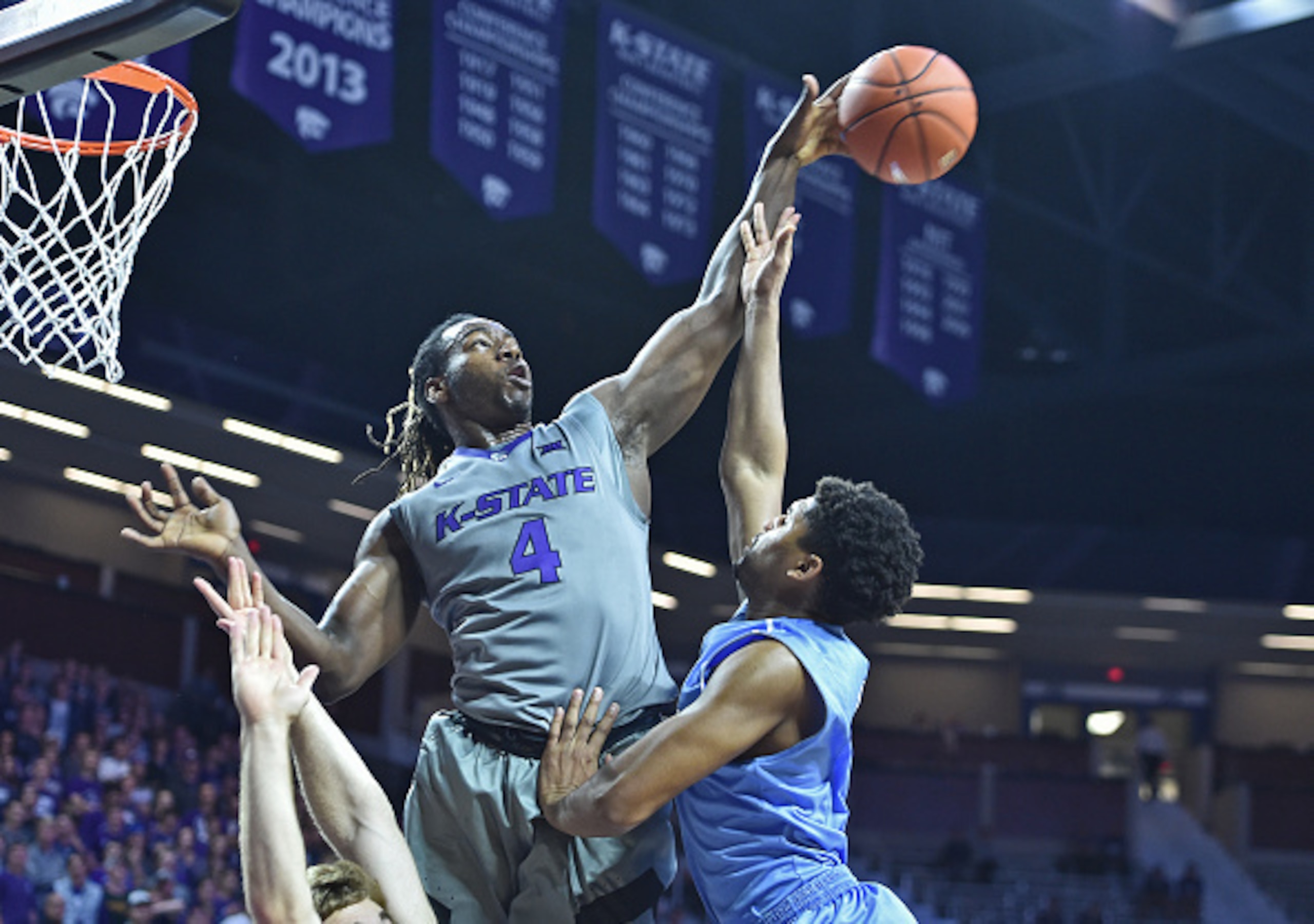
Kansas State Receives: Darius Dawkins
Jacksonville Receives: D.J. Johnson
Kansas State is close to being good.
Freshman forward Dean Wade has been a godsend, and fellow freshmen Kamau Stokes and Barry Brown have been solid in their own right. Senior big man Stephen Hurt has fizzled out over the past five games, but he was excellent for the first month of the season. And Justin Edwards has done a fine job running the show on both ends of the court.
Unfortunately, the Wildcats can't shoot worth a darn.
They're shooting 27.5 percent from three-point range as an entire team. At 37.5 percent, Brown is the only individual converting on better than 29.4 percent of his tries. If we take out Stokes randomly catching fire against North Carolina, Kansas State is a combined 13-of-68 (19.1 percent) from downtown in its four losses this season.
Yet, the Wildcats were right there in three of those games. They were up eight in the final five minutes against the Tar Heels, pushed the West Virginia Mountaineers to two overtimes before running out of gas and led late in the second half at Texas before falling by three. If they had just been able to sink a couple of long-range shots, they'd be 13-1 and soaring in the polls.
Instead, they're 10-4 and struggling.
Meanwhile, Jacksonville's Darius Dawkins is shooting 50.4 percent from beyond the arc while averaging 3.8 made triples per game. Despite his lethal stroke, Jacksonville is 0-8 against teams in the KenPom Top 290. Anything could happen in the Atlantic Sun tournament in a few months, but let's just say the Dolphins aren't the favorites to come out of that conference.
That's no excuse to throw away the season, but they have other guys who can shoot and could definitely use an interior presence like that of D.J. Johnson instead. The junior forward leads Kansas State with a 13.7 offensive rebounding percentage as well as a two-point percentage at 62.7 percent.
The 6'9", 250-pound big man is hardly even playing for the Wildcats, but on a Jacksonville roster that doesn't play a single guy bigger than 6'7" or 220 pounds, Johnson would immediately become the singular go-to post weapon.
Virginia Commonwealth and Florida International
9 of 10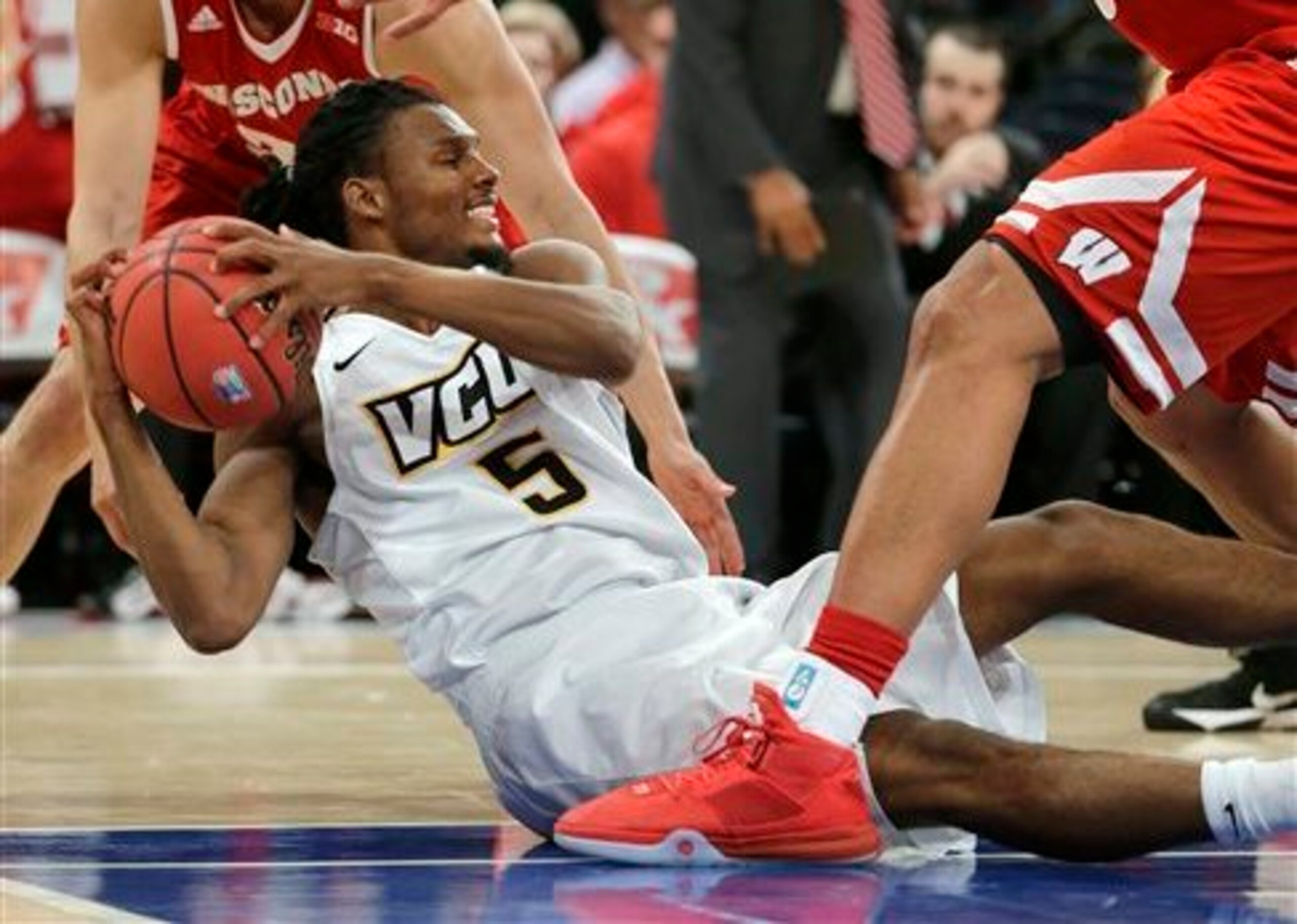
VCU Receives: Adrian Diaz
FIU Receives: Doug Brooks and Ahmed Hamdy Mohamed
In a lot of ways, VCU is even better under head coach Will Wade than it was with Shaka Smart.
The Rams entered play Tuesday forcing turnovers at a higher rate than they did in the previous two years, they're shooting better from three-point range than they ever did with Smart at the helm and their defensive rebounding rate is better than it has been in any season in the KenPom era.
Yet, they've already suffered five losses because their team two-point percentage is worse than it has been in at least 15 years. During their three-game losing streak to Florida State, Georgia Tech and Cincinnati, the Rams shot a combined 47 of 128 (36.7 percent) from inside the arc.
If they maintained that "accuracy" for the entire season, they would rank 350th in the nation in that category.
That's why they need Adrian Diaz.
Not only does the 6'11" senior bring height and shot blocking to an otherwise undersized roster, but he has converted on 66.7 percent of his two-point attempts this season—more than 10 percent better than any Ram.
At the very least, FIU would require a big man in return, which is where 6'9" Ahmed Hamdy Mohamed comes in. But Doug Brooks is the real prize for a team that ranks 348th in defensive turnover percentage and 326th in free-throw percentage.
Cutting ties with Diaz (47.4 percent) helps in the latter category, but it's Brooks' No. 2 standing in the nation in steal percentage that makes this deal too sweet for the Panthers to pass up.
George Mason and Michigan
10 of 10
Michigan Receives: Shevon Thompson
George Mason Receives: Derrick Walton Jr. and D.J. Wilson
To put things lightly, Michigan needs some help in the frontcourt.
Buy into Mark Donnal's sudden surge against Illinois and Penn State in the past week if you feel so inclined, but here are the numbers from Michigan's three losses to Xavier, Connecticut and SMU:
- Wolverines: 32-of-77 (41.6 percent) from two-point range, 80 rebounds
- Opponents: 61-of-120 (50.8 percent) from two-point range, 134 rebounds
They've been absolutely decimated by teams willing and able to go to work in the paint, and the wins over the Illini and Nittany Lions really don't do anything to change that narrative. Watch how they fare in their next three games against Purdue, Maryland and Iowa before you start thinking the Wolverines can make a legitimate tournament run with these forwards.
George Mason's Shevon Thompson would be an immediate and massive upgrade. He has been one of the best rebounders in the country over the past two years and is a good source of blocks and two-point field goals.
In exchange for that frontcourt beast, Mason's asking price would be Derrick Walton and any big man to help replace Thompson. The Patriots are in dire need of a veteran backcourt presence to help with an arsenal of guards that is currently committing 13.4 turnovers per game and only forcing 7.8.
It's a high price, but Michigan would still have Caris LeVert, Zak Irvin, Duncan Robinson, Aubrey Dawkins and Muhammad-Ali Abdur-Rahkman to shoulder the backcourt load. With an improved front line, that would be more than enough to become a legitimate contender to win the Big Ten.
All advanced stats courtesy of KenPom.com unless otherwise noted.
Kerry Miller covers college basketball for Bleacher Report. You can follow him on Twitter at @kerrancejames.
.jpg?w=2560 "Steelers Saints Football")

.jpg?w=2560 "Packers Safety Slams Refs 🤬")

.jpg?w=2560 "🚨 Week 8 AP Top 25 Poll")
