
2016 NCAA Tournament Bracket: Latest Projection for the Field for the New Year

Selection Sunday is still a little more than 10 weeks away, but Oklahoma, Virginia, Michigan State and Kansas are our projected No. 1 seeds for the 2016 NCAA men's basketball tournament as the calendar flips to January.
It has been nearly two months since our preseason bracket projection, but we needed that much time for the data to make enough sense for an updated bracket. (If you think RPI is a broken system in March, you should see how messed up it is in early December.) With the computer numbers finally starting to match our eye test and conference play just now getting underway, there's no time like the present to refresh the projected field.
Two things to note on the seeding process at this early stage in the season:
First, the best team from each conference is projected for that conference's auto bid. A lot of sites have Iona as the MAAC's auto bid and Monmouth as an at-large option because Iona is 2-0 in conference play, but Monmouth is clearly the better team right now and our only MAAC representative.
Second, we don't project wins and losses, but we do consider teams' remaining schedule for potential. As the season progresses, what you've done will certainly become more important than what you might do, but nonconference schedule strengths vary too widely to base a bracket projection entirely on games to this point in the season.
Other than that, it's business as usual.
The three primary computer metrics considered in this projection are ESPN's RPI, KenPom's pythagorean rankings (KP) and CBS' strength of schedule (SOS), though Sagarin and BPI ratings are also taken into consideration for a more holistic view of each team's resume. And, of course, the oft-mentioned, never-quantifiable eye test was a large part of the seeding process.
As always, we'll take a look at the last five teams to make the field, the first five out and a few on the horizon.
After that, we'll present each seeded region, including the subregional locations in which each pod would be played, and some commentary on which teams have moved the most in each region. Then we'll defend the rankings of the No. 1 seeds, followed by a summary of the entire field broken up by conference.
Last 5 In
1 of 9
Last Team In: Syracuse Orange (10-4, RPI: 60, KP: 58, SOS: 103)
Has any team had a more disparate first two months of the season?
Syracuse was flying high in November. The Orange won their first six games—including neutral-court wins over Connecticut and Texas A&M—to climb as high as No. 14 in the AP Top 25.
December was a drastically different story, as the three-point shot completely disappeared en route to four losses to Wisconsin, Georgetown, St. John's and Pittsburgh. In most seasons, those names represent forgivable losses. Not so much this year.
Syracuse will play Miami and North Carolina in the next 10 days, so the opportunities are certainly there to get back on track.
Second-to-Last: Seton Hall Pirates (11-2, RPI: 32, KP: 38, SOS: 113)
Seton Hall wasn't supposed to be any good this year. The Pirates lost Sterling Gibbs and Brandon Mobley—as well as Jaren Sina in the middle of last season—leaving them with no juniors or seniors of note until Derrick Gordon decided to transfer from Massachusetts.
But their onslaught of sophomores has been pretty great. Isaiah Whitehead and Angel Delgado are contributing at about the same high level as last year. Khadeen Carrington and Desi Rodriguez have really stepped up their game, while Ismael Sanogo has come out of nowhere to establish himself as a real asset in the paint.
Despite wins over Wichita State, Georgia, Ole Miss and Marquette, Seton Hall's strength of schedule is quite low, but road games against Villanova, Providence and Xavier in the next three weeks will remedy that.
Third-to-Last: Michigan Wolverines (11-3, RPI: 53, KP: 29, SOS: 102)
Michigan opened the season as the last team in the AP Top 25 but has done little to defend that honor. The Wolverines do have a pair of decent wins over Texas and N.C. State, but each of their three losses has come by a margin of at least 14 points.
Caris LeVert has been outstanding, and three-point assassin Duncan Robinson is leading the nation in O-Rating and effective field-goal percentage. However, Zak Irvin has struggled, and outside of Mark Donnal's shocking 26-point game against Illinois, Michigan still doesn't have much of anything in the frontcourt.
Fourth-to-Last: Indiana Hoosiers (11-3, RPI: 75, KP: 26, SOS: 191)
With Michigan, Wisconsin and Ohio State all off to disappointing starts to the season, the Big Ten isn't nearly as deep as usual. Michigan State, Purdue and Maryland are good up top and Iowa isn't far behind them, but the third tier of teams from this conference is questionable at best for the tournament.
In Indiana's case, rankings like KenPom and Sagarin that factor in margin of victory love the Hoosiers, because eight of their 10 nonconference wins were by a margin of at least 20 points. But outside of a neutral-court win over Notre Dame—a game in which they trailed by 16 with 15 minutes remaining—there isn't a quality win to be found.
As expected, this is one of the most high-powered offenses in the country. However, the addition of Thomas Bryant has done next to nothing to solve the Hoosiers' defensive woes. We'll see if they can overcome that deficiency and win enough marquee Big Ten games to combat what is a brutal computer resume.
Fifth-to-Last: Saint Mary's Gaels (11-1, RPI: 56, KP: 31, SOS: 250)
With nothing better than wins over Stanford and UC Irvine on the resume, Saint Mary's probably hasn't done enough to merit inclusion in the field. However, I'm astounded by what the Gaels have been able to do after losing all five of last year's starters to graduation, and there aren't any other teams more deserving of this spot.
The Gaels entered play on New Year's Eve ranked No. 1 in the nation in effective field-goal percentage.
First 5 Out
2 of 9
First Team Out: Arizona State Sun Devils (10-3, RPI: 32, KP: 51, SOS: 40)
The computer numbers are nice, but that season-opening home loss to Sacramento State isn't going anywhere—and one marquee win over Texas A&M isn't quite enough to completely undo it.
The Sun Devils' next three games are against Arizona, USC and UCLA, and a 2-1 run through those games would be more than enough to propel them into the field.
Second Team Out: Northern Iowa Panthers (8-5, RPI: 66, KP: 77, SOS: 71)
One of the strangest resumes in the country, Northern Iowa has wins over North Carolina and Iowa State but also has five losses to teams that really weren't even considered for an at-large bid.
The Missouri Valley is weak enough that the Panthers could win 16 conference games for a second straight year, but it's also so weak that anything less would almost certainly put them in "auto bid or bust" territory.
Third Team Out: Wake Forest Demon Deacons (9-3, RPI: 52, KP: 88, SOS: 74)
Neutral-court wins over Indiana and UCLA look solid next to their recent effort in a loss to Xavier, but the Demon Deacons don't have the computer numbers to support being the 10th ACC team into our projected field. Opportunities abound in the ACC, though, and Wake Forest might have done enough in nonconference play to warrant dancing with a 9-9 conference record.
Fourth Team Out: Boise State Broncos (7-4, RPI: 83, KP: 80, SOS: 91)
Who could have guessed before the season that this mess would be the resume of the second-best team in the Mountain West Conference?
Much like Arizona State, Boise State's season opened with an ugly loss (at Montana), and the Broncos have only scored one noteworthy win since then (vs. Oregon). Unlike Arizona State, though, there's little the Broncos will be able to do in conference to get back in our good graces. Even road wins over San Diego State, UNLV and New Mexico won't hold much water this year.
Fifth Team Out: Ole Miss Rebels (10-2, RPI: 49, KP: 72, SOS: 196)
Like so many other teams just on the outside looking in, Ole Miss has a solid record against a dreadful schedule. Wins over Memphis and Georgia State are as good as it gets, and the neutral-court loss to George Mason is only looking worse by the day.
But the Rebels travel to Kentucky on Saturday for a game that could drastically change their resume for the better.
On the Horizon
3 of 9
Northwestern Wildcats
With possibly the emptiest 13-1 record in college basketball history, Northwestern has yet to win a game against the KenPom top 125. However, it has looked good enough in most of those wins that assuming a .500 conference record for the first time in more than a decade might not be crazy—especially considering the Wildcats play two games each against Minnesota, Nebraska and Penn State.
This Saturday's home game against Maryland is probably their best remaining chance at a marquee win, though, as they don't play Indiana, Michigan or Purdue at home.
Wisconsin Badgers and Ohio State Buckeyes
On name power alone, the Badgers and Buckeyes remain on our radar. They may look dead, but there are too many chances in B1G play to bury them yet.
Saint Joseph's Hawks
A 10-2 record with no big wins and no bad losses is good enough for fringe consideration right now. DeAndre Bembry and Isaiah Miles have each scored in double figures in all 12 games and could be a two-headed wrecking ball in A-10 play.
Davidson Wildcats
Speaking of A-10 teams with no big wins and no bad losses, Davidson has been absolutely blown out by North Carolina, Pittsburgh and California already this season. Yet, the Wildcats somehow have an RPI rank of 30 because they have played a limited number of truly awful teams. Their KenPom rank of 94, however, suggests they have a lot of work to do in the next two months.
Kansas State Wildcats
Here's another "no big wins, no bad losses" resume. Kansas State is 10-2 with competitive losses to North Carolina and Texas A&M. The lack of quality wins will correct itself, though, if the Wildcats are able to do anything in Big 12 play. With Texas Tech playing surprisingly well this season, just about every win in this conference is a good one.
Oregon State Beavers
You know the drill: acceptable losses to Kansas and Valparaiso, but nothing better than Tulsa and Iona in the wins column. Oregon State is light years ahead of where it was last season on offense, but the Beavers still need to actually beat a marquee opponent before we can take them seriously.
Evansville Purple Aces and Southern Illinois Salukis
The Missouri Valley is a shell of its former self, but Evansville and Southern Illinois are each sitting at 12-2. The Purple Aces are in much better shape than the Salukis—with better wins and substantially more acceptable losses—but either one could have at least 27 wins by Selection Sunday.
Alabama Crimson Tide
Because they were blown out by both Dayton and Xavier in the first two weeks of the season, no one seems to be interested in talking about the Crimson Tide. However, they have neutral-court wins over Wichita State and Notre Dame and a road win over Clemson. Their only loss not already mentioned was a close one against a good Oregon team.
With LSU and Arkansas already out of the picture, there's no reason Alabama can't be the fifth- or sixth-best team in the SEC this year. That might be enough for a bid.

.jpg?w=2560 "Rams Raiders Football")

East Region (Philadelphia)
4 of 9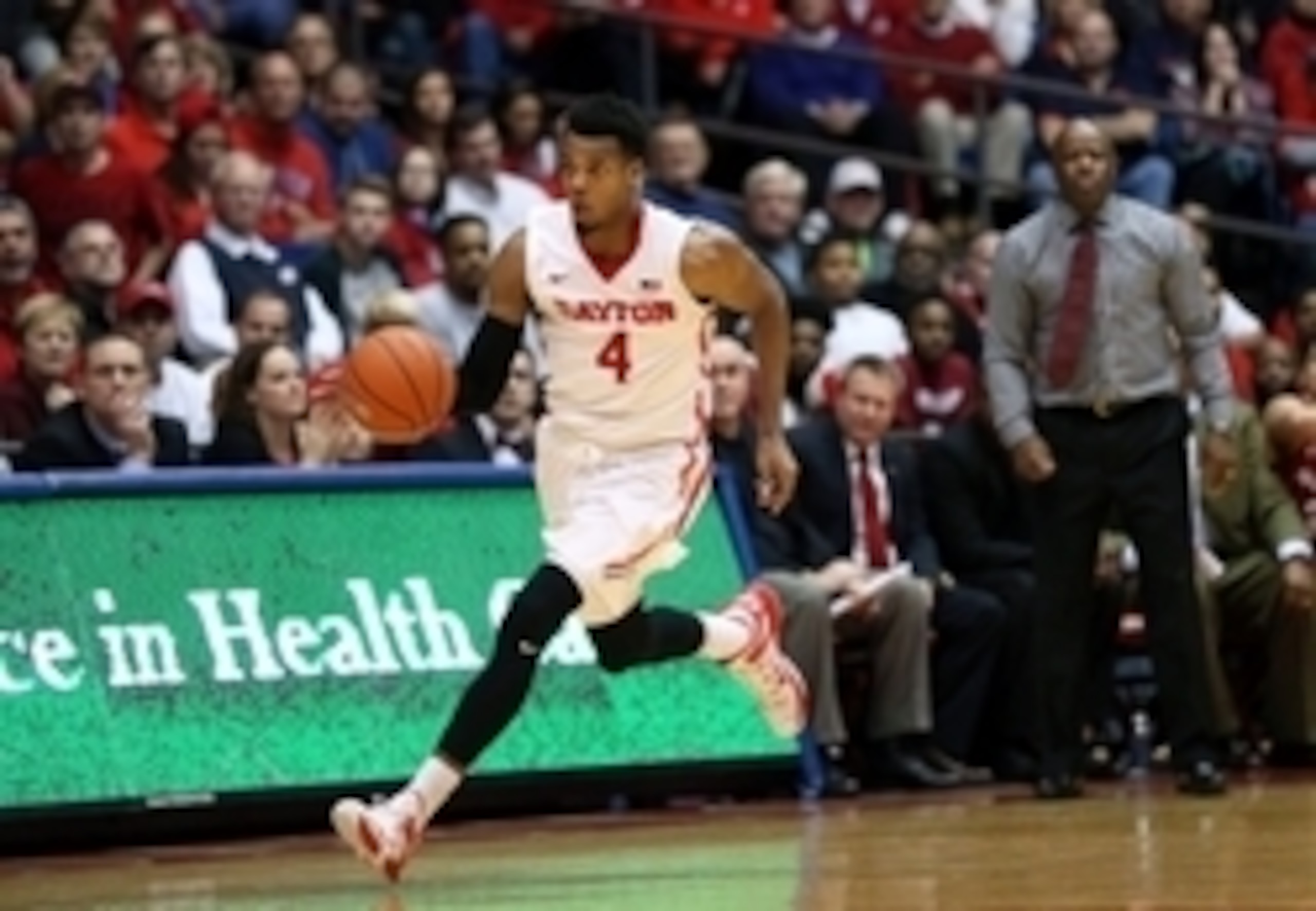
Raleigh, North Carolina
No. 1 Virginia (11-1, RPI: 9, KP: 4, SOS: 41)
No. 16 Wagner/Hampton (First Four)
No. 8 Monmouth (9-4, RPI: 17, KP: 56, SOS: 17)
No. 9 Florida (8-4, RPI: 37, KP: 27, SOS: 3)
Providence, Rhode Island
No. 4 Maryland (12-1, RPI: 26, KP: 18, SOS: 132)
No. 13 Louisiana Tech (Conference USA auto bid)
No. 5 Louisville (11-2, RPI: 27, KP: 5, SOS: 107)
No. 12 Michigan/Seton Hall (Last 5 In)
Des Moines, Iowa
No. 3 Xavier (12-1, RPI: 1, KP: 7, SOS: 2)
No. 14 Belmont (Ohio Valley auto bid)
No. 6 Dayton (10-2, RPI: 10, KP: 46, SOS: 4)
No. 11 Colorado (10-2, RPI: 22, KP: 45, SOS: 47)
Raleigh, North Carolina
No. 2 North Carolina (12-2, RPI: 8, KP: 11, SOS: 29)
No. 15 Yale (Ivy League auto bid)
No. 7 UCLA (9-4, RPI: 67, KP: 44, SOS: 48)
No. 10 Texas (8-4, RPI: 37, KP: 50, SOS: 6)
Stock Way Up: Dayton (New to the Field)
When news of Dyshawn Pierre's suspension for the first semester broke, I mistakenly wrote off Dayton. But the Flyers won games away from home against Iowa, Vanderbilt and Monmouth without him, and now he's back in the mix. Freshman big man Steve McElvene and JMU transfer Charles Cooke have been great additions to what is really starting to look like the clear-cut team to beat in the A-10 this year.
(Sorry, George Washington. You lost that honor when DePaul beat you by 21 points.)
Stock Up: Monmouth (New to the Field)
Short of winning every remaining game, I can't imagine a scenario in which Monmouth actually gets a single-digit seed in March. However, how can we not reward the Hawks with at least a No. 8 seed for what they've done to this point?
These guys have more true road wins (six) than all four of our No. 1 seeds combined (five), and three of Monmouth's six road wins have come against major conference opponents. Throw in neutral-court wins over Notre Dame and USC, and this team already has more quality wins than some of the squads that made last year's dance.
Holding Steady: Florida (No Change)
Despite four losses and only two RPI Top 100 wins, Florida somehow has a computer profile that can't possibly be ignored. The Gators will eventually need to beat a few quality opponents to retain this seed, but they'll enter SEC play in solid shape for a tournament bid.
Stock Down: Maryland (Down Three Lines)
The Terrapins' play didn't cause this plummet anywhere near as much as their strength of schedule did. With Georgetown and Rhode Island both dropping like rocks and Illinois State nowhere near as good as many inexplicably expected, Maryland ended up with just one quality nonconference win (against Connecticut).
Win the Big Ten and the Terrapins will almost certainly get a No. 1 seed—the same goes for Purdue and Michigan State—but if they finish in third place on the heels of this weak nonconference schedule, they might be lucky to go dancing with a second consecutive No. 4 seed.
Midwest Region (Chicago)
5 of 9
Oklahoma City
No. 1 Kansas (10-1, RPI: 20, KP: 1, SOS: 69)
No. 16 Texas A&M-Corpus Christi (Southland auto bid)
No. 8 Gonzaga (10-3, RPI: 57, KP: 21, SOS: 59)
No. 9 Vanderbilt (8-4, RPI: 41, KP: 16, SOS: 25)
Spokane, Washington
No. 4 Providence (12-1, RPI: 11, KP: 41, SOS: 73)
No. 13 South Dakota State (Summit League auto bid)
No. 5 Texas A&M (10-2, RPI: 14, KP: 22, SOS: 32)
No. 12 Fresno State (Mountain West auto bid)
Brooklyn, New York
No. 3 Miami (11-1, RPI: 13, KP: 12, SOS: 57)
No. 14 William & Mary (Colonial auto bid)
No. 6 Utah (10-2, RPI: 25, KP: 40, SOS: 55)
No. 11 Indiana/Syracuse (Last 5 In)
St. Louis
No. 2 Kentucky (10-2, RPI: 7, KP: 14, SOS: 9)
No. 15 Army (Patriot League auto bid)
No. 7 George Washington (11-2, RPI: 24, KP: 61, SOS: 78)
No. 10 Notre Dame (9-3, RPI: 62, KP: 33, SOS: 108)
Stock Way Up: Providence (New to the Field)
Providence was the third team out of our field in early November, but, come on, you didn't see Ben Bentil and Rodney Bullock evolving into studs, either. The Friars have been great and still aren't at full health. Once lethal three-point shooting freshman Ryan Fazekas recovers from mono, they'll have an even larger arsenal of weapons.
Here's hoping we get to watch Kris Dunn do his thing in the tournament this year, as opposed to last year's fiasco when he got into early foul trouble against Dayton and had one of his worst outings of the entire season.
Stock Up: Miami (Up Three Lines)
I had Miami pegged for a fourth-place finish in a strong ACC, and I'm still amazed at how well the Hurricanes have played (against teams other than Northeastern). And that's with Kamari Murphy just now starting to have the type of impact that we were expecting. If he keeps playing this well and at least hangs with some of the great power forwards in the ACC, Miami could legitimately win the conference.
Holding Steady: Texas A&M (Up One Line)
The wins over Baylor, Gonzaga and Texas are really nice, but the 54-point "effort" in a loss to Arizona State is still baffling nearly one month after the fact. Outside of that lone true road game on their schedule, though, the Aggies have looked strong. And they're only looking better as of late with Tyler Davis' role increasing and Jalen Jones heating up after missing the first four games.
Stock Down: Gonzaga (Down Five Lines)
It's hard to remember a time when Gonzaga's guard play was an uninspiring as it currently is. Domas Sabonis and Kyle Wiltjer have been nothing short of incredible, but even the dynamic duo couldn't save the Zags from a trio of nonconference losses.
Not one of those losses was bad in terms of margin or quality of opponent, though, so it's not difficult to envision Gonzaga winning at least 15 of its final 17 regular-season games to climb back up a few seed lines.
South Region (Louisville)
6 of 9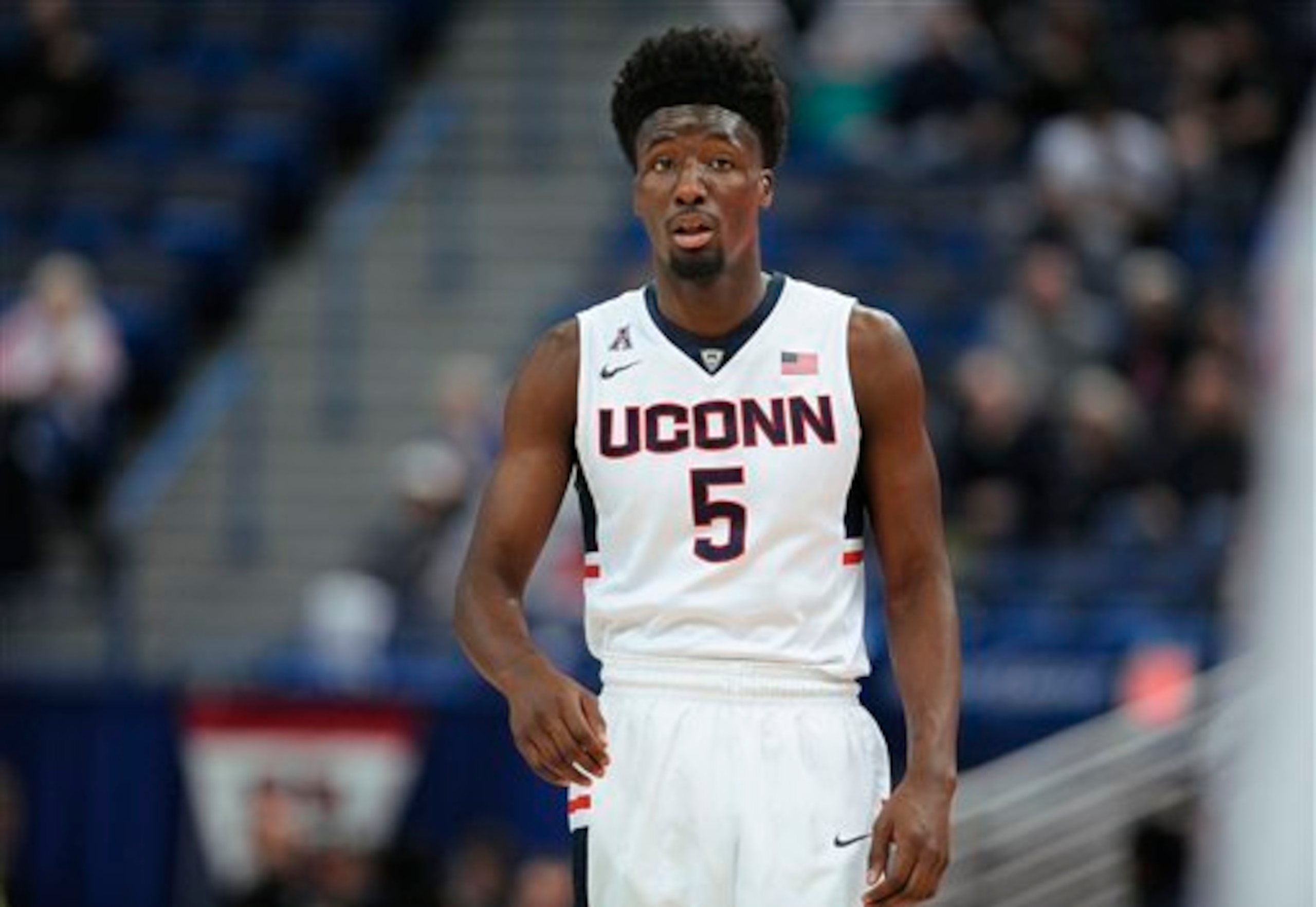
Oklahoma City
No. 1 Oklahoma (11-0, RPI: 6, KP: 2, SOS: 67)
No. 16 Southern/UMKC (First Four)
No. 8 USC (11-2, RPI: 38, KP: 34, SOS: 89)
No. 9 Florida State (10-2, RPI: 68, KP: 37, SOS: 239)
Providence, Rhode Island
No. 4 Butler (11-1, RPI: 29, KP: 19, SOS: 147)
No. 13 Chattanooga (Southern auto bid)
No. 5 Iowa (10-3, RPI: 23, KP: 15, SOS: 18)
No. 12 Akron (MAC auto bid)
Des Moines, Iowa
No. 3 Purdue (13-1, RPI: 19, KP: 3, SOS: 95)
No. 14 Arkansas-Little Rock (Sun Belt auto bid)
No. 6 Oregon (10-2, RPI: 16, KP: 30, SOS: 46)
No. 11 Saint Mary's (Last 5 In)
Brooklyn, New York
No. 2 Villanova (11-2, RPI: 2, KP: 6, SOS: 7)
No. 15 High Point (Big South auto bid)
No. 7 Connecticut (9-3, RPI: 86, KP: 23, SOS: 135)
No. 10 Texas Tech (10-1, RPI: 5, KP: 42, SOS: 16)
Stock Way Up: USC (New to the Field)
So, perhaps it wasn't so crazy to project USC to finish in seventh place in the Pac-12? The Trojans already have wins over Wichita State, Monmouth and Yale as part of their 11-2 start, and the latter part of that record might only be due to an injury to one of their stars.
"Jordan (McLaughlin) broke his nose in the first half of the Xavier game," head coach Andy Enfield said on the Pac-12 coaches teleconference this week. "We Fed-Exed in a mask that was three sizes too big for him, and that really hurt his production. Without that, there's a significant difference in his numbers."
The Trojans lost that game as well as the one against Monmouth two days later, but they're otherwise undefeated. We'll find out in a hurry whether they're the real deal, though, as they'll host Arizona and travel to UCLA and Oregon within the first three weeks of conference play.
Stock Up: Texas Tech (New to the Field)
It's a happy accident that these kindred spirits ended up in the same region, as USC and Texas Tech have been two of the worst major-conference teams in the country over the past four years. But the first seven weeks of this season have been great for both of them.
The Red Raiders haven't played any elite teams or true road games, but they do have wins over quality non-major programs like Hawaii, Arkansas-Little Rock, South Dakota State, Richmond and High Point, as well as wins over Minnesota and Mississippi State.
As with USC, though, let's give it about a month before we really start thinking about their chance to dance. Within the next four weeks, Texas Tech will travel to Iowa State and Oklahoma and host Kansas, West Virginia and Baylor.
Holding Steady: Butler (Up One Line)
Butler has played well in climbing to No. 9 in the AP Top 25, but it's tough to consider the Bulldogs for the No. 9 overall seed with so many games against the likes of Southern Utah, SIU-Edwardsville and The Citadel on their schedule.
They do have nice wins away from home over Purdue and Cincinnati, but three cupcakes per quality win isn't the best formula for a spot on the top three seed lines. They'll need to do some damage in Big East play to climb any higher than this.
Stock Down: Connecticut (Down Three Lines)
This is a bit unfair because I was admittedly way higher on Connecticut in the preseason than most bracketologists, and the Huskies have actually played really well. They have convincing wins over Michigan and Ohio State, as well as a true road win over Texas. All three of their losses came on a neutral court against teams in our current projected field, and two of those losses were by a one-possession margin.
But they haven't been quite as good as I expected, and it's unlikely their resume will get that much stronger in a weak American Athletic Conference.
If the Huskies do climb any higher, though, can we please start talking about Daniel Hamilton for National Player of the Year? He already has one triple-double and five other games in which he had at least seven points, seven rebounds and seven assists.
West Region (Anaheim)
7 of 9
St. Louis
No. 1 Michigan State (13-1, RPI: 3, KP: 8, SOS: 31)
No. 16 North Florida (Atlantic Sun auto bid)
No. 8 Valparaiso (8-3, RPI: 28, KP: 32, SOS: 82)
No. 9 California (10-3, RPI: 57, KP: 39, SOS: 114)
Spokane, Washington
No. 4 Duke (11-2, RPI: 18, KP: 9, SOS: 30)
No. 13 Hawaii (Big West auto bid)
No. 5 West Virginia (11-1, RPI: 40, KP: 10, SOS: 177)
No. 12 Wichita State (Missouri Valley auto bid)
Denver
No. 3 Arizona (12-1, RPI: 44, KP: 17, SOS: 176)
No. 14 Stony Brook (America East auto bid)
No. 6 South Carolina (11-0, RPI: 36, KP: 25, SOS: 261)
No. 11 Baylor (9-2, RPI: 109, KP: 28, SOS: 286)
Denver
No. 2 Iowa State (11-1, RPI: 12, KP: 20, SOS: 52)
No. 15 Weber State (Big Sky auto bid)
No. 7 Pittsburgh (10-1, RPI: 21, KP: 24, SOS: 53)
No. 10 Cincinnati (10-4, RPI: 107, KP: 35, SOS: 137)
Stock Way Up: South Carolina (New to the Field)
It's funny how much of a difference one personnel change can make.
The Gamecocks have largely the same roster as last year, except Tyrone Johnson graduated and took his 36.2 field-goal percentage with him, making room for freshman P.J. Dozier. And somehow, that made everyone else on the team better, as South Carolina's team three-point percentage increased from 30.1 to 40.9.
It's unlikely the Gamecocks will actually stay this high. They're 12-0 because of a weak nonconference schedule, so it may only take one or two losses to really deflate their resume. At the same time, it may only take them one or two quality wins to cement their status as a tournament team.
Stock Up: Pittsburgh (Up Five Lines)
With a win over Syracuse on Wednesday night, the Panthers quietly improved to 11-1 on the season. Michael Young and Jamel Artis have been outstanding, and James Robinson remains unquestionably the most underappreciated point guard in the country.
As a team, the Panthers are shooting better than 80 percent from the free-throw line. After an abnormally disappointing 2014-15 season, they could easily crash the "Top Third of the ACC" party with those fundamentals.
Holding Steady: Iowa State (Up One Line)
Very little has changed in the transition from Fred Hoiberg to Steve Prohm. Iowa State is still the same uptempo, high-scoring offense we've grown accustomed to seeing over the past few years. The Cyclones have scored at least 78 points in every game but one, and the trio of Monte Morris, Georges Niang and Jameel McKay has been exquisite.
Stock Down: Wichita State (Down 10 Lines)
Every single team that was a No. 6 seed or better in the preseason bracket is still in this edition of the projected field, but Wichita State almost changed that. A No. 2 seed seven weeks ago, the Shockers have fallen all the way to a No. 12 seed and would have been in a play-in game if not for the projected Missouri Valley auto bid.
Most of their five losses were without Fred VanVleet in the lineup, but that doesn't change the fact that this team has but one quality win (vs. Utah) while trying to buoy all those losses.
If it runs the table in conference play, those November losses won't look nearly as bad, but it really might take 17 straight wins from this point forward for Wichita State to make the NCAA tournament if it falters during Arch Madness.
Ranking the No. 1 Seeds
8 of 9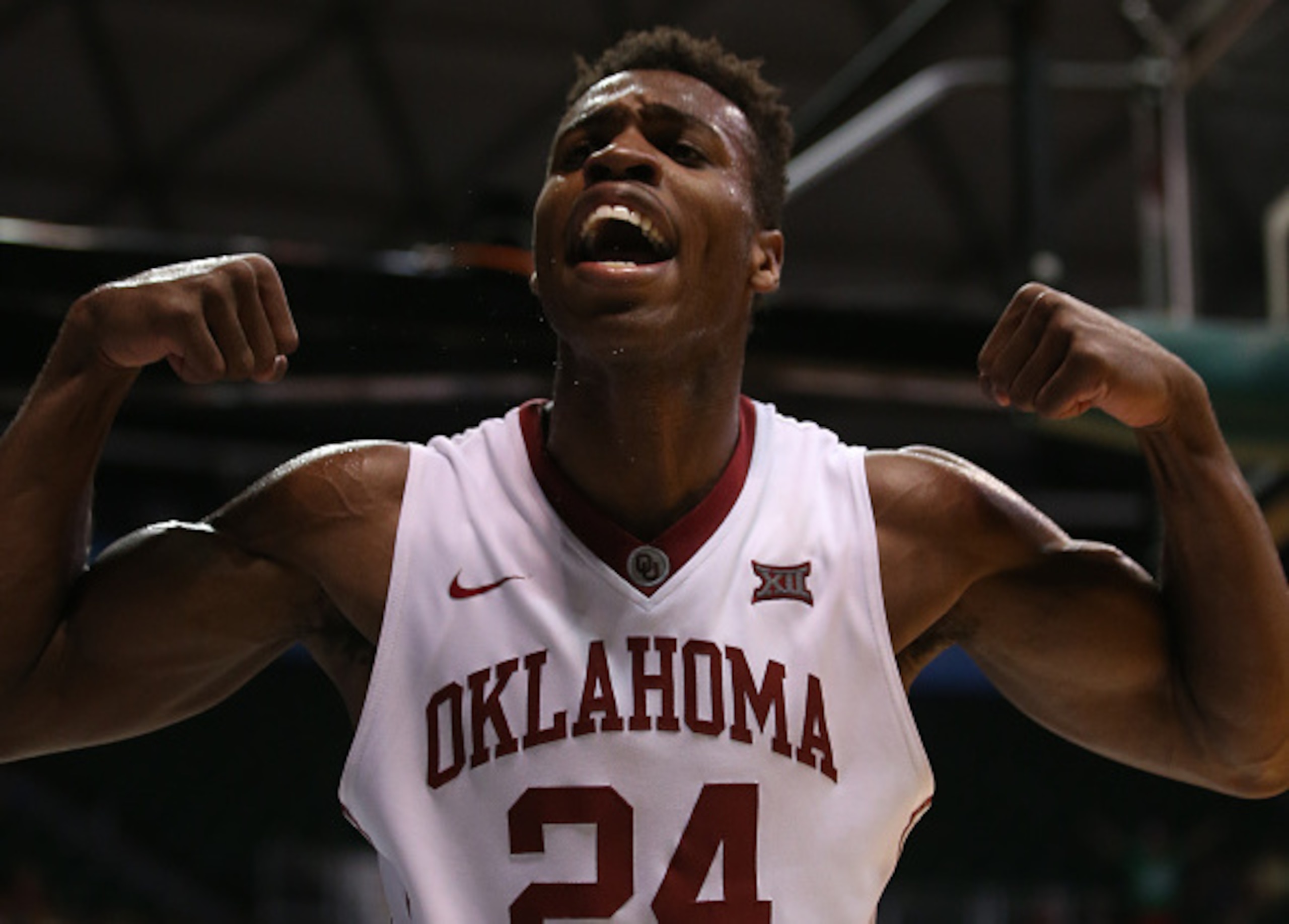
No. 4 Kansas Jayhawks (10-1, RPI: 20, KP: 1, SOS: 69)
No. 3 Michigan State Spartans (13-1, RPI: 3, KP: 8, SOS: 31)
On the one hand, Kansas' only loss (vs. Michigan State) is more forgivable than Michigan State's only loss (at Iowa).
However, the Spartans pretty much have to be seeded ahead of the Jayhawks because of that head-to-head "tiebreaker." Plus, Michigan State's three best wins (vs. Kansas, vs. Louisville, vs. Providence) are substantially better than each of Kansas' three best wins (vs. Vanderbilt, vs. UCLA, vs. Oregon State).
Regardless of the order, though, these are clearly two of the four best teams in the country as we head into 2016. Who knew that Kansas vs. Michigan State would end up being a better Champions Classic pairing than Duke vs. Kentucky?
No. 2 Virginia Cavaliers (11-1, RPI: 9, KP: 4, SOS: 41)
The Cavaliers have come a long way since their early loss to George Washington—which doesn't look nearly as strange now as it did when it happened.
Not only are the Wahoos flawless since then, but they also won three consecutive games against West Virginia, Villanova and California—surrounded by decent wins over Ohio State, William & Mary and Oakland, no less.
Early games against Morgan State and Bradley are negatively skewing their strength of schedule, but the Cavaliers have proved worthy of this No. 1 seed with a bevy of quality wins over the past six weeks.
Whoever wins the ACC is all but assured a spot on the top line, and it's looking like Virginia might be able to do so for a third straight year.
No. 1 Oklahoma Sooners (11-0, RPI: 6, KP: 2, SOS: 67)
This could go down the toilet in a hurry, with games against Iowa State and Kansas in the first four days of the new calendar year, but Oklahoma (and Buddy Hield) belongs on top of the world as one of the only two tournament-eligible undefeated teams remaining.
The Sooners only have one particularly noteworthy win, but that 78-55 desolation of Villanova was what really put this team on the No. 1-seed radar. Subsequently winning the Diamond Head Classic while several other No. 1 seed candidates suffered losses only further cemented their spot at No. 1 overall.
We've justifiably raved about Oklahoma's shooting ability as an entire team, but the defense has been even more efficient than the offense, as the Sooners rank fourth in the nation in adjusted defensive efficiency. Keep that up, and there will be a new Big 12 champion for the first time in more than a decade.
Seeding by Conference
9 of 9
In case seeded regions aren't for you and you just want to know where the "top" 68 teams stand in relation to one another, here is the list of each team's overall seed, broken down by conference ("First Five Out" in italics).
American: 27. Connecticut; 37. Cincinnati
Atlantic 10: 23. Dayton; 28. George Washington
ACC: 2. Virginia; 5. North Carolina; 11. Miami; 15. Duke; 18. Louisville; 26. Pittsburgh; 33. Florida State; 39. Notre Dame; 48. Syracuse; 71. Wake Forest
Big 12: 1. Oklahoma; 4. Kansas; 8. Iowa State; 19. West Virginia; 38. Texas; 40. Texas Tech; 41. Baylor
Big East: 7. Villanova; 9. Xavier; 13. Providence; 16. Butler; 47. Seton Hall
Big Ten: 3. Michigan State; 12. Purdue; 14. Maryland; 17. Iowa; 44. Indiana; 46. Michigan
Missouri Valley: 45. Wichita State; 70. Northern Iowa
Mountain West: 49. Fresno State; 72. Boise State
Pac-12: 10. Arizona; 21. Oregon; 22. Utah; 25. UCLA; 32. USC; 34. California; 42. Colorado; 69. Arizona State
SEC: 6. Kentucky; 20. Texas A&M; 24. South Carolina; 35. Vanderbilt; 36. Florida; 73. Ole Miss
West Coast: 30. Gonzaga; 43. Saint Mary's
Other: 29. Monmouth; 31. Valparaiso; 50. Akron; 51. Chattanooga; 52. Hawaii; 53. South Dakota State; 54. Louisiana Tech; 55. Arkansas-Little Rock; 56. William & Mary; 57. Belmont; 58. Stony Brook; 59. Yale; 60. High Point; 61. Weber State; 62. Army; 63. North Florida; 64. Texas A&M-Corpus Christi; 65. Southern; 66. UMKC; 67. Wagner; 68. Hampton
Statistics courtesy of ESPN.com and KenPom.com. RPI, KP and SOS numbers are current through the start of play on Dec. 31. Win-loss records include only games against D-I opponents and are current through the start of play on Jan. 1, with the exception of Saint Mary's.
Kerry Miller covers college basketball for Bleacher Report. You can follow him on Twitter at @kerrancejames.
.jpg?w=2560 "Steelers Saints Football")

.jpg?w=2560 "Packers Safety Slams Refs 🤬")
.jpg?w=2560 "🚨 Week 8 AP Top 25 Poll")