

CBB Players Returning from Injury Who'll Have a Big Impact in 2015-16
Think of injuries and it's hard not to think of the golf-course feud between Bob Barker and Happy Gilmore.
We "got a piece" of some really talented players last season. Now, we want them to be healthy—so they can give us the "whole thing." (Look it up, kids.)
That's what this slideshow is about: Players who were significantly impacted by ailments last year but should take their games (assuming good health) to new levels during the 2015-16 college basketball season.
Some entries are obvious. We tended to focus on players who missed the latter stages of the season, when one is most likely to make a big name for oneself. Some guys were just plain cut short.
We have a surprise entry, too, whose ailment was an understandably broken heart.
This group doesn't deserve to leave this season hurting, too. These players deserve better. And the price they've paid through rehabilitation is hopefully right on the mark.
Alex Poythress, Kentucky
1 of 11
John Calipari encourages young talent to leave and collect NBA paychecks ASAP.
But we'll see how his Wildcat Left Behind program fares, as Alex Poythress wasn't ready for the draft after missing most of last season after hurting his knee.
Kentucky lost seven players from a team that went 38-1. Of course, we're inclined not to call this a total rebuilding year.
Poythress should be a significant reason why, both for his skill set and his leadership. He'll join fellow forward Marcus Lee in helping the younger 'Cats with the learning curve. Point guard Tyler Ulis will be there, too.
The 6'8" senior certainly has the brains. He's made the SEC academic team for three straight years and earned a business marketing degree in just three years as well.
It's his brawn that has taken some hits. He missed the final 29 games of last year after tearing his ACL. It happened in a practice, ruining a season in which he had been a starter on one of the greatest college basketball rosters ever assembled.
Poythress had started eight games, averaging about six points, four rebounds and 1.5 blocks. Those are pretty great numbers, considering Calipari could keep stats in check with so much depth.
The "old man" of UK's roster thrived against top competition, getting eight points against then-Top 10 Texas and six (plus two steals) against another future NCAA tournament team, Providence.
Devonte' Graham, Kansas
2 of 11
As you can see in the above photo, Kansas Jayhawks point guard Devonte' Graham played in the NCAA tournament.
But his impact was never quite the same after a turf-toe injury sullied a significant portion of last season. The experience gained from last year, plus a more defined role in 2015-16, would benefit the team greatly.
The freshman still appeared in 29 games, averaging about six points and two assists. But he missed six midseason games and never was quite the same conditioning-wise after that injury.
We'll have to wait and see how cursed Graham will be this season. He couldn't participate with Kansas at the World University Games in South Korea this summer. Shortly before the trip, he suffered a partially torn quad tendon (h/t Rock Chalk Talk).
Graham had a solid assist-to-turnover ratio in Big 12 play but really found his second wind at the season's end.
He had 17 points (making a freshman-year best three three-pointers) in the loss to Wichita State, adding five steals against an experienced Shockers guard line.
Brandon Watkins, West Virginia
3 of 11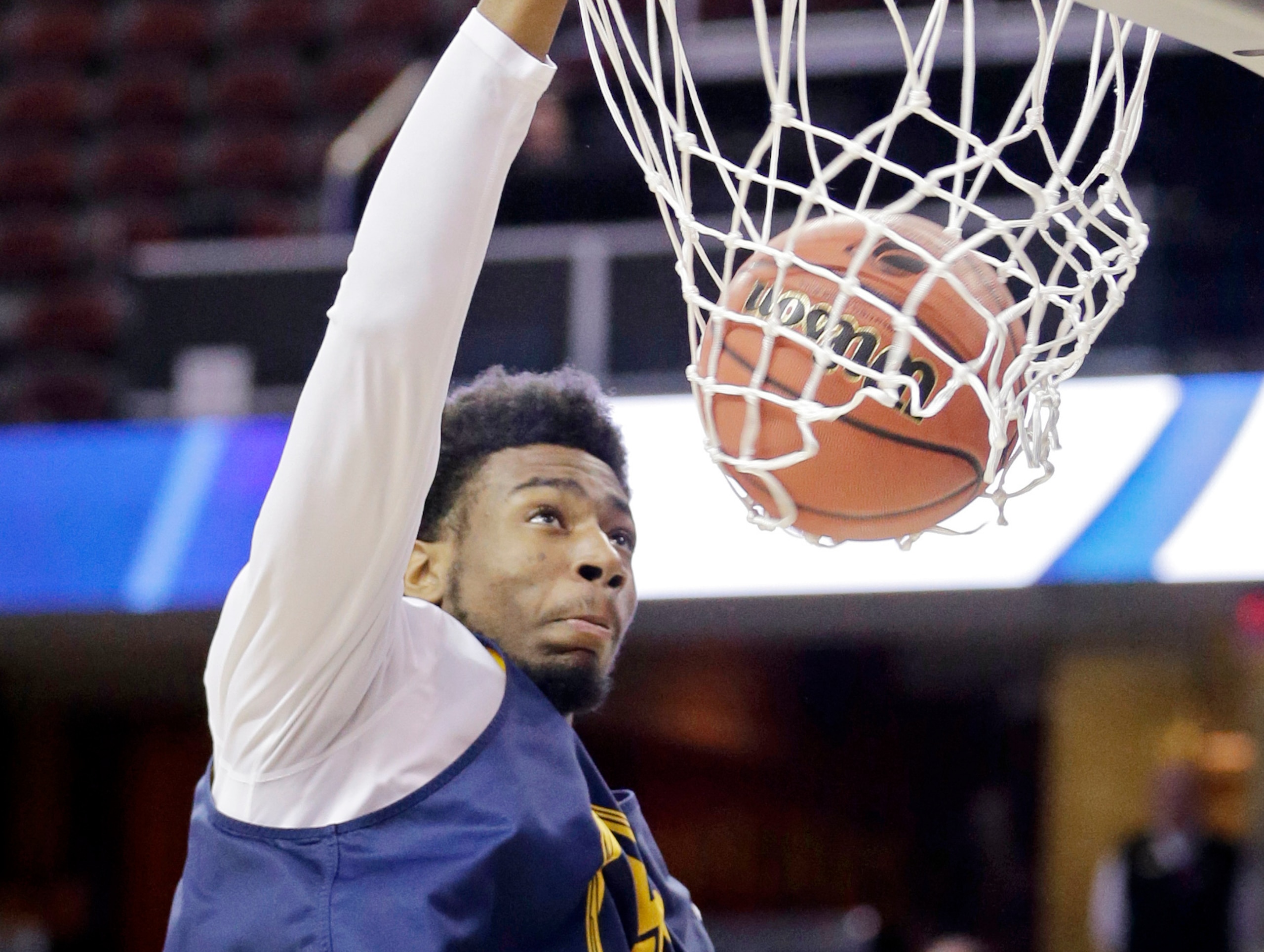
Brandon Watkins played in 23 games last year before suffering a knee injury.
It's really unfair that the mid-February season-ender came in the midst of his best game. The sophomore forward had a career-high 14 points and nine rebounds—both team highs at the time—in 17 minutes of action against the Kansas State Wildcats.
There's still a chance he won't play this year, which makes it more than a little dubious to put him on this list.
And while we're not supposed to cheer, it's only right to hope for a better/healthier 2015-16 campaign than what Watkins endured last year. He started the season with mononucleosis (missing seven games) and never was quite the same.
Then he had surgery in May to deal with a high school injury.
Here's hoping the 6'9'' forward and the Mountaineers make the right move regarding this season. And that he's able to produce more than the 1.9 points and 1.4 rebounds that didn't do his game or his tenacity justice last winter.
.jpg?w=2560 "Titans Giants Football")
Juwan Parker, Georgia
4 of 11
When you see the confidence Juwan Parker played with last year, it's easy to accept the Georgia Bulldogs can have a big winter if he can keep his repaired Achilles tendon healthy.
The 6'4" sophomore (now a junior) had found his way into the starting lineup but missed virtually all of SEC play with a chronic heel issue. He was getting about five points and four rebounds per game, including a couple of early-season breakout performances against Colorado and Arkansas (scoring double digits).
Parker's shooting-accuracy numbers leave something to be desired, though
But we'll give him some B.O.D. (benefit of the doubt) because of a lingering injury that severely limited practice time and became an obstacle for the entire team as it became an indefinitely long ailment.
“It’s going to be a long road, and it’s something that won’t get better until after the season," coach Mark Fox told reporters in mid-January per Bulldawg Illustrated.
Parker missed 15 of Georgia's final 19 games, including the NCAA tournament defeat.
The time off, and a fresh start after surgery, should put some spring in his step.
Angel Rodriguez, Miami
5 of 11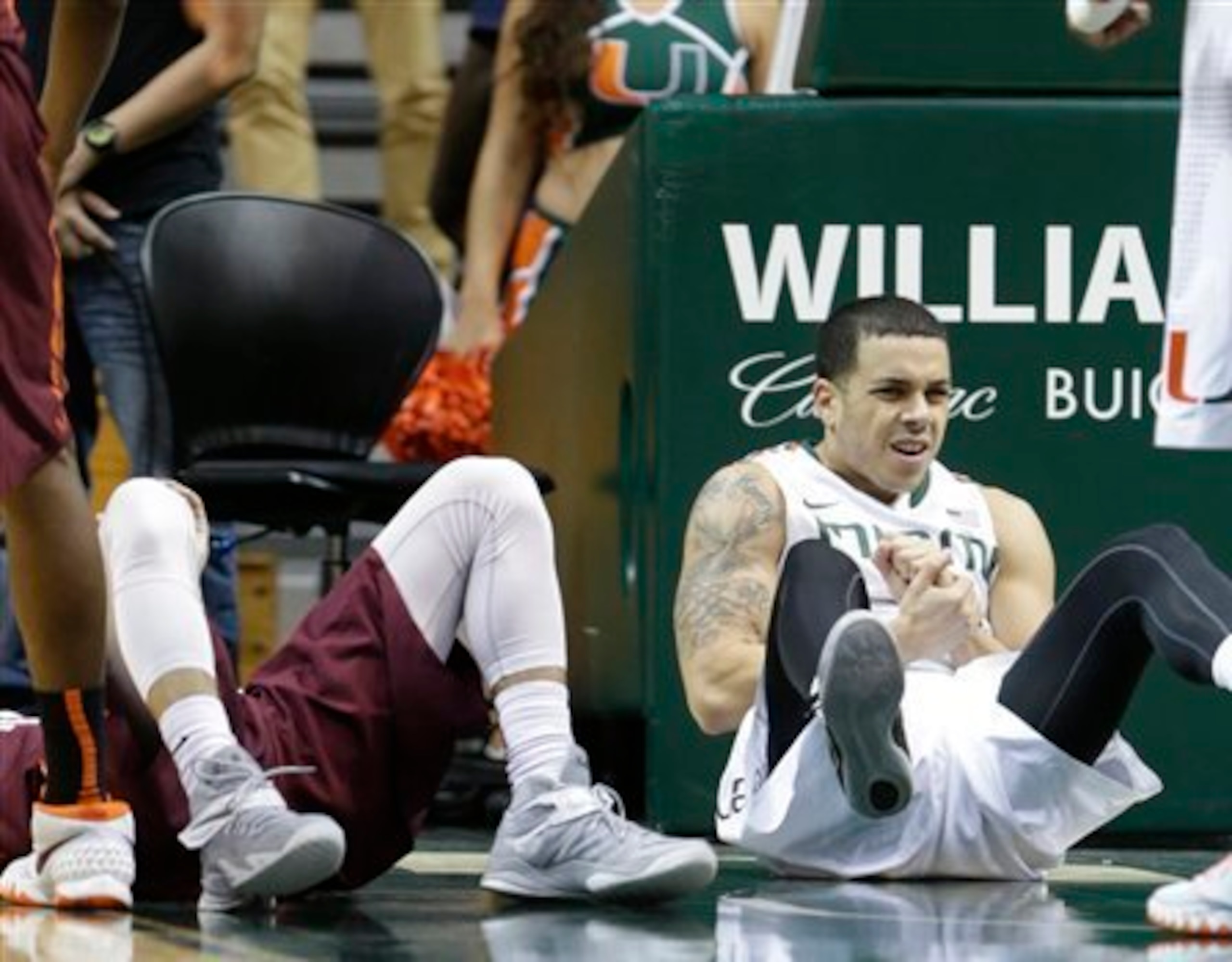
This picture just about tells the story of Miami's season.
Angel Rodriguez's injured wrist basically did in the Hurricanes, who were on a roll through December and climbed to a Top 15 ranking after winning their first eight games.
Rodriguez played like a classic point guard last year, dominating possession time but also being a spark plug who could get some steals and dish out assists.
The 5'11" Rodriguez was averaging 12.5 points and 4.2 assists per game. His final numbers were 11.9 and 3.9, so the wrist certainly bugged all of the Hurricanes.
An experienced team highlighted by a healthy Rodriguez should be an ACC and NCAA tournament contender after barely missing out last year.
Mark Williams, Temple
6 of 11
Mark Williams' early-January absence set the Temple Owls up for a tough second half of the season.
In his first 11 games he hauled in about five points and as many rebounds, getting about 20 minutes per game.
The 6'8" sophomore was never the same after a badly sprained ankle, though.
Anyone who has ever suffered one of those knows it can be hard coming back. Williams' numbers dipped considerably by the end of the year: He averaged 3.5 points and 2.6 rebounds in about 13 minutes per night.
In November, during a five-day stretch, he had 19 rebounds against Louisiana Tech and UNLV, which featured a few promising young big men.
The graduation of Temple's Jesse Morgan and Will Cummings should also open some opportunities. Morgan, at 6'5", did some good things, but he was also one of the more turnover-prone players in college hoops last season.
Danuel House, Texas A&M
7 of 11
Danuel House, a versatile 6'7" senior, was a big part of getting Texas A&M on the NCAA tournament bubble list.
His late-season absence was also a big reason the bid never came. The Aggies went 1-3 without him after his foot injury. He averaged 14.8 points last season, and Billy Kennedy's team went 21-12.
There was reason for the basketball program to be nervous over the summer too. House didn't play in the team's Italy trip because of a knee problem in August.
“He’s good—he’s 100 percent,” Kennedy told the A&M student newspaper, the Battalion, after the team's first practice of the season. “He was really near 100 percent when we went on the trip. We just chose not to play him, but he’s been good for us the last few weeks.”
House could bring down the house and get the Aggies into the NCAA field for the first time since 2011.
The author of the above-noted story, Cole Stenholm, noted at the Oct. 2 practice that House was his old self.
"House showed no signs of injury while executing team drills," Stenholm observed. "In fact, House repetitively dunked the basketball whenever he possessed it inside the paint, displaying explosive vertical leap while also finishing with vicious one- and two-handed slams."
House had a 52 percent effective field-goal percentage.
He's a classic example of a guy who gave a lot but should have another level after not being available in crunch time last year.
Sam Cassell Jr., UConn
8 of 11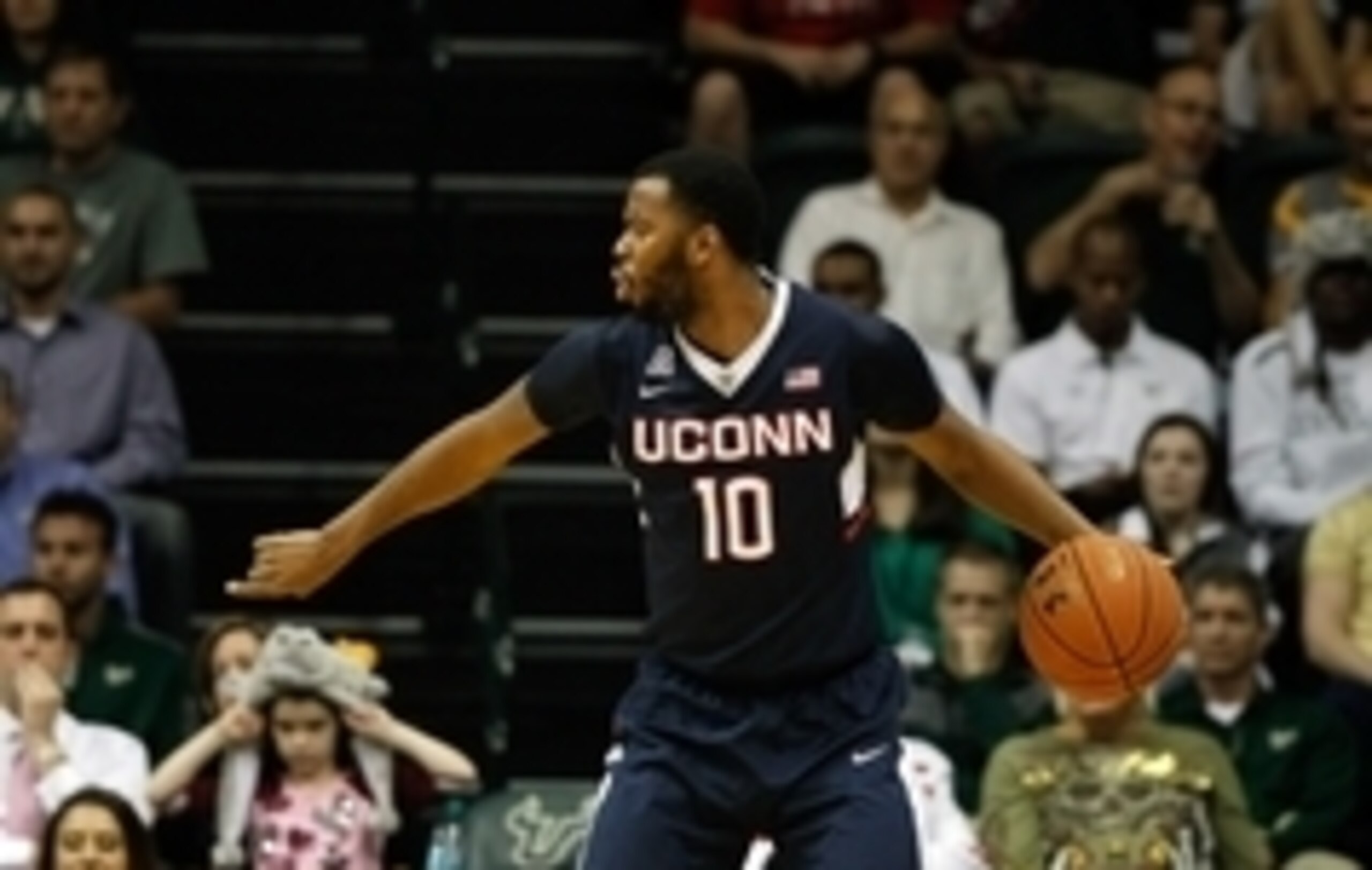
Sam Cassell Jr. wasn't exactly lighting it up before a stress fracture in his leg prematurely cut his season short.
He hit about 28 percent of his shots and was even weaker (26.5) from three-point range for UConn.
But the former junior college player, and son of a former NBA All-Star and champion, Cassell may have learned about his game and abilities with the time off.
It's fostered a newly confident guard, according to an August report from the New Haven Register's David Borges.
"I felt like Sam was still working out, he was always around the guys, encouraging the guys. Sometimes, somebody gets an injury and they withdraw," head coach Kevin Ollie told Borges. "He actually started coming in even more. That’s the real Sam for me.”
Cassell averaged 18 points one season at a Florida junior college (Chipola). Borges noted that Cassell had to sit out a year, too, because of health issues.
So the bounce-back game is nothing new. And it should be a bounce-back year for UConn, with Cassell being more than a role player.
Peter Hooley, Albany
9 of 11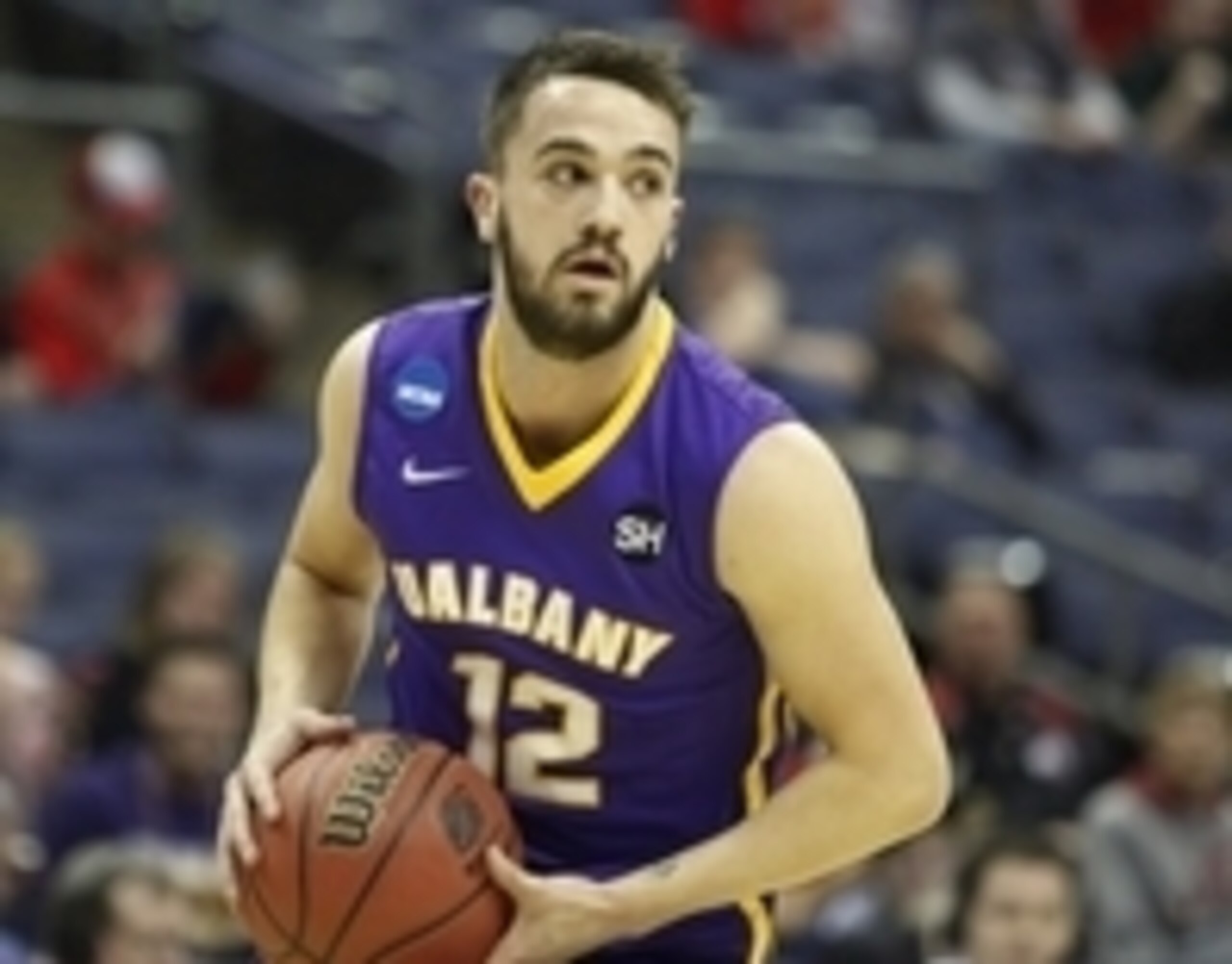
He's from a small conference (America East), sure. But Albany's Peter Hooley comes with an even huger heart, and he's our "surprise" pick.
Hooley actually played down the stretch run of the season. You may even recognize the Australian's name because he hit one of the most emotionally charged shots of last season—a three-pointer right before the buzzer, on his home court, that sent Albany to a third straight NCAA tournament. He had missed several games earlier in the season to be with his mother, who eventually died of cancer.
“With angels watching over you,” Hooley told Yahoo Sports' Pat Forde in March, “you can do anything.”
Now, imagine him with a freer mind and heart. He had been the Great Danes' best scorer before taking a sabbatical.
Stony Brook won't be easy to outclass this year The Seawolves were knocking on their first NCAA tournament appearance, holding a seven-point lead at SEFCU Arena with less than two minutes left. But a few botch possessions, a missed free throw here and there and a somewhat blessed deflection (after Hooley's teammate tried a wild drive to the rim) put Albany in a really amazing situation.
It went 24-9, going one-and-done in the tournament with a loss to Oklahoma.
Hooley only played in 24 games and was a solid foul shooter and a terrific marksman inside the arc. He should have another gear this season after presumably many sleepless nights (concerned teammates and coaches included) last winter.
Jabari Bird, Cal
10 of 11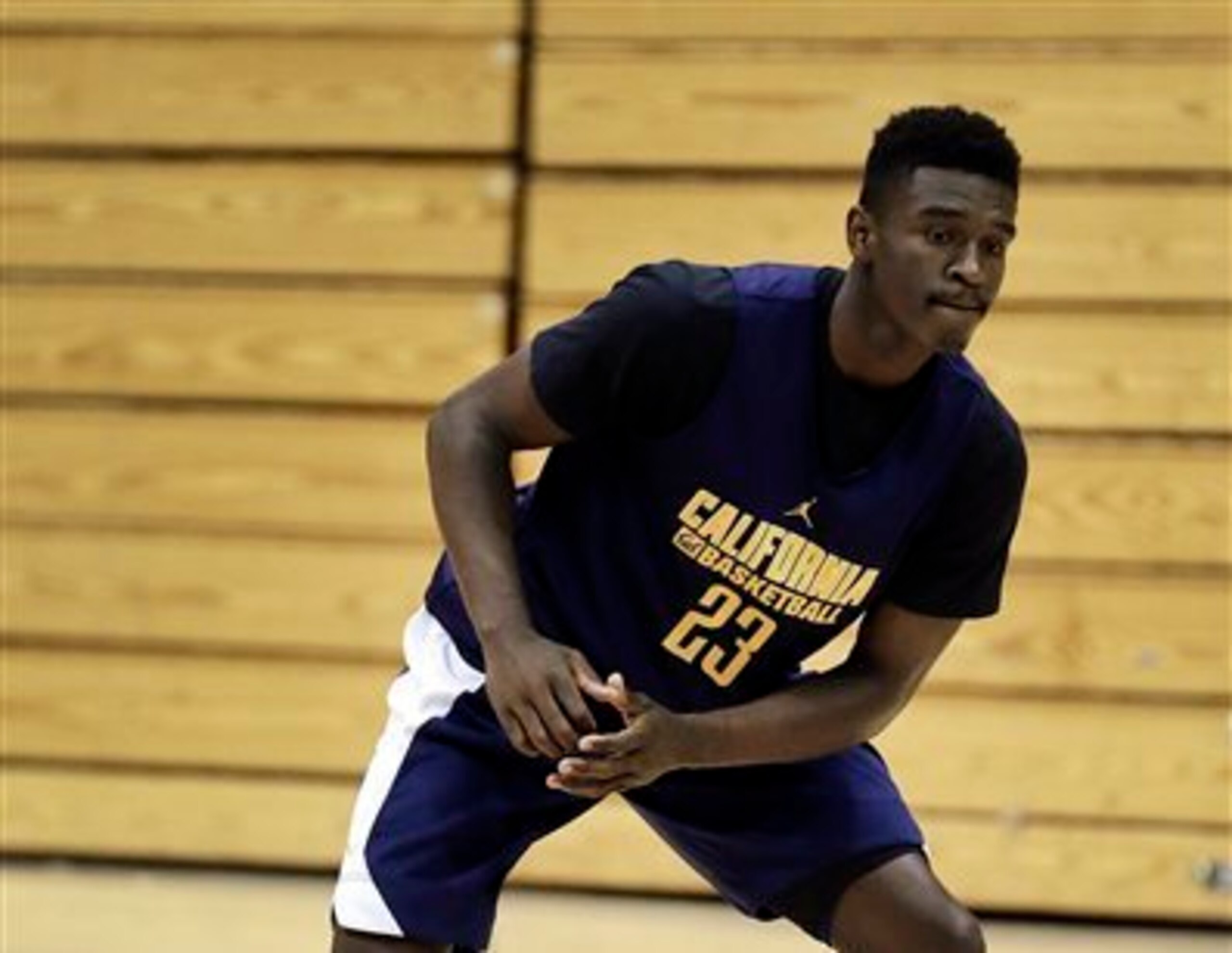
That's right, big fella, get limbered up. It's going to be a competitive season of practices for the Cal Bears, especially with the influx of freshman talent.
But Jabari Bird, a 6'6" junior, should be a factor after losing a month in the middle of last season with a stress-fracture foot injury.
Bird started 21 of the 23 games he participated in, averaging 13.4 points in the final eight—a big climb, considering he averaged 10.5 for the season.
He really clicked against some of the Pac-12's best teams last year. He scored a season-high 22 points on 9-of-10 shooting from the field in 40 minutes against Oregon. And he had a 21-point effort (10-of-14) in 31 minutes at ranked Utah.
The tough part about Bird is to determine if it's been a two-year curse or an unfortunate trend likely to continue. The former McDonald's All-American was also hampered by a late-December sprained ankle in 2013-14.
Caris LeVert and Derrick Walton Jr., Michigan
11 of 11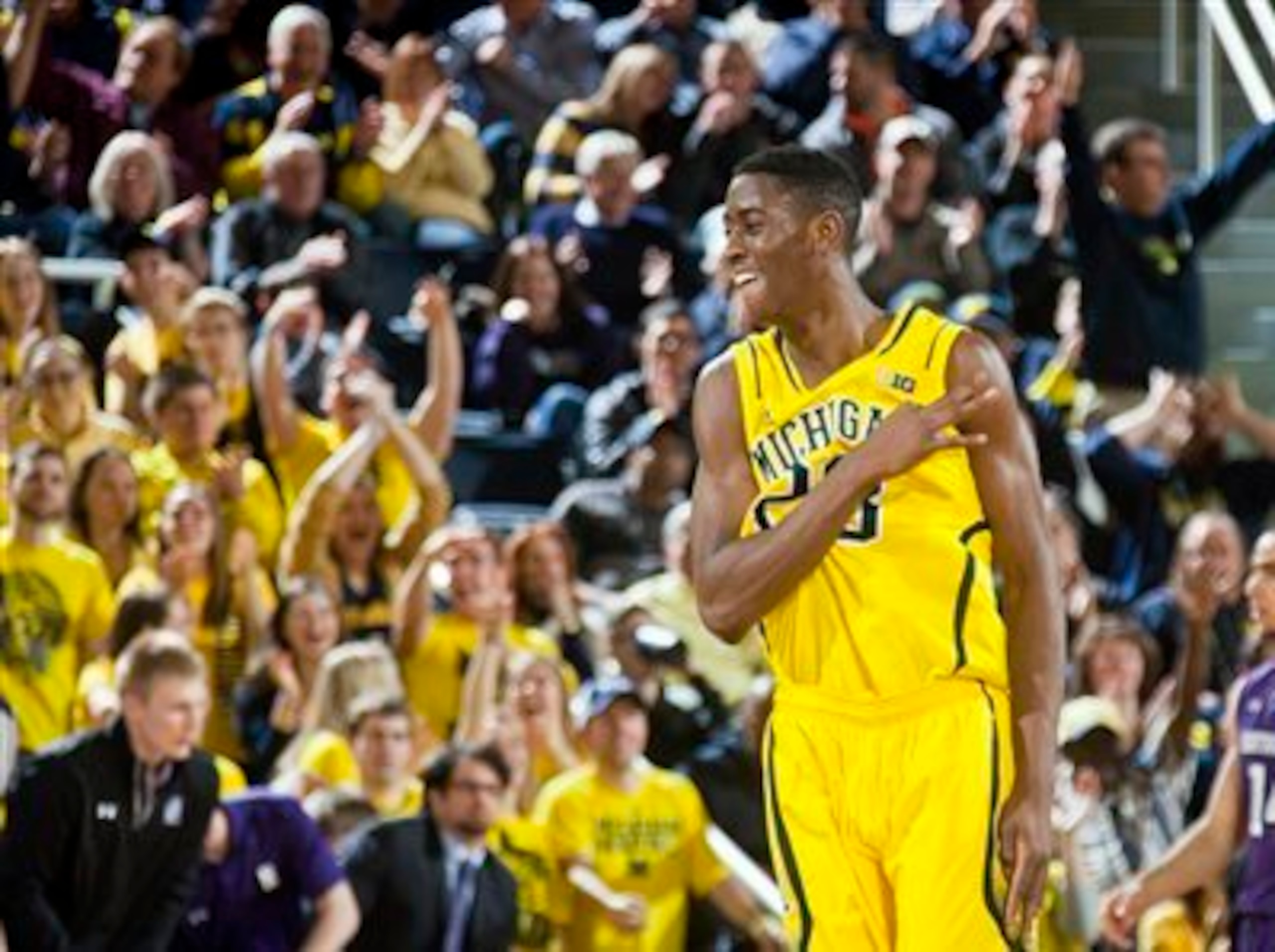
Along the lines of Michigan's recent punting woes (too soon?), the Wolverines are hoping to get over the physical hexes placed upon them last season.
It was a two-way disaster, with Caris LeVert lost for most of the season because of a foot injury and Derrick Walton Jr. following him to pick up crutches with a lingering toe problem.
LeVert averaged about 15 points, five rebounds and four assists before getting hurt during a last-ditch shot from a Northwestern player Jan. 17 in a two-point Michigan win. LeVert landed on a player after going for a rebound.
That sidelined all of the preseason hype, though expect more this year. The 6'7" senior guard is getting plenty of attention as a possible NBA lottery pick next summer. For good reason, too, as he made an analytical impact all over the floor.
As for Walton Jr., he averaged about 11 points, five rebounds and three assists last year—and had one of those day-to-day injuries that took weeks for John Beilein to finally end his season. The sophomore guard had been dealing with pain since November.
Get those two healthy and back in the lineup and it could be a repeat of the 2013 Final Four run.


.jpg?w=2560 "Rap: Lions, LaPorta End Contract Talks")

.jpg?w=2560 "Report: Baker May Miss Up to 6 Weeks")