Young NFL QBs Who Could Become the Next Tyrod Taylor
Quarterbacks take time to develop. Some take longer than others.
The Buffalo Bills' Tyrod Taylor is a perfect example. The Baltimore Ravens originally drafted the former Virginia Tech quarterback with a sixth-round pick in the 2011 NFL draft. He became the 11th signal-caller selected that year.
Cam Newton, Andy Dalton and Colin Kaepernick now headline the class, but names such as Jake Locker, Blaine Gabbert, Christian Ponder, Ryan Mallett, Ricky Stanzi, T.J. Yates and Nathan Enderle all came off the board before Taylor.
Five of those quarterbacks are now out of the league. Gabbert failed with the Jacksonville Jaguars and currently serves as Kaepernick's backup. And Mallett continues to struggle when given opportunities to start.
TOP NEWS
.jpg?w=2560 "Titans Giants Football")
OBJ Calls Out Giants After Release
.jpg?w=2560 "Saints Lions Football")
Rap: Lions, LaPorta End Contract Talks

Live Live: Updates from every NFL game
Taylor, meanwhile, blossomed into a legitimate starting quarterback in his fifth season.
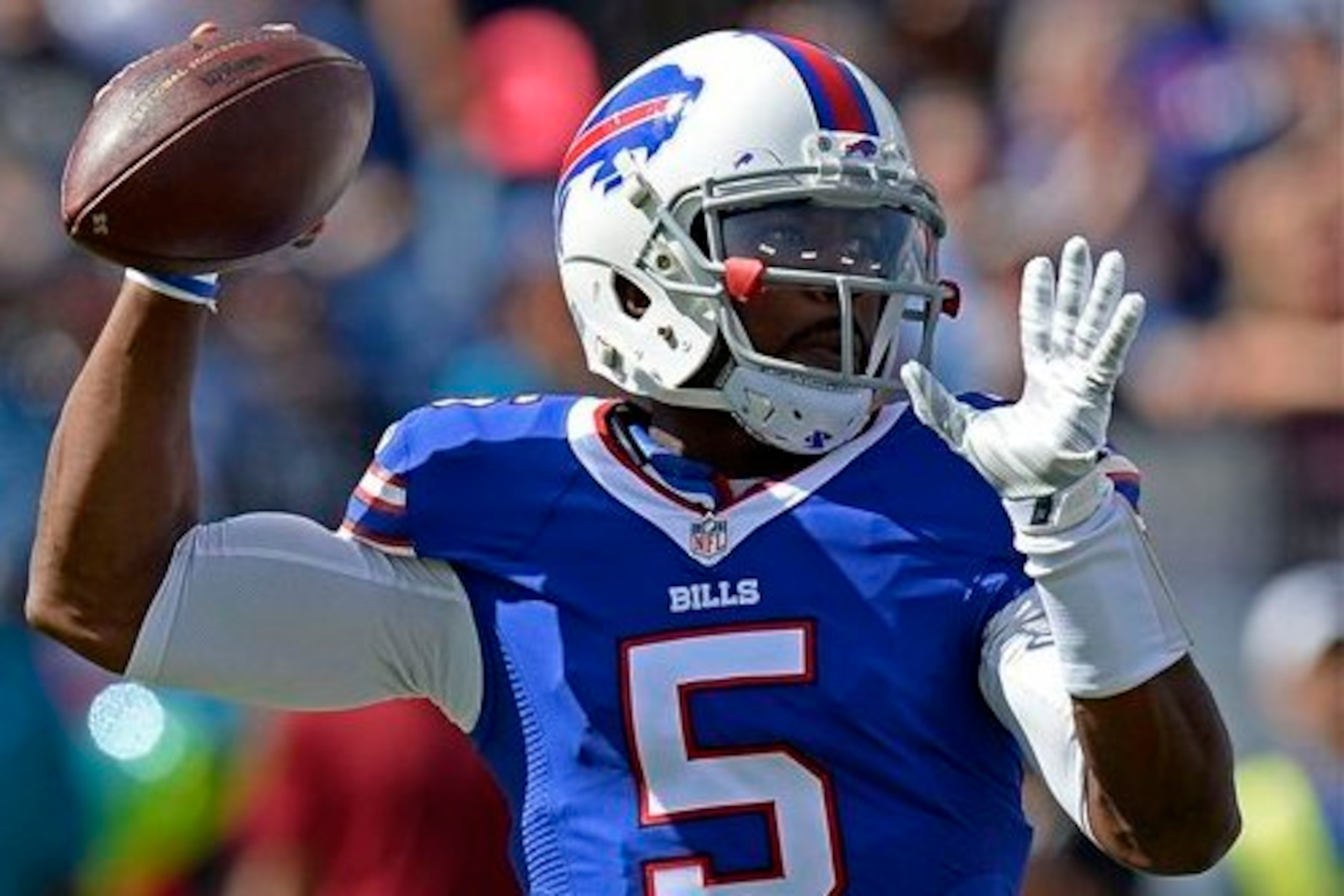
He left Virginia Tech as the school's all-time leader in total offense, passing yards, rushing yards by a quarterback, rushing touchdowns by a quarterback and touchdown passes in a season, yet he wasn't deemed worthy enough of a high draft selection to eventually serve as the face of a franchise.
Instead, Taylor developed behind the Baltimore Ravens' Joe Flacco for four seasons. During his time in the AFC North, the former Hokie only played in 13 games. All of them came in relief roles. He went 19-of-35 for 199 yards and two interceptions during his limited opportunities.
During the preseason, though, Taylor's talent became apparent. Last preseason as the Ravens' backup quarterback, the native of Hampton, Virginia, completed 25 of 38 passes for 240 passes, two touchdowns and an interception. The quarterback also ran for 100 yards.
"We've always felt like Tyrod [is a great player]," Ravens head coach John Harbaugh said last month, via ESPN.com's Mike Rodak. "We've said it many times, and some agree, and some didn't. Some in this circle agreed, and some didn't. Tyrod, we always felt like, could play, and it's good to see him proving it."
The chance to develop a quarterback by sitting on the bench seems like a novel concept in today's NFL. After all, everything is now expedited. If a draft pick doesn't immediately perform, he's often written off as a bust. Franchises and fans usually demand early-round quarterbacks play sooner in their careers than later.
Taylor sat and learned until he had an opportunity to test free agency this offseason and sign a three-year deal with the Buffalo Bills.
Throughout his four seasons, Taylor continued to hone his craft. At the time, though, he was considered—and rightly so—a raw developmental prospect coming out of Virginia Tech. His ability to succeed as a pocket passer came into question after he completed only 57.2 percent of his passes in college.
Taylor's work ethic and drive eventually led him to where he is today. While the quarterback's athleticism always served as a weapon, former Hokies offensive coordinator Bryan Stinespring saw his determination off the field as the reason why he would eventually succeed in the NFL, according to Rodak:
"Some of the things we all know about Tyrod—we understand the success he's had at the high school level, the success he's had at the college level—it didn't come by chance and just ability and God-given talent. He is an extremely hard worker with attention to detail, driven.
He's constantly working to better himself and prepare himself for this opportunity, so no, none of this has surprised any of us whatsoever, including myself. We're just really excited for him and proud of him.
"
Now, Taylor is carrying an injury-riddled offense (including himself) and continues to excel as Buffalo's starting quarterback. Through five games, the Bills signal-caller completed 70.1 percent of his passes and threw for 1,019 yards and nine touchdowns. He's also ran for 187 yards and a pair of scores.
There simply isn't a guaranteed way for an organization to obtain a franchise quarterback. Some, like Andrew Luck and Peyton Manning, are selected No. 1 overall. Others, like Tom Brady and Russell Wilson, come much later in the draft. There are even a few cases where some, like Drew Brees and Taylor, become deft free-agent signings.
Patience isn't often a virtue for NFL teams. The search for a franchise quarterback is always ongoing until one is found.
However, a few teams might eventually find themselves in similar positions as the Bills by taking chances on young players who have sat on the bench yet still display enough ability to develop into legitimate starting quarterbacks.
Johnny Manziel, Cleveland Browns

As a former first-round pick, this may come across as a slight against Johnny Manziel.
Instead, everyone should have heeded the words of Cleveland Browns head coach Mike Pettine, via 92.3 the Fan's Daryl Ruiter:
The plan for Manziel was placed on hold a year ago. The former 22nd-overall pick struggled to act like a professional and admittedly didn't properly prepare until he was thrust into the starting lineup. Once he finally saw the field, Manziel appeared overwhelmed and looked completely out of place as an NFL quarterback.
After the season, more prominent issues became public when he decided to admit himself into a clinical treatment facility.
But even before the Heisman Trophy winner reached this point in his life, he was already a long-term developmental project, based purely on his play with the Texas A&M Aggies.
While Johnny Football proved to be a magician on the field at times, a closer inspection revealed he was also a one-read quarterback who struggled with consistency in his throwing mechanics and needed to make great strides as a pocket passer.
After rededicating himself to the game this offseason, a new and improved Manziel showed up in Berea, Ohio, ready to fully embrace his role as an NFL quarterback.
The veterans on the team took notice of Manziel's improved demeanor. Eight-time Pro Bowl left tackle Joe Thomas described the differences he saw, via ESPN.com's Pat McManamon:
"You’re seeing a much more mature quarterback in the huddle and after the snap because he’s not always looking to run first right away. He’s truly trying to learn how to read a defense and understand route concepts vs. different coverages and where the ball needs to go on time. He’s using his legs to his advantage when he has to, but not as a first option.
"
This is where the comparison between Manziel and Taylor also coincides. Not only were both forced to learn behind proven veterans for a time, but they're also considered dual-threat quarterbacks with a tendency to run first.
One of the knocks on Manziel has always been his size. He's a hair under 6'0" tall and weighs 210 pounds. Obviously, his stature is far less than ideal. Yet Taylor is now flourishing at a listed 6'1" and 215 pounds.
As Brees proved throughout his career, even short quarterbacks can thrive by being able to maneuver into open throwing lanes.
What Taylor has shown in recent weeks is that his mobility can offset any issues within the offense or an off day in the passing game.
A threat out of the backfield of any kind is still a threat.
As Manziel continues to mature and sit behind 36-year-old starter Josh McCown—who has played at a level previously unseen throughout his 12-year career—his ability to make plays with his legs won't dissipate, but his understanding of the offense and comfort level in the passing game should grow by learning from a legitimate mentor.
While a Week 2 win against the Tennessee Titans stoked the fires of controversy, Pettine stuck to his plan and placed Manziel back on the bench behind McCown, who was fully recovered from a concussion he suffered Week 1 against the New York Jets.
So far, it looks like a brilliant decision. It's also buying Manziel time to hone his craft and improve upon the things that are really important as it pertains to playing the position.
Jimmy Garoppolo, New England Patriots

Eventually, Jimmy Garoppolo will get an opportunity to start. It almost happened at the beginning of this season, but some little ruling regarding deflated footballs was overturned on appeal.
Instead, Brady took the field with the New England Patriots when the season began on September 10 against the Pittsburgh Steelers.
Despite not seeing any meaningful snaps so far this season, the second-year quarterback already believes he's grown from last year.
Garoppolo came out of a version of the Air Raid offense, like Manziel did. Very few things within that scheme translate to the next level. Quarterbacks in this particular system must learn the basics of proper footwork, play calls, huddling and throwing the NFL route tree.
However, the Eastern Illinois product showed a tremendously quick release and helped lead his team to two straight playoff appearances.
During his final season on campus, the quarterback won the Walter Payton Award as the most outstanding player at the FCS level after throwing for 5,050 yards and 50 touchdowns.
His accuracy, intelligence and ability to deliver the ball with touch intrigued the organization at the time, and the Patriots eventually selected the record-setting Panther with the 62nd overall pick in the 2014 NFL draft.
In typical Bill Belichick fashion, the head coach didn't say much about the team's draft selection at the time.
"The situation we have at quarterback, I think that we felt as an organization that we needed to address that to some degree in the future," Belichick said, via ESPN.com's Mike Reiss. "I think you're better off being early rather than late at that position."
Clearly, the franchise had its eye toward the future with Garoppolo's selection. While Brady remains one of the game's best players, he's also 38 years old. Eventually—maybe not anytime soon—the team and its coaching staff must be prepared to move on without the future Hall of Fame quarterback.
This allows Garoppolo to learn from one of the greatest players of all time while also preparing himself to move into the starting lineup.
The ability to slowly learn how to play the professional game became very important to Garoppolo, according to ESPN.com's Mike Reiss:
"The quarterback position, there's so many different things physically, mentally, I mean there's so many different things, so you really just have to focus on all of it at once. It sounds difficult, but that's why [you take] little steps.
Compared to last year? I mean, it's night and day. Last year, like I said earlier, I was just trying to pick up the playbook, meetings, head was spinning a little bit, so this year it's a little different, got different goals and everything and focusing on that.
"
There is absolutely no pressure on Garoppolo now to do anything other than watch, learn and improve when he's on the practice field. But this doesn't take away his value as a former early-round quarterback prospect.
Multiple franchises, not the simply the Patriots, would have considered him during the NFL draft.
Even if Brady continues to play well into his 40s—we can't completely rule it out—Garoppolo will eventually get a look in New England or with another team.
Brock Osweiler, Denver Broncos
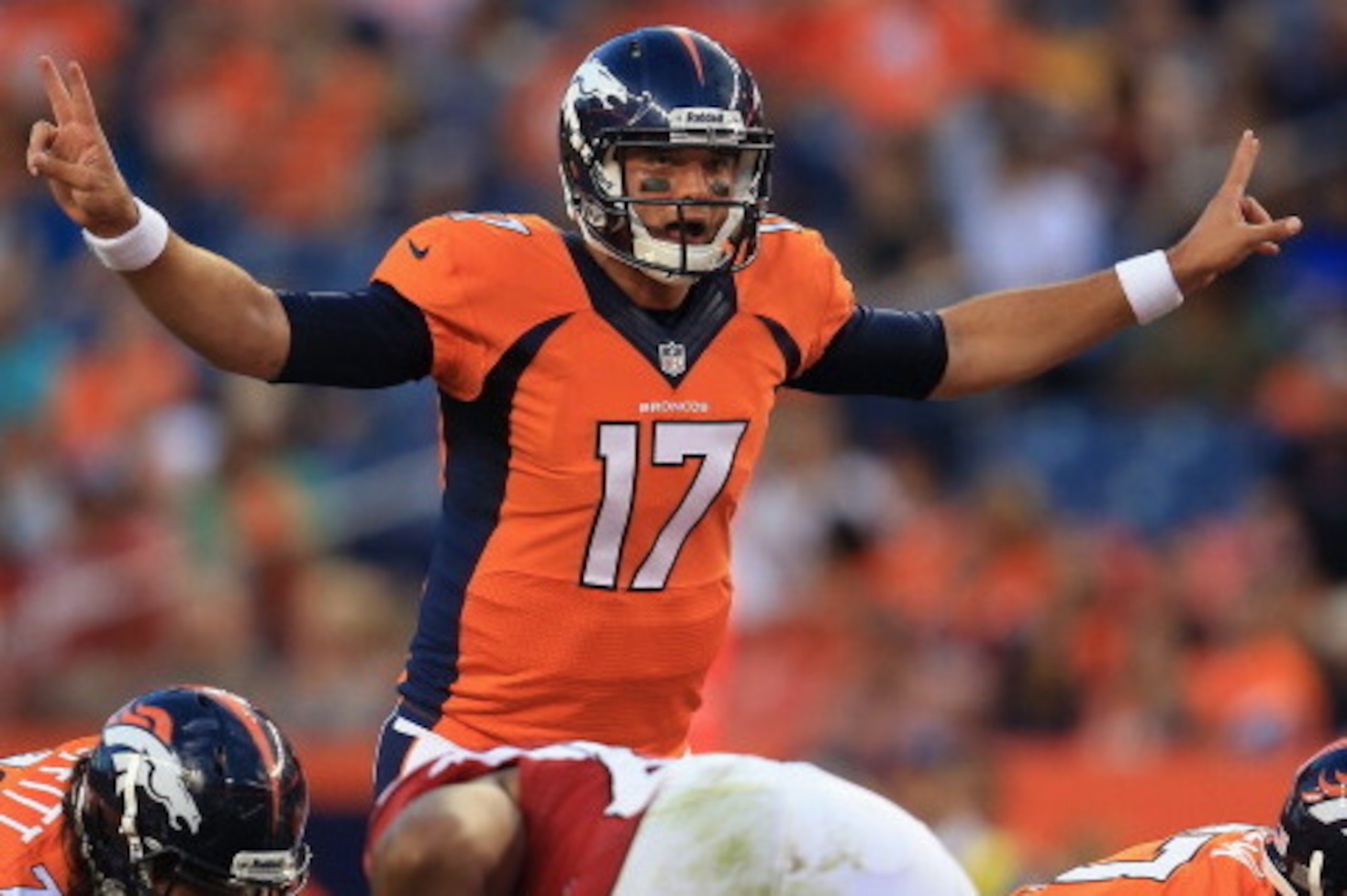
Here is another example of a relatively high draft pick waiting for a future Hall of Fame quarterback to finally call it quits.
Unlike in New England, a change at quarterback for the Denver Broncos might come sooner rather than later.
Peyton Manning isn't himself. Father Time might have finally caught up with the former No. 1 overall pick in the 1998 NFL draft. The 39-year-old gunslinger continues to struggle in Gary Kubiak's offensive scheme. In fact, the league's all-time leader in passing touchdowns has thrown more interceptions this season than scores.
There will be a time in the near future when Denver's quarterback-in-waiting, Brock Osweiler, gets an opportunity to play. But Kubiak flatly denied the possibility of rotating the quarterbacks.
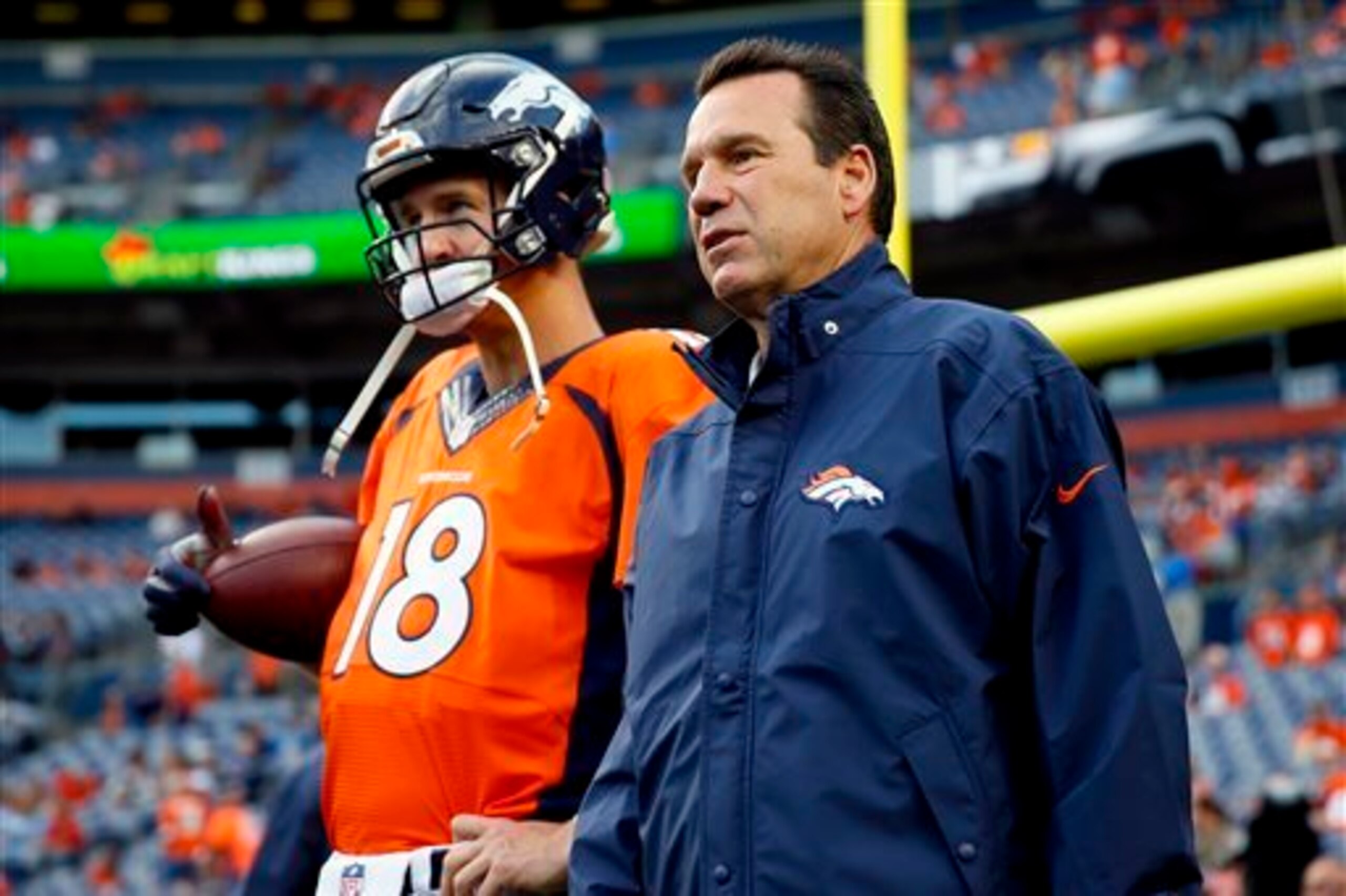
"No," the head coach said, via ProFootballTalk.com's Mike Florio. "Peyton's doing just fine."
No one can deny Manning's decline in play, though.
And Osweiler played well during preseason. The fourth-year quarterback completed 44 of 68 passes for 484 yards, three touchdowns and an interception. He also gained confidence with increased playing time.
"I think it's big," Osweiler said after starting the final preseason game against the Seattle Seahawks, via ESPN.com's Jeff Legwold. "If you look back, I haven't started a true football game since 2011. So to go out there and show yourself that you can still do it, I think it was a big deal, confidence-wise."
The physical tools are all present for Osweiler. He stands a shade under 6'8" tall and weighs 240 pounds. The young quarterback easily snaps off passes even, though his throwing mechanics can be very poor at times. Plus, the Arizona State product is a tremendous athlete for someone of his stature.
These are all reasons why Denver Broncos Executive Vice President of Football Operations John Elway decided to use a second-round pick on Osweiler.
Once drafted by the Broncos, the young signal-caller immediately saw the advantages of learning from Manning.
"A lot of quarterbacks might be upset about having to sit behind somebody, whereas I look at it as a tremendous opportunity to learn from one of the best, if not the best, quarterback to ever play the game," Osweiler said after being drafted, via ESPN.com's Bill Williamson.
Osweiler's time grows closer.
As Manning continues to struggle through the twilight of his career, the former second-round pick is a perfect fit for Kubiak's system. Osweiler is athletic enough to incorporate boot action, which is vital to the scheme.
But if the organization rides Manning as far as he'll go, the Broncos could easily be looking for another quarterback next season. Osweiler is a free agent in 2016. As such, he'll could be an intriguing option for multiple teams.
The Waiting is the Hardest Part
Of course, the Green Bay Packers' Aaron Rodgers is the poster boy for waiting and developing a quarterback. Some might even argue that Taylor is simply the flavor of the month when compared to the league's best quarterback.
Both still show there is inherent value in allowing a quarterback to sit and learn instead of rushing him into the lineup.
Everyone wants to see immediate dividends from talented quarterback prospects. This is only a recent development due to the demands of today's NFL. General managers, coaches and draft picks don't receive as much time to prove themselves. All 32 teams are in "win now" modes.
Those organizations that remain patient, though, can reap the benefit of investing less in the quarterback position yet getting the most out of that player's talent.
Taylor is merely the latest example of a developmental prospect being able to realize his potential in the right situation despite what many would consider a slow start to his career.
Manziel, Garoppolo and Osweiler each have the talent to eventually start in the NFL, but none of them were ready when they entered the league. After a handful of seasons, each could follow the path of Rodgers and Taylor and be the latest to benefit from his time on the bench.
There is nothing worse in the world of sports than a wasted talent. By bringing each of these quarterbacks along slowly, their respective organizations placed them in the best positions to eventually succeed.
.jpg?w=2560 "Vikings Buccaneers Football")