
A chain is only as strong as its weakest link, and a college basketball team is only as good as its ability to overcome its biggest weakness.
No team is perfect. We've seen some teams flirt with perfection in recent years, but even those squads had their undeniable flaws.
So, what are the hurdles that this year's Final Four contenders will need to clear in order to reach their full potential?
We took a look at the top 20 teams from the first USA Today Sports Coaches Poll of the season and pinpointed what appears to be each one's biggest weakness. Kentucky, for instance, may struggle with its lack of frontcourt depth, while Virginia might need to find at least one more three-point shooter.
Those issues and more on the following slides, which appear in ascending order of ranking in the coaches poll.
No. 20 Vanderbilt: Offensive Rebounding
1 of 20
Experts love Vanderbilt this year because of all the young talent returning for another season. The Commodores won 21 games last season with a primary seven-man rotation that included four freshmen and two sophomores. Considering five of those six guys are also great three-point shooters, it's hard to not be optimistic about this team.
While it's great that six of the primary seven are returning, I can't help but notice that everyone is quick to dismiss the one that got away.
James Siakam was Vanderbilt's second-most important player last season. He shot 62.7 percent from the field in averaging 9.2 points per game. He also ranked second on the team in blocked shots, steals and total rebounds.
The biggest issue with losing the graduated power forward, though, is that Siakam was one of the better offensive rebounders in the country. He ranked 18th in the nation, hauling in 15 percent of offensive misses while on the court. Meanwhile, Damian Jones was the only other player on the roster to average at least one offensive rebound per game.
On a team that figures to attempt a lot of three-pointers, the ability to track down offensive rebounds is crucial. Whether Josh Henderson, Jeff Roberson and Luke Kornet can fill that void will determine how successful Vanderbilt can be.
No. 19 LSU: Frontcourt Experience
2 of 20
There are seven players on LSU's roster listed as either a forward or center. Of the group, Ben Simmons is the only freshman. They have a combined total of 721 minutes of collegiate experience. Slightly more than 40 percent of those minutes belong to Darcy Malone—a 7'0" center who accounted for 22 points and 46 personal fouls last season.
The Tigers had a pretty great thing going last year with Jordan Mickey and Jarell Martin, but after those forwards left for the NBA, there's simply no experience left in this frontcourt.
Simmons is an incredibly gifted athlete, but he's a point guard trapped in a small forward's body who will be asked to play power forward for most of the season. Even if he does end up being LSU's best rebounder, who is this team's back-to-the-basket scorer and shot-blocker? Who goes to war in the paint against the opposing teams' center or aggressively physical power forward?
In order for LSU to actually be one of the 20 best teams in the country, at least one unheralded big man is going to have to step up his game in a huge way. Whether it's mountainous center Elbert Robinson III breaking out as a sophomore or Arizona transfer Craig Victor having a Jameel McKay-like impact when he becomes eligible in the second semester, it has to be someone, because Simmons simply can't do it alone.
No. 18 Notre Dame: Rebounding
3 of 20
Notre Dame did an awful lot of things right last season, but rebounding was not one of those things. In fact, the Fighting Irish finished the season with a negative rebounding margin, hauling in 1,231 of their own while allowing 1,243 to the opposition.
Given that they had one of the most efficient offenses in recent history, that's rather unforgivable. It's one thing to lose the rebounding battle by shooting poorly and not dominating the offensive glass, but Notre Dame scored so often that there weren't very many defensive rebounds for the opposing team to grab. This just simply wasn't a good rebounding team.
Worse yet, the Fighting Irish now have to move on without last year's leading rebounder, Pat Connaughton.
Instead of the two-sport star grabbing 20.4 percent of possible defensive rebounds while on the court, Mike Brey will have to play a lot more of V.J. Beachem, who, despite standing 6'8", had a total rebounding percentage of 6.1 that nearly ranked last on the entire roster.
When the Fighting Irish rebounded well, they were absolutely untouchable. They went 11-0 in games with a rebounding margin of plus-seven or better and had an average margin of victory of 27.8 points. Not one of those 11 games was won by less than 13 points.
Exploring the other end of the spectrum, though, in 16 games with a rebounding margin of minus-three or worse, Notre Dame went 11-5 and failed to win a single game by more than a 14-point margin.
The sad thing is this is a pretty big roster. There are only two players on the team shorter than 6'5" and one of them (Matt Farrell) barely plays. With a little more commitment to crashing the glass, Notre Dame could realistically be one of the best rebounding teams in the country.
No. 17 Wisconsin: Depth of Any Kind
4 of 20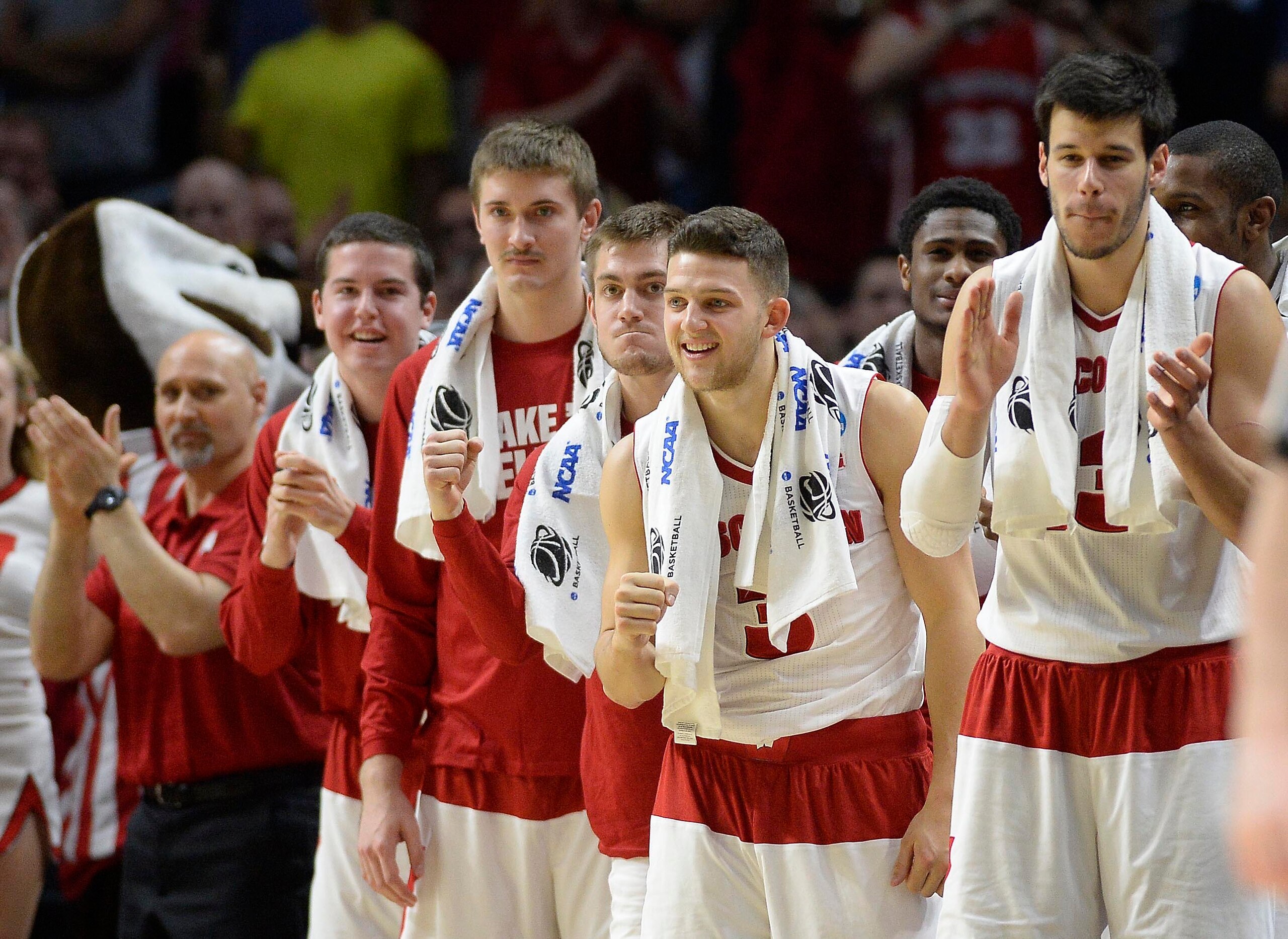
Last year, the Badgers had all sorts of depth.
Their starting point guard went down in the middle of the season and they didn't miss a beat, moving Bronson Koenig into that role and giving Zak Showalter a bigger audition off the bench. If one of their future first-round draft picks needed a break, they could bring Duje Dukan or Vitto Brown off the bench without much of a drop in production.
But given everyone who left this summer, they barely have enough depth to make a starting lineup.
Koenig and Nigel Hayes are the stars of the show, but where do they go from there? Former eighth- and ninth-man Showalter and Brown presumably move into starting roles, along with redshirt freshman Ethan Happ. If he's healthy enough after offseason surgery to repair a broken foot, freshman Brevin Pritzl could provide some help as a backcourt reserve.
The rest of the roster, though, is just one big question mark after another.
Bo Ryan rarely gets top-notch recruits and he typically does great work with the low-tier guys he does land, but it takes time. Hayes and Sam Dekker were very much the exception to the rule, the only freshmen in the past 12 seasons to average better than six points per game with the Badgers. So if you're expecting a Charlie Thomas or Khalil Iverson to put up big numbers off the bench, you may want to hang onto that optimism until a year or two from now.
No. 16 Utah: Free-Throw Line
5 of 20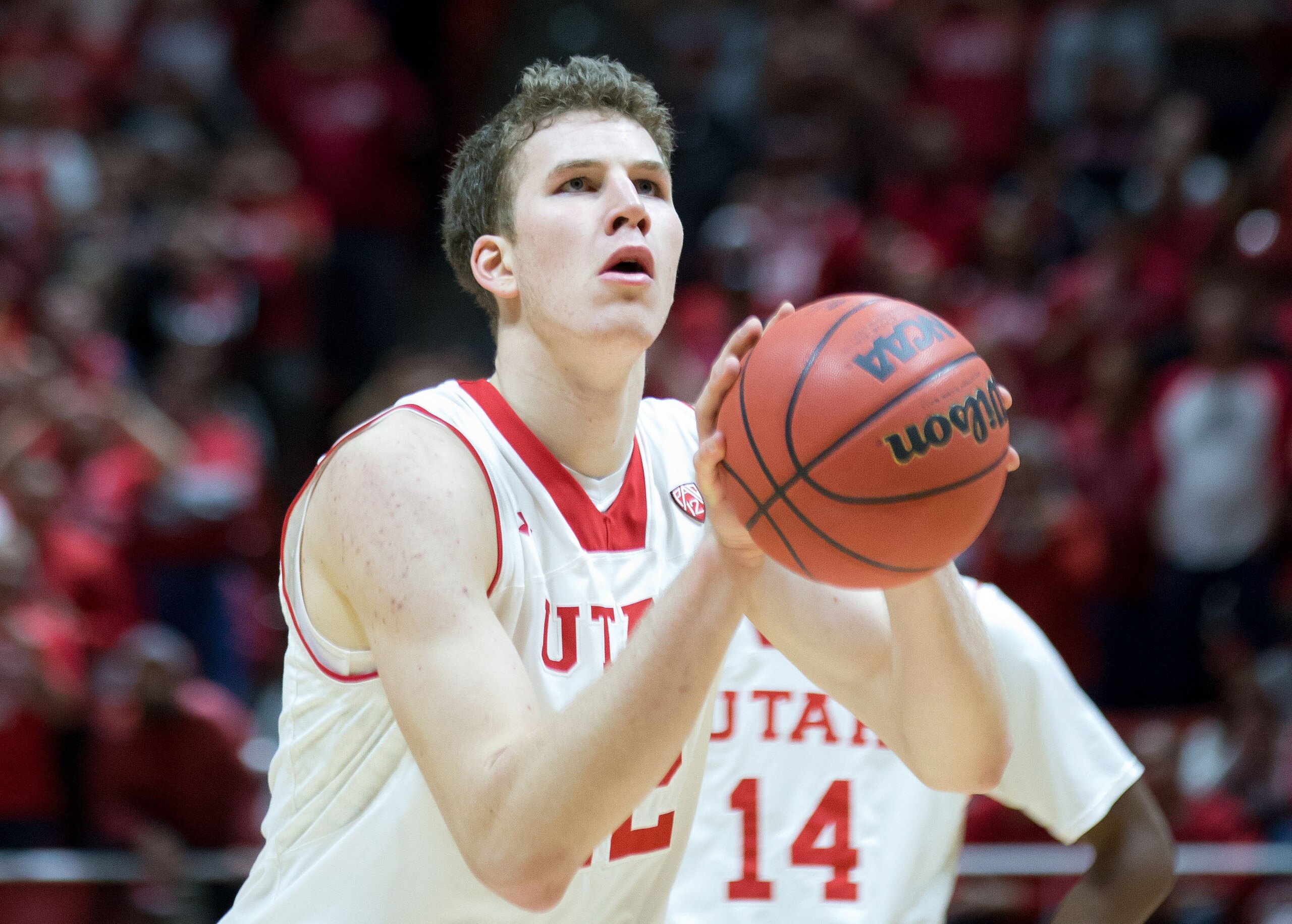
Utah has a few very good free-throw shooters on its roster. Jordan Loveridge (87.3 percent), Brandon Taylor (85.7 percent) and Dakarai Tucker (81.8 percent) each would have ranked in the top 10 in the Pac-12 in free-throw percentage if they had taken enough freebies to qualify.
But they didn't. Despite playing nearly 2,500 combined minutes, the trio attempted just 155 free throws on the season. Meanwhile, Delon Wright attempted 183 free throws in 1,165 minutes before exhausting his years of eligibility.
With 124 free-throw attempts in 2014-15, Jakob Poeltl had more than twice that of any other returning Ute, but he converted on just 44.4 percent of them. Chris Reyes ranks second among returnees with 59 attempts last year, but he wasn't much better than Poeltl, hitting just 54.2 percent of his one-pointers.
Long story short, Utah doesn't get to the line very often, and the individuals who do get there with some regularity are horribly unreliable from it. With all the rule changes being implemented this year, there will almost certainly be a drastic increase in whistles blown, at least early in the season. That could end up being a sizable disadvantage for the Utes.
No. 15 Indiana: Perimeter Defense
6 of 20
The difference between Indiana's perimeter offense and its perimeter defense could not have been much more night and day last season.
On offense, the Hoosiers were about as efficient as it gets, taking and making a ton of three-pointers. With five guys who each attempted at least 60 three-pointers and made at least 38.5 percent of his attempts, there was no end to their long-range ability.
But it was as if they saved all of their energy for offense, opting to not even bother trying to keep the opposition from getting buckets of its own.
Yogi Ferrell and James Blackmon combined to record just 45 steals in 2,175 minutes of playing time. According to Sports-Reference.com, Ferrell posted a defensive box plus/minus of negative-1.5 and Blackmon's rating was negative-1.6, meaning that a league-average backcourt would have allowed 3.1 fewer points per 100 possessions than Indiana's duo.
To be fair, it wasn't just those two guys who struggled. The entire defense was pretty lousy even on a good day. But Blackmon and Ferrell did very little on the defensive perimeter to help keep the pressure off the frontcourt.
They'll have better stoppers behind them this year in Thomas Bryant and Juwan Morgan, but let's hope that inspires them to get a bit more aggressive on defense rather than encouraging them to completely devolve into matadors out there.
No. 14 California: Forcing Turnovers
7 of 20
There's a pretty decent chance California led the nation in defensive possessions that ended after one and only one field-goal attempt.
The positive spin is that the Golden Bears did an excellent job on the defensive glass, rarely allowing second-chance opportunities. They ranked eighth in the nation in defensive rebounding percentage.
The negative side of the coin is that they almost always allowed at least one field-goal attempt, posting the fourth-worst defensive turnover rate in the country.
Tyrone Wallace was their best on-ball defender, and he had a steal percentage of only 2.2. I'm not sure where exactly that puts him on the national hierarchy, but UCLA's Kevon Looney posted a rate of 2.5 that ranked 499th among qualified players. Let's just say Wallace isn't threatening to win any Defense Player of the Year awards.
Jordan Mathews (1.2 percent) and Jabari Bird (1.0 percent) made substantially less noise in the turnover department. And this was the fifth consecutive season that a Cuonzo Martin-coached team ranked in the bottom 100 nationally in turnover percentage, so don't count on him suddenly preaching defensive pressure as a prerequisite for success.
No. 13 Michigan State: Free-Throw Battle
8 of 20
Michigan State had a major free-throw problem last season. The Spartans ranked 283rd in offensive free-throw rate, 221st in defensive free-throw rate, 338th in offensive free-throw percentage and 314th in defensive free-throw percentage. Add it all up and you have a team that was outscored at the free-throw line by a 141-point margin.
Outside of making sure to foul the right people (or not fouling the wrong ones), there's not a whole lot that Michigan State could do about the fact that opponents shot 72.2 percent last season. However, the Spartans do have at least some level of control over how well they shoot their own freebies, how much they foul and how much they get fouled. They struggled in all three departments last season, and it doesn't appear things are going to get any better.
Travis Trice led the team in free-throw attempts, drawing 4.6 fouls per 40 minutes while committing just 2.1 of his own. That positive-2.5 margin was by far the best on the roster. In fact, among the 10 Spartans who logged the most minutes, only Branden Dawson (positive-1.2) and Denzel Valentine (positive-0.6) drew more fouls than they committed.
Both Trice and Dawson graduated, though, so as far as the returning players go, Michigan State is headed for an even bigger deficit at the free-throw line than last year.
Perhaps more than anywhere else, this is where the Spartans need Eron Harris to thrive. He shot 85.6 percent from the free-throw line in his final season with West Virginia, drawing 4.5 fouls per 40 minutes while committing just 3.0. The addition of his three-point stroke will be nice, but it would be a huge plus if he can help balance out their one-point game.
No. 12 Wichita State: Frontcourt Depth
9 of 20
Like Villanova, Wichita State's frontcourt consists of one very good option (Cleveland State transfer Anton Grady) and some question marks.
Unlike Villanova, the Shockers have a ton of viable options, several of which have already proven themselves at least somewhat capable of a real role in a D-I offense.
As a freshman last season, Shaquille Morris was their best shot-blocker and ranked fourth on the team in both points and rebounds per 40 minutes. Fellow freshman Rashard Kelly was also a good source of rebounds, and he played that role without committing anywhere near as many fouls (3.6 per 40 minutes) as Morris did (8.8 per 40 minutes).
Gregg Marshall also adds a key freshman forward in Markis McDuffie. When they want to go a little smaller, the 6'8" wing can play the 4 with Fred VanVleet, Ron Baker and either Evan Wessel or Conner Frankamp holding down the three backcourt spots.
But there's an awful lot of speculation in the Wichita State optimism.
First and foremost, are we sure Grady will thrive in Wichita? In his six nonconference games last season against teams ranked in the KenPom Top 150, Grady averaged 5.2 points, 4.8 rebounds, 0.5 blocks and 4.2 personal fouls per game while shooting 25.9 percent from the field. Better players have struggled more against Louisville and Virginia, but barely showing up against Bowling Green, Toledo and Iona isn't a great omen for Missouri Valley Conference play.
Moreover, what if Morris continues struggling with foul trouble and Kelly is unable to improve upon the meager 8.4 points per 40 minutes that he posted last year? All of a sudden, Wichita State would be in serious danger of losing to any team that does most of its damage in the paint.
No. 11 Gonzaga: Ball Movement
10 of 20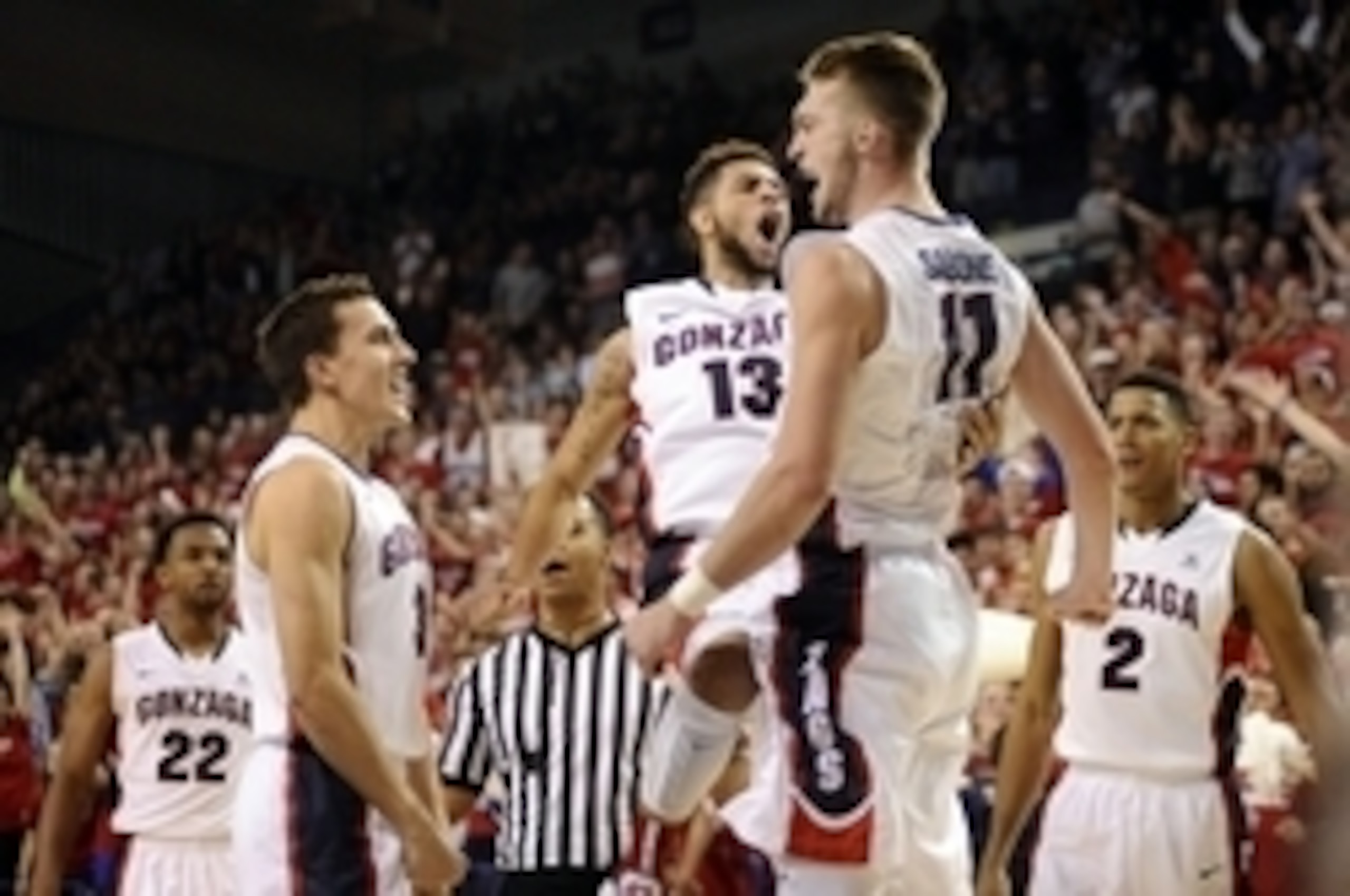
For what felt like at least a dozen years, Kevin Pangos and Gary Bell Jr. kept Gonzaga's offense running like a well-oiled machine. Pangos, in particular, was one of the better triple threats in recent memory, recording at least 78 made three-pointers and 111 assists in each of his four years.
Now that those two and Byron Wesley have all graduated, though, who makes this offense tick?
Kyle Wiltjer, Domantas Sabonis and Przemek Karnowski are all great weapons, but they each had more than five times as many field-goal attempts as assists last season. Someone has to get them the ball, and it certainly doesn't appear they'll be getting it to one another.
Freshman point guard Josh Perkins had the best assist rate among returning players, but he appeared in just five games and recorded 13 of his 17 assists in absurd blowout wins against Sacramento State (104-58) and St. Thomas Aquinas (109-55). He might be a huge asset, but it's pretty hard to use that limited audition to gauge what his effectiveness will be as a primary ball-handler.
Eric McClellan certainly doesn't seem like a great option to play point, as he has 119 assists and 139 turnovers in his career and played a grand total of 145 minutes last season.
Kyle Dranginis might be the best bet. The senior guard had 63 assists against 32 turnovers last season, but he has started a grand total of 10 games in his collegiate career. Is he ready for a full-time job as the point man for a top-10 program?
Long story short, the first few weeks of Gonzaga's season could be a real adventure of trying to figure out the backcourt combinations and roles that work best.
No. 10 Arizona: Backcourt Experience
11 of 20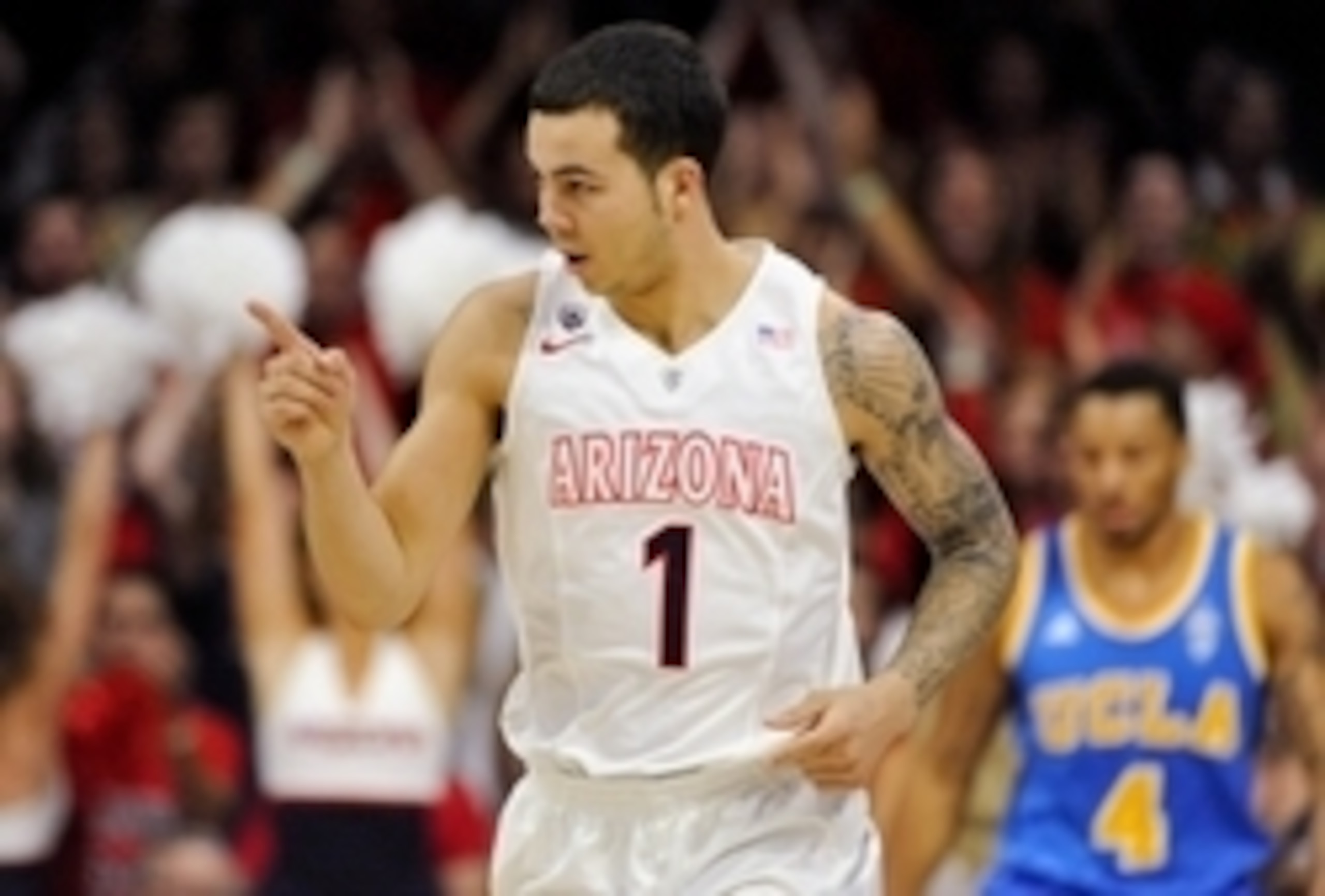
Arizona lost every starter except for its center, so it's not particularly groundbreaking news that the Wildcats aren't dripping with experienced guards. Still, it bears noting that for a backcourt that won't be wearing "Duke" or "Kentucky" across its chest, Arizona is a bit uncomfortably young.
The Wildcats do still have a couple of upperclassmen in Gabe York and Elliott Pitts, but it's just not the same as a T.J. McConnell, Nick Johnson or Mark Lyons. Both York and Pitts are three-point shooters and little else. Neither is even remotely guaranteed a starting job.
Rather, the bulk of the ball-handling duties will likely fall to Parker Jackson-Cartwright, Kadeem Allen and Allonzo Trier, who have a combined 328 minutes of D-I experience to their names—all courtesy of PJC. He had a couple of solid appearances off the bench last season, but mostly just got in the game during mop-up time. He logged at least 10 minutes in 17 different games, but only one of those games was decided by a margin of less than 14 points.
Young players have certainly thrived under Sean Miller in recent years. Look no further than Stanley Johnson, Rondae Hollis-Jefferson and Aaron Gordon for evidence to that end. But star freshmen always seem to shine brightest alongside veterans. In most cases of a Tyus Jones or James Blackmon, there's a Quinn Cook or a Yogi Ferrell teaching him the ropes and pushing him to greatness.
Can York be that leader for this team?
No. 9 Villanova: Power Forward
12 of 20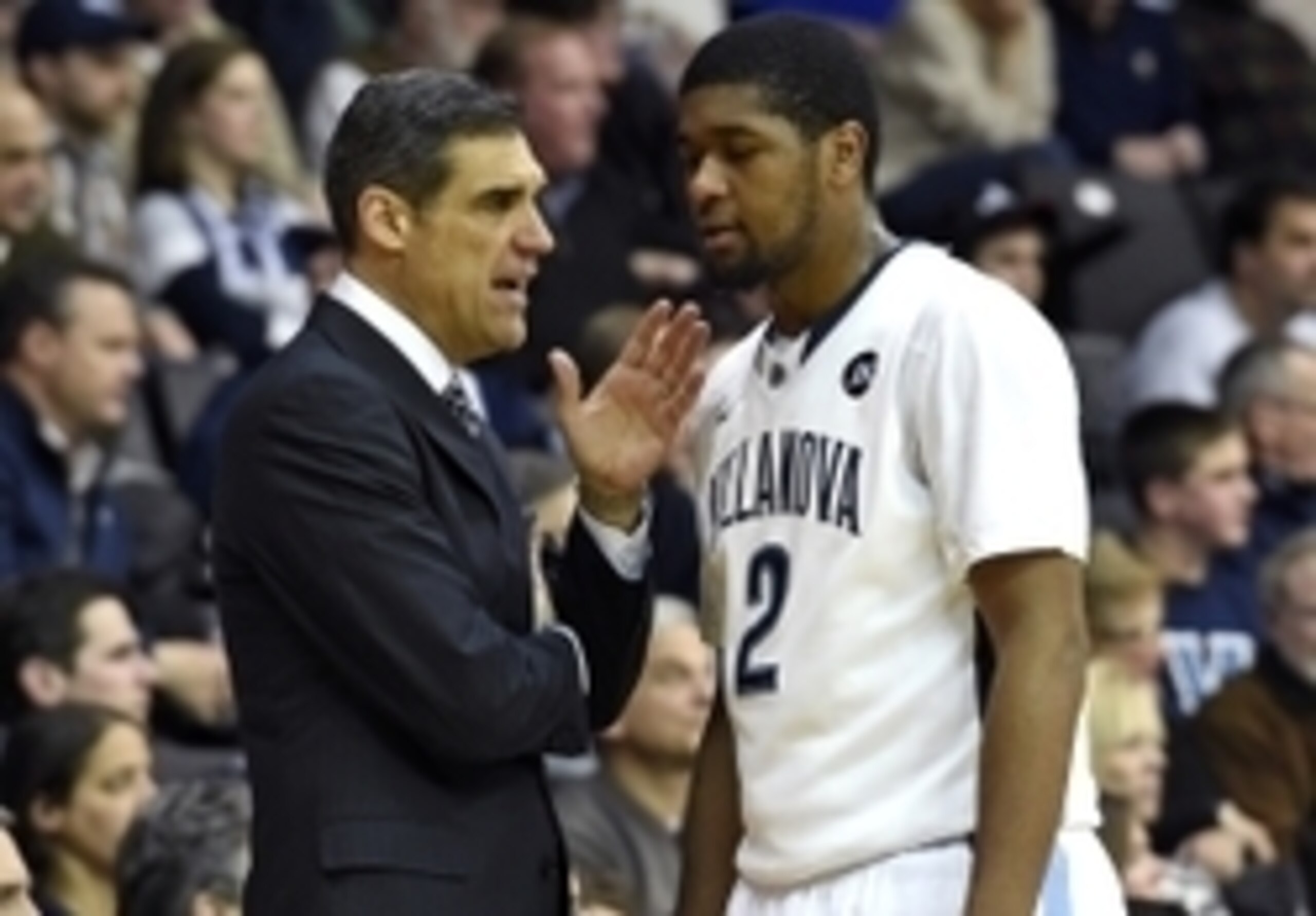
Villanova's frontcourt is disturbingly shallow. We're talking "Checking on a weekly basis for news of a graduate- or JUCO-transfer forward who can make an immediate impact" shallow.
Rather than adding a guy, Villanova's situation became even more dire last week when it was announced that freshman Tim Delaney will be out for an indefinite length of time after undergoing hip surgery to repair a torn labrum. As a result, the Wildcats are now down to Daniel Ochefu at center and only Jay Wright knows at power forward.
The leading candidate for the job is Kris Jenkins, but he averaged 4.4 rebounds per 40 minutes and attempted more than four times as many three-pointers as two-pointers. Even former Creighton gunner Ethan Wragge was more of a power forward than Jenkins.
Aside from a four-guard lineup with Josh Hart and Mikal Bridges playing the 3 and 4, the only other option for Villanova would seem to be Darryl Reynolds—a junior who played a total of 145 minutes last season. However, it's far more likely that he serves as the primary backup for Ochefu, as the primary big man logged just 24.0 minutes per game last season and is highly unlikely to suddenly play 40 minutes per night.
During the stretches that Ochefu isn't in the game, Villanova is probably going to get murdered in the paint. The Wildcats will make plenty of three-pointers to help swing the pendulum in their favor, but they're going to struggle against teams that pressure the perimeter, force them to rely on their interior game and insist on trying to get Ochefu into foul trouble.
No. 8 Oklahoma: Replacing TaShawn Thomas
13 of 20
Buddy Hield was named the Big 12 Player of the Year in 2014-15, but there's a pretty solid case to be made that TaShawn Thomas was actually Oklahoma's most important player.
In an almost unthinkable level of cohesion in today's game, the Sooners will have the same four players at the core of their starting lineup for a third straight year. Jordan Woodard, Isaiah Cousins, Ryan Spangler and Hield led the team in minutes played in each of the past two years and figure to do the same again in 2015-16.
It's only at power forward that things have really changed for Lon Kruger's squad.
Two years ago with Cameron Clark manning the position, Oklahoma was very efficient on offense, but fairly pedestrian on defense. Last year—thanks in large part to Thomas' shot-blocking and shot-altering presence in the paint—the Sooners had one of the most efficient defenses in the country. Throw in his 11.6 points and 6.5 rebounds per game, and it's not hard to see why Oklahoma had such a great season and how Thomas could be sorely missed.
They have three options to replace him, and they may well be used interchangeably to maximize effect.
Khadeem Lattin used his body well as a freshman, corralling a lot of rebounds and blocking a lot of shots in his limited minutes. However, he is a liability on offense (43.8 percent from two-point range) that the Sooners can't afford to play full time alongside Spangler, who, though efficient, hasn't been much of an assertive force on offense in his two seasons with Oklahoma.
Redshirt freshman Dante Buford will probably see the bulk of the minutes that used to belong to Thomas, but JUCO transfer Akolda Manyang will be in the picture as well—though, perhaps mostly as a backup for Spangler when he needs a break.
Oklahoma's backcourt is one of the best and most experienced in the country. If the Sooners can get their frontcourt in order, they'll have serious Final Four potential.
No. 7 Iowa State: Team Defense
14 of 20
Iowa State has a couple of very solid, individual assets on defense. Monte Morris has 110 steals against 66 turnovers over the past two seasons. Jameel McKay's shot-blocking prowess resulted in Big 12 Defense Player of the Year honors.
As an entire unit, though, Iowa State has been far from special on defense.
Pace of play is certainly in part to blame for the high points-allowed-per-game figures the Cyclones have posted over the past few seasons, but they simply have too many weaknesses to be efficient at any pace.
Georges Niang is an outstanding offensive weapon, but he recorded 0.7 steals and 0.6 blocks per 40 minutes last season. You would think a 6'8" wing-forward would accidentally block at least one shot per game, right? Similarly, Naz Long is a phenomenal shooter, but he doesn't defend well at all. Opposing shooting guards like Buddy Hield, Wayne Selden and Royce O'Neale routinely had field days against Long last season.
And don't count on Steve Prohm coming in and suddenly turning things around. Murray State was pretty much the definition of average on defense over the past three years, ranking 174th, 173rd and 180th in the nation in adjusted defensive efficiency.
As long as they've got Morris and Niang running the show on offense, though, they'll continue scoring more than enough points to withstand most nights of sloppy defense.
No. 6 Virginia: Three-Point Shooting
15 of 20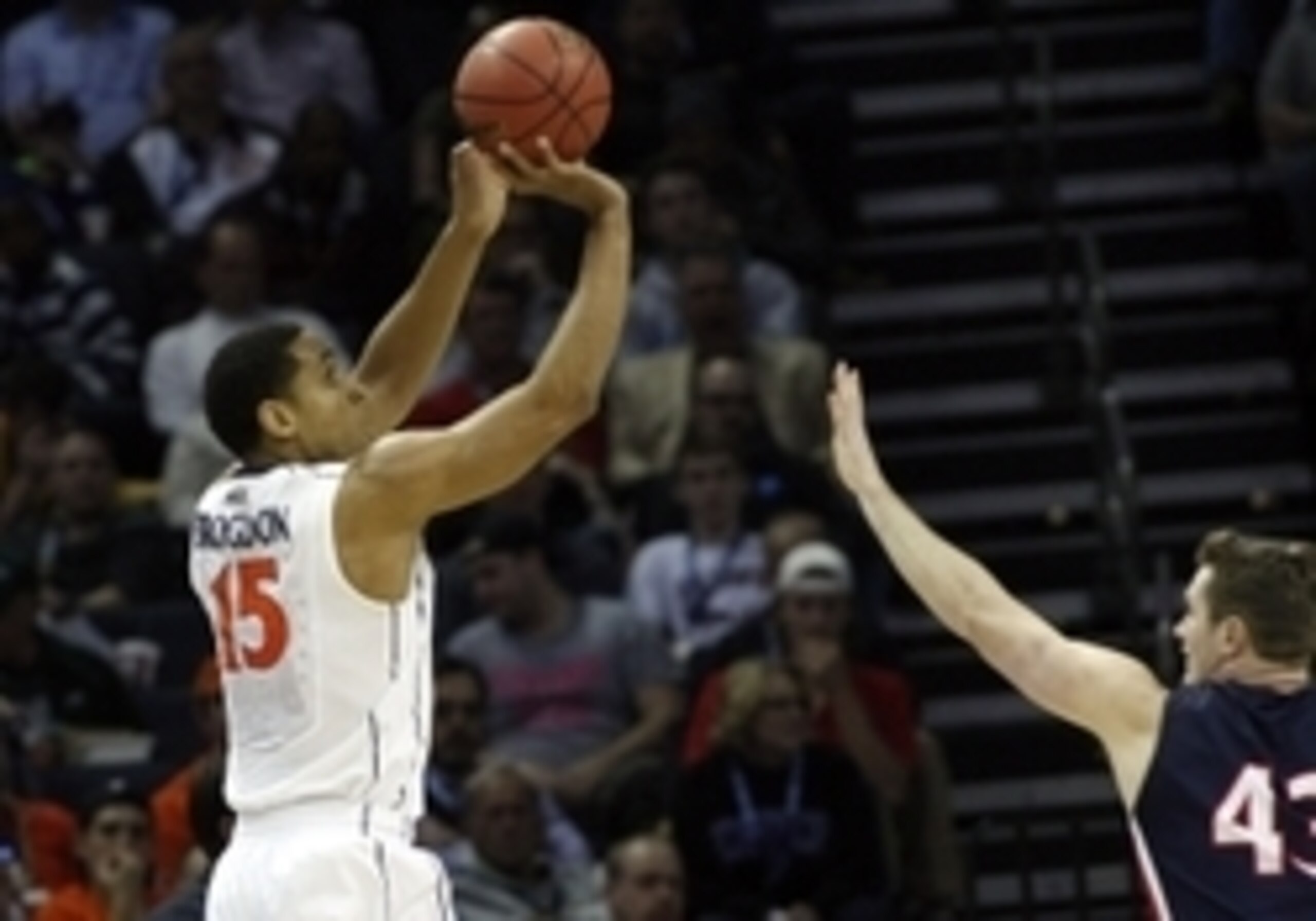
Most everyone assumed the three-point line would be Virginia's biggest enemy last season. Joe Harris was no Curtis Staples, but he was one of the best three-point shooters in UVA history, making it tough to imagine how the Cavaliers offense would continue to excel without his 40.7 percent career stroke.
Little did we know that Justin Anderson would turn into the Human Torch from three-point range before being taken in the first round of the NBA draft, but now they're back to square one.
London Perrantes is a 37.4 percent shooter in his two-year career, but he hasn't even averaged one made triple per game. Anthony Gill and Mike Tobey have combined to make precisely one three-pointer in the past two seasons, so don't expect either of those starters to suddenly start living outside the arc.
Thus, Virginia's long-range attack is pretty much Malcolm Brogdon (34.9 percent career shooter) and Marial Shayok, who shot just 6-of-22 (27.3 percent) from downtown over the course of Virginia's final 18 games last season.
Could Shayok have the type of breakout season that Anderson had upon inheriting a starting job last year? Sure. Why not? But it certainly isn't the most likely outcome in the world.
The good news is Virginia plays such good defense in such slow-paced games that three-pointers are more of a luxury than a necessity. The Wahoos played 10 games last season in which they made three triples or less. They went 8-2 in those contests.
No. 5 Kansas: Turnover Battle
16 of 20
For a No. 2 seed that won an 11th consecutive Big 12 title, things certainly did not go according to plan last year for Kansas.
Cliff Alexander struggled before eligibility issues arose. Sviatoslav Mykhailiuk had a brutally inefficient freshman year. Wayne Selden remained a far cry from the offensive weapon we were promised two years ago. And Devonte' Graham had barely any impact for the first two months of the season.
The one thing that went very, very right was Frank Mason. The sophomore made an absolute mockery of what was once considered a battle for the starting point guard position, leading the team in assists and steals while serving as the team's best three-point shooter and its second-best scorer.
Even with Mason deftly leading the way, Kansas committed 42 more turnovers than it forced last season.
This is hardly a new phenomenon for the Jayhawks, as they have been one of the most turnover-prone title contenders during their entire reign over the Big 12.
It hasn't kept them from being extremely good, but every now and again, it rears its ugly head. In all nine of their losses in 2014-15, Kansas lost the turnover battle—usually by a margin of at least three. Considering Kansas rarely gets blown out by anyone, that difference of a couple of lost possessions can have a huge effect on the outcome of a game.
If Selden (74 turnovers) and Jamari Traylor (53) can do a better job of not giving the ball away so often this season, Kansas might be the best team in the country.
No. 4 Duke: Big Men
17 of 20
"Biggest weakness" for Duke has been quite the relative term for as long as most of us can remember. The Blue Devils have won at least 26 games in 17 of the past 18 seasons and have ventured into the 30s in 11 of those years.
That said, it's impossible not to notice the drop in frontcourt talent from last year to this year.
All due respect to Amile Jefferson, Marshall Plumlee, Sean Obi and Chase Jeter, but no one will be confusing them with Jahlil Okafor and Justise Winslow.
Barring a Brian Zoubek-like breakout senior year, we pretty well know what we're getting out of Jefferson and Plumlee at this point. The former is following in the lineage of guys like Lance Thomas, David McClure and Miles Plumlee by serving as a 20-minutes-per-game starter with a strong rebounding rate and minimal need to try to score. The latter is a Tasmanian devil, fun to unleash for a few minutes of offensive rebounding and shot-blocking per game.
If Duke is going to have another "franchise center" this season, it'll have to be one of the new guys.
Obi put up strong numbers two years ago as a freshman at Rice, but there's a pretty big gap between overpowering Conference USA rosters and doing the same to ACC rosters. Will he be up to the task?
And am I crazy or is Jeter the least-discussed 5-star freshman of the past half-decade? He committed to Duke in August 2014 before seemingly dropping off the face of the earth. He did record 16.8 points, 10.8 rebounds and 2.2 blocks per game as a senior at Bishop Gorman High School, but will he add enough muscle to survive a season in the ACC paint?
Duke has options, but none currently profiles as well as last year's frontcourt. If Grayson Allen and Luke Kennard have their way with the three-point arc, though, will it even matter?
No. 3 Maryland: Weight of the World
18 of 20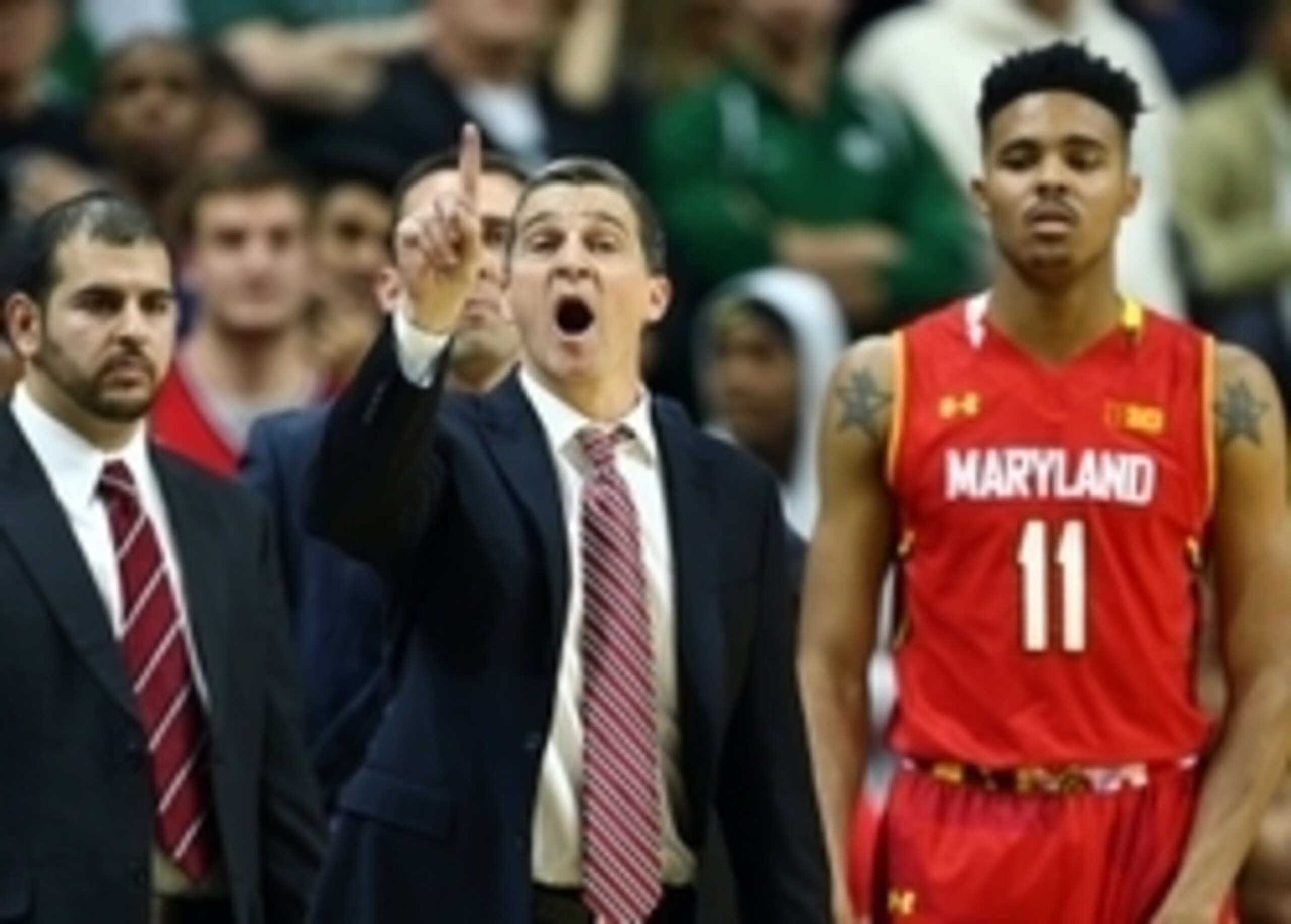
For most of the teams at the top of the rankings, it's just business as usual. Duke, Kansas, Kentucky and North Carolina have long since grown accustomed to national championship expectations being thrust upon them well before the season even begins.
At Maryland, however, it has been some time since the nation expected much of anything. The Terrapins did not appear in any of the past nine preseason AP Top 25 polls and haven't opened the season ranked in the Top 12 since 2001-02.
Sure, it was the year that they won their only national championship in school history, but that was a lifetime ago, and Gary Williams had gradually brought them to that level of greatness. It was their ninth consecutive NCAA tournament appearance. They made it at least as far as the Sweet 16 in six of those nine years, including a trip to the Final Four in 2001. That Maryland team had been conditioned for greatness.
The current team? Not so much.
Last year was the first time the Terrapins made the tournament or appeared in any AP poll since 2010. Going into the 2014-15 season, Mark Turgeon was at or near the top of everyone's list of coaches on the hot seat. They surprised a lot of fans and teams, but how will they fare with the target now squarely on their back?
Also, consider this before making any futures wagers on Maryland: The last time a team won the national championship without advancing to the Final Four at least once in the prior seven years was Connecticut in 1999—and it's not like those Huskies came out of nowhere, appearing in six Sweet 16s and three Elite Eights in the previous nine years. Maryland hasn't even been to the Sweet 16 since 2003.
No. 1 (tie) North Carolina: Ball Pressure
19 of 20
Outside of a two-year window in 2004-05 with Raymond Felton, Rashad McCants and Jackie Manuel, turnover-forcing defense hasn't really been a part of Roy Williams' teams' DNA. However, the Tar Heels were particularly disinterested in creating steals this past season, recording a turnover on just 17.7 percent of defensive possessions—their lowest rate during Williams' tenure.
Worse yet, the one key piece that they lost from last year's roster was arguably their best ball-hawking defender, J.P. Tokoto. The small forward recorded 111 steals over the past two seasons, so even though they won't miss his beyond unreliable mid-range jumper, the Tar Heels will be desperately seeking to replace his ball pressure in order to have any semblance of a fast-break-producing defense.
With Theo Pinson still recovering from a foot injury, chances are North Carolina will roll out Joel Berry at point guard, shifting Marcus Paige to the 2 and Justin Jackson to the 3.
A 6'8" wing, Jackson had trouble staying in front of the smaller, faster, conventional shooting guards last season, but perhaps he'll be able to ratchet up the defensive intensity against small forwards. If not, the Tar Heels better hope they can at least replicate last year's level of offensive efficiency, because they're headed for some more high-scoring affairs.
No. 1 (tie) Kentucky: Frontcourt Depth
20 of 20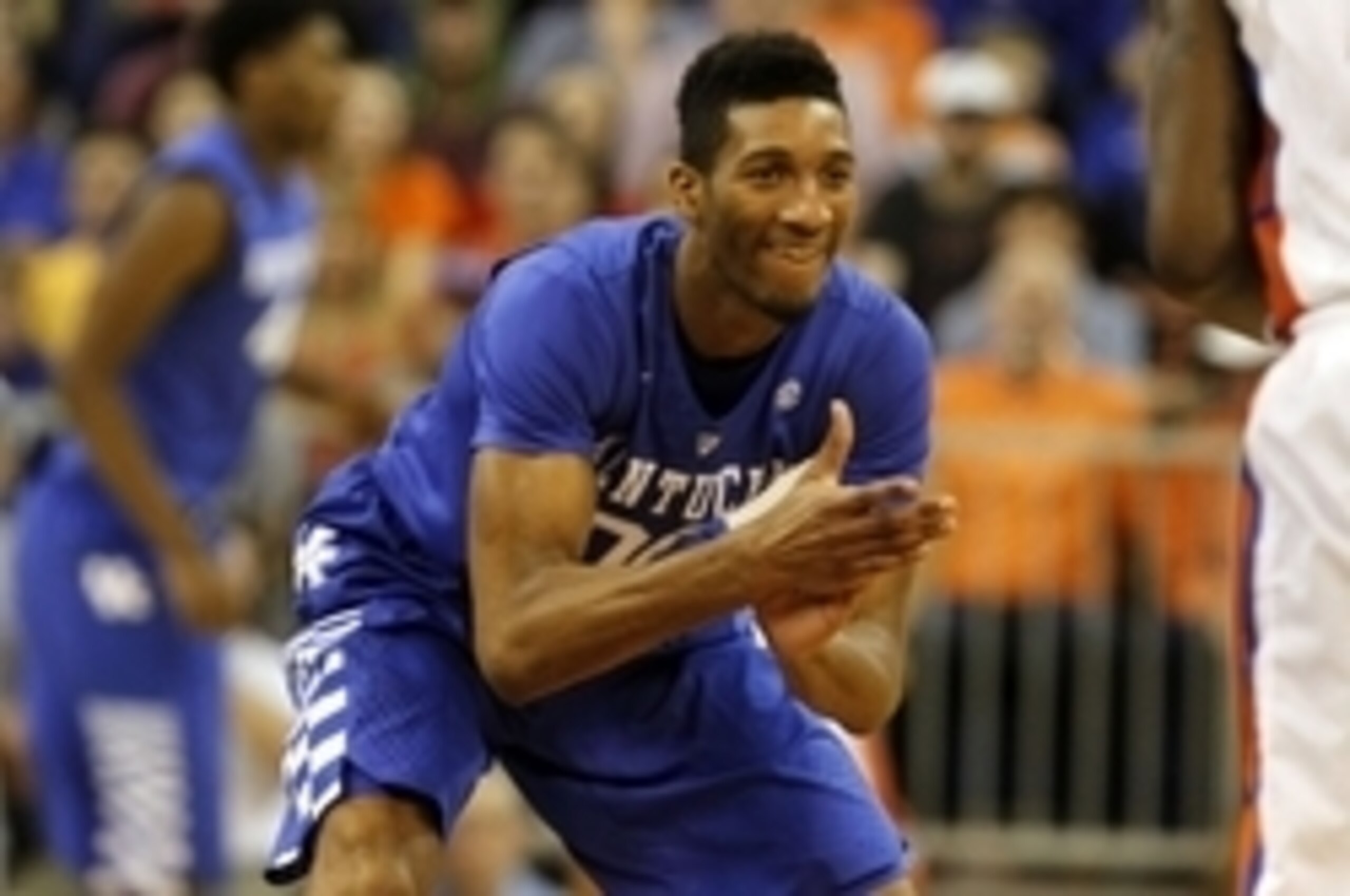
College basketball is a cruel, cruel world where one of the greatest strengths in the history of the game can become a team's biggest weakness in the span of one offseason.
As you may recall, Kentucky had so much quality frontcourt depth last season that we were left to question which 6'8" or taller big men would be forced to play small forward just to step foot on the court on a regular basis. The Wildcats had Karl-Anthony Towns, Willie Cauley-Stein, Trey Lyles, Dakari Johnson, Marcus Lee and eight games of Alex Poythress before he tore his ACL. It was laughably unfair.
But the first four names on that list left for the NBA draft, and with each successive hour that passes without Skal Labissiere getting cleared to play this season, the less sure we are it will actually happen.
Even if the stud freshman does get to play, there aren't nearly as many forwards as yesteryear. Lee and Poythress are still around, but aside from them, it's just Derek Willis—a junior who played a total of 114 minutes in his first two seasons—and Isaac Humphries, who made a late decision to reclassify to join this year's class.
So, if Labissiere isn't cleared and Poythress isn't fully recovered from that knee injury, who's ready for 30 minutes per game of Lee as the anchor in the paint for a four-guard lineup?
John Calipari will inevitably figure something out, but—speaking on behalf of everyone not affiliated with Big Blue Nation—it'll be kind of nice to see him deal with normal coaching problems for a change, instead of having to figure out how to disperse minutes evenly enough to send an entire army to the NBA.


.jpg?w=2560 "Jonathan Taylor Landing Spots")
.jpg?w=2560 "NFL House in Paris Closes for Protests (AP)")

.jpg?w=2560 "Trevon Diggs Cut by Seahawks")