Power Ranking College Football's Top 10 Offenses
The longstanding mantra about defense winning championships might still apply, but college football teams must have a strong offense to have any shot at playing for such a title.
With that in mind, there is no shortage of title contenders in the game this year, as explosive offensive numbers continue to be all the rage across the country. After six weeks of the 2015 season, there are 37 schools that average 35 or more points, including 12 that put up 40-plus points per game, while 15 schools gain at least 500 yards per game, and four are topping the 600-yard mark on a weekly basis.
These numbers are somewhat inflated because of the quality of early-season opponents, particularly those from the FCS ranks, but that doesn't change the story that offense dictates the game. And with so many strong offenses out there, it takes some extra study to figure out which ones are better than others.
We've ranked the top 10 offenses in FBS at the midway point of 2015, using a formula that factors in yards and points per game, yards per play, the frequency of explosive plays, efficiency on third down and in the red zone, and the ability to prevent turnovers and negative plays.
Honorable Mentions
1 of 11
In compiling this list, we did not use the numbers teams racked up against FCS opponents. This led to some of the teams sitting high in the national rankings in scoring and total offense to miss the cut, since their stats were heavily padded by those FCS matchups.
Additionally, our ranking also factors in the balance between running and passing the ball. Thus, productive run teams that can't throw the ball well or those that sling it all over the place but struggle with the ground game didn't finish high enough.
Below are some of the teams that were considered but ultimately did not make our top 10.
- Arizona
- Boise State
- California
- Cincinnati
- Georgia
- Louisiana Tech
- LSU
- North Carolina
- Ohio State
- Oklahoma State
- Ole Miss
- Southern Mississippi
- Tulsa
- Washington State
- Western Kentucky
10. USC Trojans
2 of 11
Coaching turmoil aside, USC's offense remains one of the best in FBS and one that has shown the ability to produce both via the run and the pass. Not being able to do both in the same game as well as struggles on third down, though, have been integral in why the much-hyped Trojans (3-2, 1-2 Pac-12) have failed to meet expectations this season.
USC averages 39.8 points and 494.8 yards per game but is coming off a woeful performance in a 17-12 home loss to Washington. In gaining a season-low 346 yards, Cody Kessler threw for only 156 yards and was intercepted twice (after averaging 324.3 passing yards with 15 touchdowns in the first four games), while the Trojans converted on third down only once in 13 attempts.
For the season, USC ranks 101st nationally in third-down offense, converting 34.55 percent of the time.
When clicking, though, the Trojans are hard to stop on offense. Kessler has a superstar to throw to in sophomore JuJu Smith-Schuster, and their top three running backs average 6.79 yards per carry.
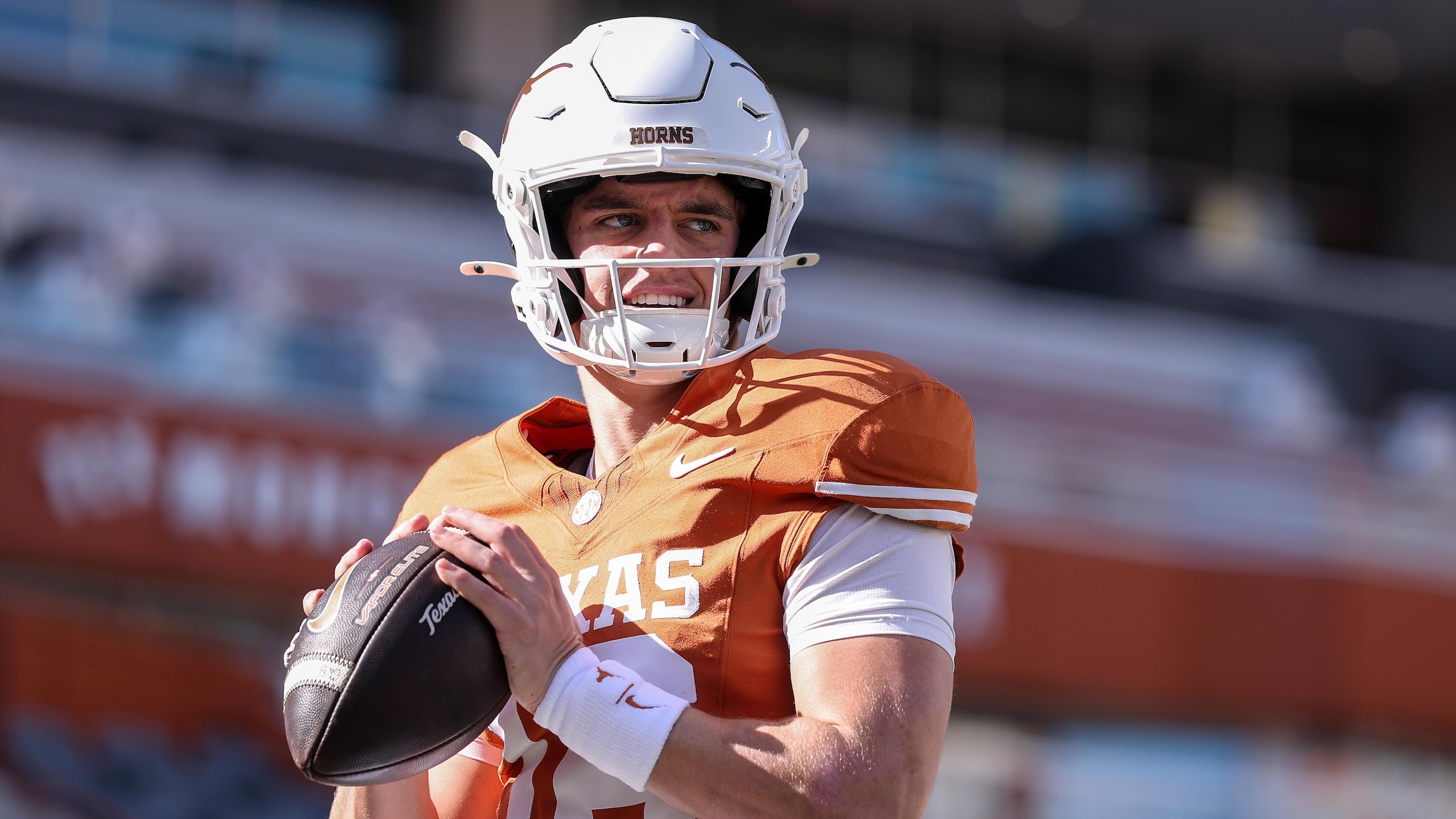
9. Stanford Cardinal
3 of 11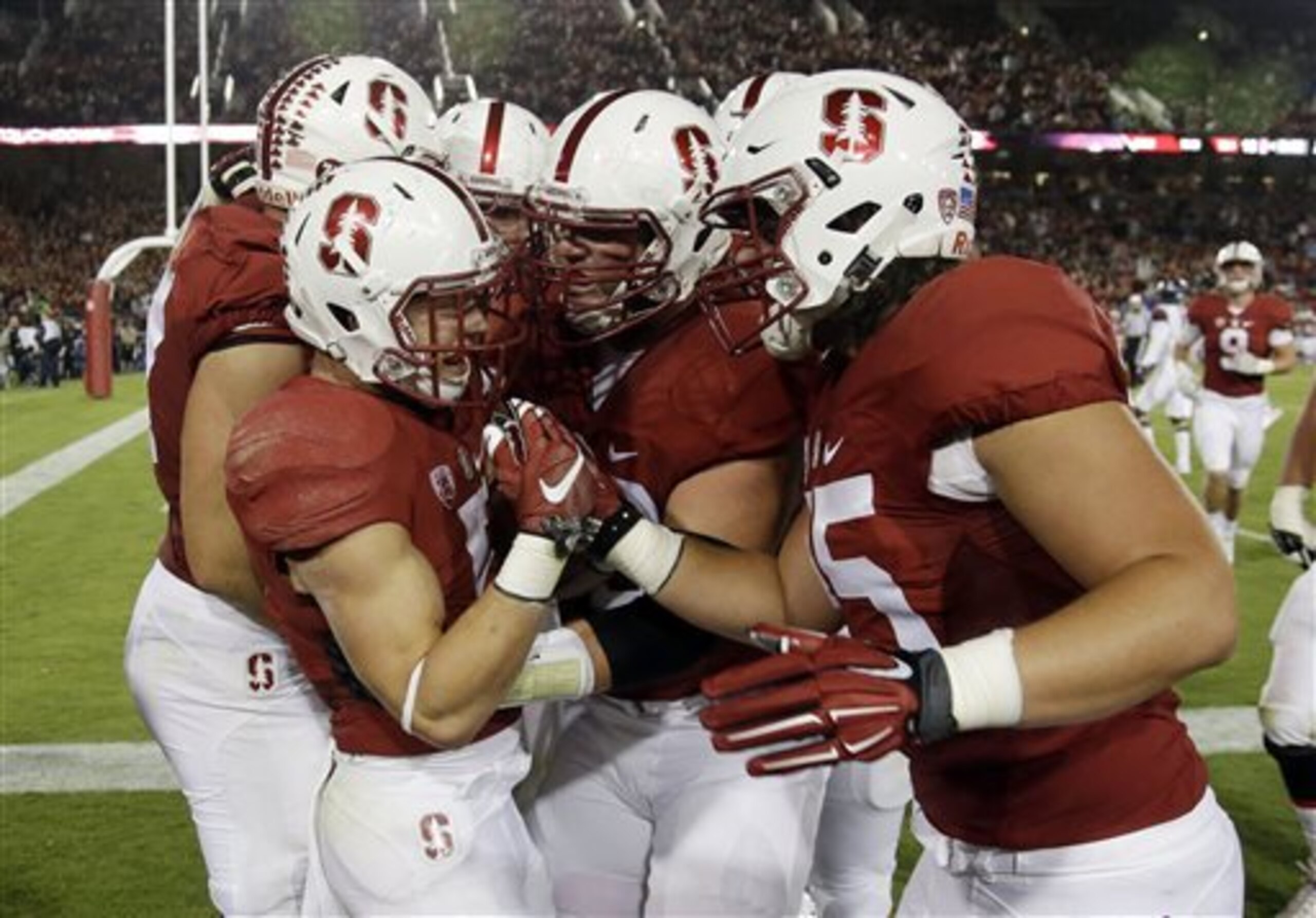
Stanford (4-1, 3-0 Pac-12) makes this list of top offenses for two reasons: how good the Cardinal have looked with the ball in the past month and how drastically better that is than during their first six quarters of the 2015 season.
A good portion of the nation wrote off Stanford after it lost 16-6 at Northwestern to start the season, gaining 240 yards in the process. It didn't score its first touchdown until late in the second half of the second game, against a UCF team that's now 0-6, but it scored 24 in the second half of that 31-7 win and has followed that up with 41 at USC, 42 at Oregon State and 55 against Arizona.
In those three blowout wins, the Cardinal have averaged 510.7 yards per game. Senior quarterback Kevin Hogan has completed 78.6 percent of his throws with six TDs in that stretch.
"He's been able to show, both facing pressure or with time, that he can hit his targets all over the field," Nicole Auerbach of USA Today wrote. "That's opened up the rushing attack, too."
Sophomore Christian McCaffrey has run for 477 yards and added 86 on six catches during the past three games, becoming one of the most versatile players in FBS along with his acumen for returning kickoffs.

.jpg?w=2560)
8. Texas A&M Aggies
4 of 11
Texas A&M (5-0, 2-0 SEC) has made great strides improving its defense with the addition of coordinator John Chavis, and this has somehow caused one of the nation's most consistently strong offenses to go relatively unnoticed this year.
The Aggies average 39.2 points and 480.4 yards per game this season, both of which are up slightly from a year ago when a midseason lull contributed to an 8-5 record. Things turned around once Kyle Allen took over as quarterback. Now as a sophomore, he's the reason they're moving the ball with ease in 2015.
Allen had a brief hiccup in the opener against Arizona State, getting benched mid-game, but he returned and has since been stellar with 316.7 passing yards per game and eight touchdown throws the last three games.
Running back Tra Carson has become more involved in the offense, too, while the emergence of freshman Christian Kirk as the top receiving weapon has made A&M's attack even more productive.
7. Notre Dame Fighting Irish
5 of 11
Notre Dame (5-1) is playing with a quarterback who was third on the depth chart back in the spring, while its starting running back got cross-trained at the position during the offseason after playing as a receiver his first two years.
And if not for a missed two-point conversion during heavy rain on the road two weeks ago, that offense might have been part of an undefeated Fighting Irish team. Even with that loss to Clemson, the Irish remain one of the more formidable offensive teams despite having to break in new stars in a short time span.
Everett Golson transferred to Florida State, and then Malik Zaire broke his ankle during the second game of this season, but freshman DeShone Kizer led Notre Dame on a game-winning drive in that win over Virginia and has averaged 292 yards of total offense in his four starts.
Starting tailback Greg Bryant was suspended for the season because of academics. Then, backup Tarean Folston got injured in the season opener and is done for the year. In came C.J. Prosise, who is 11th in FBS at 129.8 rushing yards per game with nine touchdowns.
6. Bowling Green Falcons
6 of 11
Bowling Green (4-2, 2-0 Mid-American) played one of the most challenging nonconference schedules in the country to start this season, winning at Maryland and Purdue with losses to Tennessee and Memphis. Win or lose, though, one consistent was an offense that was rarely stopped or even slowed.
The Falcons rank fourth nationally in total offense (604.7 yards per game) and passing offense (435.3), with senior Matt Johnson leading the nation with 2,534 passing yards. At 422.3 yards per game, he's on pace to break former Texas Tech quarterback B.J. Symons' FBS record of 5,833 yards set in 2013 if Bowling Green can reach the MAC title game and play in a bowl game.
The latter seems a certainty, but winning the MAC's East Division will hinge on how Bowling Green fares in November weeknight home games against Ohio (5-1) and Toledo (5-0).
Bowling Green isn't a one-dimensional team, though, as running backs Travis Greene and Fred Coppet have combined for 840 yards.
5. Memphis Tigers
7 of 11
Memphis (5-0, 2-0 American) has made some appearances on national television, including in late September when it won a wild 53-46 Thursday night game against Cincinnati that featured more than 1,300 yards of offense.
But the Tigers' real opportunity to make a splash on the national stage comes Saturday when they host Ole Miss, a game that will prove just how good their offense is when going up against last season's national leader in scoring defense and which features a likely first-round draft pick in defensive lineman Robert Nkemdiche.
"It's going to be a monumental challenge for us, there's no reason to dance around it," Memphis coach Justin Fuente told Bleacher Report's Adam Kramer.
That same Ole Miss team held Memphis to three points and 104 yards last season, but since then, the Tigers offense has been on an almost-constant upward track that's featured nine 40-point performances and six games with at least 500 yards. Four of each have been this season.
The key to the Memphis offense is an efficient and effective quarterback in junior Paxton Lynch, who has completed 70.5 percent of his passes with 10 touchdowns and no interceptions.
4. Texas Tech Red Raiders
8 of 11
Explosive offense has become as much a staple in Lubbock as cotton production, but what Texas Tech is doing this season with the ball might be its best yet. That's because the Red Raiders are far more balanced than in past years in implementing some form of the Air Raid, which Mike Leach brought there in 2000 and Kliff Kingsbury (one of his former quarterbacks) has continued.
Tech (4-2, 1-2 Big 12) has scored at least 35 points in every game this season and has averaged 51.4 points and 635.8 yards against FBS foes. It has topped the 60-point barrier twice, including last week when it won 66-31 over Iowa State while putting up a school-record 776 yards of total offense.
Two factors are helping the Red Raiders reach new offensive heights this season: having a quarterback in sophomore Patrick Mahomes II who can run (205 yards, six touchdowns) as well as pass with success and taking far better care of the ball. Tech has committed seven turnovers in six games, including five interceptions on 296 attempts, compared to 28 giveaways in 2014.
All that's holding Tech back is a defense that can provide even a semblance of support. The Raiders' losses have come despite scoring a combined 87 points in those games while allowing 118. For the year, they rank 125th nationally in total defense.
3. Houston Cougars
9 of 11
If you're wondering why defending national champion Ohio State's offense hasn't looked as explosive as it did in 2014—and consequently, why the Buckeyes didn't make this list—look at what Houston (5-0, 2-0 American) is doing under first-year coach Tom Herman. Yes, the same Tom Herman who was OSU's offensive coordinator last season.
Herman has essentially taken what worked so well for him in Columbus and brought it to Texas. While he doesn't have the same talent at his disposal with the Cougars, he's showing that scheme can often make up for star power. In Houston's four games against FBS teams, it has scored 45 points and averaged 561.5 yards while recording 32 plays of at least 20 yards.
Dual-threat quarterback Greg Ward Jr. has paced this attack, as the junior ranks sixth nationally in total offense at 371.2 yards per game, including 554 rushing yards overall. He's thrown eight touchdown passes (while completing at a 72.5 percent clip) and has scored 11 times on the ground on 79 carries.
Houston also has a traditional run game paced by Kenneth Farrow, who averages five yards per carry.
2. TCU Horned Frogs
10 of 11
Gary Patterson navigated TCU through a series of conference moves as well as some BCS-busting opportunities thanks to a penchant for great defense with occasional solid offensive teams. But it wasn't until he brought on Doug Meacham and Sonny Cumbie to revamp the offense in 2014 that the Horned Frogs became a national power.
And now offense is truly what TCU is known for, never more so than this season when its attack has had to carry the team to a pair of clutch road victories. First was the 55-52 win at Texas Tech, and then last week it needed 35 second-half points to come back from down 18 and win 52-45 at Kansas State.
The Frogs (6-0, 3-0 Big 12) have averaged 47.2 points and 613.2 yards per game against FBS opponents. Surprisingly, they've played some of their best on offense when there's been no room for error. This is because of senior quarterback Trevone Boykin, who completes 72 percent of his passes in the fourth quarter.
There's been no deficit TCU hasn't been able to overcome yet thanks to its ability to score points and gain yards in bunches.
1. Baylor Bears
11 of 11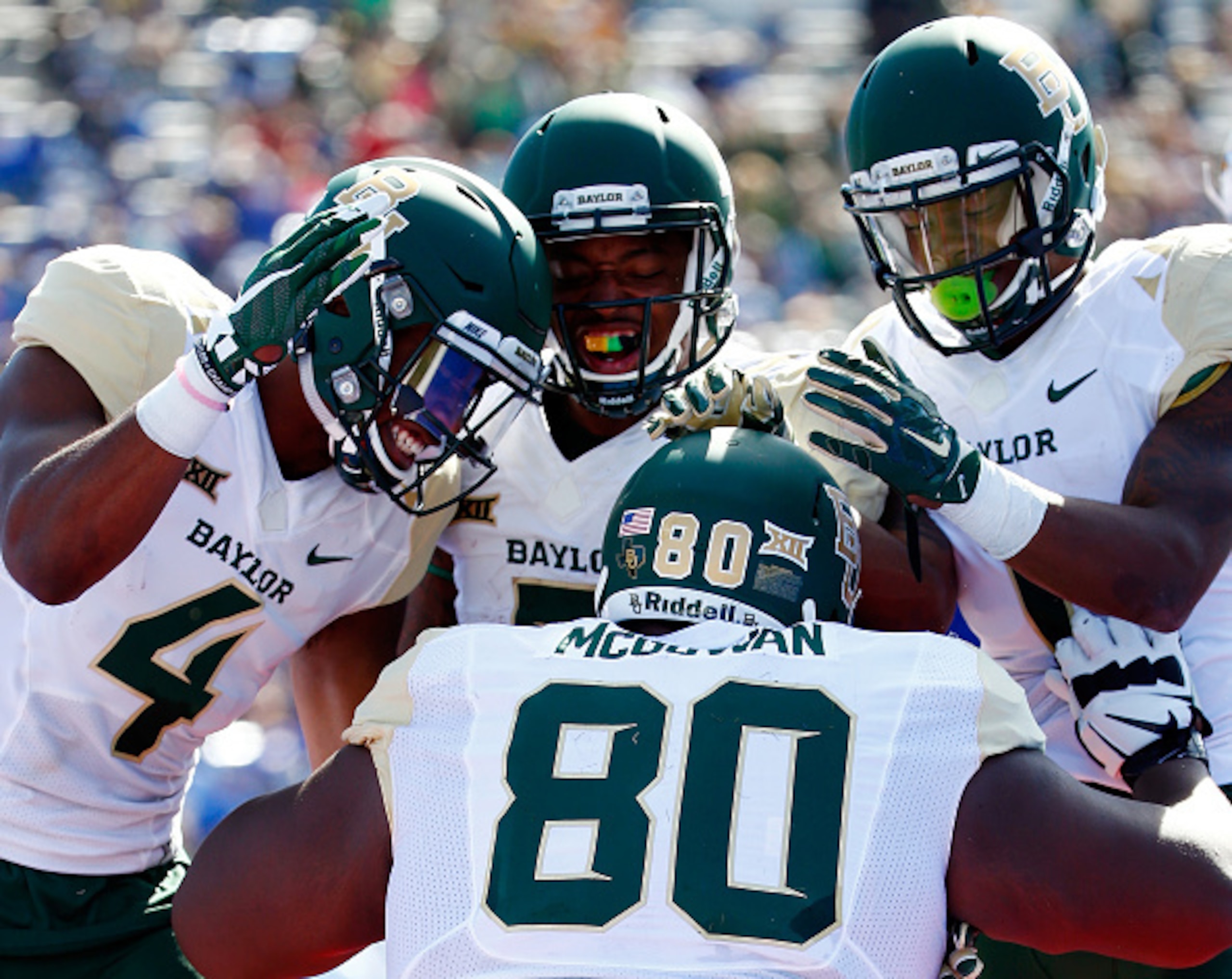
If this were a political campaign, Baylor's opponent would argue that the most dominant offense in the country has achieved this distinction because of whom it's played rather than how. The Bears (5-0, 2-0 Big 12) have faced four FBS teams that all rank in the bottom 20 nationally in yards allowed, which has led to their scoring 63.8 points and gaining 710 yards per contest.
But really, do we expect Baylor's numbers to be significantly worse against a more formidable defense? Last year, pretty much the same lineup of offensive contributors faced three top-30 defensive teams (TCU, Texas and Michigan State) and averaged 43.3 points and 584.7 yards per game.
"They are basically impossible to stop," ESPN analyst Kirk Herbstreit said, per Bill Bender of the Sporting News. "They're as balanced as anybody in the country."
Baylor runs and passes the ball with equal success, and it's not just a one- or two-man job. There are three running backs with at least 300 yards, and three players have scored at least four times on the ground, including quarterback Seth Russell. His 22 TD passes (as well as the four from backup Jarrett Stidham) have gone to eight different players, meaning even if Corey Coleman and his 13 TDs on 31 receptions were removed, you'd still have far too many weapons to stop.
Follow Brian J. Pedersen on Twitter at @realBJP.


.jpg?w=2560 "Jonathan Taylor Landing Spots")
.jpg?w=2560 "NFL House in Paris Closes for Protests (AP)")

.jpg?w=2560 "Trevon Diggs Cut by Seahawks")