Offensive Concerns Plaguing NFL Contenders Due to Personnel, Not Scheme
The rumors of zone blocking's demise have been greatly exaggerated.
Four teams considered by most to be legitimate playoff contenders prior to the season—the Philadelphia Eagles, Denver Broncos, Seattle Seahawks and Atlanta Falcons—have all experienced varying degrees of success on offense through the first two games.
All four also happen to feature zone-heavy offenses unable to run the ball effectively to start the campaign.

.jpg?w=2560 "Eagles Titans Football")
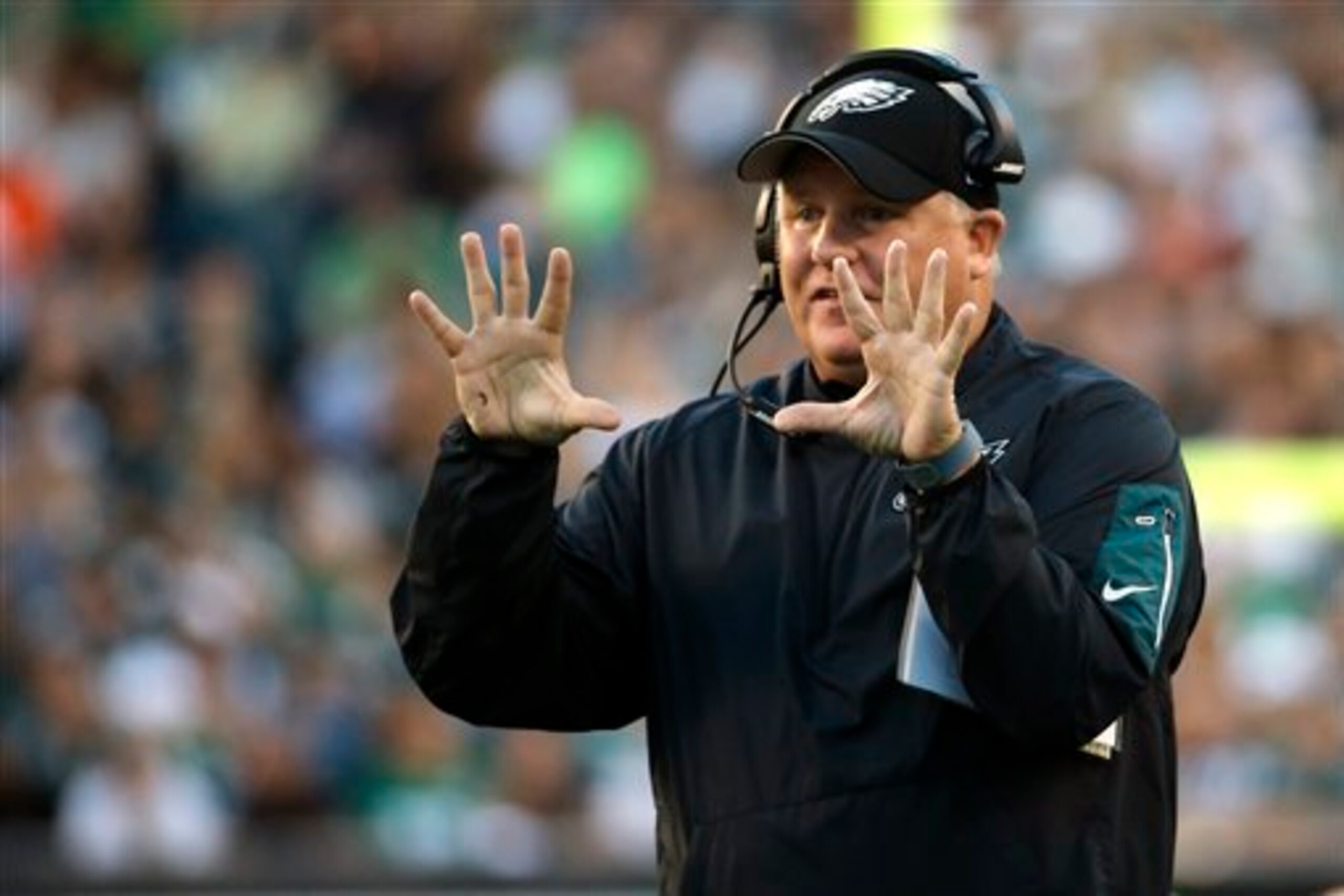
It's wrong to assume each team's problems stem from a scheme the rest of the NFL suddenly figured out how to stop after decades of success. Instead, these teams' problems originate from poor personnel decisions that have stunted each unit's ability to properly execute.
What does each of these units actually lack? Overall talent and cohesion.
There is a popular saying in football, "It's not the X's and O's; it's the Jimmys and Joes."
While NFL teams rely heavily on a scheme's ability to create mismatches, the proper talent needs to be in place to take full advantage of those situations. If competent pieces don't fill each starting spot, a defense can take advantage of those players.
For example, the Houston Texans will move J.J. Watt all over the field to exploit an opponent's greatest weakness along the offensive line.
It always starts up front, and this is where each of the aforementioned teams are found lacking and why their schemes continue to sputter.
Philadelphia Eagles

Eagles head coach Chip Kelly believes in the idea that "big people beat up little people" when the two meet on a football field. Yet, Kelly's philosophy starts to veer toward hypocritical, because he doesn't place a high value on the offensive line.
After taking right tackle Lane Johnson with the fourth overall pick in the 2013 NFL draft, the Eagles haven't spent a selection on an offensive lineman in the subsequent 20 picks, which spans nearly three draft classes.
The lack of attention the offensive trenches received during the previous drafts is manifesting in this year's poor play.
The 0-2 Eagles rank dead last in rushing offense. The team averages a paltry 35 yards per game. And running back DeMarco Murray, who led the league with 1,845 rushing yards last season, hasn't been able to get started this year with only 11 yards on 21 carries. It's an insanely low total that CSNPhilly.com's Reuben Frank placed into context:
Poor play along the offensive line remains the primary issue in Philadelphia.
Without added talent to the roster, depth became an issue. Since the Eagles previously relied heavily on an aging offensive line, the organization didn't show the foresight to develop legitimate talent behind its veteran group.
Once the team decided to finally part ways with veteran guards Todd Herremans, 32, and Evan Mathis, 33, this offseason, capable replacements weren't available to fill out the starting lineup.
Instead, a competition ensued. Andrew Gardner and Allen Barbre emerged as starters. Neither has performed particularly well in their new roles. Kelly recently admitted as much, per the Philadelphia Inquirer's Zach Berman:
It really doesn't matter how talented a group is if it's not executing.
Kelly can say the team's personnel is good enough, but the reality is it hasn't been performing well through two weeks. It starts with a new pair of guards and extends to the veterans, specifically center Jason Kelce, who surround them and haven't played to expected levels.
The group up front is also not receiving much help from its new quarterback, which becomes an entirely different personnel problem.
Quarterback Sam Bradford takes a major element away from the offense due to his lack of athleticism.
"Over past two years, the Eagles have run 236 more zone-read plays than any other team in the NFL. This year, two," Bleacher Report's Wes O'Donnell relayed, via ESPN's NFL Live.
Defenses don't need to respect the quarterback potentially slipping out the back door, like Mark Sanchez did at times last year. Instead, the defensive end can crash down the line of scrimmage against Philadelphia's zone runs and blow up the play.
The offensive line must adjust and be able to block the defensive front without using the zone read as a crutch.
Denver Broncos
In Denver, the Broncos aren't much better at running the ball than the Eagles. Peyton Manning's offense quickly grew stagnant under the watchful eye of new head coach Gary Kubiak.
Kubiak's backfield currently averages 2.8 yards per carry as the team only musters 65 rushing yards per game.
A massive overhaul along the offensive front once again remains the primary culprit.
Sure, everyone can bemoan that Manning looks mortal and say he's not an ideal fit in the team's new offensive scheme. But the Broncos aren't going to win consistently along the line of scrimmage with the starting offensive line they currently claim.
Of course, Ryan Clady's season-ending knee injury exacerbated this situation. Now, rookie Ty Sambrailo is trying to not be completely overwhelmed at left tackle, which he hasn't been too successful at to date.
Along with Sambrailo, Matt Paradis is a first-year starter at center.
Ryan Harris returned to the team for the first time in five years to start at right tackle. The veteran hasn't played well, and Chiefs outside linebacker Justin Houston absolutely owned Harris during Week 2.
The organization also signed former All-Pro guard Evan Mathis two weeks before the season began to try to stabilize the unit. So far, the move has been wildly unsuccessful, as Pro Football Focus noted:
Some of the transition became unavoidable once the Broncos decided to part with a few of their previous offensive line pieces. Orlando Franklin and Will Montgomery left via free agency. The organization also traded Chris Clark and Manny Ramirez. Clark's trade came two weeks before the start of the season.
If Clady is added to the mix, the Broncos are currently without 63 games of starting experience from last year's team.
No one, not even a squad that features a future Hall of Fame quarterback, can overcome that level of turnover along its offensive front.
Seattle Seahawks

Another team that felt it could make multiple changes to the offensive line without much of a drop-off resides in the Great Northwest.
The Seahawks played in the Super Bowl the last two seasons. Two starters, left tackle Russell Okung and right guard J.R. Sweezy, remain from those contests. A third, Justin Britt, started at right tackle during Super Bowl XLIX, but he's since been moved to left guard.
General manager John Schneider was lauded during the offseason for being able to pry All-Pro tight end Jimmy Graham away from the New Orleans Saints. In return, the Saints received center Max Unger and a first-round pick.
While the deal looked fantastic for Seattle on paper, it didn't account for continuity and how long it would take the offense to transition with these different pieces.
Unger is now starting in New Orleans, and Seahawks quarterback Russell Wilson targeted Graham exactly two times during the team's previous contest against the Green Bay Packers.
These types of moves take time to work themselves out, but the Seahawks' options at center weren't overwhelming. Former defensive lineman Drew Nowak eventually won the job, and he's experienced growing pains.

The St. Louis Rams' Aaron Donald and the Packers' B.J. Raji dominated the interior during the Seahawks' first two contests, which blew up the entire offense.
Marshawn Lynch may be the best running back in football, but even he can't overcome defenders in the backfield on a regular basis. Lynch averaged 3.5 yards per carry through the first two games.
Nowak isn't the only Seahawks offensive lineman to take his lumps early in the season. Garry Gilliam, a collegiate tight end until his senior season, continues to develop as an offensive lineman, and defenses have exploited his inexperience.
This is a physically talented group that fits the style of offense the Seahawks coaching staff wants to play, but it'll take time for it to mesh due its inexperience, not only as a starters but also playing relatively new positions.
Atlanta Falcons
While the Falcons are 2-0 and claim an explosive offense, the entire unit is still transitioning to offensive coordinator Kyle Shanahan's zone-stretch offense.
For some, like second-year left tackle Jake Matthews, the system highlights their strengths as players. For others, they're still finding their way.
Atlanta overhauled the entire middle of the team's offensive line this offseason, and it shows. Falcons running backs currently average a pathetic 2.8 yards per carry.
Justin Blalock, Joe Hawley and Jon Asamoah opened last season as the team's starters from left guard to right guard. Only Asamoah remains on the roster, and he's currently on injured reserve with a hip injury.
| Year | 2014 | 2015 |
| Left tackle | Sam Baker | Jake Matthews |
| Left guard | Justin Blalock | Andy Levitre |
| Center | Joe Hawley | Joe Hawley |
| Right guard | Jon Asamoah | Chris Chester |
| Right tackle | Jake Matthews | Ryan Schraeder |
Now Andy Levitre, Mike Person and Chris Chester comprise the middle of the team's starting offensive line.
Chester knows Shanahan's system well after starting for him in Washington, but the other two haven't performed well. Levitre, in particular, has struggled to adjust to the zone-blocking scheme after the team traded for him nine days before the start of the regular season.
In yet another attempt to improve up front, the organization signed former No. 1 overall pick Jake Long to a one-year contract after the start of the season, but he's not yet ready to contribute.
"Falcons coach Dan Quinn said newly signed offensive tackle Jake Long is probably another week away from being active for a game," ESPN.com's Vaughn McClure reported. "[He] will be evaluated after padded practice this week."
If and when Long enters the lineup, the line will again need to adjust.
The Falcons have problems up front, and the organization is still trying to figure them out during the season, which usually isn't a recipe for success.
Clearly, there is plenty of talent among this group, but continuity takes time to build among five blockers who must work in cohesion.
Continuity Supersedes Scheme
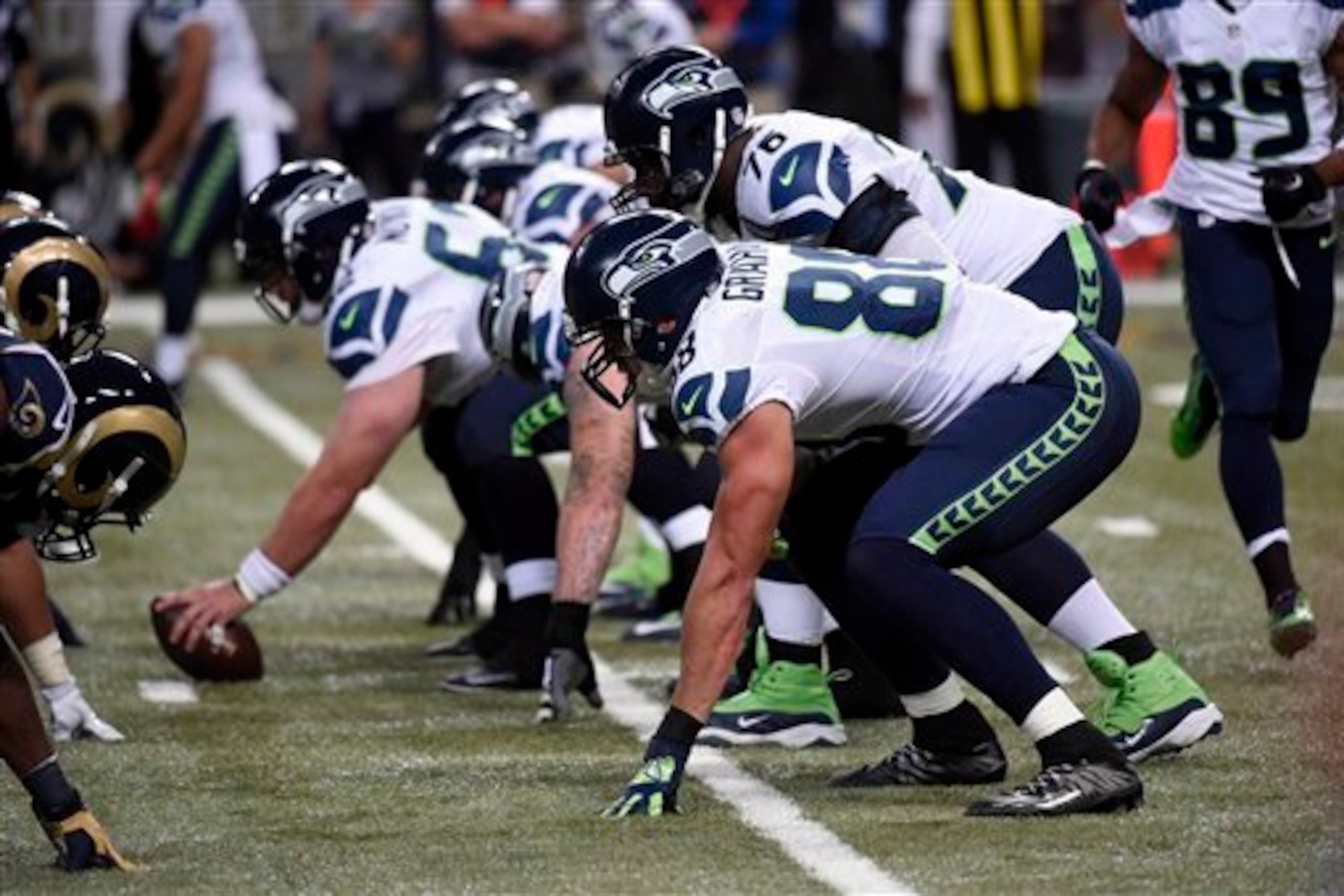
Ego is a wonderful thing in the NFL. Sometimes, an organization will out-think itself when it comes to building a strong foundation.
An offensive line requires repetition and experience to work as a cohesive group. All five linemen must work together to understand their responsibilities and what their fellow linemates are going to do in any situation. Once they achieve this level of communication and understanding, a line can successfully complete its job as a unit on a consistent basis.
The league's best offensive lines usually play together for years. Pieces can't be randomly replaced without some kind of drawback. Very few players are talented and intelligent enough to step in from day one and dominate in the trenches.
Talent is a wonderful thing if placed in a position to succeed. In each of the instances mentioned above, none of those offensive lines was even given the slightest chance to succeed at the start of the 2015 campaign.
Success now comes down to how quickly they can jell over the next 14 contests.