

New Evidence Puts UFC Handling of TRT-Fueled Vitor Belfort Front & Center Again
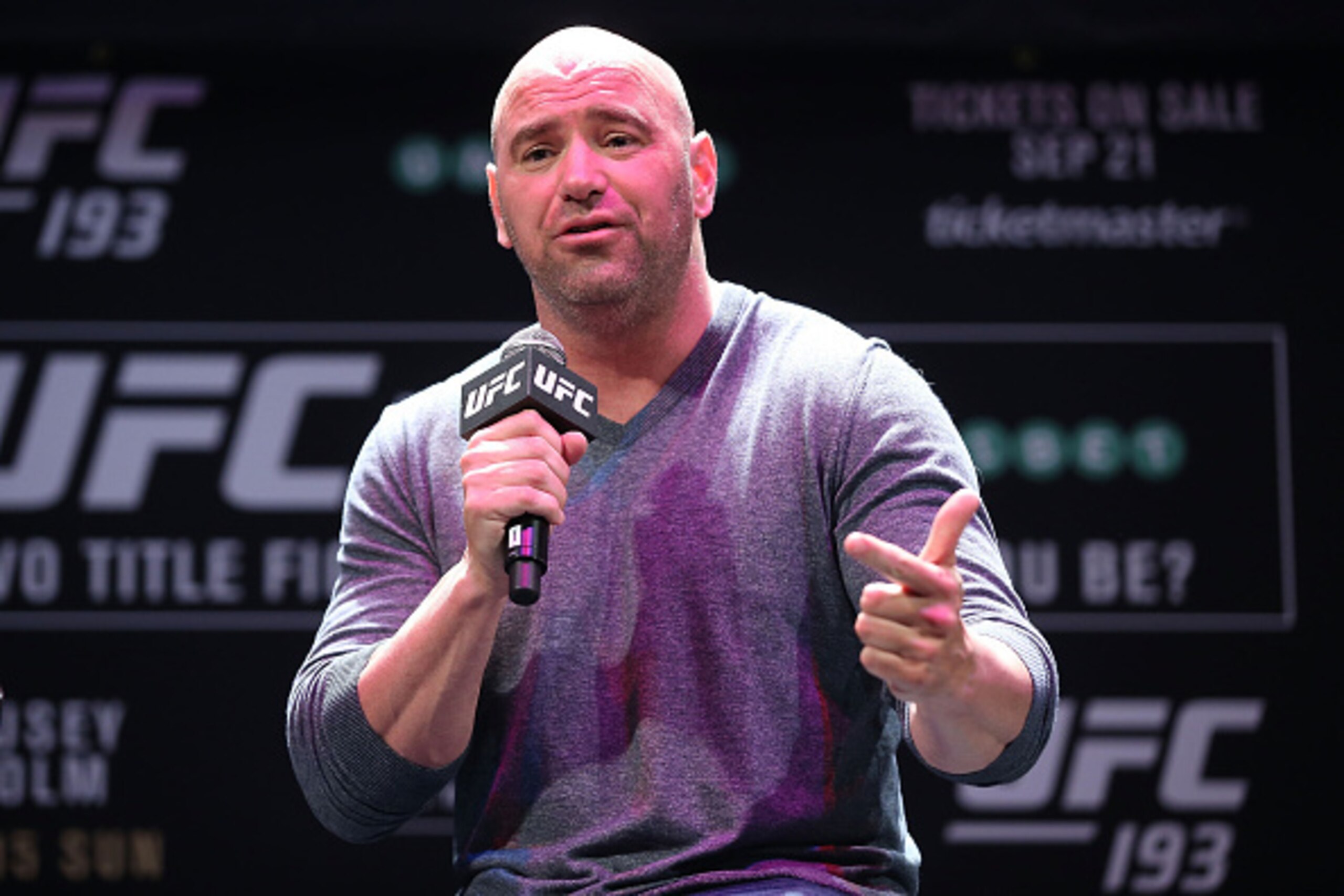
When the Nevada Sate Athletic Commission abruptly outlawed testosterone replacement therapy on February 27, 2014, UFC President Dana White said he was overjoyed.
"[I'm] pumped!" White wrote in a text message to MMA Fighting's Ariel Helwani that day, while the fight company issued its own blanket ban on the controversial medical treatment. "Couldn't wait for that garbage to go away."
More than 18 months later, as the fallout from MMA’s TRT era continues to weave a tangled web, one of the few things we can probably still take at face value is White’s genuine, full-hearted relief at being done with it.
It now appears all that “garbage” was a far bigger headache for UFC executives than we ever knew before.

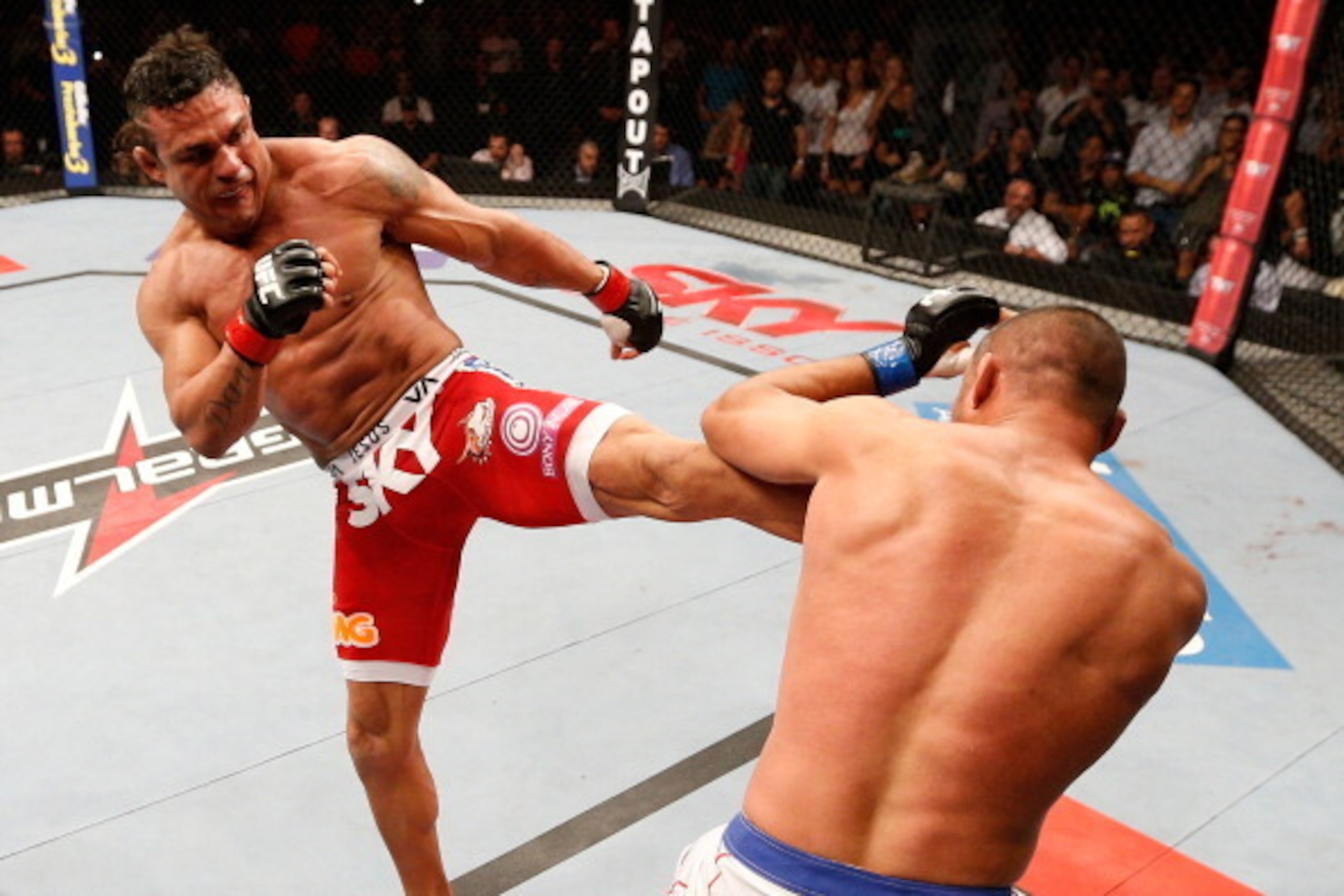
This after a lengthy report from veteran MMA writer Josh Gross published by Deadspin on Monday alleges the organization allowed Vitor Belfort to fight for its light heavyweight title at UFC 152 in September 2012 despite a “sketchy” drug test showing Belfort was over the legal limit for testosterone three weeks before the bout.
If true, it amounts to fairly damning evidence on two fronts.
First, as the third drug failure of Belfort's career to come to light—the fighter also flunked performance-enhancing drugs tests in Nevada in 2006 and 2014—it adds to the widespread picture of him as one of the sport’s most notorious and brazen drug cheats.
Second, it severely undermines the UFC’s longstanding claims that after approving Belfort a therapeutic use exemption for TRT, it carefully monitored him to make sure he wasn’t gaining an unfair advantage.
Here’s the crux of it in Gross’ own words:
"Belfort’s peers have long viewed the Brazilian as a doper. That perception is reinforced by the facts, which include not only the well-known public record, but [this] previously unreported incident in 2012 in which the UFC mistakenly emailed out results of a Belfort blood test to a group of 29 fighters, managers, and trainers three weeks ahead of his late-notice challenge for Jon Jones’ light-heavyweight title, which took place three years ago this week.
Those results indicated that Belfort had higher than allowable levels of testosterone in his system, and that—at minimum—red flags should have been raised inside the UFC, which became aware of the information as it regrouped from the recent cancellation of UFC 151.
"
The Deadspin story includes a pdf file showing Belfort’s lab results from a Las Vegas anti-aging clinic and a timeline of a series of embarrassing emails dated September 4, 2012.
Gross writes that a paralegal working for the UFC mistakenly disclosed Belfort’s lab results while trying to email them to three company executives. After two emails attempting to “recall” and explain the initial message, UFC Vice President and general legal counsel Lawrence Epstein sent an email to the 29 recipients threatening legal action if the information about Belfort became public.
"Please note that if you have and/or intend to disclose and/or disseminate this information to anyone, Zuffa will have no choice but to seek all available judicial remedies against you in both your professional and personal capacities," Epstein wrote.
The Jones-Belfort fight went off as scheduled in Toronto on September 22. Jones retained his title by fourth-round submission, but not before Belfort injured him with an armbar attempt in the first round. In the wake of it, Epstein’s threat presumably did the trick, as Belfort’s wonky blood test remained hidden until Gross published it this week.

At the time, MMA Weekly.com quoted UFC Canada’s Tom Wright saying the fight company had "contracted with a third party independent, but approved, drug testing facility" to handle UFC 152’s fight-night testing, since Ontario's fledgling athletic commission didn't plan to do any of its own.
After the event, MMA Junkie's John Morgan (h/t MixedMartialArts.com) reported that all fighters' in-competition tests came back clean, but that one unidentified fighter (who we now know was Belfort) had received a TUE from the UFC for TRT.
Gross writes Jones says he didn’t know Belfort was on TRT at the time of their fight, nor did he ever hear that Belfort’s testosterone levels were high less than a month out from the event.
The fight was one of five in a row for Belfort conducted outside the United States between January 2012 and November 2013. During that stretch, Jones was the Brazilian fighter’s only loss. Belfort closed out his run with three consecutive head-kick knockouts amid a 2013 streak that made him the No. 1 contender for the UFC middleweight title.
He would ultimately lose his championship bid to Chris Weidman at UFC 187 in May 2015, and during the lead-up to that bout Weidman made no bones about his belief that Belfort was still gaming the system.
Discovering this alleged 2012 transgression does little to further damage Belfort’s public image. It was already ruined. The more confounding thing, obviously, is the notion that the UFC might have known about it.
“How did the UFC react to the 2012 results?” Gross writes. “Other than the obvious—allowing Belfort to fight Jon Jones for the light-heavyweight championship—that’s unclear."
What we know for sure is that just a month prior to UFC 152, the fight company had been forced to entirely cancel an event for the first time in its history. UFC 151 and its intended main event of Jones vs. Dan Henderson fell by the wayside after Henderson was injured and Jones refused to accept Chael Sonnen as a replacement on short notice.
The fight company named Belfort as Jones’ UFC 152 opponent in the same press release it announced UFC 151’s cancellation. That release was dated August 23—one week before Belfort took the test Gross writes revealed elevated testosterone.
You want to talk about headaches? It’s pretty easy to speculate our way into a few here: The high-profile humiliation of canceling UFC 151 and a hastily made fight between Jones and Belfort. A week later Belfort takes his test and the UFC gets the results just 18 days before UFC 152 is supposed to go down.
If—and we say again, if—the above timeline resulted in the UFC electing to keep Belfort’s abnormal test results private and allowing him to fight Jones anyway, well, we would understand, wouldn’t we?
You can also see why White would eventually appear so relieved to see TRT brushed off the table completely.
But such a scenario would only underscore the need for quality, third-party drug testing in MMA. It would, in fact, be sort of a textbook example for why fight promoters can’t be responsible for doing their own testing.
Another thing we know for sure is that White remained indignant throughout Belfort’s TRT-fueled rise through the 185-pound division. He was always adamant the UFC was keeping close tabs on Belfort's testosterone use, that he was not using the TUE the company granted him as a cover to legally use performance enhancers.
"Vitor Belfort has not been abusing TRT,” White said in November 2013, via MMA Mania’s Matt Roth. “In a million f---ing years I would never let that happen—ever."
Yet Gross’ story raises valid questions about whether that’s exactly what White and the UFC allowed to happen.
We hope these times are behind us now. The NSAC ban on TRT—which came less than a month after it caught Belfort with elevated testosterone levels during a random drug test—closed the curtain on a period that perhaps forced fans and fight promoters alike to make some uncomfortable compromises.
The UFC’s new partnership with the United States Anti-Doping Agency certainly has the potential to usher in brighter days. However, veteran boxing writer Thomas Hauser recently raised a bevy of disquieting allegations about whether USADA might be prone to the sort of selective enforcement we fear happened in the Belfort case.
Yet is it too much to hope that the UFC could see Gross’ story as a bit of a wake-up call?
Perhaps a real drug-testing policy, earnestly enacted and uniformly enforced, might prevent further headaches, the need for further threatening emails and the eventual embarrassment of an alleged cover-up becoming public.
Over time, it might even restore public faith in the UFC’s drug-testing efforts—faith that feels entirely naïve in the immediate wake of these reports.


.jpg?w=2560 "Raiders Could Start Mendoza")
.jpg?w=2560 "Rodgers Iced Out on Plane 💎")


.jpg?w=2560 "🚨 Week 8 AP Top 25 Poll")
.jpg?w=2560 "Blockbuster Trade Idea To Shake Up the Eastern Conference 🎇")