

Duke Basketball: Setting Pass/Fail Marks for Key Players in 2015-16
Duke's roster has undergone a major change this offseason, with four starters from the national title team off to the NBA and seven newcomers either joining the program or becoming eligible for 2015-16.
Despite such turnover, the Blue Devils are still getting plenty of hype as a team that could potentially repeat as champs, earning high spots in preseason rankings from ESPN.com and Sporting News.
In order for these lofty expectations to be met, however, Duke's top players will have to perform at a high level, both statistically and from an overall team standpoint.
For now, let's focus on the numbers. According to Bleacher Report's Kerry Miller, Duke must replace 76.8 percent of its scoring from a year ago as well as a great deal of its rebounds and assists. Much of the responsibility to fill that gap will come from the new Blue Devils as well as those who were around in 2014-15 but now will play a more significant role.
We've set pass/fail benchmarks for the stats these key Duke players must meet in order for the upcoming season to go well and for those players to be considered successful.
Grayson Allen
1 of 7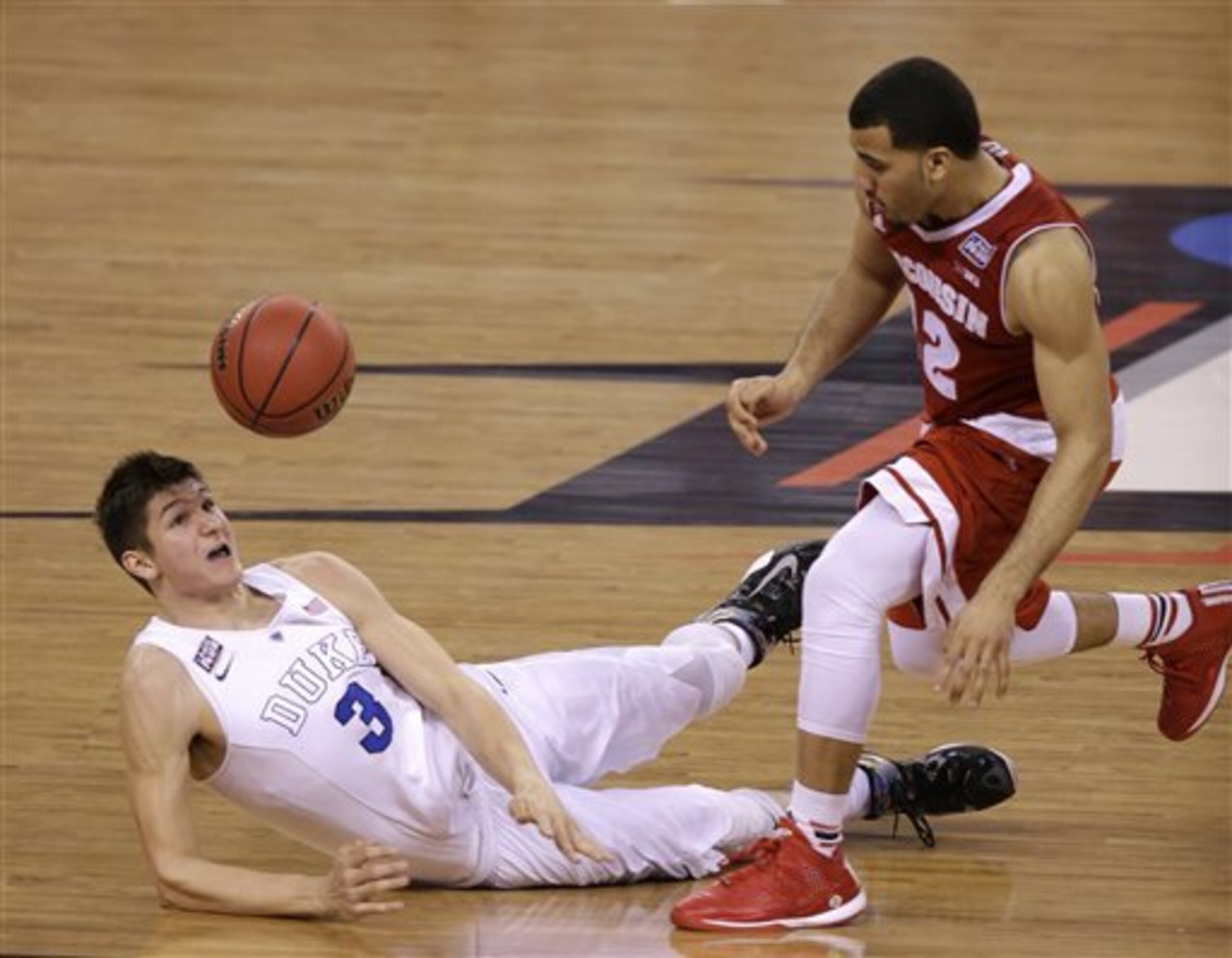
2015-16 statistical benchmarks (per game): 13.0 points, 5.0 rebounds, 3.0 assists
From the little-used ball of energy to a Final Four savior, Grayson Allen's freshman year had quite a change of course over time. He rarely saw the court until Indianapolis, when he scored 25 points in 38 minutes in wins over Michigan State and Wisconsin to help spark the championship.
As a sophomore, the 6'5" guard must be a constant source of scoring and vigor rather than just in short bursts. He'll be battling with freshman Luke Kennard and junior Matt Jones to start at shooting guard, and if he wins that gig, it may be up to him to guide the offense with his knack for driving to the basket as well as throwing himself all over to save a loose ball.
Because Duke's roster is lacking in experience, Allen's limited time from 2014-15 actually makes him one of the veterans and possibly the only starter from the returners. This will make him a leader the others look toward, and that would translate naturally into being among the top scorers—similar to Quinn Cook's position last season as a senior.
Brandon Ingram
2 of 7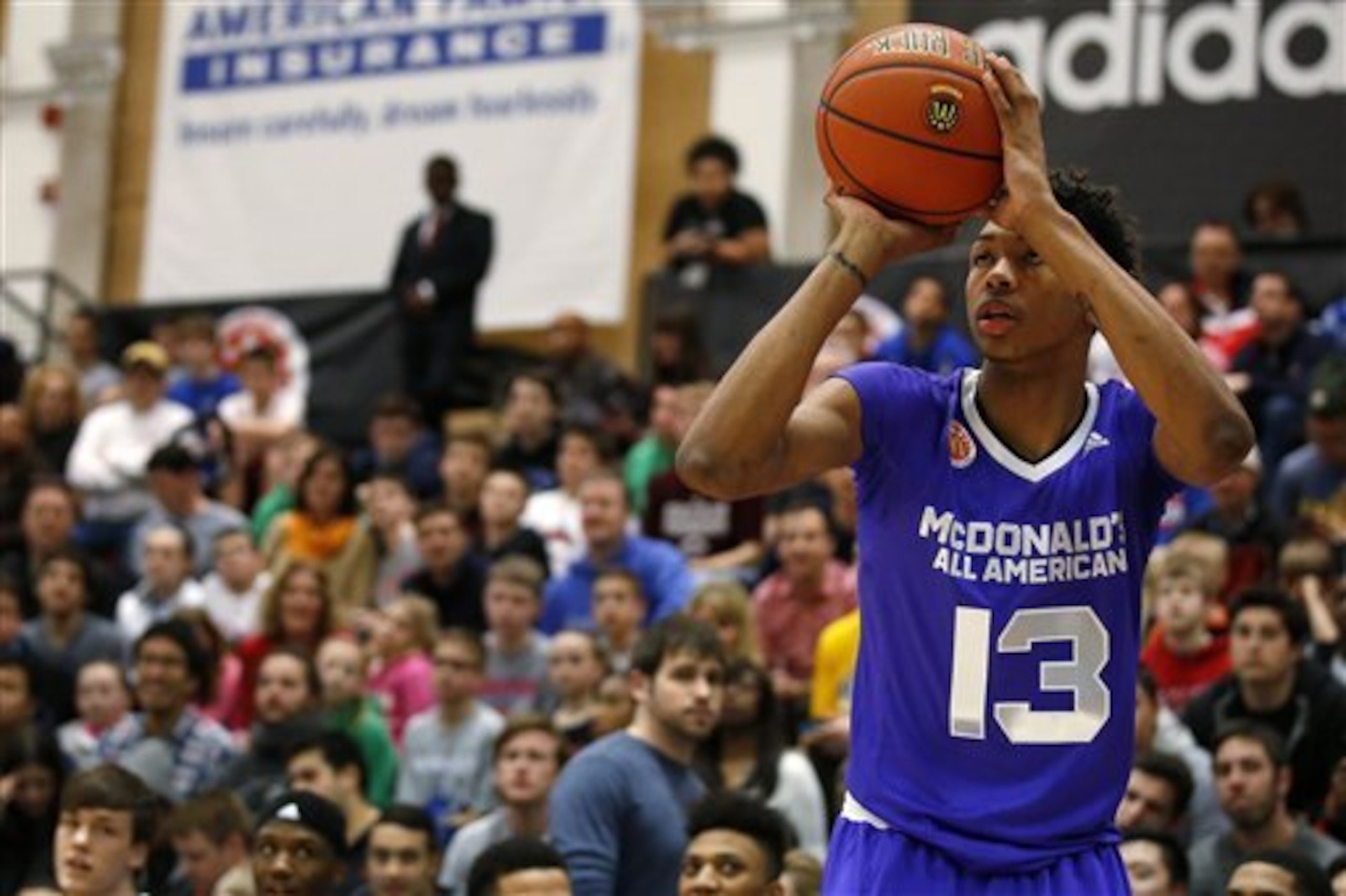
2015-16 statistical benchmarks (per game): 13.0 points, 6.0 rebounds, 1.5 assists
Duke will rely heavily on freshmen this season, but that's nothing new following a championship run when three first-year players combined to make 116 starts and provided more than 52 percent of the scoring.
That percentage could be even higher this year, and of those newcomers, Brandon Ingram is in line to have the most involvement in the offensive production.
The 6'9" forward will likely start at the 3 or 4, depending on if Mike Krzyzewski wants to go with a two- or three-guard lineup. Whatever the Blue Devils do, they'll be seeing Ingram likely log more minutes than any other freshman, and that should translate into some of the best numbers from that group.
Fitting into a role similar to Justise Winslow's from last season, Ingram might waver back and forth between 20-point games and ones where he's under 10 but still contributing with rebounds that come from his slashing to the basket.
Chase Jeter
3 of 7
2015-16 statistical benchmarks (per game): 12.0 points, 7.5 rebounds, 1.5 assists, 1.0 blocks
Chase Jeter was the first member of Duke's highly ranked 2015 recruiting class, the only one to sign before last season began—therefore the only one who had uncertainty what his role would be as a freshman. Not until he knew for certain that Winslow and Jahlil Okafor were going to turn pro was he certain he'd be in line to start in 2015-16.
Then the Blue Devils added Ingram, another frontcourt scorer with great length, and this has slightly altered the role the 6'10" Jeter will be in this season. Though he'll get his points, Jeter won't have to be the player the offense revolves around like Okafor was, and he can instead be an all-around contributor in terms of scoring, rebounding and defense.
The use of Rice transfer Sean Obi will also impact Jeter, because Obi could end up spending most of his time protecting the rim and thus freeing up Jeter to be more of an offensive weapon.



Matt Jones
4 of 7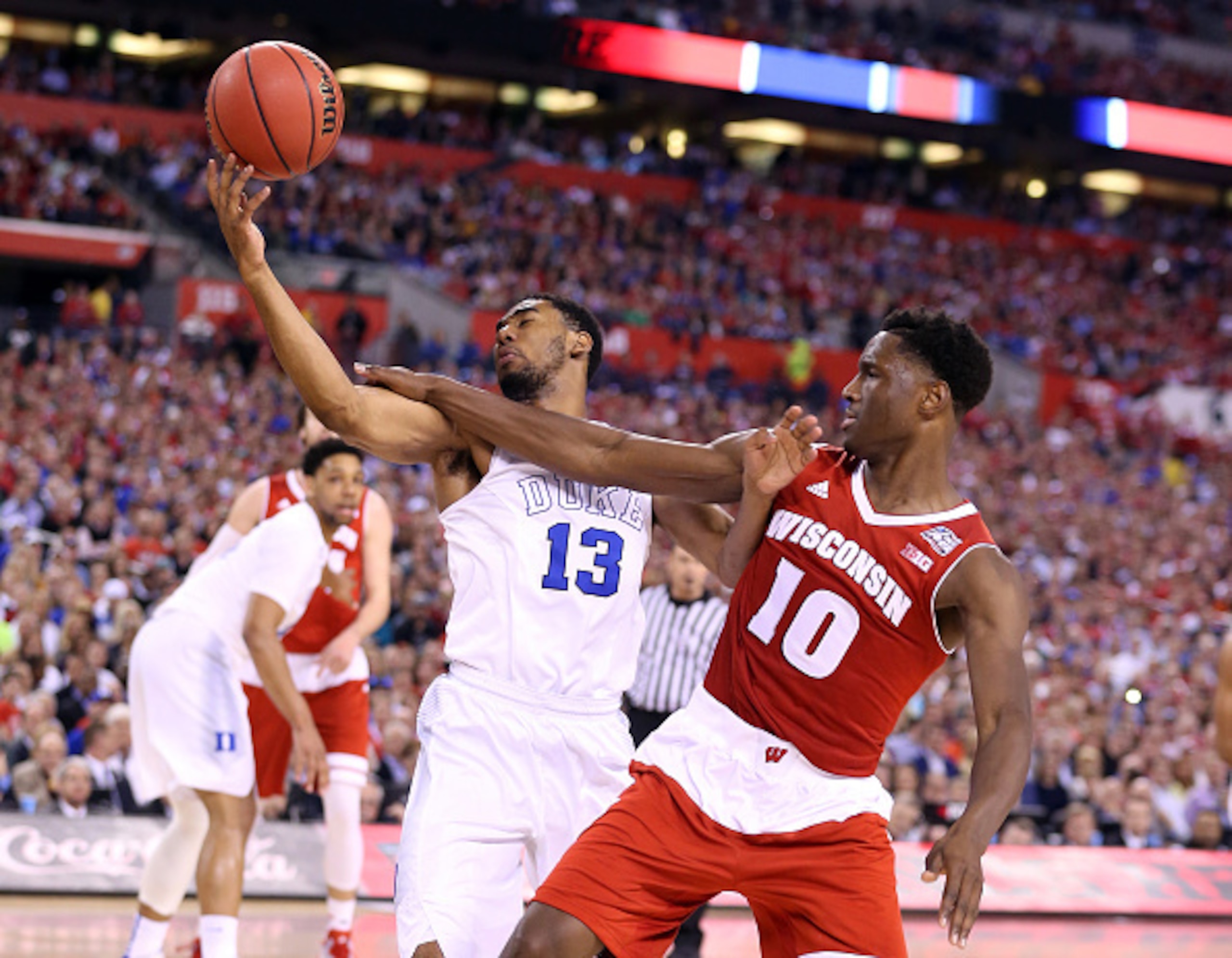
2015-16 statistical benchmarks (per game): 6.0 points, 2.5 rebounds, 1.0 assists
Matt Jones began last season on the bench, but midway through, he replaced Amile Jefferson in the starting lineup and remained there for the final 14 games of 2014-15. At 6'5" and 200 pounds, Jones has the size to play the 2 or 3, but in either place, he's not there for production as much as cohesion.
That will be the case in his junior year, but most likely again as a reserve.
Allen and Kennard have the best shot at the 2 because of their shooting ability and their aggressiveness. Jones shot 37.6 percent from three-point range, but he didn't attack the basket much and ended up with just 35 free-throw attempts in 847 minutes.
That would leave the 3, but that's probably locked down by Ingram in most lineups, so look for Jones to get his minutes and points while providing starters with a break or coming in to handle a particular assignment.
Luke Kennard
5 of 7
2015-16 statistical benchmarks (per game): 7.5 points, 3.0 rebounds, 2.0 assists
The all-time scoring leader in Ohio high school history, Kennard averaged 38.1 points per game as a senior and regularly outscored the rest of his teammates. If he sticks around Duke long enough, we might see a collegiate version of that kind of offensive takeover, but not this season.
Kennard is similar to Allen in that he's a high-scoring shooting guard who will struggle to get his minutes in his first season. Allen was the forgotten member of last year's freshman class (until the Final Four, that is) and didn't get many opportunities to show his capability.
Now that Allen is set to move into a more defined role, that figures to come at the expense of Kennard's minutes. They're both 6'5" guards with a flair for aggressive offensive play, so unless Kennard completely outplays Allen during the preseason, he's going to be the backup and thus be resigned to falling into an instant-offense-off-the-bench role.
Sean Obi
6 of 7
2015-16 statistical benchmarks (per game): 8.0 points, 8.5 rebounds, 1.5 blocks
Obi had a strong freshman season at Rice in 2013-14 but decided to transfer from that program after a coaching change. Duke was more than happy to bring him over and have him sit out a season, since it knew incoming freshman Jahlil Okafor was almost certain to be a one-and-done player.
Guys who are 6'9" and 265 pounds don't exactly grow on trees, so this saved the Blue Devils from having to search for one at the prep level on the recruiting trail for the 2015-16 season.
But don't expect Obi to fully replace what Okafor took with him to the NBA after one season, particularly from an offensive standpoint. Duke's lineup this year could be far more balanced from a scoring standpoint, and the center position could go from being the most productive to the least.
Instead, Obi's presence on the court will be more valuable on the glass and in protecting the rim. Okafor wasn't known for his defense and finished with 54 blocks, which Obi should be able to meet even with fewer minutes, and his time from last season practicing against Okafor while sitting out should help him when he gets into real action.
Derryck Thornton
7 of 7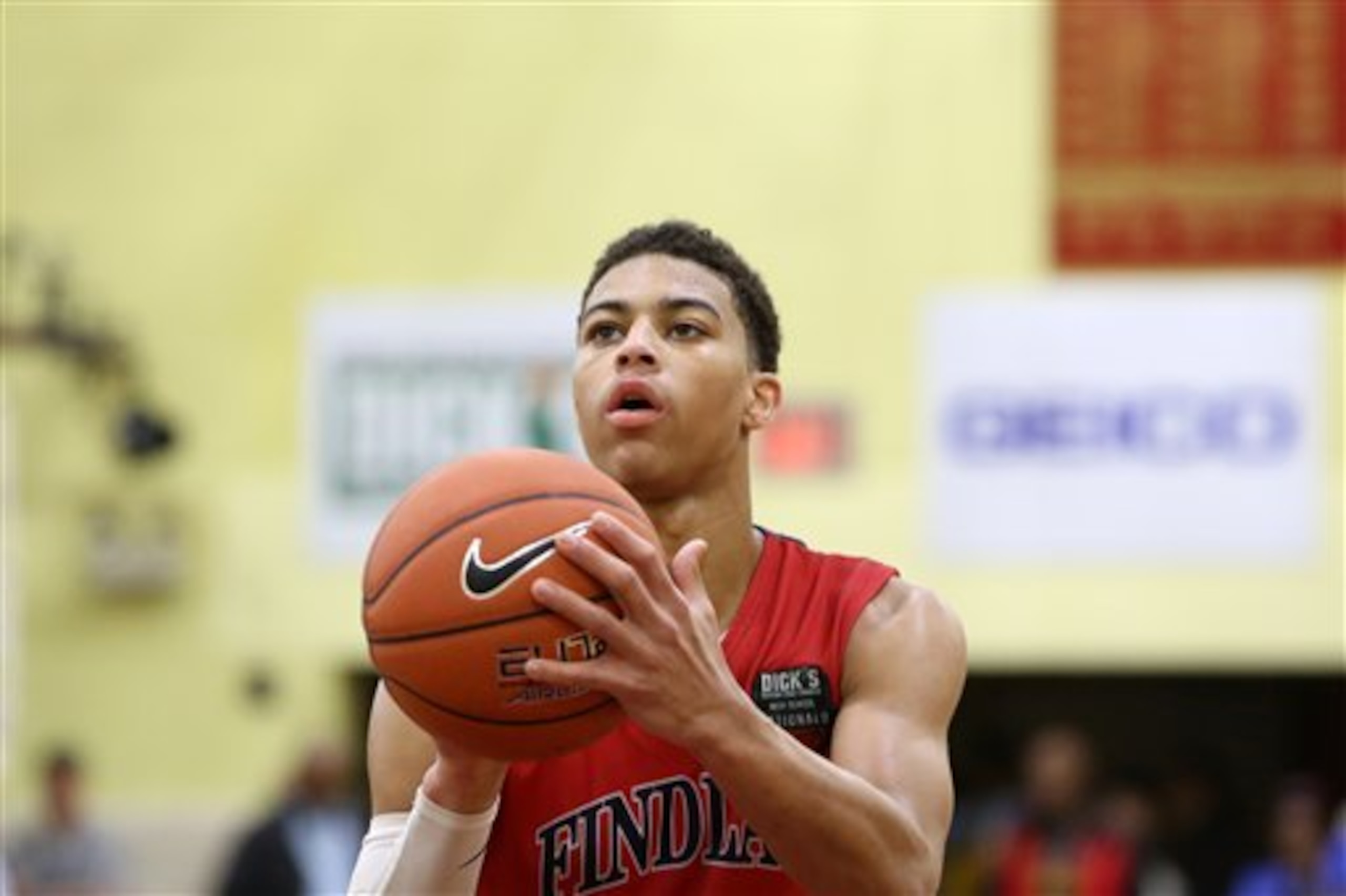
2015-16 statistical benchmarks (per game): 10.0 points, 3.5 rebounds, 5.5 assists
Derryck Thornton comes to Duke knowing that he's pretty much guaranteed a starting position, since he's the only true point guard on the roster. Allen and Kennard could handle the spot if needed, as could Matt Jones, but none of them would be the first choice to run the point if Thornton is available.
And with that in mind, the 6'2" Thornton is going to be more involved in the offense than any other player. But that doesn't mean he'll score as much as his predecessor, Tyus Jones, who averaged 11.8 points per game.
Instead, Thornton figures to focus more on distributing to the rest of the Blue Devils' offensive options, though he'll also call his own number when the opportunity arises.
The point guard used to regularly be one of Duke's top scorers, but that's been trending downward the last few seasons, and Thornton could end up being the lowest-scoring starter at that spot since Greg Paulus averaged 6.7 points as a freshman in 2005-06.
Follow Brian J. Pedersen on Twitter at @realBJP.
.jpg?w=2560 "Rams Raiders Football")
.jpg?w=2560 "Steelers Saints Football")


.jpg?w=2560 "🚨 Week 8 AP Top 25 Poll")
.jpg?w=2560 "Blockbuster Trade Idea To Shake Up the Eastern Conference 🎇")