Fantasy Football Draft Strategy 2015: PPR League Advice and 2-Round Mock Draft
"God bless fantasy football. There are many things a man can do with his time. This is better than those things."—Pete Eckhart, The League
August marks the beginning of the gradual end of summer and, with it, the rise of fantasy football.
Across the nation, over 33 million men, women and children have had their noses buried in fantasy football preview magazines, cheat sheets and mock drafts for weeks. It's a precelebration of the coming NFL season, but more so, it's a time for friends to come together and live their dreams of owning a football team.
TOP NEWS

New NFL Power Rankings 📊
.jpg?w=2560 "Texans-Mixon Released Football")
Injury-stricken Seahawks signing veteran RB
.jpg?w=2560 "Commanders Eagles Football")
2 NFL Officials Suspended
The fantasy football manager, once a title generally reserved for older football diehards in niche leagues, has become a staple of American society. Fantasy football drafts in August are as American as fireworks on the Fourth of July.
With most drafts taking place toward the middle or end of the month, fantasy managers are always looking for a leg up on their competition. Here, I'll lay out a brief draft strategy for points-per-reception (PPR) leagues before breaking down the first two rounds of a 12-team PPR mock draft.
PPR Draft Advice and Strategy
There's no universal, one-size-fits-all manifesto for how to properly draft a fantasy football team. It's all dependent on draft position, league size, preferred style and individual tastes.
Some fantasy football managers love to stockpile running backs, an increasingly befuddling position featuring few top-tier talents who legitimately fit the mold of an every-down back.
Others, especially in PPR leagues, will stash as many receiving threats as possible while opting to take mid-to-late-round fliers on backs who are part of committees or have the potential to break out and own their backfields at some point during the season.
It's impossible to break down every draft strategy, because there are too many variables and options in regard to how someone might want to structure his or her team, but here are five tips that can be useful when the day of the draft finally arrives.
1. If you have a top-six pick, it would be wise to select a running back.
Antonio Brown is undeniably the darling of PPR leagues around the nation. Last season, Brown led all players in total points (380.9) while finishing second (23.8) to Giants rookie sensation Odell Beckham Jr. (24.6) in points per game.
Having Brown on your squad is comforting. He's a warming hug every time out, there to console you and let you know he's good for at least 20 points. Fantasy football managers love comfort.
But wide receiver is deep, the deepest position in fantasy football by a comfortable margin. Seventeen wide receivers averaged at least 15 points per game last year.
Conversely, just nine running backs averaged more than 15 points per game in 2014, with that list including current free agent Ahmad Bradshaw and currently injured Arian Foster (groin). The running back position is sparse, with almost every back carrying some sort of risk, whether it be injuries, a committee approach or competition from a young vulture.
There is something undeniably tempting about taking two elite pass-catchers early, but you also leave yourself vulnerable at a key position. Later in the first round, especially in 12- and 14-team leagues, it's justifiable to go after a No. 1 wide receiver, Rob Gronkowski (more on him in a bit) or even Aaron Rodgers and Andrew Luck, but you can't spread yourself too thin at a position that must feature at least one key contributor, if not two.
There is so much plus talent at the wide receiver position that you can end up with young potential studs like Jarvis Landry (average draft position: 54), Martavis Bryant (ADP: 57.3), Amari Cooper (ADP: 46), Allen Robinson (ADP: 63.8) and Nelson Agholar (ADP: 73) even after those top 15 names disappear.
And don't shy away from veterans because of the year they were born in; old reliables like Anquan Boldin (ADP: 102), Steve Smith Sr. (ADP: 100.8) and Victor Cruz (ADP: 84.8) can all be useful additions in the middle rounds.
It's difficult to ignore splashy wide receiver names in the pass-happy NFL, but if you're selecting early in the draft, solidify your RB1 position—then feel free to stack the rest of your team with a plethora of wide receivers before snagging an RB2 a few rounds down the road.
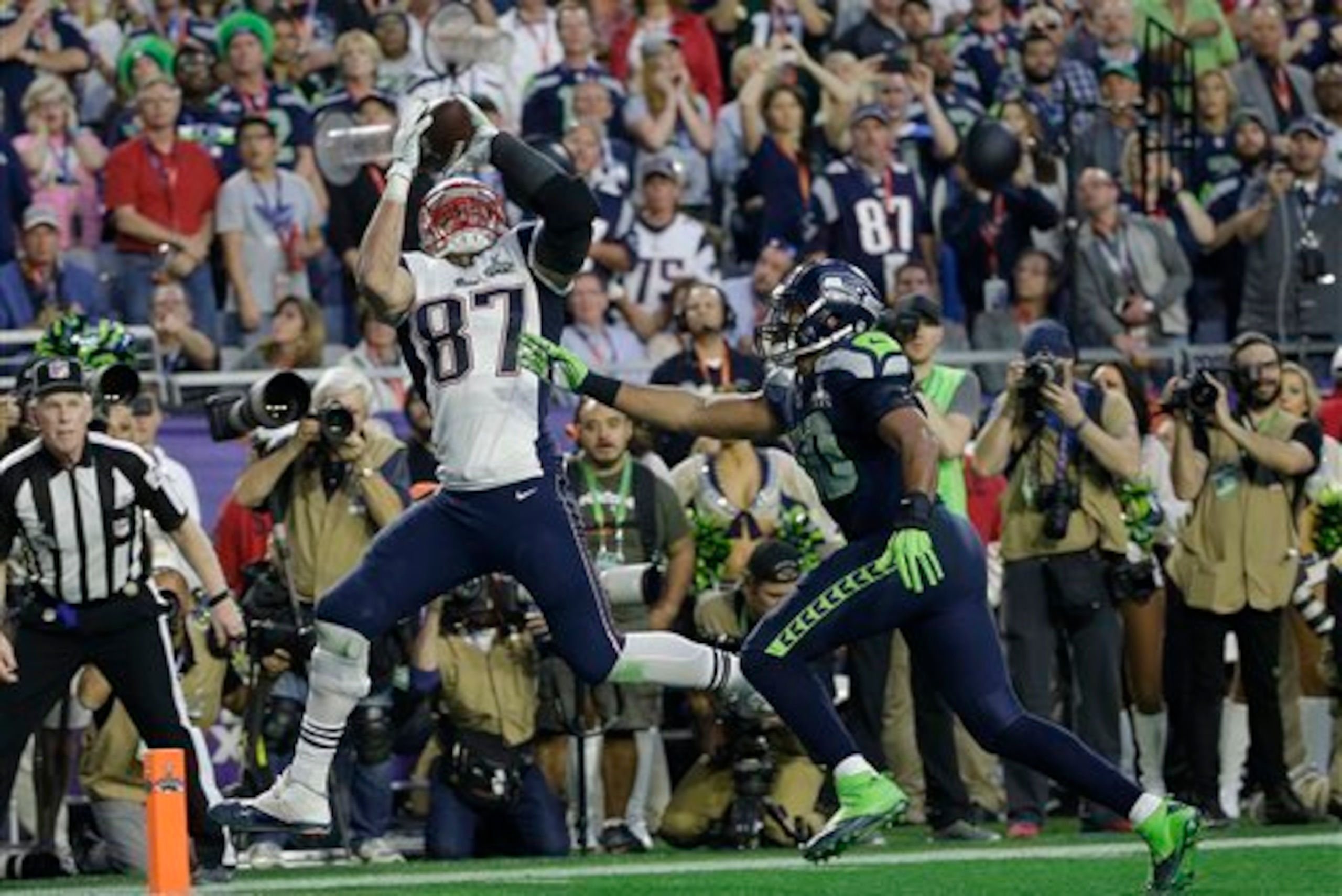
2. Unless his name is Rob Gronkowski, wait on tight ends.
Here's a look at production by tight ends in PPR leagues last season:
| Rank | Player | Current Team | Points | Avg. |
| 1 | Rob Gronkowski | New England Patriots | 266.4 | 17.8 |
| 2 | Jimmy Graham | Seattle Seahawks | 229.9 | 14.4 |
| 3 | Antonio Gates | San Diego Chargers | 223.1 | 13.9 |
| 4 | Martellus Bennett | Chicago Bears | 221.6 | 13.9 |
| 5 | Greg Olsen | Carolina Panthers | 220.8 | 13.8 |
| 6 | Travis Kelce | Kansas City Chiefs | 177.2 | 11.1 |
| 7 | Coby Fleener | Indianapolis Colts | 176.4 | 11.0 |
| 8 | Delanie Walker | Tennessee Titans | 176.0 | 11.7 |
| 9 | Jason Witten | Dallas Cowboys | 164.3 | 10.3 |
| 10 | Julius Thomas | Jacksonville Jaguars | 163.9 | 12.6 |
Gronk missed one game but still paced all tight ends with 266.4 total points. And although he played in all 16 games, former Saints star Jimmy Graham, the No. 2 tight end last season, was able to replicate only 86.3 percent of Gronk's point total.
It's a clear one-man tier at the top of the tight end board, after which things drop off considerably.
Graham has all the talent in the world, but he's in a new system in Seattle, a team that traditionally loves to dominate by running the ball and eating up the clock. He's going to be Russell Wilson's go-to guy in the end zone, but it would be foolish to believe he'll replicate the numbers he put up with Drew Brees in New Orleans' pass-happy offense.
Gronkowski currently has an ADP of 10, meaning he's unlikely to make it to the second round in most fantasy drafts. After Gronk, the next two tight ends going off the board are Graham (ADP: 29.8) and Travis Kelce (ADP: 50.3).
Reaching for a tight end who might net you only 10 to 12 points per game isn't the savviest of moves, especially with wide receiver being so deep. Try building a solid ground game and a reliable wide receiver corps before worrying about the tight end slot.
The later rounds feature plenty of intriguing talent, even if some of the names are enough to make any owner anxious. Tampa Bay's second-year tight end Austin Seferian-Jenkins is a young player who has been gaining traction in fantasy circles thanks to his uber-athletic skill set and Tampa Bay's favorable schedule.
You can also grab Owen Daniels, the Broncos' new starting tight end following Julius Thomas' departure to Jacksonville. Daniels followed head coach Gary Kubiak to Denver in the offseason, and the 10-year veteran is more familiar with the newly installed offense than anyone else on the team. He will be sharing the field in two-tight end sets with Virgil Green, but Green projects as more of a blocker.
In most weeks, tight end production relies on touchdowns, so try to target pass-catching tight ends in throw-happy offenses in the mid-to-late rounds of your draft, unless you can select Graham, Kelce or Greg Olsen at a reasonable spot.
3. Quarterback is deeper than you think. Don't reach; don't make reactionary picks.
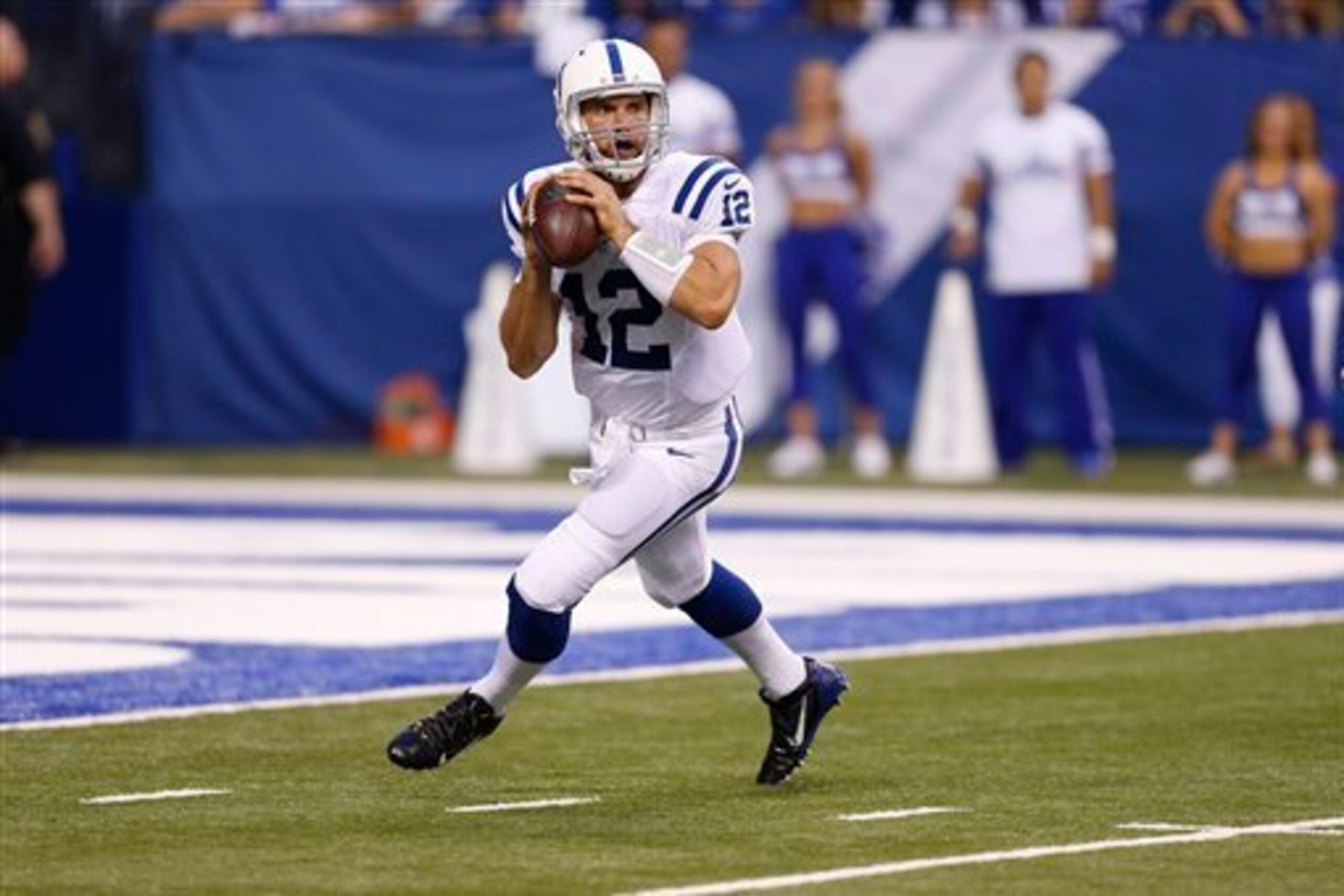
Much like the one-man tight end top tier, the quarterback class has a distinct two-man tier at the top, but the drop from Rodgers and Luck to the rest of the pack isn't as precipitous as you might think.
Not only can your team survive without Rodgers or Luck, but it can also thrive.
Rodgers and Luck led all quarterbacks in points per game in 2014, averaging 22.1 and 21.9, respectively. But the top 13 quarterbacks all averaged at least 17 points per game, with Jay Cutler just making the cut at 17.1.
Now, you would rather have Rodgers or Luck than someone as frustratingly inconsistent as Cutler, but what if you could load up on running backs and receivers early, then select Ben Roethlisberger (19.1 points per game), Matt Ryan (17.8) or Ryan Tannehill (17.4)? You'd have to feel comfortable rolling out any of those options each week, and that's without mentioning Pro Bowlers Tony Romo, Tom Brady and Brees.
Wilson and Peyton Manning are generally classified as occupying the second tier, just behind Rodgers and Luck, but it doesn't make sense to reach for either if it's the third or even fourth round, when there's a deep pool of talent available.
If your draft looks like it's going to be quarterback-heavy in the early going, don't panic. Reactionary picks are generally unwise. Stick to your guns. If you need a running back in the third or fourth round, don't abandon your strategy because the two picks prior were Manning and Wilson.
4. After selecting your starters, don't be afraid to reach in the later rounds.
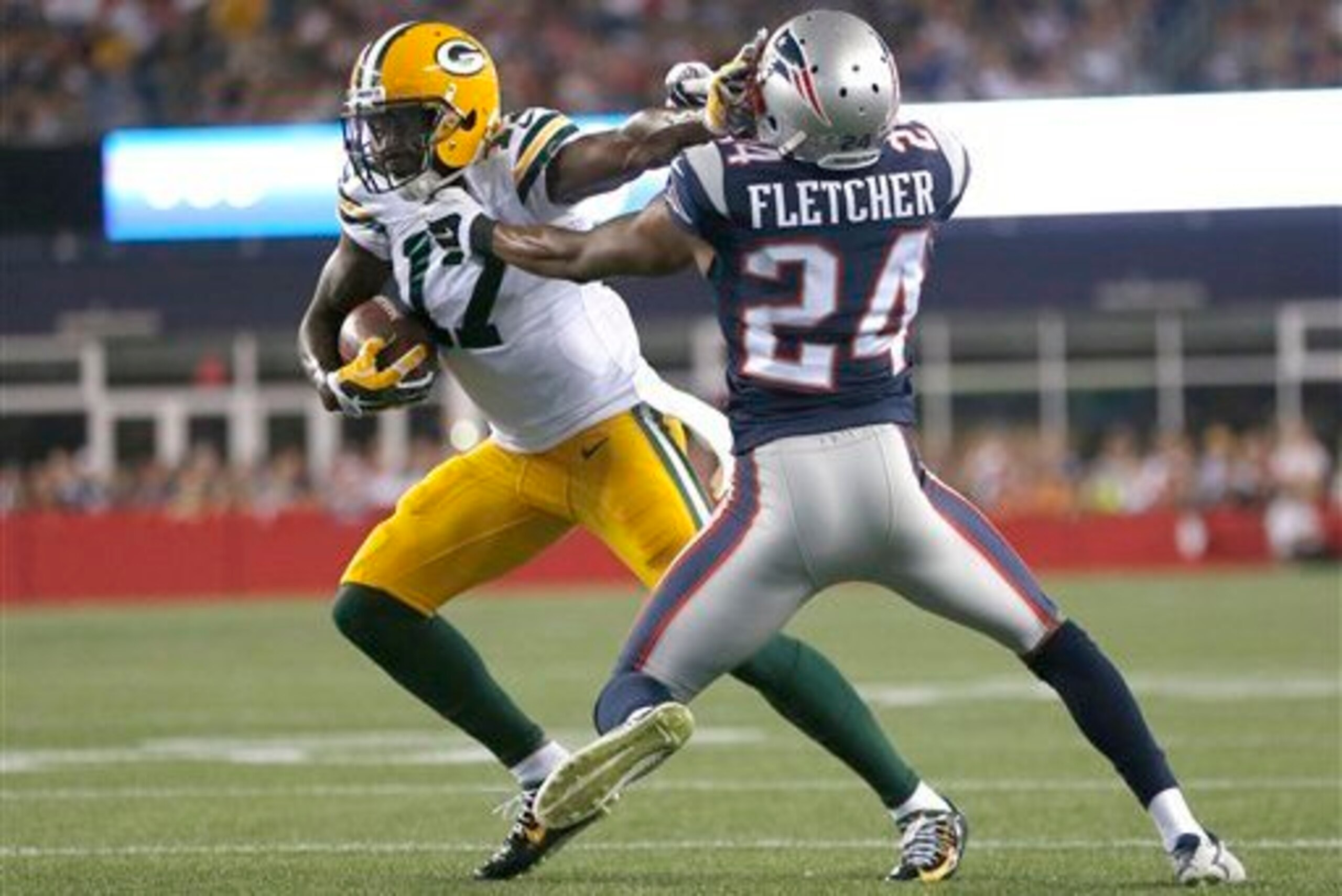
It's every fantasy owner's dream: the late-round steal who blossoms into a star.
There are several every year, and the owner wise (or lucky) enough to nail a late-round pick with top-15 or top-20 potential at his position often winds up making a playoff run.
Last season was filled with exceptional talents who slipped to the bottom depths of fantasy football drafts. Stars in the making like Beckham (ADP: 192), C.J. Anderson (ADP: 185), Emmanuel Sanders (ADP: 68.6), Kelvin Benjamin (ADP: 122.8) and Jeremy Hill (ADP: 131) all helped lead their owners to countless victories and league titles.
After you solidify your starting lineup, don't be afraid to let your freak flag fly.
Do you feel like Davante Adams (ADP: 101) is going to thrive in the absence of Jordy Nelson? Do you think John Brown (ADP: 96) can thrive and transform into the Arizona Cardinals' true No. 1 receiver this season? Do you trust that Breshad Perriman (ADP: 113.8) will recover from a sprained PCL and become the focal point of the Ravens passing game?
Ultimately, you have to feel comfortable with your selection, but you're also looking to strike oil in the vast wastelands that are the late rounds of fantasy football drafts. Chances are that you'll drop many of the bench players you draft at some point during the season.
Don't ignore reliable backups, but don't be too afraid to risk going after a player you feel strongly about. After all, half the fun of fantasy football is drafting the players you actually want.
Here are some players who fit this mold: Adams, Brown, David Cobb (ADP: 120.8), Devin Funchess (122.5), Roy Helu Jr. (146.3).
5. Have a contingency plan for every situation.

You're selecting eighth and dead set on grabbing a running back. But Le'Veon Bell, Eddie Lacy, Jamaal Charles, Marshawn Lynch, Matt Forte and Anderson are all off the board, along with wide receiver Antonio Brown.
There's no need to panic. Sure, you could grab Justin Forsett, DeMarco Murray, Hill or LeSean McCoy, but each carries question marks and uncertainty. You need a first-round pick you can trust every single week. He's going to be your core, your old reliable, your best friend.
Never be afraid to veer from your original plan, should things change—and in a fantasy football draft, things will always change.
Make the move for the reliable face with both a high ceiling and high floor. Julio Jones, Demaryius Thomas, Gronk and Dez Bryant would all be strong picks here, and there will still be quality backs on the board when the pick snakes back around to you.
Conversely, if you planned on taking Brown fifth overall, but somehow Bell or Charles slipped to you, take the running back and plan for a receiver or solidify the running back position on the wraparound.
Rigidity can be the doom of drafters; don't be afraid to deviate from the plan according to how the draft plays out, but remember to never freak out in reaction to an out-of-place pick. Don't overreact to someone reaching for Manning or Wilson in the second round by nervously grabbing the next-best quarterback.
Now, with those tips out of the way, here's a look at the first two rounds of a fantasy football mock draft.
First Round
| Pick | Player | Pos. | Team |
| 1 | Adrian Peterson | RB | Minnesota Vikings |
| 2 | Le'Veon Bell | RB | Pittsburgh Steelers |
| 3 | Antonio Brown | WR | Pittsburgh Steelers |
| 4 | Jamaal Charles | RB | Kansas City Chiefs |
| 5 | Eddie Lacy | RB | Green Bay Packers |
| 6 | Julio Jones | RB | Atlanta Falcons |
| 7 | Marshawn Lynch | RB | Seattle Seahawks |
| 8 | Calvin Johnson | WR | Detroit Lions |
| 9 | Dez Bryant | WR | Dallas Cowboys |
| 10 | Odell Beckham Jr. | WR | New York Giants |
| 11 | Demaryius Thomas | WR | Denver Broncos |
| 12 | Rob Gronkowski | TE | New England Patriots |
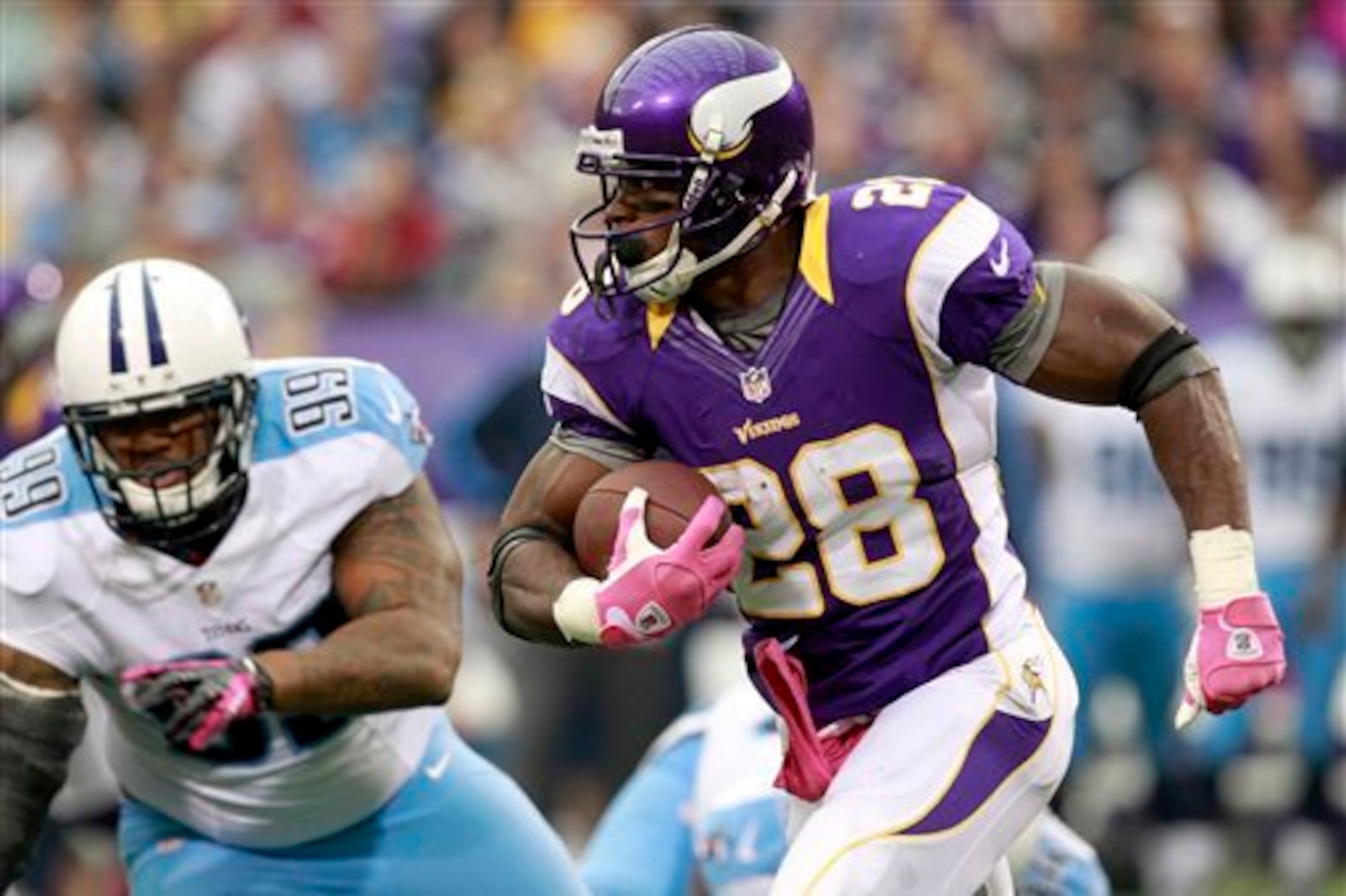
It's difficult to argue with taking Adrian Peterson first overall, despite 104 games of wear and tear on his 30-year-old body. Peterson is fresh after playing just one game in 2014; he totaled 3,758 yards from scrimmage and 24 total touchdowns from 2012 to 2013 while averaging 348 touches per season, per Pro-Football-Reference.com.
Bell would likely have gone first were he not suspended for the first two games of the regular season, and he'll go No. 1 in plenty of leagues anyway.
Brown at No. 3, even with that pedigree, may have been a reach. While that sets you up with the best fantasy football receiving threat there is, you have to hope the draft doesn't embark on a tear of running backs before the pick snakes back around. It's what you might call a comforting risk, as the owner finds solace in owning Brown but also finds him- or herself at the mercy of the other owners.
Charles and Lacy were the smart, safe picks here, and at No. 6, it's difficult to argue against Jones, who at 26 years old is just entering his playing prime. The Falcons targeted Jones 163 times last season, and he hauled in 104 passes for 1,593 yards in 15 games. Matt Ryan and Jones have established a fantastic rapport; expect it to continue this year.
Lynch at No. 7 is terrific value for a bell-cow back who has a knack for plowing into the end zone. You know what you're getting with Lynch, and while that may not be the most exciting prospect in the world, it solidifies your RB1 slot.
A string of receivers being taken from picks No. 8 to No. 11 isn't unexpected in a PPR league, but it does show that pass-catchers continue to trump running backs as "exciting" picks.
Calvin Johnson, coming off an injury-plagued 2014 season that saw him post his lowest reception (71) and yardage (1,077) totals since 2009, seems like a reach at No. 8, especially with Beckham, Dez Bryant and Demaryius Thomas still on the board.
Thomas slipping to No. 11 in that situation is particularly fortuitous, while the run of wide receivers left the door open for Gronk to come off the board at No. 12, which represents nice value considering his ADP of 10.
Six running backs, five wide receivers and the game's best tight end. There were a few moves that didn't coincide with their ADP, but overall, this is something you might expect to see in a PPR draft with owners jostling to build brilliant receiving corps.
Second Round
| Pick (Overall) | Player | Pos. | Team |
| 1 (13) | Jeremy Hill | RB | Cincinnati Bengals |
| 2 (14) | Randall Cobb | WR | Green Bay Packers |
| 3 (15) | Andrew Luck | QB | Indianapolis Colts |
| 4 (16) | DeMarco Murray | RB | Philadelphia Eagles |
| 5 (17) | A.J. Green | WR | Cincinnati Bengals |
| 6 (18) | Matt Forte | RB | Chicago Bears |
| 7 (19) | Aaron Rodgers | QB | Green Bay Packers |
| 8 (20) | Justin Forsett | RB | Baltimore Ravens |
| 9 (21) | C.J. Anderson | RB | Denver Broncos |
| 10 (22) | T.Y. Hilton | WR | Indianapolis Colts |
| 11 (23) | Alshon Jeffery | WR | Chicago Bears |
| 12 (24) | DeAndre Hopkins | WR | Houston Texans |
With Gronkowski already on the roster, the owner of the last pick of the first round was able to set the tone for the second round, with the snake format gifting back-to-back picks to the team.
Opting not to cave to the pressure of drafting a wide receiver, the owner opted to go with Hill. Hill bloomed late last season, with Giovani Bernard hobbled by injuries. From Week 8 on, Hill surpassed 100 yards rushing five times, finishing with 929 yards and six touchdowns in just nine games. He'll cede some touches and third downs to Bernard, but the 22-year-old Hill is poised for another strong campaign.
Nelson's reportedly torn ACL, per ESPN's Adam Schefter, played a key part in Randall Cobb's selection. Cobb ranked eighth among all receivers in total points last year (293.4) but was outpaced by Nelson, who finished third with 327.9 points. One might argue that losing Nelson will put more pressure on Cobb, but the 25-year-old who saw 127 targets last season should only see that number rise.
It was only a matter of time before one of the Luck-Rodgers tandem flew off the board, and Luck's selection at No. 15 overall perfectly aligns with his ADP. Rodgers would go four slots later, roughly near his ADP as well, and even with Nelson likely done for the season, Rodgers isn't ready to cede his fantasy football throne to Luck just yet.
It's a bit of a shock to see Forte fall all the way to No. 18, but most signs point to a regression this year, especially in the passing game. Still, this is tremendous value for a running back who consistently finishes in the top 12 at his position, and Yahoo Sports' Brad Evans is high on the seven-year pro:
"Coach John Fox has openly stated that he wants to employ a more balanced and run-friendly offense in 2015. So yes, Forte’s receiving stats are bound to regress. However, Fox has never been blessed with a pass-catching weapon of Forte’s caliber before. Additionally, he’ll be bringing offensive coordinator Adam Gase with him, who, over the past two years, has successfully utilized receivers out of the backfield. In fact, both Knowshon Moreno and C.J. Anderson averaged nearly 4 receptions per game in 2013 and 2014 respectively.
"
It's undeniable that slotting Calvin Johnson and A.J. Green into your starting receiver slots every week is an incredible feeling, but that team will need to hit on a running back in the next two rounds or find itself floundering at that spot. Taking Forte may have been the smarter move, but sometimes excitement wins out.
Again, a lot of running backs fell in this one. The two one-year wonders, Forsett and Anderson, fell sharply to the latter half of the second round. It's understandable that there would be some resistance to Forsett and Anderson, but drafting two backs who finished eighth and 11th, respectively, at this point in the draft is something of a steal.
It's possible that neither becomes more than what he was last year, but with quality running backs sparse and big-name wide receivers (Brandin Cooks, Sanders, Mike Evans) still on the board, these rank as wise moves.
Round 2 also ended on a tear of pass-catchers, with the No. 1 options in Indianapolis, Chicago and Houston closing the early proceedings.
The team with Brown and T.Y. Hilton now must draft a running back in the third round, but solid options in McCoy, Lamar Miller, Alfred Morris and Latavius Murray are all available for the taking
Glancing through the first two rounds, you can see that each manager has a distinct strategy.
Three teams selected two wide receivers with their first two picks, likely leaving them to scramble for an RB1 in the next round.
The three squads that opted to go running back-running back now have several routes to choose from, but the most likely strategy is picking up a WR1 to pair with one of the league's best ground games.
With Rodgers and Luck gone, quarterbacks should take a brief hiatus from the draft board for at least a round or two, but someone may take the bait and reach for one of the Manning-Wilson duo.
Every fantasy draft you enter is going to take a different shape. As noted earlier, there's no universal draft strategy guaranteed to win you a league, but this blueprint should serve as a solid foundation for future PPR drafts.
Good luck, and happy drafting.
All statistics and average draft positions courtesy of FantasyPros.com, unless otherwise indicated.

.jpg?w=2560 "Chiefs Dolphins Football")


.jpg?w=2560 "Viral Rams Coach Vid 🖕")