2015 NCAA Tournament Teams with the Most Players Returning This Season
In North Carolina and Virginia, the ACC will enter the 2015-16 college basketball season with two of the three most intact tournament rosters in the country.
In stark contrast to last week's list of the most drastic roster makeovers in college hoops, today we'll be taking a look at the tournament teams bringing back the most scoring from last season. It's the same data, but instead of winning percentage plus percentage of points lost, the ranking formula is just winning percentage plus percentage of points retained.
The ideal candidate is one that wins 100 percent of its games and returns 100 percent of its scoring. The theory, of course, is that these 10 teams will be even better than last season, thanks to a core rotation that stayed together and gained a year of experience.
Including the five honorable mentions, we feel safe penciling in each of these 15 teams for a spot in the 2016 NCAA tournament.
Honorable Mentions
1 of 11
Five teams failed to make the cut because they didn't have a high enough winning percentage, but they absolutely necessitate an honorable mention for returning at least 75 percent of their points from last season.
Oklahoma Sooners (75.2 percent retention)
Losing TaShawn Thomas' 11.6 points per game is a pretty big blow, but the Sooners retained the rest of their starting five and have quite a few options for replacing the departed power forward. Oklahoma may very well be better than last year's squad that earned a No. 3 seed in the NCAA tournament.
Belmont Bruins (81.8 percent retention)
Over the past decade, Belmont has established itself as one of the best non-major programs in the country. The Bruins are 0-7 in the NCAA tournament, but getting to the Big Dance 70 percent of the time is no small feat. They'll be in great shape to make it eight out of 11 with point guard Reece Chamberlain the only major casualty from last year's roster.
Purdue Boilermakers (82.7 percent retention)
By adding Caleb Swanigan to a returning roster that already includes A.J. Hammons, Isaac Haas, Rapheal Davis, Vince Edwards, Kendall Stephens and Dakota Mathias, Purdue should be one of the top teams in the Big Ten—provided the Boilermakers can navigate the loss of Jon Octeus. Texas Arlington and Illinois State transfer Johnny Hill could be the difference between flirting with a top-four finish in conference and flirting with an appearance in the Final Four.
Indiana Hoosiers (86.9 percent retention)
Much like Oklahoma, the Hoosiers are a serious Final Four candidate because they return all of their major pieces except for a starting frontcourt player. And, frankly, Indiana is upgrading substantially from Hanner Mosquera-Perea to the combined forces of Thomas Bryant and Juwan Morgan.
UAB Blazers (90.4 percent retention)
One of the most intact rosters in the country, UAB returns all seven of its leading scorers from a roster that should have been too young to dance. The Blazers had four freshmen among their top five scorers and will only have one senior on this year's roster. This should be the team to beat in the C-USA for the next few seasons.
10. North Florida Ospreys
2 of 11
2014-15 Winning Percentage: 65.7
Percentage of Points Retained: 83.7
Key Players Lost: Jalen Nesbitt (380 points)
Top Five Returnees: Dallas Moore (554 points), Beau Beech (452 points), Chris Davenport (383 points), Trent Mackey (307 points), BaeBae Daniels (289 points)
The Atlantic Sun has been producing one of the biggest Cinderella threats on a nearly annual basis for the past decade. It was Belmont for a while, but since the Bruins left for the Ohio Valley Conference, Florida Gulf Coast, Mercer and now North Florida have had their turns in that role.
For the Ospreys, it's a near-foregone conclusion that they will be serving a two-year term as the conference's tournament representative. Not only is FGCU their only viable competition, but they return almost everybody from last year's team that was flawless against all in-conference competition not named USC Upstate.
Replacing Jalen Nesbitt could be a challenge—he led the Ospreys in steals while ranking second in assists, third in rebounds, third in blocks and fourth in points—but their other six primary players will all be back for either their junior or senior season.
Based on that reliance on upperclassmen, great three-point shooting, solid defense and a pretty brutal schedule (true road games against Illinois, LSU, Dayton, Arkansas and VCU is no joke), North Florida is checking all of the boxes on the criteria for Cinderella that we came up with two years ago.
No. 1 on last year's preseason Cinderella list was Georgia State, and there's a good chance the Ospreys will be in that spot this November.
We already feel sorry for the No. 2 or No. 3 seed that draws North Florida on Selection Sunday.
9. Wichita State Shockers
3 of 11
2014-15 Winning Percentage: 85.7
Percentage of Points Retained: 64.6
Key Players Lost: Darius Carter (398 points), Tekele Cotton (332 points)
Top Five Returnees: Ron Baker (516 points), Fred VanVleet (475 points), Shaquille Morris (145 points), Evan Wessel (134 points), Rashard Kelly (102 points)
Compared to some of the teams near the top of the list (as well as the honorable mentions), Wichita State lost an awful lot. Darius Carter and Tekele Cotton were the third- and fourth-best scorers on a team that only had four players average so much as five points per game. The former was the team's best (and often only) interior weapon, while the latter was a multitool weapon who was vastly underappreciated compared to his backcourt running mates.
However, that's just about all the Shockers lost, and they are well-prepared for those changes.
In house, they still have an extremely strong backcourt made up of Ron Baker, Fred VanVleet and Evan Wessel. Everyone knows about Baker and VanVleet, but Wessel is extremely valuable in his own right, despite putting up numbers that barely get noticed. He has been for Wichita State what Josh Gasser was for Wisconsin for the past four years.
Also in house, Shaquille Morris had a strong freshman season and would have commanded more playing time if he wasn't constantly getting into foul trouble. He averaged 14.9 points, 8.2 rebounds and 2.5 blocks per 40 minutes and should be in the running for a starting job.
But the biggest reason—both literally and figuratively—that Wichita State remains a top-10 candidate is the addition of Cleveland State transfer Anton Grady. Arguably an even better version of Carter, Grady averaged 14.3 points and 7.9 rebounds per game last season and will immediately become Wichita State's go-to guy in the post.
For a third straight season, this isn't just a fantastic Missouri Valley Conference team. This should be an excellent basketball team capable of beating anyone in the country.

.jpg?w=2560 "Texans-Mixon Released Football")
8. Gonzaga Bulldogs
4 of 11
2014-15 Winning Percentage: 92.1
Percentage of Points Retained: 58.8
Key Players Lost: Kevin Pangos (440 points), Byron Wesley (402 points), Gary Bell (312 points)
Top Five Returnees: Kyle Wiltjer (638 points), Przemek Karnowski (416 points), Domantas Sabonis (369 points), Kyle Dranginis (155 points), Silas Melson (100 points)
Considering Gonzaga ranked 21st on last week's list of the most drastic makeovers and eighth on this week's list of the most intact rosters, there's a pretty good argument to be made that we should have minimized the impact of winning percentage in the formulas. Perhaps next summer we'll go with winning percentage plus double the attrition/retention rate. You live, you learn.
In the meantime, the Bulldogs certainly do have a trio of crucial returning frontcourt players who should each score a ton.
With 638 points, Kyle Wiltjer ranks sixth in the nation on the list of highest-scoring returning players. Not too shabby for a guy who sat out the entire 2013-14 season after transferring from Kentucky following a rather disappointing sophomore season. He was always a plus shooter from downtown, but he was one of the most lethal three-point shooters in the country last season.
On most rosters, a shooting guard trapped in a power forward's body can be a bit of a predicament. On this roster, though, it's a perfect fit, because Domantas Sabonis and Przemek Karnowski are more than capable of handling the dirty work in the paint. In West Coast Conference play, the duo combined for 19.2 points and 13.0 rebounds in just 47.8 minutes per game.
Clearly, there's no need to worry about the big men, but are the guards ready to excel?
Gonzaga lost all three of its starting guards, leaving the backcourt play up to some combination of Josh Perkins (who lasted just five games before suffering a broken jaw), Eric McClellan (who barely played after transferring in from Vanderbilt), Silas Melson and Kyle Dranginis.
As such, the first weeks of the season may be a work in progress, but with the help of probably the best frontcourt in the country, Gonzaga should have no problem winning at least 25 games for a ninth consecutive season.
7. Davidson Wildcats
5 of 11
2014-15 Winning Percentage: 75.0
Percentage of Points Retained: 78.4
Key Players Lost: Tyler Kalinoski (533 points)
Top Five Returnees: Brian Sullivan (406 points), Jack Gibbs (405 points), Jordan Barham (367 points), Peyton Aldridge (302 points), Oskar Michelsen (179 points)
Considering they lost the Atlantic 10 Player of the Year, I never would have guessed that Davidson is one of just three teams retaining at least 75 percent of its points from a team that won at least 75 percent of its games.
Tyler Kalinoski had an absolutely phenomenal senior season—particularly when you consider Davidson lost a key player (Jake Belford) just six games into the season and played a full month of conference games without its second-best player (Jack Gibbs). However, he was one of just two seniors on the roster, and the other (Ali Mackay) scored a grand total of 12 points.
Thus, Davidson is in pretty solid shape to win a fifth consecutive outright regular-season conference title.
After all, most regarded Gibbs as the star of this team before he suffered a torn meniscus. Despite the injury, he was one of two players in the country to average at least 16 points and 4.5 assists per game while shooting at least 42.5 percent from three-point range. (The other was Sacramento State's Mikh McKinney.)
With Gibbs back for at least one more year, even without Kalinoski, there will be big expectations from Davidson's backcourt. In addition to Gibbs, Brian Sullivan (12.7 PPG, 3.9 APG) and Jordan Barham (11.8 PPG) have to be considered early candidates for the A-10 all-conference team.
It's the frontcourt, however, that will determine how great this team can or cannot be.
With Belford's early injury and Oskar Michelsen and Peyton Aldridge both freshmen, Davidson was extremely reliant on three-pointers and frequently exploited in the paint. We're not looking for that trio of forwards to match what Gonzaga's frontcourt trio is capable of doing, but as long as they're competent enough to not let the team's excellent perimeter play go to waste, the Wildcats could be a very difficult team to beat, once again.
6. Kansas Jayhawks
6 of 11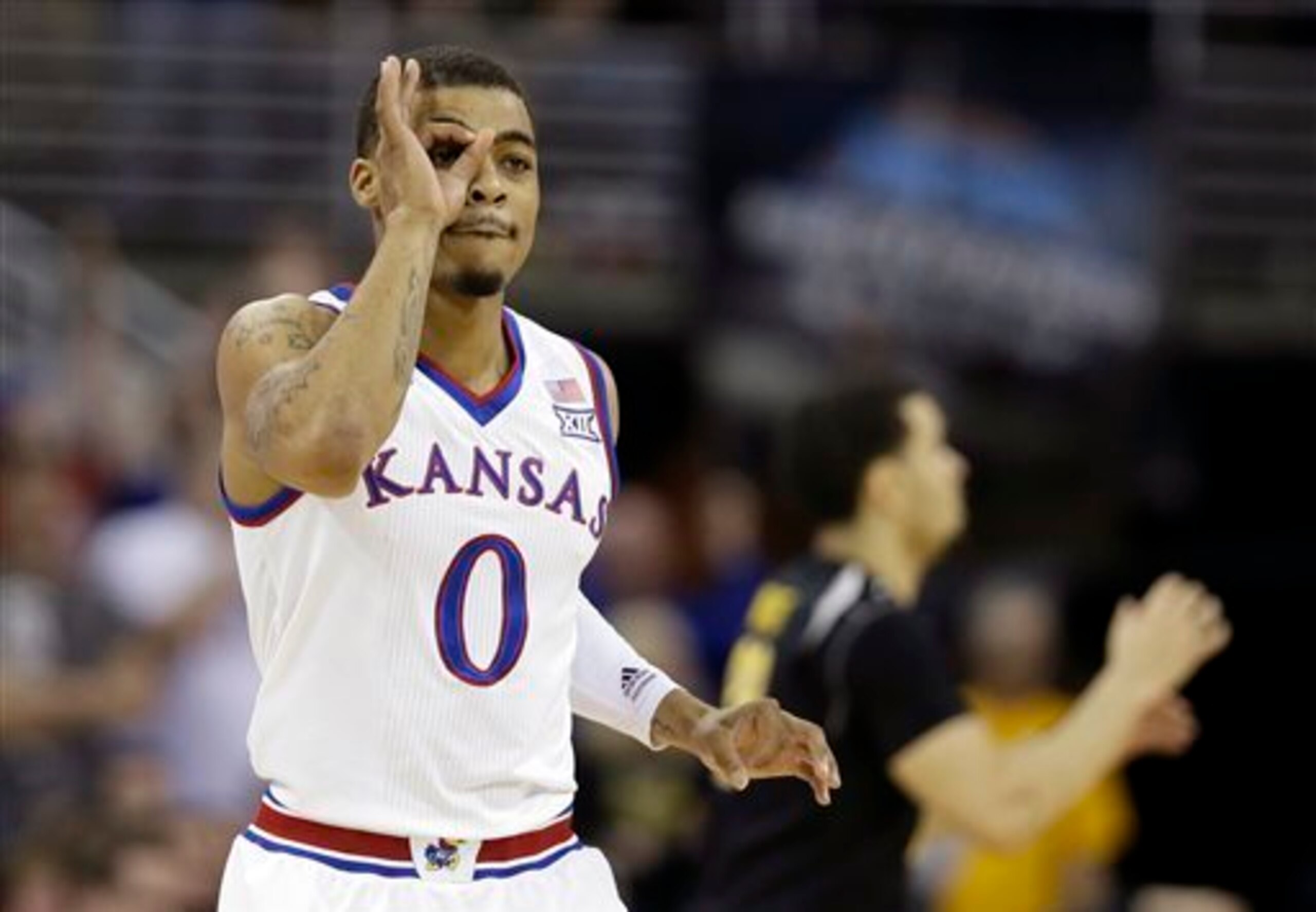
2014-15 Winning Percentage: 75.0
Percentage of Points Retained: 79.1
Key Players Lost: Kelly Oubre (333 points), Cliff Alexander (199 points)
Top Five Returnees: Perry Ellis (469 points), Frank Mason (452 points), Wayne Selden (339 points), Brannen Greene (198 points), Jamari Traylor (167 points)
Hard to believe an annual powerhouse like the Jayhawks could hang on to all three of their leading scorers, but that's precisely what Bill Self and company have been blessed with as they seek a 12th consecutive Big 12 title after merely losing a pair of freshmen.
Frankly, those top five returnees would make quite possibly the best starting five in the conference—which is really saying something.
Perry Ellis has been solid as a rock for the past few seasons. Frank Mason was one of the biggest breakout stars in the country last season. Wayne Selden hasn't quite lived up to the hype of his arrival from two seasons ago, but he has been far from a disaster and could finally be headed for a monster year. And Brannen Greene and Jamari Traylor are two of the better reserves in the country.
Throw in what should be a big year for Sviatoslav Mykhailiuk and hopefully a rare full six months of health for Devonte' Graham, and Kansas is already loaded with returning players.
The additions of Cheick Diallo (maybe?), Carlton Bragg and Lagerald Vick are just overkill.
5. Cincinnati Bearcats
7 of 11
2014-15 Winning Percentage: 67.6
Percentage of Points Retained: 88.2
Key Players Lost: Jermaine Sanders (156 points)
Top Five Returnees: Octavius Ellis (337 points), Troy Caupain (327 points), Farad Cobb (289 points), Gary Clark (265 points), Kevin Johnson (220 points)
After losing Sean Kilpatrick, Justin Jackson and Titus Rubles from the 2013-14 team, not a single Bearcat averaged so much as 10.0 points per game this past season.
Still, it must feel pretty good to be getting all six of their leading scorers back for another year—a luxury almost never afforded to teams that have gone dancing for five straight years.
For Cincinnati, points scored aren't nearly as important as points prevented. The Bearcats have ranked in the top 25 nationally in adjusted defensive efficiency in each of the past five seasons, and with Octavius Ellis, Gary Clark and Coreontae DeBerry all back for another year of shutdown interior defense, we have every reason to assume that this will be one of the 10 best defenses in the country in 2015-16.
Even with that great defense, though, they desperately need a couple of these returnees to step up on offense. Cincinnati failed to score 60 points in 50 percent of its games, including a 56-55 double-overtime loss to Nebraska that's still nauseating to think about.
Clark, Ellis and Troy Caupain were the three most efficient scorers on the roster, but each was only responsible for about 18 percent of the team's shots while on the court. A slight adjustment to get more looks for those three players could be all it takes to elevate this team to an AAC title.
4. Stephen F. Austin Lumberjacks
8 of 11
2014-15 Winning Percentage: 85.3
Percentage of Points Retained: 70.7
Key Players Lost: Jacob Parker (472 points), Tanner Clayton (130 points)
Top Five Returnees: Thomas Walkup (529 points), Ty Charles (291 points), Clide Geffrard (282 points), Jared Johnson (258 points), Demetrious Floyd (232 points)
In terrifying news for any team with aspirations of earning a No. 4 or No. 5 seed in the 2016 NCAA tournament, Stephen F. Austin remains relatively intact for another season, including getting one more season of its do-everything small forward, Thomas Walkup.
Walkup was one of just five players in the country to average at least 15 points, 6.0 rebounds and 3.5 assists per game, joining a pretty exclusive club made up of Tyrone Wallace (California), DeAndre Bembry (Saint Joseph's), Wesley Saunders (Harvard) and Emmy Andujar (Manhattan). And with a field-goal percentage of 56.7, there's an argument to be made that Walkup was actually the most valuable of that bunch.
He lost his primary running mate (Jacob Parker) but does still have a pretty solid stable of teammates.
In his freshman season, Ty Charles was already nearly as valuable as Parker was in his senior year. With a little more room to shine, he could be a monster this year. Jared Johnson and Demetrious Floyd both shot 41 percent from three-point range last season and should see a bit of an increased workload with Parker out of the picture.
One big key to the Lumberjacks' success will be a returning player who ranked ninth on the team in scoring. Starting point guard Trey Pinkney has been pretty awful at trying to put the ball in the hoop, but he led the team in both assists and steals—helping lead SFA to the nation's fifth-highest assist rate and fifth-highest defensive turnover rate.
With five seniors likely in this year's primary six-man rotation, perhaps 2016-17 will finally be the year that another team stands a chance in the Southland Conference. Not this year, though. If they win the season opener at Baylor (unlikely, but possible), the Lumberjacks just might be the top candidate to enter the NCAA tournament with an undefeated record.
3. North Carolina Tar Heels
9 of 11
2014-15 Winning Percentage: 68.4
Percentage of Points Retained: 88.1
Key Players Lost: J.P. Tokoto (316 points)
Top Five Returnees: Marcus Paige (534 points), Brice Johnson (492 points), Kennedy Meeks (420 points), Justin Jackson (408 points), Isaiah Hicks (252 points)
The sheer amount of talent and experience on this roster is pretty ridiculous.
Whether we realize it or are willing to admit it, the potential but unlikely ramifications of the Wainstein Report on the 2015-16 season are clouding our judgment of these Tar Heels, right? Were there no off-the-court issues whatsoever, how could you possibly argue against this team for the No. 1 spot in the preseason AP Top 25?
"We can be the team next year that only loses one or two games in the regular season, if we make the changes that we need to," Marcus Paige told B/R's Jason King shortly after their loss to Wisconsin in the 2015 NCAA tournament.
The Tar Heels have lost J.P. Tokoto since then, but he was one of the least efficient players on the roster in 2014-15. They might miss his defense, but they won't miss his impersonation of a 15-foot jump shot. Certainly not with the likes of Theo Pinson, Isaiah Hicks and Joel Berry chomping at the bit for the playing time Tokoto left behind.
Of bigger concern than the Wainstein Report was the team's inability to stay healthy last year. There weren't any major, season-ending injuries, but it was one of those seasons in which the athletic trainers for the Tar Heels probably didn't see much of their family and friends while tending to a hefty number of nagging injuries.
Keep a clean bill of health this season, and it'll be tough to envision North Carolina losing more than a couple of games all year.
2. Virginia Cavaliers
10 of 11
2014-15 Winning Percentage: 88.2
Percentage of Points Retained: 73.5
Key Players Lost: Justin Anderson (317 points), Darion Atkins (252 points)
Top Five Returnees: Malcolm Brogdon (476 points), Anthony Gill (395 points), Mike Tobey (233 points), London Perrantes (206 points), Marial Shayok (130 points)
Darion Atkins was named the ACC Defensive Player of the Year and also ranked fourth on the Cavaliers in scoring. Justin Anderson was very much in the running for ACC Player of the Year before a broken finger cost him the final month of the regular season.
As such, it's hard to fathom that Virginia is bringing back nearly three-quarters of its scoring from the two-time reigning ACC champs.
The two biggest pieces and near-locks for a preseason All-ACC roster are Malcolm Brogdon and Anthony Gill. Because of Virginia's deliberate pace of play, the duo didn't score nearly as many points as most team leaders, but they have been efficient and reliable throughout the course of their three seasons with the Wahoos.
Using KenPom's Player of the Year standings, one Tweeter recently pointed out the insanity of how underrated Gill was last season. We would like to add that he ranked fourth in the nation in win shares per 40 minutes, trailing only Karl-Anthony Towns, Frank Kaminsky and Delon Wright in the category. Long story short, dude's pretty good and is one-third of arguably the best PG-SG-PF trio in the country, along with Brogdon and London Perrantes.
In addition to those returning studs, Virginia is well-positioned to deal with the losses of Anderson and Atkins. Marial Shayok had a strong freshman season and could explode this year as the team's primary small forward. Mike Tobey played limited minutes last year, but he's more than capable enough in the rebounding and shot-blocking departments to at least come close to matching Atkins' production.
Toss in Isaiah Wilkins, Evan Nolte and Tennessee transfer Darius Thompson, and that's one heck of an eight-man rotation for a team that lost a pair of stars.
1. Valparaiso Crusaders
11 of 11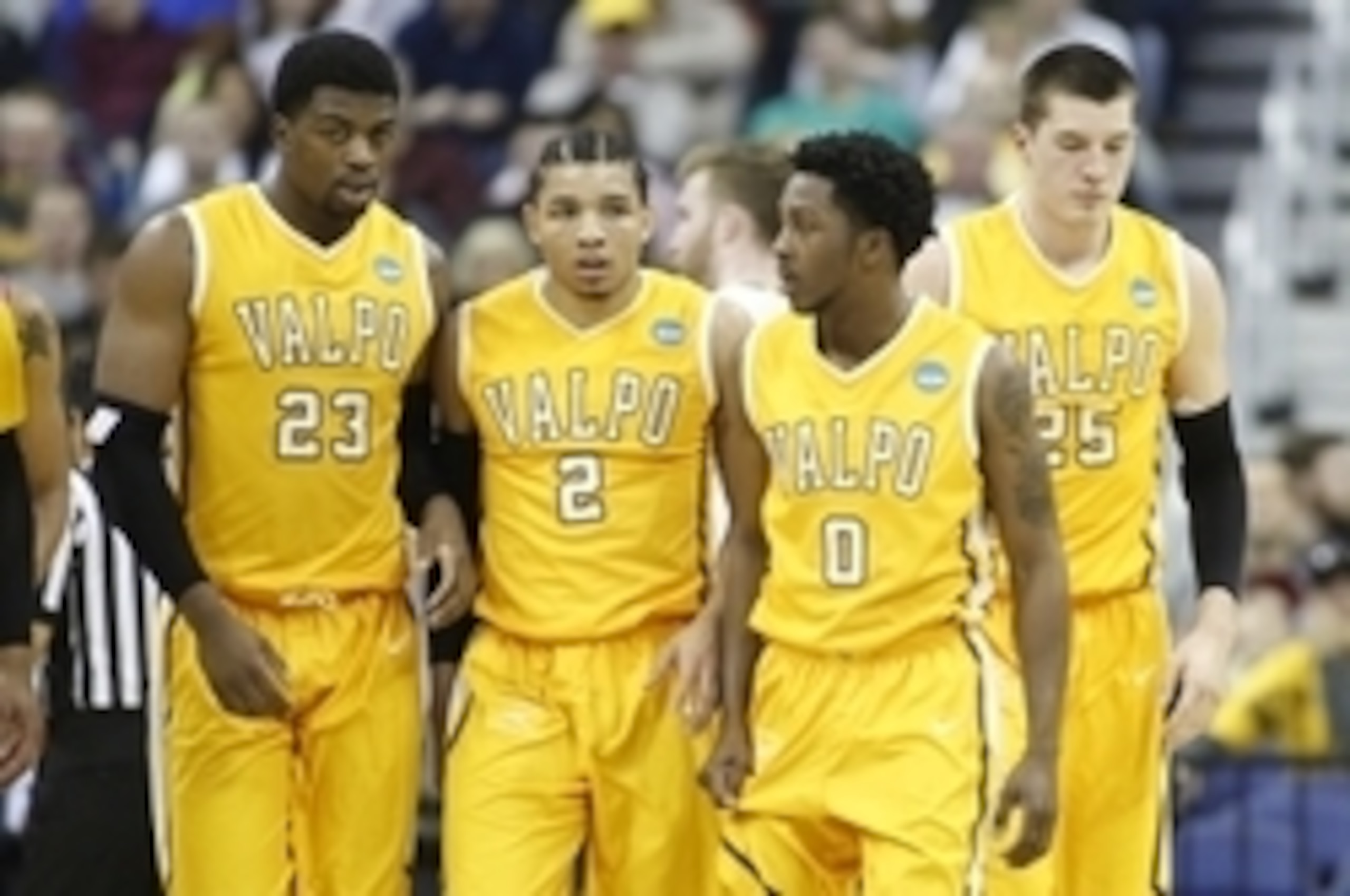
2014-15 Winning Percentage: 82.4
Percentage of Points Retained: 80.2
Key Players Lost: Vashil Fernandez (234 points), E. Victor Nickerson (206 points)
Top Five Returnees: Alec Peters (570 points), Darien Walker (364 points), Tevonn Walker (349 points), Keith Carter (201 points), David Skara (184 points)
Ladies and gentlemen, meet the only team in the country that won at least 80 percent of its games and retained at least 75 percent of its scoring.
And yet, there was a pretty big issue that Valparaiso needed to address. The Crusaders will quickly figure out how to move on without E. Victor Nickerson—a 6'8" small forward who didn't shoot or rebound particularly well and primarily functioned as a tertiary point guard—but Vashil Fernandez* is a much bigger loss to cope with.
The Horizon League Defensive Player of the Year wasn't much for scoring, but he was a rock in the paint, averaging 9.6 rebounds and 4.0 blocks per 40 minutes. Despite playing just 24.7 minutes per game, he finished the season with 37 more blocked shots than the rest of the Crusaders combined, anchoring a defense that ranked 14th in the nation in two-point field-goal percentage.
Fortunately, they appear to have addressed that potential frontcourt problem by adding the offspring of the Dunkin' Dutchman. Derrik Smits averaged 14.9 points and 2.6 blocks per game as a senior at Zionsville and should be an immediate big-time contributor on a roster that doesn't otherwise have any conventional big men.
Alec Peters is 6'9", but he's much more Kyle Wiltjer than he is Julius Randle, and those stretch 4 types need a solid 5 in order to benefit the team rather than serving as a net detriment because of porous defense. In Smits, the Crusaders just might have their interior stalwart for the next several years, affording them the opportunity to dominate this conference until further notice.
*Note: After publish, it was brought to my attention that Fernandez has been granted an extra year of eligibility. This changes nothing about Valparaiso's ranking—unless you count moving even further ahead of the rest of the field as a change—but it certainly strengthens the argument that no coach in his right mind wants to draw this team in March.
Kerry Miller covers college basketball for Bleacher Report. You can follow him on Twitter @kerrancejames.
.jpg?w=2560 "Commanders Eagles Football")


.jpg?w=2560 "Mahomes' Wife Trolls Kubiak 💀")

.jpg?w=2560 "Viral Rams Coach Vid 🖕")