

Rising Stars Emerging in NFL Training Camps at Every Position
Wide eyes watch as young talent grows around the NFL each August.
The widest eyes of all are in the stands, where fans are dazzled by one-handed catches from an emerging wide receiver like the Buffalo Bills' Sammy Watkins, or a deep grab by Cincinnati Bengals tight end Tyler Eifert.
Or maybe there isn't one moment or one play. Maybe instead, multiple performances over intense practices make it clear you're watching a rising star, and a seed is being planted right now during training camp.
Sure, there are training camp mirages, because even the most brutal practice doesn't simulate a game environment. But for a variety of reasons—health, experience that's adding up or simple raw skill—the buzz around a young player who's climbing quickly often turns into production when it matters.
Sometimes training camp risers aren't widely recognized names yet. Some, like San Francisco 49ers guard Brandon Thomas, will be needed to fill a void, while others are rookies wasting little time justifying their first-round draft statuses.
Let's take a closer look at the rising stars of August and dive deep on one for each position.
Quarterback: Marcus Mariota, Tennessee Titans
1 of 12
Throughout the predraft evaluation process, there was always at least passing concern about Tennessee Titans quarterback Marcus Mariota and how he would handle the transition to a pro-style offense. Or was it instead more of a hesitation as we all waited for his stumble when the pads went on at training camp and the mental speed required for successful reads had to accelerate?
Well, we’re still waiting.
The second overall pick didn’t throw a single interception during seven-on-seven and 11-on-11 drills over the first eight days of training camp practice. ESPN.com’s Paul Kuharsky consulted his notes to see Mariota’s completion percentage one week into camp. At that time, he had completed 77 of 119 attempts (64.7 percent).
The standard brake-pumping applies here: It’s practice, and Mariota did experience some minor setbacks when the Titans began their preseason schedule Friday night against the Atlanta Falcons—he turned the ball over on both of Tennessee's opening possessions, but rebounded to finish 7-of-8 passing for 94 yards. Caution is always needed when dealing with stats from practices, a time that’s meaningful because techniques are honed, but meaningless because there are no wins at stake.
But we shouldn’t just shrug off Mariota’s early training camp success either. He’s still throwing against NFL defenders and executing plays in an NFL offense much different than the uptempo spread system he led for the Oregon Ducks. And he’s doing all of that so far with the accuracy of a steady veteran.
Mariota’s nearly mistake-free style led to only 14 interceptions on 1,167 pass attempts in college, and that just might be transferable to the pro game.
Running Back: Latavius Murray, Oakland Raiders
2 of 12
Competition and the threat of a job being ripped from your grasp is the oxygen that breathes life into every NFL training camp. Football players are not robotic cyborgs who just catch, run, hit and throw. They’re actual breathing humans, and some extra motivation through competition can go a long way.
That was the Oakland Raiders’ goal when running back Trent Richardson was signed to a minimal two-year contract worth only $600,000 in guaranteed money. Reeling in Richardson wasn’t the actual goal, because for quite some time it’s been clear his career is beyond repair. Instead, his unspoken job was to light a fire under Latavius Murray.
Consider it done, as the Raiders’ first unofficial depth chart unsurprisingly lists Murray as the starter ahead of Richardson, who has barely practiced after reporting to training camp overweight.
Murray is a versatile runner who is impressively fast for his size. At 6’3” and 230 pounds, he ran the 40-yard dash in only 4.38 seconds at his Central Florida pro day. An assortment of minor injuries kept his playing time to only sporadic touches in 2014 until Week 12, when Murray torched the Kansas City Chiefs with 112 yards on just four carries.
His blend of power to blast through a hole and burst in the open field resulted in 5.2 yards per run attempt during the 24-year-old’s first NFL action—that included four 20-plus yard runs on only 82 carries.
That unique skill set has been clear immediately again during training camp, prompting Raiders general manager Reggie McKenzie to make a bold prediction when speaking to Vic Tafur of the San Francisco Chronicle. He responded with a definitive “no question” when asked if Murray can have a 1,000-plus yard rushing season.
The glowing words continued when Tafur spoke to Raiders offensive line coach Mike Tice.
“For a big guy, Latavius has extremely good quickness,” Tice said. “And when he gets behind his pads, he is hard to tackle. Smaller linebackers might be in serious trouble.”
Wide Receiver: Sammy Watkins, Buffalo Bills
3 of 12
In 2014, three rookie wide receivers climbed to the 1,000-yard plateau: the New York Giants’ Odell Beckham Jr., the Tampa Bay Buccaneers’ Mike Evans and the Carolina Panthers’ Kelvin Benjamin.
Buffalo Bills wideout Sammy Watkins wasn’t part of that marquee group, but he was damn close, and he would have received Offensive Rookie of the Year votes in a world where Beckham doesn’t exist (what a cold and cruel world that would be). Watkins came just just shy of becoming the fourth 1,000-plus yard rookie, finishing with 982 yards even though he often had to perform delicate pirouettes while catching passes from Kyle Orton and EJ Manuel.
Now, it seems he’s ready to do more than take the next step. Watkins sounds prepared to catapult into another stratosphere.
Through speed and intricate footwork, Watkins excels because of his route running and an ability to generate gains after the catch. Joe Buscaglia of ABC Buffalo observed Watkins’ dazzling training camp displays and thinks he somehow improved on his excellence in one area.
“If it was possible, it seems as though Watkins’ route running has gotten even better than it was last year,” wrote Buscaglia. “He can stop on a dime, change directions and leave the defender in the dust on a pretty routine basis.”
Watkins improving in that regard is a terrifying thought for any cornerback. This is a receiver who averaged 5.2 yards after the catch per reception, which was a solid 23rd out of the 76 receivers in 2014 who played at least 50 percent of their team’s snaps, according to Pro Football Focus. There were also five games in which he averaged at least 18.0 yards per reception.
He regularly creates chunk plays, which is why the Bills should regularly put the ball in his hands.

.jpg?w=2560 "Rams Eagles Football")
.jpg?w=2560 "Texans-Mixon Released Football")
Tight End: Tyler Eifert, Cincinnati Bengals
4 of 12
The Tyler Eifert breakout train was supposed to chug away from the station around August 2014. At that time, the Cincinnati Bengals tight end was fresh off a promising rookie season when he caught 39 passes for 445 yards while playing only 58.7 percent of his team’s offensive snaps.
His snap count was set to increase in 2014. Then a different snap happened.
Eifert dislocated his elbow in Week 1. His season ended after a mere eight snaps, and that breakout train suddenly ground to a halt.
Now, it’s ready to get rolling again with Eifert fully healed and nearly uncoverable in training camp, according to Geoff Hobson of Bengals.com.
“[Quarterback Andy Dalton] throws to him whenever he’s in a jam or needs a big play,” Hobson wrote while observing the chemistry between quarterback and tight end. That connection is critical with Jermaine Gresham gone, no longer blocking Eifert’s path to playing time.
Earning security-blanket status in August means the next step to being a consistent deep target up the middle isn’t far away. That’s how Eifert will be used if he can stop breaking bones. In 2013, he ran 303 routes, and 36.6 percent of them were from the slot, per PFF.
He functions as an oversized wide receiver, which is becoming an essential tool in the pass-happy NFL filled with itchy trigger fingers.
Offensive Tackle: Terron Armstead, New Orleans Saints
5 of 12
At the 2013 scouting combine, New Orleans Saints left tackle Terron Armstead did something that, even in hindsight now two years later, doesn’t seem like it should have been scientifically possible.
A 306-pound man who stands 6'5" ran 40 yards in 4.71 seconds, setting a new record for offensive linemen. Those body frame and speed measurements simply don’t add up, as during the same combine, quarterback Ryan Nassib needed 5.06 seconds to run his 40 yards. This is when I remind you Nassib weighs 227 pounds.
Even with that unfathomable athleticism and size, Armstead sat on the sideline until late in his rookie year after the Saints made him a third-round pick in 2013. He struggled initially, but natural skill quickly took over in 2014. While playing 850 snaps, he allowed only three sacks, four quarterback hits and 18 hurries, all per PFF.
His 25 total pressures allowed ranked 28th among the 78 tackles who played at least 25 percent of their team’s snaps. As he enters his third year now, Armstead’s teammate and fellow offensive lineman Zach Strief has sky-high expectations for him.
“There is no ceiling for him,” Streif told ESPN.com’s Mike Triplett. “He could be one of the best of all time.”
That’s high praise coming from a nine-year veteran, and it’s echoed by Saints offensive line coach Bret Ingalls.
“The guy is a super athlete,” he told Triplett, who noted that Armstead has really shined in camp during one-on-one pass-rush drills when asked to wall off speed-rushers who try to round the corner. “He’s different for the position. And he’s a confident guy and a smart guy and a tough guy.”
The left tackle assigned to protect Saints quarterback Drew Brees needs to be all those things and more.
Guard: Brandon Thomas, San Francisco 49ers
6 of 12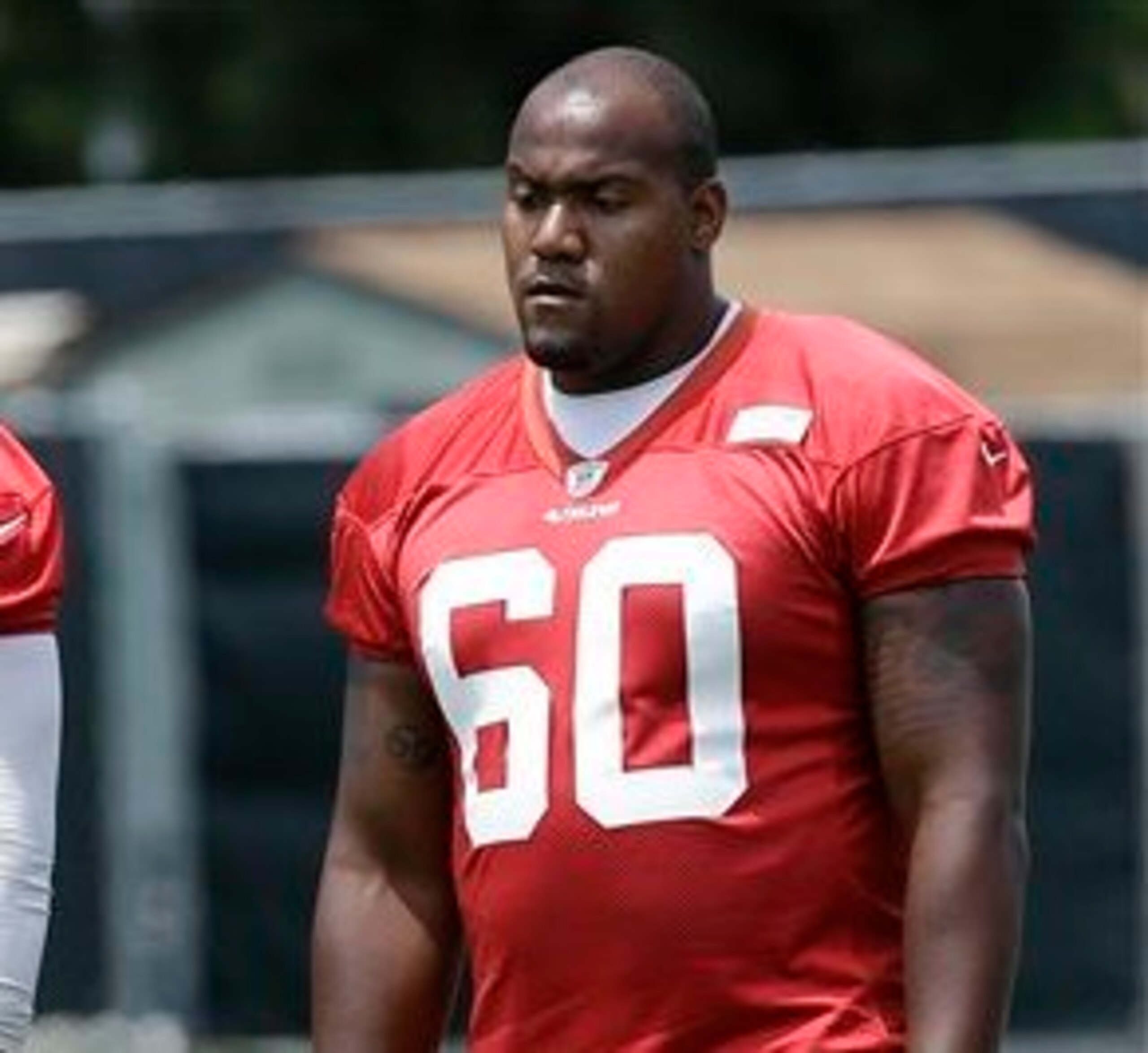
The San Francisco 49ers were in a rather luxurious position back during a time that feels like it was so long ago—a time before they were losing a core defensive contributor every other hour.
Through trades and compensatory picks, the 49ers stockpiled a lot of ammunition prior to the 2014 draft. They held 12 picks, which is a serious surplus for a team that had just appeared in three straight NFC Championship Games.
That meant general manager Trent Baalke could make some calculated dice rolls. He could invest early in a player who may not have a role immediately, but would be a critical piece in a year or two.
He could spend a third-round pick on guard Brandon Thomas, who had torn his ACL during a predraft workout with the New Orleans Saints and would likely miss all of 2014.
That’s what Baalke did, adding depth to an offensive line that was then the engine for everything San Francisco did offensively. Now a luxury has become a necessity, with Thomas competing to fill a guard spot vacated when Mike Iupati left as a free agent to join the Arizona Cardinals.
His competition is Marcus Martin, who was another luxury pick during the same draft, and during the same round even. Martin is ahead on the depth chart for now, but that may only be temporary as Thomas eases back into game action.
Throughout much of OTAs this spring, Thomas was the starting left guard beside tackle Joe Staley, who told Eric Branch of the San Francisco Chronicle that the former Clemson standout’s natural talent is becoming clear now.
“You’re starting to see more of the natural talent that he has and the reason that we drafted him high last year,” Staley said. “He’s so powerful, and he's so big and moves really well.”
Thomas will eventually be a core piece of the 49ers offensive line. And likely soon, too.
Center: Barrett Jones, St. Louis Rams
7 of 12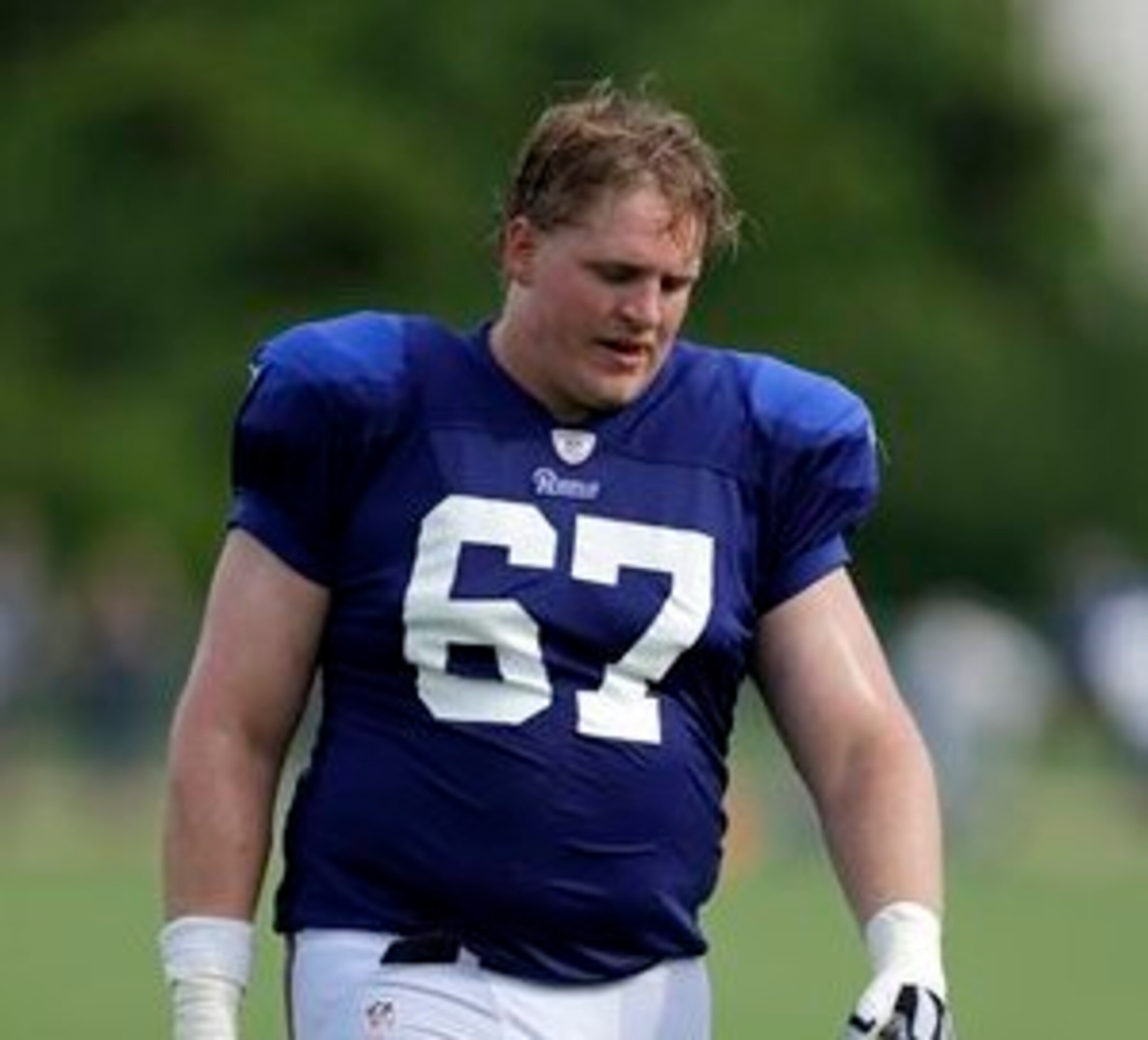
The St. Louis Rams seem to have a basic plan for winning games—enough of them to make the playoffs or at least become relevant again.
First, they’ll pulverize opposing quarterbacks with a defensive line that might permit only nanoseconds to attempt a pass. Then offensively, they’ll default to full hammer mode once running back Todd Gurley is healthy. With that pass rush and running power, there should be confidence even average quarterback play from Nick Foles will be just fine.
But to reach or exceed a satisfactory standard, Foles needs to remain in an upright position, which was an issue for the Rams in 2014 no matter who was under center.
They ranked a lowly 24th while allowing 47 sacks, and they now need to replace former center Scott Wells, who was responsible for much the Rams’ offensive line leaks. The 34-year-old was allowed to walk as a free agent after he gave up 27 pressures during his final year in St. Louis, per PFF, which ranked 37th out of 39 qualifying centers.
That gushing hole needs to be plugged fast, and Barrett Jones has the required draft background to ascend quickly.
The former Alabama center was deemed worthy of a fourth-round pick in 2013, which is when CBSSports.com draft analyst Rob Rang wrote this sparkling praise regarding Jones’ versatility: “Jones has been a dominant performer at center, right guard and center against SEC competition. In football, the most important thing a player can bring is dependability. No player in this draft proved more reliable than Jones.”
Of course, positional dependability doesn’t always mean a player is also durable. There’s appeal in Jones because he can be shifted to multiple spots when needed, but injuries have limited him to only 23 career snaps.
Still, the skill shown against SEC defenses that warranted a mid-round draft investment will likely lead to Jones’ rise, which has started with him listed ahead of Tim Barnes and Demetrius Rhaney on the first preseason depth chart.
Cornerback: Marcus Peters, Kansas City Chiefs
8 of 12
In 2014, the Kansas City Chiefs defense rarely gave the gift of great field position while trotting off to the sideline. The unit finished tied for dead last in interceptions, generating only six.
They needed to become more physical on the outside, and injecting a ball-hawking presence usually helps in that regard.
The first-round draft priority was clear then: a cornerback, and preferably one who plays like his lunch money was just stolen. He needed to be equal doses large and menacing.
Marcus Peters fits that description, which is why the 6’0", 197-pound corner was Kansas City’s selection with the 18th overall pick. It’s also why he’s already been elevated into a starting role.
His rise to starting status was accelerated because of fellow cornerback Sean Smith's three-game suspension to start the season. But Peters’ play during training camp likely would have still earned him a starting job even without that extra push.
“To be honest with you, that kid’s a future star,” Chiefs safety Husain Abdullah told BJ Kissel of Chiefs.com early in camp when asked about Peters. “He came down here and he already has five or six interceptions in camp and a countless number of breakups.”
Peters allowed just 38.1 percent of the passes against him to be completed during his final two collegiate seasons, per NFL.com. The Chiefs expect to see that sort of shutdown coverage right away after he recorded 27 passes defensed and 11 interceptions over three seasons with the Washington Huskies. And so far, they’re getting it.
Safety: Landon Collins, New York Giants
9 of 12
New York Giants safety Landon Collins plays with a thud. A mangled sound of shoulder pads clashing seems to follow him.
“He’s definitely a guy who loves to bang and take someone’s head off,” Giants cornerback Prince Amukamara recently told ESPN.com’s Dan Graziano after a training camp workout. “Can’t wait to see him pull the trigger in a game.”
The repeated physical bruising Collins is responsible for pushed Giants general manager Jerry Reese to target him early in the 2015 draft, trading fourth- and seventh-round picks to the Tennessee Titans to secure his services.
Collins thrives in exactly the situation Amukamara describes: one that calls for him to charge forward, lower his head and try to dislodge the football and/or a body part. He’s in his ideal environment when asked to almost function as another linebacker, which is why the Giants were drawn to him. The tenacity Collins brings in practice will be the medicine needed for a run defense that allowed 135.1 rushing yards per game in 2014.
He’s replacing the departed Antrel Rolle, who’s run-stop percentage of 4.9 ranked 32nd in 2014 out of the 52 safeties who played at least 50 percent of their team’s snaps, per PFF.
Linebacker: Ryan Shazier, Pittsburgh Steelers
10 of 12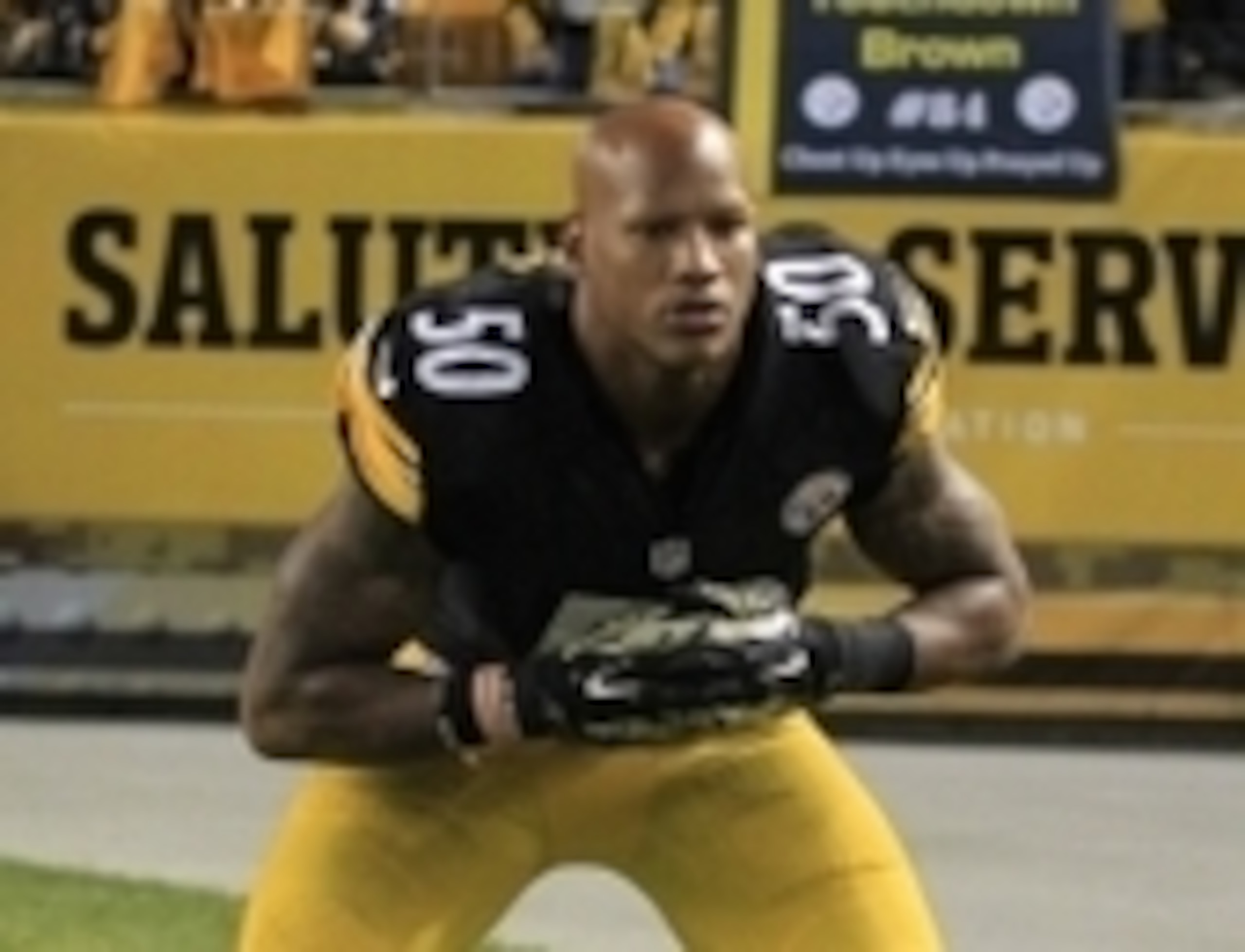
The Pittsburgh Steelers defense is in a time of transition, and leading that movement is a linebacker who becomes the whirling blur you see moving from sideline to sideline.
At his Ohio State pro day prior to the 2014 draft, Ryan Shazier posted a blazing 40-yard dash time of 4.36 seconds. That time was unofficial, as all pro day times are, but there’s little disputing Shazier’s premier speed, which led to 143 tackles during his final collegiate season, including 22.5 for a loss.
Now, he’s healthy for the first time after missing seven games as a rookie. So what, exactly, can a rebuilding Steelers defense expect from their high-motor linebacker in his second season? An answer to that question perhaps came during the Hall of Fame game when Shazier recorded a tackle on nearly 30 percent of his opportunities, according to Jeff Ratcliffe of Pro Football Focus.
If Shazier can stay on the field, he’ll be a linchpin for a defense in search of one.
Pass-Rusher: Demarcus Lawrence, Dallas Cowboys
11 of 12
Dallas Cowboys defensive end Demarcus Lawrence's rise has already started. Now with a hopefully full season of good health and the support of fellow defensive end Greg Hardy, his career trajectory could spike in a hurry.
During the 2014 playoffs, Lawrence began to establish himself after he was slowed during the regular season by a fractured foot in training camp, which cost him nine games during the regular season. His playoff production was especially impressive: two sacks and a forced fumble over only 54 snaps.
Once Hardy's four-game suspension ends, Lawrence will be the full-time left defensive end, which is where Cowboys defensive coordinator Rod Marinelli feels his quickness and hand speed can be optimized.
“The one thing I’ve always felt if you can get a good left end—and he’s strong, this guy is powerful in the run game—your matchups are really good over there, naturally, because your offensive right tackles are not usually their biggest men, maybe not quite as nimble,” Marinelli told 105.3 The Fan (via Fox Sports).
Lawrence will be counted on to continue his emergence and help jolt a Cowboys pass rush that ranked 28th in 2014.
Defensive Tackle: Sylvester Williams, Denver Broncos
12 of 12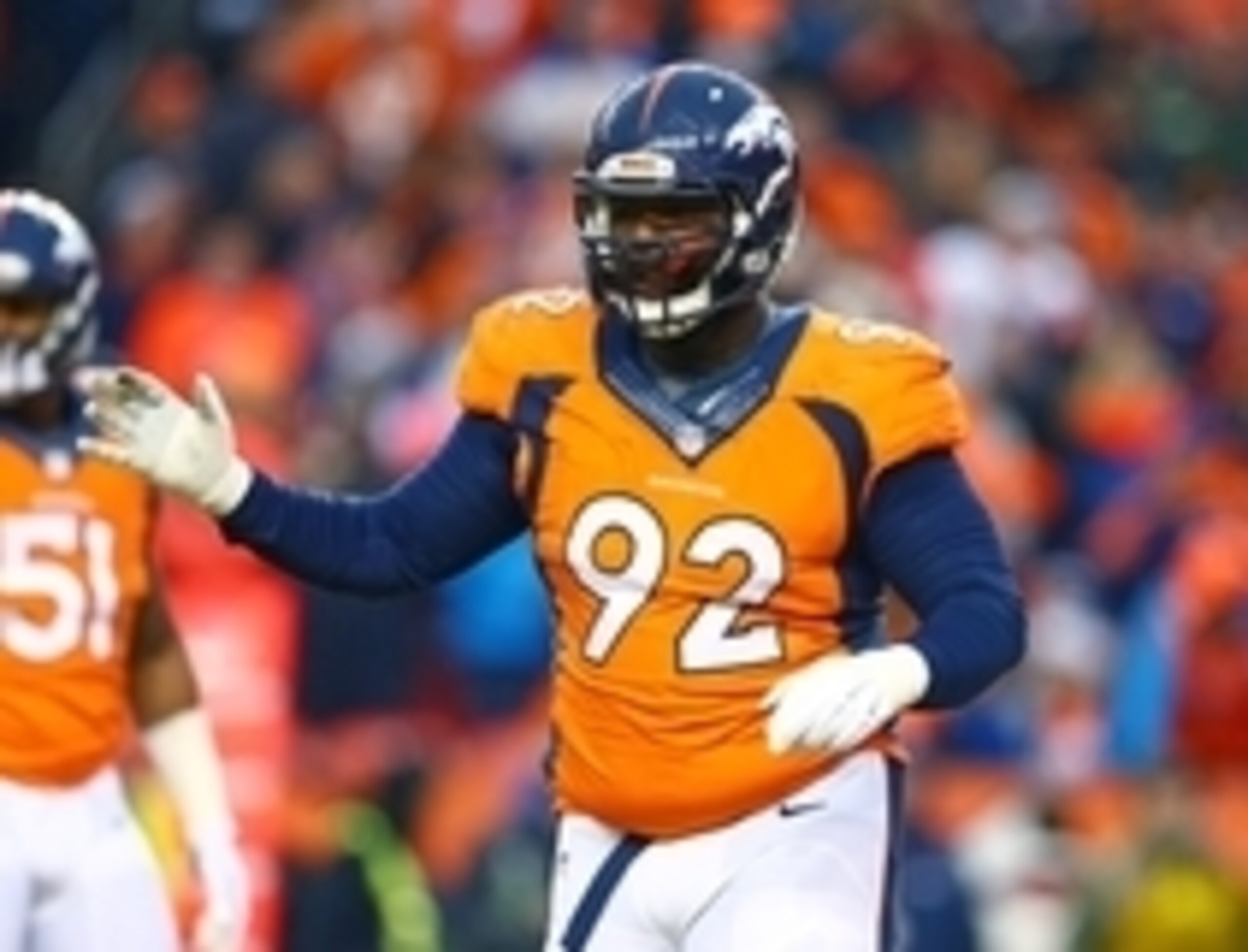
Denver Broncos defensive tackle Sylvester Williams was a man without a fit during his first two NFL seasons.
The first-round pick couldn’t find a contributing role in the Broncos' 4-3 defense, as he played only 35.7 percent of the team’s defensive snaps in 2013. Little changed the following season in 2014, when Williams saw the field for only 39.8 percent of Denver’s defensive snaps.
But the offseason often has a way of bringing rejuvenation through change. Or in this case, bringing rejuvenation through Wade Phillips.
The Broncos are moving to a 3-4 defense with Phillips as their new coordinator. Combined with defensive tackle Terrance Knighton's departure as a free agent, Williams now has a chance to finally make his mark while anchoring Phillips’ defense as a nose tackle.
He’s slightly undersized at that position (6’2”, 313 lbs) and isn’t quite your typical space-eater. But that matters little to Phillips, who’s confident a first-round pick who had 96 tackles over two seasons at North Carolina can slide in just fine.
“Sly has been exceptional,” Phillips told Andrew Mason of Broncos.com during minicamp. “I think he’s really taken over the nose guard position. I think he can play a 3-technique, but I think he’s done really well. I’m really pleased with where he is.”
.jpg?w=2560 "Commanders Eagles Football")



.jpg?w=2560 "Mahomes' Wife Trolls Kubiak 💀")

.jpg?w=2560 "Grading WWE Raw 🔠")