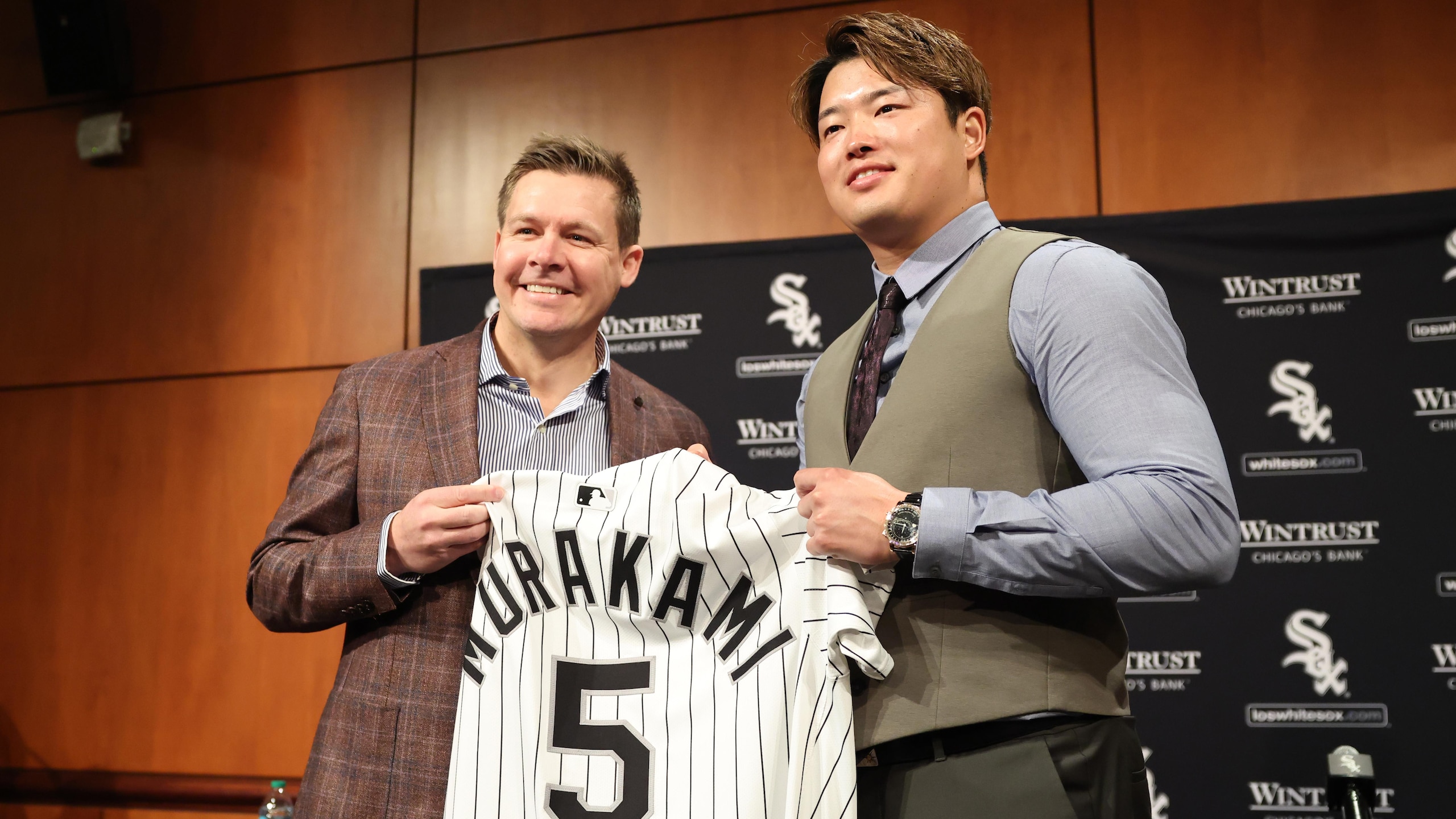

Ripple Effects of 'Japanese Babe Ruth' Munetaka Murakami's $34M White Sox Contract

With his deadline to sign with an MLB team bearing down, Munetaka Murakami chose to take everyone's expectations and throw them out the window.
Murakami did not accept a long-term, big-money offer from a team that is going places. The Japanese slugger instead picked the Chicago White Sox, agreeing to terms Sunday on a two-year, $34 million contract. He's going to move across the diamond from third and play first base for them.
That's a paltry amount of money for a free agent who will only turn 26 on February 2. And in this case, said free agent is bringing 265 professional home runs with him to the States after eight hugely successful seasons in Japan.
For their part, the White Sox are merely hoping to contend in 2026. They have endured three straight 100-loss seasons, high…er, lowlighted by 121 losses in 2024.
This means there's a lot to unpack here, so let's take a five-part look at the ripple effects of Murakami's signing.
How Did Murakami's Market Go So Cold?
1 of 5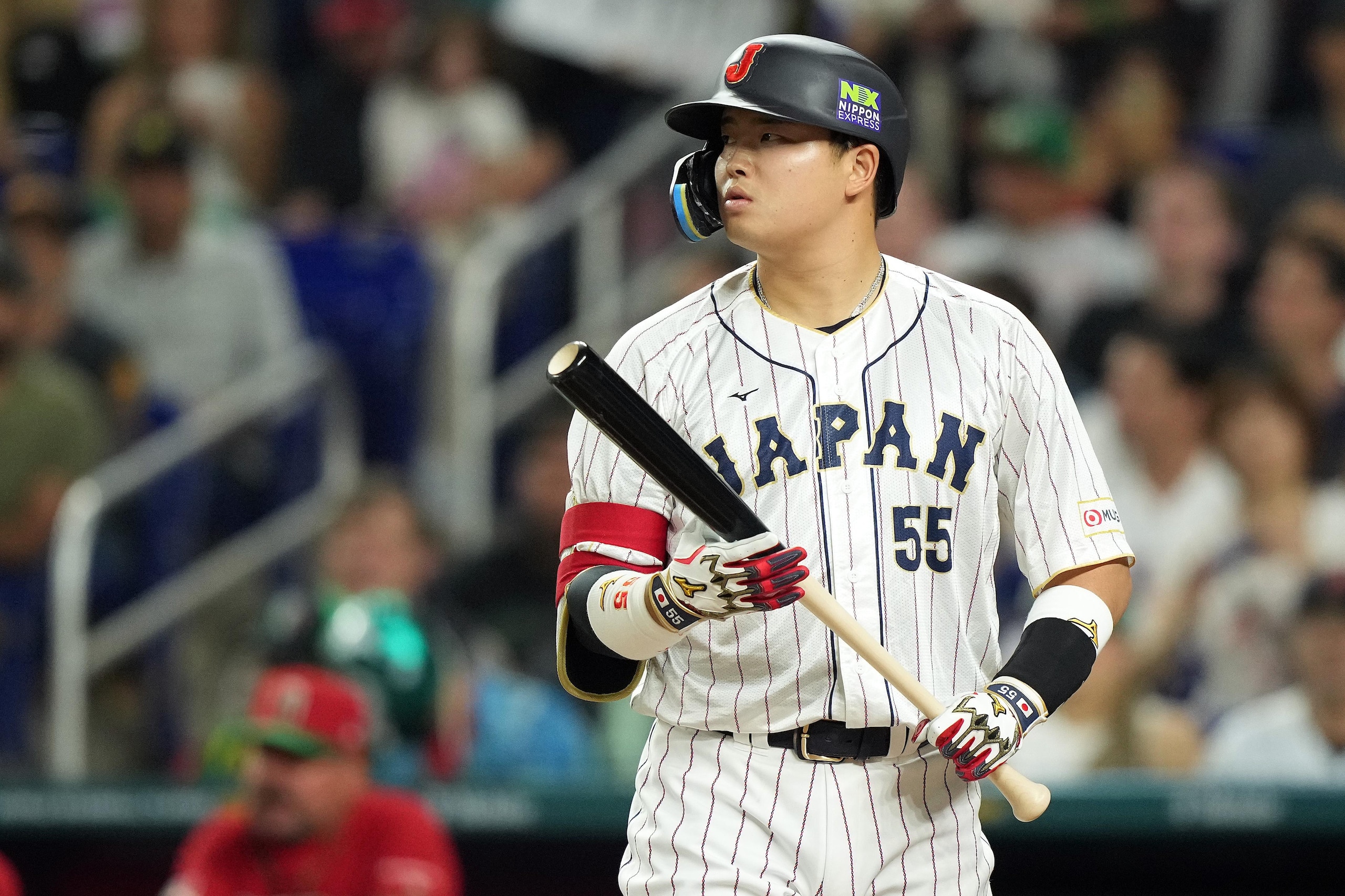
When Kyle Schwarber and Pete Alonso landed $305 million worth of deals during the winter meetings, the market seemed to be trending in Murakami's favor ahead of the December 22 deadline for his posting window.
Those contracts indicated that there was a real hunger for power-first hitters, and Murakami matches that description even better than his NPB results indicate. Nobody doubts his raw power, with one executive even rating it as a 90 on the 20-to-80 scouting scale.
How, then, did he fall three years and $61 million short of what B/R's Tim Kelly projected, much less a whopping $146 million short of MLB Trade Rumors' projection?
Until the full story trickles out, the best guess is that Murakami's red flags overwhelmed the allure of his power. His upside as a Schwarber type was always there, but obvious defensive limitations and a tendency to swing and miss—his 28.6 K% in 2025 put him in the third percentile among NPB hitters—also hinted at a possible outcome as the next Joey Gallo.
With Mark Feinsand of MLB.com reporting that Murakami had longer offers, his decision to accept Chicago's two-year deal tells us he chose to bet on himself.
Should he succeed, he'll be a star coming off only his age-27 season in 2027. Should he fail, then he can go back to Japan having wasted only two years of his prime on MLB.
Why Did Murakami Choose the White Sox?
2 of 5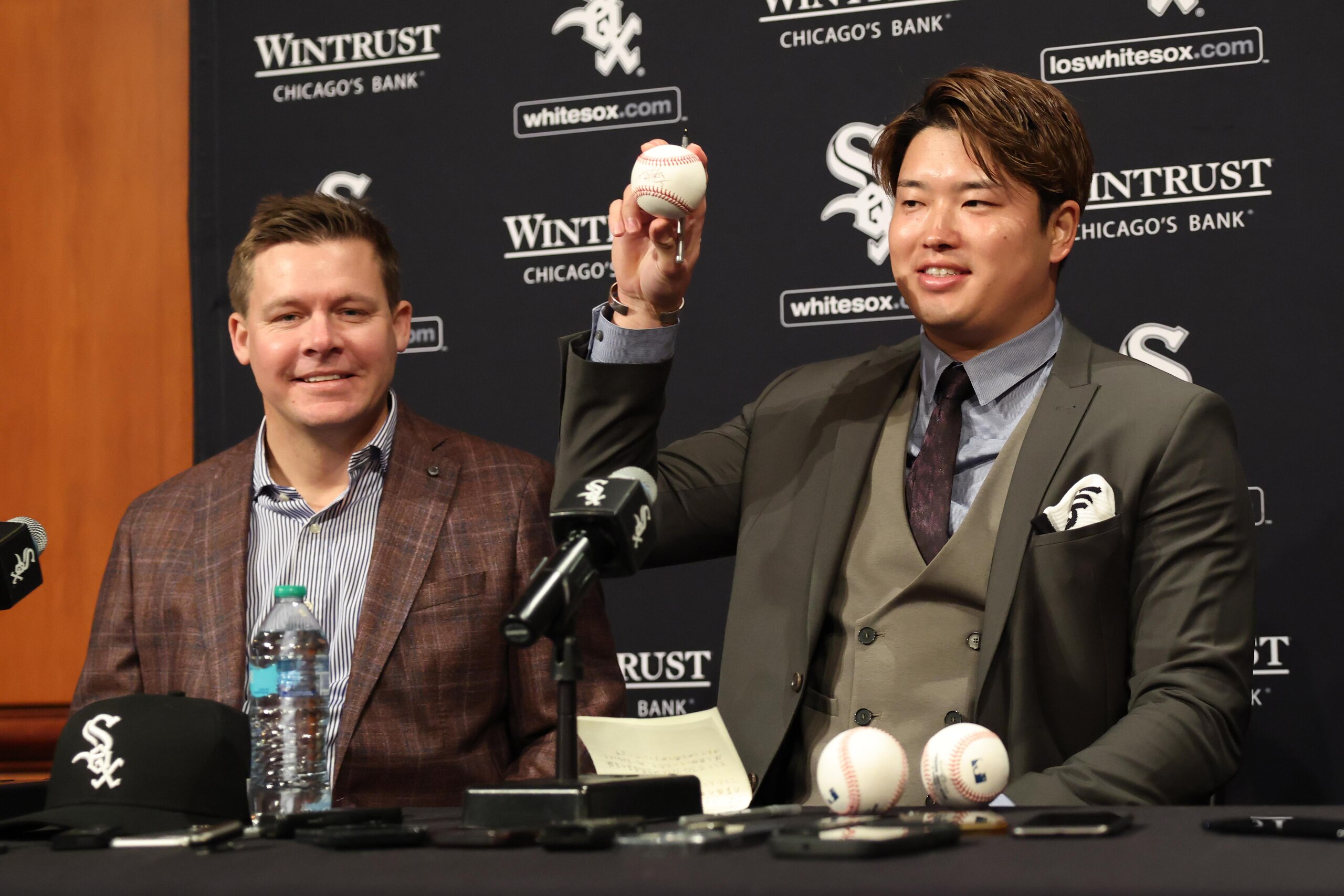
If it is true that Murakami had longer offers, then it seems safe to assume that he didn't land with the White Sox simply because they made the best offer.
What we can grant Murakami either way is this: As a place for him to play out a bet on himself, Chicago makes a lot of sense as a destination.
Though the White Sox have been stuck in 100-loss mode for three straight seasons, they showed some fight in the latter half of 2025. Their offense had the same wRC-plus as the cross-town Cubs, and the club's winning percentage improved by 101 points over the first half.
Murakami coming into this mix is a case of upside meeting upside. He'll get to share a lineup with up-and-comers like Colson Montgomery and Kyle Teel, and the White Sox still had a mid-tier farm system at the end of 2025 even after the latter two got promoted and hit the ground running.
It won't exactly be a pressure cooker environment around Murakami, but perhaps that's the point. He won't be in danger of losing playing time if he slumps, and he won't necessarily have anyone stealing his spotlight if his star potential explodes.
Shouldn't Another Team Have Made This Deal?
3 of 5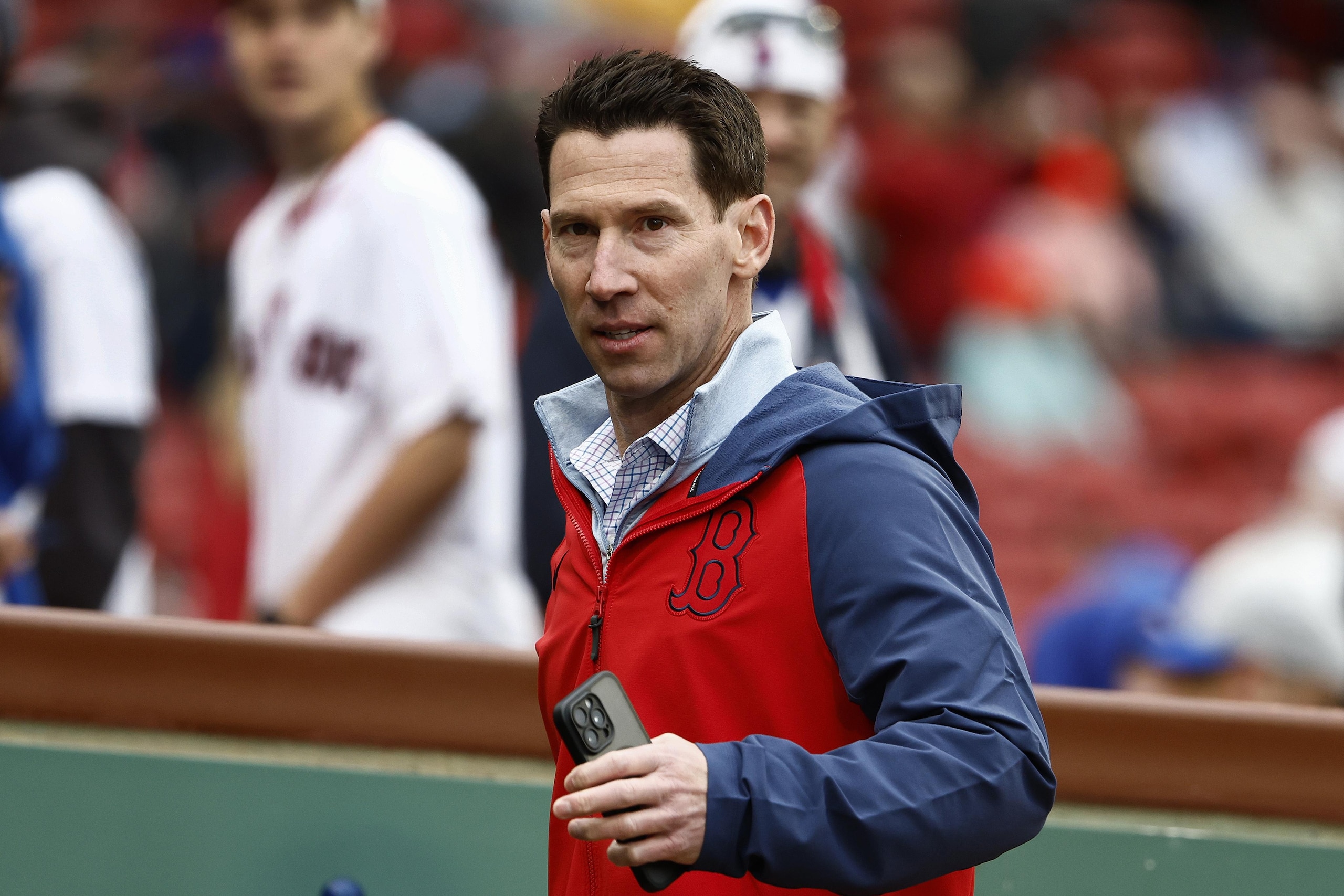
As much sense as the White Sox make for Murakami, 29 other fan bases all had the same question on Sunday: Couldn't my team have done this deal?
It's a legitimate question, and certainly for some teams more than others.
The Boston Red Sox "kicked the tires" on Murakami, according to Chris Cotillo of MassLive. He would have fit in the Alex Bregman-shaped hole at third base, and he also had hypothetical fits elsewhere in the AL East with the New York Yankees and Toronto Blue Jays.
The New York Mets also had a spot for Murakami, and any number of teams could have seen him as a source of affordable power. In theory, those include the Pittsburgh Pirates, Cincinnati Reds, Miami Marlins and San Diego Padres.
However, this conversation gets tricky when you confront the question of pressure. All of the teams mentioned above are looking to contend in 2026 and 2027, and thus could have run into the problem of what to do with Murakami if he went through growing pains in adapting his game to MLB.
As for other clubs playing the long game alongside the White Sox, it's pretty much just the Colorado Rockies, Washington Nationals, Minnesota Twins and newly rebuilding St. Louis Cardinals.
And whereas the White Sox already have a couple of years of rebuilding under their belt, the other four are in the early stages of figuring things out. Murakami simply didn't make sense for them, and particularly not on a short-term deal like the one he accepted.
Will Things Work Out for Murakami and the White Sox?
4 of 5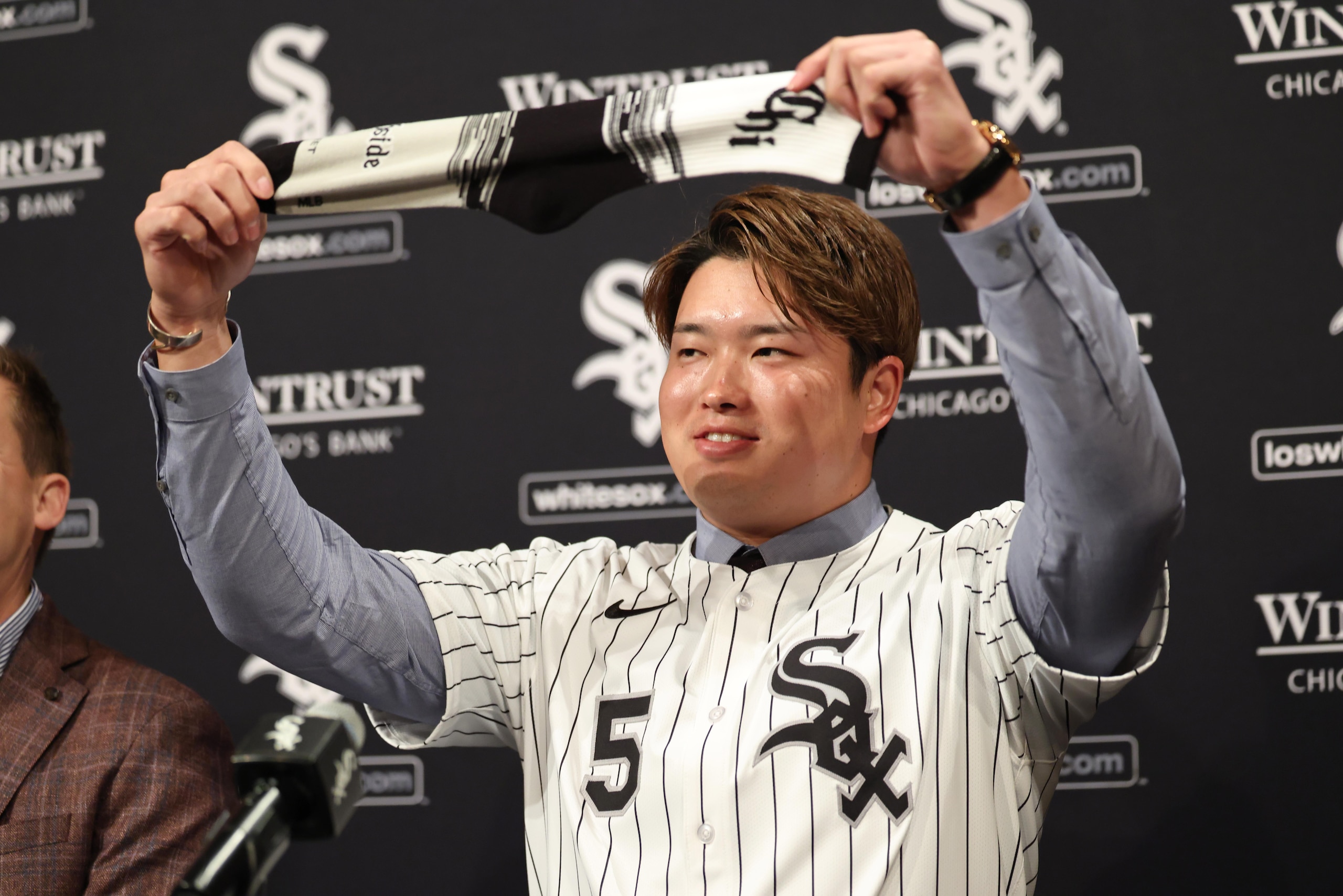
Looking ahead, it's not hard to imagine things working out for neither Murakami nor the White Sox.
Even with him, they project for the lowest WAR of any American League team in 2026. And if there's a reason to take the under on his upside, it has to do with how he handled velocity in NPB.
As noted by Ben Clemens of FanGraphs, Murakami only had a 63 percent contact rate against fastballs of 93 mph and above in Japan over the last four seasons. The norm in MLB for this span was closer to 80 percent, and the average fastball for the whole league this year clocked at 94.3 mph.
On the plus side, it's not a lack of bat speed that kept Murakami from hitting heat in Japan. On the contrary, he is elite:
It seems possible that the velocity of MLB pitchers won't be so much a death sentence as exposure therapy for Murakami, with the end result being more or less the same dangerous hitter he was in Japan.
That would definitely help hasten the end of the White Sox's rebuild, perhaps even to the point of them making the playoffs in 2026 if they can find enough pitching. Noah Schultz and Hagen Smith are two top prospects who could help.
For what it's worth, we'd put stronger odds on Murakami going bust in Chicago than we would on him going boom. But baseball has a way of mocking absolute predictions, and his boom potential can't simply be dismissed out of hand.
What Does This Mean for the Rest of the Market?
5 of 5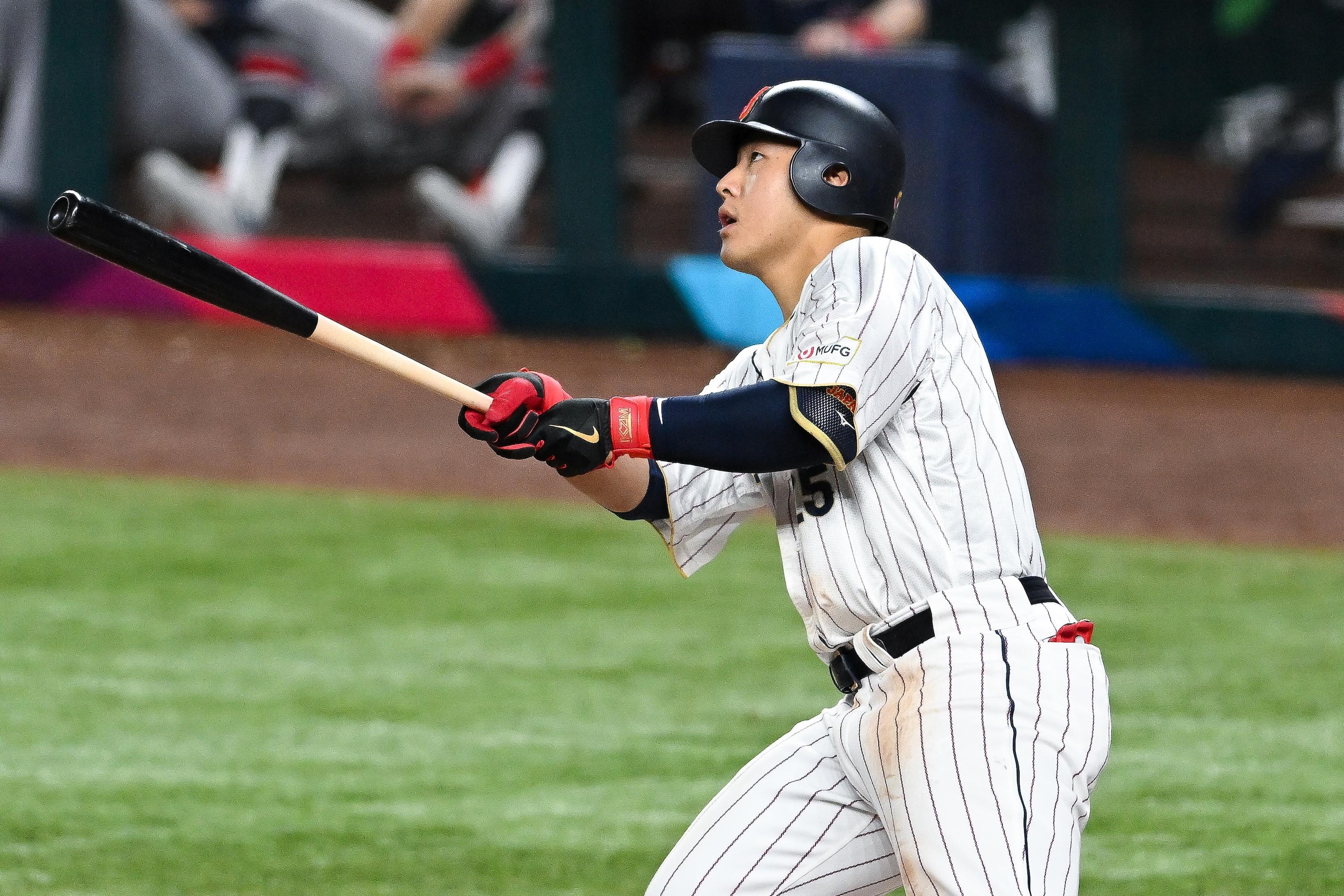
In all likelihood, the downstream effect of Murakami's deal with the White Sox doesn't figure to be too extreme.
Though his contract was a much smaller one than expected, it shouldn't reset the markets for Kyle Tucker, Bo Bichette, Alex Bregman or Cody Bellinger. They remain the top hitters still available, and each has a decent chance of beating even the $150 million and $155 million deals of Kyle Schwarber and Pete Alonso, respectively.
Kazuma Okamoto may not be so lucky, however.
He's the other longtime NPB star looking to make it as a position player in MLB, and he's always been something of the inverse of Murakami. Whereas Murakami has a high ceiling with a low floor, Okamoto is more of a high-floor, low-ceiling type.
Feinsand's piece on Murakami mentions that Okamoto could still get a four- or five-year deal, but the catch could be a smaller average value than the former's $17 million. And because Okamoto is four seasonal ages older, he isn't in as good of a position to bet on himself as Murakami was.
Murakami's deal could also be a bad omen for other power-first hitters who come with similarly low floors. The first name that comes to mind is 34-year-old Eugenio Suárez, who started to show some age in pairing his 49 home runs with a .298 OBP this year.
Stats courtesy of Baseball Reference, FanGraphs and Baseball Savant.




.jpg?w=2560 "Raiders Could Start Mendoza")
.jpg?w=2560 "Rodgers Iced Out on Plane 💎")


.jpg?w=2560 "🚨 Week 8 AP Top 25 Poll")
.jpg?w=2560 "Blockbuster Trade Idea To Shake Up the Eastern Conference 🎇")