

Why 4-2-1-3 Should Be Guardiola's Go-to Formation for Bayern Munich in 2015/16
As Bayern Munich prepare for the 2015-16 season, the question on the minds of most fans is not so much who will play in Pep Guardiola's starting lineup as what shape the trainer's selection will take.
The ex-Barcelona man is famous for making a personal statement with his tactics, as well as his unwavering commitment to his fundamental views of football. Last season, he tried several tactical approaches, and as he welcomes back the likes of Javi Martinez and Thiago Alcantara, who both missed much of the previous campaign, he will more likely than not tweak his tactics. In fact, he'll probably make adjustments on a regular basis.
TOP NEWS

Messi Picks Next Gen Talent 💫
Live World Football Goals and Highlights 🔥
5 Potential Replacements for Michael Carrick as Manchester United Manager Amid Rumors
Generally speaking, tactics won't have much influence on Bayern's success domestically; the squad's individual qualities should be enough to down the likes of Mainz and Frankfurt on a regular basis whether Guardiola uses a 2-3-5 or a 5-3-2 formation, especially if the trainer gives positional freedom to some of his more versatile players.
With that said, Bayern will face some difficult tests, particularly in the Champions League and against some of their more robust domestic challengers. Guardiola was criticized for overthinking in key matches last season and will be wise to come up with a go-to strategy for the big games. To this end, there is one formation that would suit Bayern quite well in terms of providing balance and using the members of Guardiola's squad to their greatest strengths: 4-2-1-3.
In principle, the 4-2-1-3 brings the current Bayern team back to its roots, the principles that took it to the Champions League finals in 2010, 2012 and 2013. Those teams were all different but shared certain fundamentals in common: diverse and solid midfield cores, full-backs who could both defend and provide width to the attack, lethal wingers and center forwards who could not only score but were willing to put in the extra effort to harry defenders and win the ball.
Now, in many ways, Guardiola has an improved squad. Robert Lewandowski is one of the best pressing center forwards in the game but is a far more prolific scorer than Mario Mandzukic or Ivica Olic ever were. Although Toni Kroos was a brilliant passer of the ball, Thiago Alcantara is a more dynamic playmaker going forward, his dribbling ability making him a bit more suitable to play ahead of the holding midfield pair.
In Arturo Vidal, whose transfer to Bayern is expected to be announced imminently, with Karl-Heinz Rummenigge confirming an agreement had been reached with Juventus for the Chilean, via the Guardian, Bayern finally have a presence in midfield who can provide the energy Bastian Schweinsteiger started to lose soon after the 2010 World Cup as he battled a number of injuries.
In the preseason thus far, Guardiola has experimented with a more or less 3-4-1-2 formation, a rather narrow approach with only two wide men. It's a good way to control proceedings in the center of the park, at least until the final third, but it limits attacking options on the wing and makes Bayern more susceptible to opponents that use width.
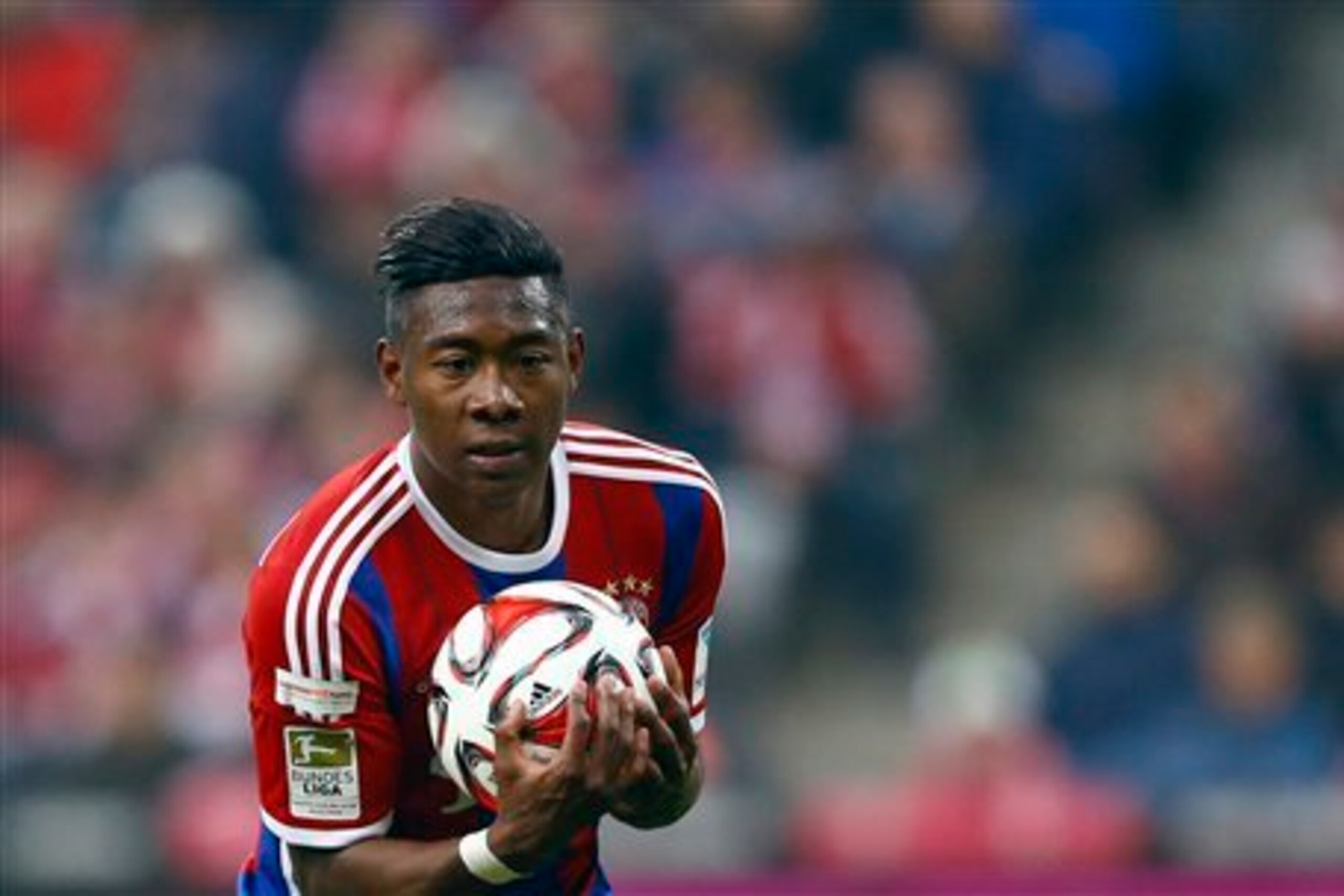
Using David Alaba as a third center-back, as he has been deployed in preseason, limits his contribution to the buildup play. And giving him a third of the central-defensive duties makes Bayern susceptible to crosses into his zone, the Austrian lacking a bit of aerial strength.
Additionally, using Philipp Lahm in a dedicated wide-midfield role without a full-back behind him is asking for trouble. The captain has had a brilliant preseason and has outstanding positional instincts but never has been the fastest. Many of Europe's finest attackers play on the wing, and it would be asking a lot of the soon-to-be-32-year-old Lahm to sprint down the flank after his opponents for 90 minutes.
A more balanced approach would be to use Alaba and Lahm as full-backs in a four-man defensive line. Many believe the former's ball-playing ability is wasted in defense and that he's more appropriate in midfield, but in reality, full-backs can be extremely active. For most of Lahm's career as a full-back, he led Bayern (or was not far behind the leader) in touches of the ball.
Not too long ago, it was common wisdom that the team with the best full-backs was the team to beat. Think Lilian Thuram and Bixente Lizarazu for France at the 1998 World Cup and Roberto Carlos and Cafu for Brazil four years later. More recently, Germany won the World Cup only after moving Lahm from midfield to defense, the team vastly improving after his switch.
In Guardiola's Barcelona, Dani Alves played as an extremely attack-minded full-back, with Eric Abidal more reserved. This season, the trainer can play Alaba similarly to Alves to involve him more in the buildup. Alaba could be far more involved in possession as a full-back than in central defense, while using him in an Alves-type role would spare Lahm some of the physical burden and keep the veteran in more of a defensive role—much like Abidal—with his forward runs less continuous.
Using two full-backs and two wingers would give Bayern balance in breadth, with more options of stretching opposing defenses with cross-field passes and overlapping runs on the wings. A more narrow formation simply makes it harder to break through stubborn defenses, which can crowd the penalty box with 10 players.
That's not an impossible task for Bayern, but it makes attacking harder than it has to be and can force the German giants to lose their balance and overcommit to the attack, throwing players forward in order to achieve any sort of penetration.
Even without the entire midfield entering the attacking third, Bayern can be exposed out wide when using a three-man defense. A pair of wide players on each flank prepares the Bavarians to take on opposing wingers and limits the effectiveness of opposing full-backs joining in the attack.
Some will wonder what to make of the midfield with Alaba and Lahm—both used in central midfield under Guardiola—out wide. The good news for Bayern is they have other players with the diversity of skills to provide a perfect balance from their central trio.
As mentioned before, Thiago can be the main link between the midfield and forwards. He won't be a dedicated part of the attack but, with a solid holding platform behind him, will be able to make late runs into the penalty area without leaving much space in his wake. He's managed to score multiple times from similar runs already in preseason, and it's an important part of his game.
Generally, though, Thiago's role will be to distribute the ball in the attacking third. He has similar long-range passing qualities to Kroos but can also take on defenders in tight spaces, playing one-two passes and using his agility and dribbling ability to better effect than the German. Although not an out-and-out No. 10 by nature, Thiago should be used in a semi-playmaker role. Moreover, in his absence, Bayern would have Mario Gotze as suitable cover.

Behind Thiago, Vidal is a must. The Chilean will be the most versatile midfielder in the Bayern team, his ability to play a truly box-to-box style giving a huge plus to their consistency. If Thiago is a ball magnet when in possession, Vidal is a magnet off the ball: His aggression, stamina, strength and willingness to fight for the ball make him a monster in the center of the pitch.
The Chilean has all the qualities of a destroyer, yet at the same time, he offers more than adequate ball control and dribbling and is a master of the short-passing game. Essentially, he's everything Schweinsteiger was in his prime.
Vidal's signing has effectively eliminated the need to use Alaba in midfield. Previously, the Austrian provided a much-needed burst of energy that had been missing when three of Kroos, Schweinsteiger, Lahm and Xabi Alonso made up the midfield. Vidal can give the energy and intensity needed to close down space in defending situations and the engine to drive the ball from defense to attack.
That leaves the third midfield position, which can be occupied by either Alonso or Javi Martinez, players with entirely different skill sets. The former's passing range is a big bonus, and Guardiola has employed him consistently in preseason. Using the veteran in midfield also allows Thiago to focus more on attacking duties.
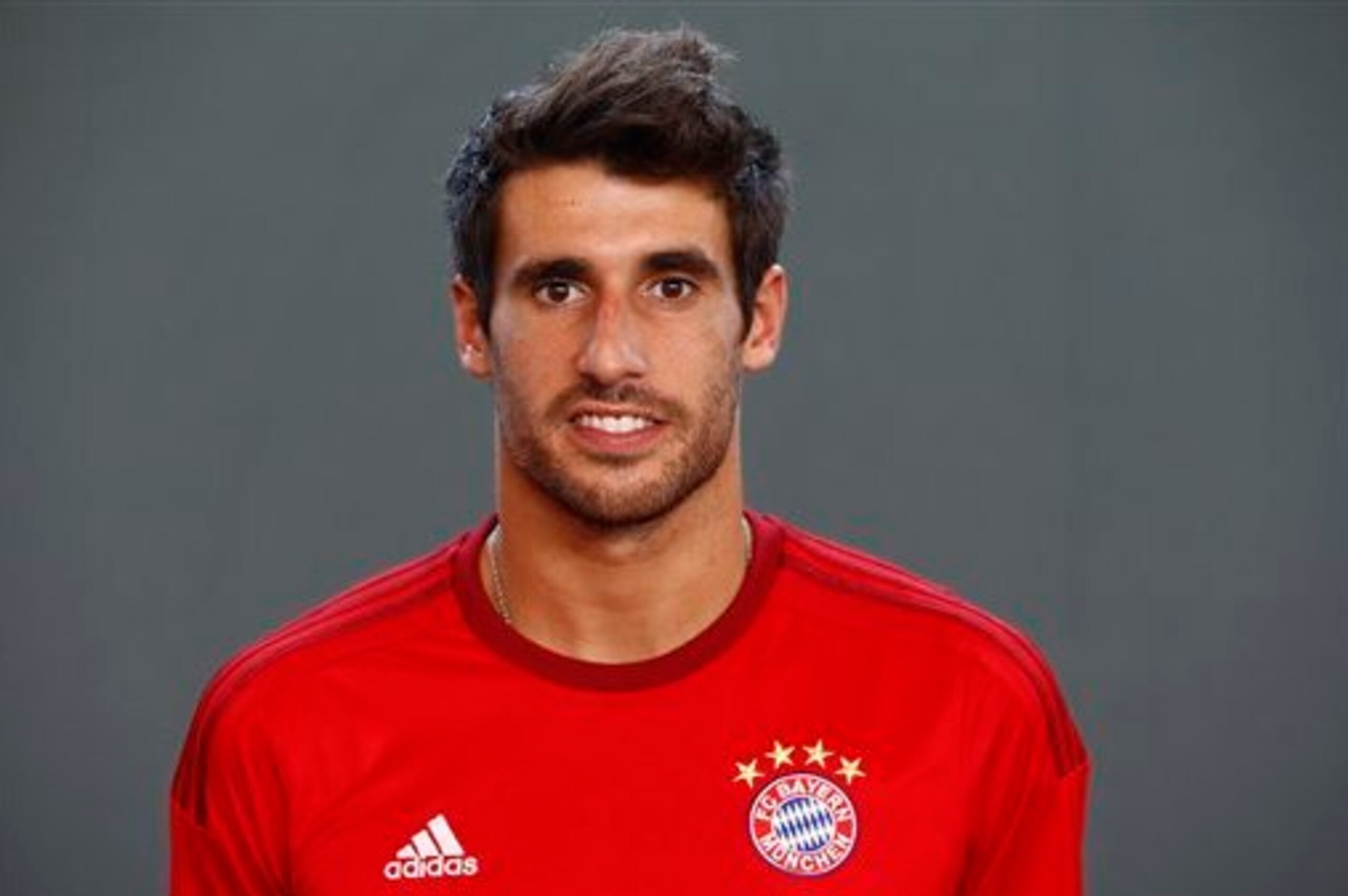
Yet in the big games, Martinez is a better option. Alonso often proved to be a defensive liability last season, his lack of agility and pace being exploited repeatedly. This will only become more of a problem as he passes his 34th birthday in November. In order to balance the team, Bayern need Martinez in midfield as a screening player who can read opposing attacks and win anything in the air, as neither Vidal nor Thiago nor Alonso can.
Although Martinez lacks the passing ability of Alonso, his presence would allow Vidal and Thiago to focus more on the possession game. For precedent, consider the role of Sergio Busquets as the support man for Xavi and Andres Iniesta at Guardiola's Barcelona.
Some will claim Martinez is better in defense, perhaps including Guardiola. But when the Spaniard has played well at the back, it's been in a three-man defense when there are two others to cover him.
Although he has the build for a defender, Martinez lacks the experience required to be a truly world-class center-back: The best in that position rarely reach elite status before 25 (Nemanja Vidic and Thiago Silva are prime examples) after many years of learning the position. Martinez is old enough, but he has spent much of his career in midfield and doesn't have many years of experience in defense.
There's a reason Jupp Heynckes singled out Martinez as his desired signing shortly after losing the 2012 Champions League final, and there's a reason Bayern were willing to pay €40 million to sign him. It's no coincidence that in 2013, Martinez's first season, Bayern finally won the Champions League. Using Martinez in midfield would free Vidal and especially Thiago to work their magic and would do wonders to balance the team, making it impervious to the counterattack.
Guardiola will surely continue to try to impress with tactical innovations and game-by-game tweaks and modifications. This should be more or less acceptable on the regular. But when the big games come, he'll need to use his players to their strengths and send out his team with appropriate balance both vertically and horizontally across the pitch.
Based on the players at his disposal, the best means to this end is a 4-2-1-3 formation. Whether Guardiola will choose to use it, or whether he'll have the fit players to use it at its best, remains to be seen.
.jpg?w=2560 "Texans Titans Football")
.jpg?w=2560 "Chargers Fall to 0-5 🤢")
.jpg?w=2560 "🚨 Texans Trade for MHJ")
.jpg?w=2560 "Grading MHJ Trade 📝")

.jpg?w=2560 "MHJ Bought Own Jugs Machine")