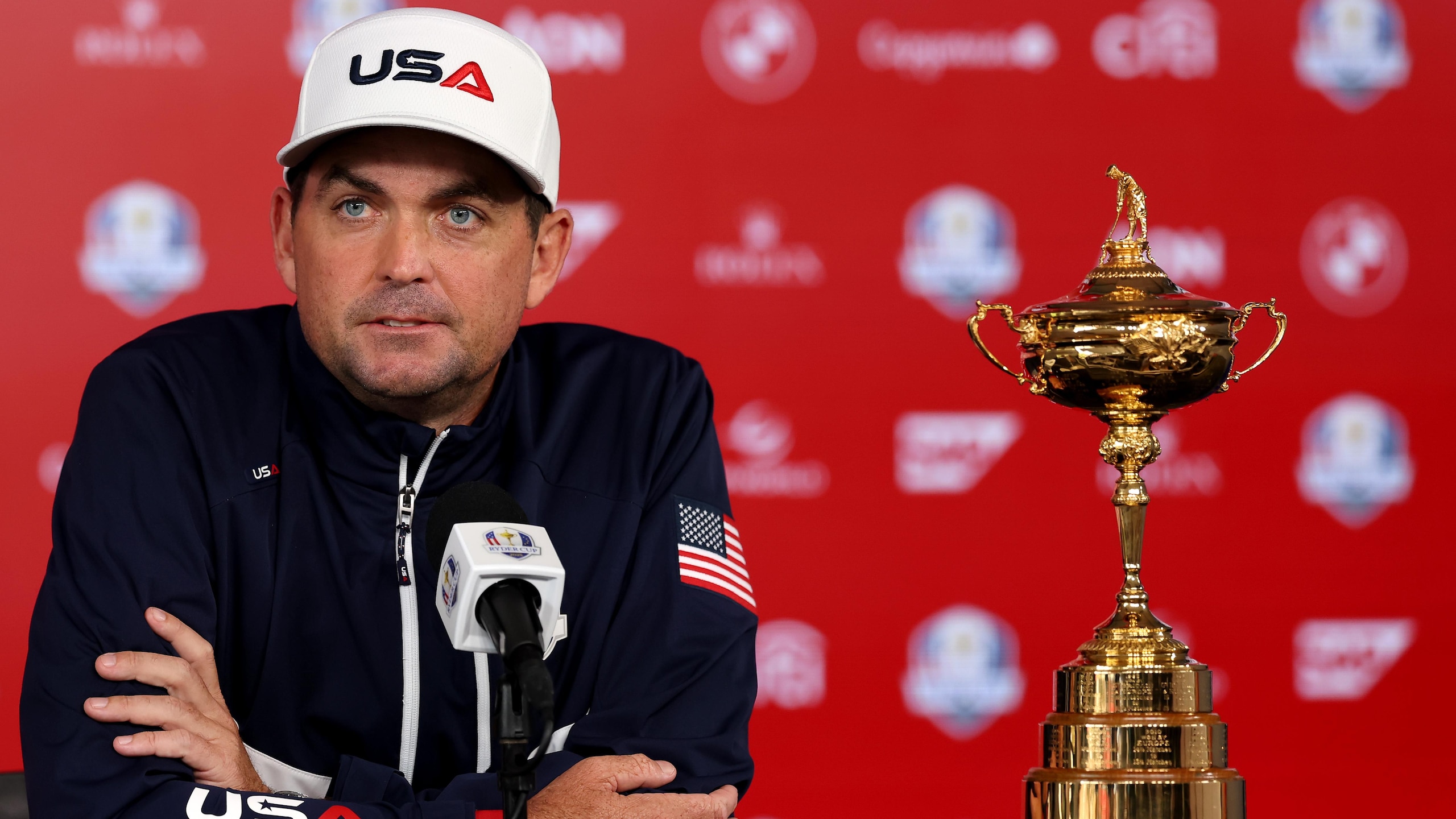


Forget everything you think you know about golf tournaments.
Staid behavior and reserved clapping take a pause at the Ryder Cup, where partisan crowds fuel players into intense displays of emotion in pursuit of the sport's most significant team trophy.
Twelve-man squads representing the U.S. and Europe are at Bethpage Black on Long Island this weekend, with the visitors from across the pond aiming to defend a title won two years ago in Italy and prolong a run that's seen them win eight of 11 since the turn of the century.
The B/R golf team got into the swing of things by looking back over the event's 98-year history and coming up with a collection of the 10 greatest moments since the first go-round in 1927.
Take a look at what we came up with and drop a thought of your own in the app comments.
10. Post-War Cup Revival, 1947
1 of 10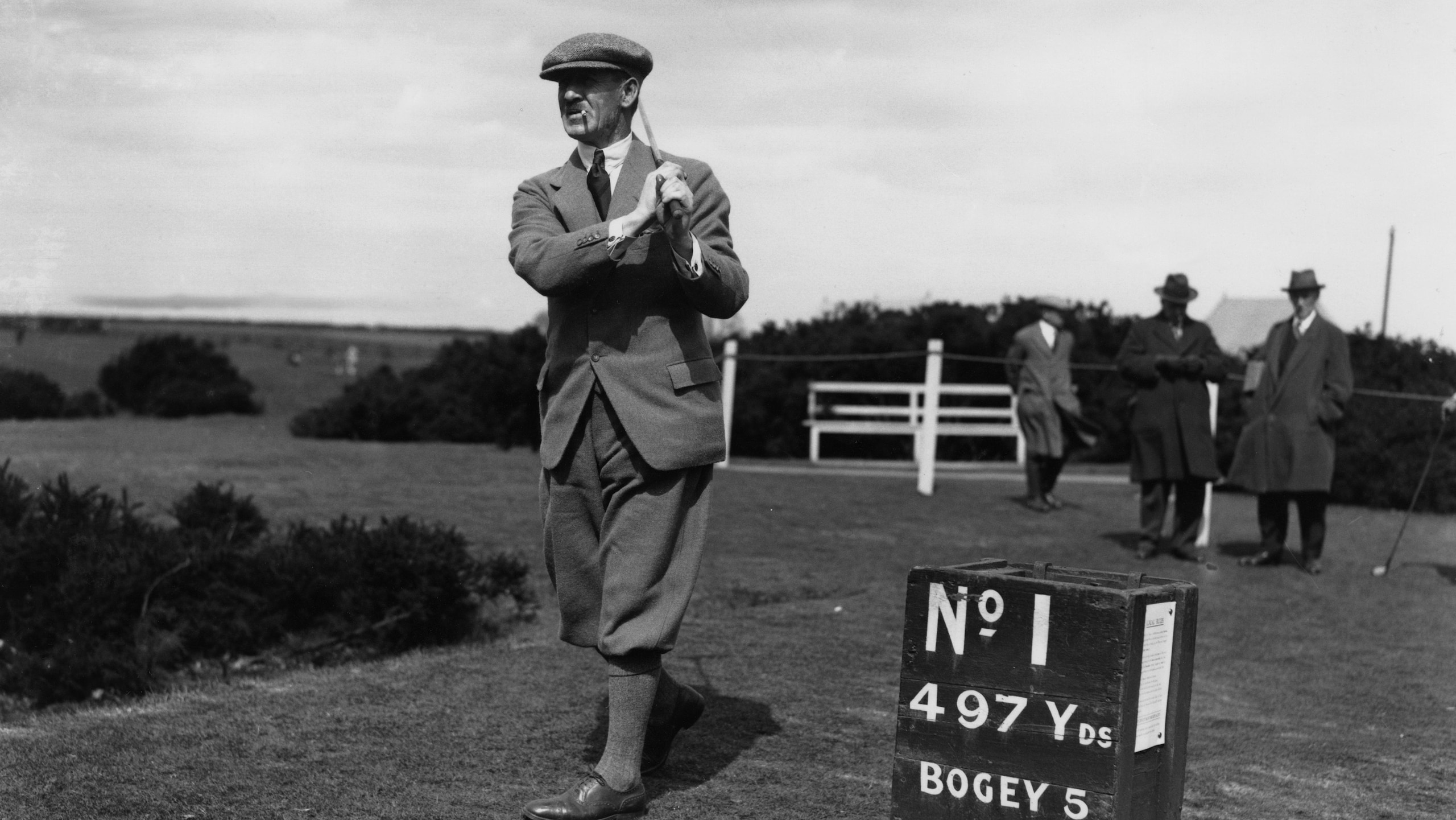
It's a mainstream juggernaut now, but the event was on shaky legs in the years following World War II, amid a 10-year hiatus due to the global hostilities.
The Portland (Ore.) Golf Club was set to host in 1947, but Europe was facing an economic crisis in the aftermath of the war and it was no lock the Great Britain/Ireland team would make the trip. Up stepped Robert Hudson, a member at the Portland club who'd made his fortune in the food business and volunteered to serve as chair.
He underwrote the team's voyage across the Atlantic to the East Coast and the subsequent cross-country trip to the Pacific Northwest, along with the other expenses earmarked for food, lodging, and caddies.
The tournament went on as haphazardly planned and the U.S. squad captained by Ben Hogan was an 11-1 winner. But it's no stretch to say it, and perhaps the rest of the series, never would have happened without the efforts of Hudson.
"We hadn't forgotten about the Ryder Cup, but when the war ended, that didn't mean the competition would be on again," said Englishman Max Faulkner, a member of the 1947 team and winner of the 1951 British Open. "It looked rather bleak."
9. Captain Seve Gets Tearful, 1997
2 of 10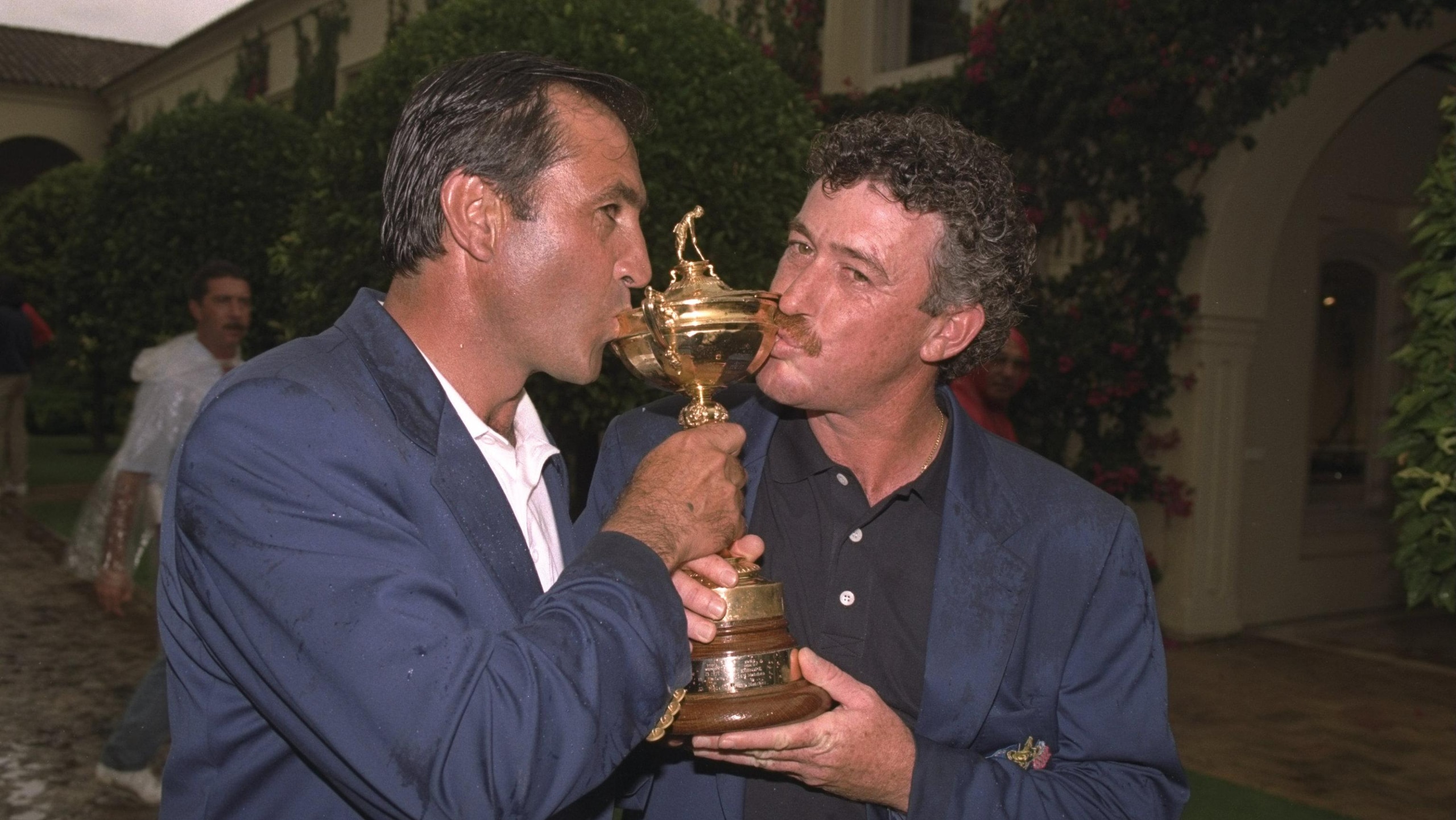
Seve Ballesteros was a Ryder Cup savant.
He represented Team Europe eight times from 1979 to 1995 and was a consistent producer across all formats, frequently linking up with countryman José María Olazábal to form one of the most successful tandems in the event's history.
His swashbuckling manner was an inspiration to teammates, too, and he ultimately translated it to captain's duties. Ballesteros was the chief flag-waver for the 1997 team at the Valderrama Golf Club and the loudest cheerleader as the Europeans won a 14.5-13.5 thriller in the first event hosted on the continent.
He was reduced to tears upon receiving the trophy from the daughter of the Spanish king and called it the ultimate moment of a career that saw him rack up 90 professional victories and five major championships.
"This is my best win ever," he said. "I have won five majors, six Order of Merits, many great tournaments around the world, but I have felt nothing like this."
8. Phil/Tiger Collapse as Teammates, 2004
3 of 10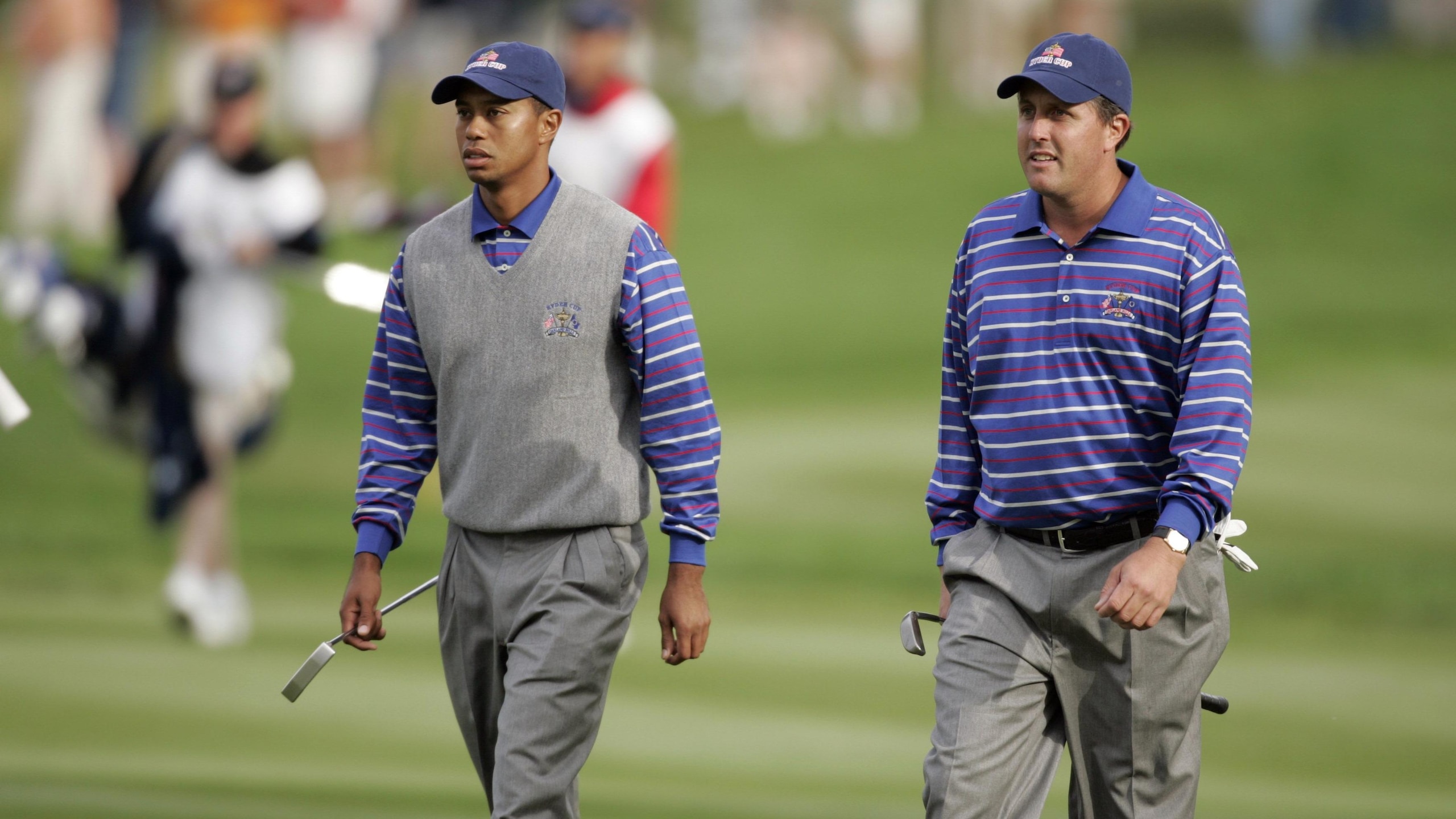
Phil Mickelson and Tiger Woods had won nine majors between them—OK, Tiger had won eight of them, but Phil was the reigning Masters champ—when they were put together by captain Hal Sutton for certain dominance at Oakland Hills in 2004.
Or...maybe not.
Rather than blowing away their European foes on aura alone, the generational U.S. rivals found themselves on the struggling side of the ledger in a pair of matches, losing 2 and 1 to the team of Colin Montgomerie and Padraig Harrington before dropping a 1-up decision to Darren Clarke and Ian Woosnam.
It wasn't so good elsewhere either, with Woods losing alongside another power partner in Davis Love III while Mickelson dropped a singles match to a then-20-something Sergio Garcia.
Put it all together and it was a blowout 18.5-9.5 win for the visitors, and a career-long blotch on the resumes of both legends.
"We were told two days before that we were playing together," Mickelson said. "And that gave us no time to work together and prepare."

.jpg?w=2560 "Rams Raiders Football")

7. Europe's First Win on U.S. Soil, 1987
4 of 10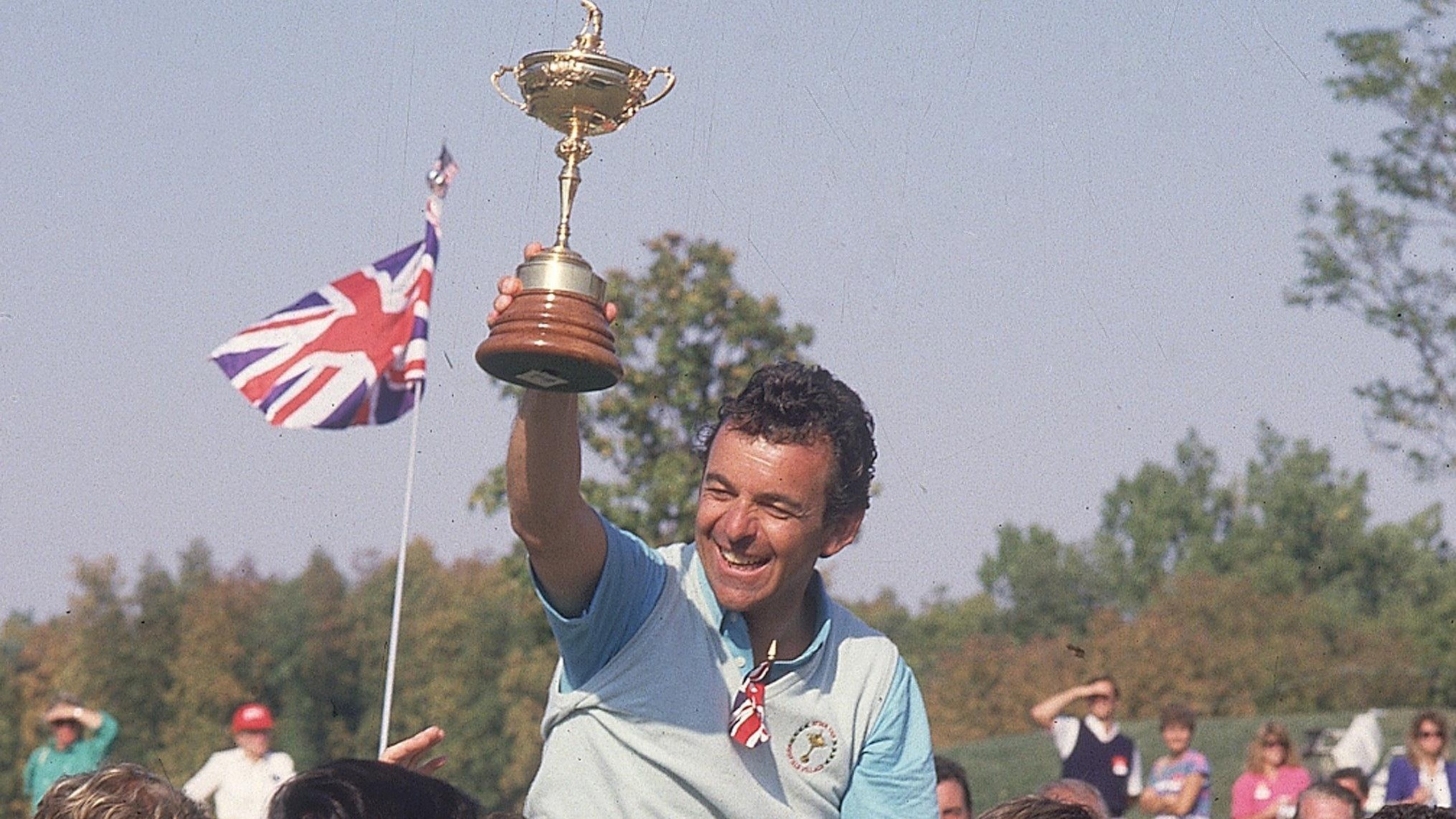
Maybe this is where the tide officially turned.
The Europeans were the reigning champions after a 1985 victory at The Belfry, but they'd won just four times in series history heading to the 1987 event at Muirfield Village—and never in the United States.
But given the confidence instilled by that triumph in England and the fact that it ended an 0-12-1 run, perhaps it was no surprise what came next.
The Tony Jacklin-coached visitors were up 6-2 after the first day and had a 10.5-5.5 edge heading into the final day of singles matches, where late wins from Ballesteros and Eamonn Darcy and ties from Bernhard Langer and Gordon Brand Jr. locked up a final 15-13 margin and a permanent shift in the mojo.
Europe is 10-6-1 in 17 subsequent matches, including repeats in 1995 and 1997 and threepeats from 2002-2006 and 2010-2014.
"It's everyone's target to play where the best are, and America it is," Jacklin said.
"It's that excellence in some ways that spurred me and someone like Seve. We had been poor, and the singular thing that runs through you is just because they've got everything, it doesn't mean to say they are the best. Given the proper and level playing field, it doesn't matter where you're from. America doesn't have a stranglehold on ambition."
6. Lanny Wadkins Pitches In, 1983
5 of 10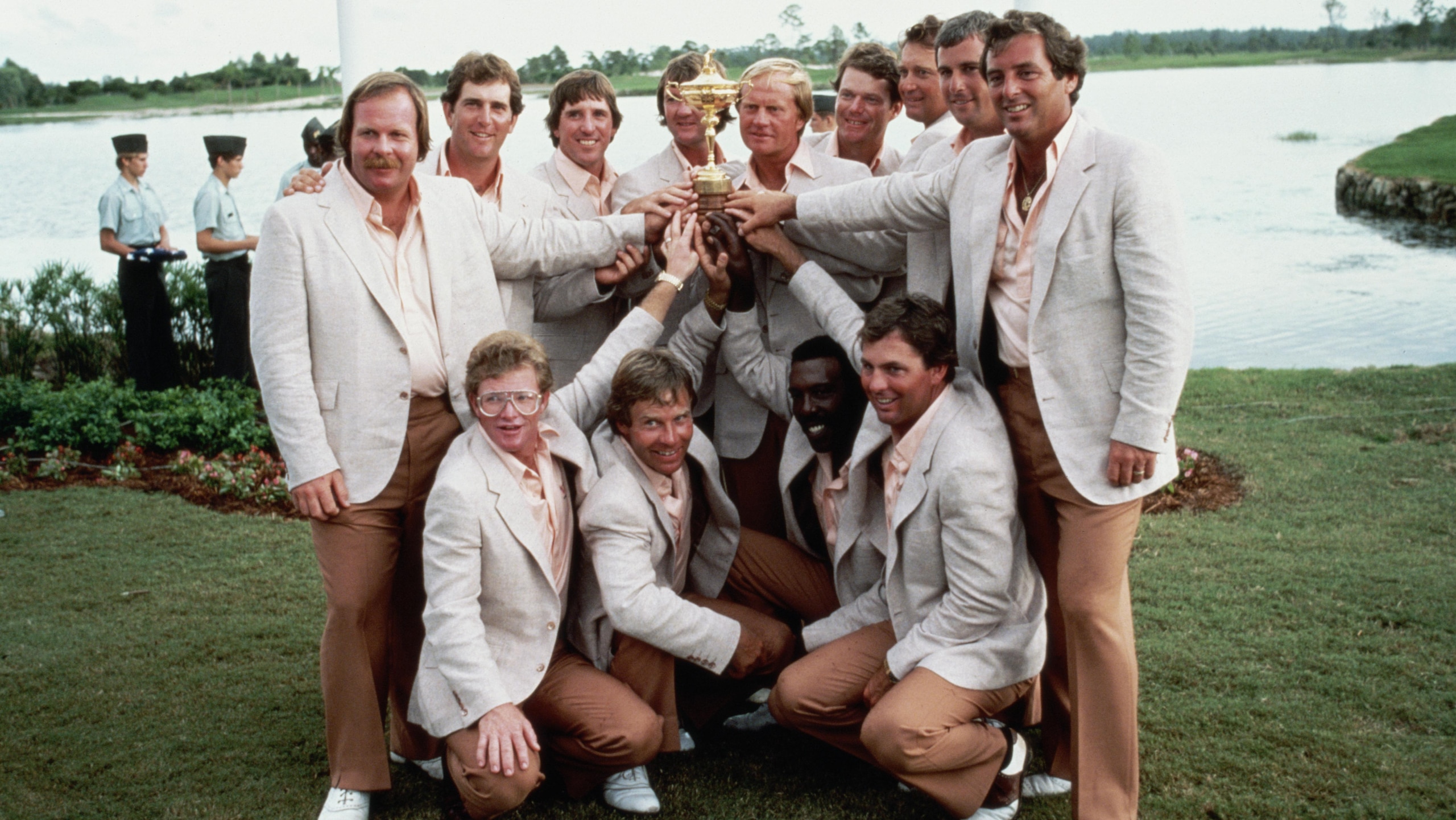
When it comes to golfing greats, Lanny Wadkins isn't the first name to emerge.
The now-75-year-old from Virginia was a respectable pro, winning 21 PGA Tour events and finishing in the top five at five majors alongside a sudden-death win over Gene Littler in the 1977 PGA Championship at Pebble Beach.
But when it comes to the Ryder Cup, he made his mark six years later.
The 1983 event at PGA National in south Florida was a neck-and-neck competition throughout, with the overall score dead even at 8 heading into Sunday's singles. It was still tied at 13 with the final two matches still on the course, including Tom Watson against Bernard Gallagher and Wadkins versus Jose Maria Canizares.
Watson got his win when Gallagher missed a short putt on the 17th hole, leaving Wadkins to pitch from the fairway to inside of three feet on No. 18, prompting captain Jack Nicklaus to run out and kiss the divot the shot had left.
Canizares missed a birdie putt that could have won him the match, allowing Wadkins the half-point that allowed the U.S. team to escape with a 14.5-13.5 win.
"I was glad nobody wanted to talk to me then because I couldn't get a word out," Nicklaus said. "It's an experience I'll remember the rest of my life."
5. Reed vs. Rory, 2016
6 of 10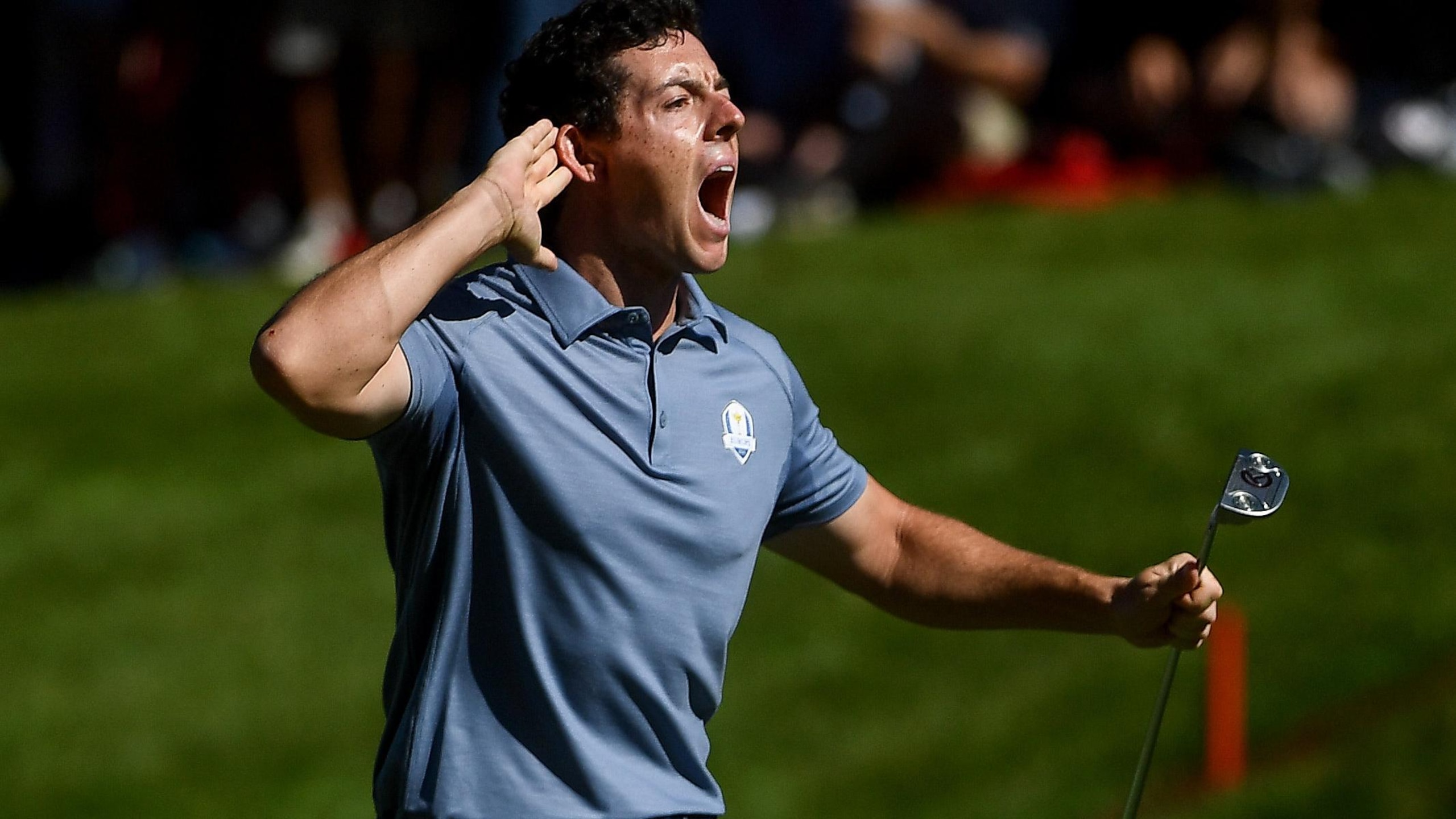
Don't think established pros can talk the same sort of trash on a world stage that buddies might exchange during their Saturday morning play dates?
Think again.
Patrick Reed and Rory McIlroy displayed their miles-wide competitive streaks in front of global TV cameras during the 2016 event at Hazeltine, engaging in a Sunday afternoon singles match that folks who know what they're looking at call the greatest one-on-one encounter in Ryder Cup history.
Reed's U.S. team was badly in need of a win after defeats in 2010, 2012 and 2014, and his emotion was obvious at No. 6 when he blew up protocol by wagging his finger in McIlroy's direction after sinking a putt to halve the hole. They exchanged long putts again two holes later, with McIlroy cupping his hands to his ears to incite the crowd before Reed replied with another finger-wag after draining a 20-footer.
A tap of knuckles indicated mutual respect as the players exited the eighth green and the demonstrative behavior took a back seat to the high-end golf down the stretch, with Reed taking a 2-up lead at the 16th, McIlroy narrowing it to one at 17 and Reed clinching the 1-up victory with a four-footer on No. 18.
It was the highlight of the U.S.'s 17-11 team victory and retains its luster nearly a decade later.
"I remember that eagle, thinking this is the best golf that we might ever see played just between two guys going head to head," ESPN's Kevin Van Valkenburg said. "We were joking, this is like our Duel in the Sun with Nicklaus and Watson. That's what the equivalent of it is."
4. The War at the Shore, 1991
7 of 10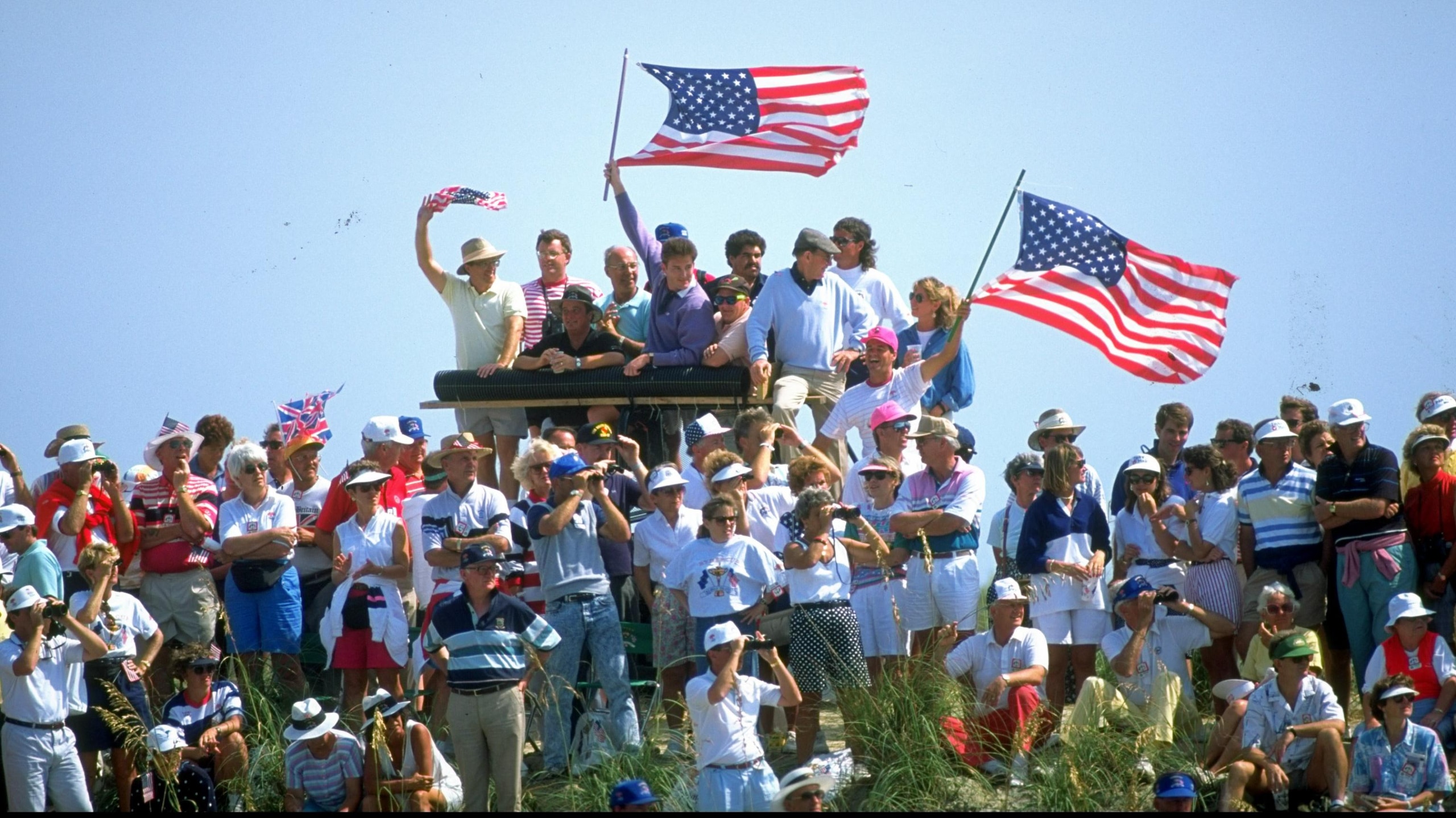
Three Cups without a victory (losses in 1985 and 1987, tie in 1989) was certain to get the Americans annoyed, and the irritation carried over when the teams converged on Kiawah Island in South Carolina in the first week of fall in 1991.
Add in the fervor of the first Gulf War and the atmosphere was rife with tension.
A pre-match gala included a five-minute European highlight video that was trumped by a 20-minute American version, a military flyover before play began ratcheted up the vibe, and the camouflage hats worn by several U.S. players as a tribute to the armed forces did nothing to dim the contentiousness.
The fans got involved with "U-S-A, U-S-A" chants, too, and the gamesmanship carried over with a European complaint that Chip Beck and Paul Azinger changed balls during a first-day foursomes match, and a counter claim levied that Ballesteros was frequently clearing his throat during U.S. players' backswings.
It came down to the final day and ultimately the final hole of the final match, where Bernhard Langer missed a six-foot par putt that gave Hale Irwin the hole and the Americans the overall victory by a 14.5-13.5 margin.
"It all came together," U.S. captain Dave Stockton said. "It changed the dynamics of the Ryder Cup, the competition of it and what people thought of it."
3. The Concession, 1969
8 of 10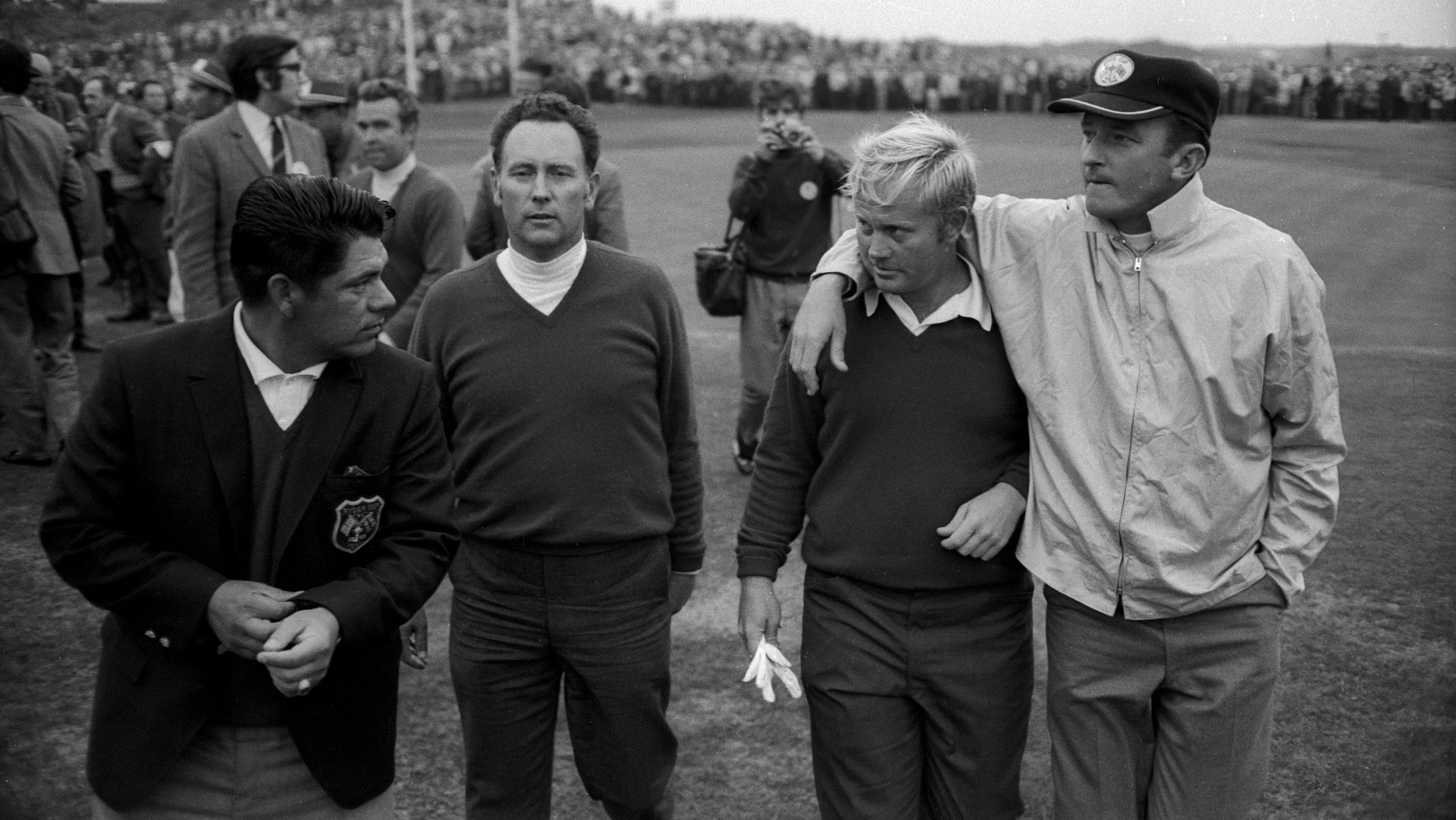
Sometimes it's a war. Sometimes it's not.
The 1969 version at Royal Birkdale in England arrived during a period of total U.S. dominance, with 14 wins in 17 events.
The Europeans had a 13-11 lead early Sunday but it was 15.5 apiece by the time the final match between seven-time major winner Nicklaus—making his first Ryder Cup appearance—and veteran Jacklin headed to the 18th hole all square.
Both reached the green in two and missed birdie tries before Nicklaus sank a par putt that meant Jacklin had to make his to avoid an outright U.S. win. But, instead of forcing his rival to putt it out, Nicklaus conceded the two-footer and locked in a 16-16 tie, ending a run of five straight wins for the Americans.
It was considered an act of high-level sportsmanship at the time and is generally regarded that way all these years later, but not everyone agreed with the gesture.
"When it happened, all the boys thought it was ridiculous to give him that putt," U.S. captain Sam Snead said. "We went over there to win, not to be good ol' boys."
2. The Miracle at Medinah, 2012
9 of 10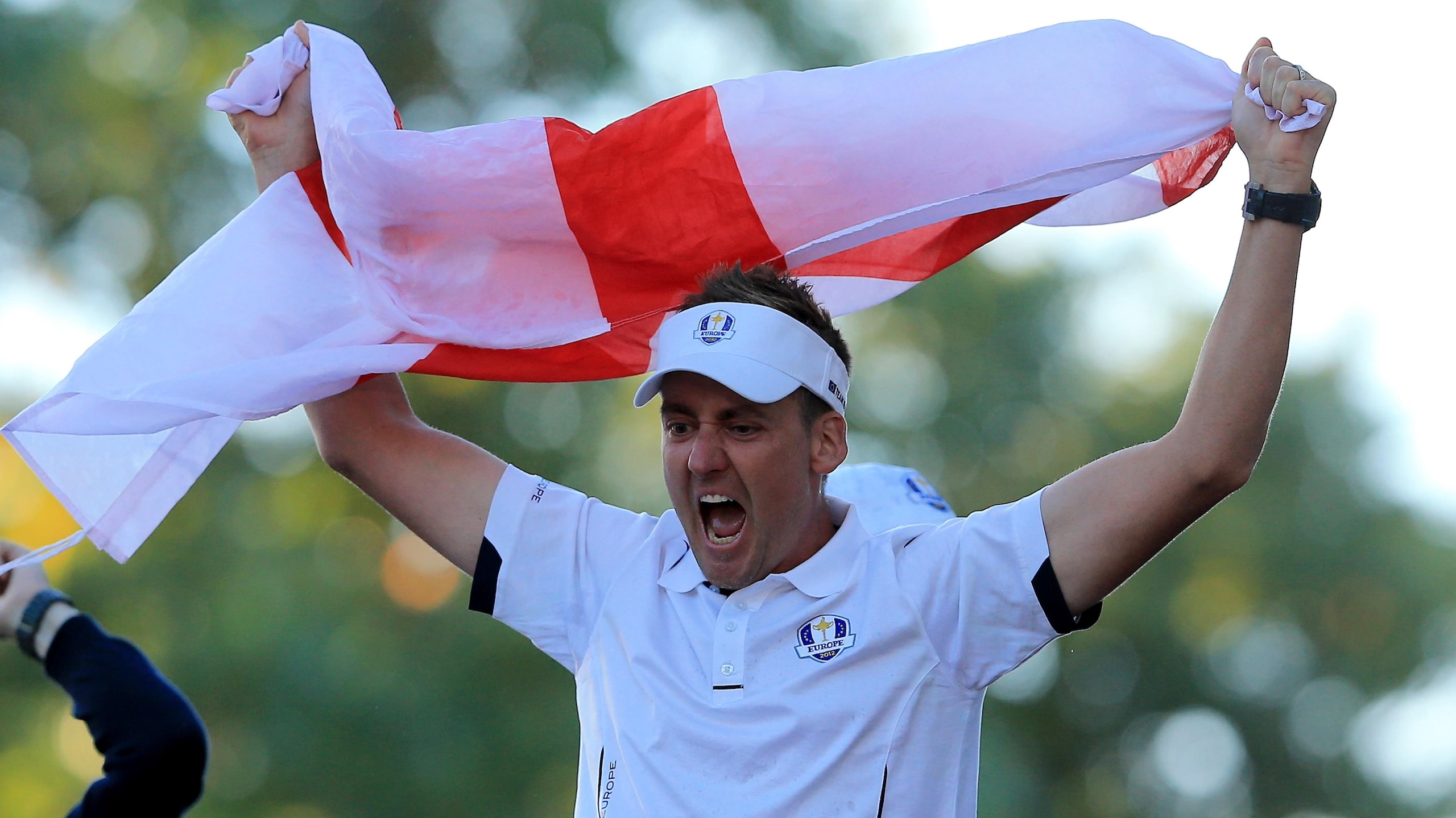
Turns out that miracles aren't reserved for Olympic hockey rinks.
The Europeans were the reigning champions and had won eight of 13 events (8-4 with a tie) heading into 2012 at the Medinah Country Club in suburban Chicago, but things didn't look good as they arrived to Sunday in a 10-6 hole.
But they got singles wins from Luke Donald, Ian Poulter, Rory McIlroy, Justin Rose, Paul Lawrie, Sergio Garcia, Lee Westwood and Martin Kaymer on the final day and completed the comeback when Francesco Molinari, then a three-time winner on the European Tour, halved his match with 14-time major winner Tiger Woods.
It was Europe's first win in the U.S. since 2004 and one that the team has not duplicated since, which will surely be a point of discussion this weekend at Bethpage given the holdover presence of McIlroy and Rose as players and Donald as captain.
"Everything around us was just going off with the European celebrations, the Americans being deflated and spectators starting to leave the course," Molinari said. "It was a surreal finish."
1. Justin Leonard For the Win, 1999
10 of 10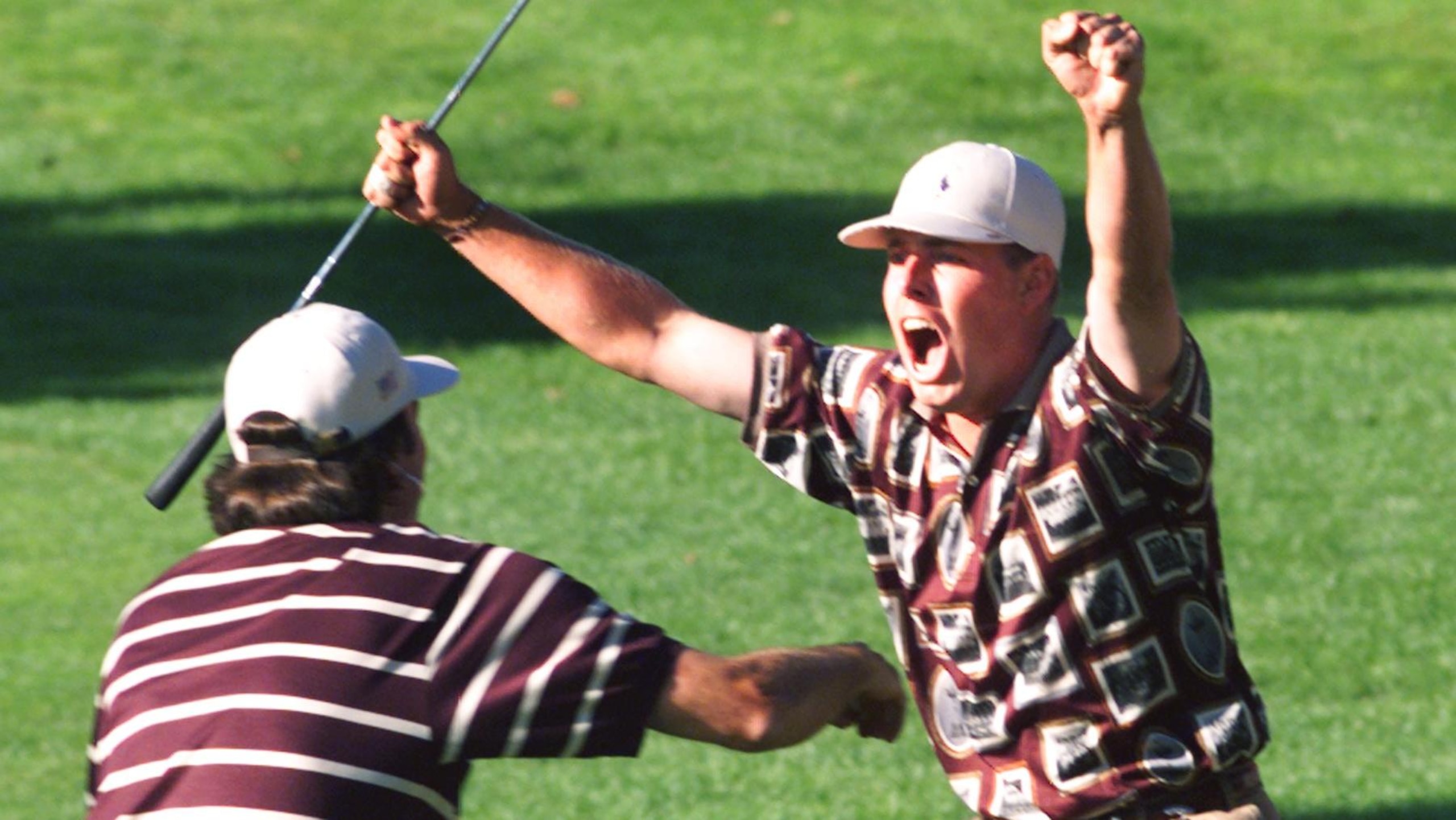
File this one under "Americans Can't Stop Being American."
The 1999 team representing the U.S. at The Country Club in Brookline, Mass. came ready to make a statement, with shirts designed by captain Ben Crenshaw that depicted framed photos of past winning teams.
But if you think the fun was reserved for the fashion police, think again.
The hosts were down, 10-6, heading to the final day of singles matches before winning six in a row and seizing a 14-12 edge. That shifted the focus to Leonard, winner of the 1997 British Open and ranked in the world's top 15, as he lined up a 45-footer for birdie on the 17th hole.
The ball rolled up a slight incline before heading directly for the cup and dropping in the center. Leonard reacted by sprinting to the side of the green and leaping into the arms of teammates and other inside-the-ropes supporters, perhaps forgetting (or ignoring) that playing foe Olazábal had a putt of his own to prolong the match.
Not surprisingly, Olazábal missed and the U.S. emerged with a 14.5-13.5 victory whose aftertaste lingered.
"The United States should be ashamed," European vice captain Sam Torrance said. "It's about the most disgusting thing I've ever seen in my life. And it's not sour grapes."



.jpg?w=2560 "Rodgers Iced Out on Plane 💎")
.jpg?w=2560 "🚨 Week 8 AP Top 25 Poll")
