
2015 NFL Training Camp: 10 Players Who Could Still Be Traded During Camp
Midsummer trades are rarities in the NFL, but there are still numerous players around the league who could potentially hit the block depending on how their respective teams’ training camps play out.
As position battles take place in the weeks leading up to the season, some players who slide down depth charts will become expendable to their teams. While many of those players will simply be released, there are some players—especially at premium positions like quarterback—whose value could be worth exploring on the trade market.
If you’re holding out hope for a blockbuster deal like the Minnesota Vikings' trading running back Adrian Peterson, that’s highly unlikely to happen at this point. There will likely be at least a few deals, however, that involve less spectacular players being swapped for late-round and/or conditional draft picks.
Any player with an exorbitant contract can likely be ruled out as a potential trade chip at this point. With most NFL teams moving close to the salary cap in filling their rosters, there are unlikely to be any takers for players who are overpaid.
The most plausible candidates for trades are young players who are still on their rookie contracts—making them affordable—and who have enough upside to potentially help another team but might not have significant roles with their current organizations.
With only one exception, nine of the league’s 10 most likely candidates for trades are players who are still on their first contracts with the teams who drafted them.
EJ Manuel, QB, Buffalo Bills
1 of 10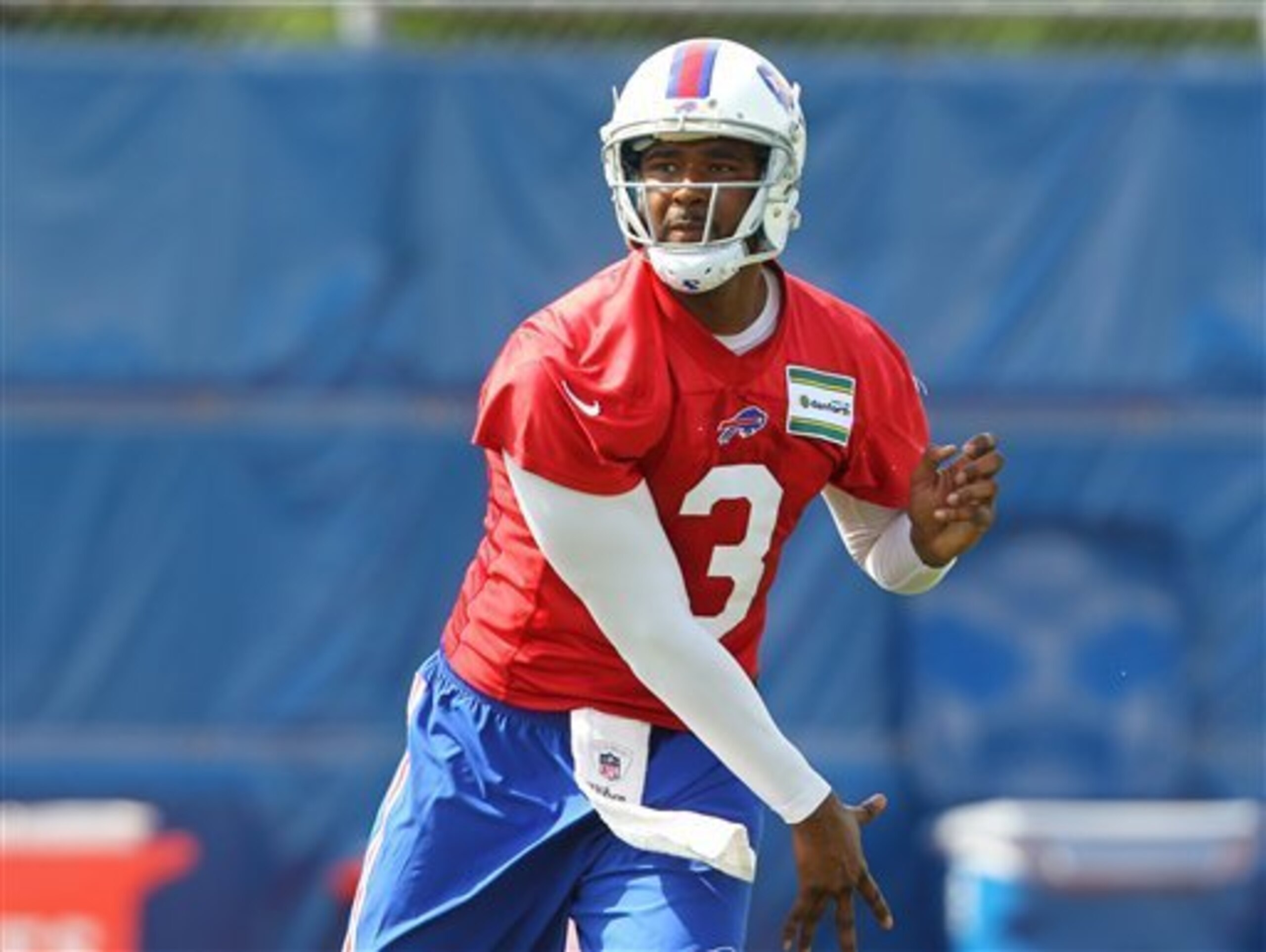
After two uninspiring seasons to start his NFL career and two offseason quarterback acquisitions by the Buffalo Bills, 2013 first-round pick EJ Manuel could potentially end up on the trade block if he fails to seize the team’s starting job this summer.
Set to have a three-way quarterback competition in training camp and the preseason, Buffalo should still give Manuel a full opportunity to earn his place in the lineup.
The best-case scenario for the 2015 Bills remains one in which the third-year quarterback from Florida State stands out above Matt Cassel, a 33-year-old journeyman, and Tyrod Taylor, who struggled as a passer in limited action over four seasons with the Baltimore Ravens.
According to WKBW’s Joe Buscaglia, Manuel “was easily the most productive quarterback during the three-day minicamp” the Bills held in June. “However, he and the Bills both still have a long way to go before anyone gets named the starter,” Buscaglia added.
To this point, there have been no indications that the Bills consider Manuel a favorite to win the position. On the contrary, Bills offensive coordinator Greg Roman has said the competition to start at quarterback is “anybody’s job to take,” according to Brent Axe of Syracuse.com.
That could mean Manuel, but if it doesn't—and the Bills decide to go with Cassel and Taylor as their top two quarterbacks—they could potentially look to move on from Manuel.
Should Manuel fail to win the starting job, he probably won’t garner much value on the trade market, given that he has yet to shown any real signs of being the franchise quarterback he was drafted to be.
But if the Bills decide to move forward with their newly acquired signal-callers for 2015, it could make sense to deal Manuel for a late-round pick to a team who wants to add a young backup at the position or loses a quarterback to injury.
Kirk Cousins, QB, Washington Redskins
2 of 10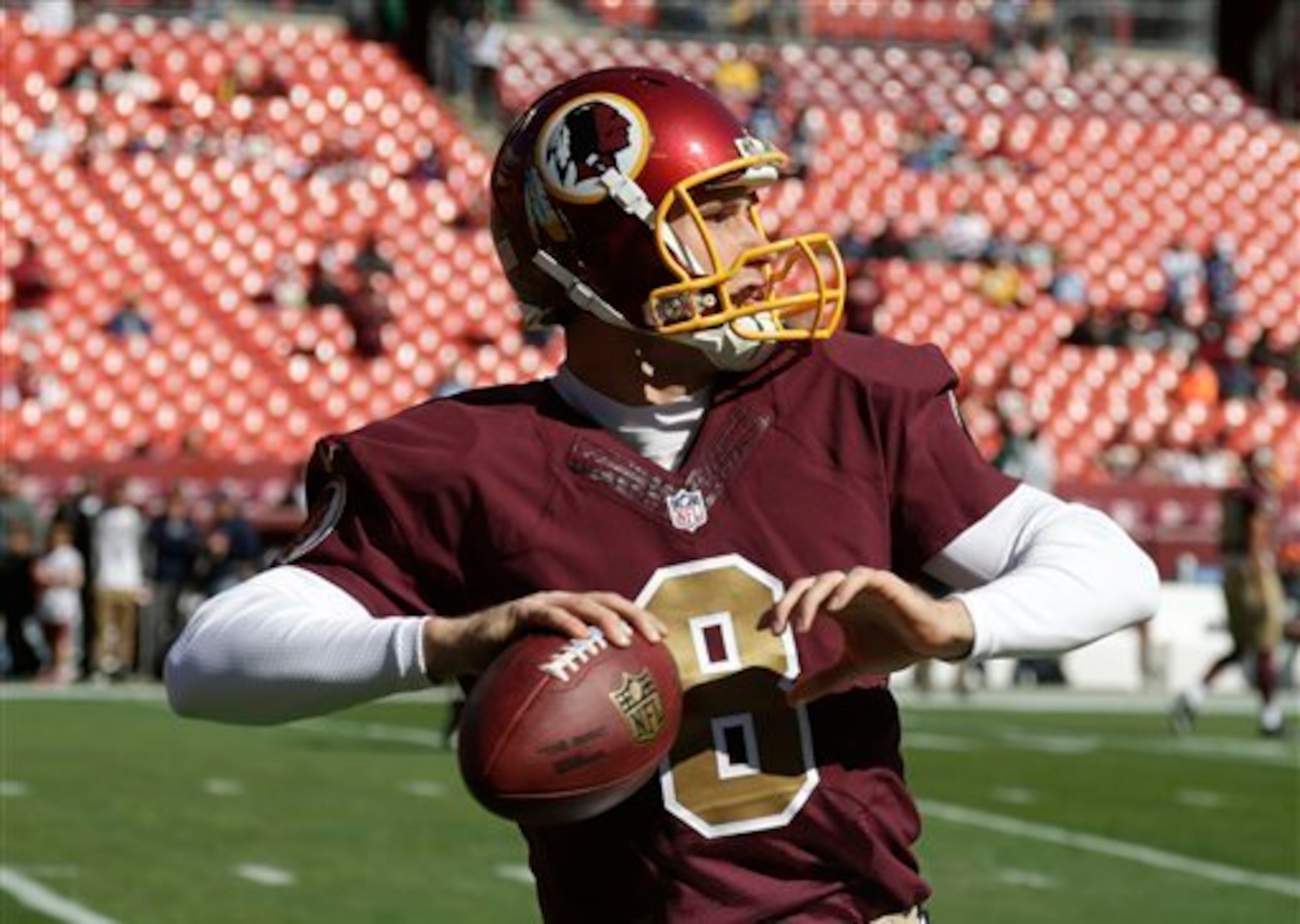
Remember when former Washington Redskins coach Mike Shanahan suggested that Kirk Cousins could be worth a first-round pick?
That notion looks even more laughable now than it did a year-and-a-half ago, but as the 2012 fourth-round pick enters the final year of his rookie contract, trading Cousins for a later-round pick could still be an option.
Going into training camp, Cousins projects to be Washington’s third-string quarterback for 2015. While he is set to compete for the No. 2 position on the depth chart with Colt McCoy, according to Mike Jones of the Washington Post, Cousins projects as the likely underdog in that battle, as he was replaced in the starting lineup by McCoy last year after initially replacing injured starter Robert Griffin III.
The ideas once propagated about Cousins potentially being a franchise quarterback and/or the best quarterback on the Redskins roster have faded away. In 14 appearances over the course of three seasons, Cousins has completed just 59 percent of his passing attempts and has thrown for more interceptions (19) than touchdowns (18).
Nonetheless, Cousins is still a better spot-starting option than many other backup quarterbacks in the NFL. So should any team lose its starting quarterback to an injury during training camp or the preseason, Cousins would be a solid acquisition to bandage the wound.
The Redskins did not receive “any official offers from other teams” for Cousins this offseason, according to general manager Scot McCloughan via the team’s Twitter account, so it would likely take an injury situation for a team to have serious interest in Cousins.
Should a market arise, however, the Redskins would be smart to consider a deal, even if only for a Day 3 draft pick. If Cousins stays in Washington, he might never see the field this year and will likely opt to sign with a different team in free agency next offseason.
Zach Mettenberger, QB, Tennessee Titans
3 of 10
After talking up the talent of second-year quarterback Zach Mettenberger for the first four months of the offseason before ultimately deciding to draft Marcus Mariota with the No. 2 overall pick, the Tennessee Titans could continue talking up Mettenberger with other NFL teams in an effort to trade him for a positive return value.
A 6’5”, 224-pound pocket passer with a strong arm, Mettenberger showed promising potential as a rookie last season. In seven game appearances, including six starts, Mettenberger completed 59.8 percent of his passes while averaging 7.9 yards per passing attempt.
The sixth-round pick still needs to become more consistent with his accuracy and faster in processing the game mentally. Even so, Mettenberger exhibited enough upside in 2014 that if the Titans put him on the market now, they very well might be able to get back a significantly higher pick than they used to draft him just one year ago.
Young quarterbacks with the passing skills to succeed as NFL starters are tough to come by, and the Titans appear to have two of them. With Mariota already locked into Tennessee’s starting job, the time to trade Mettenberger might be this summer, especially if he makes significant strides this preseason and/or other teams believe Mettenberger can be an upgrade over their current starting options.
It is uncertain what Mettenberger’s trade value would be this summer, and the Titans should absolutely not make a deal unless they can bring back than what they gave up for him. But assuming Mariota stays healthy and Mettenberger stays relegated to the bench, his value will only decline over time.
As the Tampa Bay Buccaneers selected quarterback Jameis Winston with the No. 1 overall pick, some analysts—including ESPN’s Matt Williamson—have suggested that they should trade third-year quarterback Mike Glennon. A trade involving Glennon is highly unlikely to take place, however, because Glennon is the only quarterback on the Buccaneers roster with any NFL regular-season game experience.
The Titans, on the other hand, can afford to move Mettenberger if they wish to do so because they also have an experienced veteran backup. Charlie Whitehurst, who started five games for Tennessee last season, can capably take over as the team’s No. 2 quarterback and spot-start if needed.
.jpg?w=2560 "49ers Giants Football")
.jpg?w=2560 "Commanders Vikings Football")
Matt Barkley, QB, Philadelphia Eagles
4 of 10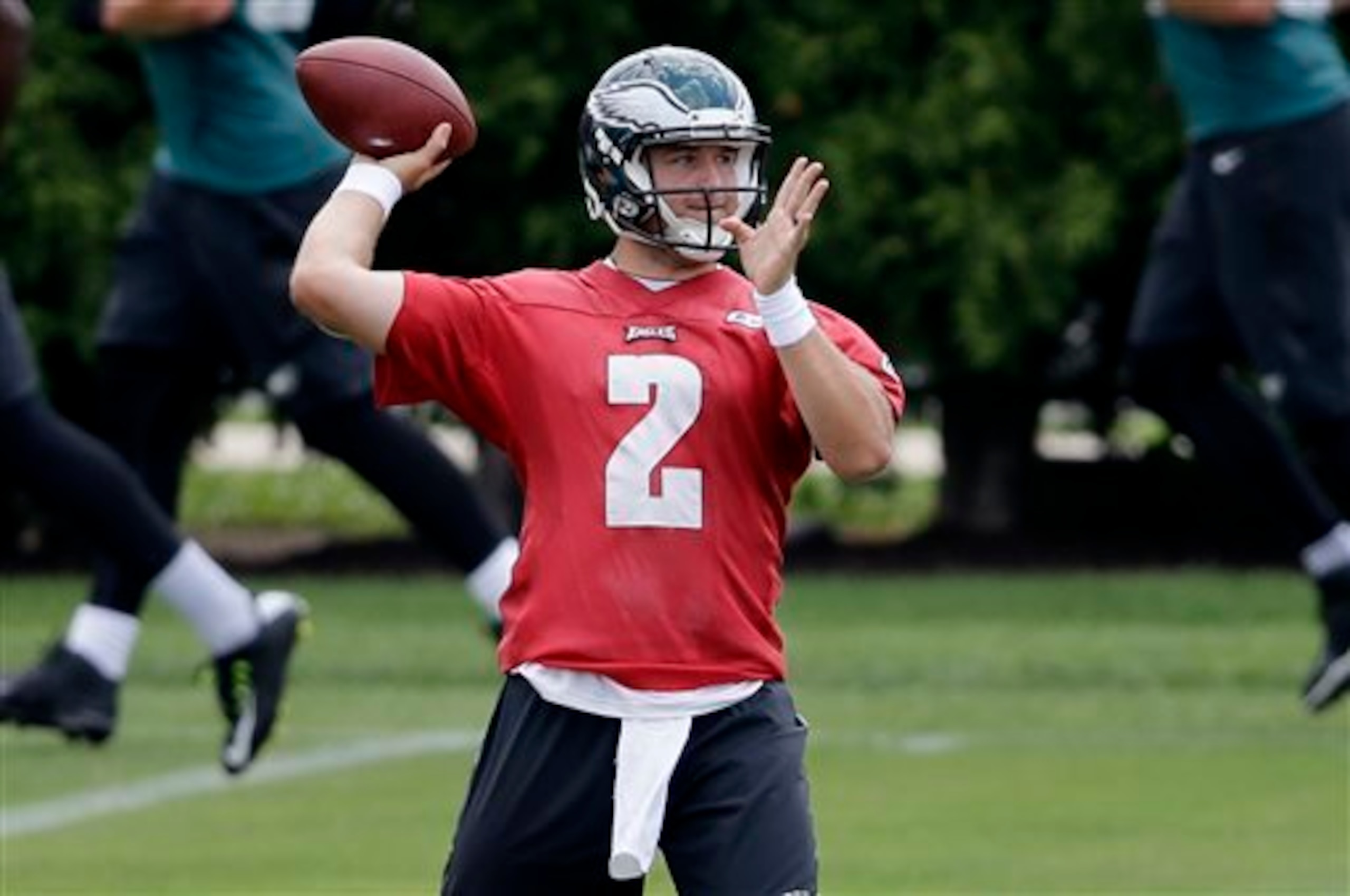
Given the unconventional, fantasy football-esque approach that Chip Kelly has taken with personnel moves this offseason, there are many players on the Philadelphia Eagles roster who could plausibly end up being traded this summer. If any team is going to trade away a prominent player in a July or August blockbuster deal, the Eagles stand out as the most likely team to do so.
With that being said, the player the Eagles are realistically most likely to trade this summer—if he still has any trade value at all—is third-year quarterback Matt Barkley.
By trading for Sam Bradford, re-signing Mark Sanchez and signing Tim Tebow this offseason, the Eagles eliminated a need to keep Barkley on the roster. While there is no guarantee that Tebow will make the roster, and Barkley could beat him out for the team’s No. 3 quarterback job, Barkley is very much on the team’s roster bubble.
According to ESPN’s Adam Schefter, the Eagles already tried to trade Barkley in April but “could not get enough in return.” Like the aforementioned quarterbacks, Barkley’s trade value this summer could be contingent on whether injuries around the league leave teams desperate to acquire a quarterback before the start of the season.
Even in an injury situation, no team is going to trade for Barkley to make him a starter. If a trade comes to fruition, it will likely be for nothing more than a conditional late-round draft pick, as Barkley has proven nothing thus far in his NFL career.
If Barkley fails to beat out Tebow in training camp, the 2013 fourth-round pick could simply be waived if no trade market develops for him. But if there ends up being an NFL team who needs to acquire a backup quarterback prior to the start of the season, Barkley would be a cheap, presumably available option who is smart enough to pick up an offense quickly and young enough to still have some upside.
Christine Michael, RB, Seattle Seahawks
5 of 10
Stuck behind a workhorse in Marshawn Lynch and a solid backup in Robert Turbin on the Seattle Seahawks’ running back depth chart, Christine Michael has had only 52 rushing attempts in his first two NFL seasons.
After re-signing Lynch to a two-year contract extension this offseason, the Seahawks’ best chance of getting any real value out of Michael—who has two years left on his rookie contract—might be to trade the 2013 second-round pick now.
While Michael is an injury-prone player who has yet to prove anything in the NFL, he still has believers in his potential because he has a rare combination of size and athleticism. According to a formula used at the time by Bleacher Report’s Ryan Riddle, Michael graded out as the most physically gifted prospect in the 2013 NFL draft.
Michael’s physical potential was not matched by much production at Texas A&M, and it certainly has not been yet in the NFL. Despite their investment in him just two years ago, the Seahawks might be ready to move on.
According to ESPN.com’s Terry Blount, Seahawks coaches “are high on” Thomas Rawls, an undrafted rookie from Central Michigan who is making a push to earn a spot on the roster as the team’s No. 3 running back. As Blount alluded to in the same article, the Seahawks could potentially look to trade Michael for a late-round draft pick if they decide to keep Rawls on the roster.
Should the Seahawks put Michael on the block, they should be able to find a taker. At the likely cost of a conditional Day 3 draft choice, Michael’s rare physical traits would make him worth a shot, especially for a team with a need—perhaps one that opens due to injury—for a running back who can contribute this season.
Cordarrelle Patterson, WR, Minnesota Vikings
6 of 10A starting wide receiver for the Minnesota Vikings going into last season, Cordarrelle Patterson was widely projected to be one of the NFL’s breakout players after a promising rookie year.
Instead, he was one of the league’s biggest disappointments; he failed to show improvement as a wide receiver and ended up playing less than 10 offensive snaps, according to Pro Football Focus, in each of the Vikings’ final five games.
Going into his third year, the 2013 first-round pick appears set for a role much closer to that which he held at the end of last season than his prominent role from the beginning of the year.
According to ESPN.com’s Ben Goessling, Patterson’s role at the Vikings’ June minicamp was with the second-team offense, with Mike Wallace and Charles Johnson taking starters reps outside and Jarius Wright working as the first-team slot receiver.
If Patterson is unable to work his way back into the offensive lineup, it could make sense for the Vikings to trade him, especially given their fifth-round selection of Stefon Diggs, who could fill Patterson’s role as the team’s fourth wide receiver and lead kickoff returner.
At this point, a Patterson trade still looks like a long shot. Having traded four picks to move up in the 2013 draft and select him, the Vikings would not be able to get a return value even close to what they invested in him.
Furthermore, Vikings coach Mike Zimmer adamantly told NBC Sports Radio (h/t Andrew Krammer of 1500 ESPN) in March that there was “no chance” the team would deal Patterson this offseason.
Still, there’s reason to wonder whether Zimmer and the Vikings might revisit that stance if Patterson fails to distinguish himself this summer and Diggs catches on quickly. And because Patterson is a top-notch kickoff returner, a gifted physical specimen, only 24 years old and on a rookie contract, he likely could still command a third- or fourth-round pick on the trade market.
Justin Hunter, WR, Tennessee Titans
7 of 10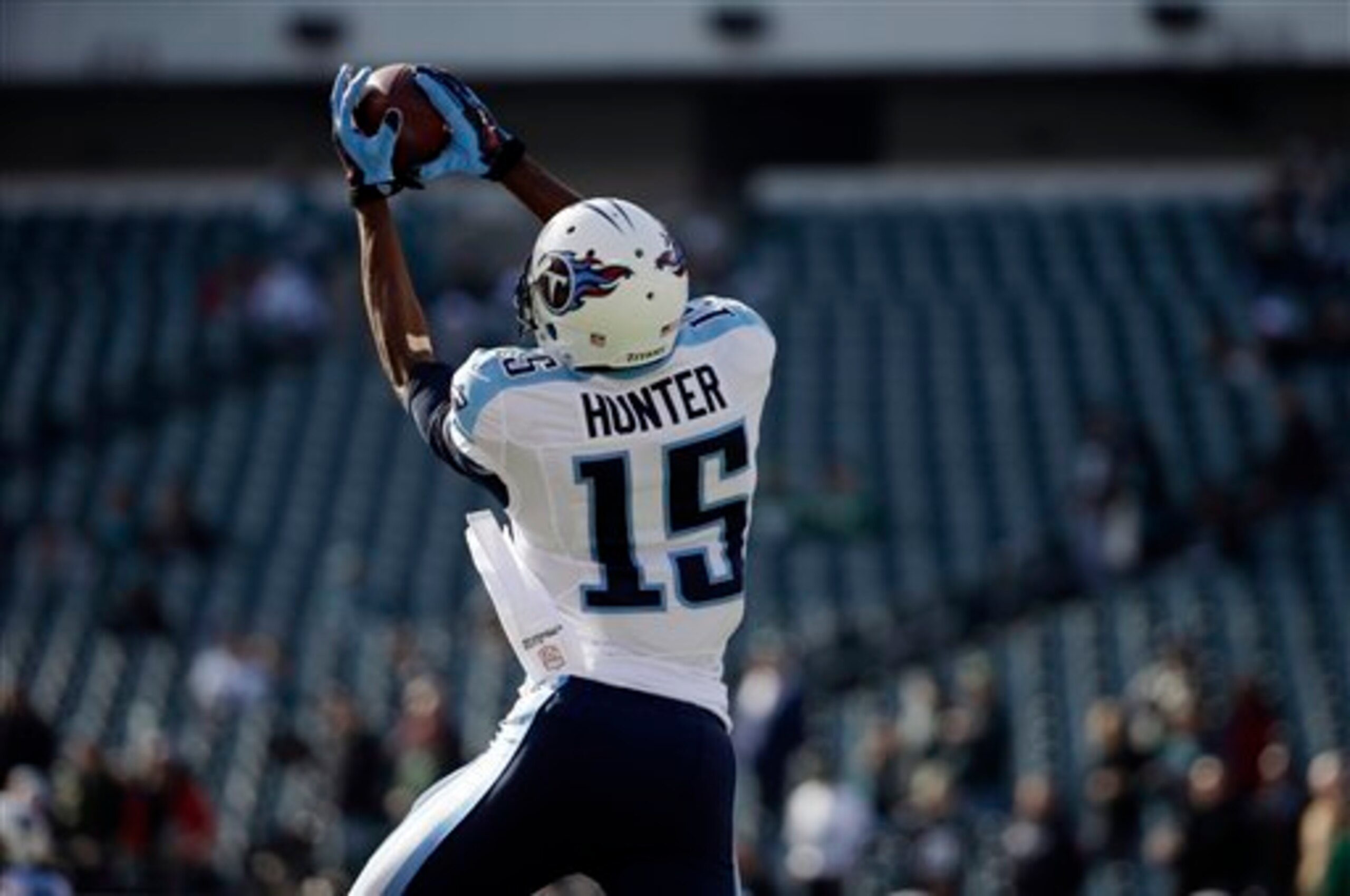
Much like former University of Tennessee teammate Cordarrelle Patterson, Justin Hunter fell well short of expectations in his sophomore season last year.
The 2013 second-round pick caught 28 passes for 498 yards and three touchdowns in 12 games but continued to be inconsistent with his production and plagued by drops.
After the Tennessee Titans added four new wide receivers this offseason who all have a chance to challenge him for his playing time, Hunter could potentially end up on the trade block if he fails to exhibit clear improvement as a pass-catcher and route-runner in training camp.
While Hunter still projects as the favorite to be the Titans’ No. 2 starting wide receiver opposite Kendall Wright, he could face a strong challenge for that role this summer from rookie Dorial Green-Beckham, the team’s second-round draft pick.
If Green-Beckham gets off to a strong start, it could make sense for the Titans to move on from Hunter, given that they loaded up on depth at the position this spring by signing veteran free agents Harry Douglas and Hakeem Nicks and by drafting Tre McBride with a seventh-round pick.
A 6’4” wide receiver who ran a 4.44-second 40-yard dash at the 2013 NFL Scouting Combine, Hunter has a top-notch combination of length and speed that gives him huge upside if he can improve upon his fundamentals. Still just 24 years old and on a rookie contract, Hunter would likely garner a middle-round draft pick on the trade market this summer.
With six receivers competing for what might be only five roster spots, the Titans’ best move might be to deal Hunter—while they can still get something in return for him—if he fails to establish himself as a starter.
Zane Beadles, LG, Jacksonville Jaguars
8 of 10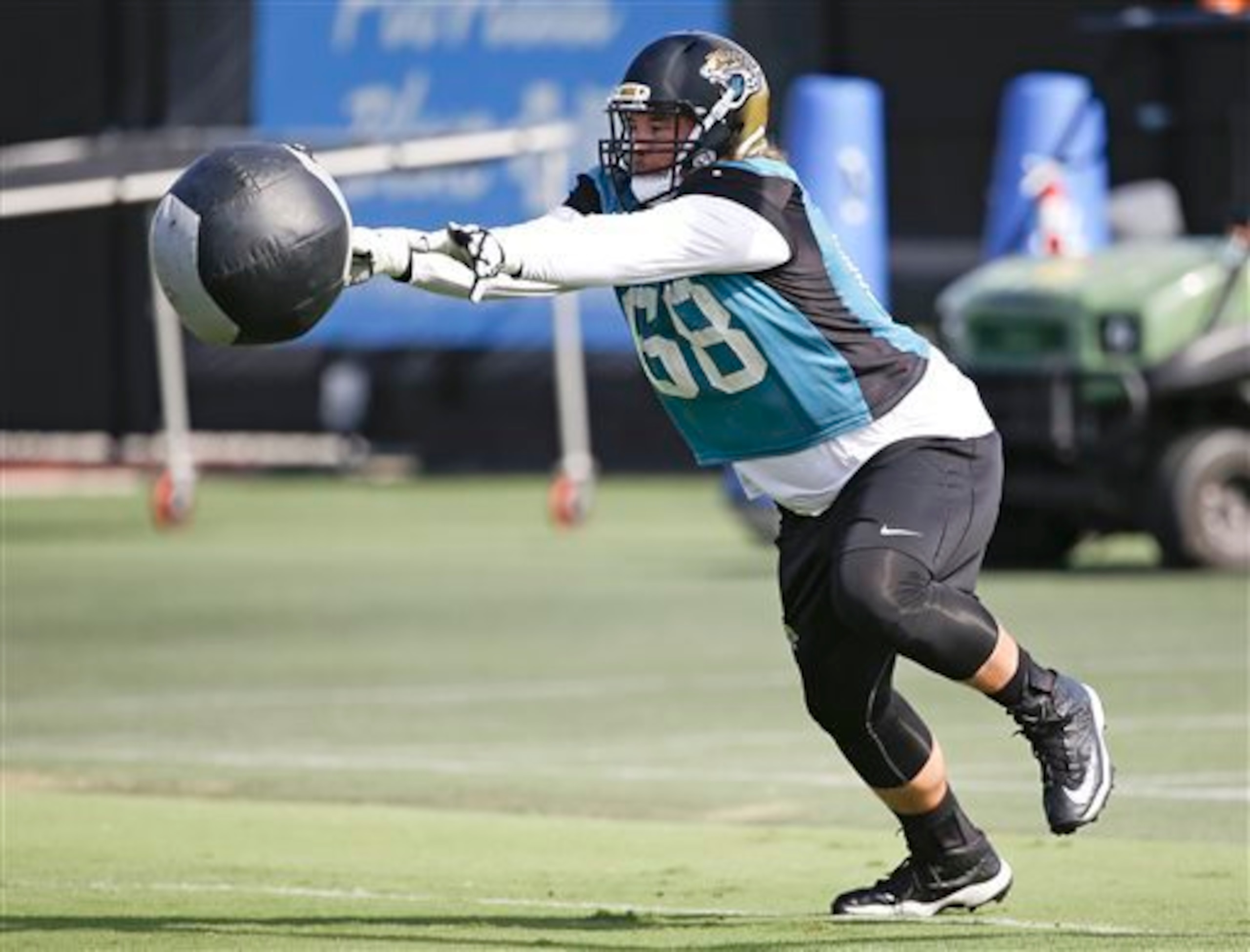
The lone player on this list already on his second NFL contract, Zane Beadles was expected to be the Jacksonville Jaguars’ left guard for years to come when he signed a five-year, $30 million contract with the team last offseason.
That status was put in doubt this spring, however, when the Jaguars added multiple interior offensive linemen to their roster.
The Jaguars used their third-round selection in this year’s NFL draft on A.J. Cann, who projects to be Beadles’ replacement sooner than later. A four-year starter at South Carolina, Cann is a strong, technically sound blocker who should be ready to take on a starting role as soon as possible.
Furthermore, the Jaguars also signed veteran offensive lineman Stefen Wisniewski, who can compete with Luke Bowanko at center but also provide depth at all three interior line spots, to a one-year, $2.5 million contract this offseason.
Given that, it would make sense for the Jaguars to explore the option of trading Beadles if Cann performs well in training camp. Moving Beadles would only cost Jacksonville $2 million in dead money, and it would save them $3 million against this year’s salary cap while taking $17.5 million over the next three years off the books.
With no dead money in his contract beyond this year, according to Spotrac, Beadles would be a low-risk investment for a team that needs a short-term upgrade at left guard. While it appears his first season in Jacksonville did not live up to the team’s expectations, he is a solid interior pass protector who could be a quick fix for a team with a need at the position.
If the Jaguars are ready to move on from Beadles and want the cap savings, they could simply release him. Presumably, though, they should be able to find a team who would at least give up a late-round pick in order to acquire Beadles and upgrade its offensive line.
Bjoern Werner, OLB, Indianapolis Colts
9 of 10
Like many of the other players on this list, Bjoern Werner was a high draft pick but has failed to live up to expectations.
Selected with the No. 24 overall pick in the 2013 draft, Werner has yet to provide a significant pass-rushing presence in two seasons with the Indianapolis Colts.
Although Werner started 15 regular-season games and two playoff games for the Colts last season, his playing time gradually diminished over the course of the year, and he was inactive for the team’s AFC Championship Game against the New England Patriots. For his career to date, Werner has just 6.5 sacks and has been consistently underwhelming.
In an interview with Stephen Holder of the Indianapolis Star this May, Werner defended his disappointing play. "Since I've entered the league, I haven't been healthy one time,” Werner said, explaining that he battled foot and knee injuries as a rookie and a sore shoulder last season.
Even so, it looks unlikely that Werner will return to playing a major role within the Colts defense in 2015.
Between the signing of free agent Trent Cole and the return of Robert Mathis from an Achilles injury, the Colts will have two outside linebackers they did not have last season who are likely to see more playing time than Werner, in tandem with returning starter Erik Walden. Additionally, Werner could also be supplanted on the depth chart by Jonathan Newsome, who recorded 6.5 sacks in limited action as a rookie.
Because of his lack of production thus far in his career, Werner would not likely be worth more than a late-round draft pick in a trade this summer. Nevertheless, it might be in the Colts’ best interest to move him while he is just 24 years old and still has some value, if they end up having four other outside linebackers ahead of him on the depth chart.
Dee Milliner, CB, New York Jets
10 of 10
No team did more to revamp an individual unit on its roster than the New York Jets did with their secondary in free agency this year.
In addition to signing Darrelle Revis, arguably the NFL’s best cornerback, they added three more potential starters to their defensive backfield in outside cornerback Antonio Cromartie, slot cornerback Buster Skrine and safety Marcus Gilchrist.
With those moves, the Jets secondary should be exponentially better than the group on the field last season. Whether there is a spot for 2013 first-round pick Dee Milliner in that secondary, however, is uncertain.
Milliner was wildly inconsistent as a rookie but started to blossom at the end of the season, as he recorded five passes defensed in each of his final two games. He was unable to build upon that momentum last season, however, as he suffered a torn Achilles that ended his year after just three games played.
Now, with three established veterans at the position ahead of him, Milliner enters his third season looking to be no better than fourth on the Jets’ cornerback depth chart. Considering the Jets also have Marcus Williams, Darrin Walls and 2014 third-round pick Dexter McDougle on their roster, that could make Milliner expendable.
A No. 9 overall draft selection out of Alabama, Milliner has the talent to be a quality starting cornerback in the NFL if he can shore up his technique and stay healthy. He might not get that chance again with the Jets, however, as Cromartie and Skrine are signed through 2018 and Revis is signed through 2019.
Given that, the Jets would be smart to at least consider any trade offers they might get for him this summer.
According to a March report from Manish Mehta of the New York Daily News, the Jets received trade inquiries about Milliner following their free-agency spending spree but “told interested teams that Milliner isn’t available at a drastically discounted price,” at least not at that time. So it would seemingly take at least a middle-round pick for the Jets to give up Milliner, and there might not be any team willing to make that offer.
That said, the latter could change if a team loses a cornerback to injury, has a sudden need at the position and believes Milliner can address that need. In such a situation, it could make sense for the Jets to get return value on Milliner while they still can and for another team to see if it can take advantage of his upside.
All measurables and statistics courtesy of NFL.com unless otherwise noted. Salary information courtesy of Spotrac.
Dan Hope is an NFL/NFL Draft Featured Columnist for Bleacher Report.
.jpg?w=2560 "Commanders Cowboys Football")

.jpg?w=2560 "WWE Raw Live Grades 🔠")

.jpg?w=2560 "🚨 Puka Out for MNF")