
MLB's 10 Biggest Storylines Heading into the 2nd Half of the Season
The All-Star Game is in the books. The American League has home-field advantage in the World Series. Pete Rose is still banned from baseball, mostly.
Now we can move onto things that actually should count, like the second half of the Major League Baseball season.
Games don't start until Friday, so absorb the time off because the second half is loaded with intriguing storylines. From the July 31 nonwaiver trade deadline to which teams will hold up through September to lawsuits and federal investigations, MLB has a full plate coming out of the All-Star break.
Get yourself educated on 10 of the biggest second-half storylines here:
July's Trade Market
1 of 10
We are now well-versed in how teams maneuver the July 31 nonwaiver trade deadline in the era of the second wild-card spot. Hope and preseason commitments cause underachieving teams to hang on until near the end, slowing the action until the realization hits in the final days of the month.
Teams like the Boston Red Sox, Chicago White Sox, Cincinnati Reds and San Diego Padres are still technically alive in the wild-card races. But considering how they all have performed this season and how many teams are ahead of them in those standings, securing one of their league's spots seems to be virtually impossible.
Here is a list of the teams that have given up on their season and are willing to sell whatever valuable assets they posses: Philadelphia Phillies.
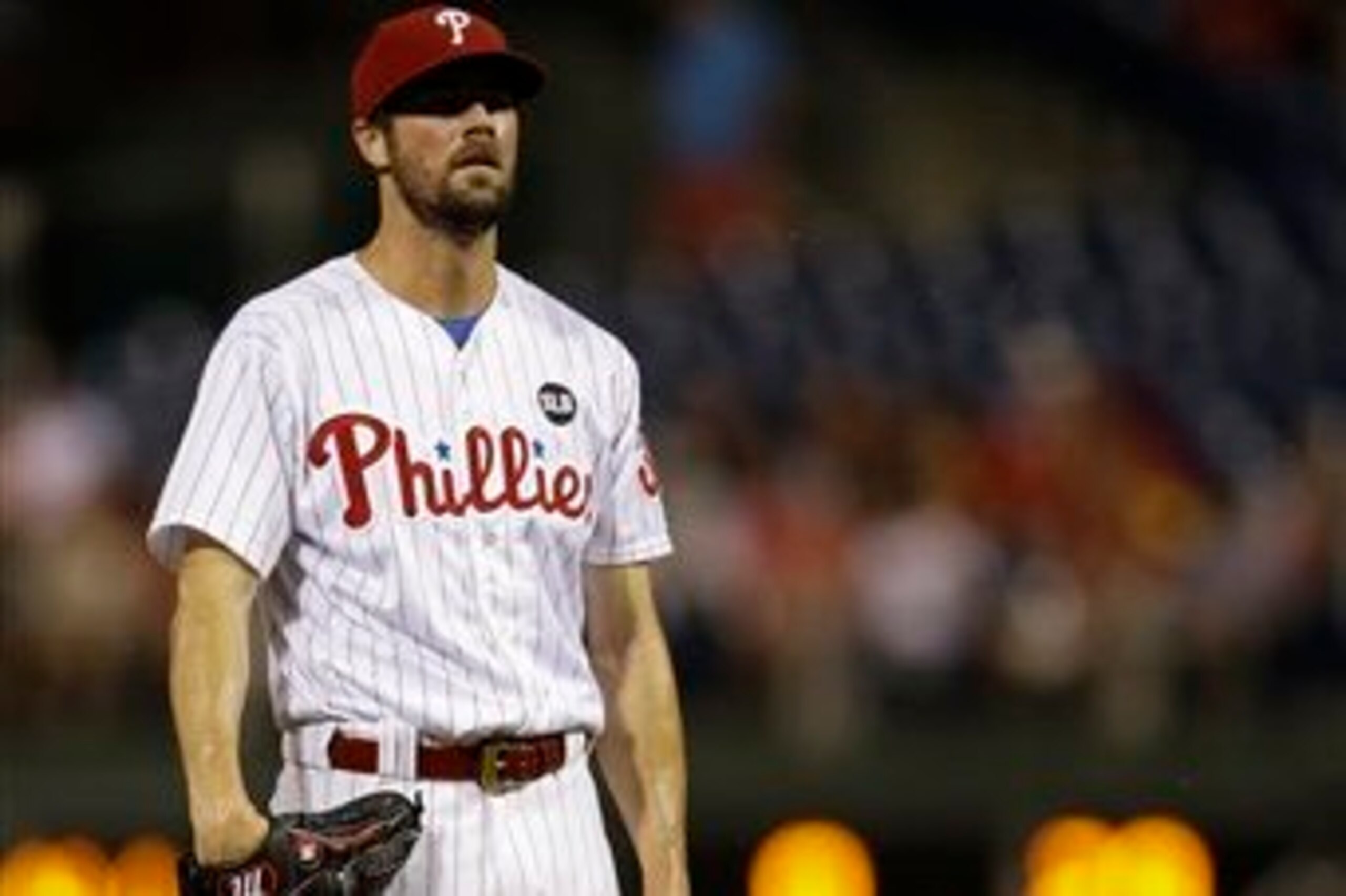
That's it. Just Cole Hamels. No other club with anything attractive in the jaw-dropping sense has declared itself a seller. Sure, the Reds have Johnny Cueto, who will undoubtedly be traded, but they've sat on their hands with him long enough that their return is likely diminishing every hour he is still on their roster.
Aside from those two, finding a blockbuster deal for a reasonable price right now is unlikely. The trade market is going to be strung out until the final minutes, stifling any drama until the very end. That can create a massive, short-lived high for fans, but it also keeps true buyers from getting full value out of their acquisitions.
Unless teams like the ones mentioned above, and possibly the Detroit Tigers, undergo a deciding swoon in the next 10-14 days, we could be waiting a while for this to all play out.
Cole Hamels, Ace of the [Insert Team Here]
2 of 10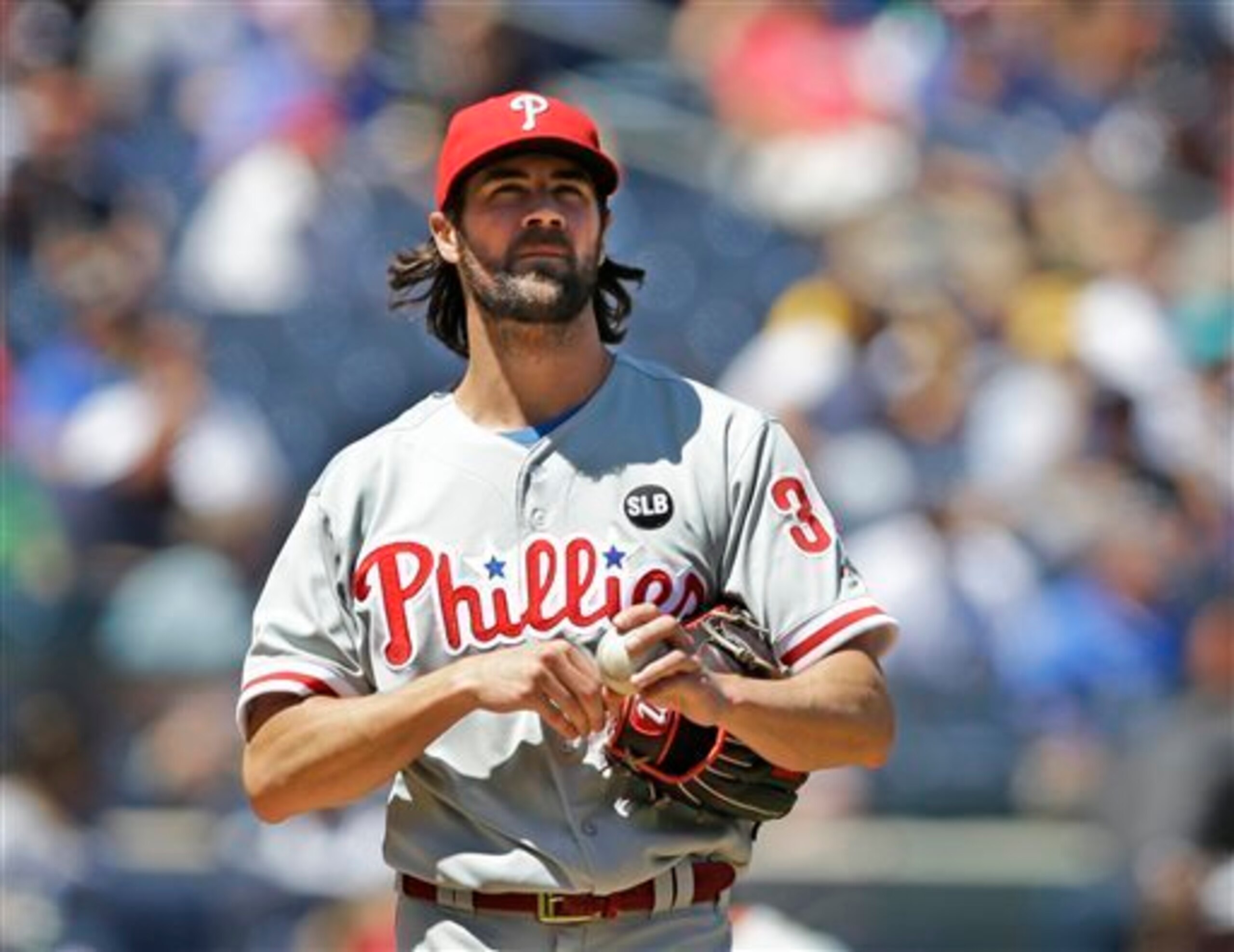
Hamels is the prize, just as he was at last year's deadline and last offseason.
He remains property of the Philadelphia Phillies, though, because general manager Ruben Amaro Jr. is steadfast in his attempt to pry an incredible haul from whatever team he deals with.
That plan could backfire. Free agency will be ripe with starting pitching this winter, including David Price, Zack Greinke, Jordan Zimmermann, Johnny Cueto and Jeff Samardzija. That kills Hamels' value during the offseason because those other names don't cost a team highly touted prospects, only money.
A Hamels deal could hinge on who is actually running the show in Philly, as it might not be the lame-duck Amaro by the time the end of the month comes. Either way, the Phillies have to move Hamels now or risk the handling of the situation becoming the stuff of legendary baseball screw-ups.
To Contend or Fade: The Saga of the Surprising Astros
3 of 10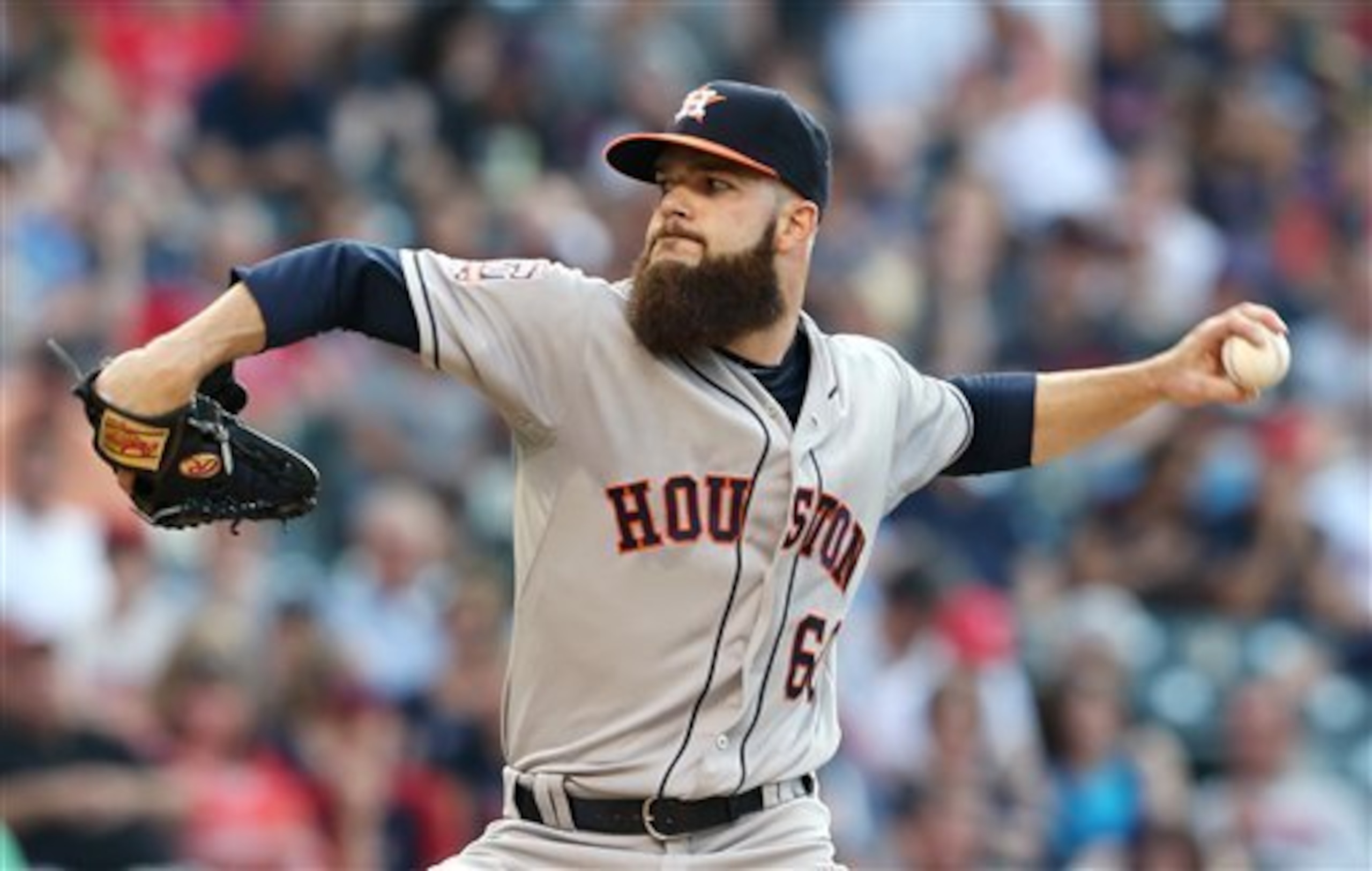
Entering June, the Houston Astros were on pace to win an absolutely stunning 101 games, which likely would be enough to win the American League West championship. The franchise lost 111 games in 2013, so that would mean the biggest two-year turnaround—50 games—in major league history.
The Astros started play on the Fourth of July with a five-game lead over the Los Angeles Angels partly because they swept the other best team in the league, the Kansas City Royals. That prompted plenty in the industry, including ESPN.com's Buster Olney, to make the argument for the Astros as the best team in the AL.
What a difference a little more than a week makes. The Astros lost eight of their last nine going into the All-Star break and saw their division lead completely evaporate. The Angels won 11 of their last 14 before the break and now have a half-game lead.
Things don't get easy entering the second half. Houston faces the Texas Rangers and Boston Red Sox in its first two series, and it has combined to go 3-6 against those clubs this season. After that, it is on the road against the Royals then back home for the Angels.
The Astros are not a fluke. They are a good club, top to bottom, and we should fully expect them to contend. But their next dozen games could determine if they are contending for a wild-card spot or their division title.

Clayton Kershaw's Perceived Turnaround
4 of 10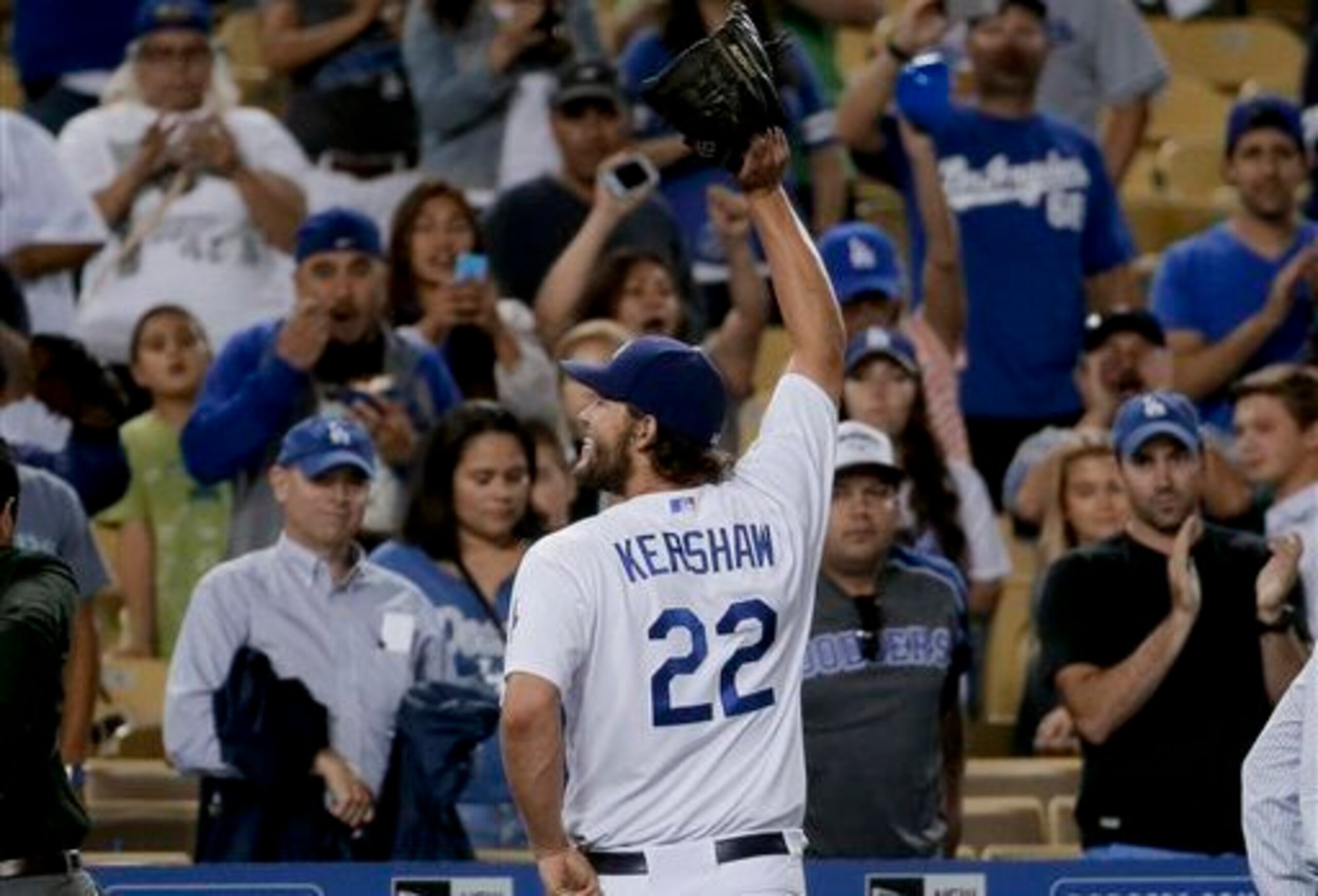
Kershaw has not been as good as his historically dominant 2014 season. Because of that, there has been a prevailing belief that the Los Angeles Dodgers ace, and the game's best pitcher over the last four-plus seasons, is having a down year.
Some thought he was so mediocre this season that he was not even worth being selected to the National League's All-Star team. Fans did not choose Kershaw. NL manager Bruce Bochy did not choose him, either. Kershaw got in by way of a rule to protect pitchers on Sunday, as Washington Nationals ace Max Scherzer became ineligible to pitch in the Midsummer Classic.
The early-season belief that he was much worse than simply being unlucky could not have been more wrong, though. That brought an outcry of cases for Kershaw's greatness as the All-Star Game approached.
While he had a 4.32 ERA through his first nine starts, his underlying numbers were still elite, as shown by a major league-leading 2.11 xFIP entering that ninth start, according to FanGraphs.
Since then, Kershaw is satisfying everybody—except All-Star voters—with all his numbers. He posted a 1.53 ERA in his next nine starts, and his rate of 11.7 strikeouts per nine innings leads the league. For the season, his 2.39 FIP is third-best in the majors, and his 2.07 xFIP still leads baseball, according to FanGraphs.
Some might see the second part of his first half as a major turnaround. It was not. Things just started breaking his way and correcting themselves based on the numbers that were more telling than his win-loss record or ERA.
If he continues being the kind of ace that pleases all facets, he could make the Dodgers the NL's second-half favorites.
The Next Wave of 2015 Prospects
5 of 10
This season has already been the year of the top-flight prospect, as baseball has seen several of the game's top prospects earn major league call-ups during the first half, with Chicago Cubs third baseman Kris Bryant and Los Angeles Dodgers center fielder Joc Pederson making the National League All-Star team.
The second half could continue the trend. Dodgers shortstop prospect Corey Seager is the highest-rated major league-ready talent in line for promotion, according to MLB.com. But he's not the only one with a chance to be summoned.
The Houston Astros are looking for rotation help, and if former No. 1 overall pick Mark Appel, MLB.com's No. 22 prospect, can show he is ready, the team might tap him in the next month. The same goes for New York Yankees prospect Luis Severino, the No. 16 MLB.com prospect. Severino has a 1.79 ERA in nine Triple-A starts, and since the Yankees are on a tighter budget and want to hang onto prospects these days, promoting from within to find second-half help is a real possibility.
Even if the next wave of promotions is still far off, the prospects already in the majors will continue to be a second-half story as we track their progress.
Detroit's Swan Song
6 of 10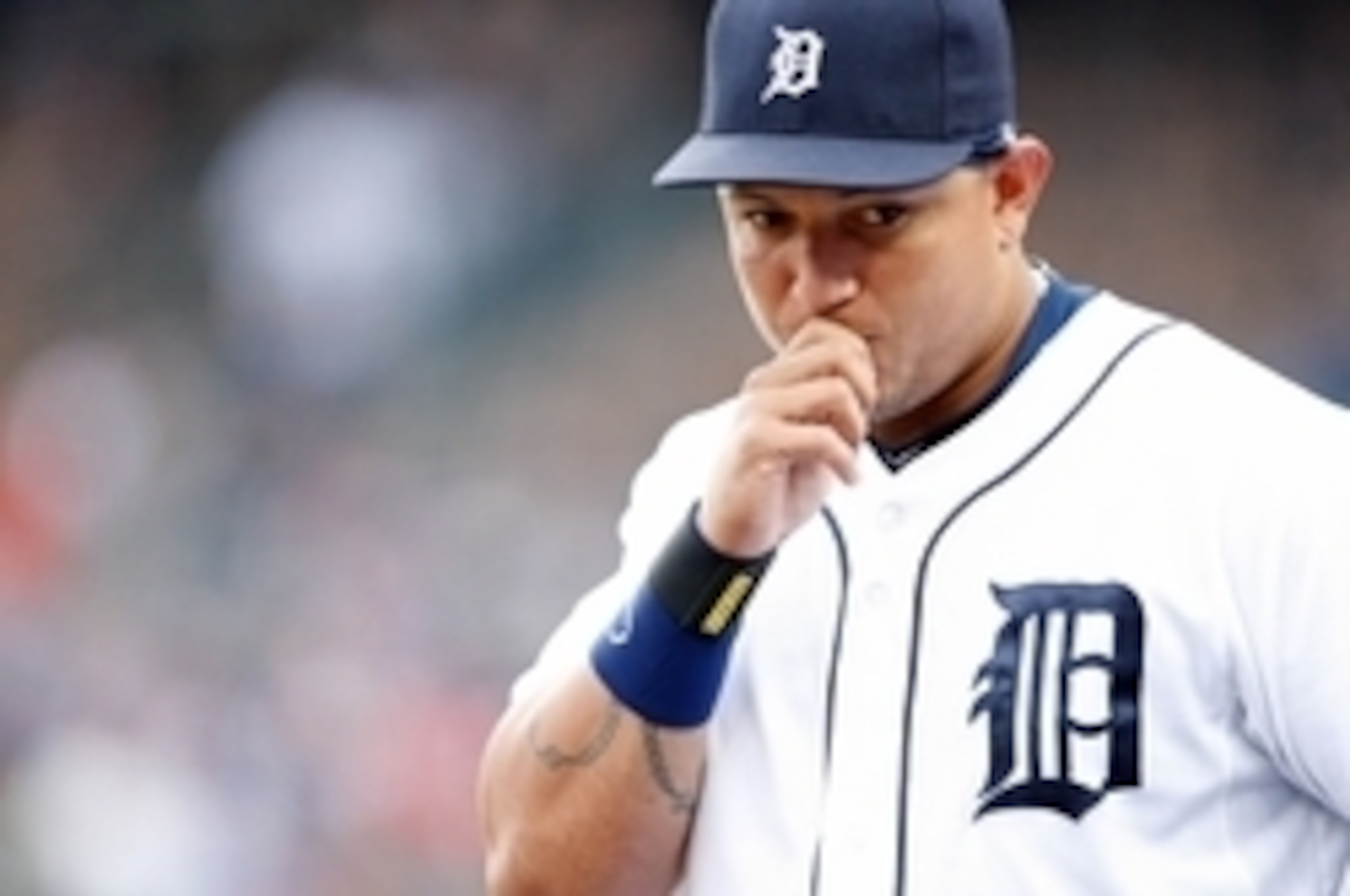
The Detroit Tigers have won the American League Central for four consecutive years, and despite the Kansas City Royals winning the AL pennant last season, the Tigers still entered 2015 as one of the favorites, if not the favorite, in the division.
The first half has shown that assumption to be false.
The Tigers are .500 at the break and will play a significant part of the second half without their best player, Miguel Cabrera, who suffered a calf injury July 3. He is expected to be out about six weeks, which puts his return sometime in August at the earliest.
Detroit has had a myriad of first-half problems. At times, the offense, even with Cabrera, was inconsistent. The rotation has a 4.48 ERA, putting the Tigers 14th out of 15 AL teams. The bullpen ERA is 3.97, 13th in the league. They lost eight of their last 13, including three in a row to the blossoming Minnesota Twins going into the break.
The Tigers need help from the trade market, but they don't have the farm system to sustain a blockbuster deal for a difference-maker.
All of these problems give off the feeling that the Tigers' window is closed and their run as AL Central champs is finished. That is why contending teams will monitor the Tigers over the next couple of weeks to see if they free-fall.
If they do, calls will come in regarding free agents-to-be Yoenis Cespedes and David Price, who has not discussed a contract extension with the team, nor does he think he will be traded.
"I don't think it will happen; I don't," Price told reporters Monday. "We have a very, very talented team. ... So we just need everybody to do their part, come to the field, work hard and have fun.
"If we can get back to the baseball playing we did the first two weeks of the season, the sky's the limit."
Oakland's Dilemma
7 of 10
Sometimes, statistics can show a team is not as good as its record. Sometimes, they show a team is not as bad. But ultimately, there comes a point when the record is the record, and reality is forced to set in by the date on the calendar.
That is the case for general manager Billy Beane and his Oakland A's, a team with an impressive plus-44 run differential and whose winning percentage should be .583 by way of FanGraphs' BaseRuns calculations. If that were the case, the A's would be the second-best team in the American League at the All-Star break.
Reality's calculations tell us the A's have a .451 winning percentage, are nine games under .500, in last place in the AL West and eight games out of a wild-card spot with the entire league ahead of them.
As constructed, the A's might have a second-half run in them. However, there is no time for that, not when the A's constantly have to crunch numbers to save money and maximize returns. With the nonwaiver trade deadline a little more than two weeks away, the A's are going to have to strike deals for whatever pieces they have that other teams covet.
That means contributors like utility man Ben Zobrist and left-hander Scott Kazmir. Without those two, the A's are unlikely to make a run to get back into contention. However, keeping them means they don't cash in by gaining prospects through their trades.
The economics of the sport will force the A's to decide soon, and it is more likely they sell and try again next season. That would also be the wiser decision since the A's are at the bottom of the league and, aside from nine wins in 11 games during mid-June, have not shown real signs of breaking out.
The A's are going to be a closely watched and heavily dialed team over the next couple of weeks.
Living Up to the Projected Prowess in D.C.
8 of 10
When the Washington Nationals signed Max Scherzer as a free agent in the winter, the team was seen as World Series favorites among oddsmakers and in the baseball media.
But they trudged through the first half because of injuries, shoddy defense and an underachieving/injured rotation. At one point near the end of April, they trailed the New York Mets by eight games in the National League East.
Since then, they have flashed greatness by going 12-2 in one stretch and 8-0 in another. They went 18-9 in May, but again, they've stalled in July with a 5-5 mark entering the break and have a modest—if not unsafe—two-game lead in the division.
The rotation is the key to Washington regrouping and making a run to bury the Mets in the second half. Scherzer has been great, but Jordan Zimmermann, Stephen Strasburg and Doug Fister have all underachieved from what they were in 2014. Now that Strasburg is back on the disabled list, the other two have to start living up to expectations if the Nationals are going to separate.
The road is rough coming out of the break, as the Nationals host the Los Angeles Dodgers and New York Mets in their first two series. If they can handle those clubs, it could be a sign of a runaway second half.
What's Next for the Red Sox and Padres?
9 of 10
Based on preseason expectations, there was plenty of love to go around for the Boston Red Sox and San Diego Padres. Their offseason makeovers were the reasons, but based on first-half performances, they are two of the most disappointing clubs in the game.
They are a combined 13 games under .500 and a combined 16.5 games out of first place. And though the Red Sox have won nine of their last 13, they need a lot more pitching to sustain their recent surge, as they have the AL's worst team ERA (4.44).
"We're way disappointed in this year to date," Padres executive chairman Ron Fowler told Dennis Lin of the San Diego Union-Tribune.
So where do they go from here?
The Red Sox had their lone trade chip go down with a strained muscle in his elbow, making Clay Buchholz virtually untradeable before the nonwaiver deadline. That keeps them from selling and gaining anything significant in return. And since they have been unwilling to trade from their talented youth and prospect pool in the recent past—this is why they could not get Cole Hamels from Philadelphia—there is little chance they can make any significant upgrades.
They don't have much that anyone wants, and they aren't going to give up what it takes to get what they need. Basically, the Red Sox don't have many options other than to stand still and let the ugliness play out.
The Padres are hoping to have more options. They have a coveted bat in Justin Upton, and the club has started feeling out the market for James Shields, according to baseball insider Peter Gammons (h/t Mark Polishuk of MLB Trade Rumors).
While their pieces with value are on the block, the Padres may also be willing to buy, according to Lin. If they do, it would be more of a retooling for 2016 rather than a push to contend this season.
Either way, expect both clubs to finish the season as disappointments.
Pace of Play, Safety Netting and Intellectual Property
10 of 10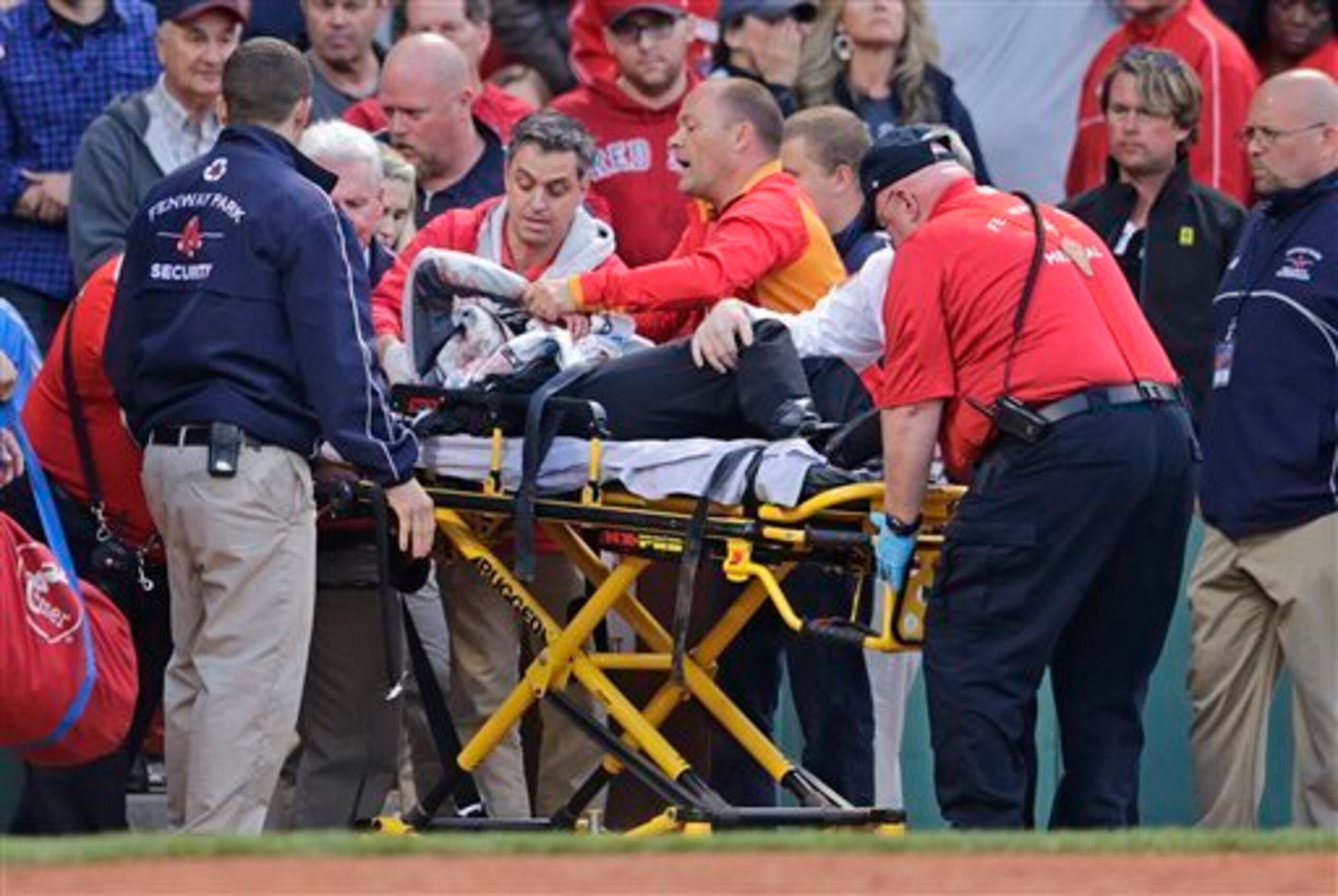
Major League Baseball made a huge, mostly unnecessary deal about quickening the pace of play. So far, so good, according to Commissioner Rob Manfred, who told CNBC's Fast Money that new pace-of-play rules have shortened the length of games in the season's first half.
"We are down about nine minutes, which would be the largest decrease since 1965," Manfred told CNBC.
Keep an eye on this in the second half to see if it actually helps the game attract younger viewers, which was one of the goals of the new rules and seems to miss the point of why baseball's audience skews mostly male, white and old. The National Football League actually has longer games, and that was before the new rules were implemented by MLB.
The far more important issue for MLB—it should be, at least—is fan safety. Every season—heck, nearly every week—you can read about a fan being injured by a bat or ball at a baseball game, as you may have last month when a splintered bat struck fan Tonya Carpenter in the head. Her injuries were life-threatening before she stabilized.
This has become such an issue that there is a proposed class-action lawsuit against the league claiming it does not do enough to protect fans. Manfred said MLB is working on the situation and that each team is allowed to do what it wants to protect fans sitting near the field, as reported by Pete Abraham of the Boston Globe.
Since legal action has been taken, it will be interesting to see if some clubs take their own to protect ticket buyers before this season ends.
The second half could also give us an end to the hacking scandal involving the St. Louis Cardinals and Houston Astros. The Cardinals fired scouting director Chris Correa, according to Robert Patrick and Derrick Goold of the St. Louis Post-Dispatch, but there could be bigger, more long-term ramifications.
As data analysis becomes more sophisticated and valued, Manfred said MLB will have to work with teams to better protect their intellectual property, as Goold reported. That would be something to watch over the next couple of months as well as the next couple of years.
.png?w=2560 "MLB Power Rankings")
.jpg?w=2560 "Jaxson Dart Ruled Out of MNF")

.jpg?w=2560 "Ertz Returning to Eagles")
.jpg?w=2560 "Dak Addresses 'Dumb' Old Romo Tweet 🤣")
.jpg?w=2560 "WWE Raw Live Grades 🔠")

.jpg?w=2560 "🚨 Puka Out for MNF")