
Everything You Need to Know About 2025 NBA Free Agency
The Oklahoma City Thunder have been crowned as the 2024-25 NBA champions. The 2025 NBA draft is now over.
That means it's time for some free-agent fireworks.
The NBA is set to again take center stage this week, as free agency officially kicks off at 6 p.m. ET on Monday. With a rich history of exciting free-agency moments like "The Decision," DeAndre Jordan's emoji-filled about-face, and Kevin Durant joining the Golden State Warriors, NBA free agency is an annual reminder that anything is possible.
As we prepare for the potential chaos, here's a breakdown of everything you need to know about free agency. We'll lay out the rules of engagement, explain what Bird rights are, touch on the types of contracts available and make sure you have an idea as to what all these aprons mean. We'll also highlight some of the biggest names available, including both restricted and unrestricted free agents. (Don't worry, we'll also explain the difference.)
The Ground Rules: Moratorium, Salary Cap, Luxury Tax and Aprons
1 of 7
In one way, NBA free agency has kind of already begun. Starting the day after the NBA Finals end, teams are allowed to begin negotiating with their own upcoming free agents—meaning players who ended last season on their roster. Decisions on team and player options were also required by June 29, so it's now clear who will and won't become a free agent this summer.
The official start of free agency at 6 p.m. ET on Monday marks the first time that teams are able to negotiate with any free agent. Here are a few other rules and regulations to know before free agency begins.
The Moratorium
While teams can begin to negotiate with free agents beginning at 6 p.m. ET on June 30 and may even come to an agreement on a contract, most deals can't be officially signed until after 12:01 p.m. ET on July 6. Either side can back out during this moratorium, and the salary of any agreed-upon contract doesn't impact a team's salary cap until it actually becomes official.
A few types of contracts can be signed during the moratorium. Notably, teams can sign their 2025 draft picks, a restricted free agent can sign a qualifying offer or an offer sheet with a new team (more on that later), players can sign one- or two-year minimum contracts with no bonuses, and two-way contracts can be signed or converted to NBA contracts.
The Salary Cap, Luxury Tax and Aprons
The NBA's salary cap is expected to rise 10 percent to $154.6 million for the 2025-26 season. However, the NBA's cap is not a hard limit on team spending.
Teams are allowed to go over the cap without penalty until they surpass $187.9 million, which is where the luxury tax kicks in. Any teams that exceed the luxury-tax line in a given season are required to pay a penalty based on how much money they spent over that limit. That money gets divided up equally among all the teams that didn't exceed the tax line that season.
Beyond the luxury tax, there are two further lines of demarcation called the first and second aprons, the latter of which was added when the new collective bargaining agreement was ratified in 2023. For 2025-26, the first apron is projected to be at $195.9 million and the second is projected to be at $207.8 million.
Each of the aprons introduces further limitations to roster-building, with the second apron being much more punitive. While some teams may be comfortable paying the luxury tax on a regular basis, no franchise wants to stay on the wrong side of the second apron for very long.
'Bird' Rights and Other Exceptions Available to Teams in Free Agency
2 of 7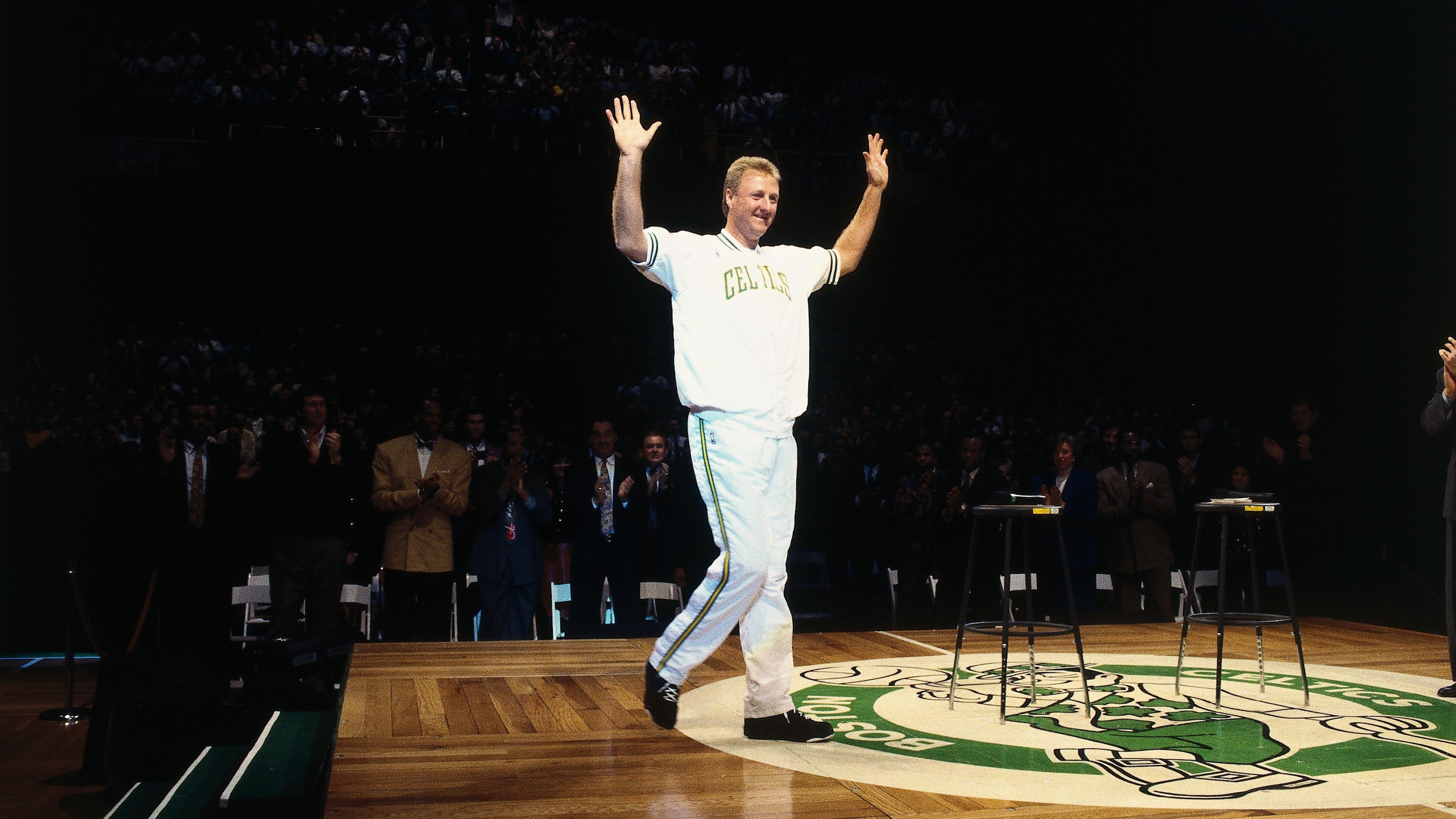
Every year around this time, the term "Bird rights" starts to get thrown a round a bit more than usual. It's mostly because Qualifying Veteran Free Agent Exception is a bit of a mouthful.
Bird rights, which were inspired by Larry Bird, essentially allow teams to go over the cap to sign their own free agents. For a team to fully make use of this exception, the player in question needs to have been on the team for some or all of the previous three seasons. A player with full Bird rights can sign for up to the maximum salary.
The Early Bird exception allows teams to sign players who have only been with them for two years, though they can only sign for up to 175 percent of their previous salary or 105 percent of the average player salary from the prior season, whichever is higher. Teams can also sign non-Bird players (those who only spent last season with the team), though the amount they can offer for the first year of that contract is limited to 120 percent of the player's salary last season or 120 percent of the minimum salary.
Below are a few other exceptions that allow teams to exceed the cap to sign players:
Non-Taxpayer Mid-Level Exception: A team that's below the first apron can use up to $14.1 million on the first-year salaries of newly signed free agents. Contracts signed using the NTMLE can be for up to four seasons. Using the NTMLE triggers a hard cap at the first apron.
Taxpayer Mid-Level Exception: Similar to the NTMLE, but for teams that are above the first apron and below the second apron. They are limited to $5.7 million, and signing players using this exception triggers a hard cap at the second apron.
Bi-Annual Exception: As the name suggests, this exception can be used only once every other year. For 2025-26, teams that didn't use the BAE last year will have $5.1 million they can spend to sign free agents, though contracts using this exception cannot be longer than two years. Using the bi-annual exception also triggers a hard cap at the first apron.
Minimum Salary Exception: Teams are allowed to go over the cap to sign players to a one- or two-year minimum contract. However, teams that are hard-capped cannot exceed their hard cap even to add players on minimum contracts.
How Restricted Free Agency Works
3 of 7
Most situations heading into free agency are relatively simple. If someone has a player option on their contract, they can decide whether or not to exercise it. If a team holds a team option, they have the decision-making power as to whether or not to bring a player back on that deal.
If a player is an unrestricted free agent, they can sign with whatever team they choose. However, restricted free agency is more complicated.
Restricted free agency only applies to players who are coming off the fourth year of their rookie-scale contract or a non-first-round pick who with three or fewer years of NBA experience. It gives the incumbent team the "right of first refusal," provided that they extend the player a qualifying offer at the outset of free agency.
That qualifying offer is a safety net representing the bare minimum that said player will earn next season. They're then free to negotiate with teams around the league—including their own—looking for a better deal.
If another team extends an offer sheet (minimum two years) to the restricted free agent and he signs it, then his previous team will have one day to match that contract if the player signed it before 12 p.m. ET or two days if he signed it after 12 p.m. ET. If they do, the player stays with them on that deal. If not, the player is officially free to instead sign with the offering team.
Outside of situations in which a team avoids restricted free agency entirely by signing their would-be restricted free agent to a max or near-max extension, teams often allow the market to help determine how much they'll pay a restricted free agent. While it's financially shrewd to avoid overpaying your own free agents if they may not get a big payday somewhere else, this whole process can naturally lead to friction between front offices and players. The teams want to spend as little as possible, while the players want to maximize their first foray into free agency.



Top Available Restricted Free Agents
4 of 7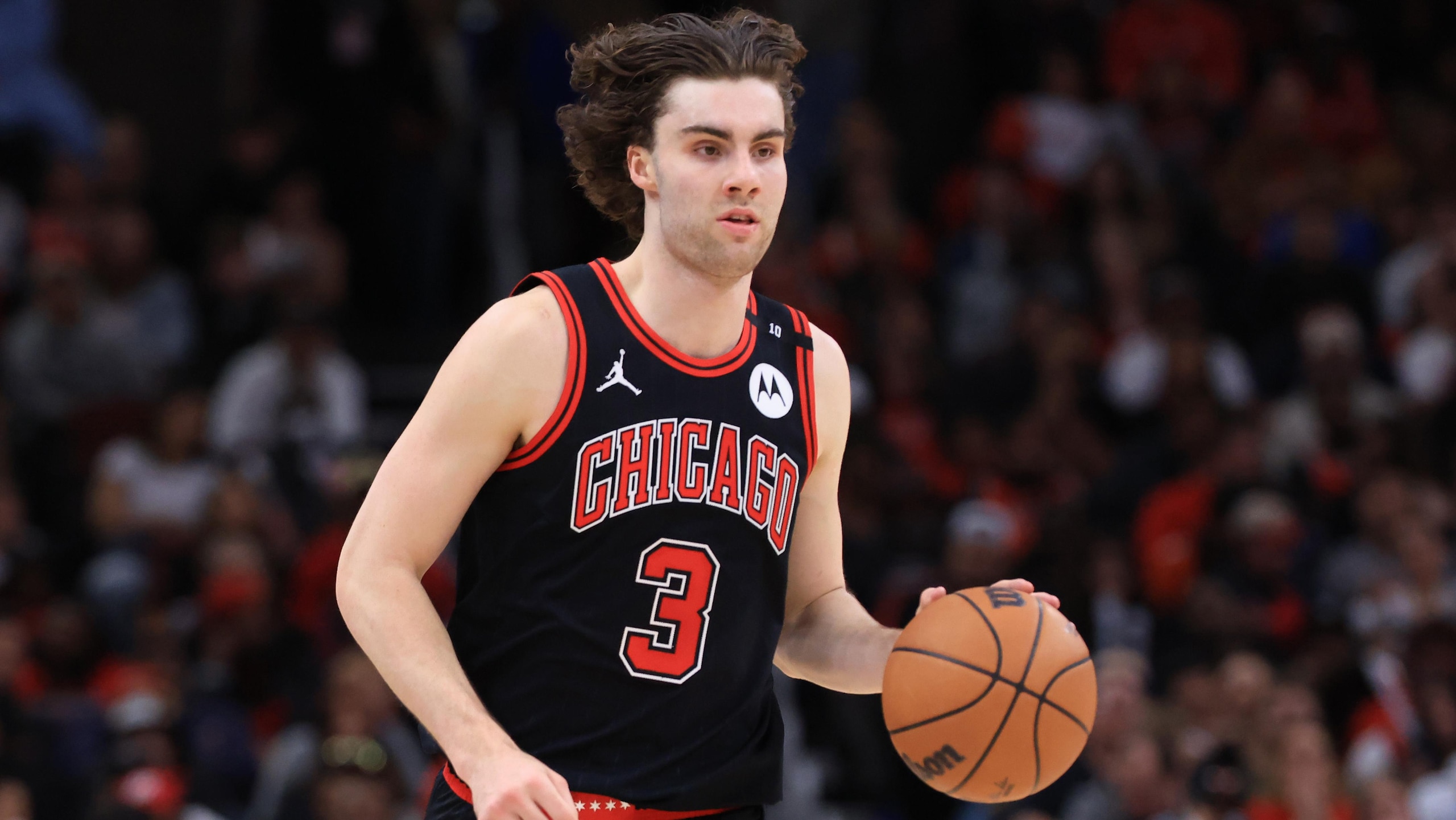
Josh Giddey, Chicago Bulls
Giddey settled into a starring role with Chicago last season after the Zach LaVine trade, averaging 14.6 points, 8.1 rebounds, 7.2 assists and 1.2 steals pe rgame in 2024-25. Now, the Bulls have a decision to make. Do they strongly invest in Giddey as a cornerstone of their rebuild, try to flip him for maximum value in a sign-and-trade, or cut bait if Giddey's offer sheet goes higher than they would like to spend?
That last option is probably the least likely, as they could always match the offer sheet and trade him down the road. But with Giddey reportedly looking for a contract exceeding $120 million in total value, you have to wonder how high Chicago is willing to go.
Quentin Grimes, Philadelphia 76ers
Grimes has already played for four teams since being the 25th overall pick in 2021, but he saved his best for his fourth season. He averaged 14.6 points while shooting 38.5 percent from three-point range last season between stops in Dallas and Philadelphia.
In his 28 games with the 76ers, Grimes put up 21.9 points per game, illustrating just what he may be capable of if he gets brought back to Philly or is given a regular role elsewhere.
Jonathan Kuminga, Golden State Warriors
Kuminga is arguably the most interesting restricted free agent in the entire NBA. He reportedly wants to make $30-plus million per year, but given that the Golden State Warriors already owe about $130 million to just Stephen Curry, Jimmy Butler and Draymond Green next year, it's hard to imagine they'll pay Kuminga that kind of dough.
So, do they pony up and go much deeper into the tax, let him walk for nothing, hope no other team extends an offer sheet, or do they try to orchestrate a sign-and-trade? If they opt for the last option, they still have a lot of hoops to jump through due to arcane CBA rules.
Cam Thomas, Brooklyn Nets
Though he was limited to just 25 games last season because of a hamstring injury, Thomas is one of the bright, young stars whom the Brooklyn Nets can build around. He averaged a career-best 24.0 points, 3.3 rebounds and 3.8 assists in limited action last season, which came on the heels of averaging 22.5 points, 3.2 rebounds and 2.9 assists while shooting 36.4 percent from three-point range in his third season.
The Nets have more than enough cap space to bring him back to be the cornerstone of their rebuild, but they could also sign-and-trade him to a more cash-strapped team if they're so inclined.
Top Available Unrestricted Free Agents
5 of 7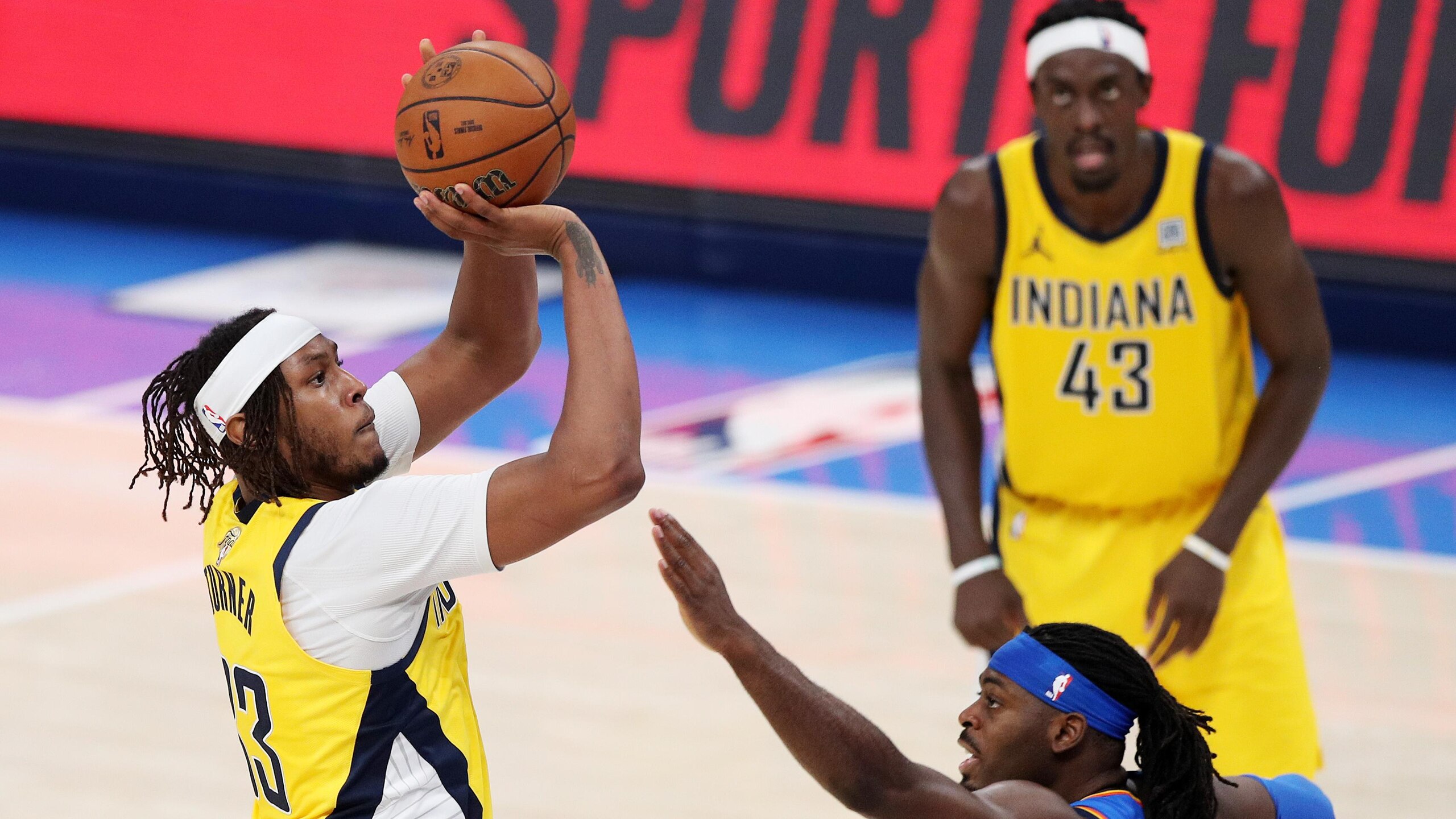
Many of the top-end, would-be free agents are reportedly off the market already.
Kyrie Irving, James Harden and Julius Randle all had player options for next season, but they're instead reportedly planning to re-sign with their current teams on multiyear extensions. Meanwhile, LeBron James and John Collins both picked up their player options, which also kept them out of free agency.
We'll go more in depth on players who are expected to stay off the market later on, but for now, let's zero in on guys who will actually hit unrestricted free agency.
Focusing only on players who have not picked up an option or indicated a clear intent to sign an extension with their current team, here are some of the biggest names among the available unrestricted free agents at the outset of the new league year.
Myles Turner, C
Turner has been a mainstay with the Indiana Pacers over the past 10 seasons, anchoring their defense in the paint with his great shot-blocking ability while also spacing the floor as a three-point threat. He was a key factor in their run to the NBA Finals this year, and he's now in line for a massive payday.
Will the Pacers be willing to go into the luxury tax for Turner—even with star point guard Tyrese Haliburton presumably out for all of next season due to the Achilles injury that he suffered in Game 7 of the Finals—or will they get outbid? Will Turner, who clearly loves Indiana, be willing to stay and hold down the fort while Haliburton is out, or will he try to chase a championship immediately somewhere else?
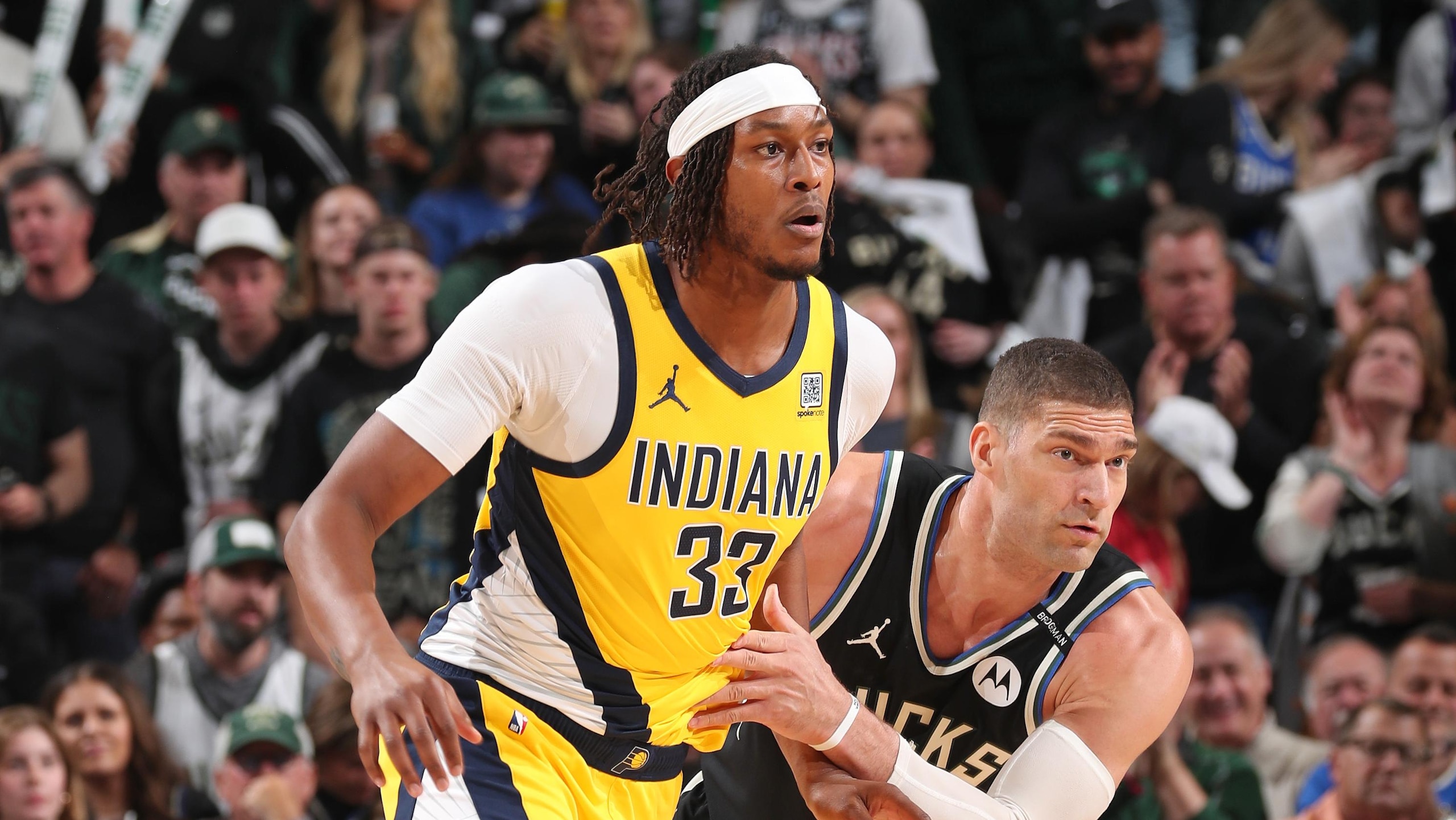
Brook Lopez, C
Sticking with veteran centers who are great defensively and spread the floor on the other end, Lopez is also hitting unrestricted free agency today. The last time he was in that position, he bet on himself by taking a one-year, $3.4 million deal with the Milwaukee Bucks. That proved fruitful for both parties, as the Bucks got the exact center they needed to help them win a championship in 2021, and Lopez ultimately got paid via a long-term extension.
Will Lopez try to repeat that feat by looking for greener pastures as he aims for one last big payday toward the end of his career? Or will he stay with the Bucks as they try to navigate their 2025-26 season without Damian Lillard, who also suffered an Achilles injury in the playoffs?
Russell Westbrook, PG
While he may not be an MVP candidate anymore, Westbrook is still a capable bench leader for any contender looking for a second-unit spark. Westbrook averaged 13.3 points, 6.1 assists and 4.9 rebounds while logging nearly 28 minutes per game across 75 contests for the Denver Nuggets last season, and he declined his player option to test the waters this summer.
Chris Paul, PG
Similar to Westbrook, Paul is no longer the Point God he once was now that he's 40 years old. But there's certainly still interested in the veteran star, who appeared in all 82 games for the youthful San Antonio Spurs last year.
The question now is what Paul will value as he looks for a new team. Will he want chase rings even if it's at the expense of playing time? Will he aim to land with a team where he can remain a starter, even if that team may not be a contender? Will he go wherever he can get the biggest paycheck?
Malik Beasley, SG
As recently as Saturday, it was possible that Beasley wouldn't even reach free agency, as he was reportedly negotiating an extension with the Detroit Pistons. But after a shocking report on Sunday that he's being investigated by the U.S. District Attorney's office regarding "allegations of gambling related to NBA games and prop bets," Beasley's future is suddenly in question and negotiations are paused.
Potential Free-Agent Steals
6 of 7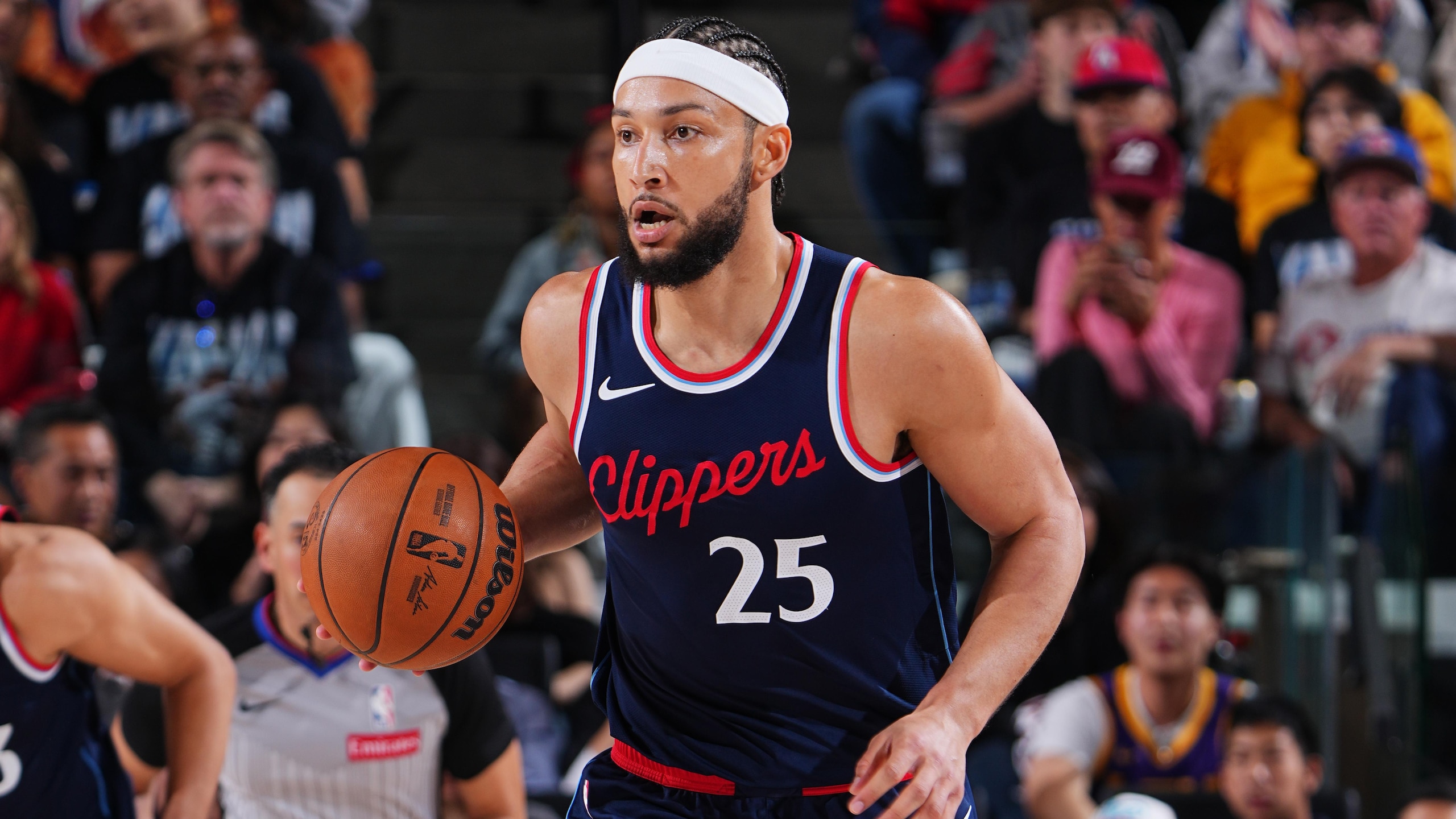
Every year, certain free agents fly under the radar and sign for minimum or near-minimum contracts before going on to play major roles for their new teams. Here are some players to watch out for as we try to project 2025's potential steals.
Malcolm Brogdon, SG
Brogdon has been languishing on bottom-dwelling teams and struggling to stay healthy since winning Sixth Man of the Year at the end of the 2022-23 season. He's played only 63 games with the Portland Trail Blazers and Washington Wizards over the past two years combined, but you could certainly see a contender taking a chance on Brogdon if he's willing to take a pay cut to try to rehabilitate his value.
Talen Horton-Tucker, SF
It feels like we're a long ways away from Horton-Tucker being the exciting, young player whom the Los Angeles Lakers chose to extend instead of paying Alex Caruso. However, that wasn't too long ago, and he's still only 24 years old.
Horton-Tucker's time with the Utah Jazz and Chicago Bulls wasn't all that inspiring, but he could play rotation minutes on a competitive team and earn a bigger role from there. After a strong start to his career, he might be running out of chances to prove himself, so his next stop could be critical.
Cam Reddish, SG
Reddish has played for four teams since being the No. 10 overall pick in the 2019 draft. Despite a decent start with the Atlanta Hawks, Reddish has never found solid footing in the league, and this run through free agency might be his last chance.
He's likely to be valued at around the minimum (if at all), but if he can find the right fit, he could rebuild his stock and resurrect his career.
Ben Simmons, G/F / Markelle Fultz, PG / Marvin Bagley III, C
Maybe it's too late to believe in any of these players. Maybe it's silly to believe they can produce enough to possibly be considered steals. However, Simmons and Fultz are former No. 1 overall picks, while Bagley was a No. 2 overall selection. All three have talent, even if they haven't maximized it during their time in the NBA.
They're all running out of chances to prove themselves, but it's easy to see a team taking a flier on any of these three on a minimum contract. If they can provide solid rotation-level value, that might just qualify as a steal at this point.
Notable Players Who Avoided Free Agency by Exercising Options or Striking Deals
7 of 7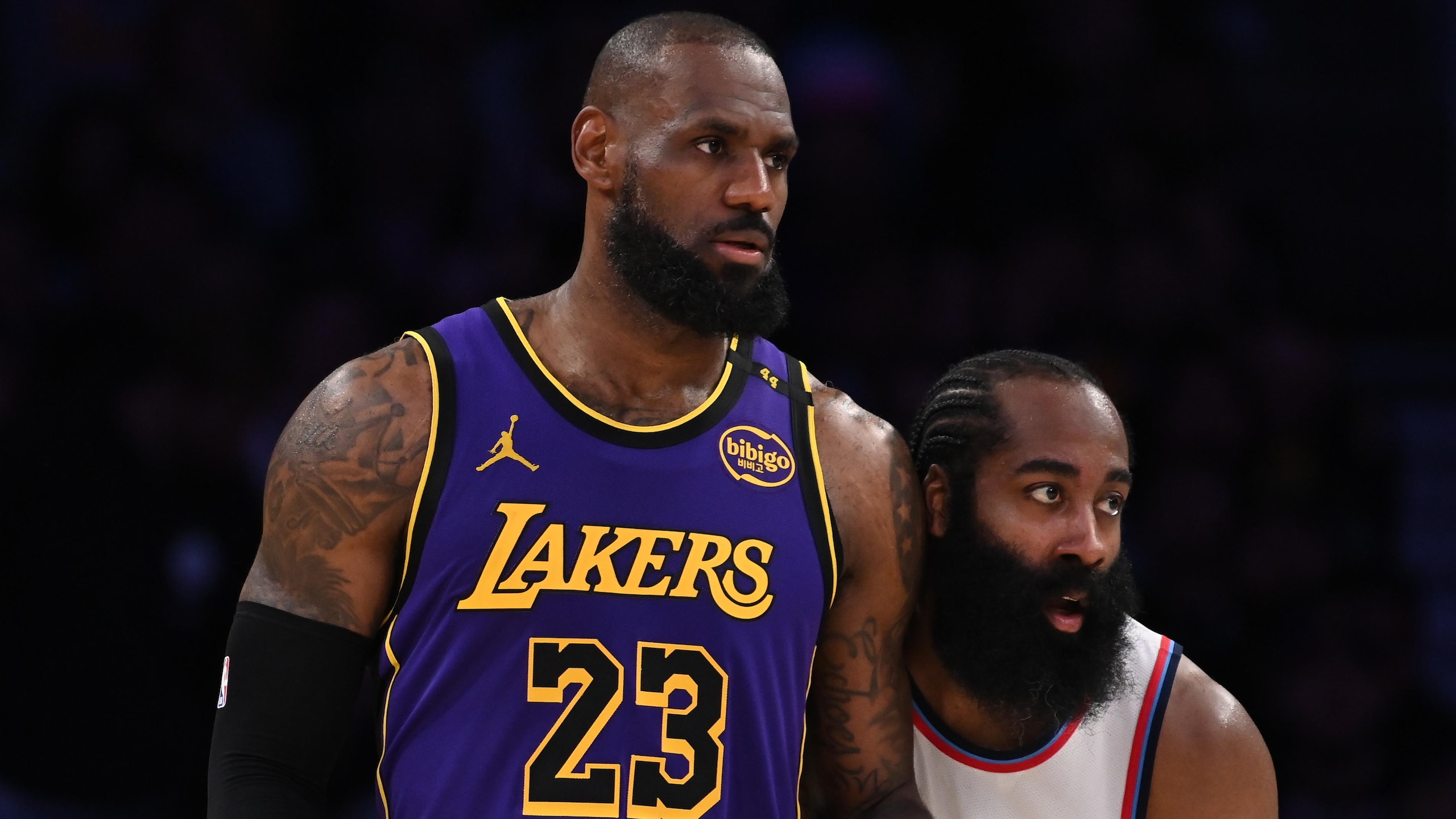
As mentioned earlier, a number of players avoided free agency by coming to terms with their incumbent teams. Each of them either exercised an option or agreed to a multiyear deal.
Here are some of the biggest names that will reportedly be staying put—at least for now.
John Collins, Utah Jazz: Picked up $26.5 million player option for 2025-26 season
James Harden, Los Angeles Clippers: Declined $36.3 million player option and plans to sign two-year, $81.5 million deal
Kyrie Irving, Dallas Mavericks: Declined $43.0 million player option and plans to re-sign with Mavericks on three-year, $119 million deal
LeBron James, Los Angeles Lakers: Exercised his $52.6 million player option
Bobby Portis, Milwaukee Bucks: Declined $13.4 million player option and plans to re-sign with Bucks on three-year, $44 million deal
Julius Randle, Minnesota Timberwolves: Declined $30.9 million player option and plans to re-sign with Wolves on three-year, $100 million contract
Naz Reid, Minnesota Timberwolves: Declined $15.0 million player option and plans to re-sign with Wolves on five-year, $125 million contract
Fred VanVleet, Houston Rockets: Agreed to two-year, $50 million contract with Rockets after they turned down their $44.9 million team option on him
.jpg?w=2560 "NFL investigating 2 referees for separate viral exchanges")
.jpg?w=2560 "OBJ Calls Out Giants After Release")
.jpg?w=2560 "Report: Chiefs Contact Hill's Agent")
.jpg?w=2560 "Tyreek makes another cryptic post amid Chiefs rumors")