
5 NBA Free Agents with Most to Prove During 2015-16 Season
You'd think that signing multiyear, multi-million-dollar contracts would be an indicator freshly paid NBA free agents had already proved everything they had to.
But with every bump in salary or move to a new team, new questions arise: Is this guy really ready to lead us? Will he screw up the chemistry we've established? Can he play a new position?
Free agency is about teams making big investments on players who have to go out and justify those expenditures after the fact. In that way, signing a big contract means you haven't proved anything...yet.
The low-money guys (relatively speaking, of course) don't really qualify. Sure, it'd be disappointing if Al-Farouq Aminu didn't live up to his four-year, $30 million contract—especially since that deal struck many as an overpay. And yes, both Rajon Rondo and Deron Williams have plenty of questions to answer with their respective new teams.
But the contracts that come with real expectations are the ones that could, potentially, cripple a team if things go bad.
Dropping less than $10 million per season on one player won't matter much when the salary cap crests the $100 million mark in a couple of years, according to Jonathan Givony of DraftExpress. It's the bigger deals, usually with bigger names, that carry the real expectations and demand the real proof.
Here, we'll look at players who'll collect big bucks on new deals, all of whom face the challenge of playing a larger and/or different role going forward.
It's time to put up or shut up.
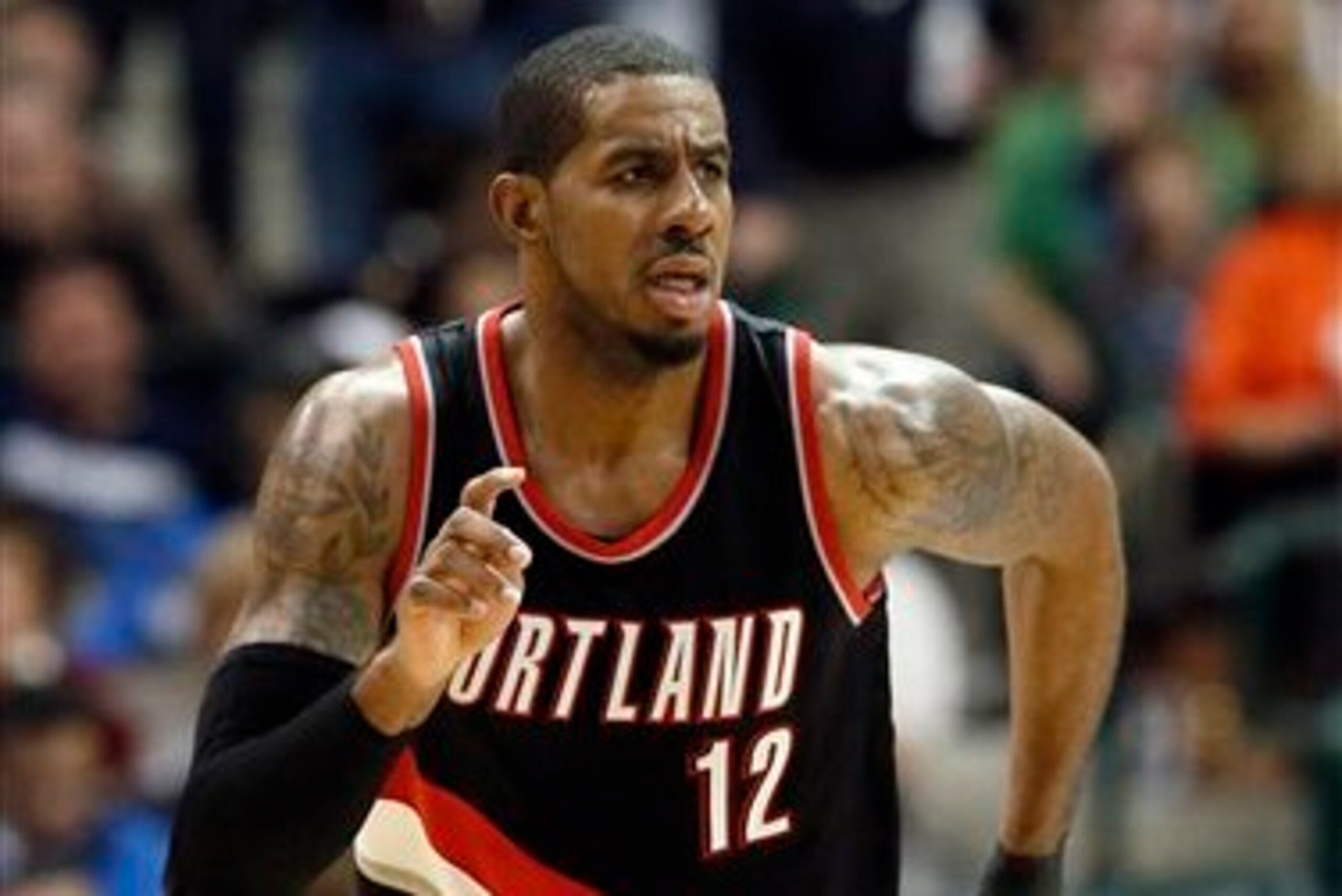
LaMarcus Aldridge, PF, San Antonio Spurs
1 of 5
The Deal: Four years, $80-plus million
What He Must Prove: Adding stars doesn't ruin the San Antonio Spurs.
So, here's the thing about the Spurs: They don't add ready-made stars. They draft them. They develop them internally over long periods.
But they don't add them.
Not until now.
LaMarcus Aldridge is a borderline superstar in the middle of his prime, and while there's plenty of value in having him around to lead the team into its next era alongside Kawhi Leonard, the more immediate goal of winning a title this season still matters.
With the Portland Trail Blazers, Aldridge got loads of touches on the left block and left wing. He did a lot with those touches, routinely torching opponents in one-on-one situations with his feathery jumper and technical skill on the block. The Spurs don't really play isolation basketball, though, so Aldridge must prove he can fit into a high-velocity, read-and-react system with more fluidity than anything he's ever seen.
There will also be a new defensive system and a dramatically higher level of accountability.
Aldridge is exceptionally talented, and he moves the ball intelligently when opportunities present themselves. But it's been a really long time since he operated in an environment where the star-team dynamic was the reverse of the norm. Instead of the Spurs adapting to him, it's Aldridge who must prove he can conform to them.
Oh, and the only thing hanging in the balance is the brutal disappointment of failure, which would probably cost Tim Duncan his last shot at a championship.
So, there's that.
DeMarre Carroll, SF, Toronto Raptors
2 of 5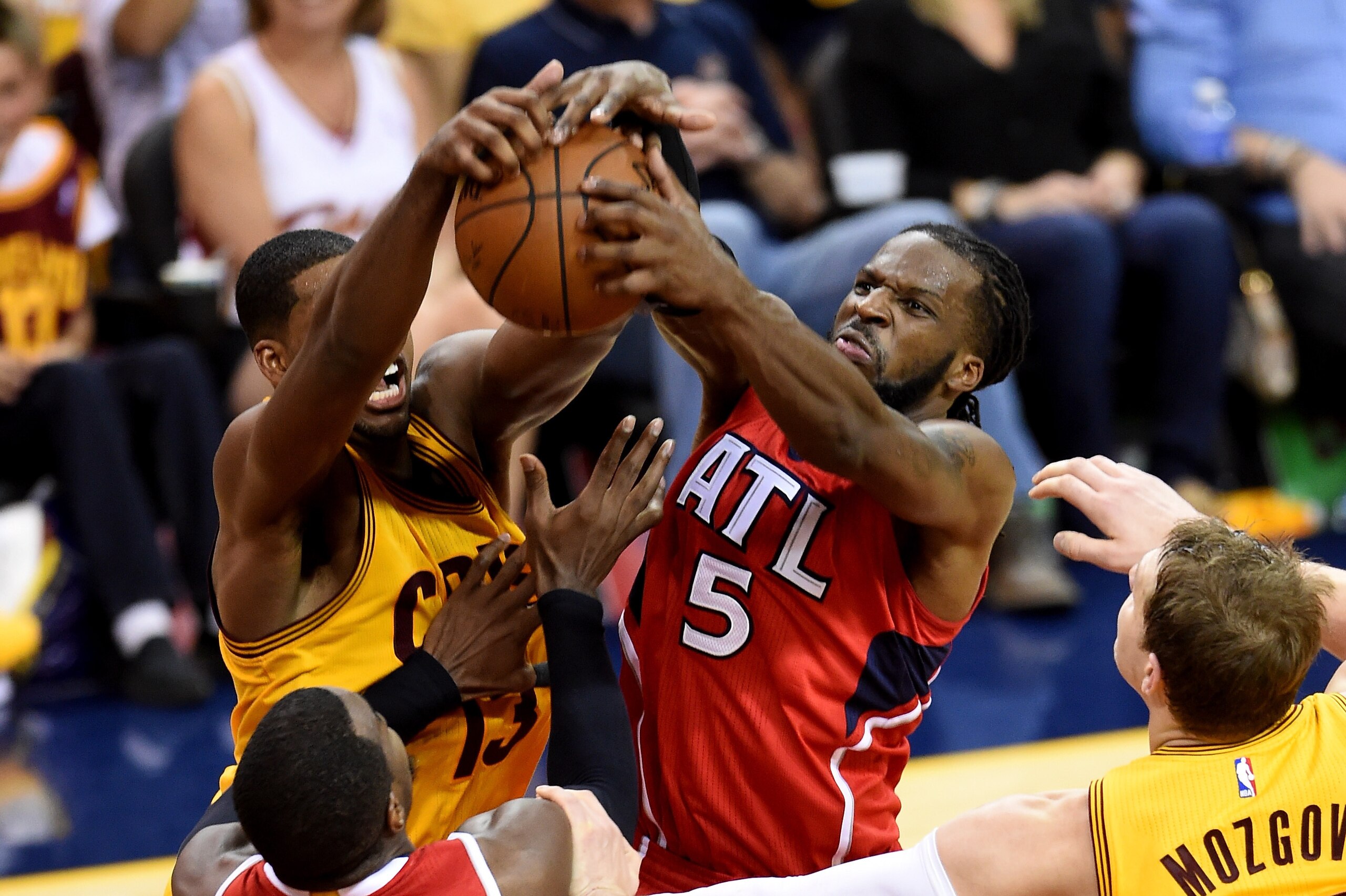
The Deal: Four years, $60 million
What He Must Prove: He's ready for major minutes as a power forward.
It's telling that the most important task ahead of DeMarre Carroll isn't justifying his new four-year, $60 million contract. Remember, Carroll made $5 million over his last two years combined with the Atlanta Hawks, and now he's collecting three times that amount on average...per season.
But based on his defensive chops and three-point shooting, it's a safe assumption that Caroll can maintain his recent production levels. If he puts up the same kinds of numbers and flashes the same versatility, he'll be worth the investment.
The Raptors, however, aren't paying Carroll to do the same things he did over the past two years—not exactly, anyway.
They still want the shooting, positional flexibility and defense. But it looks like they'll want it at the power forward spot. And we know that because part of the Raps' pitch to Wesley Matthews (before he signed with the Dallas Mavericks) was a lineup featuring him at the 3 and Carroll at the 4, according to Sam Amick of USA Today.
According to 82games.com, Carroll played the 4 sparingly in 2014-15, allowing opponents to post a worrying player efficiency rating of 20.6. When he played small forward, that number dipped to 13.2, a figure that justified Carroll's reputation as an excellent wing defender.
Toronto obviously isn't getting Matthews, but it also hasn't made any acquisitions that figure to change Carroll's new role. Sure, the Raptors added Luis Scola, but the veteran won't command major minutes. That leaves Patrick Patterson as the only other big-role option at the 4.
Carroll is going to play plenty of power forward, and he'll have to play it well for the Raptors' plans to work out.
Reggie Jackson, PG, Detroit Pistons
3 of 5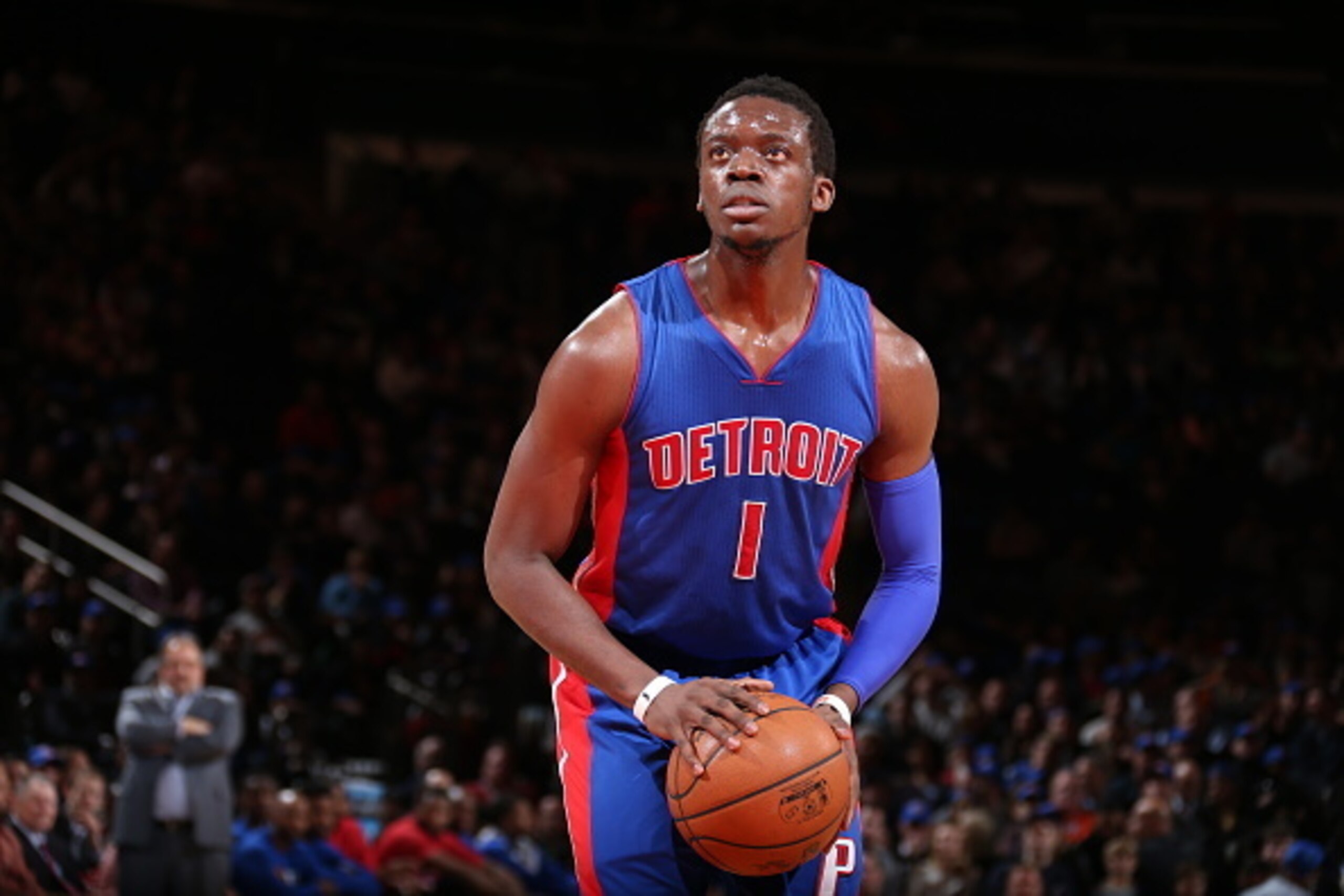
The Deal: Five years, $80 million
What He Must Prove: He's a franchise point guard.
ESPN NBA Insider Kevin Pelton gave the Detroit Pistons a "C" grade when they traded for Reggie Jackson at the February deadline; he wrote:
"The market will set Jackson's value as a restricted free agent, and with many of the teams in need of point guards filling that void at the deadline, maybe Stan Van Gundy can get Jackson back at a reasonable price. But if what the Pistons got was the right to pay Jackson eight figures per year, that's unlikely to work out.
"
It seems the Pistons completely ignored the market.
Despite owning the right to match any offer sheet Jackson signed, Detroit dove in and gave the point guard $80 million. No other team, by the way, extended an offer that we know of.
This, after Jackson played some seriously underwhelming ball in a much bigger role for the Pistons after coming over from the Oklahoma City Thunder.
"His inability to space the floor is a major problem in today's NBA," wrote Bleacher Report's Zach Buckley. "Even his impressive volume production after landing in Detroit at the deadline (17.6 points, 9.2 assists and 4.7 rebounds per night over his last 27 games) loses some of its appeal since the Pistons went just 10-17 over that stretch."
Jackson can't shoot, doesn't get to the foul line and is not known as a defender. At the very least, the Pistons could have sat back and let another offer sheet dictate his value.
Now, Jackson faces the unenviable task of proving he's worth as much as one foolhardy team decided to pay him. It's not his fault Detroit spent needlessly, but he's the one who has to perform like a star to make that money count for something.

Wesley Matthews, SG, Dallas Mavericks
4 of 5
The Deal: Four years, $70 million
What He Must Prove: A ruptured Achilles doesn't mean the end of the line.
When the Dallas Mavericks lost out on DeAndre Jordan, they bumped Wesley Matthews' contract up from $57 million to $70 million—a significant raise for a player whose future is so uncertain.
Matthews would have been worth the full $70 million and then some if he'd signed with the Mavs as a healthy player. But he tore his Achilles tendon in March, and the harsh truth about that particular injury is that almost nobody is ever the same afterward.
We should all be hopeful Matthews makes it back. He's a terrific player, and his attitude, embodied here in a comment he made to reporters (via the Dallas Morning News), is inspiring:
"I have the drive to not let this take away anything I’ve done. It’s been a different kind of battle. It wasn’t a battle against an opponent. It wasn’t a battle against a coach saying this or a GM saying I’m not good enough.
It’s myself. And every single year I’ve gotten better in this league and I pride myself on that.
And I’ll be damned if I let this stop me.
"
It's also naive.
Chris Towers of CBSSports.com compiled a list of the 14 players to have returned from an Achilles injury from 1992 to 2012, noting that their minutes per game dipped by an average of 27 percent in the year of their return. Worse still, their collective shooting percentage fell from 45.9 percent to 40.9 percent.
That's bad news for Matthews, for whom three-point shooting makes up half of his appealing three-and-D skill set.
Nobody's uphill climb will be steeper this season.
Omer Asik, C, New Orleans Pelicans
5 of 5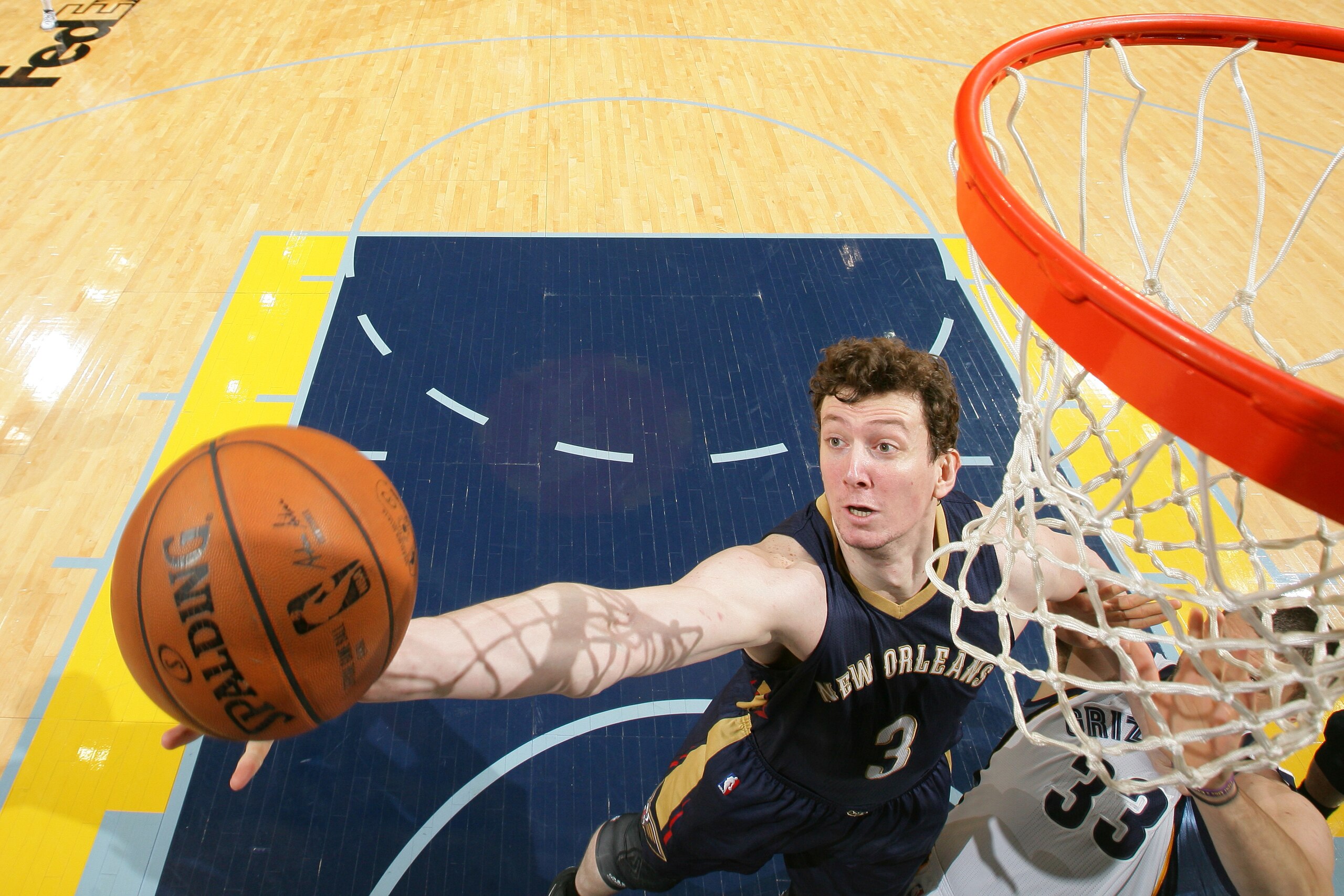
The Deal: Five years, $58 million
What He Must Prove: He's not ruining Anthony Davis.
Nothing matters more to the New Orleans Pelicans than Anthony Davis' development. Every move the franchise makes—every hire, signing or roster tweak—has to be made with an eye toward what it means for the league's most promising young superstar.
And if you squint hard enough at Omer Asik's new contract, maybe there's a way to see it as helpful for AD.
Maybe it assures somebody big and strong will be there to shield him from the punishment of guarding opposing centers. Maybe it means Davis can safely move to the perimeter (a potential boon to his development) because somebody else will be down in the trenches to rebound.
But that's some painful squinting.
A clearer look at Asik reveals a player whose bad hands severely limit his offensive value and who may no longer warrant the reputation he's earned on the other end.
Buckley breaks it down: "Billed as an intimidating interior presence, Asik posted the worst block percentage (2.1) of his career last season, per Basketball-Reference.com. Opponents averaged nearly as much point-blank success against him (51.1 percent shooting at the rim) as they did when matched up with noted sieve Kevin Love (52.6)."
That's not ideal.
The biggest problem of all is that more minutes for New Orleans' new $58 million man indicate Davis is likely ticketed for the power forward spot. And that means AD's true calling as a legitimate stretch 5 who can bury threes and defend the paint may never be realized.
Look, Davis and Asik played well together last season, posting a net rating of plus-4.6 points per 100 possessions when on the court at the same time, per NBA.com. But Davis and Ryan Anderson put up a figure of plus-6.0, indicating that maybe putting Davis at center has its merits.
Noisy data aside, the point is that Davis must be given every opportunity to grow.
Asik will have to play brilliantly to prove he's worth what he's costing the Pelicans—both financially and in terms of Davis' development.
.jpg?w=2560 "Dart Believed to Have Sprained MCL")
.jpg?w=2560 "WWE Raw Live Grades 🔠")

.jpg?w=2560 "Ertz Returning to Eagles")
.jpg?w=2560 "Dak Addresses 'Dumb' Old Romo Tweet 🤣")