
The Best NBA Playoff Rivalries of All Time
Part of the beauty of the NBA playoffs is the ever-present possibility for the rekindling of old rivalries and the births of new ones. Every clutch shot, hard foul, pointed quote, or Game 7 could ignite (or reignite) lasting enmity between players, franchises, and their fanbases.
Nothing shakes a latent rivalry out of its doldrums quite like a 3-1 comeback, either.
Everyone loves a good rivalry. The NBA's postseason history is chock full of them. Here, we've highlighted the best playoff rivalries in league history, though it's first important to lay out what qualifies as a rivalry.
First and foremost, the teams/players involved need to have faced off more than twice, preferably with numerous matchups in a short, defined time period. Bulls-Jazz, Mavericks-Heat, and Spurs-Heat were some fantastic Finals matchups, but each of them only happened twice, so they're out.
Next, each rivalry needs to feature each side winning at least once. There might be bad blood between a pair of teams, but if one team ultimately wins every time, it's not really a rivalry. The Lakers and Kings played some all-timers back in the early 2000s—and maybe the Kings were robbed in 2002—but L.A. won every series.
Finally, the most memorable rivalries have to feature some element of drama and/or bad blood between the two teams. Trading gentleman's sweeps in the first round over a handful of years without any real excitement? That's whatever. We're looking for the best of the best here, so the more drama, the better. High-intensity matchups in later rounds definitely hold more weight.
The following rivalries are presented in no particular order following a few honorable mentions, though there was an effort to avoid the same team being featured back-to-back (which was difficult, as you'll soon see).
Honorable Mentions
1 of 14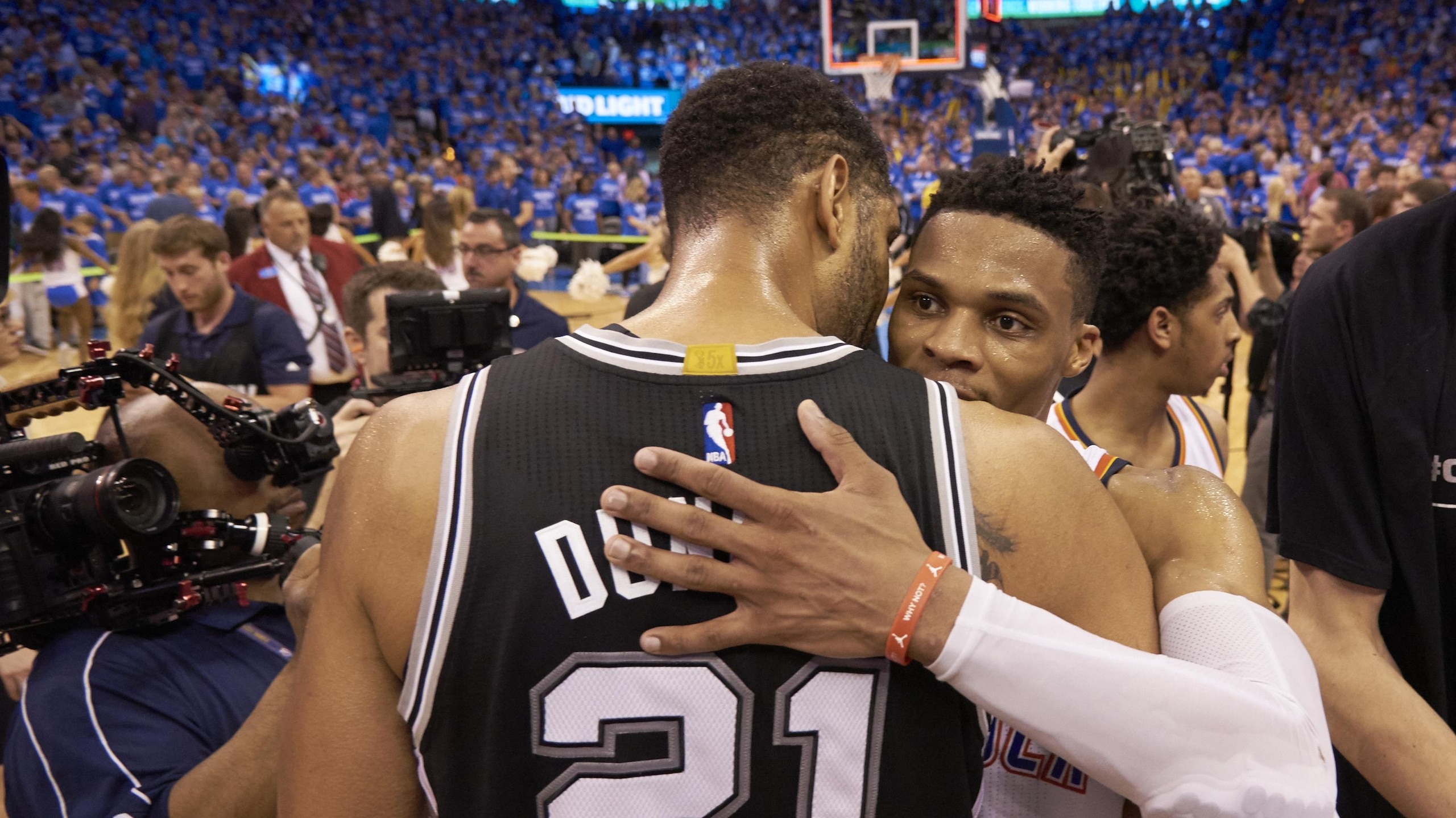
Los Angeles Lakers vs. San Antonio Spurs
While there were some individual memorable shots—Derek Fisher, anyone?—and some of the teams involved were among the NBA's best, the Lakers-Spurs rivalry never extended long enough to go to a deciding game. Eight of their 12 matchups since 1982 involved the losing side earning zero or one win. Add in the famously boring nature of the Spurs, and it lacks the punch of the top rivalries, even though these two teams frequently clashed.
Utah Jazz vs. Houston Rockets
Houston knocked Utah out of the playoffs in back-to-back years in 1994 and 1995 on the way to winning a pair of championships. That 1995 team did so as a No. 6 team, upsetting a 60-win Utah squad. The Jazz got their revenge on the Rockets in 1997 and 1998, knocking them out on their own path to the Finals.
As much as anything else, though, this rivalry gave us a Grade-A troll tweet from former Rockets standout Vernon Maxwell.
New York Knicks vs. Chicago Bulls
Does it feel wrong to put this rivalry in the honorable mentions section? Yes, yes it does.
By our criteria, it could fit even though the Knicks are 1-6 all-time against the Bulls in the postseason. But the crux of the rivalry is the Knicks vs. Michael Jordan. New York never beat him. The Knicks' only playoff series win over the Bulls came in 1994... when Jordan was playing baseball. And even then, it took seven games.
San Antonio Spurs vs. Oklahoma City Thunder
The dynastic Spurs and the upstart Thunder, led by Kevin Durant and Russell Westbrook, had a trio of great clashes in the 2010s, with the Thunder winning twice to signal a changing of the guard. Maybe this rivalry can spark up again in the future if Victor Wembanyama and the Spurs can catch up with the already-contending Thunder?
Boston Celtics vs. Philadelphia 76ers
2 of 14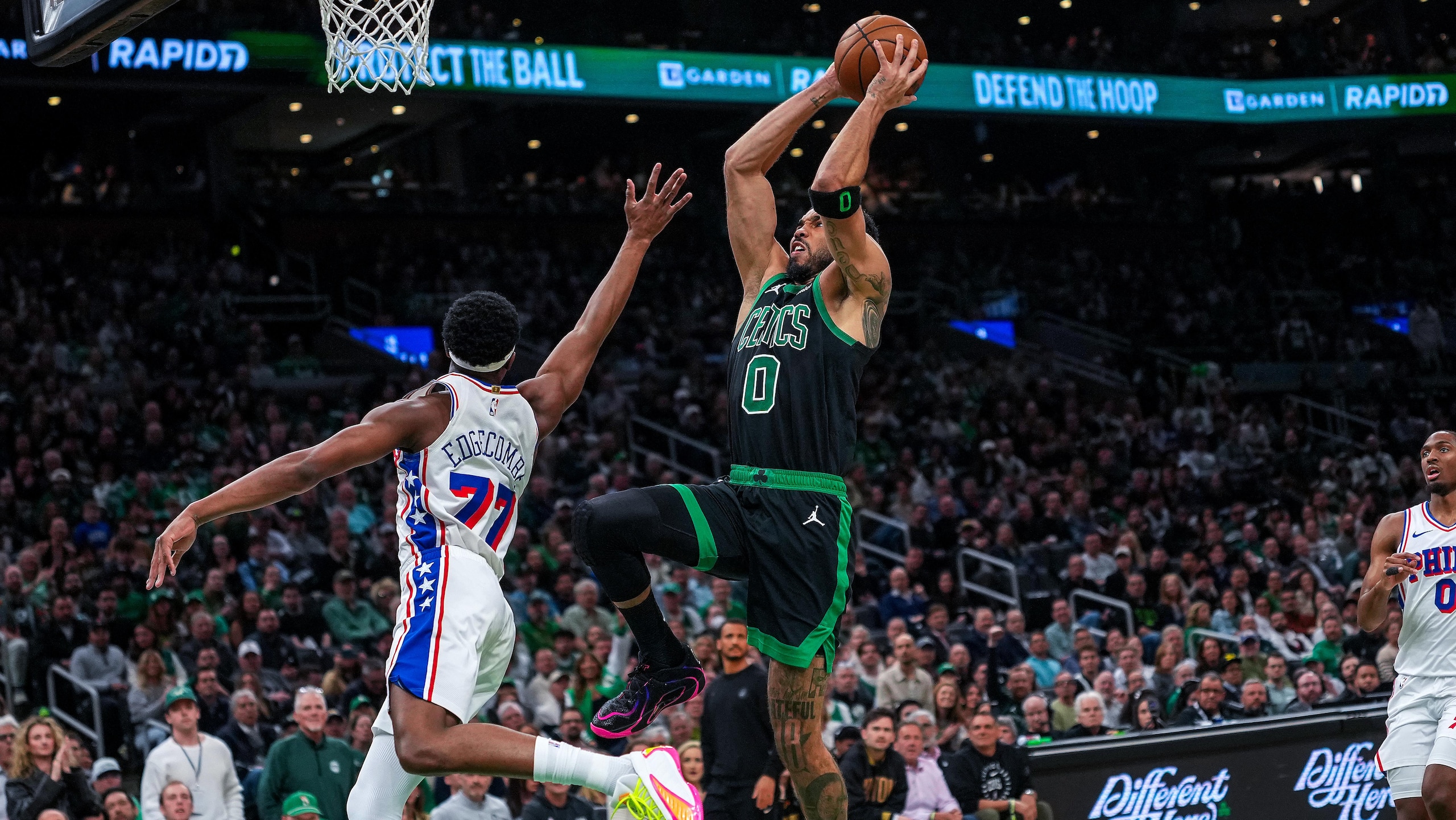
The Boston Celtics and Philadelphia 76ers hold the distinction of being the most frequent playoff pairing in NBA history, with 23 matchups spanning over 70 years (including the 76ers' time as the Syracuse Nationals). However, entering the 2026 postseason, the Celtics had won 15 times, and Philadelphia had lost six straight series against Boston since 1982.
Through four first-round games, this dormant rivalry looked like it was going to continue its decades-long hibernation. Boston had little trouble asserting its dominance on the way to a 3-1 series lead, including a 32-point thrashing in Game 4 in Philadelphia.
With the series shifting back to Boston, it seemed only a matter of time before the Celtics would do what they always do and send the Sixers tail-spinning into the offseason. But Joel Embiid, Tyrese Maxey and the Sixers had other plans.
With their backs against the wall in hostile territory, the Sixers overpowered the Celtics in the second half of Game 5. They cruised to victory in Game 6 to set up a winner-take-all Game 7 back at TD Garden.
Boston star Jayson Tatum was ruled out with a left knee injury hours before the game, leading to Philadelphia's stars taking full advantage of the opportunity against the short-handed C's. Embiid (34 points, 12 rebounds, six assists) and Maxey (30 points, 11 rebounds, seven assists) spurred the Sixers to a 109-100 win by becoming the first teammates to record stat lines of at least 30-10-5 in a Game 7 in NBA history.
That win also reignited the rivalry between the 76ers and the Celtics. Despite the many historical matchups, it was hard to truly keep this as a marquee playoff rivalry given that Philadelphia hadn't won a series against Boston in the cell phone era—the first commercial cell phone was approved by the FCC in 1983.
But with a 3-1 series comeback and Embiid publicly throwing shade at Boston's Payton Pritchard, it's fair to say that all the bad blood between these two teams has bubbled back up to top-tier rivalry status.
San Antonio Spurs vs. Phoenix Suns
3 of 14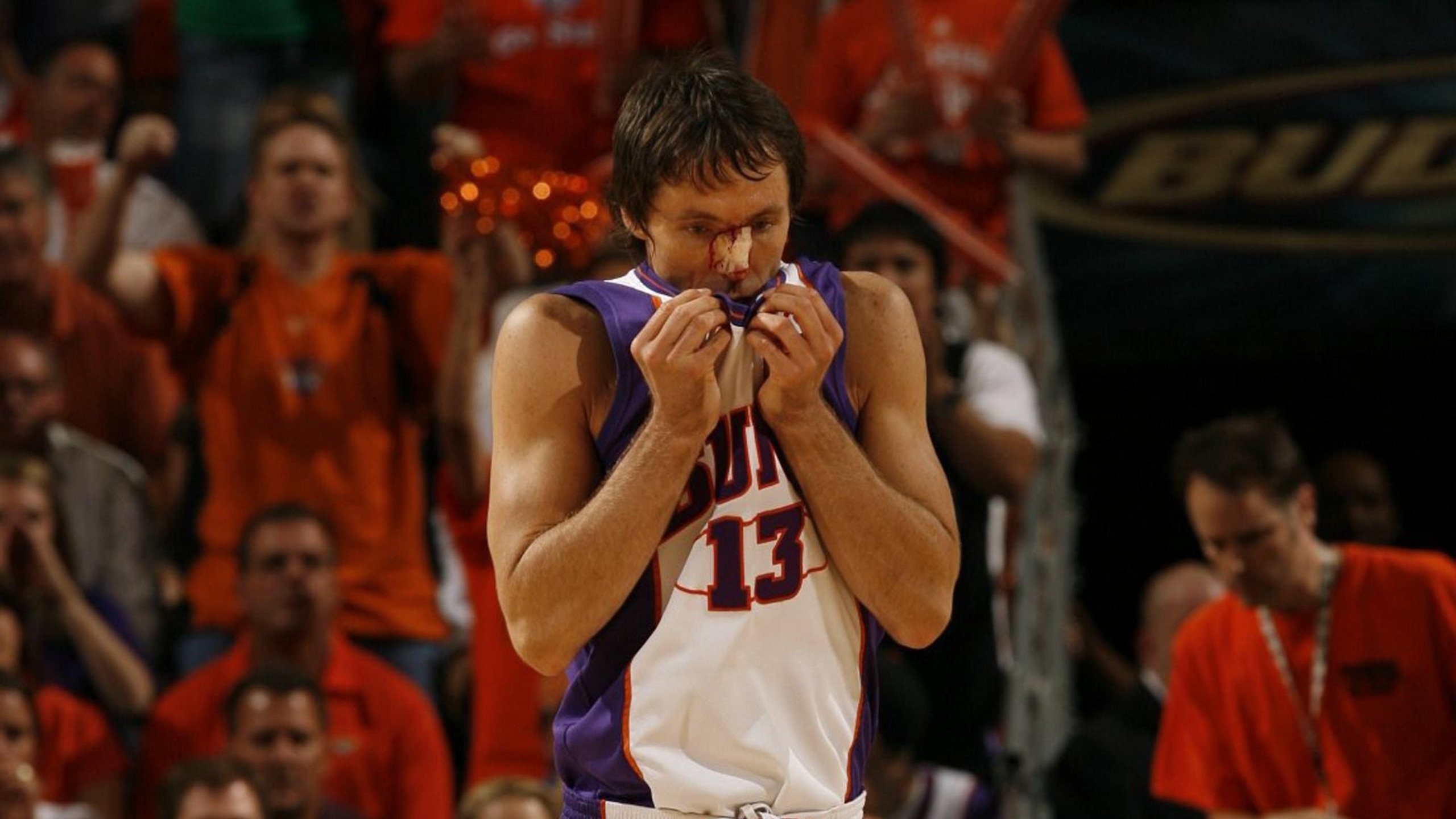
A player getting bloodied and playing through it? Now we're talking!
The San Antonio Spurs and Phoenix Suns have met 10 times in the playoffs, with the Spurs owning a 6-4 edge in series victories. But the real meat of this rivalry came from 2007-2010.
After Steve Nash bumped heads with Tony Parker and played through a bloody nose during the fourth quarter of Game 1 of the 2007 Western Conference semifinals, the rivalry reached a new level of contention in Game 4, which the Suns ultimately won to even the series at 2-2.
Late in that game, Robert Horry intentionally body-checked Nash into the scorer's table, sparking an on-court altercation and earning an ejection from the game. The bigger issue was that Phoenix's Amar'e Stoudemire and Boris Diaw left the bench area and were therefore automatically suspended for Game 5, even though they were held back from interacting with any Spurs players.
Hampered by those suspensions, the Suns lost Game 5 at home before dropping Game 6 in San Antonio to lose that series to the Spurs, who would go on to win the title. With the way the Spurs cruised in the rest of the playoffs, those suspensions went down as one of the greatest what-ifs in NBA history.
The Suns and Spurs linked up again in 2008 (Spurs won 4-1) and 2010 (Suns won 4-0) in series that weren't nearly as dramatic, but some of their bad blood may have altered the course of USA Basketball. Suns CEO and USA Basketball managing director Jerry Colangelo chose Duke's Mike Krzyzewski—not Spurs head coach Gregg Popovich—to lead the 2008 men's national team despite Popovich's stated interest, which drew many theories about the rivalry between the two teams influencing the decision.

Boston Celtics vs. New York Knicks
4 of 14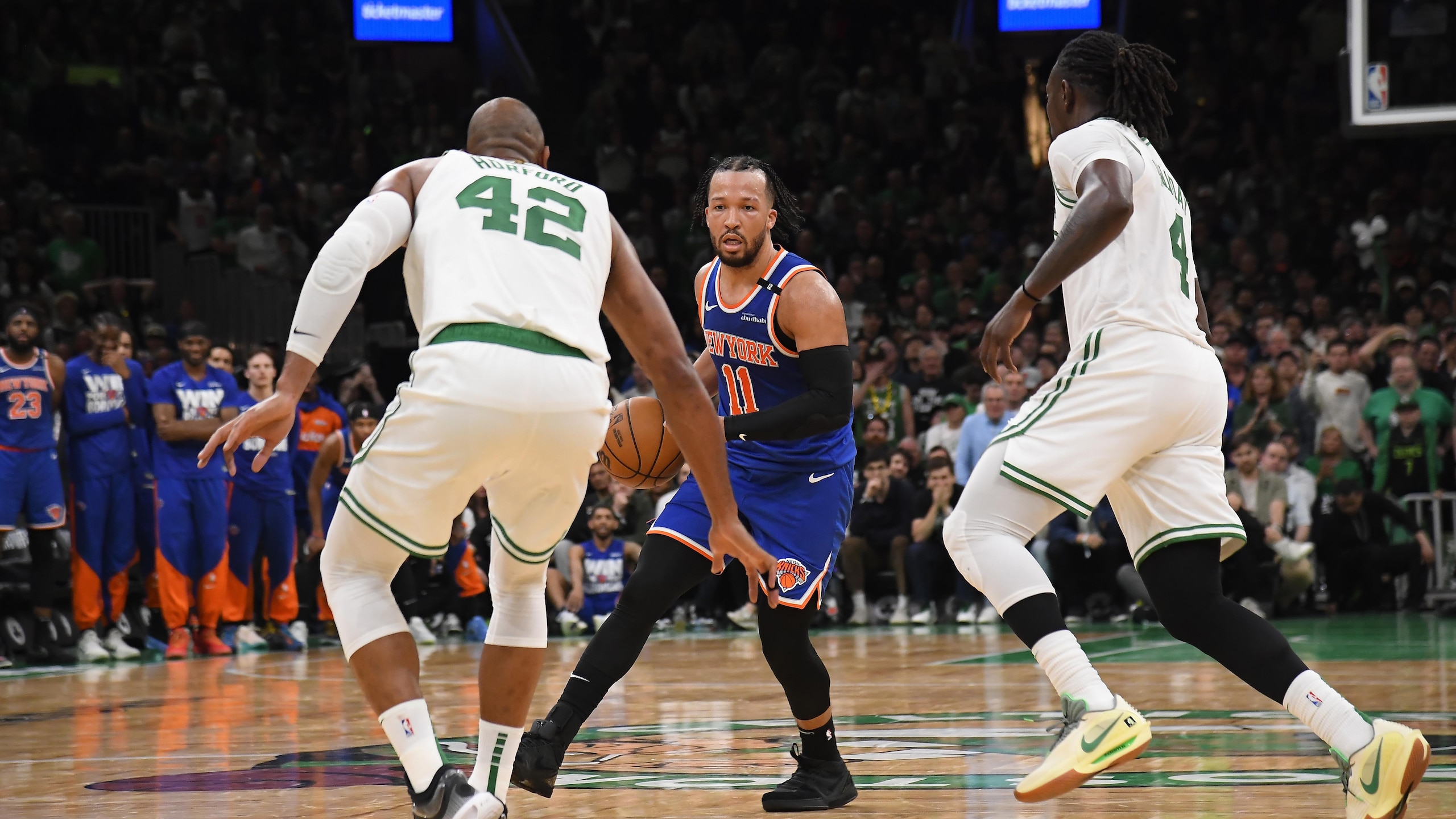
New York and Boston don't need a sport to have a rivalry with one another, but the Knicks and Celtics going head-to-head in the playoffs is always going to stir up something special between the fanbases in each city. The two teams have faced off 15 times since 1951. The Knicks' six-game upset of the second-seeded Celtics in 2025 put New York ahead 8-7 in the decades-long postseason history between the two teams.
Though they've met many times over the years, the 2025 conference semifinals clash marked just the third time the Knicks and Celtics have met in the playoffs since 1990. The teams met five times in a row from 1951-1955 and then five times from 1967-1974, but their matchups have been more sporadic since.
New York's historic back-to-back 20-point comebacks on the road in Games 1 and 2, plus Jayson Tatum's devastating Achilles injury, were the major headlines from the 2025 series. It also may have signaled a changing of the guard in the East.
Michael Jordan vs. the Bad Boys Pistons
5 of 14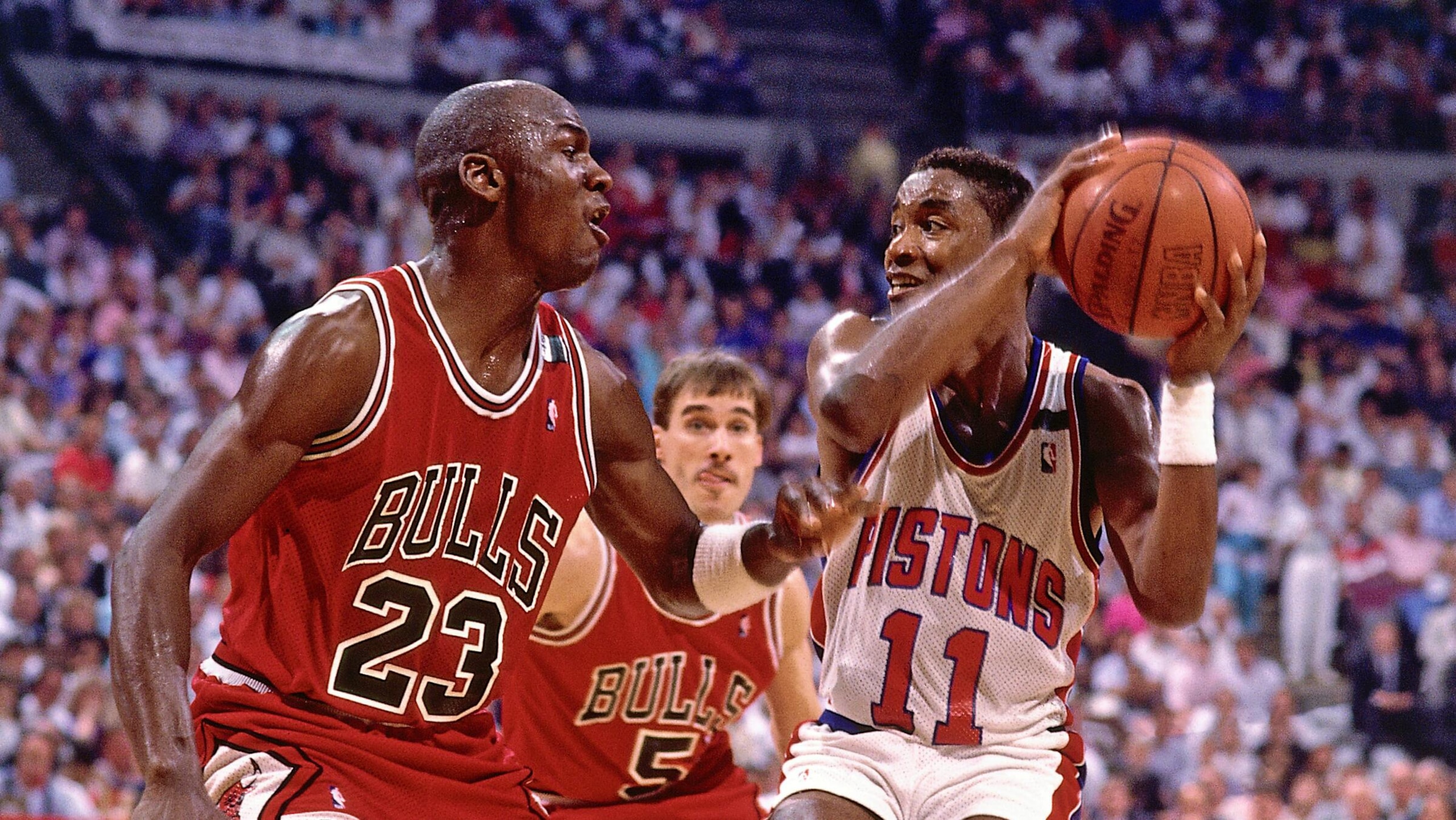
Michael Jordan was an ascendant star and an MVP, but he was not yet a champion. The Detroit Pistons, led by Isiah Thomas, Joe Dumars and Bill Laimbeer, were tough, physical to the point of being dirty, and intent on building and maintaining a path to a dynasty—not Jordan and the Chicago Bulls.
All the stars were aligned for a highly combustible rivalry, particularly since the two teams met in the playoffs four years in a row from 1988-1991, including in three straight Eastern Conference Finals.
The Pistons had the upper hand in this rivalry at first, winning the 1988 Eastern Conference semifinals, thanks in part to the "Jordan Rules" that they applied on defense. Detroit continued to be physical with Jordan and the rest of the Bulls. They held serve in both the 1989 and 1990 Eastern Conference Finals on their way to winning back-to-back championships.
MJ and the Bulls finally cracked the "Jordan Rules" in 1991, sweeping the Pistons in the Eastern Conference Finals. Game 4 ended memorably when many of the Pistons' core players left the bench before the game was over and did not shake hands with the Bulls, adding another layer to the angst between the two teams.
The Pistons were the final nemesis that Jordan and the Bulls had to overcome before they built a dynasty that would collect a pair of three-peats during the 1990s. It also created a rift between Jordan and Thomas, one that was long discussed as a possible reason for Thomas' exclusion from the 1992 Dream Team.
Bill Russell vs. Wilt Chamberlain
6 of 14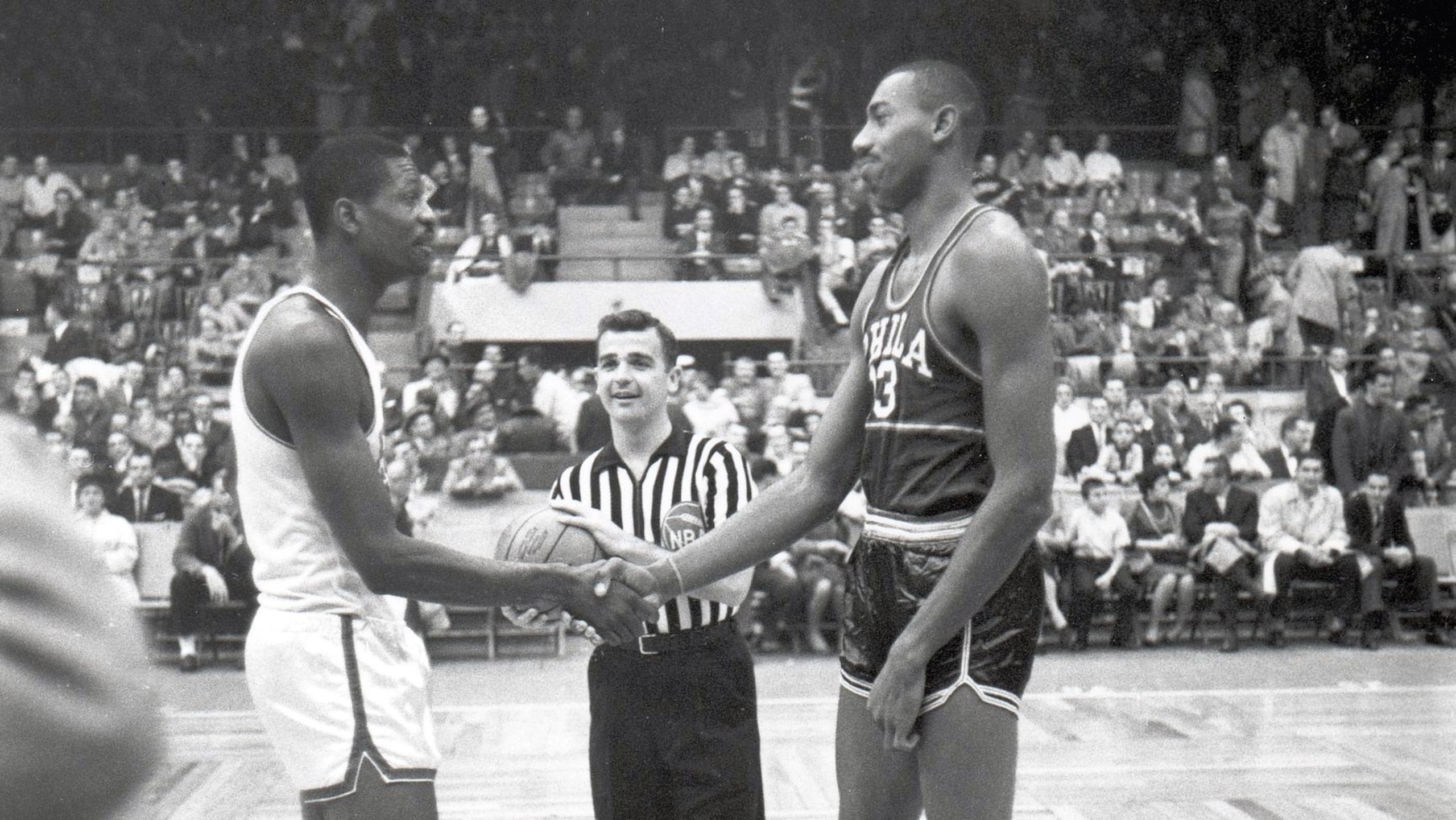
Sometimes, a rivalry is bigger than just two franchises. Not many can compare to legends Bill Russell and Wilt Chamberlain.
While Russell played in Boston throughout his storied career, the name on the front of Chamberlain's jersey changed multiple times from Philadelphia to San Francisco back to Philadelphia and finally to Los Angeles. Still, the battles between the two titans kept coming year after year.
Russell and Chamberlain faced off in the playoffs eight times between 1960 and 1969, with Russell's team getting the better of seven of those matchups during that dynastic Celtics run. However, Chamberlain was more than a worthy adversary, averaging 25.7 points, 28.0 rebounds and 4.1 assists in 47.5 minutes per game while shooting 51 percent from the floor over 49 postseason games against Russell's Celtics.
Russell put up solid numbers himself, averaging 14.9 points, 24.7 rebounds and 4.9 assists in 46.3 minutes per game while helping the Celtics earn 29 wins in the 49 matchups against Chamberlain's teams.
Russell and Chamberlain met only twice in the NBA Finals, with the Celtics beating the San Francisco Warriors 4-1 in 1964 and downing the Los Angeles Lakers 4-3 in 1969. However, Chamberlain's Philadelphia 76ers scored a cathartic 4-1 series win over Russell and the Celtics in the 1967 Eastern Division Finals, setting the stage for the franchise's first championship in Philadelphia.
Boston Celtics vs. Los Angeles Lakers
7 of 14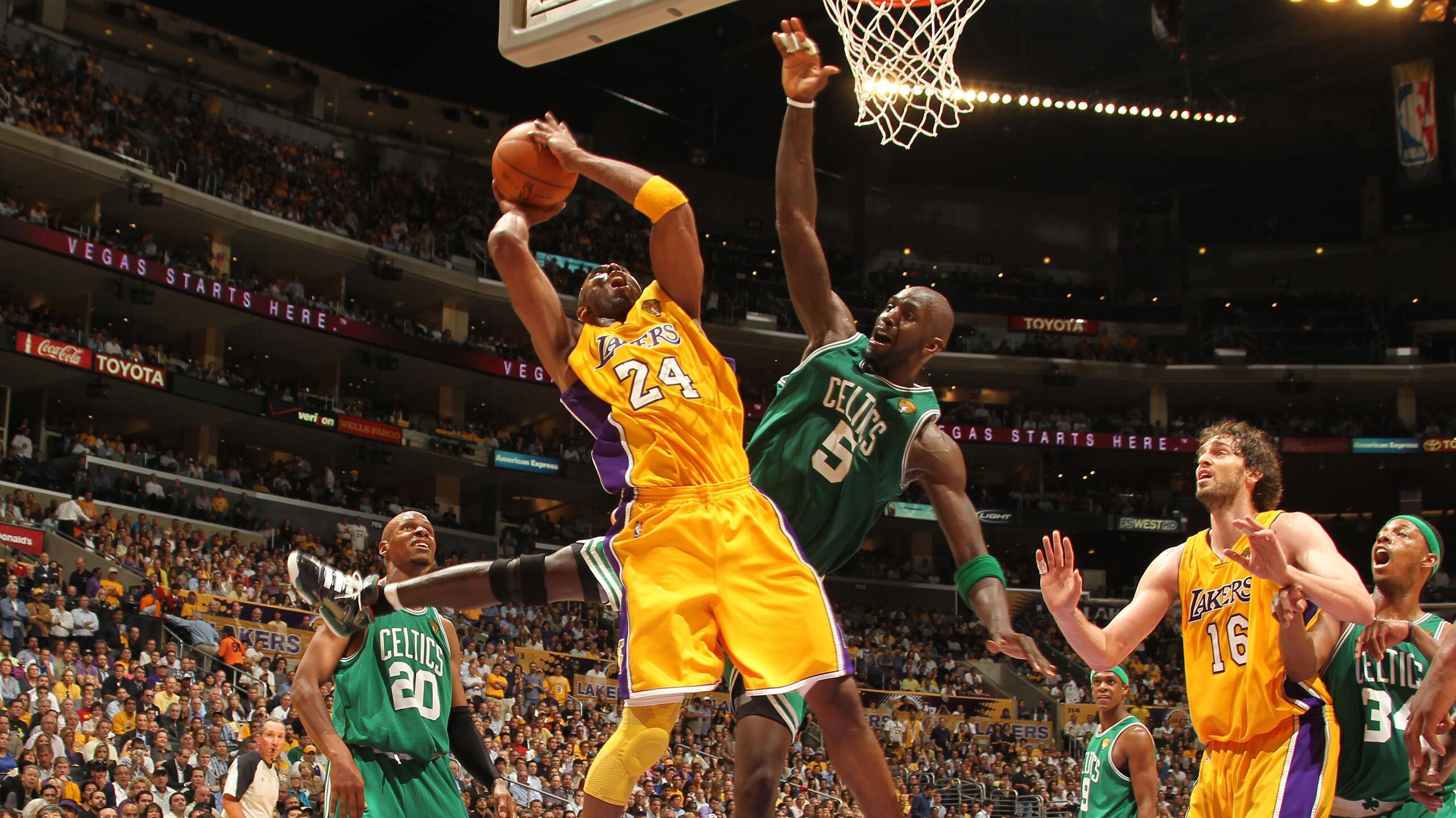
The crown jewel among the NBA's historic rivalries, the actual rivalry between the Celtics and Lakers didn't truly begin until the 1980s...at least by our definition.
The Celtics and Lakers faced off eight times in the NBA Finals between 1959 and 1984, but Boston won all eight matchups. The Lakers drew first blood in 1985 and added another victory in 1987 (more on that later), but let's focus on the renewal of this rivalry in 2008 and 2010.
Boston's Big Three of Paul Pierce, Kevin Garnett and Ray Allen carried the C's to the NBA Finals in 2008, where they met Kobe Bryant, Pau Gasol and the Lakers. Game 1 went down as the unforgettable Paul Pierce Wheelchair Game, which got the series off to a dramatic start befitting of Celtics-Lakers.
The series turned in Boston's favor for good in Game 4 when the visiting Celtics erased a 35-14 first-quarter deficit for a comeback win that gave them a commanding 3-1 series lead. The Celtics ended a 22-year title drought by finishing off the Lakers in Game 6.
The Lakers bounced back by beating the Orlando Magic to win the 2009 title. The rivalry reached its modern height in 2010, when Boston and L.A. met in the NBA Finals. After Los Angeles scored a blowout win to force Game 7, the Lakers held off the Celtics 83-79 to secure the franchise's 16th title, which was only one behind the Celtics' NBA-record 17 at the time.
Reggie Miller vs. the New York Knicks
8 of 14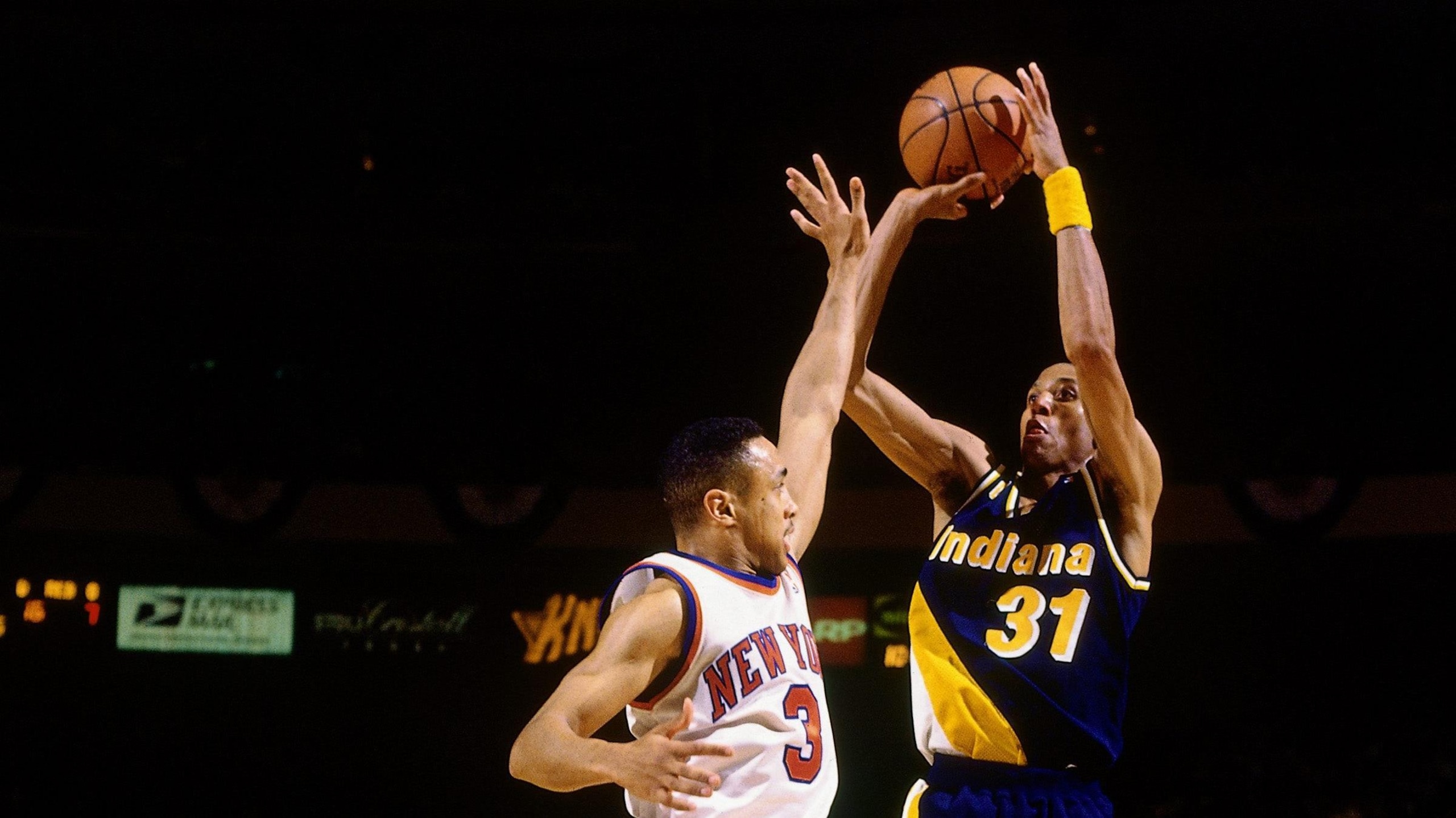
Basketball is a team sport, but the rivalry between the Indiana Pacers and New York Knicks isn't really a Pacers-Knicks thing. It's a Reggie Miller vs. New York thing.
Case in point: The Knicks and Pacers faced off in the 2025 Eastern Conference Finals—one year after a seven-game conference semifinals series that the Pacers ultimately won—and one of the viral stories leading up to Game 1 was about a Knicks fan urinating on a mural of Miller in downtown Indianapolis.
The heart of this rivalry stems from the six meetings between these two teams from 1993 to 2000. The prelude to things really blowing up came in 1993. In Game 3 of a series that the Knicks would win in four games, New York guard John Starks got fed up with Miller's trash talk and elbowing and decided to take matters into his own hands by headbutting Miller as they went down the court.
Somehow, the drama built up even more in 1994, as the two teams squared off in the Eastern Conference Finals. Indiana took a 3-2 series lead in Game 5 thanks to Miller's 39 points—including 25 in the fourth quarter—though that game is remembered more for Miller trash-talking Knicks superfan and courtside staple Spike Lee, including flashing a choke sign his way.
However, the Knicks rallied back to subdue Miller and the Pacers in seven games, silencing their nemesis for another year.
In 1995, Miller had his defining moment, as he scored eight points in 8.9 seconds toward the end of Game 1 of the Eastern Conference semifinals to shock the Knicks and the Madison Square Garden crowd. The Pacers went on to win that series in seven games, as Patrick Ewing missed a potential game-tying layup at the buzzer of Game 7. The Pacers fell to the Orlando Magic in the conference finals, but they had at least vanquished the hated Knicks.
While the two teams met three straight years from 1998-2000—including two Pacers wins and a shocking trip to the Finals for the eighth-seeded Knicks in 1999—nothing could quite match the hysteria of the clashes from 1993-95.
But with the Pacers toppling the Knicks in the playoffs twice in a row—including with a trip to the 2025 NBA Finals on the line—the Knicks-Pacers rivalry seems to be entering a new, post-Miller era.
LeBron James vs. Stephen Curry
9 of 14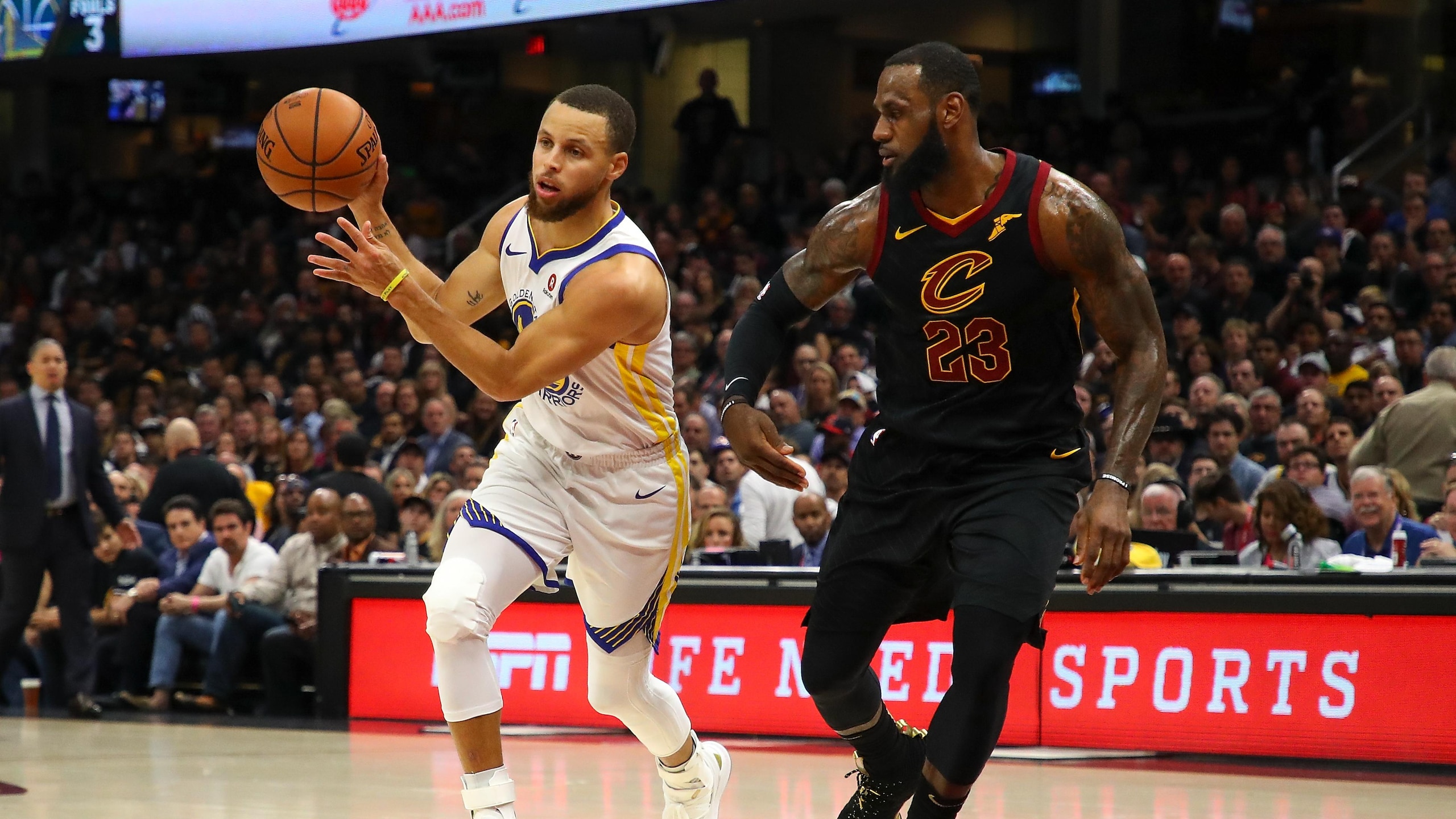
Could we have titled this "Cleveland Cavaliers vs. Golden State Warriors" instead? Sure. But we all know who the biggest stars of those matchups were. Plus, it would have excluded a bonus matchup between LeBron James and Stephen Curry in the 2023 playoffs.
The LeBron-led Cavaliers and Curry's Warriors met in the NBA Finals for four straight seasons from 2015-2018, as neither conference could find an answer to either team. The resulting Finals weren't always close, but they were undoubtedly dramatic.
Golden State began its dynastic run of four titles in five years in 2015, as Curry, Klay Thompson, Draymond Green and the Warriors' three-point revolution proved too potent for James and the Cavs. It was James' fifth straight Finals appearance—the previous four were with the Miami Heat—but the Warriors denied him the opportunity to bring the Larry O'Brien Trophy back to northeast Ohio.
By 2016, Curry and the Warriors were the talk of the league. They opened the season 24-0 and compiled a 73-9 regular-season record—the best in league history—and Curry was the unanimous MVP. After surviving a seven-game scare from the Oklahoma City Thunder in the Western Conference Finals, the Warriors had their eyes on history in the NBA Finals.
Golden State built a 3-1 series lead, but a Game 4 flagrant foul by Green in which he swung at James' groin triggered an automatic suspension because he had accrued four flagrants in the playoffs. James and the Cavs roared back to even the series with commanding wins in Games 5 and 6 before coming through in the clutch to take Game 7 and cap the most incredible comeback in NBA Finals history.
The Warriors got their revenge by adding Kevin Durant and running away with the 2017 and 2018 championships, beating James and the Cavs both times.
In 28 playoff games against each other, Curry owns a 17-11 advantage over James. Curry has averaged 25.6 points, 6.5 assists and 5.8 rebounds in those games, while James has nearly compiled a triple-double with 31.3 points, 10.9 rebounds and 8.5 assists.
New York Knicks vs. Miami Heat
10 of 14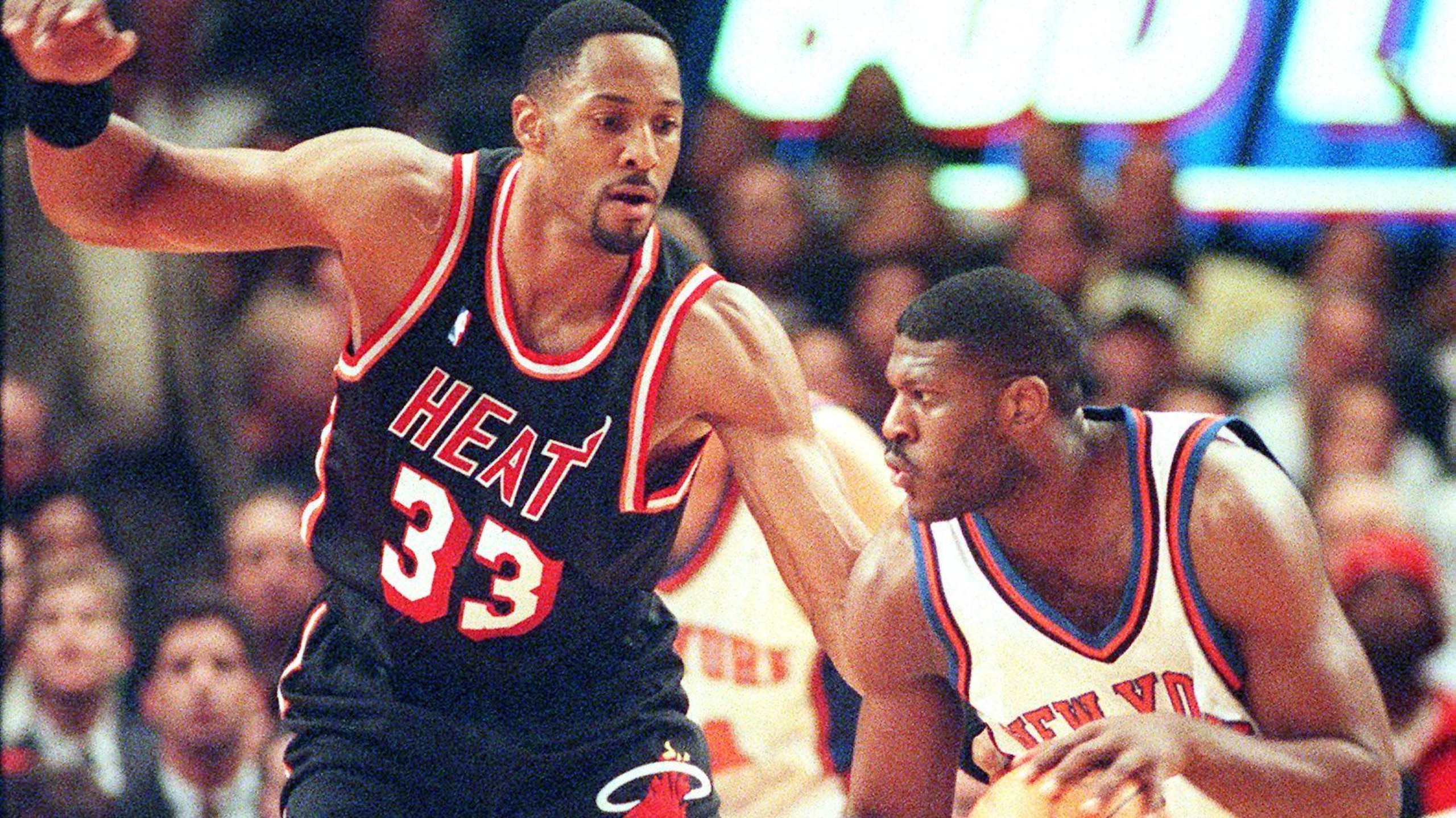
Four straight years. Four matchups. Four series that went the full distance.
From 1997 to 2000, the New York Knicks and the Miami Heat held annual heavyweight brawls in the Eastern Conference playoffs. Those matchups turned into literal fights more than once.
The first of those came in Game 5 of the 1997 conference semifinals, where the Knicks were up 3-1 but were trailing the Heat in the fourth quarter. That's when New York's Charlie Ward went in for a hard boxout of P.J. Brown on a free throw. Brown took exception, grabbing Ward, lifting him up and flipping him into the front row of cameramen.
Four Knicks starters left the bench during the ensuing fracas. They, along with Ward, received one-game suspensions, which were spread out over Games 6 and 7. The shorthanded Knicks dropped both contests and saw their season end shy of a rematch with the Chicago Bulls in the conference finals.
The next year, the Knicks and Heat met in the first round of the playoffs and provided one of the last images of the rivalry. New York was putting the finishing touches on a series-tying win in Game 4 when former teammates Larry Johnson and Alonzo Mourning started swinging at each other. Knicks head coach Jeff Van Gundy ran on the court to try to intervene when one of Johnson's swings unintentionally connected with his coach's face. Van Gundy dropped to the floor and clung to Mourning's leg.
With Mourning sidelined for Game 5, the Knicks cruised to a win.
The 1999 series between the two teams featured the No. 8 Knicks against the No. 1 Heat. New York started an improbable Finals run thanks to a series-winning runner by Allan Houston that gave the Knicks the lead with 0.8 seconds left. New York and Miami played another down-to-the-last-minute series in 2000, with New York again advancing by the skin of its teeth.
Los Angeles Lakers vs. Phoenix Suns
11 of 14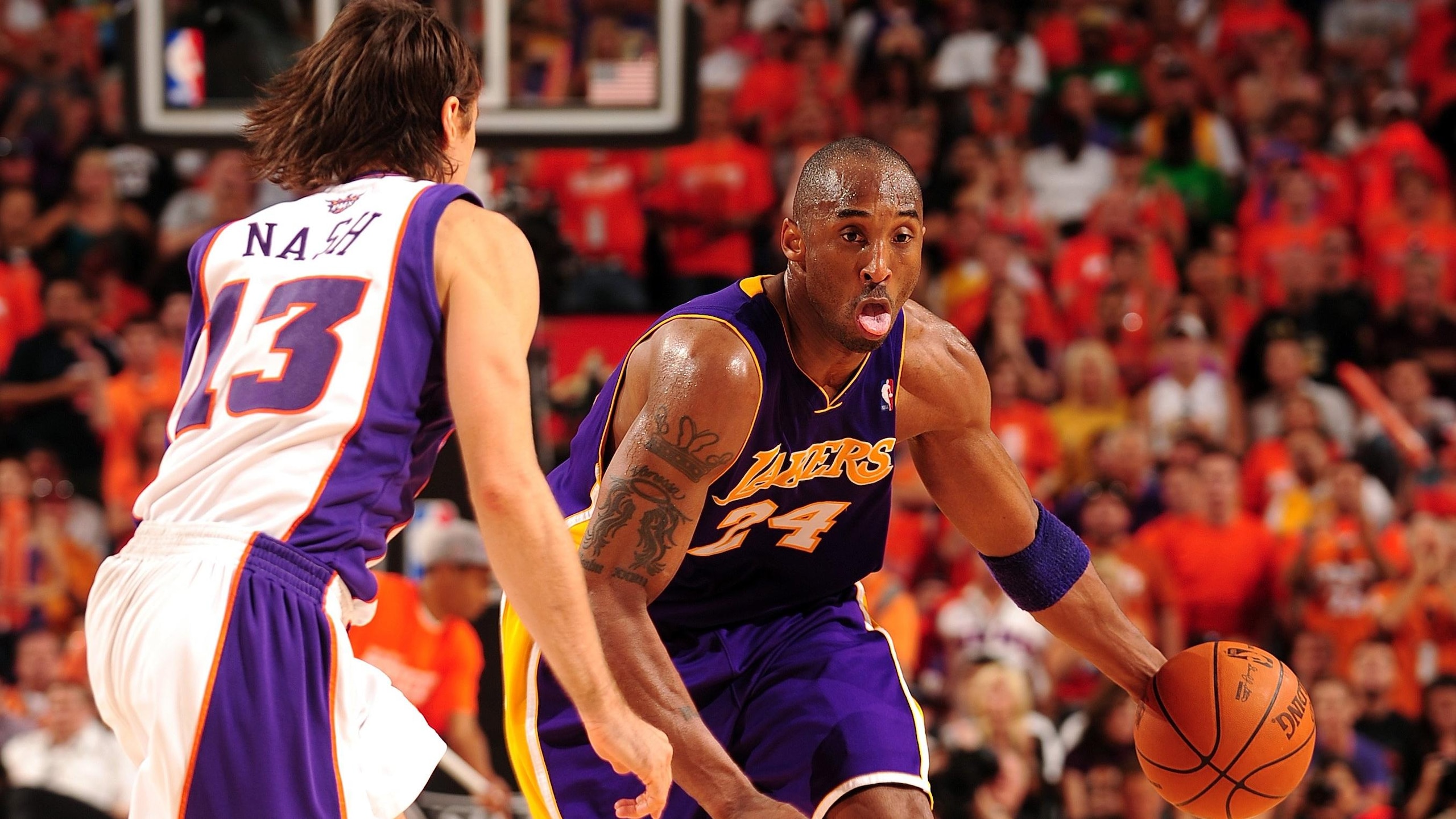
The Phoenix Suns—in the prime of the 07 Seconds or Less revolution—knocked Kobe Bryant and the Lakers out of the playoffs in both 2006 and 2007. The 2006 series was an especially bitter pill for the Lakers to swallow.
In that series, Bryant hit a buzzer-beater in Game 4 to give the No. 7 seed Lakers a 3-1 series lead, putting them in position to pull off a shocking upset. But the Suns weren't going to go down without a fight—and Raja Bell meant that literally. Amid a double-digit Game 5 win, Bell clotheslined Bryant on a fourth-quarter drive and was summarily ejected and suspended for Game 6.
The shorthanded Suns scratched out a win thanks to the heroics of Tim Thomas, who nailed an overtime-forcing three-pointer with 6.3 seconds left. Phoenix then took command in overtime and—back at full strength—crushed the Lakers in Game 7.
Phoenix and L.A. ended the 2007 season in the same spots in the standings and thus met again in the first round. The series ended in a gentleman's sweep that time around.
"Yes, they stopped me from getting a championship—twice," Bryant told ESPN in 2016. "Damn right I hated them. Absolutely. Raja and Steve [Nash] and all of those good guys. Hated them. No question. But at the same time, I loved them, because they brought the best out of me and my teammates."
Though they made the Finals in both 2008 and 2009—winning the latter series—Bryant and the Lakers had to wait until the 2010 Western Conference Finals to get postseason revenge on the Suns.
Each team held serve at home in that series entering Game 5, which was deadlocked at 101 with 3.5 seconds left. That's when Bryant airballed an attempt at a game-winner, but Ron Artest (now known as Metta Sandiford-Artest) cut across the paint for the rebound and quickly put back the miss to beat the buzzer. L.A. then took care of business on the road to avenge its past losses, earning its third trip to the Finals in as many years.
Overall, the Lakers and Suns have met in the playoffs 13 times since 1970, with Los Angeles winning eight of those series.
LeBron James vs. Boston Celtics
12 of 14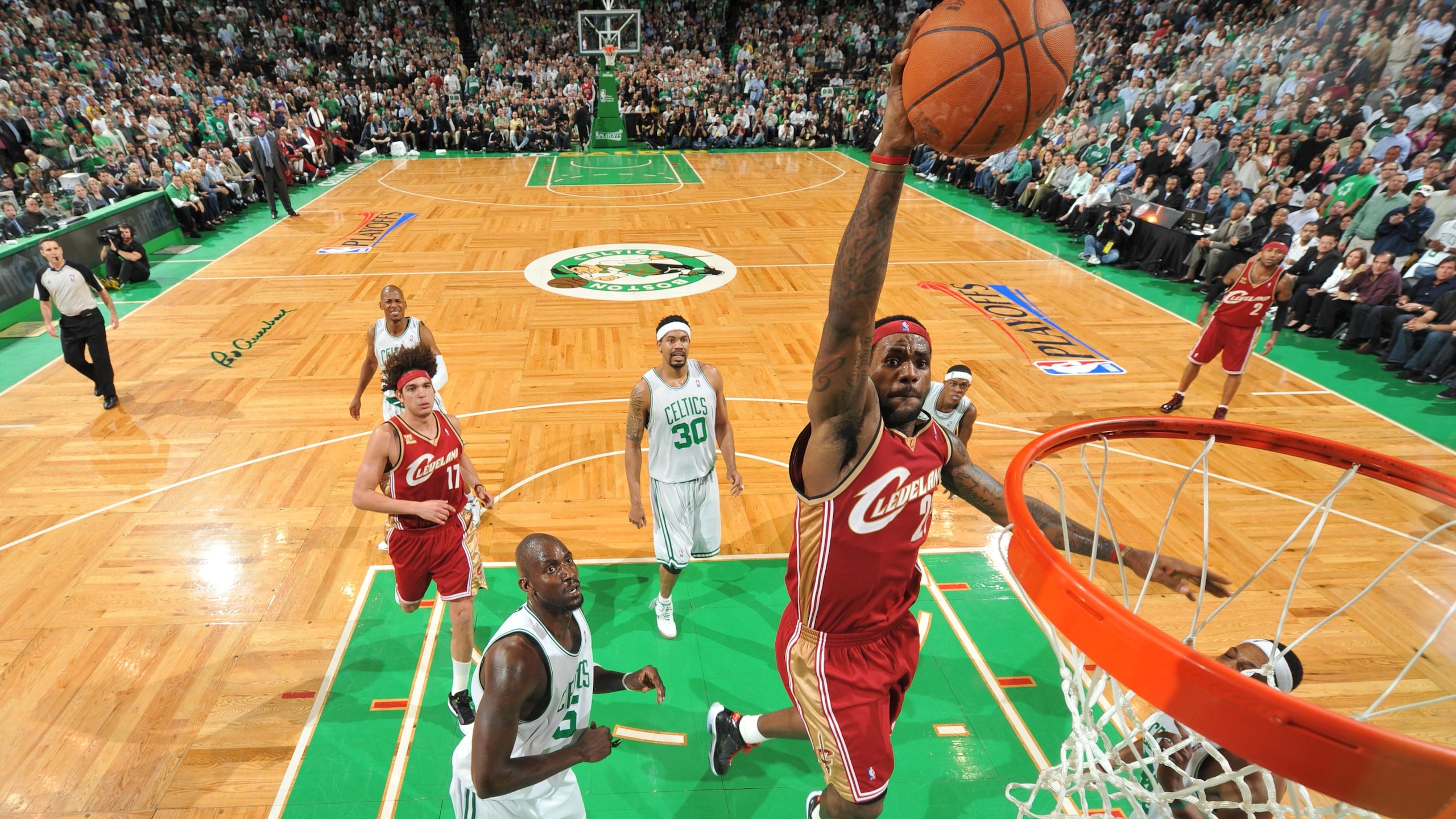
LeBron James' arrival in the NBA in 2003 was heralded as a changing of the guard. However, the old guard wasn't quite ready to be replaced yet.
James and the Cleveland Cavaliers never made it to the mountaintop during his first stint there. During their five postseason runs, the most common impediment was the Boston Celtics.
In 2008, James faced off against Boston's Big Three in the Eastern Conference semifinals. He averaged a series-leading 26.7 points per game and almost willed the Cavs to victory with 45 points in Game 7, but Boston's deeper well of talent won out.
A second matchup between these two teams in 2010 might be credited with breaking up the Cavs. After Cleveland lost three games in a row to drop the series 4-2, James ultimately decided to take his talents to South Beach and join the Heat.
From that point on, though, James' postseason clashes with the Celtics have always gone his way.
Whether with the Heat or back with the Cavs, James has won five straight series against the Celtics (2011, 2012, 2015, 2017, 2018), with the only truly close one coming in 2012. In that Eastern Conference Finals, the Celtics surged back from a 0-2 deficit to take a 3-2 lead. James responded with 45 points on the road in Game 6. That led to the Heat claiming Game 7 on their way to the title—James' first.
Overall, James has averaged 29.6 points, 8.5 rebounds and 6.3 assists in 41 playoff games against the Celtics.
San Antonio Spurs vs. Dallas Mavericks
13 of 14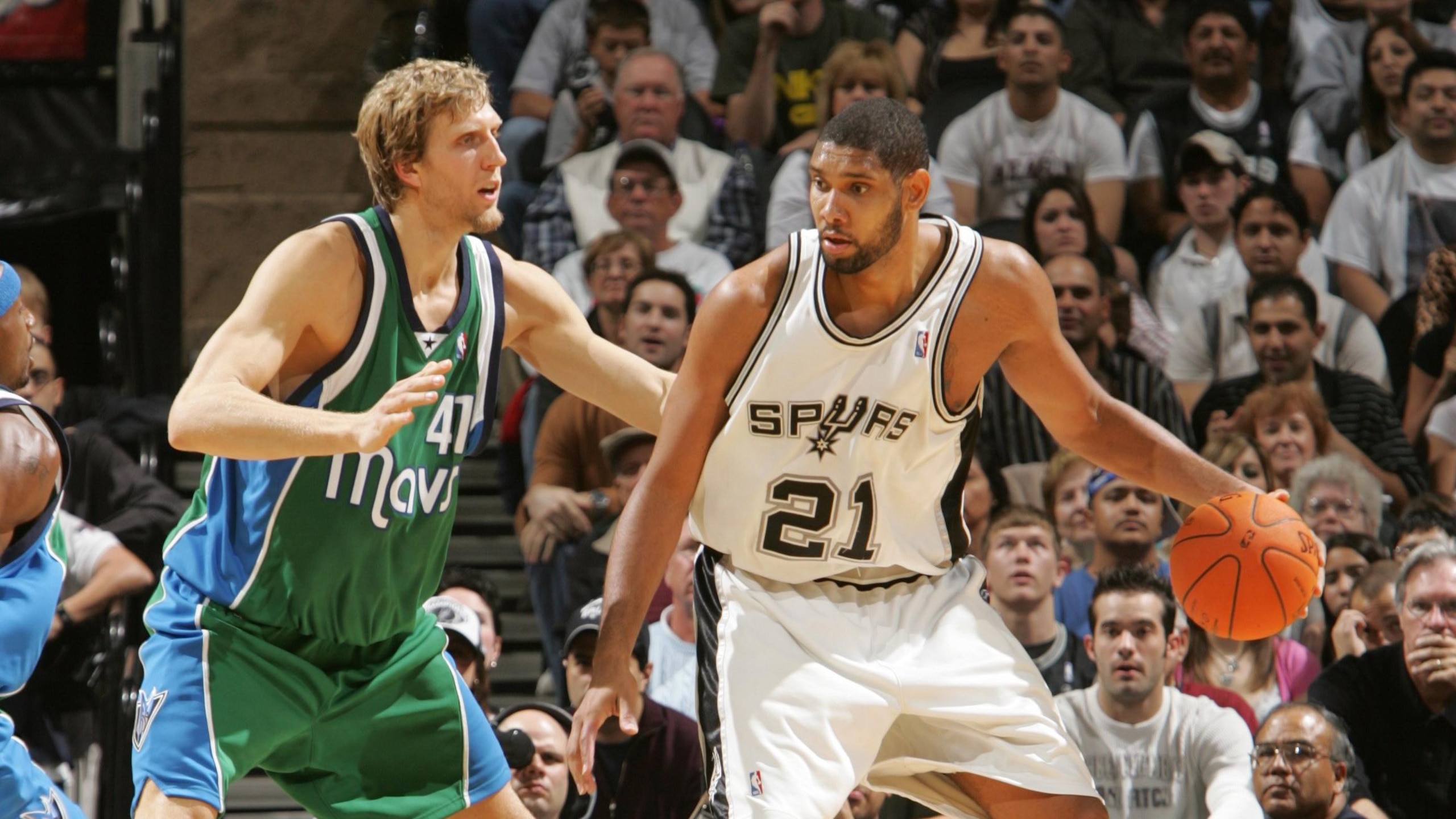
These I-35 rivals squared off in the playoffs six times from 2001 to 2014, with one of those matchups coming in the conference finals and another coming in what should have been the conference finals.
The Spurs knocked off the Mavs in the 2001 conference semifinals and again in the 2003 Western Conference Finals on the way to winning the championship. But their most hotly contested series and most memorable game came in the 2006 Western Conference semifinals.
Both teams finished with 60-plus wins that year, making them the only West teams to do so. However, division winners received the top three seeds in each conference at the time, so the 60-win Mavericks were the No. 4 seed behind the 54-win Phoenix Suns and the 44-win Denver Nuggets.
That set the Spurs and Mavs up for a second-round clash that certainly delivered the goods. After splitting the first two games, the Mavs scored a one-point win in Game 3 and held home court with a win in Game 4 to take a 3-1 series lead.
San Antonio earned a 98-97 win in Game 5. The day after that game, the NBA reviewed an incident from the final seconds and found that Dallas' Jason Terry punched San Antonio's Michael Finley, resulting in a one-game suspension.
The Spurs won Game 6 in Dallas to set up a Game 7 in San Antonio, where Manu Ginobili gave the home team a 104-101 lead with a three-pointer with 32.9 seconds left. Dirk Nowitzki then tied the game with an and-one with 21.6 on the clock. Dallas went on to win in overtime, thanks in large part to 37 points from Nowitzki (Tim Duncan led San Antonio with 41).
Dallas went on to win its first championship that year.
The two teams eventually met again in the first round in 2009, 2010 and 2014, with San Antonio winning two of those series. But nothing matched the drama of what happened in 2006.
Larry Bird vs. Magic Johnson
14 of 14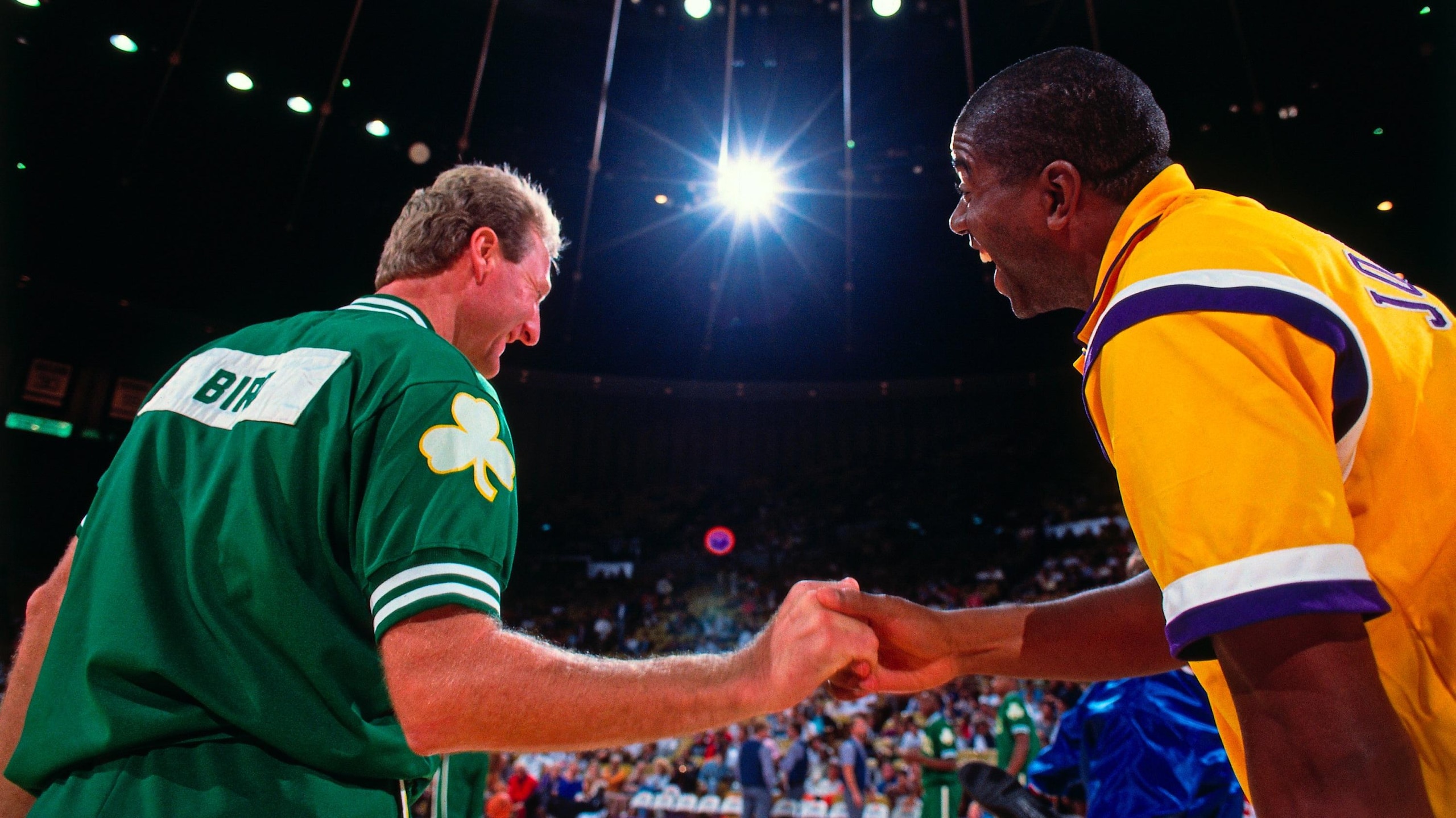
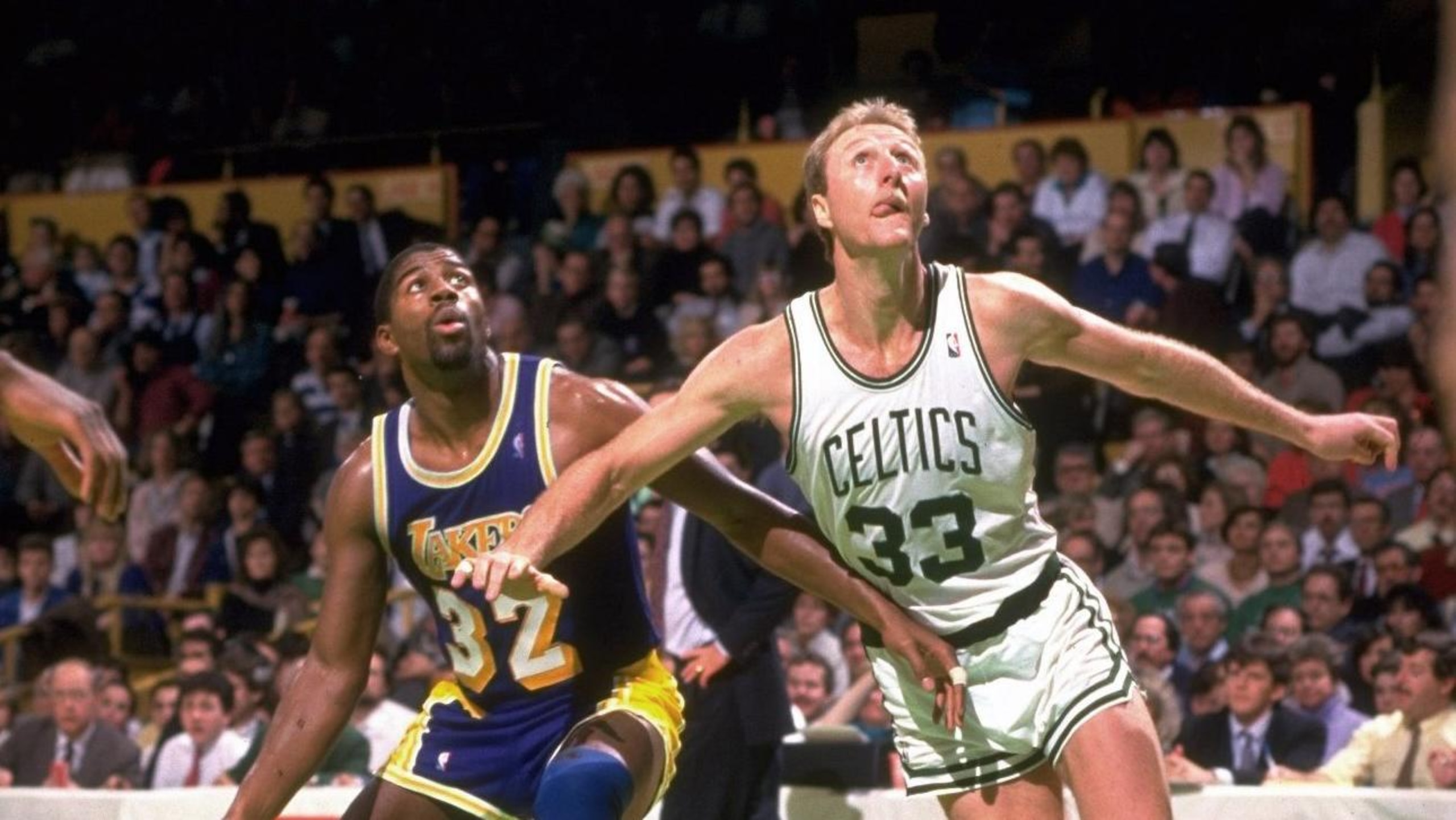
There's no talking about NBA rivalries without specifically mentioning the greatest rivalry in league history. Celtics forward Larry Bird and Lakers point guard Magic Johnson both saved and expanded the popularity of the league with their clashes throughout the 1980s.
A few years after Johnson and Michigan State knocked off Bird and Indiana State in the championship game of the 1979 NCAA tournament, the two rookies engaged in a seven-game battle in the 1984 NBA Finals. Game 7 was a one-possession contest in the final minute, but the Celtics held on thanks to a Johnson turnover, and Bird was named Finals MVP.
In 1985 and 1987, it was Johnson's turn to be back on top (although Bird was the Finals MVP in 1986 against the Rockets). After years of the Celtics dominating the rivalry between the two teams, Johnson helped catapult the Lakers to the top with wins over Bird in the Celtics in both years and earned the 1987 Finals MVP award—the last of his three Finals MVPs.
Johnson earned bragging rights over Bird thanks to the two championships in their three head-to-head Finals matchups, with the Lakers winning 11 of 19 games overall. Bird averaged 25.3 points, 11.1 rebounds and 4.6 assists, while Johnson filled up the stat sheet with 20.7 points, 13.5 assists, 7.5 rebounds and 2.2 steals.

.jpg?w=2560 "Jerry Defends Dak Heckler")
.jpg?w=2560 "Report: Rams Changing Kickers 😬")