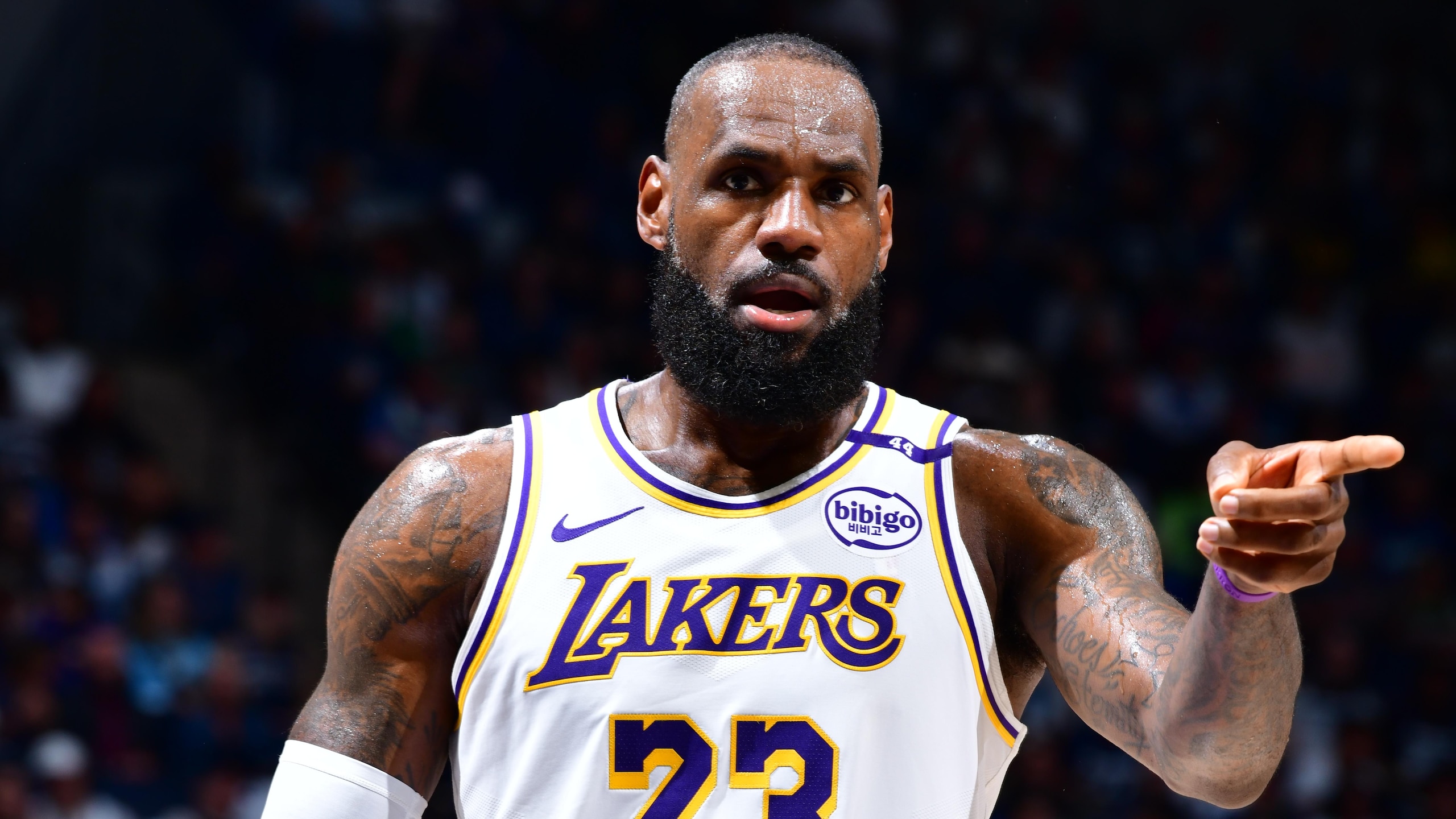


Shai Gilgeous-Alexander winning his first MVP award on Wednesday has plenty reacting online by wondering whether Nikola Jokić should've secured his fourth (or whether this year should've been his fifth win in a row).
He's reached the point where analysis of his MVP argument usually goes something like this: Well, Jokić is the best player in the league, but he's not the most valuable because...
And he's not the first to get there. There is certainly a case for Michael Jordan having more than five MVP trophies. LeBron James was undoubtedly the best player in the world for more than the four years his MVP count suggests he was.
But there's much-needed context that can often explain the all-timers coming up short in individual seasons. Voter fatigue is often a factor. In 2024-25, SGA's Oklahoma City Thunder set the record for average point differential. In 1996-97, Karl Malone led the league in player efficiency rating.
But what if the award truly did just answer nothing but the question: Who was the most valuable individual player this season? How many would LeBron have?
Let's take a look below.
The Four He Already Has
1 of 7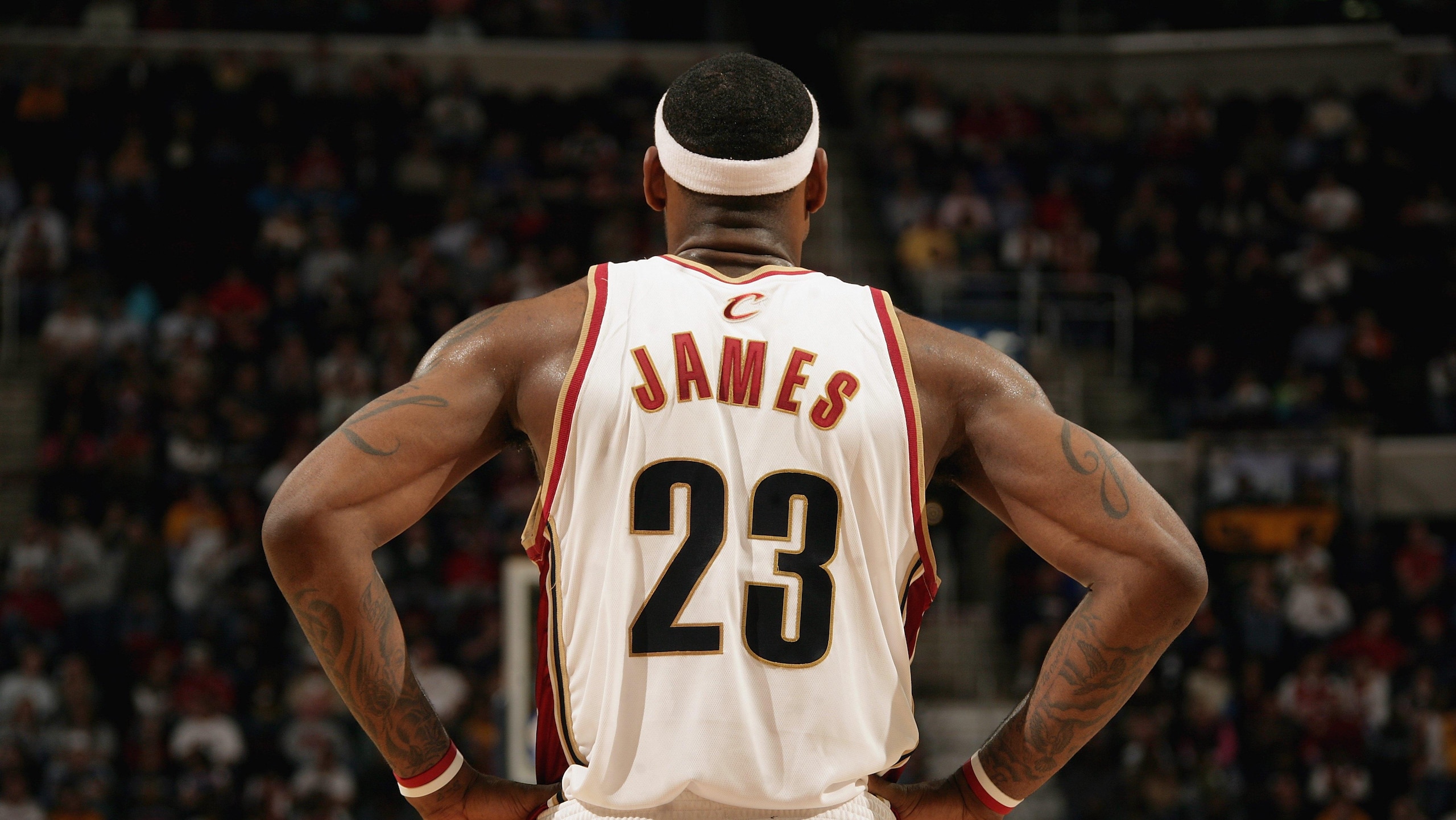
2008-09: LeBron didn't just lead the league in box plus/minus (a basketball box score-based metric that estimates a basketball player’s contribution to the team when that player is on the court) this season. His 13.2 from that campaign is the third-highest mark ever (it was the highest prior to Jokić's last half decade). And he registered it for a 66-win team while averaging 28.4 points, 7.6 rebounds, 7.2 assists, 1.7 steals and 1.1 blocks.
2009-10: LeBron followed up his first MVP campaign by raising his scoring average to 29.7 and his assists to 8.6. He once again led the league in BPM, and his Cleveland Cavaliers won a league-best 61 games.
2011-12: You may be sensing a trend here, but LeBron once again led the league in BPM in 2011-12. And this is really when his scoring efficiency started to take off, too. Beyond averaging 27.1 points, 7.9 rebounds and 6.2 assists, LeBron posted career highs in both three-point percentage (at 36.2) and true shooting percentage (at 60.5).
2012-13: The very next year, LeBron topped both of those aforementioned career highs with a 40.6 three-point percentage and 64.0 true shooting percentage to go with his 26.8 points, 8.0 rebounds and 7.3 assists. He also (you guessed it) led the league in BPM, and his Miami Heat won six more games than any other team in the NBA.
Verdict: LeBron deserved all four.
2005-06
2 of 7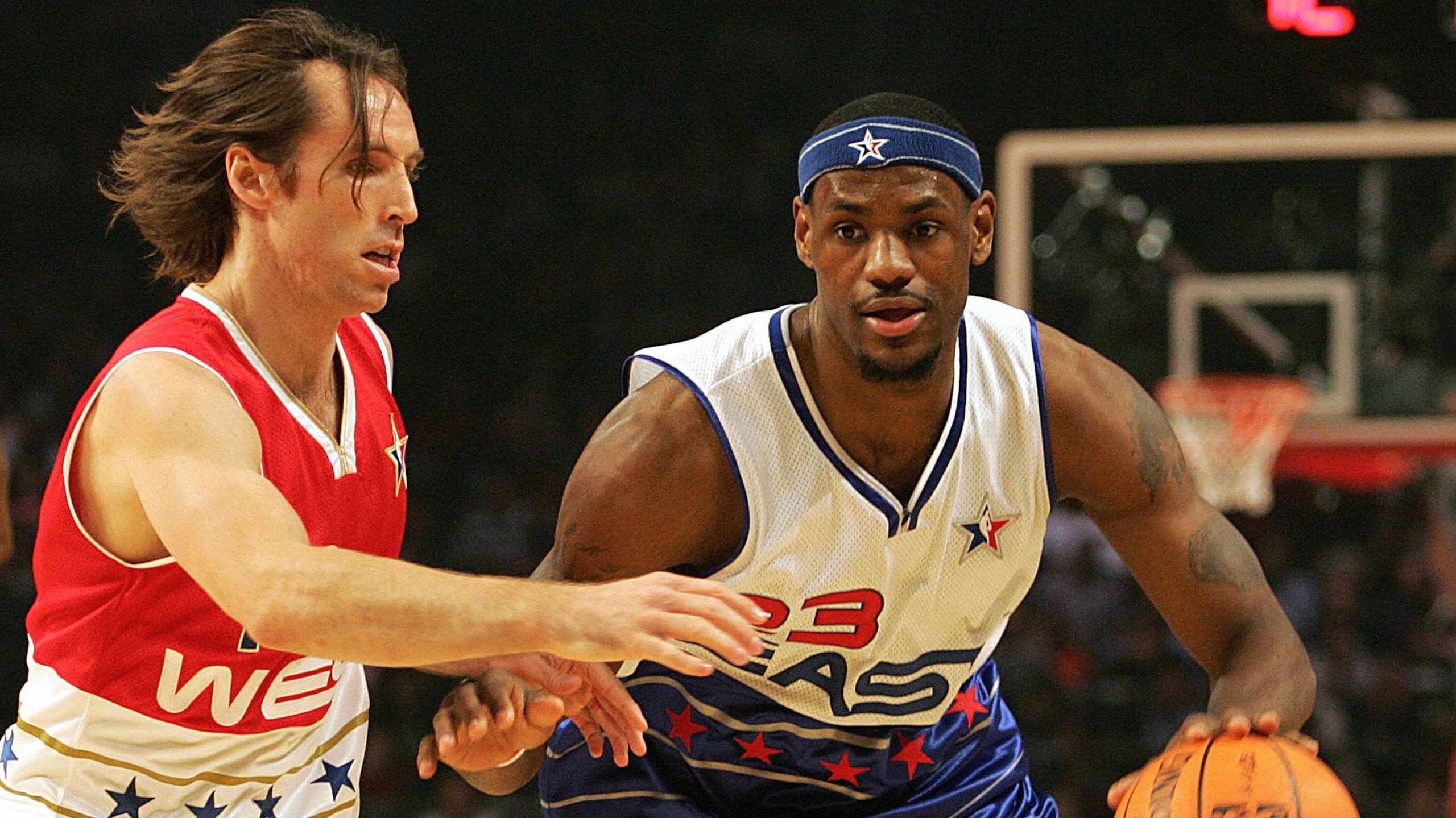
31.4 points, 7.0 rebounds, 6.6 assists, 1.6 steals, 56.8 TS%, 9.4 BPM (1st), 4.1 net rating (10.4 swing), 2nd in MVP voting
Almost 20 years ago, the current co-hosts of the Mind the Game podcast finished first and second in MVP voting, with Steve Nash taking home the award for a second consecutive season.
On analytics, it certainly looks like the award could've been LeBron's. In his third season, he led the league in BPM for the first of what would eventually total a whopping seven times. Nash was tied for 16th.
LeBron also had a better net rating swing (the difference between a team's net points per 100 possessions when a given player is on or off the floor) than Nash that season.
And he put up those numbers on a team that had Eric Snow, Zydrunas Ilgauskas and Drew Gooden at second, third and fourth on the team in total minutes played.
The Cavs' 50 wins that season were shy of the Phoenix Suns' 54, but Nash's team had two players (Shawn Marion and Boris Diaw) who were at or near All-Star level that season.
The argument for Nash isn't hard to understand. His shooting efficiency and passing were unreal. And the degree to which he transformed the Suns influenced voters beyond his first season there.
But the most valuable player that season was LeBron, even if he didn't win Most Valuable Player.
Verdict: Should've won.
2010-11
3 of 7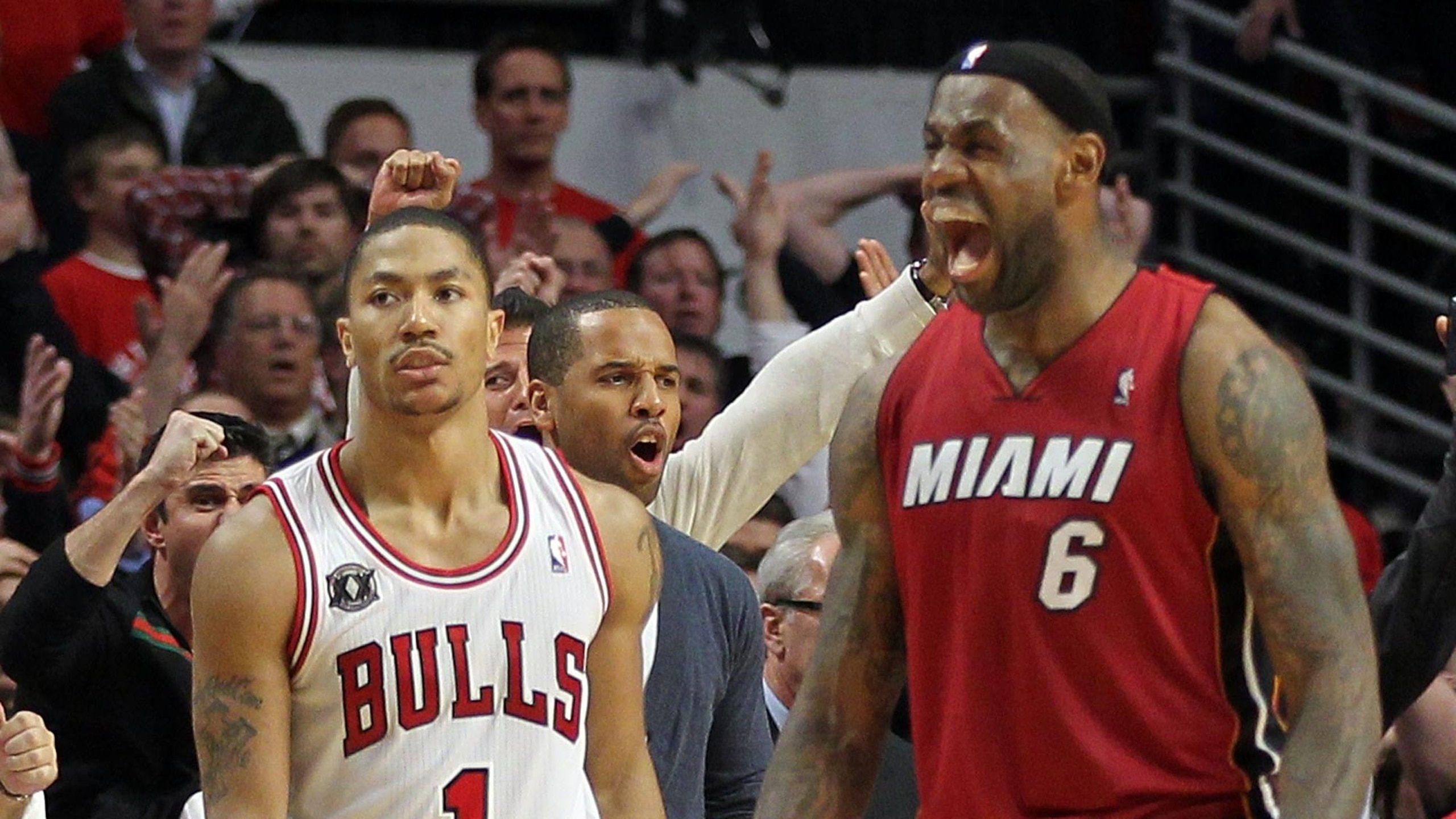
26.7 points, 7.5 rebounds, 7.0 assists, 1.6 steals, 59.4 TS%, 8.1 BPM (1st), 10.6 net rating (9.0 swing), 3rd in MVP voting
Often the first season cited when discussing LeBron's MVPs that should've been, there was undoubtedly a hint of resentment among the voters in the wake of the infamous Decision.
LeBron left his hometown Cavaliers the summer before, helped to orchestrate the assembly of a superteam with Chris Bosh and Dwyane Wade and generally turned free agency into an event it had never been before.
In his first year with the Miami Heat, his team was easy to portray as the villains of the season. Meanwhile, Derrick Rose and the upstart Chicago Bulls were the natural foil.
They finished first in the East, while Rose (who won the award) averaged 25.0 points and 7.7 assists.
But LeBron topped Rose in points, rebounds and steals per game, effective field-goal percentage and BPM. And despite the Bulls having four more wins than Miami, LeBron's individual net rating (his team's net points per 100 possessions with him on the floor) was higher than Rose's, too.
Verdict: Should've won.

2013-14
4 of 7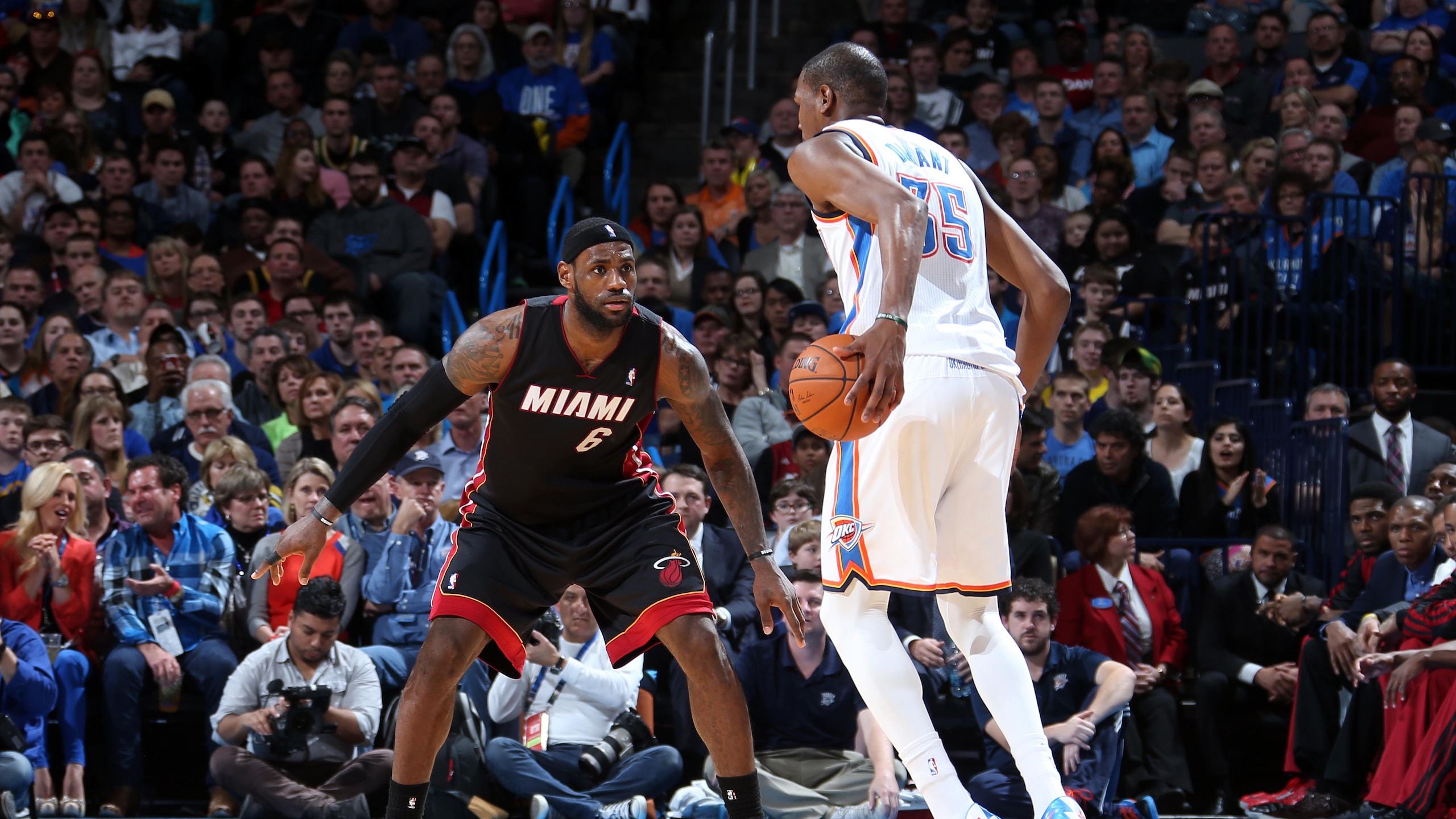
27.1 points, 6.9 rebounds, 6.3 assists, 1.6 steals, 64.9 TS%, 8.8 BPM (3rd), 7.2 net rating (7.0 swing), 2nd in MVP voting
As you can see, LeBron's 2013-14 numbers are right in line with his career norms, but Kevin Durant was out of his mind that season.
He led the league in BPM and in scoring at 32.0 points per game. His Oklahoma City Thunder had 59 wins (five more than Miami).
He interrupted LeBron's bid for a third straight MVP, and voter fatigue really wasn't a factor. KD was the rightful winner that season.
Verdict: Shouldn't have won.
2017-18
5 of 7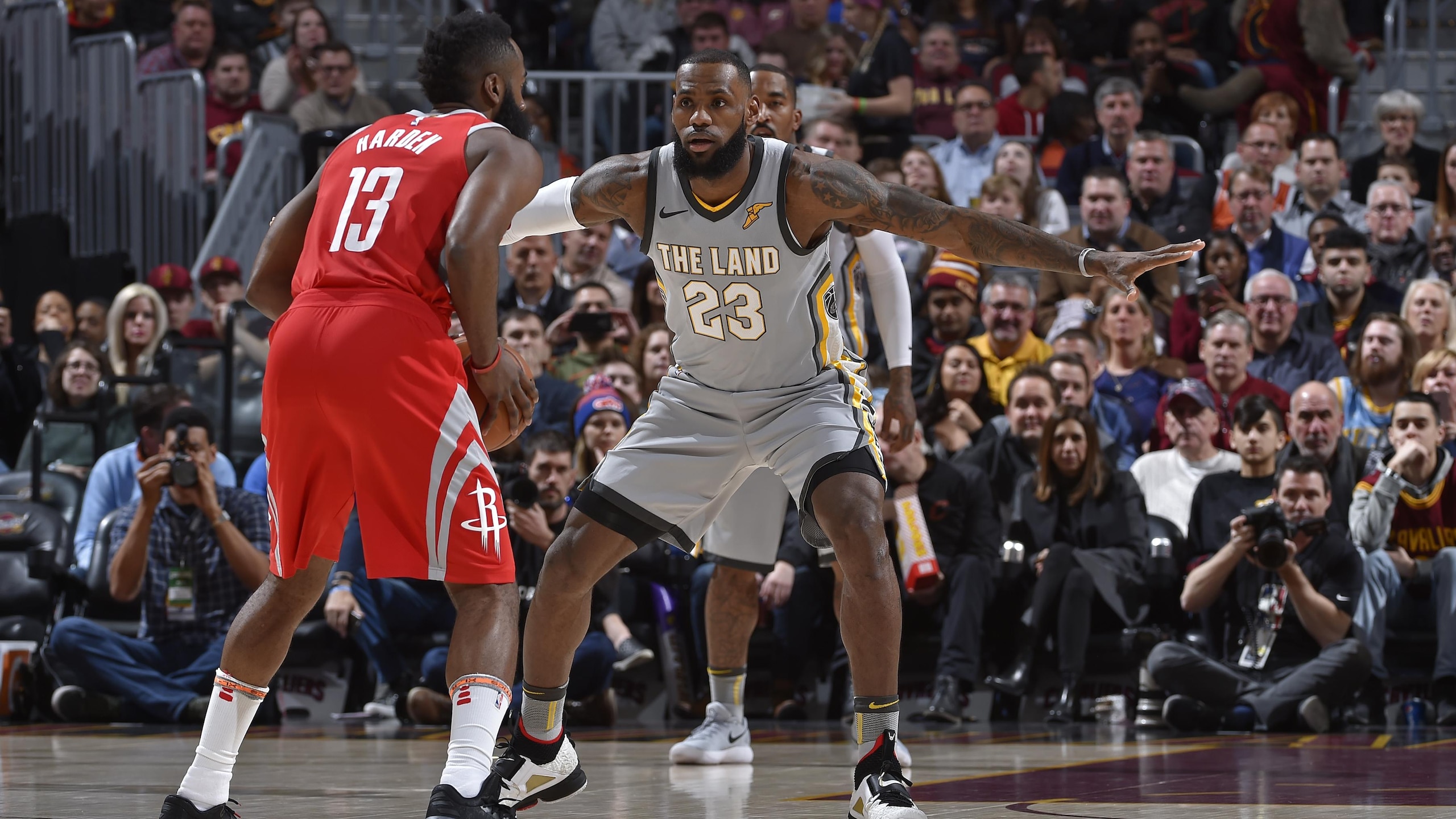
27.5 points, 9.1 assists, 8.6 rebounds, 1.4 steals, 62.1 TS%, 8.7 BPM (2nd), 1.4 net rating (1.9 swing), 2nd in MVP voting
The 2017-18 campaign was another in which LeBron finished second in MVP voting and had a gaudy stat line to support it.
And like 2013-14, it also featured a superstar season that was just better than LeBron's. This time, it was James Harden.
That season, he scored nearly three more points per game than LeBron, led the league in BPM and led a Houston Rockets team that topped the NBA in wins and had 15 more than LeBron's Cavs.
Verdict: Shouldn't have won.
2019-20
6 of 7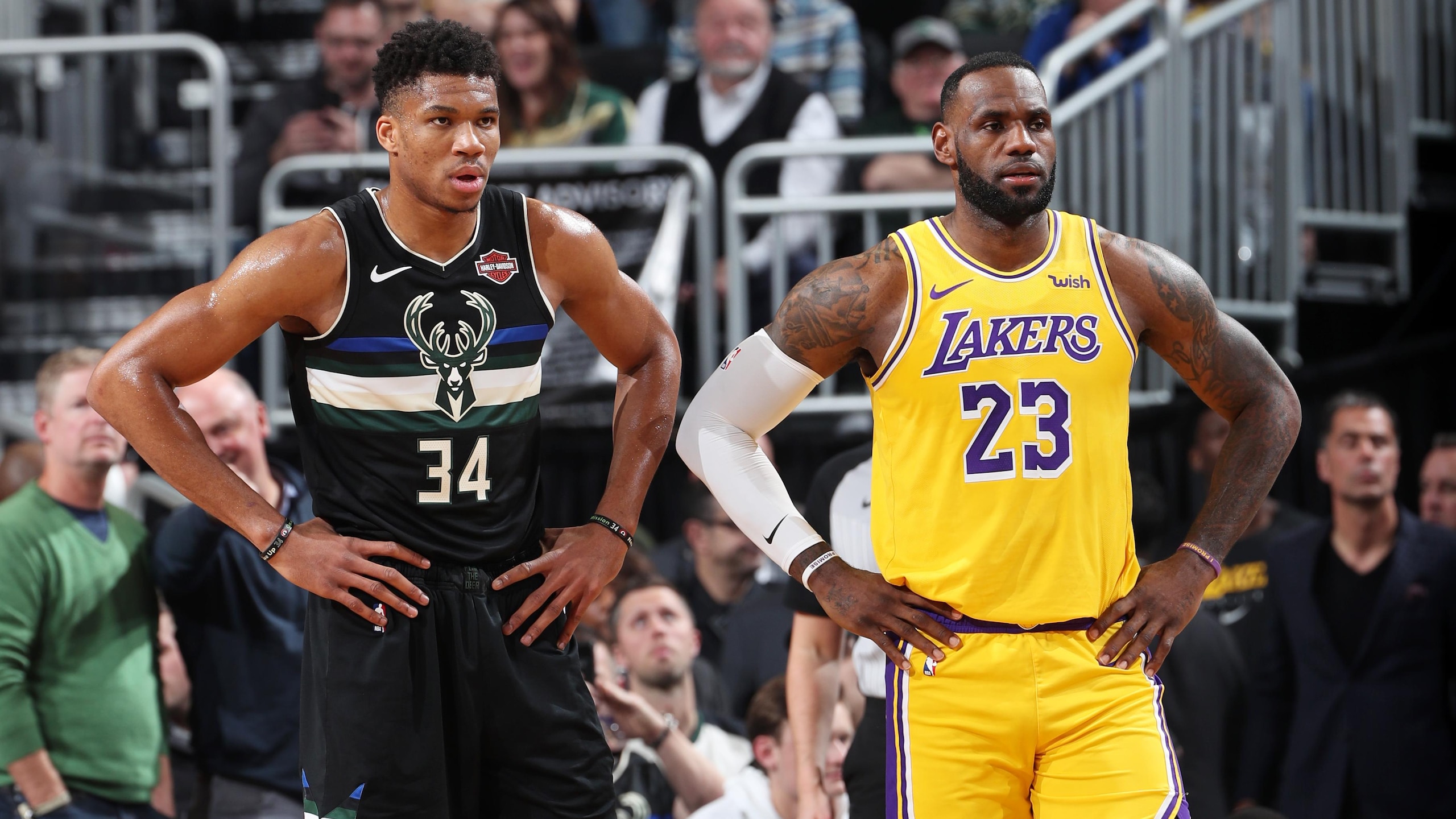
25.3 points, 10.2 assists, 7.8 rebounds, 1.2 steals, 57.7 TS%, 8.4 BPM (4th), 9.0 net rating (9.9 swing), 2nd in MVP voting
The 2019-20 campaign was the only one in which LeBron averaged over 10 assists. It was also the first and only time he ever led the league in that category.
His playmaking was an obvious factor in the Los Angeles Lakers going 52-19 in the pandemic-shortened season, and it helped LeBron secure his fourth championship.
But in 2019-20, he came up against Giannis Antetokounmpo, who averaged over four more points and nearly six more rebounds while emerging as one of the best all-around defenders in the NBA.
In fact, Giannis' defense was so good that season that MVP wasn't the only award he won. Defensive Player of the Year was his, too.
And with his Milwaukee Bucks going 56-17 (the best record in the league), he was the runaway winner of the league's top individual honor.
Verdict: Shouldn't have won.
LeBron Should Have (at Least) Six MVP Wins
7 of 7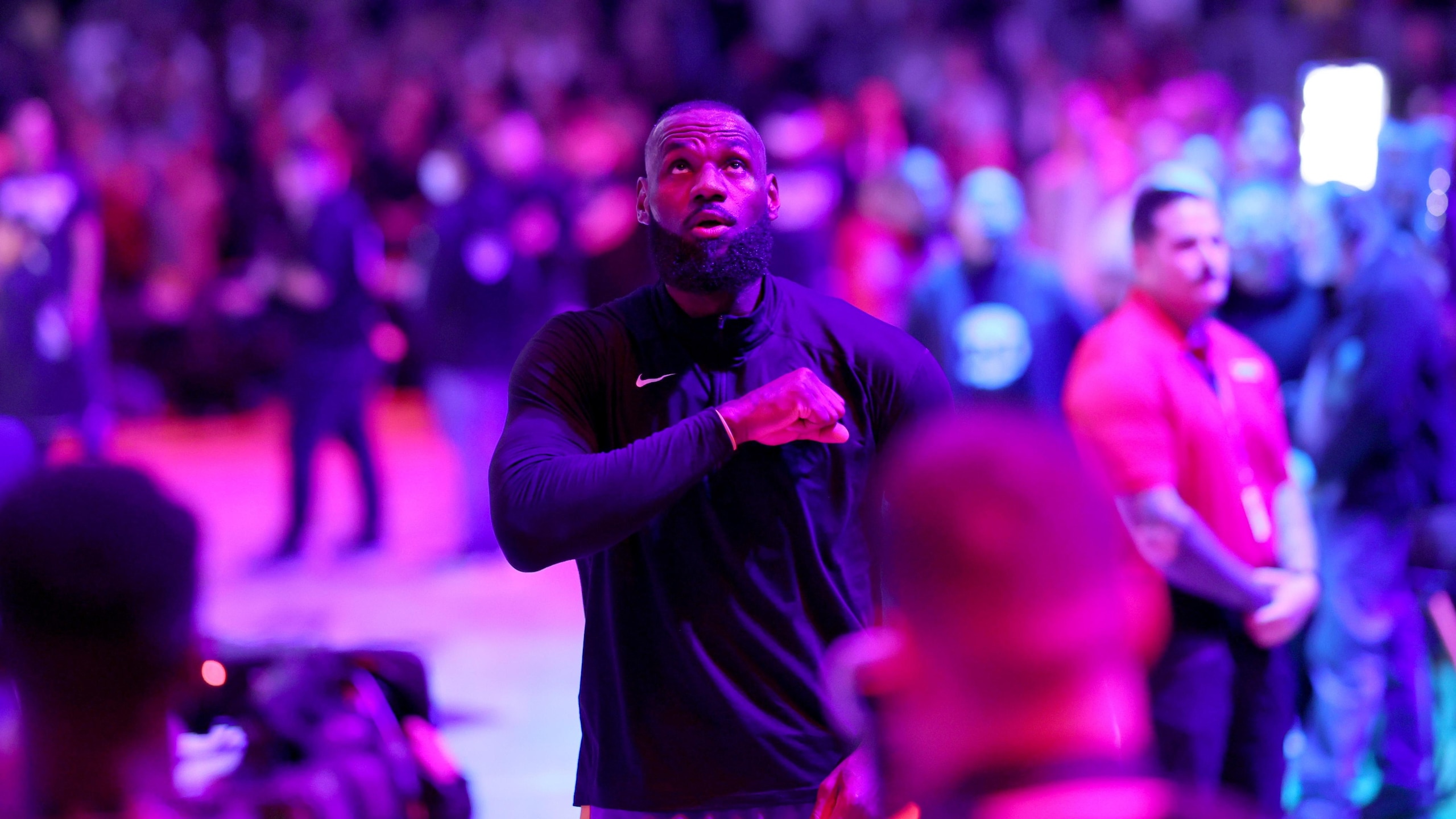
In case you weren't keeping track, if you add the two years we thought LeBron should've won (2005-06 and 2010-11) to the four he secured, that brings us to a total of six.
But of course, as much as we'd like them not to be, MVP debates are subjective. You might not agree with some of the assessments above. There could be years we didn't even mention that you could make an argument for.
Again, he led the NBA in BPM an absurd seven times.
But MVP is a regular-season award. And in plenty of the seasons LeBron didn't win it, there were perfectly good reasons for the results.
The better way to look at LeBron's career might be through "MVP shares," defined by Basketball Reference, as follows:
The formula is (award points) / (maximum number of award points). For example, in the 2002-03 MVP voting Tim Duncan had 962 points out of a possible 1190. His MVP award share is 962 / 1190 = 0.81
LeBron has registered points in the vote in an unfathomable 19 different seasons. And he's the all-time leader in total MVP shares at 8.8, well clear of Michael Jordan's 8.1.
There may not be another single number that better summarizes LeBron's incredible career.


.jpg?w=2560 "NFL House in Paris Closes for Protests")
.jpg?w=2560 "Trevon Diggs Cut by Seahawks")

.jpg?w=2560 "Jonathan Taylor Landing Spots")