

Gerald Green Offers Perfect Fit at Bargain Price for the Miami Heat
In signing Gerald Green, the Miami Heat proved that adding a player defined occasionally by his wildness can be the safest, smartest move.
The Heat addressed a glaring need for wing scoring by adding the 29-year-old veteran at the league minimum, as first reported by Adrian Wojnarowski of Yahoo Sports.
An Absolute Steal
TOP NEWS
Pistons Up Offer for Duren

Ranking 5 NBA Teams With the Worst Salary-Cap Situations 😖
Kyrie's Future in Question
There's almost no such thing as a bad signing at the minimum, but given the potentially perfect fit on the roster and Green's very recent success, Miami's latest move is an absolute coup.
Both Grantland's Zach Lowe and former NBA executive Bobby Marks were big fans:
Green is a legitimate rotation player—imperfect, certainly, but not so far removed from a terrific 2013-14 season that saw him play all 82 games with remarkable offensive efficiency, according to Synergy Sports:
Whether it's reasonable to expect Green to achieve that level of play again is debatable, but it's worth mentioning that Goran Dragic, recently signed to a five-year deal with the Heat, was the primary point guard with the Phoenix Suns when Green was at his best two years ago.
That's a pairing we've seen work extremely well for both parties involved.
In a vacuum, getting a player like that for the lowest amount allowed by the collective bargaining agreement is a good move. But when you consider how desperately Miami needed someone exactly like Green, it's even better.
Dwyane Wade and Luol Deng figure to start on the wings this season, and both have well-documented injury histories and worryingly high career-minute totals.
| Dwyane Wade | 28,302 | 28 | 36.2 | 5 |
| Luol Deng | 26,656 | 36 | 35.6 | 14 |
Deng led the league in minutes per game twice under Tom Thibodeau during his time with the Chicago Bulls, and Wade's "here today, gone tomorrow" knee health is a product of more than a decade of physical pounding and deep playoff runs.
Wade has missed 48 games over the past two seasons. Green, in contrast, appears to have pretty fresh legs.
Throw in rookie Justise Winslow, and the Heat now have a pair of viable fallback options for when their starting wings inevitably lose games to injury and/or scheduled rest. Once a weakness, wing depth now looks like one of Miami's strengths.
Green is going to start plenty of games for Miami. If all he does is play somewhere between the level he established in 2013-14 and the less impressive one he showed last season, the Heat will have themselves a major contributor at the league minimum.
Flaws and All
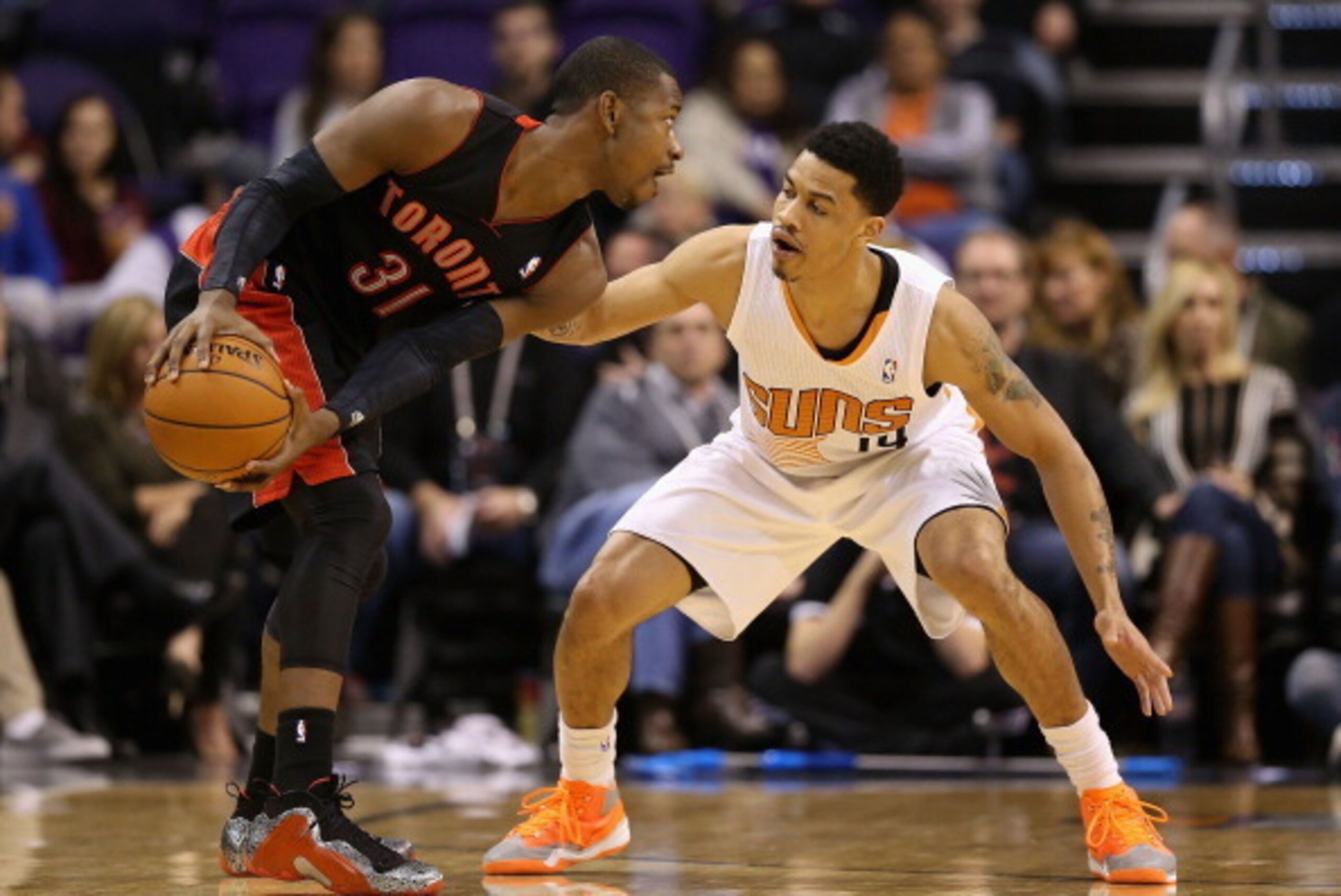
The full picture of Green has to include his flaws.
Defensively, his reputation's not great. Suns head coach Jeff Hornacek didn't mince words about why Green's minutes dipped last season, via Paul Coro of the Arizona Republic: "He never really seemed to get it going, and then it comes to the point where, if you're not scoring and if your defense isn't picking up, it's hard to stay in the game."
Green is often inattentive on D, and his boundless length and athleticism has yet to translate into anything that bothers offensive players. Last year, opponents shot markedly better than their typical averages when Green was the primary defender, according to NBA.com:
| Overall | 45.7 | 43.0 | +2.7 |
| 3P | 38.3 | 35.2 | +3.0 |
| 2P | 50.4 | 47.1 | +3.3 |
| Inside 6 Feet | 67.7 | 59.8 | +7.9 |
| Inside 10 Feet | 63.8 | 53.5 | +10.3 |
| Outside 15 Feet | 37.9 | 36.8 | +1.1 |
Team defensive data is always noisier, but the Suns allowed 106 points per 100 possessions with Green on the floor last year against just 101.9 with him on the bench, according to NBA.com. That's a significant difference, and one that aligns with Hornacek's criticisms.
There's also the issue of Green's shot selection, which is to say he sometimes gets into tunnel-vision streaks where he's not being selective at all. In a manner similar to J.R. Smith, Green's athleticism and confidence make it possible for him to get shots off at virtually any time.
In one sense, that's a skill. And when tasked with the role of engineering offense in the second unit, it's a valuable one. It's also, of course, not always conducive to effective ball movement. And it can bail out the defense.
Still, Green made over 200 threes in 2013-14 at a 40 percent clip. A guy with that kind of volume and efficiency on his resume should be aggressive—especially if his limited role essentially requires it. And even if that excellent season may not be repeatable (it sure wasn't last year), Green is still a career 36.8 percent shooter from deep who can also ignite an arena with highlight finishes on the break.
So, yes, Green is a mixed bag. The Heat will be his eighth team in eight years, and there will be points when Miami fans see some of the reasons why Green has never stuck in any one spot.
But for the 100th time, the Heat are paying him the minimum!
Consider the players making more than that, as analyst Nate Duncan did here:
You don't get perfect players at this stage of free agency. The best you can do is find guys who fill needs, and if you can do it on the cheap, all the better.
Score One for Riles
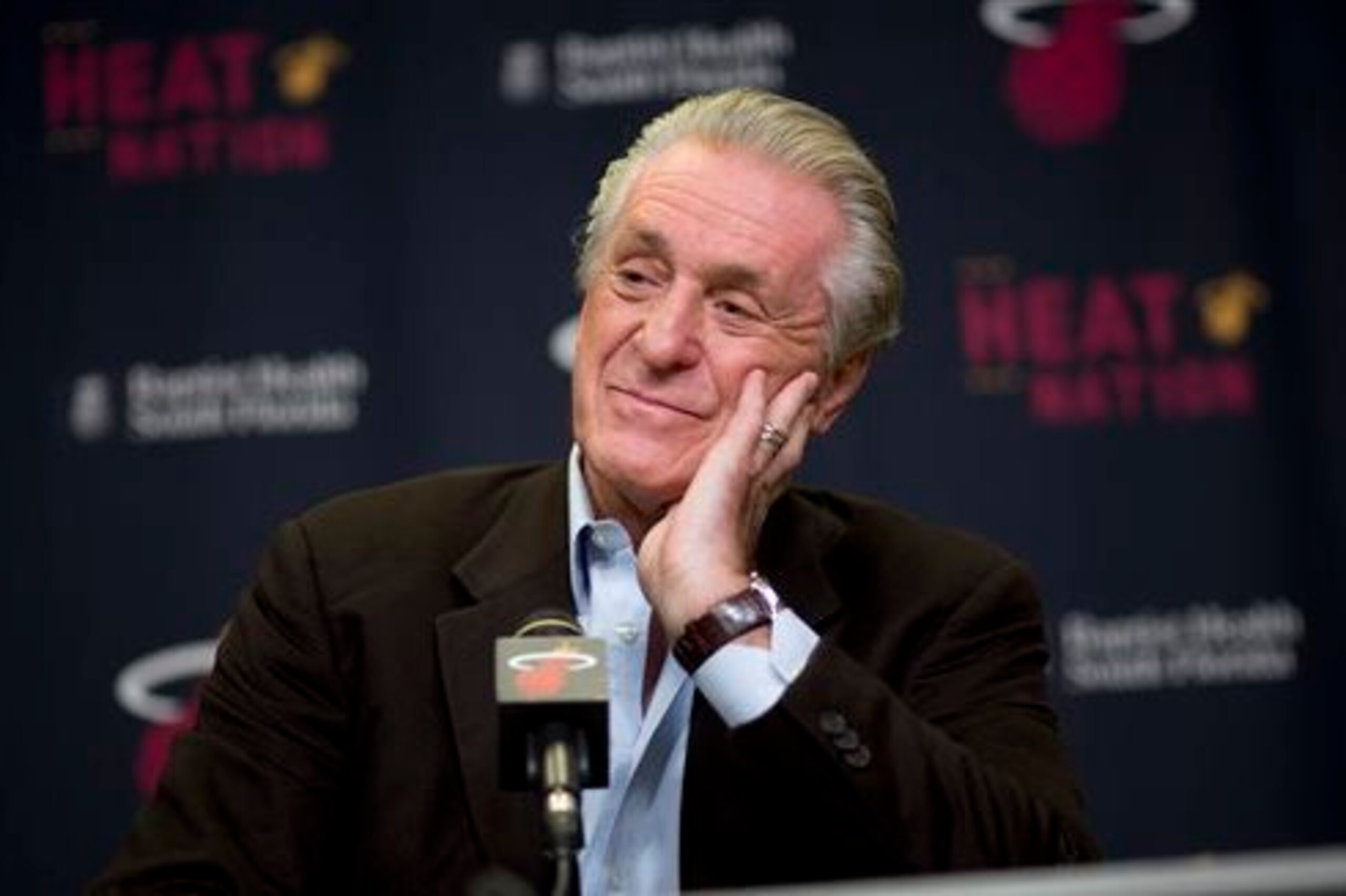
Miami's starting unit of Dragic, Wade, Deng, Chris Bosh and Hassan Whiteside is potentially dominant, though we can't be sure until we actually see those players on the court together. Depth is the Heat's most pressing problem, and even after signing Green, that's still the case.
But as long as Green isn't slated to start 50 games or log 30 minutes per contest, we should expect this steady, veteran-laden team to get the most out of him.
Chalk up another one for team president Pat Riley and Company. Green, at a bargain-basement price, is going to help the Heat pursue an upper-tier playoff seed in the East.
Grant Hughes covers the NBA for Bleacher Report. Follow him on Twitter @gt_hughes.
.jpg?w=2560 "Jaxson Dart Ruled Out of MNF")

.jpg?w=2560 "Ertz Returning to Eagles")
.jpg?w=2560 "WWE Raw Live Grades 🔠")
.jpg?w=2560 "Dak Addresses 'Dumb' Old Romo Tweet 🤣")

.jpg?w=2560 "Follow Raw As It Happens 👊")