
Why Are the Oakland A's Playing in Sacramento This Year?
As spring training wraps up and leaguewide Opening Day looms, all 30 Major League Baseball teams have started the process of heading home. For the Athletics, though, “home” is going to look quite different this year and for the foreseeable future.
Following their departure from Oakland at the end of last season—one that came in anticipation of a move to a permanent home in Las Vegas projected for 2028—the A’s will play their home games in West Sacramento, California, for at least the next three seasons. Their home ballpark, in stark contrast to the cavernous Oakland Coliseum, will be Sutter Health Park, a stadium with 10,624 fixed seats and a total capacity of roughly 14,000 that they’ll share with the Triple-A Sacramento River Cats.
Due to the transient nature of their stay in Sacramento, the A’s decided to buck all MLB precedent and officially became the first team in league history without an official city designation in their name. The Oakland Athletics are no more, the (West) Sacramento Athletics never were and the Las Vegas Athletics are not yet a reality.
So how did the A’s get here—a major league team playing in a minor league ballpark without a city to truly call their own? And what does this all mean for West Sacramento and eventually Las Vegas?
Why the A's Left Oakland
1 of 4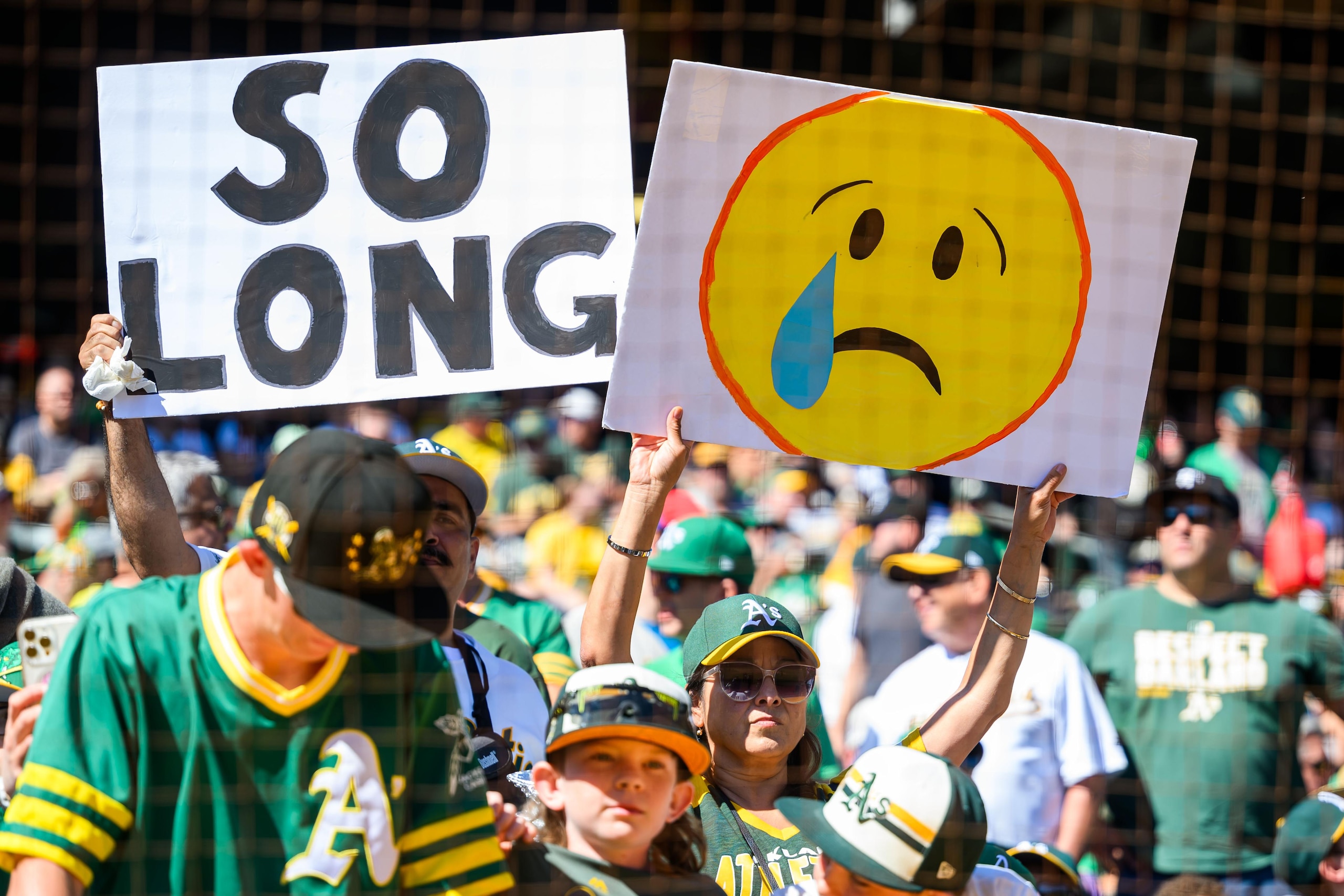
If you take A’s owner John Fisher at his word—do so at your own peril—the team didn’t necessarily intend to make a pitstop in West Sacramento on the way to Las Vegas.
“We explored several locations for a temporary home, including the Oakland Coliseum,” Fisher said in a statement announcing the move to West Sacramento in April 2024. “Even with the long-standing relationship and good intentions on all sides in the negotiations with Oakland, the conditions to achieve an agreement seemed out of reach.”
That announcement came following more than a decade of negotiations surrounding the decrepit state of the Oakland Coliseum and who would foot the bill for a new, updated home for the team in the Bay Area. There were numerous iterations of plans for a new, state-of-the-art stadium in Oakland, with the strongest being a proposed mixed-use development along the waterfront at Howard Terminal.
The Howard Terminal project faced multiple legal, environmental, logistical—and perhaps most importantly—financial obstacles. In 2023, it was estimated that the whole project could cost upwards of $12 billion. For the famously penny-pinching A’s, which have usually tracked among the lowest teams in terms of annual revenue as well as payroll spending, that would be a high bar to clear.
While those negotiations were ongoing, Fisher and the A’s were also exploring relocation options that would take them out of California entirely—something that Major League Baseball gave them permission to do in 2021. Knowing the team was exploring a move, A’s fans persistently fought to try to save the team, including a headline-grabbing “reverse boycott” in June 2023 where they filled the stadium to protest the team’s possible move and called on Fisher to sell the team.
By May 2023, the A’s and Las Vegas had reached an agreement on a new stadium, with the state of Nevada approving up to $380 million in public financing toward the proposed $1.5 billion stadium on the south end of the Las Vegas Strip. Just six months after that agreement, MLB owners officially approved the relocation.
The fly in the ointment, though, was that the A’s lease at the Oakland Coliseum was due to expire at the end of the 2024 season. With their new digs in Las Vegas not scheduled to be ready until 2028, the team would have to come up with a plan for 2025-2027.
Last March, the city of Oakland made one last offer to renew the team’s lease. It was a five-year deal with an opt-out after three years that included a $97 million “extension fee.” About a week later, the team announced its move to West Sacramento, ushering in a final, lame-duck season in Oakland.
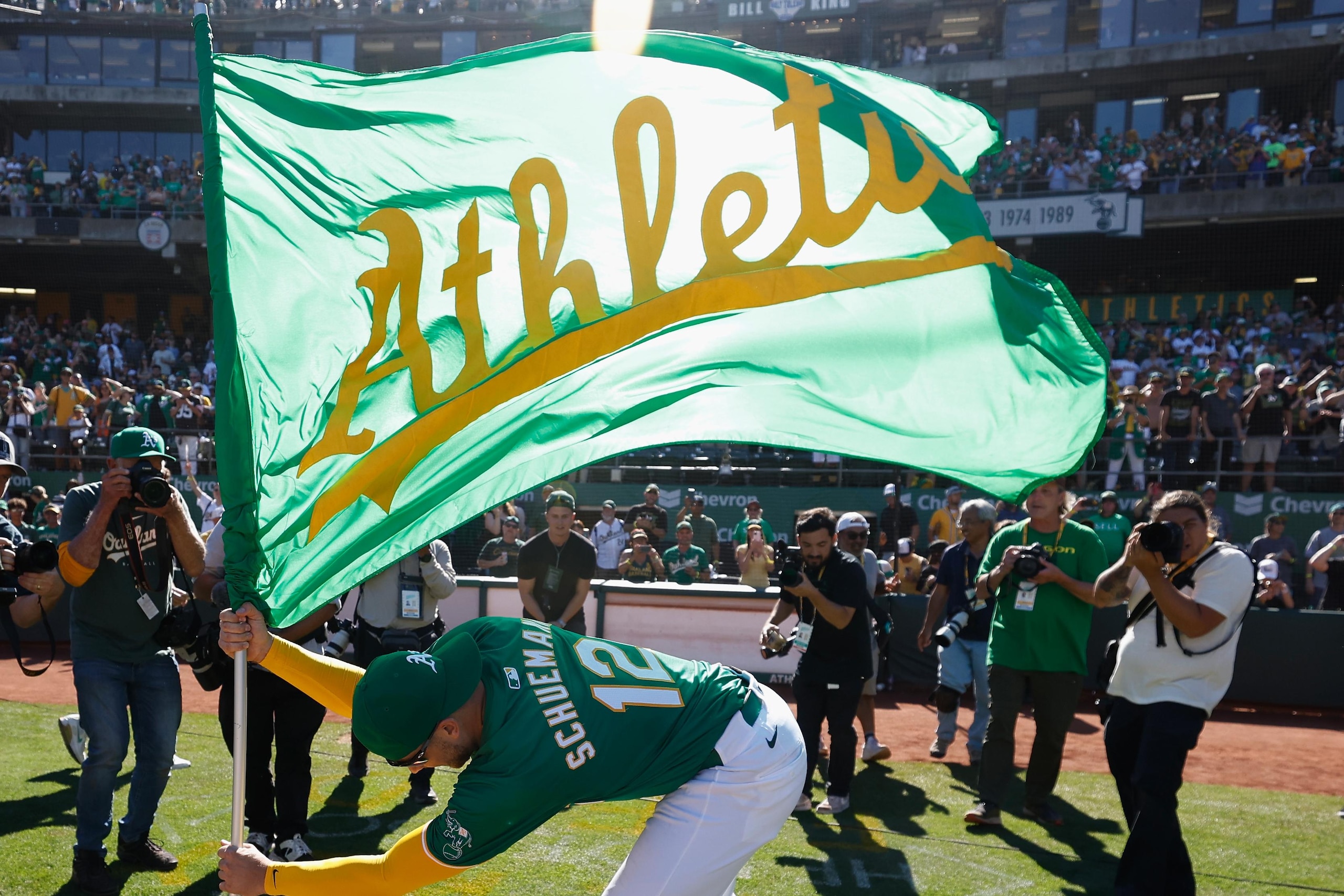
The A’s won their final game at Oakland Coliseum on Sept. 26, 2024, ending the team’s 57-year tenure in Oakland.
“I’ve never been to a World Series before, but I feel like today is one of those days that you can kind of experience the emotion of that,” A’s manager and former player Mark Kotsay said after that game. “The magnitude of it, driving in today and seeing the fullness of a parking lot and feeling the energy and emotion, that’s something I’ll treasure for the rest of my life.”
So Why Did the A's Pick West Sacramento?
2 of 4
The A’s needed a temporary home. The Sacramento region needed an opportunity to showcase itself as a Major League city. And with Oakland Coliseum and Sutter Health Park being less than 90 miles apart—meaning any remaining loyal A’s fans in the area could reasonably get to games—this partnership lined up as a potential win-win-win.
The deal that brought the A’s to the Sacramento region includes the team playing there from 2025 to 2027 as well as the option for an additional year in case the construction of the team’s future home in Las Vegas encounters delays.
For California’s capital city and its surrounding area, the A’s provide a golden opportunity to prove itself capable of supporting more than one major franchise. Already home to the NBA’s Sacramento Kings—which interestingly enough bought a controlling share of the Triple-A Sacramento River Cats in 2022—the region is one of just two American cities (along with Orlando) in the top 20 of the Nielsen media market rankings with just one team in NFL, NBA, NHL or MLB.
Former Sacramento mayor Darrell Steinberg, who completed his second term in 2024 and didn’t run for reelection, has been bullish on Sacramento being a prime prospect for potential MLB expansion should the league opt to grow to 32 franchises in the coming years. Hosting the A’s could be the region’s proving grounds.
“It would demonstrate to Major League Baseball, as it considers its long-term expansion plans, that Sacramento is a major league city,” Steinberg told the Sacramento Bee last year.
Of course, the A’s technically aren’t playing in Sacramento, as Sutter Health Park is across the Sacramento River from the capital city. Maybe it’s a technicality for most, but it’s a big deal for the city itself.
“The A’s are putting West Sacramento on the map,” mayor Martha Guerrero said.
The team announced that it has already sold out of its season-ticket allotment for 2025, so crowds are surely coming. While area hotels and businesses may be salivating over the expected tourism boom, the city will have to prove it can handle the added volume of visitors. In the coming days and weeks, the added traffic and logistical challenges will put the city to the test.
How Is Sutter Health Park Being Upgraded?
3 of 4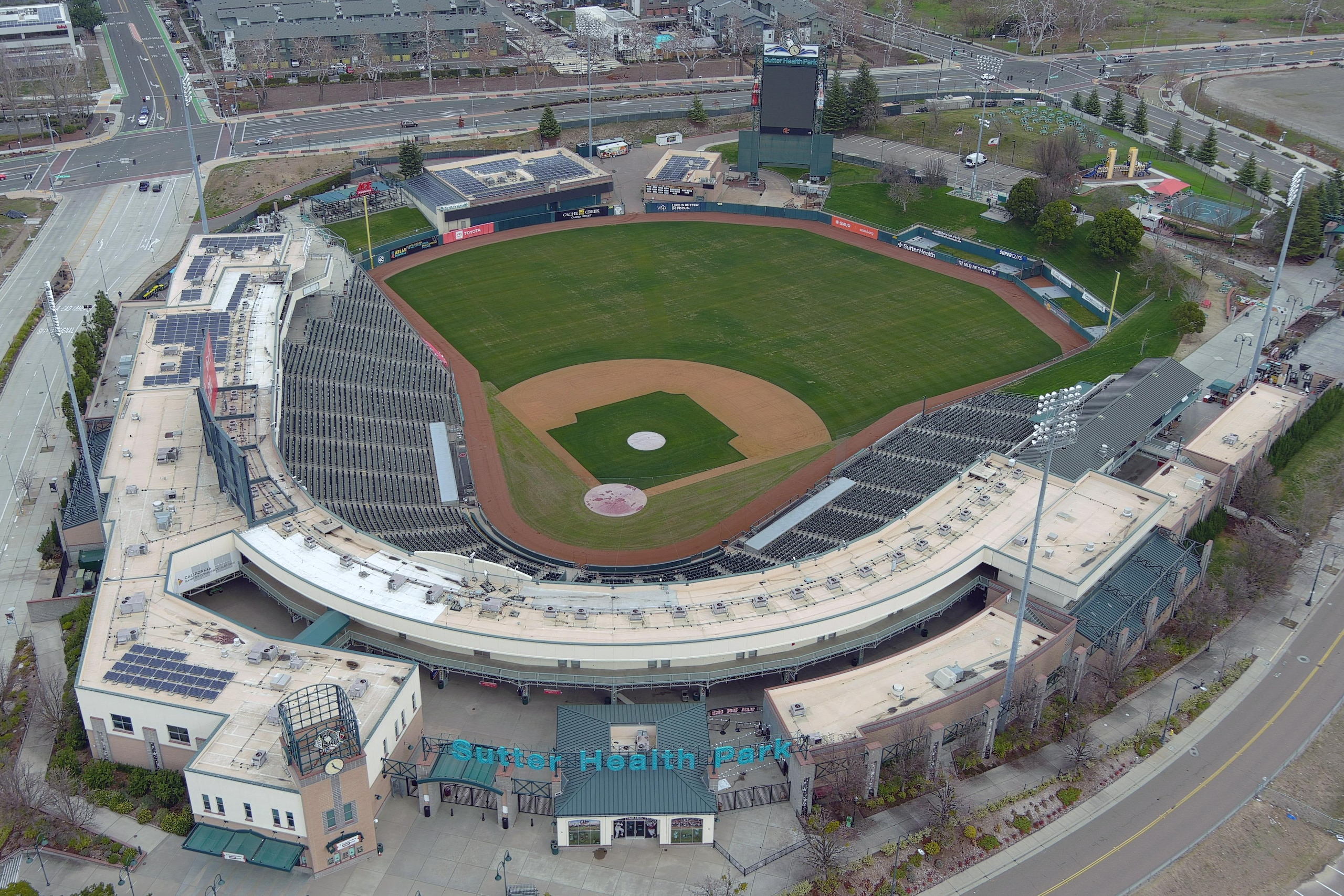
With both the River Cats—the Triple-A affiliate of the San Francisco Giants—and the A’s sharing Sutter Health Park, there’s going to be plenty of chances to watch baseball in Sacramento over the next three years. In fact, it’ll be hard to find days baseball is not being played at Sutter Health Park.
Considering the A’s 81 games and the River Cats' 75, there will essentially be nonstop baseball during the 2025-2027 seasons. That’s going to put a strain on the field itself, which was of particular concern last year when the field initially planned to transition to synthetic turf—something that agent Scott Boras and the MLB Players Association questioned.
In response to those objections, Sutter Health Park will maintain its natural grass for 2025. Not only that, but MLB announced improvements to the grass itself and how it will be maintained through the grueling 156-game slate.
“The installation of AirPAT technology will optimize root zone oxygenation, improve moisture management, and regular subsurface temperatures—ensuring a healthier, more resilient playing surface year-round,” MLB said in a statement. “These upgrades will not only enhance turf durability but also reduce reliance on chemical treatments, promoting environmentally responsible field management.”
The park has also installed a new 75’x32’ video board in right-center field, expanded its connectivity capabilities, upgraded its visual displays and audio system and improved its premium seating and concessions.
While the A’s and Sutter Health Park want to prove themselves to fans, it seems they’ll have their work cut out for them when it comes to winning over players. According to The Athletic’s 2024 Player Poll, the franchise easily had the worst reputation among the league’s players, something strongly influenced by the team’s move.
“I’ve heard Oakland is pretty rough,” one player said. “Sacramento for three years? I’ve been to that ballpark before. They can’t find something better?”
The ballpark has upgraded its clubhouses, training areas, dugouts and other amenities ahead of the 2025 season in order to better suit the needs of MLB players and teams. How those changes will be received by visiting players is yet to be determined, but the early returns from A’s players are trending positive.
“I think it’ll end up playing to our advantage,” pitcher JP Sears said. “It seems like they’re going to pack it out every night and support us pretty strong. The clubhouse facilities and those facilities we toured looked really nice and upgraded. … I haven’t been this excited for a baseball season in my life.”


What's Next for the A's?
4 of 4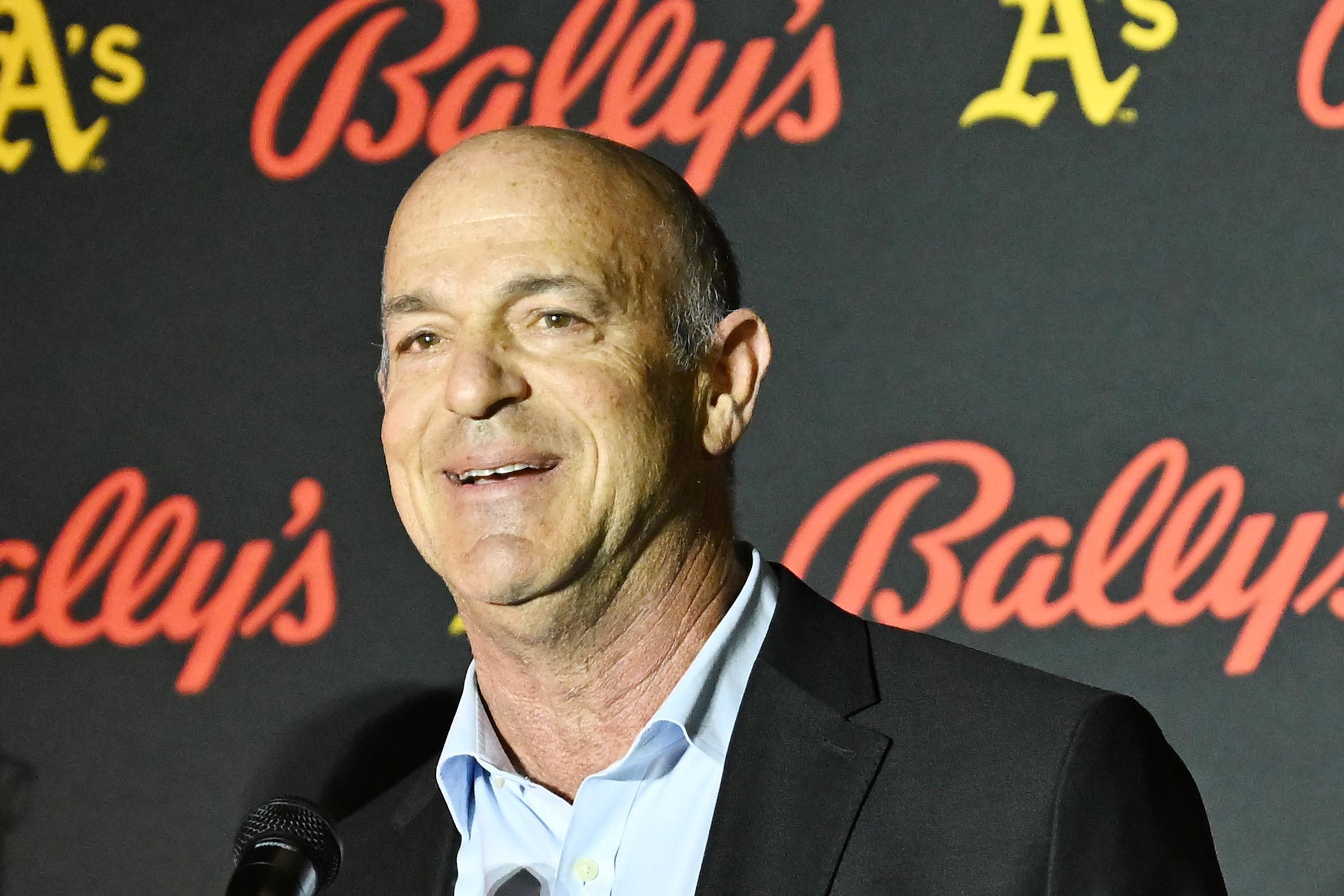
Obviously, the clock is already ticking on the partnership between the A’s and West Sacramento. The novelty of an MLB team playing in a minor league ballpark isn’t meant to last forever, and the A’s plan to move to a brand-new, 30,000-plus seat, fixed-roof stadium in Las Vegas in time for the 2028 season.
The stadium will be built at the southern end of the Las Vegas strip, on land previously occupied by the Tropicana Hotel and Casino, which was demolished in October 2024. The site will include the stadium as well as an integrated Bally’s resort as well as parking, shopping and dining options.
According to Mick Akers of the Las Vegas Review-Journal, the total cost of the stadium is projected to be about $1.75 billion, with the Fisher family responsible for over $1 billion.
“The ballpark will be paid for by a $1.1 billion equity contribution from A’s owner John Fisher’s family, $350 million of a possible $380 million in public funding made available via Senate Bill 1 and a $300 million construction loan to be provided by Goldman Sachs and U.S. Bank,” Akers wrote. “The A’s have to spend the first $100 million before public funding will be made available.”
Construction is scheduled to begin between now and the end of June.

.jpg?w=2560)
.jpg?w=2560 "AD Trolls Bears WR on IG 😂")
.jpg?w=2560 "Viral Dan Campbell Presser 💙")

.jpg?w=2560 "Report: Steelers WR to Miss 'Weeks'")
.jpg?w=2560 "Cam Ward Says He's Not A Loser")
.jpg?w=2560 "Buzz: MHJ Hired Agents for Trade")

.jpg?w=2560 "Chargers Fall to 0-5 🤢")