Cleveland Cavaliers Get Even Deeper, More Lethal with Mo Williams Signing
Another summer, another old friend makes a return home for the Cleveland Cavaliers.
Veteran point guard Mo Williams has agreed to sign with the Cavs, as Yahoo Sports' Adrian Wojnarowski reported Monday and Williams later confirmed himself:
"I'm coming home!!!!! #cavsnation #cityilove #questforaring
— Mo Williams (@mowilliams) July 7, 2015"
TOP NEWS
KAT's Contract News Quote 😬

1 Player Every Team Should Trade 🔀
Most Fascinating Players This Season 😲
The deal is for a reported two years and $4.3 million, per Woj, which the Cavs will have to use all but $1.3 million of their mid-level exception on. The second year is a player option, similar to the deal Mike Miller signed last offseason.
Williams played for the Cavs from 2008 to 2011 before being traded to the Los Angeles Clippers in a deal that netted Cleveland an unprotected first-round pick. Ironically, the Cavs used that pick on Irving, which jump-started their rebuilding process.
Williams, now 32, enjoyed the greatest stretch of his career for the Cavs, earning his only All-Star appearance in 2009. He was widely considered Cleveland's second-best player on teams that won 66 and 61 games in back-to-back seasons.
Looking past the nostalgia, this is a tremendous signing for the Cavaliers, who were short on playmakers in the NBA Finals following a knee injury to point guard Kyrie Irving.
Williams returns to Northeast Ohio surrounded by a very different roster. The Cavs were good before. Now, they're quickly becoming downright lethal.
What We Know About Mo
For the better part of three seasons, Cavs fans got a good look at Williams, then a rising young guard in the association.
Acquired in a summer 2008 three-team trade for Damon Jones (now the Cavaliers' resident shooting consultant/LeBron James buddy) and Joe Smith, Williams immediately became the secondary scorer that Larry Hughes never could.
In 186 games, Williams averaged 16.2 points, 3.1 rebounds, 5.1 assists and nailed 40.8 percent of his three-pointers, the fourth-best mark in franchise history. His 17.8 points per game in 2008-09 were a career-best and netted his only All-Star appearance. He excelled as an on- or off-ball guard, meshing nicely alongside James.
Always playing a smooth brand of basketball, Williams seemed at ease, unfazed by taking big shots in big moments. He wouldn't take over games, and he didn't have to, either. Although not a good shot-creator for himself, Williams was a capable enough point guard to help get others involved.
After James left in 2010, Williams was unfairly asked to be one of the faces of the franchise, a role he struggled with. His shooting percentages plummeted, as did his open looks. In 36 games prior to the trade during the 2010-11 season, Williams' scoring had dropped to 13.3 points on 26.5 percent shooting from deep. His value to the Cavs lessened without a playmaker to get him the ball.
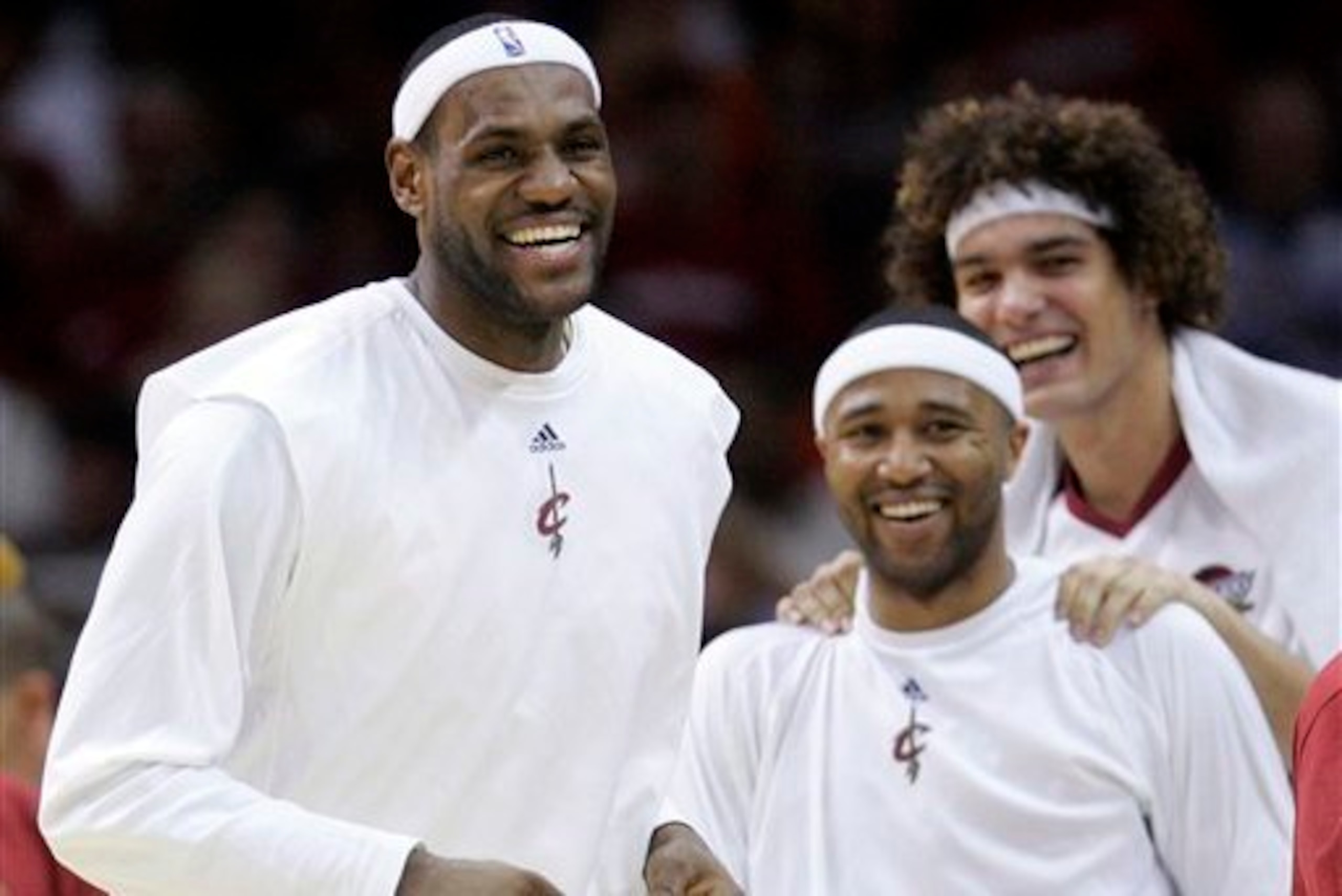
No one ever referred to him as Williams, of course. It was always 'Mo'. Or 'Mo Gotti'. He was a regular when it came to Cleveland's dancing bench or picture-taking opportunities.

Williams seemed to genuinely enjoy himself on the Cavs, even if they fell short of a title both years.
Now, he gets a chance at redemption on a much deeper, more talented squad.
Where the Cavaliers Stand
Before Williams agreed to sign, point guard was the Cavaliers' weakest overall position.
That's not to take anything away from Irving and Matthew Dellavedova, but both missed time this past season with knee injuries. Depth was certainly needed.
With the addition of Williams, here's how Cleveland's projected depth chart shakes out.
| Kyrie Irving | Iman Shumpert | LeBron James | Kevin Love | Timofey Mozgov |
| Mo Williams | J.R. Smith? | Mike Miller | Tristan Thompson | Anderson Varejao |
| Matthew Dellavedova | Joe Harris | Sir'Dominic Pointer | Rakeem Christmas | Brendan Haywood |
Should Anderson Varejao stay healthy, the Cavaliers are loaded up front with Kevin Love, Timofey Mozgov and Tristan Thompson, currently a restricted free agent. James and Mike Miller are more than enough to get by with on the wing.
The only real question marks lie in the backcourt, where J.R. Smith and Dellavedova (restricted) remain free agents. The signing of Williams will not impact Cleveland's desire to bring both back, notes Wojnarowski.
Cleveland has talent all throughout the roster, but most would be considered situational. That is to say, this is a team designed around James and his ability to create for others. Irving and Love certainly play a role in this as well.
When the Cavaliers lost two of their three stars in the Finals, it became strikingly clear where the roster needed improvements.
James was forced to do everything for the Cavs, leading both teams in scoring, rebounding and assists. Dellavedova was the closest thing Cleveland had to a playmaker after James. Both showed more and more signs of exhaustion as the series wore on.
On the other end, the Golden State Warriors seemed to endlessly roll out shot-creators. Whether it be guards like Steph Curry, Shaun Livingston and Leandro Barbosa or playmaking forwards Draymond Green and Andre Iguodala, the Warriors were deep, talented and loaded with options.
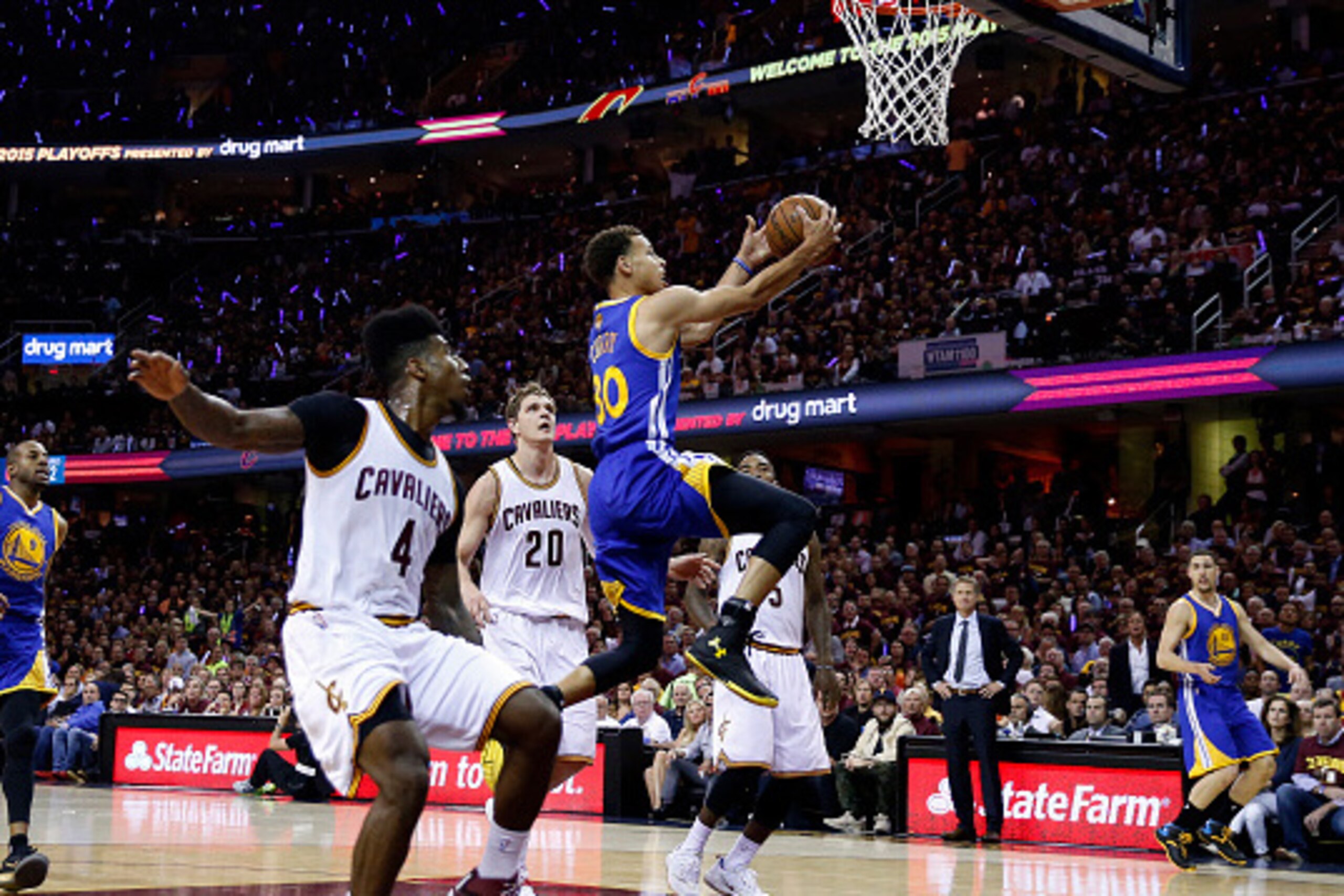
Now, the Cavaliers are striving to become the same.
Simply getting a healthy Love and Irving back will do wonders, but their history shows that both are prone to missing games. The Cavs can't risk being in the same position deep in the playoffs yet again, not with James set to turn 31 in December.
Cleveland needed another point guard, someone who could take pressure off James and Irving and help facilitate the second-team offense when both needed a breather.
To accomplish such a feat and prepare for future postseasons, the Cavs needed to only dip into their past.
Mo's New Role
From 2008 to 2011, Williams started 183 of his 186 games in Cleveland. Now, he'll provide a key role off the bench.
Irving has never had the luxury of a veteran floor general behind him over the course of a full season. Williams' presence and postseason experience should only help aid the 23-year-old's development.
Of course, the Cavs aren't bringing Williams in to just play the mentor role. They need his offense, his three-point shooting and his ability to create for others. Nostalgia be darned, the Cavaliers need this version of Williams more than ever.
Even with Irving, Dellavedova and half a season of Smith and Shumpert, the Cavaliers required more production out of their backcourt. Cleveland guards ranked 16th in shooting (42.2 percent from field), 23rd in scoring (39.5 points) and 29th in assists (10.1), per hoopsstats.com.
Given Irving's injury history and the uncertainty regarding Smith's potential return, Williams could play a very big role this season, as Sports Illustrated notes:
"Should Kyrie Irving again miss time to injury, the Cavs’ offense will be better prepared to cope thanks to Williams. Even teams with multiple stars can benefit from shot-creating role players. Williams is effective in that regard so long as is he isn’t left entirely to his own devices; the run of Mo Williams, Starter tends to play out very differently than that of Mo Williams, Reserve. LeBron James and Kevin Love are a perfect counterbalance—versatile forwards who will allow Williams to contribute plenty without overstepping.
"
Already bringing the experience of playing (and thriving) next to James, Williams will have his share of shot opportunities. He's very good at moving without the ball and finding spots in James' peripheral vision for LeBron to hit him with a bullet pass.
The Cavaliers love the three ball, attempting the second most shots from deep (27.5 per game) in the NBA last season. While some would prefer a more balanced offensive system, three-point shooting has proved to be an effective method for success. Eight of the top nine teams in three-point attempts last season reached the playoffs. Three of the top four advanced to the conference finals.
In this environment, Williams should be encouraged to let it fly. As previously mentioned, he enjoyed his best seasons in Cleveland thanks to open looks created by James. In two years as teammates, Williams shot an impressive 43.2 percent from deep. He's never reached 40 percent in any season before or since.
The Cavaliers will need Williams to play a solid 15-20 minutes a night, possibly more if Smith is not re-signed. He can play in small-ball lineups next to Irving at shooting guard or run the offense when Kyrie needs a break.
Cleveland no longer needs 17 points a night from Williams—eight to 10 with a handful of assists should suffice. Just his on-court presence will help to space the floor for James and Irving to create and drive.
The Cavaliers were already a safe bet to return to the Finals next season in a watered-down Eastern Conference. Williams brings them that much closer to a championship, something he should be hungry for after coming so close years ago.
Having another playmaker and offensive weapon with Williams is just what the Cavaliers needed. His existing popularity doesn't hurt, either.
Greg Swartz has covered the Cleveland Cavaliers and NBA for Bleacher Report since 2010. Follow him on Twitter: @CavsGregBR
All stats come via Basketball-Reference.com unless otherwise noted.

.jpg?w=2560 "Cam Ward Says He's Not A Loser")
.jpg?w=2560 "🚨 Texans Trade for MHJ")
.jpg?w=2560 "Grading MHJ Trade 📝")
.jpg?w=2560 "Chargers Fall to 0-5 🤢")
.jpg?w=2560 "MHJ Bought Own Jugs Machine")