

Fantasy Football Draft Strategy: Tips to Guide You to a 2015 Fantasy Title
'Tis the season to be drafting, fa-la-la-la-la, la-la-la-la!
Thank your lucky stars this article doesn't come with audio.
Kidding aside, the calendar has turned to July, which means that fantasy draft season is just around the corner. In fact, drafts are already underway in more than a few leagues.
There are several steps to preparing for your fantasy draft. Cheatsheets must be built and updated. News must be scoured so that those cheatsheets are as current as possible. And any tips and tricks must be carefully tucked up the appropriate sleeve.
It's that last batch of info we'll be delving into here, with some tips on how to tweak your fantasy draft strategery to insure a deep playoff run in 2015.
Fine, strategy. Geez with all the spelling.
Like I'm a writer or something.
Know Your Scoring
1 of 10
Just about every year I write one of these sorts of articles.
Just about every year, I offer this seemingly obvious bit of advice.
And then every season fantasy owners torpedo their drafts right out of the gate by not knowing the intricacies of their league's scoring.
It happens all the time. You'll get five rounds in, and a message appears on the league chat board—"Wait, is this league a PPR?"
Don't be that guy. Don't assume that league No. 5 is just like the other four you're in.
Are passing touchdowns worth four points or six? What's the deduction (if any) for interceptions?
Does the league award a point for catches? Does every position get the same amount (some leagues award 1.5 for tight ends)?
How many players at each position are required starters each week?
Is there a "flex" spot? What about a "superflex" (a flex spot where quarterbacks are also eligible)?
What about the defensive scoring? Do defenses get points for yards and points allowed, or just sacks and turnovers?
Every one of those questions can have a significant impact on player valuation.
And you should know the answer to all well before draft day.
Be Flexible
2 of 10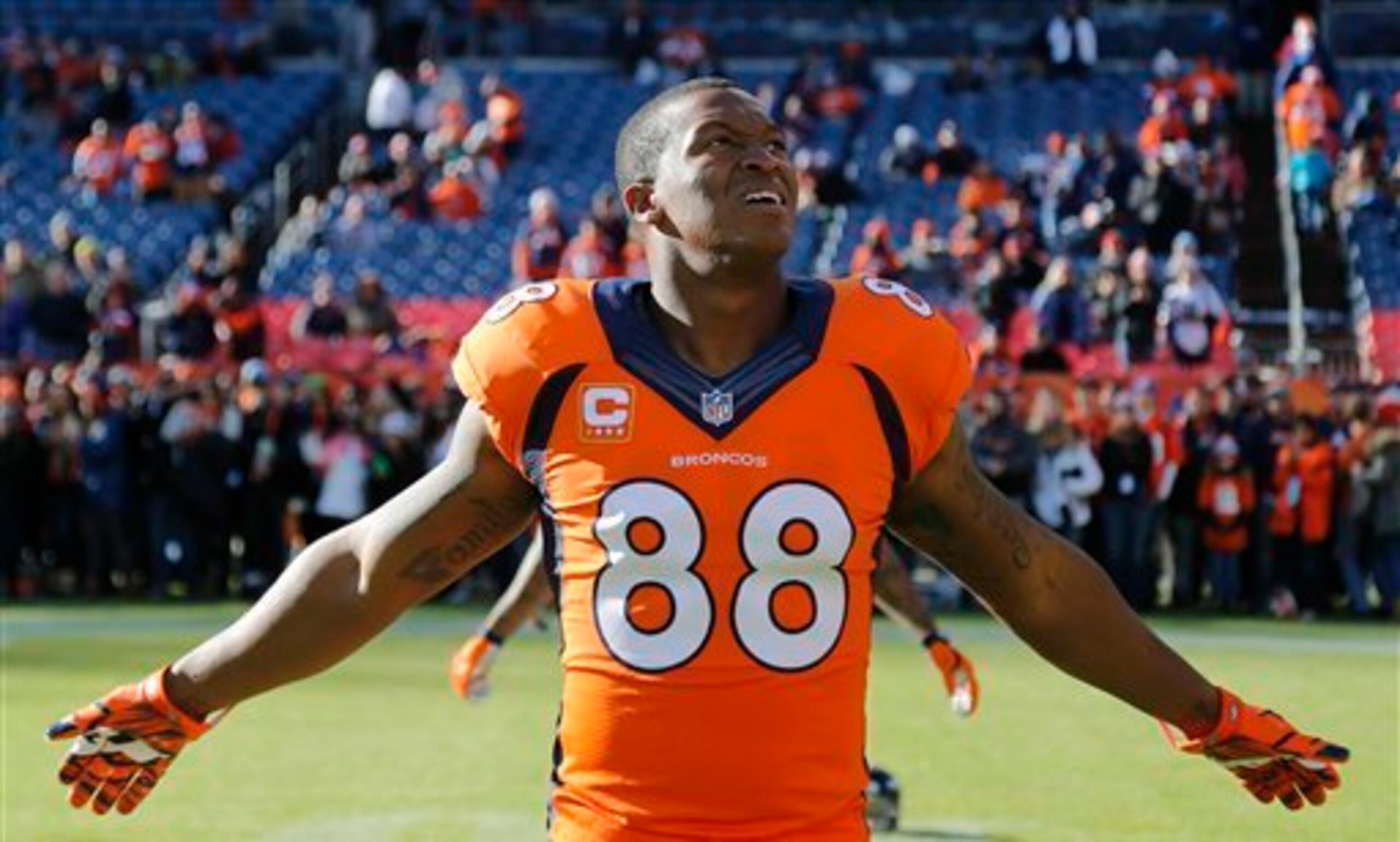
You've done your homework. You've assembled your rankings. You've mocked out several drafts from your slot in an upcoming draft.
You are ready.
In fact, you're more than ready. You are confident. In almost all those mock drafts, you were able to select Chicago Bears running back Matt Forte and Denver Broncos wide receiver Demaryius Thomas with your first two picks. You walk into draft day beaming, safe in the knowledge that your team's foundation is set.
Then the draft starts, the real thing is nothing like you thought it would be, you freeze in the second when Thomas goes one pick ahead of you and next thing you know you're wondering why you drafted Mark Ingram even though you don't like the the New Orleans Saints tailback this year.
Drafts are like snowflakes. No two are alike.
It's good to have a plan headed into your draft. It's bad to be so committed to any one plan to the point you develop tunnel vision. Getting so locked into the notion of grabbing running backs with your first two picks that you miss out on a huge value at wide receiver may give you the team you wanted, but it won't give you one that wins championships.
Flow with your draft, not against it. Let the value come to you.
Wait at Quarterback
3 of 10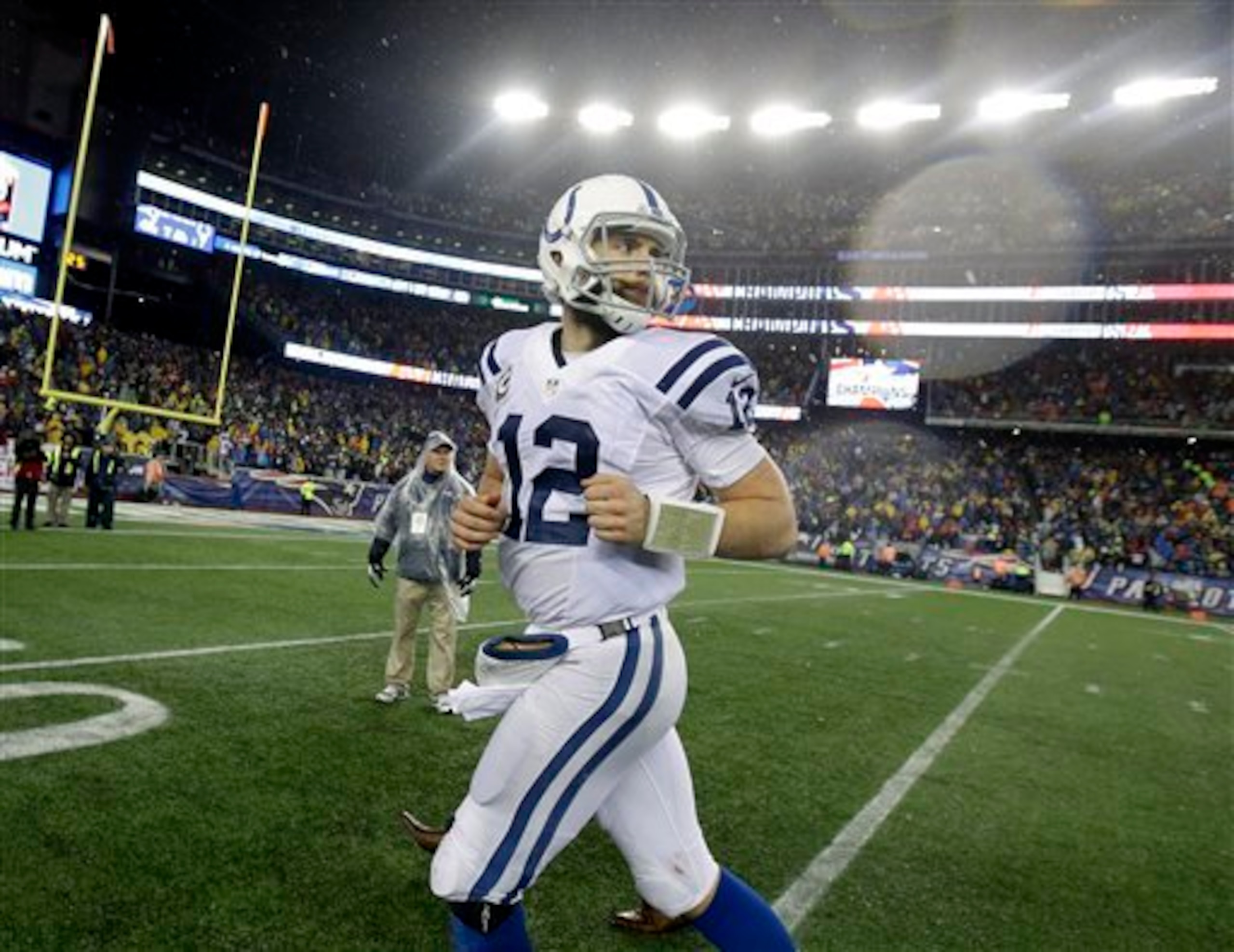
This is another mantra I've been preaching for years. And yes, there are fantasy football players and pundits alike who swear by the notion of taking an elite quarterback like Aaron Rodgers of the Green Bay Packers or Andrew Luck of the Indianapolis Colts.
And I still don't get it.
It isn't that they aren't great players. They are. It isn't that Rodgers and Luck aren't clearly the top two options at the position in fantasy leagues in 2015. They are.
It's a matter of the edge they give you at quarterback not being worth the hole it digs at other positions. In a 12-team fantasy league using NFL.com default scoring, the difference between last year's No. 1 and No. 12 quarterback was 6.4 fantasy points per game.
However, with two running backs and at least two receivers starting every week, the gap widens at those positions to 7.9 fantasy points per game at wide receiver and 9.0 points per game at running back.
Also, as The Late Round Quarterback pointed out at this time last year, today's pass-wacky NFL only serves to add to the depth under center available to fantasy owners:
"With more quarterbacks being usable in fantasy football due to the high volume of passes each team is throwing, the notion of “last starter selected” is becoming more and more irrelevant.Think of it this way. The 12th quarterback being selected in fantasy drafts right now is Tony Romo, and it’s happening at the end of the 8th round. That, according to FantasyFootballCalculator.com, is six rounds after Drew Brees and Aaron Rodgers are being drafted (Manning is a late-first rounder).
"
Even folks like Steve Andress of the Colts' official team website, who (stunner) doesn't thing taking Luck early is a bad idea, offers up a caveat about drafting a quarterback early this year:
"For me the most important thing with quarterback strategy in 2015 is to either commit to getting Luck or Rodgers or wait a loooooonnnnggggg time to get a quarterback. Once Luck and Rodgers are off the board, there’s a drop-off to the next tier of QBs, in my opinion. At that point, there isn’t a big enough difference between the likes of Wilson, Manning, and Brees all the way down to Rivers and Tannehill. The difference between the #3 fantasy QB last year and the #12 fantasy QB was less than 3 points per week. The difference though between the #2 and #12 QB was more than 5 points per week. If you want to spend a late first or second round pick on Luck or Rodgers, I wouldn’t criticize it.
"
I still don't think it's worth it, but I'll give Andress one thing. He's spot-on about the Manning/Brees/Wilson tier. All have fairly significant question marks. And all are being taken at a point where any sort of real value means they have to hit their ceilings.
Give me a Matt Ryan or Ben Roethlisberger later and better receivers and backs, please.
.jpg?w=2560 "Texans Titans Football")
.jpg?w=2560)
.jpg?w=2560 "Broncos Chargers Football")
Long Live the King—the King Is Dead?
4 of 10
For many years, running backs were the unquestioned kings of fantasy football. There wasn't any question that the first overall pick in a given draft was going to be a running back. It was just a matter of who.
That's changed in recent years. The past couple of seasons (especially 2013) have been littered with first-round busts in the backfield. Meanwhile, today's pass-heavy NFL has swelled the ranks of elite wide receivers.
The days of the running back as the unquestioned kings of fantasy football are, for now, dead and gone. Teams just aren’t running the ball as often as they used to, and when they do run the ball more and more teams are sharing the wealth.
However, the very same factors that have combined to knock the running back position from its perch actually add to the value of some running backs. There just aren’t as many 350-carry bell cows (a la DeMarco Murray in Dallas last year) as there used to be.
Add in that the drop-off from No. 1 to No. 12 and from No. 12 to 24 is steeper at running back than at any position save possibly tight end, and the same positional scarcity that makes Rob Gronkowski a mortal-lock first-round fantasy pick gives teams with an elite running back (or two) a decided weekly edge at a position it can be difficult to gain one at.
It's a sticky wicket for fantasy owners. However, if the average draft position data at Fantasy Pros is any indication, old habits die hard—five of the first six picks in PPR drafts this year are running backs.
This isn't to say that drafting a wide receiver in the first round isn't a good idea. In fact, proponents of the "Zero RB" fantasy draft theory advise shying away from the backfield even longer (the fifth or sixth round).
Just don't do so under the mistaken belief that there isn't going to be the same huge early run at running back that there is in the overwhelming majority of fantasy drafts every year.
So have your mid-round upside targets not only in mind, but be vigilant the pool doesn't shrink so quickly that your opponents reach for those targets early.
Running backs may not be as valuable relative to wide receivers as they once were, but so long as everyone keeps drafting them early anyway, in some ways perception becomes reality.
You can take advantage of that and clean up at other spots, but unless your sleeper backs hit it may not do much good.
Older Models Can Be Bargains
5 of 10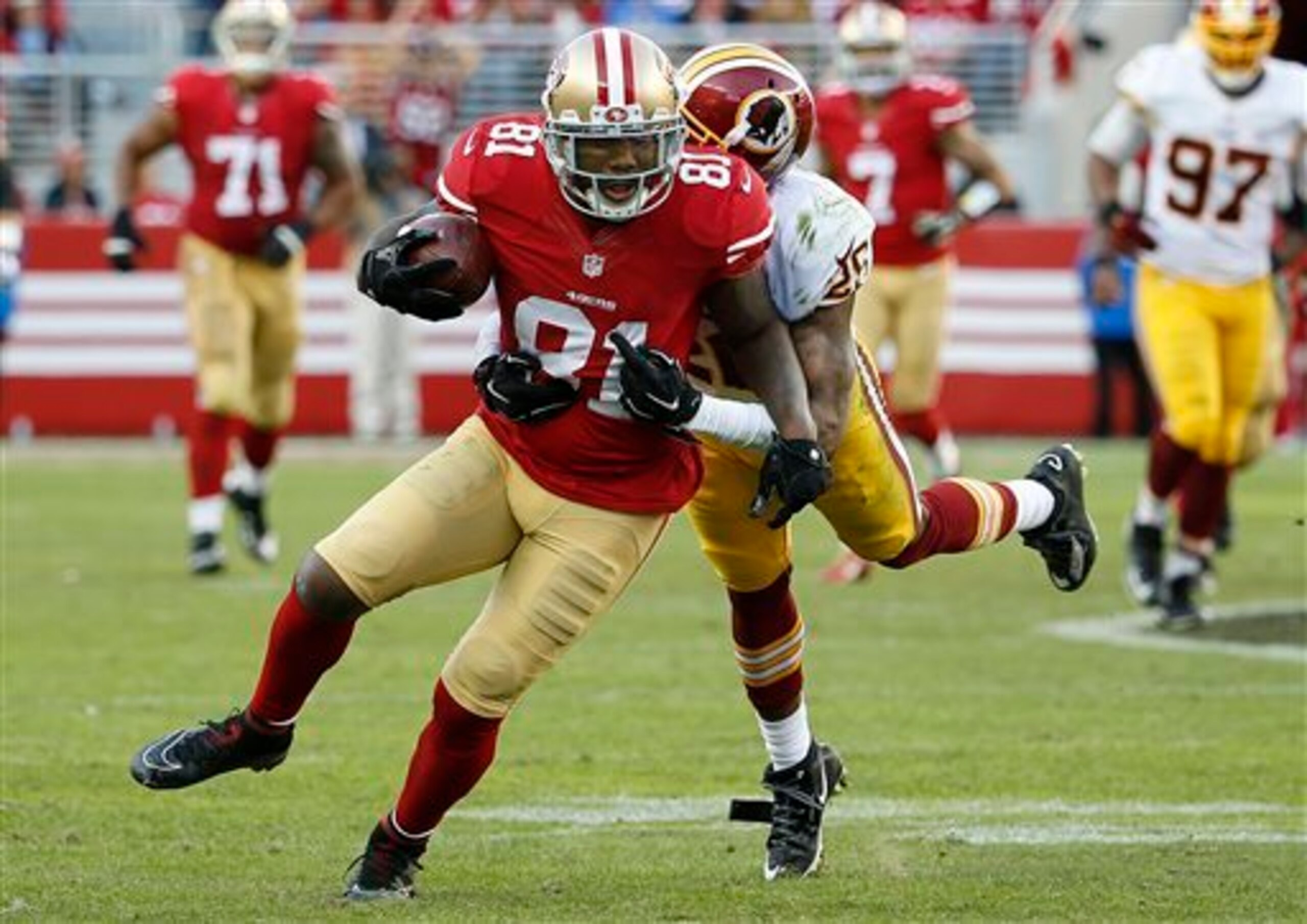
Last year we saw a rookie explosion at the wide receiver position unlike any in NFL history. It's something of a coup when one rookie tops 1,000 receiving yards in his first NFL season.
In 2014, three rookies went over a grand. And one of those youngsters, Odell Beckham of the New York Giants, led all fantasy receivers on a points-per-game basis.
Add in another strong rookie class in 2015. And everyone loves the shiny new toy. Beckham and Mike Evans of the Tampa Bay Buccaneers are both being drafted inside WR1 territory, per the ADP info at Fantasy Pros.
Now, that's fine. But it's what we're seeing at the opposite end of the spectrum that's of interest to astute fantasy owners.
Veteran players are dropping like stones in drafts. Tampa Bay's Vincent Jackson is being drafted as a middling WR3 despite 1,000-yard campaigns in six of the past seven seasons.
Baltimore's Steve Smith may be 36, but he's also the No. 1 wideout for the Ravens. Smith was a top-10 fantasy wideout over the first six weeks of last year, but he's barely going inside the top 40.
Anquan Boldin of the San Francisco 49ers has topped 1,000 yards and finished inside the top 20 two years in a row. Washington's Pierre Garcon led the NFL in catches in 2013.
They're both being drafted outside the top 40. Marques Colston of the Saints is barely being selected inside the top 50 at the position.
Yes, there's a ton of young talent available to fantasy drafters in 2015. However, there are more than a few old warhorses available in the later rounds who aren't ready for the glue factory just yet.
To Gronk or Not to Gronk
6 of 10
There is one position in fantasy football this year where the No. 1 option is so clearly defined and so far ahead of the other players that he's a tier unto himself.
That player is New England Patriots tight end Rob Gronkowski.
With Jimmy Graham now in Seattle and Julius Thomas now in Jacksonville, the question isn't whether Gronkowski is the top tight end in fantasy football.
The question is just how early a pick Gronkowski could be worth this season.
According to Fantasy Pros, if you want the 26-year-old on your squad it's going to cost a first-round pick, with Gronkowski currently carrying a hefty average draft position of 10th overall.
However, the argument can be made that if Gronkowski comes anywhere near his fantasy ceiling, that pick would be a bargain.
In fact, if you think Gronkowski is set for a 2011-type monster year and have the first overall pick, pull the trigger.
Yes, you read that right. A tight end at No. 1 overall.
It's a matter of the staggering weekly edge Gronkowski could afford you at the position. Back in Gronkowski's record-setting 2011 campaign, he outscored the No. 3 tight end in PPR formats by well over 100 fantasy points. Gronkowski outscored the No. 10 tight end by nearly 10 fantasy points per game.
That sort of edge, week in and week out, is worth the No. 1 overall pick.
It's not a strategy for the meek-hearted (that gap from the top pick to No. 24 could loom large if Gronkowski gets hurt again), but it's a viable one.
Kickers and Defenses Are Worthless
7 of 10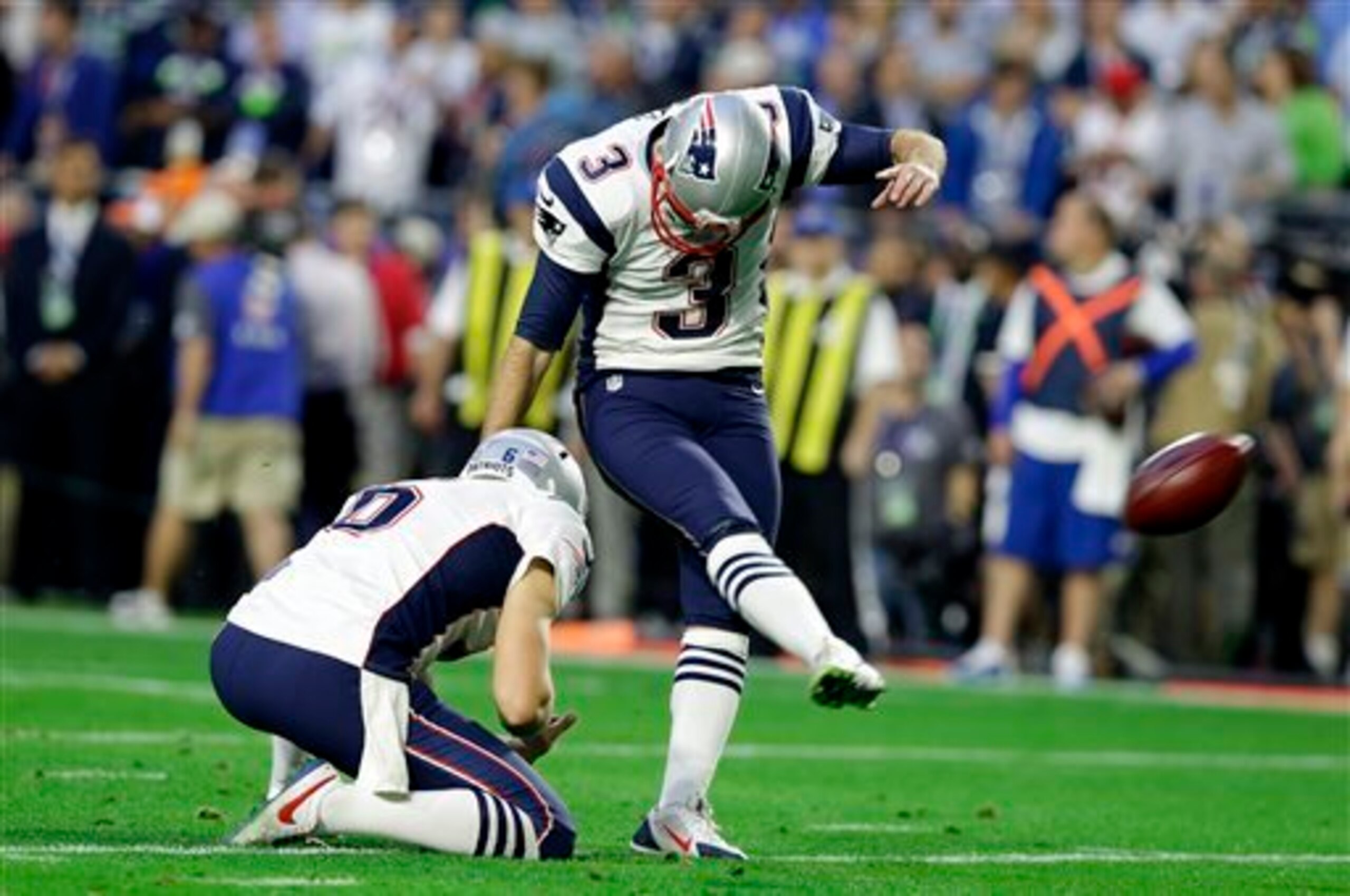
I can boil down the proper strategy for drafting a kicker very easily.
Don't take one before your last pick. In fact, if you don't have to and your league runs free agency before the season begins, don't draft a kicker at all. Use that pick on an upside flier and pick up a kicker just before Week 1.
Yes, the new extra-point rule that makes PATs a 32-yard attempt could, in theory, increase the value of the high-end kickers a bit relative to middling options.
Not enough to justify spending a pick that isn't the last one on a position where the No. 1 fantasy option outscored the No. 12 one by less than two fantasy points per game in NFL.com default scoring last year.
The gap between the No. 1 and No. 12 team defenses is a bit wider, but it still doesn't behoove fantasy owners to burn an early pick on one of the "big guns" at the position.
Because it's nigh impossible to figure out from one season to the next who the big guns will be.
Two years ago, the Kansas City Chiefs were fantasy football's top defense in NFL.com default scoring. Last year, injuries set in, the big plays dried up and the Chiefs finished outside the top 20. Last year's top fantasy defense, the Philadelphia Eagles, were hugely reliant on defensive and return touchdowns for that finish.
And that makes them a prime candidate to regress in 2015.
Rather than spending a pick on a defense you hope will be a weekly starter, focus on teams like the Carolina Panthers (at Jacksonville) or New York Jets (vs. Cleveland) who have a favorable matchup or two to start the season.
Then, when those tasty matchups dry up, it's off to the waiver wire they go in favor of another team playing a cellar-dweller.
Just pick Cleveland's opponent every week. You'll do fine.
Elite production at a bargain price.
Shoot the Moon Late
8 of 10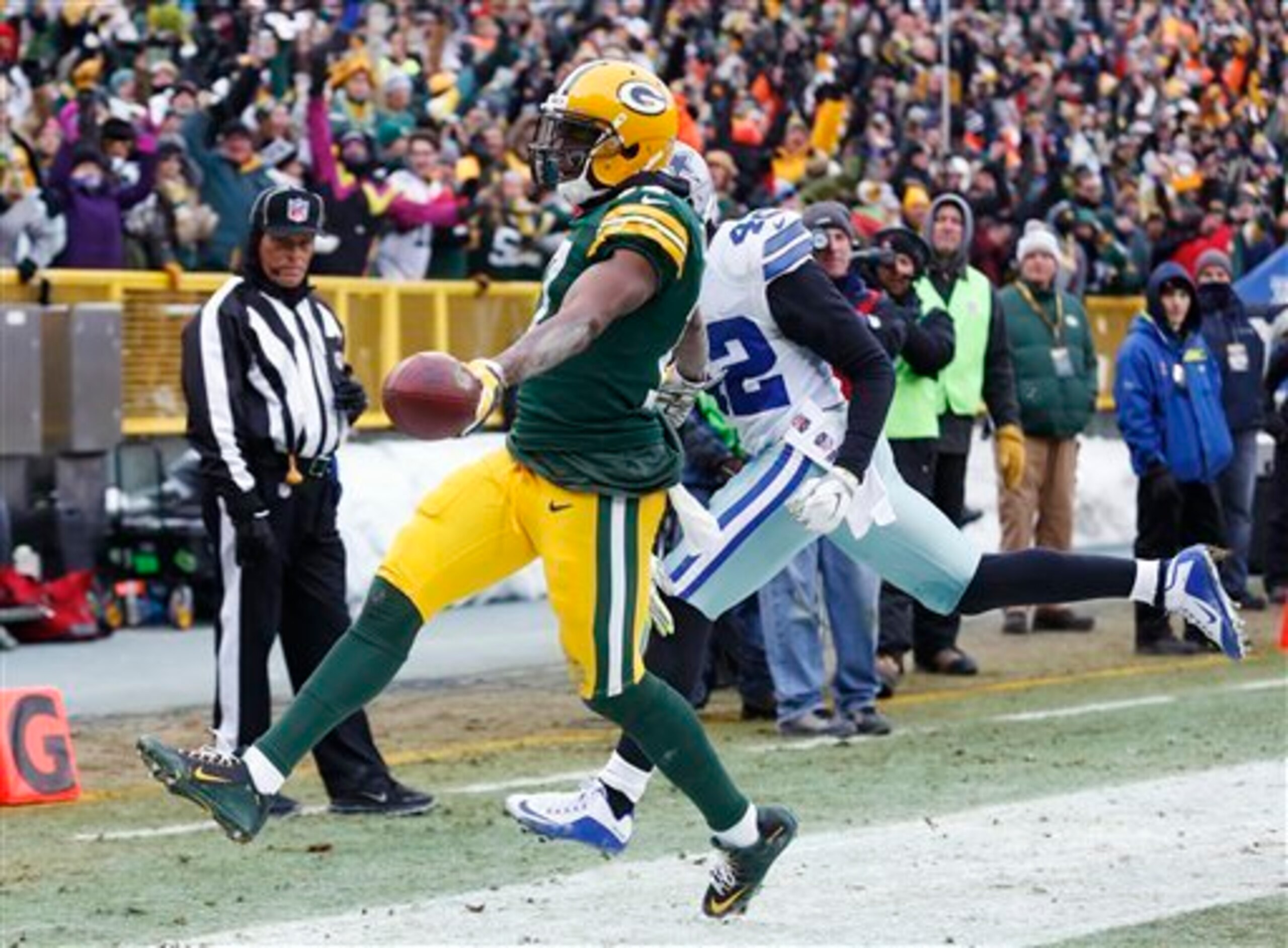
As the draft winds down and you're waiting to draft a kicker and defense (as you should), you're going to find yourself with a few picks to use to fill out your bench.
Now, you may be tempted to use one of those picks on one of those discount veterans I mentioned a while back. And that's fine. Depth is good. Injuries, at some point, will all but certainly take a bite out of your fantasy team.
However, injuries are also going to take a bite out of NFL teams, opening doors of opportunity for players who may not seem all that fantasy-relevant right now.
The lottery tickets.
Green Bay's Davante Adams is a great example. As the No. 3 wideout for the Packers, stuck behind a pair of superstars in Randall Cobb and Jordy Nelson, Adams is unlikely to see enough targets for consistent fantasy value as things stand right now.
However, were Cobb or Nelson to miss time, Adams would have legitimate WR1 upside in the Packers' potent passing game.
Sifting through an unappealing pile of late-round running backs?
Rookie Josh Robinson flashed feature-back potential while at Mississippi State and plays behind a 32-year-old starter in Frank Gore with the Colts.
It isn't the first-round picks that determine who wins fantasy championships.
It's the teams who are able to draft a Jeremy Hill or Odell Beckham late who get the huge boost that can put a squad over the top.
Late in drafts, defer to upside. Gamble. If it doesn't pay off, you've lost nothing but a double-digit pick.
If it does, you have to clear off space on the mantle for a new trophy.
Dont Buy into the Byes
9 of 10
Every year you'll hear this refrain at least once from one of your league-mates.
"Boy, I really like so-and-so this year. Too bad he has the same bye week as such-and-such."
And my reply is always the same.
"So?"
There is only one time that bye weeks should ever come into play for you during a draft. And that's as a tiebreaker for essentially identical options.
It's especially true now, as the London games have resulted in a bye schedule that lurches to and fro from two teams to six to two to four to my head hurts.
Yes, Chicago Bears running back Matt Forte and Cincinnati Bengals tailback Jeremy Hill have the same bye week. So do wideouts Jordy Nelson and Randall Cobb of the Packers and Demaryius Thomas of the Denver Broncos.
They all have the same bye—Week 7.
Passing on any of them in a position of value just because of that bye week is silly.
The Sky Is Not, in Fact, Falling
10 of 10
Sometimes, it happens.
Despite all your preparation, all your hard work, all your diligence, draft day comes and things go—unwell.
Maybe an unexpected run freezes you out at running back, and next thing you know Darren McFadden of the Dallas Cowboys is on your team.
Ouch.
Maybe a few too many cocktails on draft day results in some questionable picks. Maybe you had a few too many cocktails the day before and forgot the draft altogether.
Whatever the case, all is not lost.
Fantasy leagues aren't won in June or July. They are won in December. It usually isn't the fantasy owners who drafted the "best" teams over the summer that advance to the playoffs.
It's the owners who built the best team throughout the fall.
Make some preseason trades to address perceived weaknesses. Even better, just relax for a minute. What looks like a so-so team in the dog days of summer can look a lot different when the leaves start changing.
Stay active on the waiver wire, whether your team is 1-3, 4-0 or anywhere in between. Never pass up an opportunity to make your team better.
Stay active period, both for the sake of your own team and the rest of the league. No body likes ghosts, in scary movies or fantasy football.
.jpg?w=2560 "Cardinals Giants Football")

.jpg?w=2560 "MHJ Bought Own Jugs Machine")