

England Were My Team of the Tournament at the Women's World Cup
You trudge around Canada for a month watching the Women’s World Cup, get to Vancouver for the final in anticipation of an exciting game—and it’s all over in 16 minutes! Short-changed, or what?
No way. Those 16 minutes were some spectacle, the USA simply blasting Japan out of contention to rapidly—and super-emphatically—gain revenge for the defeat on penalties by the Nadeshiko in the 2011 final.
So, do the stats: The USA win the World Cup for a record third time; the 5-2 scoreline represents the biggest victory in a women’s final; Carli Lloyd hits the first hat-trick in a women’s final and the fastest in any final, male or female, and quite probably scored the longest distance goal in the history of the final. The USA captain’s third goal was a brilliant lob from a yard inside the half-way line.

Unsurprisingly—after a World Cup in which the USA started slowly but came alight in the 2-0 semi-final win against Germany and were then on fire for the final—the inspirational Lloyd also took the Golden Ball award. And she missed out on the Golden Boot only as Germany’s Celia Sasic had equalled her scoring record from fewer on-field minutes.
Victory was sweet for head coach Jill Ellis and her players after the criticism, some of it very harsh, they had received over several months prior to Canada 2015 and indeed during the early stages of the tournament.
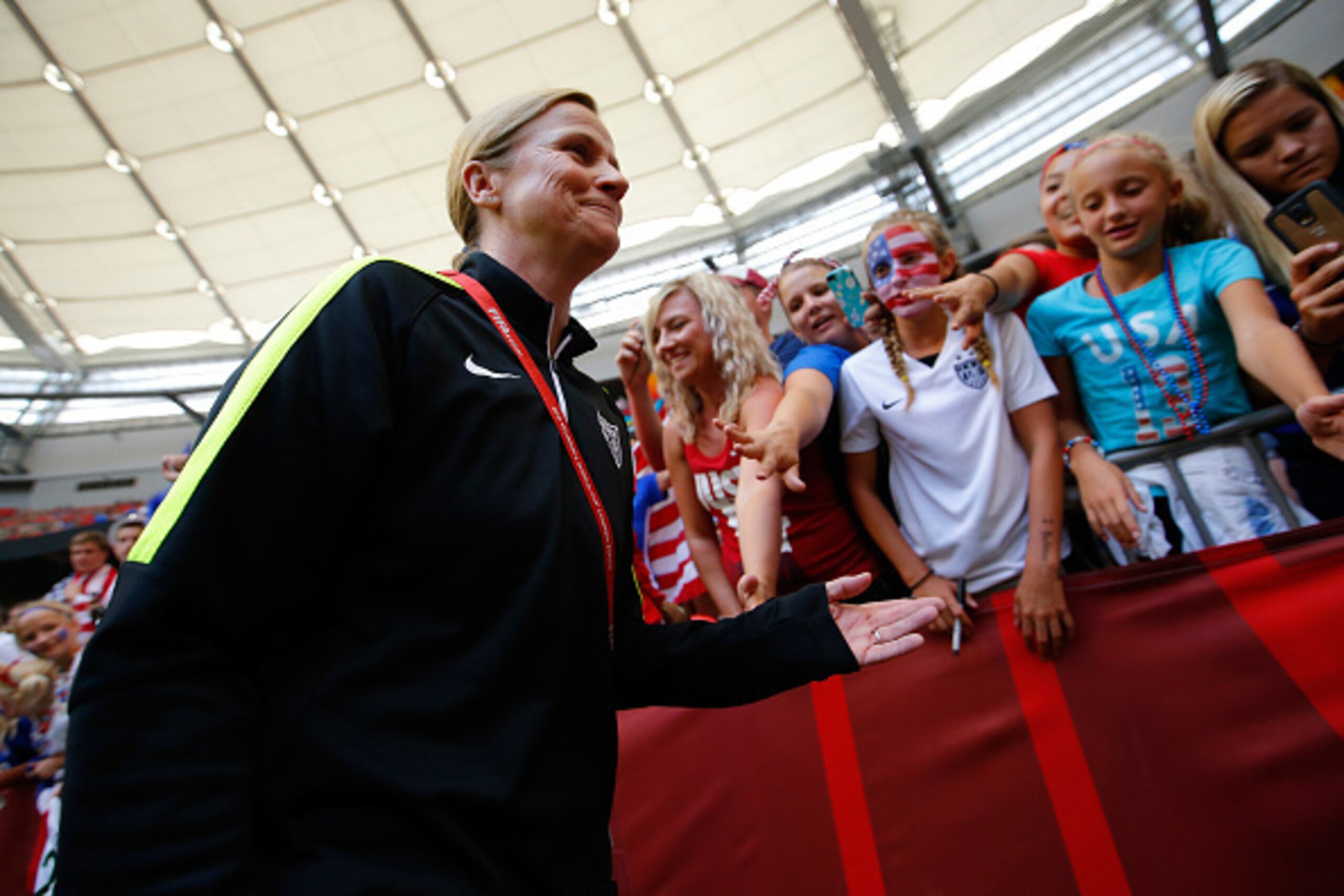
Ellis fielded the sometimes vicious comments with dignity and refused to deliver a told-you-so statement when given the chance after the final. When I asked her if her team’s performance and result against Japan—following their equally impressive semi-final win against the world’s top-ranked team Germany—had been one in the eye for her critics, she gave me a typically calm response:
"From day one I knew where my focus had to be, and I said to the players that they had to believe in the process—and it had to be a quick process because I was only hired last year. We had some growing pains and it’s (World Cup gold) not vindication, it just feels really good. I couldn’t be more proud of the players – I knew they had it in them, they knew they had it in them.
"
Lloyd was likewise unwilling to have a dig at the doubters after a quite superb end to the American campaign. “I welcome criticism,” she said, adding, “when people criticise and then you do something like that, it feels even better. We had all the faith in the world in the coaching staff from day one—we’ve just stayed together, stayed true to ourselves, and we knew that we could do this.”
Ellis knocked the nail on the head when summing up the reason for her team’s growth from what looked like a mediocre start to her reign in May last year to the magnificent triumph in Vancouver’s BC Place Stadium. “As the (opposing) teams get harder and the pressure gets higher,” she said, “this team gets better.”

If the Americans got better, the Japanese and Germans got worse. Japan were lucky to reach the final, their 2-1 victory over England in the semis coming via the unluckiest of stoppage-time own goals by central defender Laura Bassett.
England had been the better team, certainly in the second half, and if the game had gone into extra time Japan would quite likely have been beaten. Coach Norio Sasaki admitted after the final that he might have managed his team better in the early stages but had no excuses for the defensive cave-in.
Four years after becoming world champions for the first time, the Nadeshiko looked a shadow of their 2011 selves, and you had to wonder whether or not they will be able to return to the days of their tiki-taka pomp.
Germany too looked to be on the slide. I watched them comprehensively beat Sweden 4-1 in the quarter-finals and thought at that stage that they would go on to beat my title-winning tip France and ultimately lift the trophy.
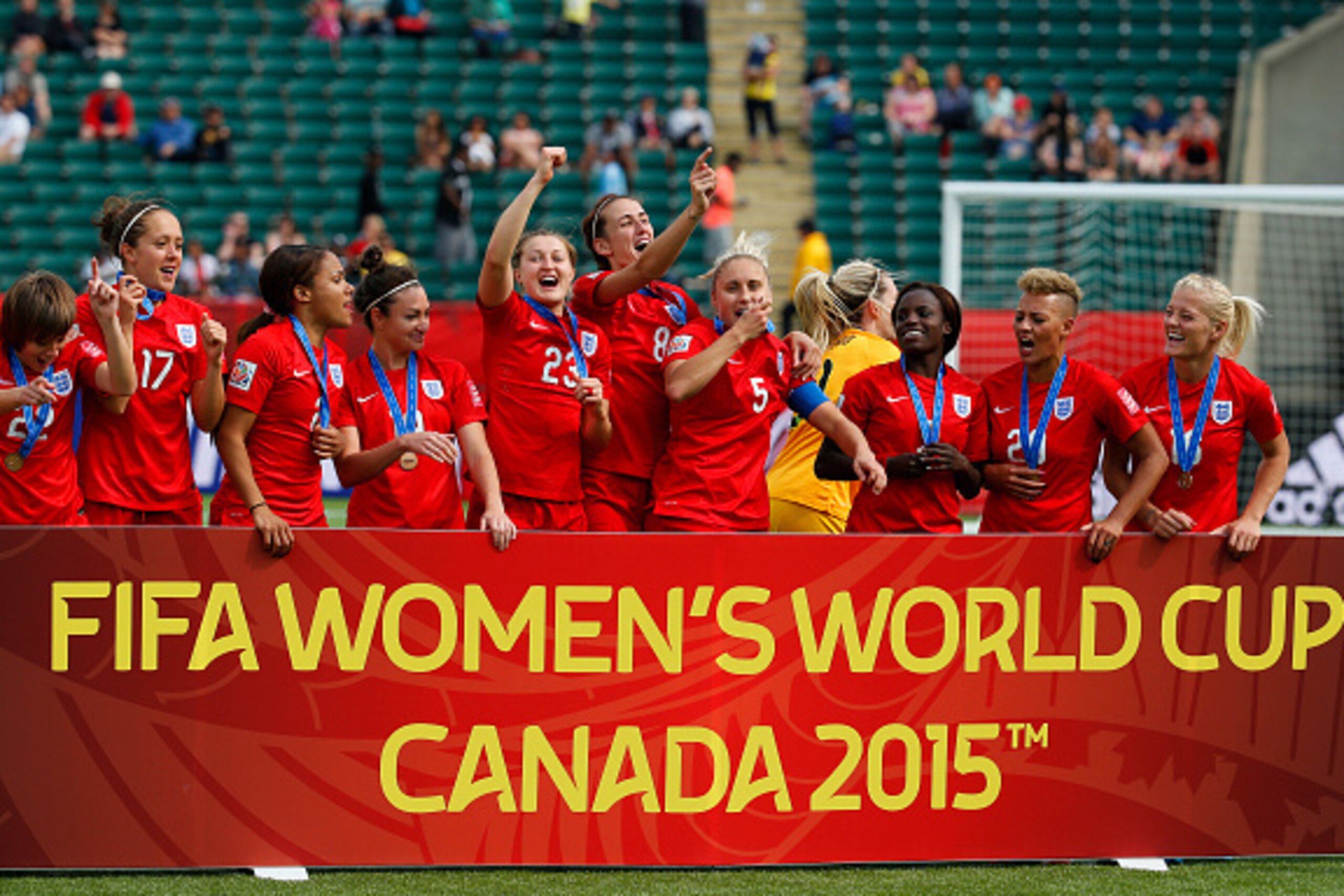
They did beat France, but it was on penalties after being outplayed by Les Bleues. And they then capitulated to the USA before losing the third-place play-off tie to England, a team that had never previously beaten them in 20 attempts.
That play-off game was the eighth meeting between Germany and England that I had witnessed. Mark Sampson’s team admittedly produced the best performance of any English team I’d seen against the Germans, but it was also the worst display I had seen by a once supreme Silvia Neid side.
One English player said to me after the game, “The Germans just didn’t want it, and we really, really wanted it—that’s why we won.” I couldn’t disagree. After pressing early on in the game the Germans fell away and simply looked as though they’d rather be on a plane home than trying to win a bronze medal.
As the quality of their performances diminished during the latter stages of the tournament, so the pressure on head coach Neid built back home in Germany. After being revered in the country, rightly so for the success she has helped bring the national team, Neid is nearing the end of her tenure and will hand over the coaching reins to Steffi Jones after next year’s Olympic games in Brazil.
Some women’s football watchers in Germany feel that the hand-over should come earlier. The really strong criticism—ironically led by an Englishman in Frankfurt, coach Colin Bell—began after the 2-0 semi-final loss to the USA.
“After the opening goal almost nothing worked, there was no plan B,” Bell told the German newspaper Frankfurter Rundschau, as per DW. “When a game like that starts to go in a negative direction,” he added, “you have to change players or tactics. This simply didn’t happen.”
When I asked Neid for a response to the criticism, I got a sarcastically defensive reply. “I am actually grateful for this criticism,” she said. “I can understand it, but if my colleagues (coaches such as Bell) had just called me we could have talked about it; perhaps they would have had a piece of advice as well.”
So Neid went back to Germany to face a grilling, whereas her England counterpart Mark Sampson returned home to a hero’s welcome and with one national newspaper columnist suggesting that he could soon be managing a men’s Premier League club rather than working in the women’s game.
That idea was perhaps a flight of fancy, but Sampson proved himself an assured coach with tactical nous and good man-management. His team went into the tournament hoping to win a World Cup knock-out stage game for the first time, but ended up desperately unlucky not to make the final.
The cruelest of own goals by Bassett spelled defeat and some heart-wrenching scenes as the defender self-imploded with grief at the final whistle. I’ve known "Bass" since she was 17, that’s 14 years now and counting, and she’s the last person you would wish that misfortune on.

But despite the burden of a bad, bad memory, she played against Germany and had a fine game. Bassett was one of England’s outstanding players as Sampson’s team overachieved at a tournament that was the springboard for what is certain to be a climb in the world rankings, when the new figures are released later this week, to fifth place—their highest-ever position.
The rise and rise of England during Sampson’s 18 months in charge has been met with much praise, though there have been some dissenters. Japan coach Sasaki called their attacking style “simple,” and his players described it as “weird.”
And when I bumped into former USA head coach April Heinrichs in my hotel in Edmonton a couple of days after England’s victory over Canada, she was critical of the way Sampson’s team had played the last hour of the match.
“They couldn’t kick the ball straight,” she said. “Instead of playing the ball out from defence they were hitting it as far as they could, and Canada just kept coming back at them.” Long-ball tactics, eh—who’d have ‘em? Sampson had them quite often during this now-completed tournament, but love or hate the tactic, it worked more than well enough whenever it was deployed by the England coach.
Given that the USA returned to the World Cup glories they had enjoyed in the 1990s and that we saw the emergence of countries such as Australia, my team of the tournament was England. Yes, I have a vested interest as I’m from Blighty, but I feel that a lot of neutrals around the world would agree with me.
Tony Leighton covered the Women's World Cup on location in Canada.
.jpg?w=2560 "49ers Giants Football")


.jpg?w=2560 "Ertz Returning to Eagles")
.jpg?w=2560 "WWE Raw Live Grades 🔠")
.jpg?w=2560 "Dak Addresses 'Dumb' Old Romo Tweet 🤣")


.jpg?w=2560 "Follow Raw As It Happens 👊")