
2025 NCAA Tournament: Toughest Men's College Basketball Resumes to Evaluate
Some resumes for the 2025 men's NCAA tournament are almost too easy to evaluate. Auburn is the clear-cut No. 1 overall seed. Purdue is solidly a No. 2. The Big 12 seems to be one great big cluster of No. 3 seeds. And while we can debate whether they are in or out, both Arkansas and UC Irvine are smack dab on the cut line.
Then there are the ones that feel like Mission: Impossible to Seed.
In the latest Bracket Matrix refresh, Wisconsin ranges from a No. 2 seed to a No. 6 seed. Memphis is, deservedly, all over the projected map. Whether Texas is a No. 8/9 seed or an NIT team is getting tough to decipher.
Let's take a look through some of the resumes that are toughest to figure out with about one month to go until Selection Sunday.
Teams are presented in alphabetical order.
Records and resume data current through the start of play Tuesday.
BYU Cougars
1 of 9
Current Resume: 15-8, NET: 41, RES: 56, QUAL: 32
Three Best Wins: Baylor, at UCF, Cincinnati
Three Worst Losses: at Providence, at TCU, at Utah
By most accounts, BYU has a solid bubble resume.
They're lacking in the marquee win department, but at least the Cougars do have one win over a projected tournament team (Baylor) and a handful of wins over fellow bubble inhabitants.
They've played 12 games outside the top 1.5 Quads, winning all 12 games—11 of them by double digits. So, it's a 'clean' resume.
The resume metrics aren't great, but they aren't disqualifying, either. And the predictive metrics are providing good support.
But there's just something about this resume that doesn't pass the smell test, and that's largely the product of a dreadful nonconference SOS.
BYU only played two nonconference games against the NET top 100, losing both of those to Providence and Ole Miss. And while the Cougars are sitting at 6-6 in a strong Big 12 conference, only four of those 12 games came against teams that would be in the field today.
It's a lot of smoke and mirrors that had most of us bracketologists projecting BYU for a spot in the field prior to its 18-point loss to Cincinnati on Saturday. Maybe that was the eye opener we needed, though, because this now looks like the resume of a team that has quite a bit of work to do down the stretch to have a realistic case for a bid.
The Cougars are still "in position to be in position," if you will, with road games against Iowa State and Arizona, a home game against Kansas and two games left against West Virginia to potentially move the needle in a hurry. Probably need two of those five (and to win the other games against Kansas State, Arizona State and Utah) to make the cut.
Gonzaga Bulldogs
2 of 9
Current Resume: 18-7, NET: 14, RES: 46, QUAL: 15
Three Best Wins: at San Diego State, Baylor, Indiana (in Bahamas)
Three Worst Losses: Santa Clara, at Oregon State, West Virginia (in Bahamas)
Did you know that if the Zags suffer another loss before Selection Sunday, it would be the first time since 2011 that they enter the NCAA tournament with more than seven losses.
Of course, that's assuming they actually enter the NCAA tournament.
Gonzaga is in pretty good shape for now, but that resume metrics average is problematic; its combination with those fantastic predictive metrics telling the story of a team that has narrowly missed on a lot of Quad 1 opportunities while consistently beating up on the weak competition on the docket.
Fun fact: In games decided either in overtime or by six points or fewer, Gonzaga is 0-7. They're like a bizarro version of 2021-22 Providence, incapable of winning anything that comes right down to the wire.
But with two games remaining against San Francisco, a home game against Saint Mary's and road games against Santa Clara and Washington State still to come, the likelihood of at least one nail-biter down the stretch is quite high.
Can they finally win one?
Per Torvik, the Zags are presently at 0.9 wins above bubble, with the opportunity to add about 2.5 more down the stretch. Win them all and they're definitely going dancing, probably rising up to something in the vicinity of a No. 5 seed.
It would only take one more loss to make things a little questionable, though, as it's already tough to gauge where they belong in the Nos. 7-11 seed range.
Illinois Fighting Illini
3 of 9
Current Resume: 16-8, NET: 12, RES: 33, QUAL: 13
Three Best Wins: Missouri (in St. Louis), at Oregon, Wisconsin
Three Worst Losses: USC, at Rutgers, at Northwestern
There ultimately will be three Big Ten teams on this list, but Illinois is the toughest nut to crack, in large part because this team will look like a title contender in one game and then a prime suspect for a first-round loss in the next.
Some of that is owed to injury (Kasparas Jakucionis missed the loss to USC) or illness (Tomislav Ivisic was out with mono for the loss to Nebraska and the blowout loss to Maryland). Even at full strength, though, this freshman-heavy and three-point-centric team has been erratic.
Here's the good: Illinois is top 15 in NET and all three predictive metrics. It has six Quad 1 wins and an overall record of 8-8 against the NET Top 75, with no losses outside of that group.
Thus far, sounds a lot like Kentucky, except the Wildcats are 7-7 against the Top 75 with slightly worse predictive metrics. And they're looking pretty good for a No. 4 seed at the moment.
But here's the bad: Illinois' resume metrics simply aren't up to snuff, as it doesn't have anything close to the upper echelon wins that Kentucky can boast.
The 32-point road blowout of Oregon in early January sure was impressive, but are the Ducks even a No. 7 seed at this point? (More Oregon thoughts coming shortly.) All three of Illinois' best wins listed above are Quad 1A results, though only barely. And with eight losses and no truly elite victories, it's tough to say where Illinois belongs.
The Bracket Matrix average has landed on a No. 6 seed here, but there are quite a few with the Illini as a No. 4 and even more that have them projected as a No. 7 seed right now. Though, with six of their final seven against Quad 1—including at Wisconsin, at Michigan, vs. Purdue and a neutral against Duke that will all be Quad 1A—quite a bit of this story is still to come.



Memphis Tigers
4 of 9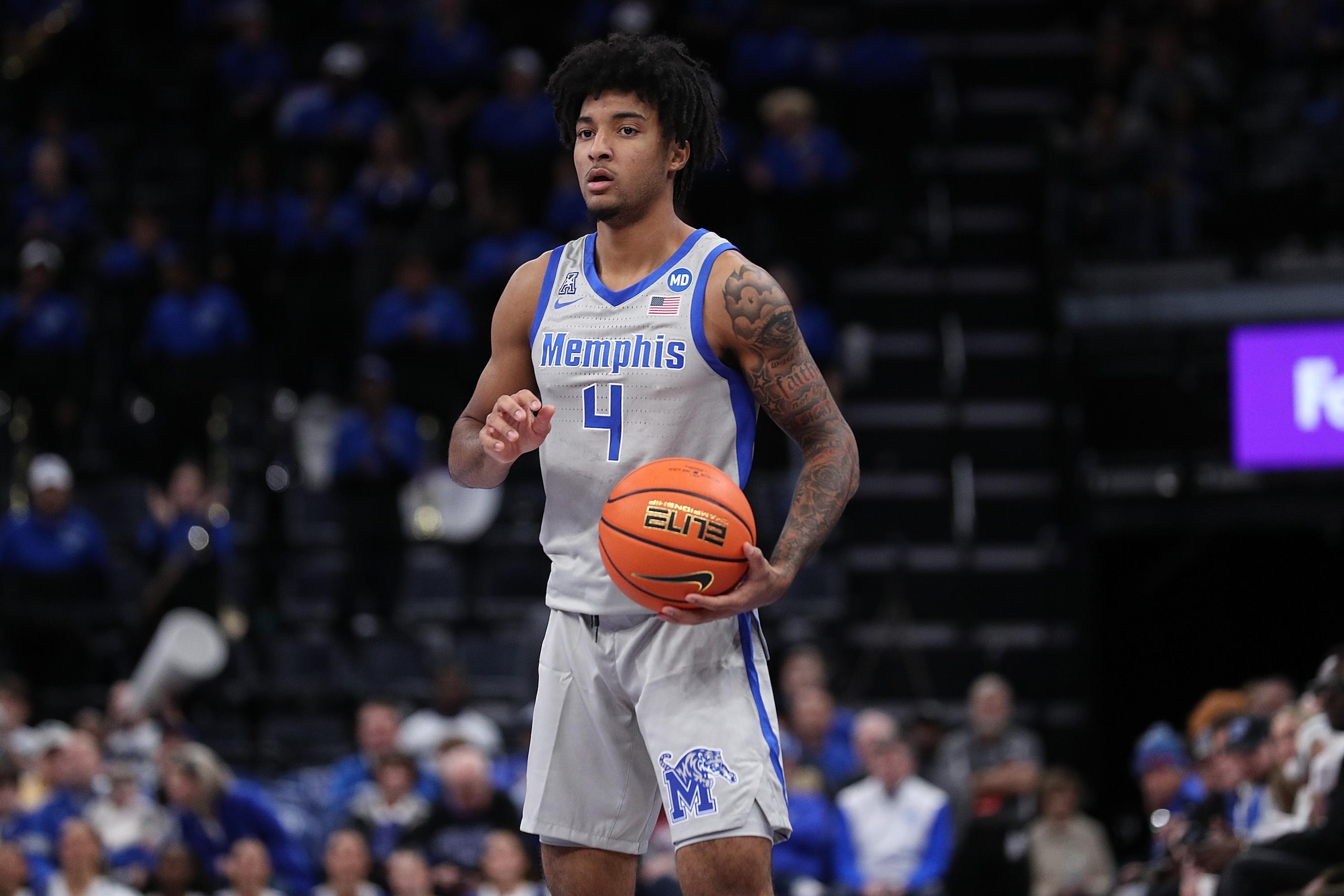
Current Resume: 20-4, NET: 45, RES: 13, QUAL: 46
Three Best Wins: Michigan State (in Maui), at Clemson, Connecticut (in Maui)
Three Worst Losses: Arkansas State, at Temple, Mississippi State
Resumes with multiple Quad 3 and/or Quad 4 losses are always a bit tricky to evaluate, but it's typically a situation where the resume metrics are weighed down because of those losses.
Take Saint Mary's last year, for example. The Gaels finished top 20 in NET, KenPom and BPI and ended up with five Quad 1 wins, but thanks in large part to a pair of Quad 3 losses had a resume average of 41.5 which led most to project them for a No. 6 or No. 7 seed. (They ended up with a No. 5 seed.)
Memphis has gone in the opposite direction, though, top 15 in the resume metrics thanks to a 5-2 record vs. Quad 1 and a 10-2 record against the top two Quads, but two not-great losses and predictive metrics that barely even paint them as a top-50 team in the country.
Instead of Saint Mary's, the much better comparison from last year is South Carolina.
The Gamecocks ended up with a NET/KenPom/BPI average of 51 and a resume metrics average of 15.5. They went 11-5 vs. Quads 1 and 2 with a pair of Quad 3 losses that didn't decimate their resume. For that effort, they got the No. 24 overall seed (bottom No. 6 seed).
Like the Gamecocks, the Tigers have good wins. Quite a few of them, in fact.
They just don't have many convincing wins.
Because of that, there's a divide between how good Memphis' resume is and how good Memphis is perceived to actually be, and projections for the Tigers are all over the place, ranging from a No. 4 seed down to a No. 10 seed in the latest Bracket Matrix refresh.
Mississippi State Bulldogs
5 of 9
Current Resume: 17-6, NET: 30, RES: 19, QUAL: 31
Three Best Wins: at Memphis, Ole Miss, at Vanderbilt
Three Worst Losses: Butler (in Tempe), Missouri, Kentucky
How fitting that we venture straight from Memphis to Mississippi State because A) they both range from a No. 4 seed to a No. 10 seed in the Bracket Matrix and B) winning at Memphis was arguably the best thing Mississippi State has done all season.
And, well, if we don't really have a consensus on where Memphis belongs in the field, it's tough to know how impressed we should be with a win that certainly doesn't jump off the team sheet, coming against NET No. 44.
What's problematic about the Bulldogs' resume is the missed opportunities.
Despite playing in the loaded SEC and putting together a respectable nonconference slate, Mississippi State entered Tuesday's game against Florida having only played six games against the NET Top 30—four at home (Alabama, Kentucky, Ole Miss, Missouri) and two on the road (Auburn and Tennessee)—and all the Bulldogs have to show for it is a 1-5 record with an overtime home win over their in-state rival.
They do have a nice stockpile of pretty good wins, though. At Georgia, at SMU, at Vanderbilt and at Memphis are all straddling the line between Quad 1A and 1B and doing quite a bit of heavy lifting for MSU's Wins Above Bubble mark. Combine those four true road wins with just the one even remotely questionable loss working against them and you can see why some have the Bulldogs as a No. 4 or No. 5 seed.
Until they pick up a particularly marquee win, though—and, again, the jury is out on whether the Memphis win qualifies as such—even a No. 6 seed seems a bit generous.
Most in the latest Matrix refresh have settled on Mississippi State as either a No. 6 or No. 7 seed, but it feels almost like a placeholder while we wait for the Bulldogs to really show us where they belong.
Oregon Ducks
6 of 9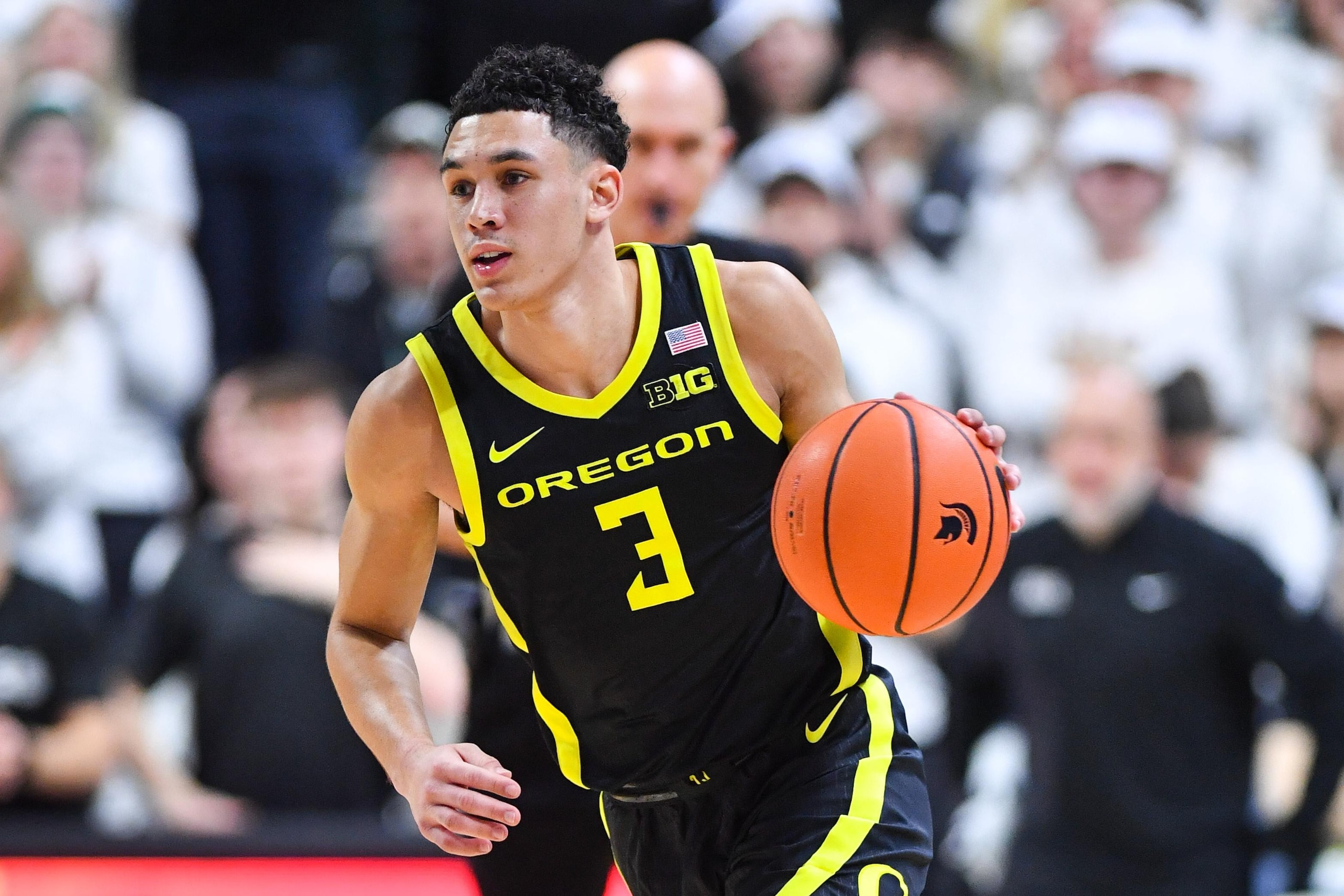
Current Resume: 16-8, NET: 35, RES: 25, QUAL: 41
Three Best Wins: Alabama (in Las Vegas), Texas A&M (in Las Vegas), Maryland
Three Worst Losses: at Minnesota, Nebraska, UCLA
KPI loves Oregon, ranking the Ducks as the 12th best resume in the country. With what was eight Quad 1 wins—currently down to seven after San Diego State's NET dropped enough for that win to now register in Quad 2—12th-best resume made sense for a while.
That's no longer the case, though.
The Ducks entered Tuesday's home game against Northwestern riding a five-game losing streak, and they haven't beaten a tournament-bound team in over a month.
Those November wins over Alabama and Texas A&M still look sensational on the resume, but also feel like relics of a bygone era; memories of what Oregon used to be.
That's not supposed to matter. Results on Day 1 of the season count the same as those on Day 120. But even the metrics (aside from KPI) at this point are saying, "Yeah, no, this isn't your standard 'seven or eight wins against Quad 1' type of team."
There were 13 teams last year who ended up with seven or more Quad 1 wins. Twelve of them got a No. 4 seed or better, the exception being Texas A&M, which suffered 14 total losses and four Quad 3 losses and still ended up with a No. 9 seed.
With that in mind, it's tempting to put Oregon down for a No. 5 seed, even though so much about this resume is pointing to more of a No. 8 seed.
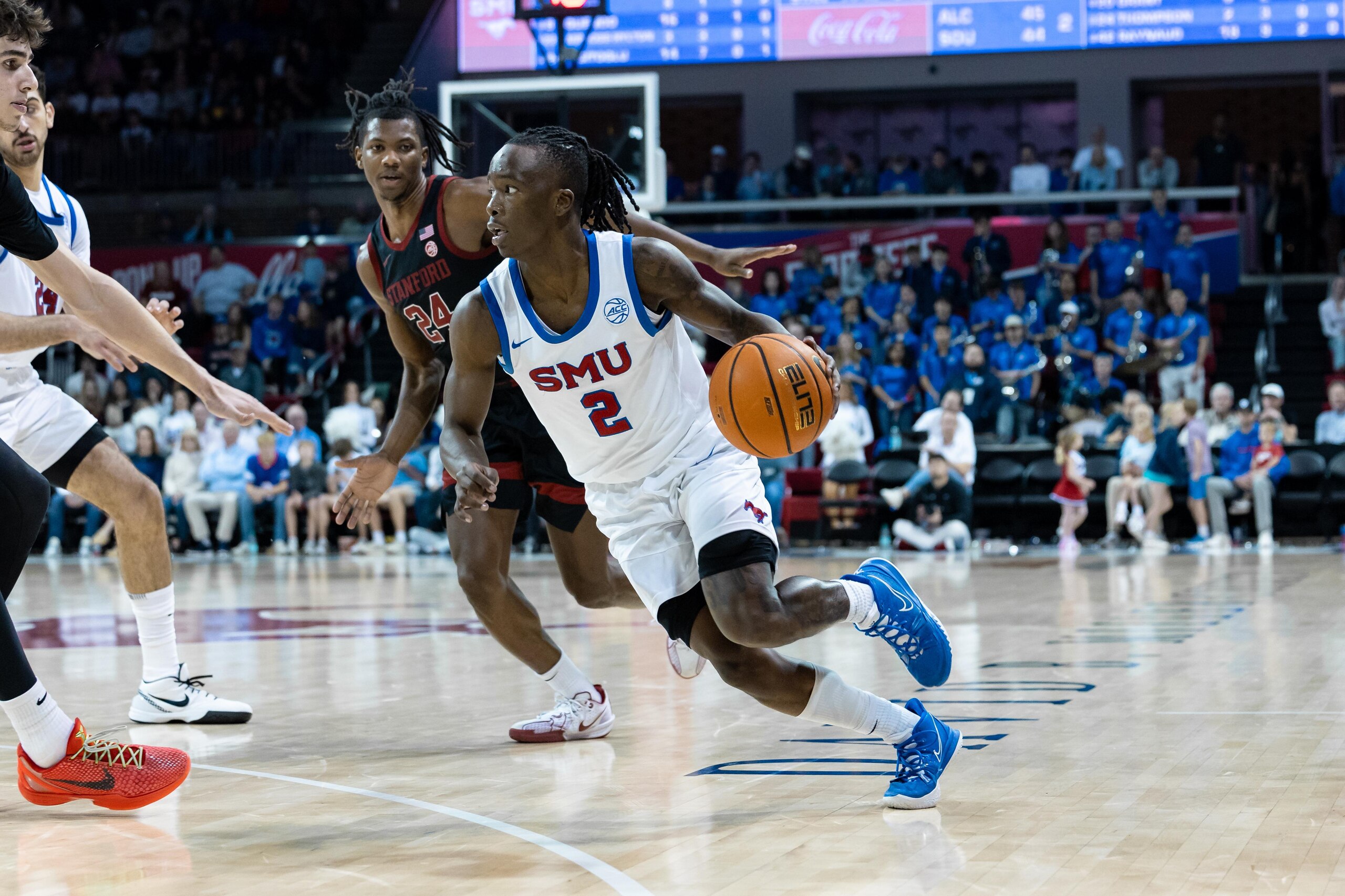
SMU Mustangs
7 of 9
Current Resume: 18-5, NET: 40, RES: 47, QUAL: 44
Three Best Wins: LSU (in Frisco), vs. Stanford, at Virginia
Three Worst Losses: at Butler, at North Carolina, vs. Mississippi State
SMU has one of those tournament resumes that, as a bracketologist, you either love to hate or hate to love.
In every metric except for KPI, the Mustangs rank in the top 50. And aside from last year when a ton of bid thieves resulted in a tougher bubble cut line than usual, ranking top-50 across the board is typically grounds for a spot in the field.
But that's because in order to rank top 50 in most or all of the metrics, you almost have to pick up at least a couple of quality wins.
SMU, however, entered Tuesday's game against Pittsburgh without a single win over the NET Top 75, feasting instead on teams in the Nos. 76-130 range for a bunch of lower Quad 2 and upper Quad 3 wins, and hanging around the bubble by virtue of its lack of bad losses.
It's the type of resume you'd expect to see from the Mountain West or the Missouri Valley, but it's almost offensive that this comes courtesy of one of the major conferences, SMU already blowing (in blowout fashion) every regular season opportunity it will get against Duke, Louisville and North Carolina.
The Mustangs do still have a home game against Clemson, as well as road games against Notre Dame, Florida State and Stanford, each of the four a coin flip representing about a 0.5 Wins Above Bubble opportunity. Winning three of the four (and taking care of business elsewhere) might do the trick.
For the time being, though, there's something of a glass ceiling on SMU's resume, the lack of any marquee wins leaving them in a spot where they might need to finish somewhere in the 35-40 range of most of the metrics in order to get over the hump.
Texas Longhorns
8 of 9
Current Resume: 15-9, NET: 31, RES: 49, QUAL: 31
Three Best Wins: Texas A&M, Missouri, at Oklahoma
Three Worst Losses: Arkansas, at Vanderbilt, Connecticut
What jumps off the page with Texas is the complete lack of bad losses. The Longhorns should've been able to win that home game against Arkansas last week, but when losing to one of the bubbliest teams in the country was your biggest misstep through 24 games, you're probably doing alright.
However, Texas brings us full circle back to BYU and the problem with doing nothing in nonconference play.
The Longhorns' best win through mid-January was either the neutral game against Saint Joseph's or the road game against NC State, both of which land near the bottom of Quad 2.
If you can pull a Houston, Arizona or Texas Tech and just go on a rampage in a strong league after beating no one worth mentioning for seven weeks, you can still end up as a No. 2 or No. 3 seed. But for Texas to have done nothing in November or December and then start out 4-7 in conference play is becoming a real problem.
Granted, it's 4-7 in maybe the best league ever assembled, but even that only has the Longhorns at around 50th in the resume metrics.
As things currently stand, it's hard to make the case for Texas as anything better than one of the last four teams in, destined for Dayton. But projections in the Bracket Matrix have the Longhorns ranging anywhere from a No. 8 seed to a No. 12 seed, plus a couple that don't have them in at all.
If they don't beat Alabama or Kentucky this week, they might need to go 5-0 from that point forward, lest they end up with 12+ losses, no particularly outstanding wins and a nonconference SOS rank of around 300.
Wisconsin Badgers
9 of 9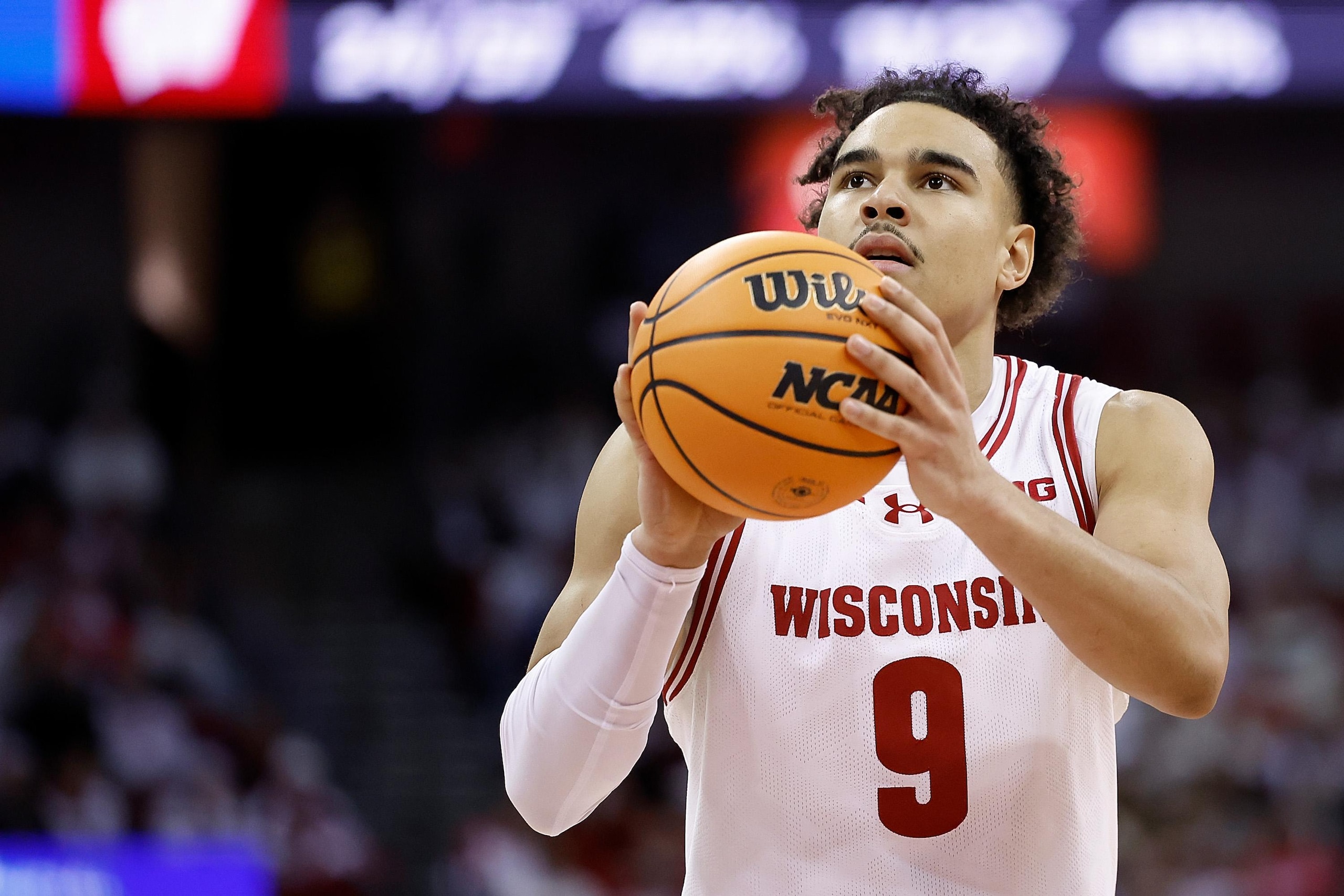
Current Resume: 19-5, NET: 15, RES: 10, QUAL: 16
Three Best Wins: Arizona, Ohio State, Pittsburgh (in Greenbriar)
Three Worst Losses: Michigan, at UCLA, at Marquette
At a quick glance, Wisconsin looks good for a possible No. 3 seed. As of Sunday morning, the only metric in which the Badgers weren't ranked 13th or better was BPI (21). They were also 7-5 against Quad 1 without any losses outside of that group. (Nor are any of those losses anywhere close to dropping to Quad 2).
Let's talk about those seven wins, though.
The home win over Arizona is excellent. Didn't look that way for a bit when the Wildcats were 4-5 overall, but they've won 13 of 14 and would probably climb up to a No. 2 seed if they beat Houston on Saturday. It was an ugly game with about a million fouls and free throws, but that 15-point victory is quite the piece of gold. (Shoutout, Rocco Miller.)
Beyond that, the other six Quad 1 wins—at Rutgers, at USC, at Iowa, at Northwestern, Pitt neutral and vs. Ohio State—are way closer to Quad 2 than they are to the top half of Quad 1.
In fact, if Quad 1 was home games vs. NET Top 25 (instead of 30), neutral games vs. NET Top 40 (instead of 50) and road games against NET Top 55 (instead of 75), Wisconsin would be 1-5 instead of 7-5.
Sure, the Badgers would still be extremely comfortably in the field, as they would be 11-0 vs. Quad 2 with one outstanding win and no bad losses.
They wouldn't be in the conversation for a No. 3 seed, though.
It's reminiscent of what Auburn did last season, going 1-5 in its six toughest games, but racking up a 10-0 Q2 record (24-0 vs. Q2-Q4) en route to a No. 4 seed (No. 15 overall). However, that Auburn team had way better predictive metrics than this Wisconsin team has, rated either fourth, fifth or sixth on KenPom for 10 consecutive weeks to end the season. That bought the Tigers at least a seed line.
A No. 5 seed feels about right for Wisconsin, but there are quite a few bracketologists out there right now with the Badgers on the No. 3 seed line.
At least we'll have an answer on this one soon, though, as the Badgers don't play again until after the Top 16 reveal on Saturday.

.jpg?w=2560 "Cardinals Giants Football")
.jpg?w=2560 "NFL investigating 2 referees for separate viral exchanges")
.jpg?w=2560 "Ward Nearly Walks Out of Presser ▶️")

.jpg?w=2560 "OBJ Calls Out Giants 😳")
.jpg?w=2560 "Tyreek Deal May Come Soon")