
USA vs. Germany: Winners and Losers from Women's World Cup 2015 Semifinal
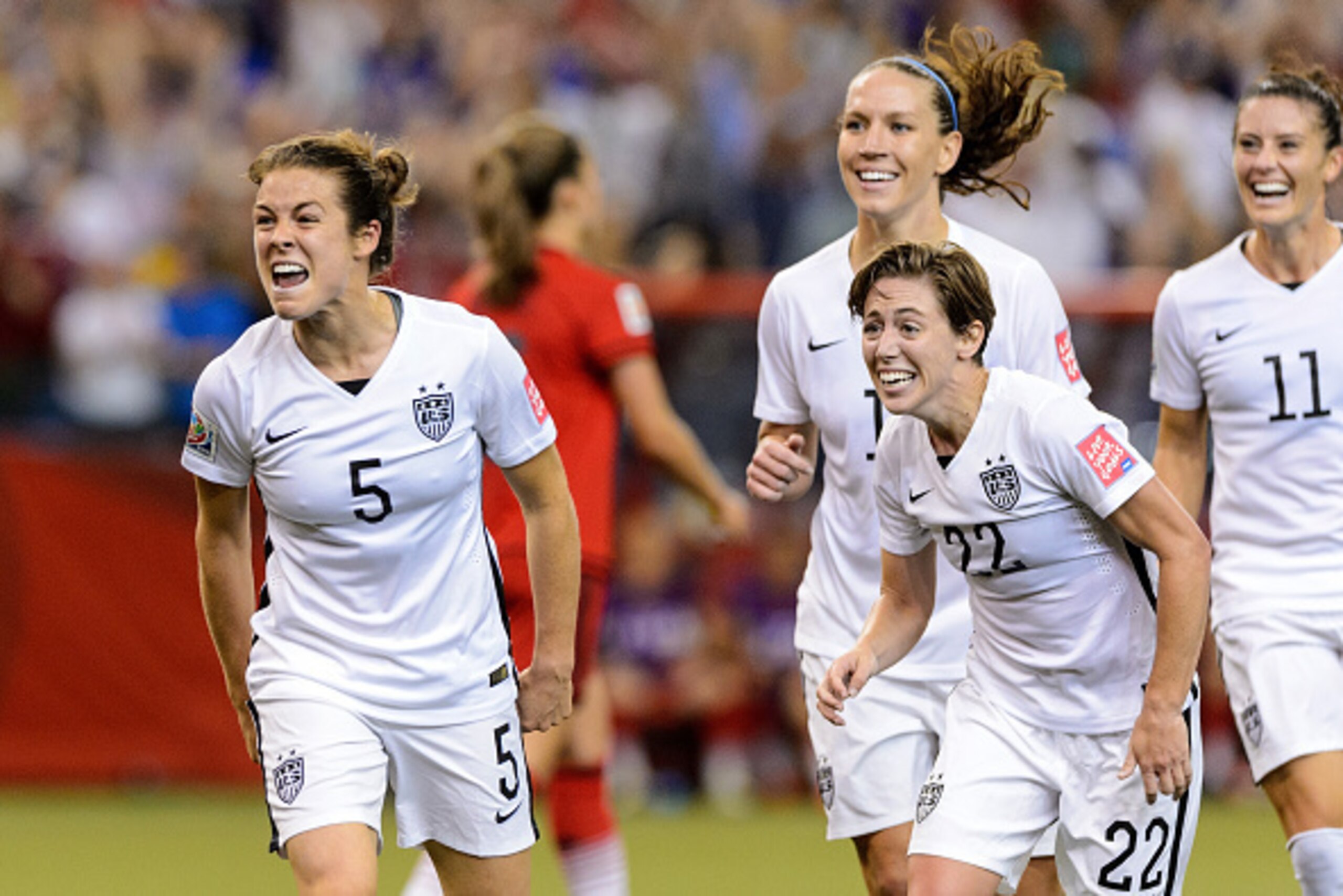
The United States advanced to the FIFA Women's World Cup final with a 2-0 victory over Germany in Montreal on Tuesday night in the semifinals.
Carli Lloyd converted a second-half penalty to give the U.S. the lead, and Kelley O'Hara added the second six minutes from time to seal the win. Germany's Celia Sasic missed a penalty of her own when the match was still scoreless midway through the second half.
The U.S. will now play either Japan or England in the final on Sunday in Vancouver, British Columbia.
Here are our choices for the winners and losers from Tuesday's match.
Winner: Football
1 of 5
Germany and the U.S. entered the World Cup as the No. 1 and No. 2 teams in the world, respectively. A matchup of such highly rated teams promised an enthralling encounter in the semifinal, and that's exactly what happened.
The game featured a brilliant mix of ingredients: goals, penalties, misses, controversy, injuries and, of course, plenty of drama. Coming as it did at the semifinal stage, the match even had lofty stakes.
Both teams held up their end of the bargain, and for that, fans of football were the winners. Any (neutral) observer who failed to enjoy the night's proceedings simply isn't a fan of the world's game.
Loser: Referee Teodora Albon
2 of 5
The U.S. was the better team overall and deserved to win the match, but the Americans benefited considerably from two poor calls by referee Teodora Albon.
In the 59th minute, Germany won a penalty kick after U.S. defender Julie Johnston pulled back Alexandra Popp inside the box. Albon correctly called the foul, but she failed to show Johnston a red card. By the letter of the law, she should have dismissed Johnston for denying a clear goalscoring opportunity. Instead, the American escaped with a yellow card and remained on the pitch for the full 90 minutes.
Johnston has been the best player of the tournament for the U.S. and the key leader of the defense. Her continued presence stabilized the American back line against Germany, and if she had been dismissed for the foul, the match might have been much different afterward—regardless of the fact that Celia Sasic sent her spot-kick wide.
The second bad call came eight minutes later, when the U.S. won a penalty of its own. This time, Albon correctly whistled German defender Annike Krahn for a foul on U.S. forward Alex Morgan, but the foul occurred outside the box. Albon incorrectly awarded a penalty, and Carli Lloyd converted it for what turned out to be the winning goal.
To reiterate the point above, the U.S. fully deserved its victory for a comprehensively impressive performance against Germany. But the Americans received help from two bad calls from the match referee. At the highest level—and the Women's World Cup is certainly that—referees should not make such potentially game-altering errors.
Winner: Carli Lloyd
3 of 5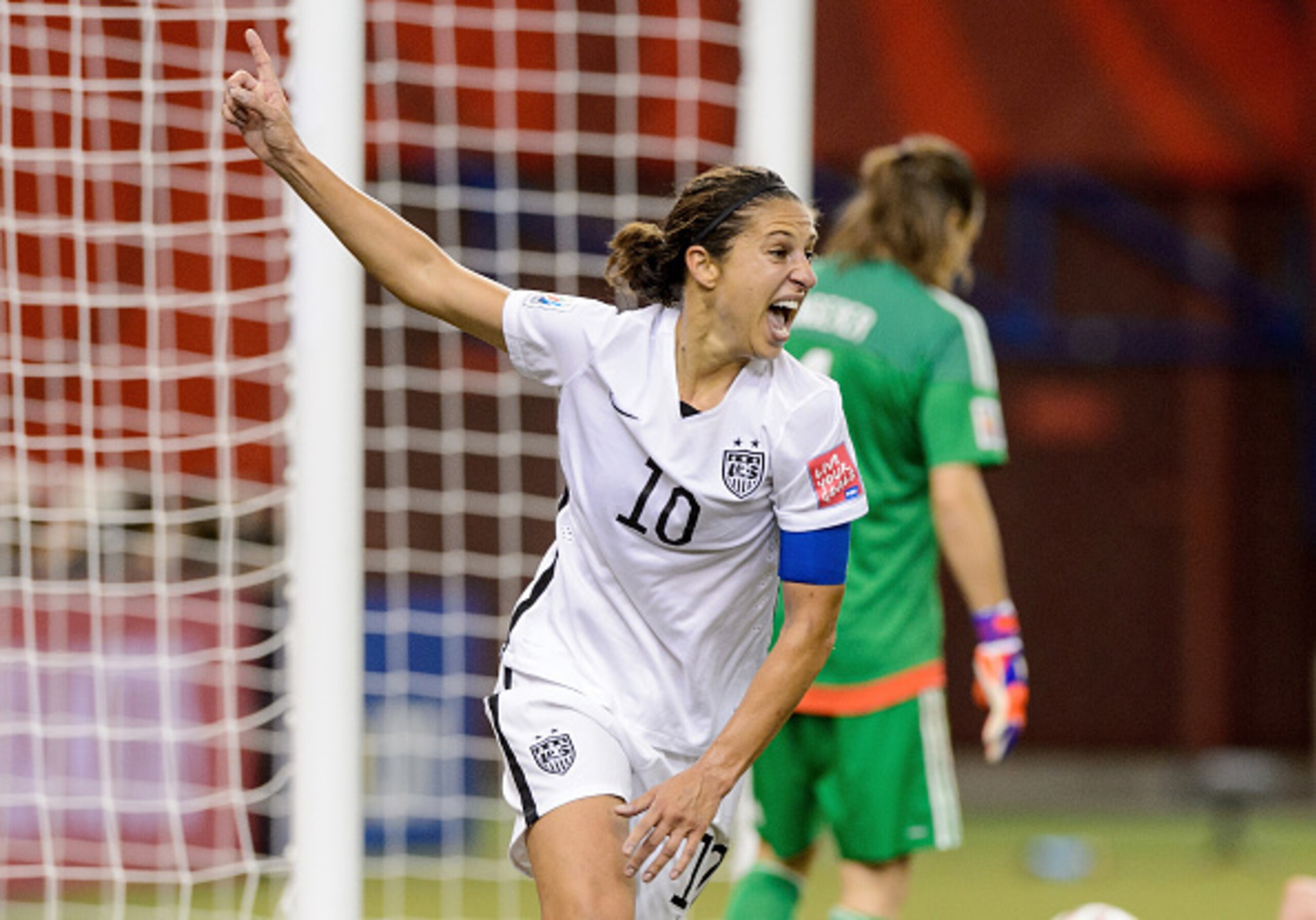
Carli Lloyd, the U.S. captain, scored the winning goal and assisted the second. It was a game-changing performance from the 32-year-old, one that could help cement her legacy as one of her country's legendary soccer figures.
To be fair, Lloyd might already hold that status. A 10-year veteran of the national team with more than 200 caps, Lloyd scored the winning goals in both the 2008 and 2012 Olympic gold-medal games.
But now, after scoring for the third straight match, Lloyd has a chance to take the next step and lead the U.S. to a third World Cup title. Doing so would surely place her among the long list of American soccer greats.
She might not score as many goals as Mia Hamm or longtime teammate Abby Wambach. But Lloyd's habit of coming through in big games has put her within touching distance of legendary status.



Losers: Celia Sasic and Germany's Offense
4 of 5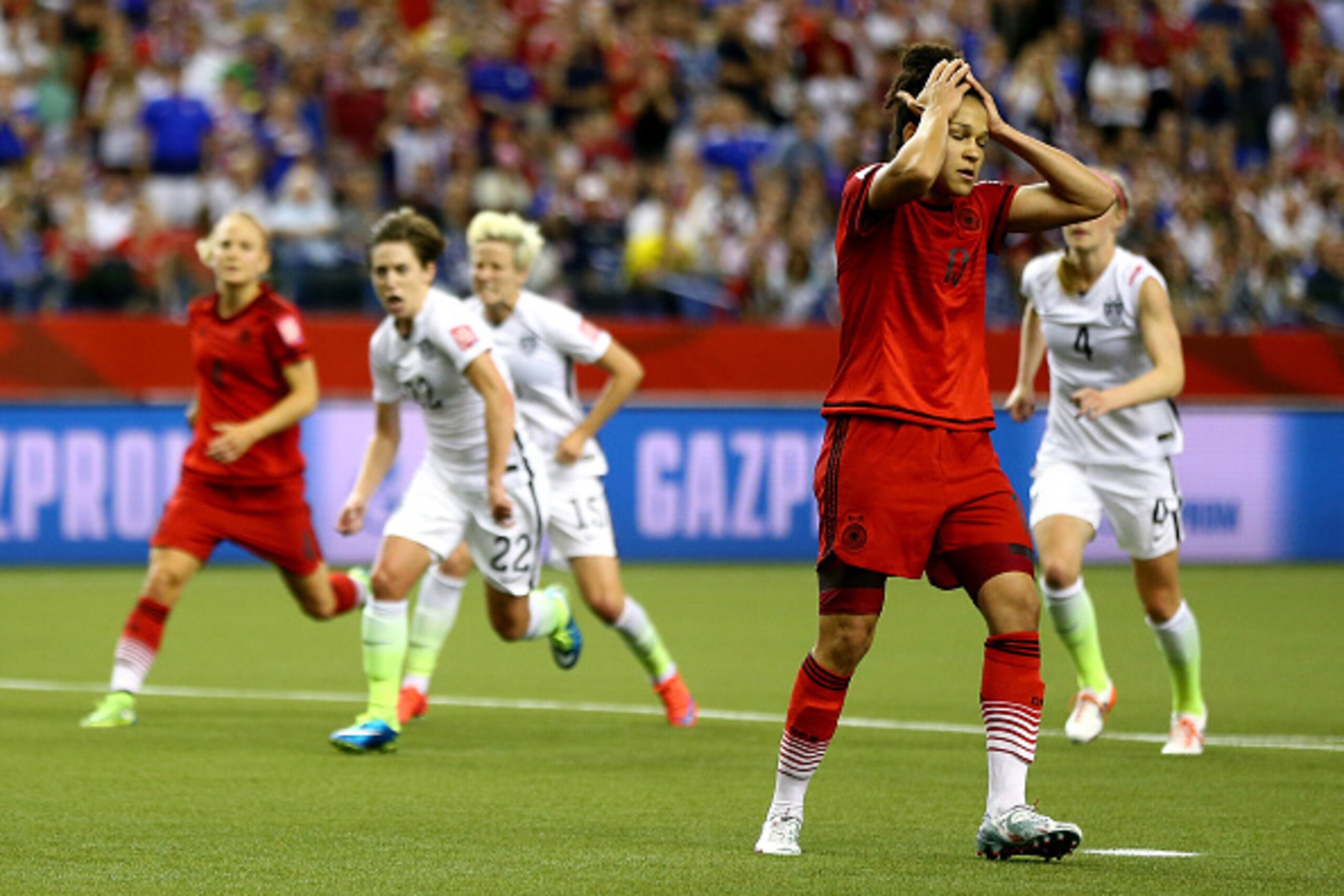
The game lasted 90 minutes, but it might have turned in the blink of an eye. In the 60th minute, Celia Sasic had a chance to put Germany ahead with a penalty kick. The Europeans had been second-best for much of the match to that point, though they had started to threaten the U.S. defense early in the second half.
But with a place in the final potentially on the line, Sasic fluffed her chance and pulled her penalty wide. It was a shocking development, in part because Germany had never before missed a penalty in the Women's World Cup—but also because Sasic was and still is the tournament's top scorer.
When the 27-year-old striker stepped up to the spot, it was almost a foregone conclusion that she would score. She didn't, and less than 10 minutes later, Carli Lloyd succeeded where Sasic had failed.
That turned out to be the difference between the teams in more ways than one on Tuesday. Not only did Lloyd—and later Kelley O'Hara—convert the crucial chance, but Germany also struggled to establish any kind of offensive rhythm against the Americans.
In five previous matches in this tournament, Germany had scored 20 goals and dominated opposing defenses. Against the U.S., head coach Silvia Neid's players mustered just one shot on target.
Winner: Jill Ellis
5 of 5
Jill Ellis faced a dilemma. She turned it into a match-winning choice.
In the previous round, the U.S. coach had drafted midfielder Morgan Brian into her starting 11 purely out of necessity. With Lauren Holiday suspended, Brian came into the lineup to partner Carli Lloyd in central midfield. Brian proved to be a revelation, providing the defensive cover necessary to set Lloyd free in the attack.
With Holiday eligible for selection again following her suspension, Brian's status was unclear. Would Ellis keep the inexperienced 22-year-old in the squad, or would she revert to her original first-choice lineup? In the end, Ellis did neither, and it worked.
In picking her squad to face Germany, Ellis gambled and changed the U.S. formation from a 4-4-2 to a 4-3-3. (Tactical analysts might argue that the U.S. played anything from a 4-2-3-1 to a 4-3-1-2 to a 4-5-1, but the point is that Ellis gambled with the change.)
The switch allowed all of Lloyd, Holiday and Brian to play together in midfield, while Megan Rapinoe and Tobin Heath filled the wide roles around center forward Alex Morgan.
What followed was the best U.S. performance of the tournament. Facing its toughest test of the tournament in the mighty top-ranked Germans, Ellis' team attacked beautifully and defended resolutely. Up to that point, the Americans hadn't given their supporters many reasons to expect a victory against a side like Germany.
But after that performance, it somehow felt inevitable. It wasn't, of course. The players were brilliant in a way they hadn't been before in the entire tournament. But Ellis deserves immense credit for making the right decisions ahead of the match.
"Full credit to Jill Ellis," former U.S. men's international Landon Donovan tweeted. "Changed to 4-3-3, (and) took a big chance by bringing Rapinoe off, substitute O'Hara scored second goal."
Ellis, meanwhile, gave credit to the women on the pitch.
"It's not about a system, it's about the players on the field," Ellis said on American television after the match (via Fox Sports). "And they did a great job. I mean they just played their hearts out…and I'm just so, so pleased for them."
Another performance like this one will surely produce a third World Cup title.
Follow @MiguelCominguez
.jpg?w=2560 "49ers Giants Football")
.jpg?w=2560 "WWE Raw Live Grades 🔠")


.jpg?w=2560 "Ertz Returning to Eagles")

.jpg?w=2560 "Dak Addresses 'Dumb' Old Romo Tweet 🤣")