
Predicting Stat Lines for Each Incoming 5-Star Freshman in 2015-16 CBB Season

Men's college basketball has grown increasingly reliant on freshmen over the past decade, particularly those of the 5-star variety. In honor of the NBA draft that many of those players will be attending a year from now, we took some time to project stat lines for each of the 25 highest-rated freshmen who will be taking the floor this November.
Last year, 5-star freshmen averaged 11.2 points, 5.3 rebounds and 2.0 assists per game.
Some of those players—D'Angelo Russell, Jahlil Okafor and Rashad Vaughn, to name a few—drastically exceeded those averages. Others—Theo Pinson and Cliff Alexander, to name a couple—not so much. Still, that was the average stat line and is roughly the average we aimed for with these projections for the top dogs in the 2015 class.
We based projections primarily on team need and fit, but the elite players did receive an extra boost based on the fact that they could excel anywhere.
Let's all agree to come back to this piece in a year and marvel at how accurate some of these predictions are while laughing hysterically at how misguided the others were.
Note: Star rankings courtesy of 247Sports.com. Players are listed in alphabetical order by last name.
Jalen Adams, Connecticut
1 of 25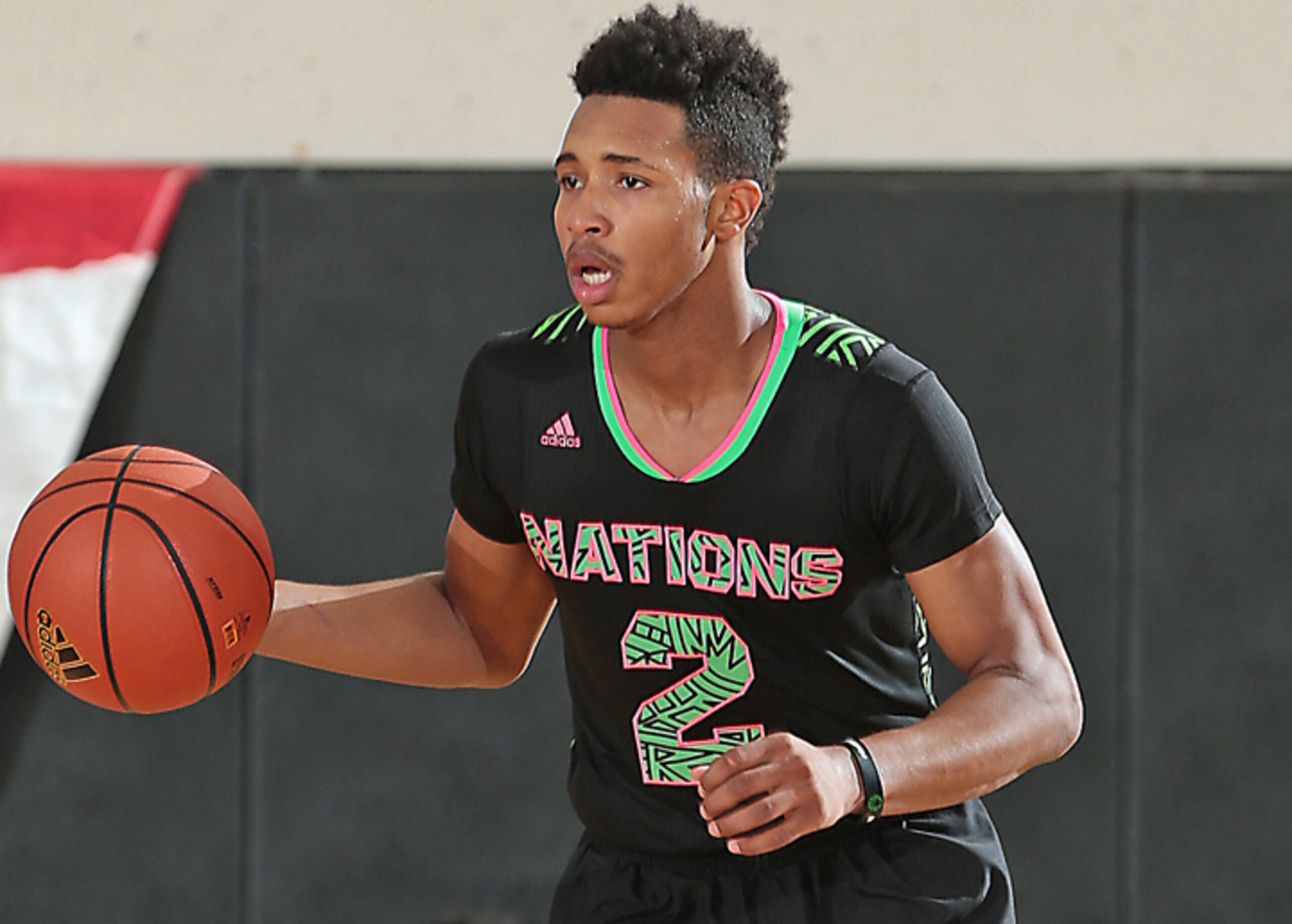
Projected Line: 9.6 PPG, 2.7 APG, 1.0 SPG
From A.J Price, Kemba Walker and Jeremy Lamb to Shabazz Napier and Ryan Boatright, Connecticut has had an embarrassment of combo guard riches for the past decade. Eventually, Jalen Adams seems like a safe bet to join that list. He's an excellent scorer on every level with above-average court vision.
It might not be this year, though. It's hard to fathom that a team that missed the 2015 NCAA tournament won't have a ton of room at the inn for its only 5-star recruit of the year, but the Huskies are stacked thanks to the transfer market.
Ten weeks ago, Adams was a surefire starter on this roster.
Now that the Huskies have Sterling Gibbs and Shonn Miller in the fold, I'm not so sure. In addition to those graduate transfers, coach Kevin Ollie still has Rodney Purvis, Daniel Hamilton, Amida Brimah, Kentan Facey, Philip Nolan, Sam Cassell Jr. and Omar Calhoun looking for playing time. That's a lot of depth chart for Adams to bypass for starter minutes.
Maybe Ollie relegates Purvis to the bench and starts the frosh from the outset of the season, but Adams is far less likely to average at least 25 minutes per game than most of the guys on this list. Because of that, he gets one of our more modest projections.
Dwayne Bacon, Florida State
2 of 25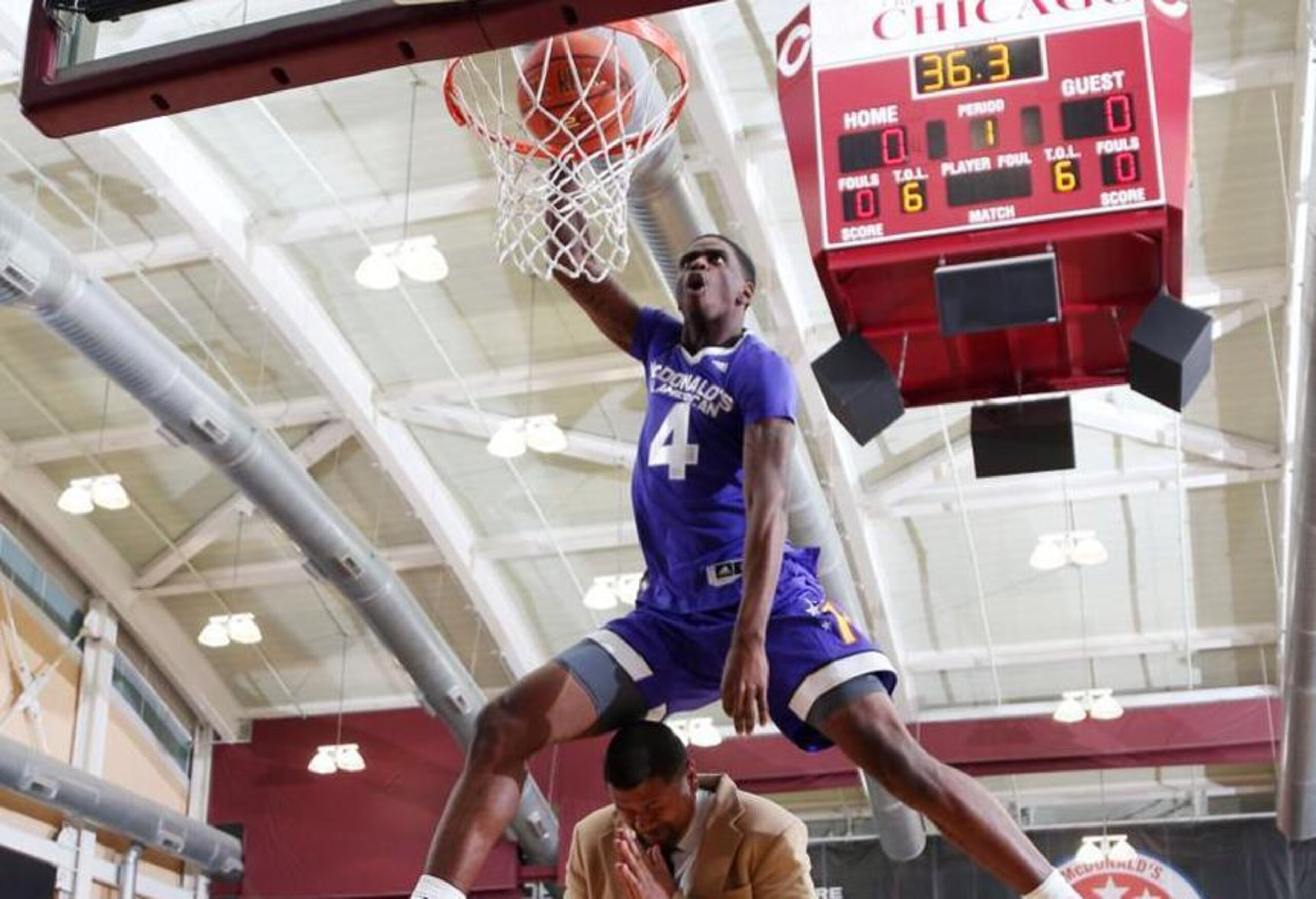
Projected Line: 10.5 PPG, 4.7 RPG, 2.1 APG, 1.4 SPG
As was the case for Jalen Adams, Dwayne Bacon might be crunched for playing time despite joining a squad that missed the Big Dance this past March.
Florida State only lost one player to graduation this offseason, and the departure of backup center Kiel Turpin has no impact whatsoever on how much Bacon will play on the perimeter.
What the Seminoles didn't lose were Xavier Rathan-Mayes, Montay Brandon and Devon Bookert—three guards who each averaged at least 34 minutes and 10 points per game last season. Moreover, Bacon is one of just three highly touted shooting guards in Leonard Hamilton's recruiting class this year, as Malik Beasley and Terance Mann also join the roster. The Seminoles also signed JUCO point guard Benji Bell in late March.
Add it all up and that's quite a backlog in the backcourt.
Bacon might be the best player of that bunch, but which upperclassman takes the major hit in playing time to give him the minutes his talent probably deserves? It would be a minor surprise if he ends up averaging more than 23 minutes per game this season, but we expect him to be an electric scorer in however many minutes he does play.
Antonio Blakeney, LSU
3 of 25
Projected Line: 14.9 PPG, 3.7 RPG
Ben Simmons is the prized jewel of LSU's 2015 class, but Antonio Blakeney could be the freshman who leads the Tigers in scoring.
While he isn't the best three-point shooter in this year's batch of recruits, he might be the best scoring guard. With a pull-up game that's nearly as lethal as his ability to finish at the rim, Blakeney has the skill set to be a one-man offense if opponents don't properly respect his talent.
Competition for playing time should be fairly minimal, as he figures to slide immediately into a starting job. Keith Hornsby will be LSU's primary deep threat, while Tim Quarterman and Simmons share the point-forward duties, leaving Blakeney with the freedom to find buckets wherever they're available on the court.
Look for him to be a 6'4" version of North Carolina's Justin Jackson, but ideally a version that hits his stride before late February.


Carlton Bragg, Kansas
4 of 25
Projected Line: 6.3 PPG, 3.7 RPG
On most rosters, Carlton Bragg would be a legitimate double-double threat. He has a strong face-up game with an ability to hit mid-range jumpers, a nose for rebounds and the size and instincts to swat a lot of shots.
On Kansas' roster, however, Bragg will have difficulty getting on the court.
With Perry Ellis coming back for his senior season and Cheick Diallo signing with the Jayhawks in late April, it's almost impossible to see Bragg playing his way into the starting lineup. Even worse, Bill Self still has Jamari Traylor and Landon Lucas on the frontcourt depth chart, so even backup minutes will be tough to come by.
Ten months from now, though, after Ellis and Traylor graduate and Diallo presumably goes pro? At that time, Bragg will be all but guaranteed a spot at the top of our list of projected breakout stars for the 2016-17 season. His career arc should be similar to Thomas Robinson's explosion after the Morris twins left Lawrence.
Isaiah Briscoe, Kentucky
5 of 25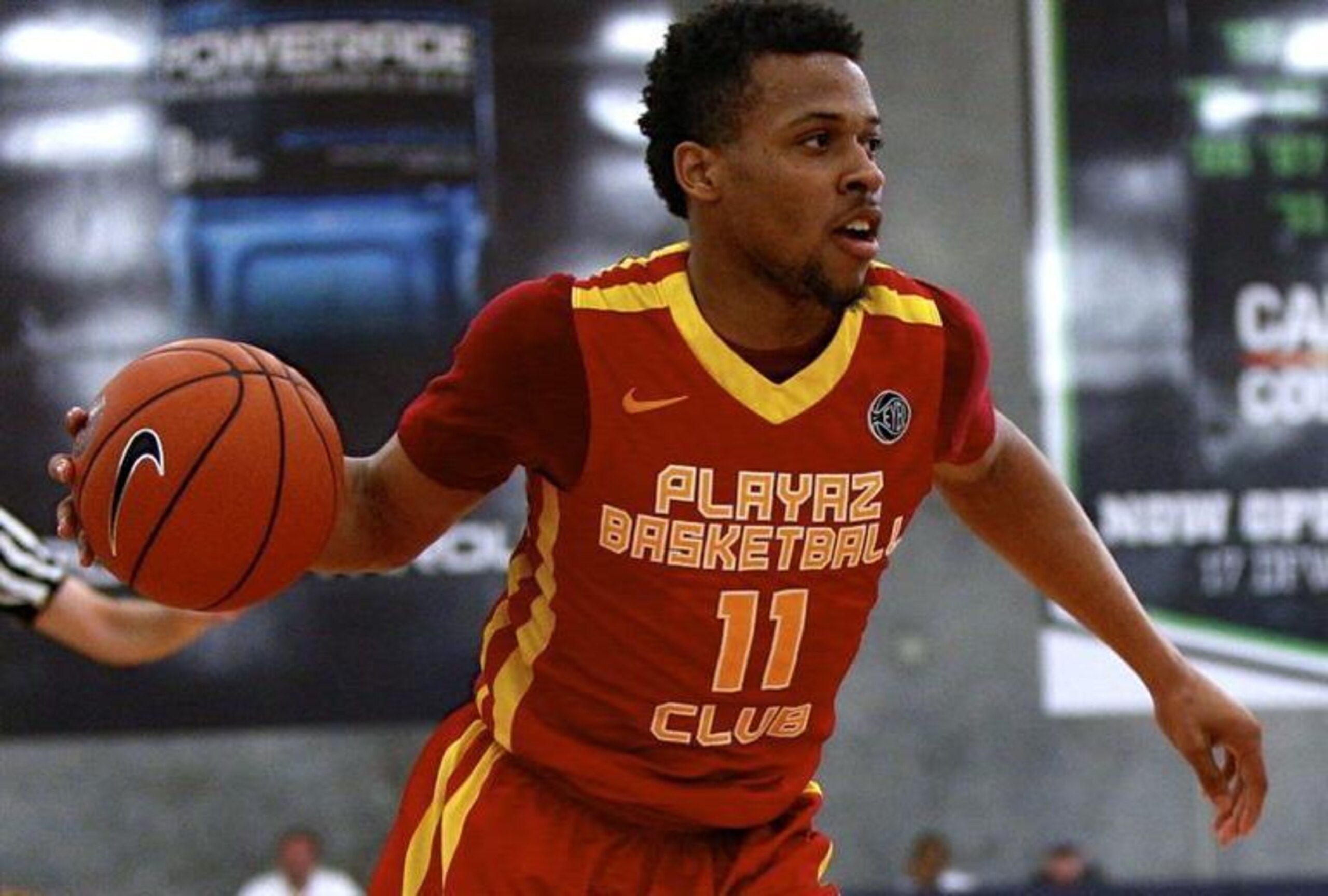
Projected Line: 7.1 PPG, 2.5 APG
Earlier this summer, Kentucky head coach John Calipari said on CoachCal.com that the platoon system was a one-and-done idea:
"If you ask me if I’m ever going to platoon again, my answer is NO. Last season was an absolute outlier. It’s just not the way I like to coach. I would rather play seven or eight guys because I believe that gives us the best chance to win. I think we wrote the book on platooning this year, but I hope we stick it on the shelf and never have to use it again.
"
But now that the Wildcats have signed Jamal Murray, it's hard to imagine them not employing some sort of platoon system in the backcourt. Even if we assume a three-guard lineup at all times, there's still a significant timeshare taking place among Murray, Tyler Ulis, Isaiah Briscoe, Charles Matthews, Mychal Mulder and Dominique Hawkins.
How does Briscoe fit into that equation? Positionless basketball or not, Ulis is all but guaranteed to serve as the primary ball-handler and Murray will probably get the nod as the secondary ball-handler in the starting lineup.
Does Kentucky really need a third point/combo guard playing 20-30 minutes per game? Rather than a guy like Briscoe who excels at creating his own shot, the Wildcats would probably be better suited with a spot-up shooter like Matthews getting the third share of starter minutes.
If that's the case and the platoon system is, in fact, dead, Briscoe might be headed for the type of 5-star reserve role that Kyle Wiltjer filled for Kentucky during the 2011-12 season.
Jaylen Brown, California
6 of 25
Projected Line: 16.8 PPG, 7.3 RPG, 1.5 SPG, 1.1 BPG
One of the top candidates to be named the 2015-16 National Freshman of the Year, Jaylen Brown has the build and talent—and even the hairstyle—to draw comparisons to Duke's Justise Winslow and Arizona's Stanley Johnson. In fact, he even figures to fill the same slightly-out-of-position role held by Winslow over the latter half of this past season.
Brown measured in at 6'6 ½" and 222 pounds at this past April's Nike Hoop Summit, so there's nothing small about this small forward. And he knows how to use that size to his advantage on both ends of the court. He's a plus defender who should rack up a respectable number of steals and blocks. On offense, he's a relentless driver who may well lead the nation in free-throw attempts.
As was the case with both Johnson and Winslow, if Brown can develop a more consistent three-point stroke, opposing teams will have little hope of stopping him.
Though he'll likely be drafted (in the 2016 lottery) to play the 3 in the NBA, Brown should spend most of his time as a stretch 4 for California. With Tyrone Wallace, Jabari Bird and Jordan Mathews all back for another year, the Golden Bears already have a lethal perimeter game.
Regardless of his position, Brown will be a stud. Look for all five of California's starters to log at least 30 minutes and 10 points on average, and don't be surprised if Brown swoops in and leads the team in scoring.
Jalen Brunson, Villanova
7 of 25
Projected Line: 10.9 PPG, 5.3 APG
On behalf of everyone who covers college basketball, I'd like to apologize in advance to Jalen Adams, Jaylen Brown and Jalen Brunson for the number of times that we will accidentally interchange their last names or the spelling of their first names this season. It's kind of crazy that three of the 25 best incoming players in the country have a similar first name.
Brunson will be the best passer of that trio, as we project him to record more assists this season than any other freshman. As was the scouting report on Duke's Tyus Jones a season ago, Brunson isn't overly athletic, but he has fantastic instincts and feel for the game.
As was also the case for Jones, Brunson is joining a team that already has a good lead guard in place. For Duke, Quinn Cook averaged 11.6 points and 4.4 assists while shooting 37.1 percent from three-point range as a junior. For Villanova, the final line on Ryan Arcidiacono's junior year was 10.1 points, 3.6 assists and 37.2 percent three-point accuracy.
Brunson and Arcidiacono will likely open the season sharing both the point and shooting guard duties, but look for the freshman to gradually pilfer the bulk of the ball-handling from the senior.
On a solid three-point shooting team that has recorded a high assist percentage over the past two years, the primary point guard should have little difficulty averaging at least five assists per game. And he's capable of creating his own shot off the dribble, which should lead to many nights of scoring in double figures.
Thomas Bryant, Indiana
8 of 25
Projected Line: 12.1 PPG, 10.2 RPG, 2.4 BPG
Thomas Bryant is a stone's throw away from guys like Ben Simmons, Jaylen Brown and Skal Labissiere on the list of top NBA prospects, but that shouldn't stop him from putting up big numbers as a freshman at Indiana.
That's because he is one of the most desperately needed additions in the country.
Led by Yogi Ferrell, James Blackmon Jr., Robert Johnson and Nick Zeisloft, the Hoosiers are going to put up some ridiculous numbers from three-point range. They averaged 9.4 made triples per game last season, and that number should only increase this year.
But in the frontcourt, Tom Crean's club is razor-thin—particularly with Hanner Mosquera-Perea and Devin Davis getting dismissed from the team in May. Troy Williams and Emmitt Holt are the best returning "big men," and they're each 6'7" on a good day.
In other words, the 6'10" freshman center is entering into an all-you-can-eat buffet of playing time.
Just by being on the court for 19.7 minutes per game, Mosquera-Perea averaged 6.5 points, 4.3 rebounds and 1.3 blocks per game. Bryant is bigger, better and headed for more playing time than him. With 30-32 minutes per game as the team's only true post presence, Bryant should be a double-double machine. If he's not, Indiana may need to set all-time team records for three-point shooting to play as well as expected.
Cheick Diallo, Kansas
9 of 25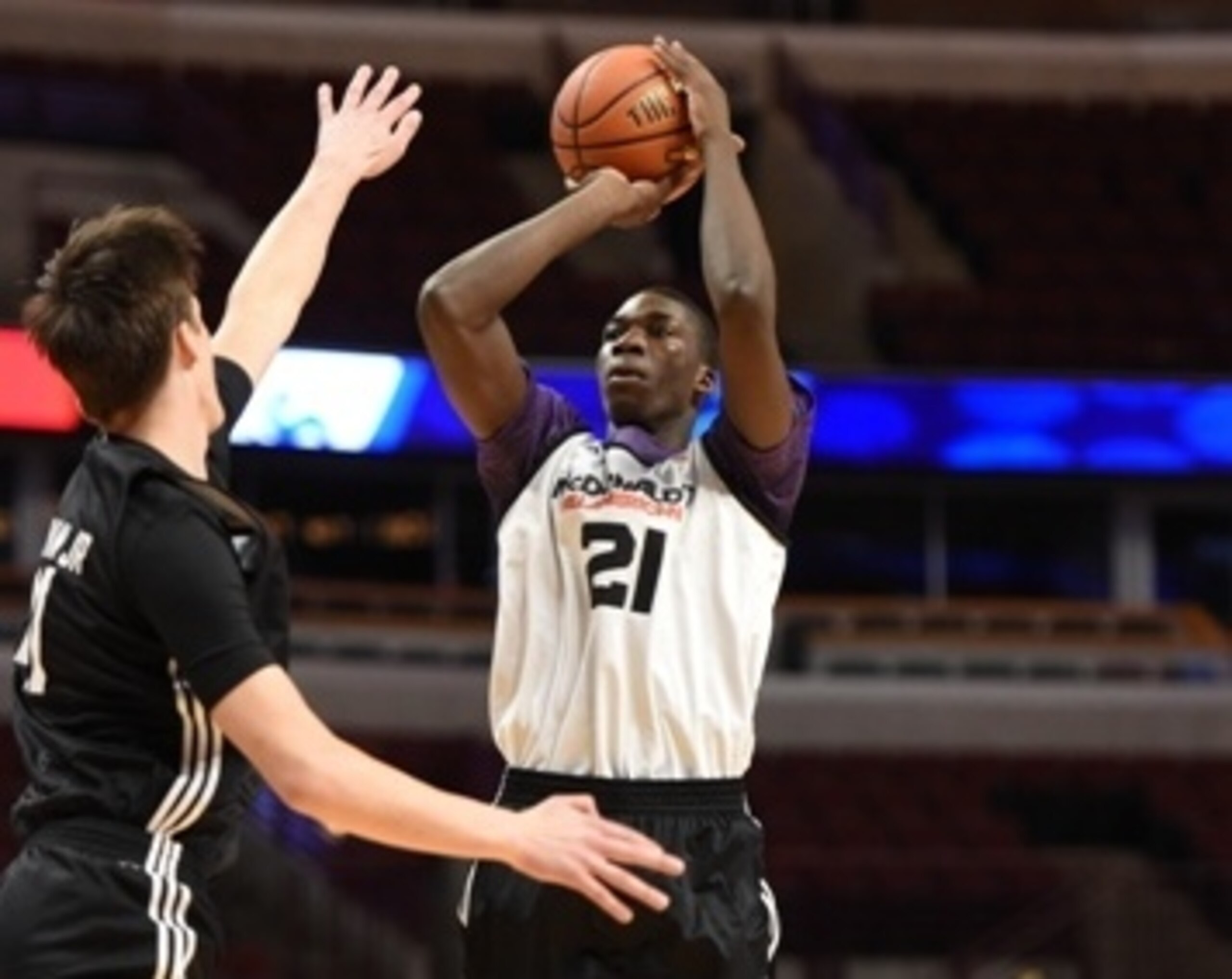
Projected Line: 9.8 PPG, 9.9 RPG, 2.6 BPG
Cheick Diallo isn't quite the talent that Joel Embiid was two years ago, but he fills a big void on Kansas' roster all the same.
He's "only" 6'9", but Diallo is wired like a center and possesses more than enough athleticism and aggressiveness to fill that role. He is an insatiable rebounder who will block a lot of shots. Like a young Rico Gathers, Diallo has the type of game that will lead to some double-digit scoring nights without a single play being drawn up for him.
As long as he commits to being a center and doesn't fall in love with his unreliable mid-range game, he should be a star. The Jayhawks already have one face-up big man in the post in Perry Ellis. They don't need a second one—especially if Sviatoslav Mykhailiuk is draining shots this year as the primary small forward.
Basically, we're looking for Diallo to be the player Cliff Alexander was supposed to be last year. His post moves aren't anything close to polished, but his motor alone could make him one of the most frustrating players to try to contain.
Perry Dozier, South Carolina
10 of 25
Projected Line: 13.7 PPG, 3.6 APG, 3.8 RPG
While most 5-star guys are chasing championships with annual powerhouses, Perry Dozier figures to be the leader of a team that hasn't been to the NCAA tournament since 2004.
John Calipari has spoken this summer about positionless basketball at Kentucky, but here's a freshman for South Carolina who really doesn't fit any of the conventional molds. A 6'6" ball-handler who doesn't have a great jump shot but passes, rebounds and defends well, Dozier could play 1 through 3 and conceivably fill in as a 4 in a pinch.
Most likely, though, he'll replace the departing Tyrone Johnson as Frank Martin's primary point guard.
If the Gamecocks were a better shooting team, he might be headed for six or seven assists per game. His court vision is that good. But South Carolina's 2-guards are not good shooters, which means Dozier will routinely create his own shot and likely serve as the team's leading scorer.
Whether that's enough to get South Carolina back to the Big Dance is yet to be determined, but it should result in Dozier putting up some of the most impressive numbers among all freshmen.
Henry Ellenson, Marquette
11 of 25
Projected Line: 14.8 PPG, 7.8 RPG, 1.6 BPG
Marquette hasn't been snakebitten for anywhere near as long as South Carolina, but like Perry Dozier, Henry Ellenson is joining a program that didn't even sniff the NCAA tournament last season.
Moreover, Ellenson is heading to a roster where he is absolutely, desperately needed. Marquette loses Juan Anderson to graduation and Steve Taylor to the transfer market, leaving Luke Fischer as the only returning big man.
Even if Ellenson wasn't that talented, his size alone (6'10", 230 lbs) would be enough for him to play serious minutes on this team.
But he is talented. He's very talented. It's hardly a stretch to assume that he'll immediately lead the Golden Eagles in both points and rebounds as a freshman.
Frankly, he might be the best power forward in the Big East, assuming we can categorize Daniel Ochefu and Jalen Reynolds as centers. If Ellenson is even remotely as good as advertised, it's tough to picture players like Andrew Chrabascz, Kris Jenkins, Isaac Copeland and Ben Bentil slowing him down. He and Fischer should be the driving forces of Marquette's return to the top half of the conference standings.
Brandon Ingram, Duke
12 of 25
Projected Line: 15.3 PPG, 6.7 RPG, 1.7 BPG
Duke is loaded with talented guards, but it's Brandon Ingram who will determine how well the Blue Devils defend their national championship and what they look like in the process.
Thanks to a recent growth spurt, the 6'9" forward has the height to be Duke's primary power forward. However, he may need to pack on some mass to handle the rigors of a season spent jousting for position in the paint.
If he can get to the point of playing the 4 and hanging with guys like Brice Johnson and Anthony Gill, that would allow coach Mike Krzyzewski the freedom to regularly play three of Derryck Thornton, Grayson Allen, Luke Kennard and Matt Jones on the perimeter—arguably the team's most potent offensive option.
If, instead, Ingram needs to remain a small forward, that's less playing time for the wings and more minutes for big men like Sean Obi, Amile Jefferson, Chase Jeter and Marshall Plumlee.
Either way, Ingram is going to play a ton. He's the only Duke player that Draft Express projects to even get drafted in 2016. That he happens to be No. 4 on that list only further cements his status as the most talented player on the roster. Whether he plays the role of Rodney Hood or Jabari Parker, expect the Blue Devils to turn to him time and again when they need a bucket.
Chase Jeter, Duke
13 of 25
Projected Line: 5.7 PPG, 4.6 RPG, 1.2 BPG
The player most impacted by the role that Brandon Ingram plays will be Chase Jeter.
If Ingram spends most of his minutes as Duke's power forward, Jeter will have difficulty even getting on the floor. Players rarely redshirt at Duke, but that might be the best career move for Jeter if it becomes apparent that Ingram is destined for playing time in the post.
But even if Ingram doesn't play a single minute at the 4, Jeter will still be battling for playing time with several other players. Amile Jefferson and Marshall Plumlee should have significant roles as seniors, and Rice transfer Sean Obi should demand some minutes after averaging 11.4 points and 9.3 rebounds as a freshman two years ago.
As was our argument for Kansas' Carlton Bragg, Jeter could be the type of guy who just barely gets his feet wet as a freshman before exploding as a sophomore once all the roadblocks to playing time are out of his way.
Luke Kennard, Duke
14 of 25
Projected Line: 8.1 PPG, 1.2 APG
It's a coincidence that Duke has three consecutive players alphabetically, but at least it gives us the opportunity to consider them all at once.
With all due respect to Chase Jeter and Luke Kennard, I'm assuming a Blue Devils starting five of Derryck Thornton, Grayson Allen, Matt Jones, Brandon Ingram and either Amile Jefferson, Sean Obi or Marshall Plumlee.
Kennard is probably the best incoming three-point shooter in the country, but it's unlikely he'll supplant Allen or Jones in the starting rotation unless one of them struggles or suffers an injury.
If we can agree that Kennard is probably going to be in a reserve role, 8.1 points per game would be pretty impressive. That's better than the 7.9 points per game that L.J. Peak scored last year for Georgetown, and that freshman shooting guard averaged 25.3 minutes per night.
At least for one year, look for Kennard to play the type of role that Andre Dawkins played as a senior at Duke. He only played 13.7 minutes per game, but he averaged 7.9 points by attempting one three-pointer for every three minutes on the court and sinking 42.1 percent of them.
Skal Labissiere, Kentucky
15 of 25
Projected Line: 15.8 PPG, 9.6 RPG, 2.3 BPG
Of the seven Kentucky Wildcats who declared for the NBA draft, Dakari Johnson's decision was arguably the most surprising. He played the fewest minutes and scored the fewest points of the bunch. Over Kentucky's final 12 games, he averaged just 12.6 minutes and 3.8 points per contest as Willie Cauley-Stein and Karl-Anthony Towns took the lion's share of the frontcourt minutes.
Then again, with Skal Labissiere on the way and Marcus Lee and Alex Poythress coming back for another season, it was probably brilliant for Johnson to skip town and make some money rather than spend another season in a backup role.
Because even though Johnson was a 5-star player who now has two years of experience, that's how special Labissiere could be. And thanks to Johnson's decision, there's no question whatsoever that Labissiere is No. 1 on the depth chart at center and should be headed for a boatload of playing time.
His body type is much more Cauley-Stein than it is Towns, but don't let the wiry frame fool you. Labissiere is an exceptional talent with respectable range and plenty of ceiling for growth. Unless Lee suddenly develops into a reliable, full-time player, Labissiere will be Kentucky's first and only dominant post presence. Tyler Ulis and Jamal Murray will find ways to get him the ball on a regular basis.
Jamal Murray, Kentucky
16 of 25
Projected Line: 12.4 PPG, 3.7 APG
All is once again right with the world, as John Calipari finally signed another 5-star recruit this week, getting a commitment Wednesday night from Canadian stud Jamal Murray. Kentucky was already going to be good, but now the Wildcats are back in the running to be ranked No. 1 in the nation when the season begins.
In Murray, Calipari is getting a real triple threat of a ball-handler. He can score from anywhere on the court but particularly excels in the mid-range game with a pull-up jumper that is second to none.
With Murray and Tyler Ulis taking turns running the dribble-drive-motion offense, Kentucky could be even more efficient on offense than it was a season ago.
The big key there, though, will be Murray's ability to develop as a passer. He does a phenomenal job of creating his own shot, but that only goes so far if the defense doesn't need to worry about his ability to find an open teammate while penetrating. As soon as he displays an ability and propensity for kicking out to an open teammate, he could become the best combo guard in the nation.
Malik Newman, Mississippi State
17 of 25
Projected Line: 17.9 PPG, 3.1 APG, 2.4 RPG
Ladies and gentlemen, meet your projected highest-scoring freshman for the 2015-16 season.
Not only is Malik Newman arguably the best scoring guard in this year's class, but he is in the perfect position with the perfect coach to set the nets on fire.
If you'll recall from his years at UCLA, Ben Howland knows how to recruit and coach lead guards. If you don't believe me, just ask Jordan Farmar, Arron Afflalo, Darren Collison, Russell Westbrook, Jordan Adams, Kyle Anderson and Shabazz Muhammad—each of whom put up big numbers for the Bruins before moving on to the NBA.
And those players were on good teams with multiple viable scoring options. That isn't so much the case at Mississippi State. The Bulldogs had a below-average offensive efficiency while putting together a 13-19 record last season, per kenpom.com.
It probably won't result in an invitation to the NCAA tournament, but Newman is going to score a ton of points for a team that proved repeatedly incapable of scoring without him a season ago. Expect the type of individual offense that we saw from Rashad Vaughn at UNLV last year.
Ivan Rabb, California
18 of 25
Projected Line: 12.5 PPG, 10.9 RPG, 1.5 BPG
California is widely regarded as one of the top 10 teams heading into next season, but imagine where the Golden Bears would be right now without those late commitments from Jaylen Brown and Ivan Rabb.
Kingsley Okoroh and Kameron Rooks are the only players on the roster from last year taller than 6'6" who scored at least 10 points in either of the past two seasons. And it's not as if either one was particularly great. Okoroh scored 60 points last year as a freshman, and Rooks scored 33 points in 2013-14 before missing last season with a torn ACL.
Not only would the Bears be hurting in the frontcourt, but there's a reasonable expectation that Tyrone Wallace would have left for the NBA rather than sign up for another season without a tournament appearance.
But that isn't the case. This team is loaded, and Rabb should be a monster in the paint—if only because he needs to be. Unless Okoroh or Rooks emerges from nowhere to become a viable weapon, Rabb is pretty much all Cal has for rebounds and back-to-the-basket buckets.
His efficiency may take a hit against some of the big men in the Pac-12 (Jakob Poeltl, Kaleb Tarczewski, Jordan Bell, etc.), but it's going to be difficult for opponents to keep him from recording double-doubles because of his skill and the lack of other frontcourt options on the roster.
Ben Simmons, LSU
19 of 25
Projected Line: 17.1 PPG, 11.1 RPG, 2.3 APG
Lather, rinse and repeat Ivan Rabb's narrative for Ben Simmons.
With Jordan Mickey and Jarell Martin both declaring for the draft, LSU doesn't have much left on the roster to stand in Simmons' way. The Tigers have a few big men in Aaron Epps, Darcy Malone and Elbert Robinson, but not a single one of them showed much of anything last season to indicate they'll replace Simmons for any reason other than foul trouble or sheer exhaustion.
Even if they had viable frontcourt options, though, do you really think that Johnny Jones wouldn't be able to find ample playing time for the No. 1 player in this year's class?
Whether Simmons or Labissiere deserves to be the No. 1 pick in the 2016 draft is a discussion for another time many months from now, but there's no denying that he's a talented player who could put up big numbers on any roster. That he's entering into a situation where he becomes the team's best interior threat by default only adds to his already enormous potential.
It's going to be one heck of a year for SEC freshmen. Between Simmons, Labissiere and Newman, the conference could have the nation's three highest-scoring first-year players.
Ray Smith, Arizona
20 of 25
Projected Line: 4.8 PPG, 3.1 RPG
After five straight instances of a player expected to excel at least partially because of the lack of teammates standing in their way, Ray Smith brings us back to the side of the fence where players could struggle to get off the bench.
Despite losing T.J. McConnell, Stanley Johnson, Rondae Hollis-Jefferson and Brandon Ashley, coach Sean Miller still has more quality players than he can possibly keep happy.
Even before we factor in the new freshmen, Arizona could put together a starting lineup of Parker Jackson-Cartwright, Gabe York, Elliott Pitts, Ryan Anderson and Kaleb Tarczewski with Kadeem Allen and Dusan Ristic off the bench. Now consider that the Wildcats are also adding Smith, Allonzo Trier, Chance Comanche and Justin Simon, and there are way too many mouths to feed.
If Smith was the best freshman of the bunch, maybe he could play his way into the starting lineup. However, Trier is probably the best incoming player, so he'll be the one legitimately battling for a job.
Smith might be lucky to serve as the second player off the bench. And that's without accounting for his recent injury history.
Smith tore his ACL last July. Michael Luke of Scout.com spoke with Smith's father this past March and was told, "You have to remember, we were so focused on getting him back to health that he literally didn't touch a basketball for about seven months. Everything we did was with a goal of getting him back to being 100 percent physically."
We're not calling him a "prime candidate" for a redshirt, but given the roster situation and his inability to play for many months, it wouldn't be a huge surprise if he chose to postpone his collegiate debut until the 2016-17 season. If he does play this year, it will probably be sparingly.
Diamond Stone, Maryland
21 of 25
Projected Line: 10.3 PPG, 6.8 RPG, 1.7 BPG
More impressive than Diamond Stone's final stat line will be the limited number of minutes in which he gets them. He won't have the best per-game numbers in the country, but look for the big man to be a per-40 machine akin to what Myles Turner and Karl-Anthony Towns accomplished this past season.
That's because Maryland is practically overflowing with talent. Stone will probably start at center alongside Georgia Tech transfer Robert Carter, but the Terrapins also have Damonte Dodd and Michal Cekovsky requesting and deserving playing time. And coach Mark Turgeon can't very well employ a three-man frontcourt with Melo Trimble, Rasheed Sulaimon, Jake Layman, Jared Nickens and Dion Wiley all needing minutes in the backcourt.
If you should ever need convincing that Maryland deserves to be in the conversation for No. 1 in the nation in November, just go ahead and read that paragraph again. This nine-man rotation is ridiculous.
Whether he plays 20 or 25 minutes per night, Stone will be fun to watch. It will be a while before we see a center who begins his college career as polished as Jahlil Okafor did, but Stone has excellent feet and plenty of finesse that could lead to some forced comparisons between the two.
Caleb Swanigan, Purdue
22 of 25
Projected Line: 8.7 PPG, 5.1 RPG
Without fail, there's always one decision by a 5-star player that completely befuddles me.
Caleb Swanigan to Michigan State made perfect sense. He probably would have needed to battle for minutes with Gavin Schilling, Matt Costello and Deyonta Davis, but he's also probably more talented than all three of those players, so it's a battle he likely would have won.
Backing out of that commitment to Michigan State to play for Purdue, however, doesn't make any more sense now than it did five weeks ago.
Early reports are that Rapheal Davis and Vince Edwards are adjusting their game to make room for Swanigan at power forward, but there's also the matter of 7'0" A.J. Hammons and Isaac Haas on the roster for another season.
As one of the last big-name players to pick a school, Swanigan could have gone just about anywhere. Michigan State would have been a good fit, but Michigan would have been even better. He could have been the star big man who helped elevate the Wolverines to a top-10 ranking.
Instead, he decided to join a crowded frontcourt on a team that frankly doesn't get much national attention. Maybe he'll prove me wrong and immediately blossom into a star, but my guess is he won't start to shine until 2016-17 when Hammons and Davis are gone.
Derryck Thornton, Duke
23 of 25
Projected Line: 12.7 PPG, 3.9 APG, 2.1 SPG
Between Tyus Jones, Austin Rivers and Kyrie Irving, Mike Krzyzewski has had a pretty good run on freshman point guards in recent years.
With Derryck Thornton, it shouldn't be too hard to keep that trend going, because he is probably the best point guard in this year's class.
His basketball IQ is off the charts. It's as if he's playing the game in slow motion while also seeing two moves ahead of everyone else. There might be a bit of a learning curve as he not only advancing to the collegiate level but reclassified to get there a year earlier. However, the game has come so easily to him thus far that it's hard to imagine he won't make the necessary adjustments to excel in short order.
What will be really interesting to watch is how well he learns to play with his new toys.
With some combination of Grayson Allen, Matt Jones and Luke Kennard on the perimeter and Brandon Ingram taking up space down low, Thornton should have little difficulty racking up assists when he isn't busy making his own shots.
One of his biggest strengths, though, is his defense, which is something that really hasn't been the case with Duke point guards in recent years. We're not expecting a clone of Briante Weber or anything, but his on-ball pressure could be the X-factor that pushes the Blue Devils over the top.
Allonzo Trier, Arizona
24 of 25
Projected Line: 12.7 PPG, 3.1 RPG, 1.2 APG
While Ray Smith might have trouble finding playing time this season with the Wildcats, Allonzo Trier's ability to score will all but demand that he step foot on the court on a regular basis.
As deftly worded by 247Sports' Matt Jessen-Howard, Trier is "an efficient ball hog." Those words rarely go together, as players tend to become less efficient the more that they're asked to shoot, but Trier did the vast majority of his team's scoring in EYBL and arguably should have been taking even more shots.
After losing Stanley Johnson and Rondae Hollis-Jefferson, Arizona probably needs a go-to guy like Trier. Gabe York is a great shooter, but he isn't a great scorer. Maybe Kadeem Allen fills that role, and Trier serves as a primary backup, but there's a better than slim chance that Trier's ability to produce at all three levels will result in a starting job.
If he gets the job and remains the efficient scorer that he has been over the past several years, Arizona will be in great shape to keep California from claiming its Pac-12 throne.
Stephen Zimmerman, UNLV
25 of 25
Projected Line: 14.8 PPG, 9.2 RPG, 1.8 BPG, 1.6 APG
Pray tell, who else is going to lead the way for UNLV this season?
Four of the Rebels' five leading scorers either graduated or left early for the draft.
Patrick McCaw is their best returning scorer, but his impact as a shooting guard does little to affect what Stephen Zimmerman will do in the paint. Goodluck Okonoboh is a good player, but he's more of a defensive stalwart than an offensive juggernaut. But his ability to hold down the fort in the post will allow Zimmerman to play his preferred face-up game.
Christian Wood averaged 15.7 points and 10.0 rebounds last season as UNLV's power forward, and that was with Rashad Vaughn taking nearly 33 percent of the team's shots while he was on the court. Zimmerman might be a better player than Wood, and he's definitely in a better position than Wood was to be the team leader in field-goal attempts.
Really, the only question here is how many minutes he can play. If he has the conditioning to log 32 minutes per night, this projected line might be underselling his potential impact. UNLV has had at least one player average a double-double in three of the past four seasons, and the other year was the one in which Anthony Bennett turned 16.1 points and 8.1 rebounds per game into the No. 1 overall pick.
In other words, it wouldn't be the first time a Rebel put up crazy numbers.
Kerry Miller covers college basketball for Bleacher Report. You can follow him on Twitter @kerrancejames.


.jpg?w=2560 "Latest Peyton-Colts Rumors")