
Predicting the Best 6th Men in College Basketball in 2015-16 Season
College basketball fans are wired to think about the starting five.
But it's not always that simple. Some teams are deeper than that. Some players simply perform better—or strategically give their teams a sharper edge—by coming off the bench after tipoff.
We're here to celebrate some of those guys—the ones who may not hear their names called during raucous pregame introductions, but they're soon after making their presence felt. And there's no rule that says they can't be around during crunch time.
There will certainly be some freshmen in the mix (though how many highly recruited newcomers are dreaming about sixth-man roles?), but we'll examine older guys who have been thrust into action before.
There are some players who could be back in that role again, which shouldn't be considered an insult.
The trick for some players—and the best thing for the group—is when they develop a sixth sense and, in the immortal words of The Rock, know their role.
Here's a look at those top reserves.
Gabe York, Arizona
1 of 11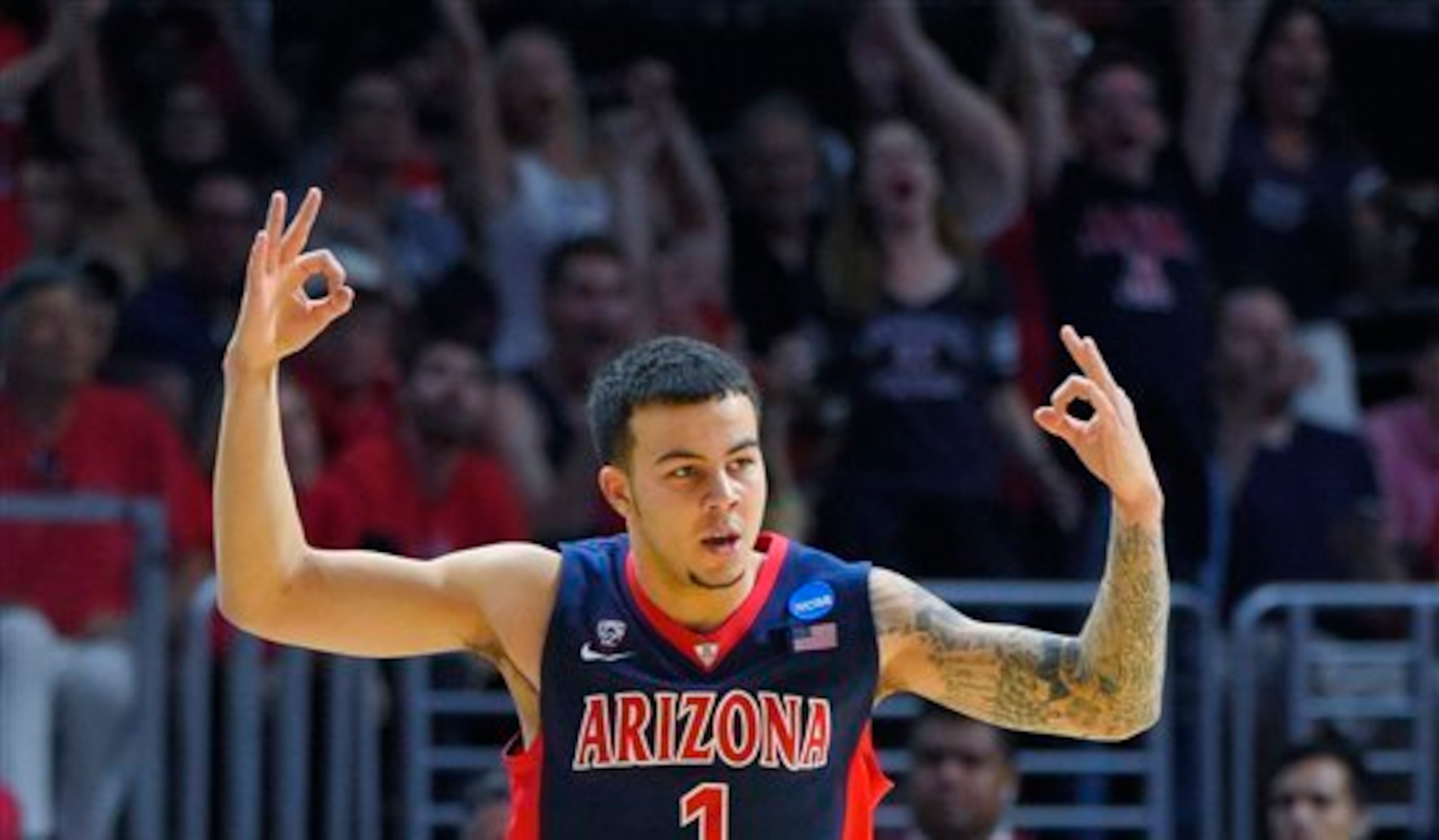
We'll start with what could be an unfair one or could be spot-on.
Arizona's senior-to-be actually started 13 games last year, but the Wildcats note that he was among the first substitution group a team-high 18 times during their run to the Elite Eight.
Gabe York averaged 9.2 points, 2.1 rebounds and 1.2 assists in 23.1 minutes per game and—perhaps most impressively—shot 40 percent from three-point range and 81.1 percent from the free-throw line.
Considering all that UA lost to the NBA ranks (including Stanley Johnson, Rondae Hollis-Jefferson, Brandon Ashley and T.J. McConnell), it might be fair to say York's going to step right in and be a starter.
York led Arizona in scoring four times and reached double figures in points on 18 occasions.
But how about taking this into consideration: York's team might just be better off with him in the same role.
Sean Miller could have highly touted freshman Allonzo Trier in the starting five, and York could keep doing what he does. It certainly wouldn't keep York out of the game at the end.
In theory, Trier's collegiate inexperience would get the best of him in some cases. Then York's there as a more than capable understudy.
Marshall Plumlee, Duke
2 of 11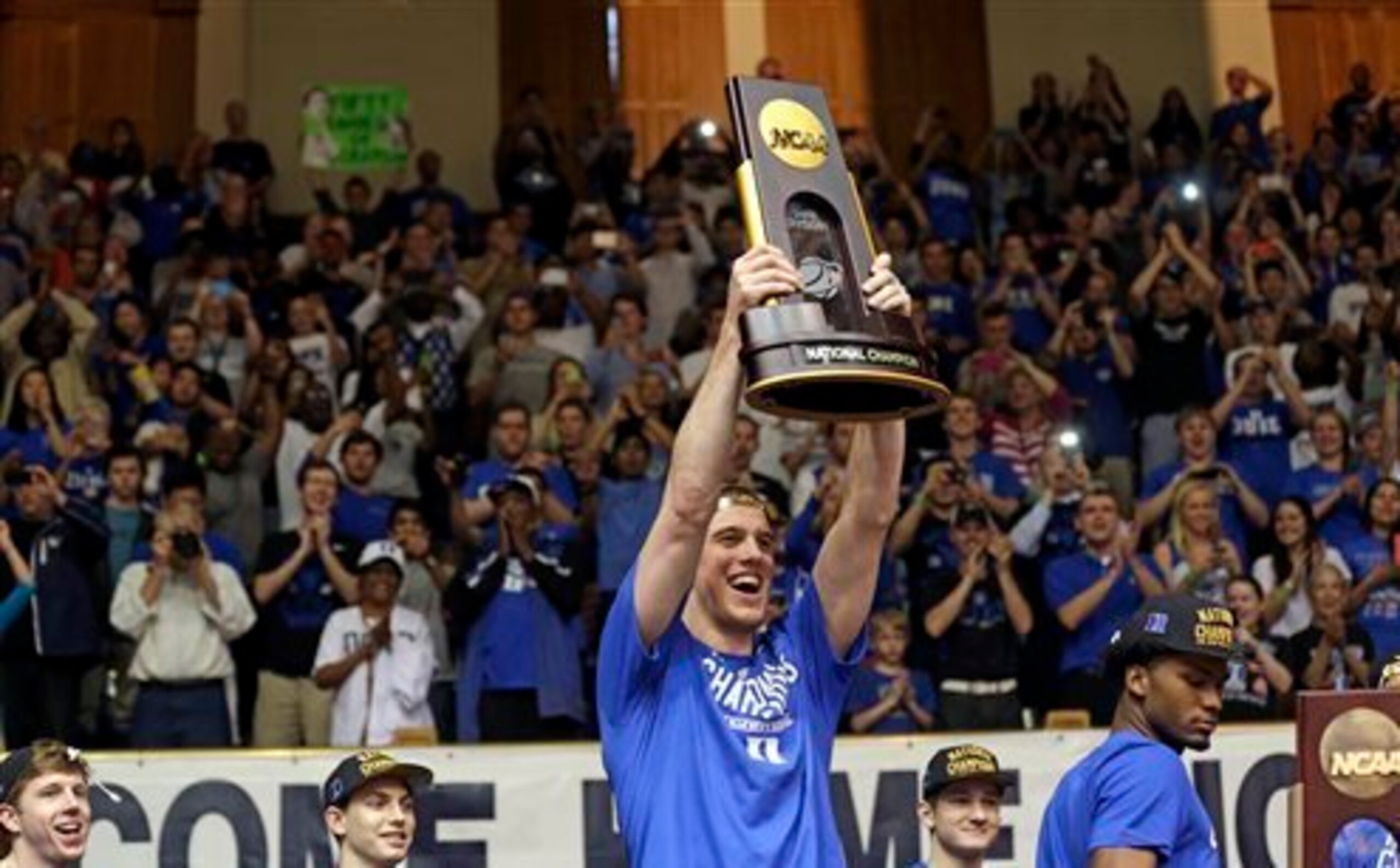
A former McDonald's All-American, Marshall Plumlee hasn't quite panned out.
Or has he?
Plumlee likely won't start at center for the defending national champions. That spot could belong to Rice transfer Sean Obi, a sophomore who's just another athletic big man in the line of players keeping Plumlee on the bench.
Two years ago, the Nigerian averaged 11.4 points and a Conference USA-leading 9.3 rebounds per game. He scored in double figures in 17 of 30 games a year ago while shooting 59.1 percent.
But it's Plumlee who understands the day-to-day rigors of the program so well. Last year, he was known basically as the guy who gave freshman star Jahlil Okafor a breather once in a while, appearing in all 38 games and averaging nearly 10 minutes (three points, two rebounds).
Plumlee was named a captain, along with Amile Jefferson and Matt Jones, at the team's postseason banquet.
Considering he faced Okafor daily in practice, that could be a major benefit to the Blue Devils in their repeat quest.
It's worth noting that Duke—which wasn't deep at all last year—has another player to consider.
Guard Matt Jones could be in a sixth-man role, as he'll be in a playing-time battle with championship game hero Grayson Allen and Amile Jefferson.
Marial Shayok, Virginia
3 of 11
This pick is completely based on the reputations of Virginia and coach Tony Bennett.
The Cavaliers have won the ACC's Sixth Man Award the past two years, and Marial Shayok is more than capable of producing a three-peat.
He appeared in all 34 games last year and averaged nearly four points and two rebounds. He's 6'5'' and will be a sophomore, emboldened by the experience of shooting 40 percent last year from the field and 38 percent from three-point range.
He'll need to work on his free throws (63 percent) to be considered a crunch-time factor.
Justin Anderson's somewhat unexpected departure for NBA waters means there are more minutes available for Shayok.

.jpg?w=2560 "Seahawks Chiefs Football")

Taurean Prince, Baylor
4 of 11
This doesn't happen every day: We're talking about a sixth man who's also his team's best scorer.
It's no wonder Taurean Prince was named Sixth Man of the Year in the Big 12 (and a second-team selection in a stacked league) after the 6'7'' junior averaged 13.9 points per game on 47.4 percent from the field and 40.7 from three-point range.
In rugged Big 12 play, he poured in 15.6 points a contest.
Prince may not see his minutes go up a ton. That's one of the drawbacks of Rico Gathers returning.
But it certainly hasn't stopped Prince from contributing, as he averaged about two more points than Gathers despite only starting six games.
It should be noted, however, that Prince is a classic example of a guy who doesn't need the pregame limelight.
Only the workhorse Gathers played more minutes than him for the Bears last year.
Farad Cobb, Cincinnati
5 of 11
Coach Mick Cronin should be back after heart issues last year.
He'll be blessed with a talented, experienced team that remains intact from a year ago. And that includes a heck of a bench presence in Farad Cobb, who started just nine of 34 games but still produced 8.5 points and finished with a team-high 53 three-pointers.
Cobb was Cincy's third-best scorer for the season and basically played starter-type minutes.
He seems to have grown up after issues took him off a D-I program and made him find his way back through the junior college ranks.
A silky shooter, he is cherished by UC in pick-and-roll situations and can undoubtedly shine in big settings.
He had 18 points (including 4-of-9 from three-point range) in a big win against AAC foe SMU, including nine straight in one critical second-half stretch.
Alex Poythress, Kentucky
6 of 11
There's a lot of back-and-forth when it comes to discussing Alex Poythress.
He probably didn't expect to spend so much time in Lexington–while so many of his teammates recently declared for the NBA draft—but he's made the most of it. According to UK, he earned his undergraduate degree in business marketing in three years.
Now, the basketball question: What's the best business decision for the Wildcats and the player?
Poythress missed the final 29 games of UK's title-game run after tearing his ACL (left knee) in December.
He started all eight games when he was part of John Calipari's vaunted "platoon system," averaging 5.5 points, 3.8 rebounds and 1.5 blocks. Cal and Co. could use more from him this year on a revamped roster.
If Poythress is healthy, he could start. But there will be competition from returner Marcus Lee and highly touted freshman Skal Labissiere.
The question is about that knee. Poythress may simply be better off starting, right after warm-ups, so that rehabbed joint doesn't get tight. But the Wildcats could potentially use his maturity off the bench to help a young team steady its course.
Brannen Greene, Kansas
7 of 11
Greene is one of the country's best shooters who had a secret toward the end of last year.
He was in a lot of pain. Hip don't lie. The streaky Kansas shooting guard needed offseason surgery.
Greene told Gary Bedore of the Lawrence Journal-World he had struggled since the end of January, when he "felt something pop in the hip area while stretching." The Jayhawk started conference play on a tear, then missed 22 of his 26 three-point attempts over the final nine games.
“I couldn’t get that lift off it [right leg], the power,” said Greene, who shot 40 percent from the arc. “It’s all about rhythm. I have no excuses how I shot, though. I still could make shots. I’ve got to get in the gym and work.”
Like many athletes, Greene groused about the post-surgery helplessness. According to Bedore, he spent seven weeks on crutches.
But Greene didn't lose his sense of humor. When asked by reporters if he asked about others who had gone through a similar surgery, he winced.
“I don’t think I want to look around. Aaron Hernandez [had the] same surgery, so that’s not good to look around,” Greene said in reference to the imprisoned football star.
Greene's going to have to get healthy and have his defense improve to have a shot to unseat Wayne Selden for playing time. But Greene's outside threat—assuming it comes back along with the hip—is going to be a major factor in Kansas' experienced team's title hopes.
Abdel Nader, Iowa State
8 of 11
Fred Hoiberg left Steve Prohm a great situation at Iowa State.
It's guys like Abdel Nader who make it one.
As a junior, the 6'6'' guard didn't start once last year. But he did average about six points and three rebounds, basically playing off whatever the Cyclones needed on a particular night.
Nader played 25 minutes in the Big 12 tournament championship game win against Kansas and followed up with 21 in the NCAA tournament upset by UAB.
He's a flawed player to some degree (37 turnovers) but can also produce blocked shots and steals, and he was ISU's seventh-best scorer. It will be interesting to see how Prohm uses him, among other experienced Cyclones.
Eron Harris, Michigan State
9 of 11
Much like Ohio State has a big decision to make at quarterback this fall, Michigan State has terrific options along its guard line.
How will Tom Izzo bring in Eron Harris, a scorer who averaged 17.2 points and 3.5 rebounds as a sophomore at West Virginia two seasons ago? He sat out, per NCAA transfer rules, during MSU's unexpected Final Four run but did practice with the team all year.
That presents quite the potential competition between Harris and senior Bryn Forbes, a big part of how the Spartans made it to Indianapolis. He started 24 of 39 games and shot nearly 43 percent from three-point range.
Therefore, Harris is going to have to prove himself beyond practice. Not that he's fazed by competition, presumably. He latched on to Izzo's program not long after leaving WVU, opting not to take any other visits.
"I'll bring a guy who is tough, a leader, can handle the ball and shoot the ball," he told ESPN.com's Jeff Goodman upon making his decision last June.
Kyle Dranginis, Gonzaga
10 of 11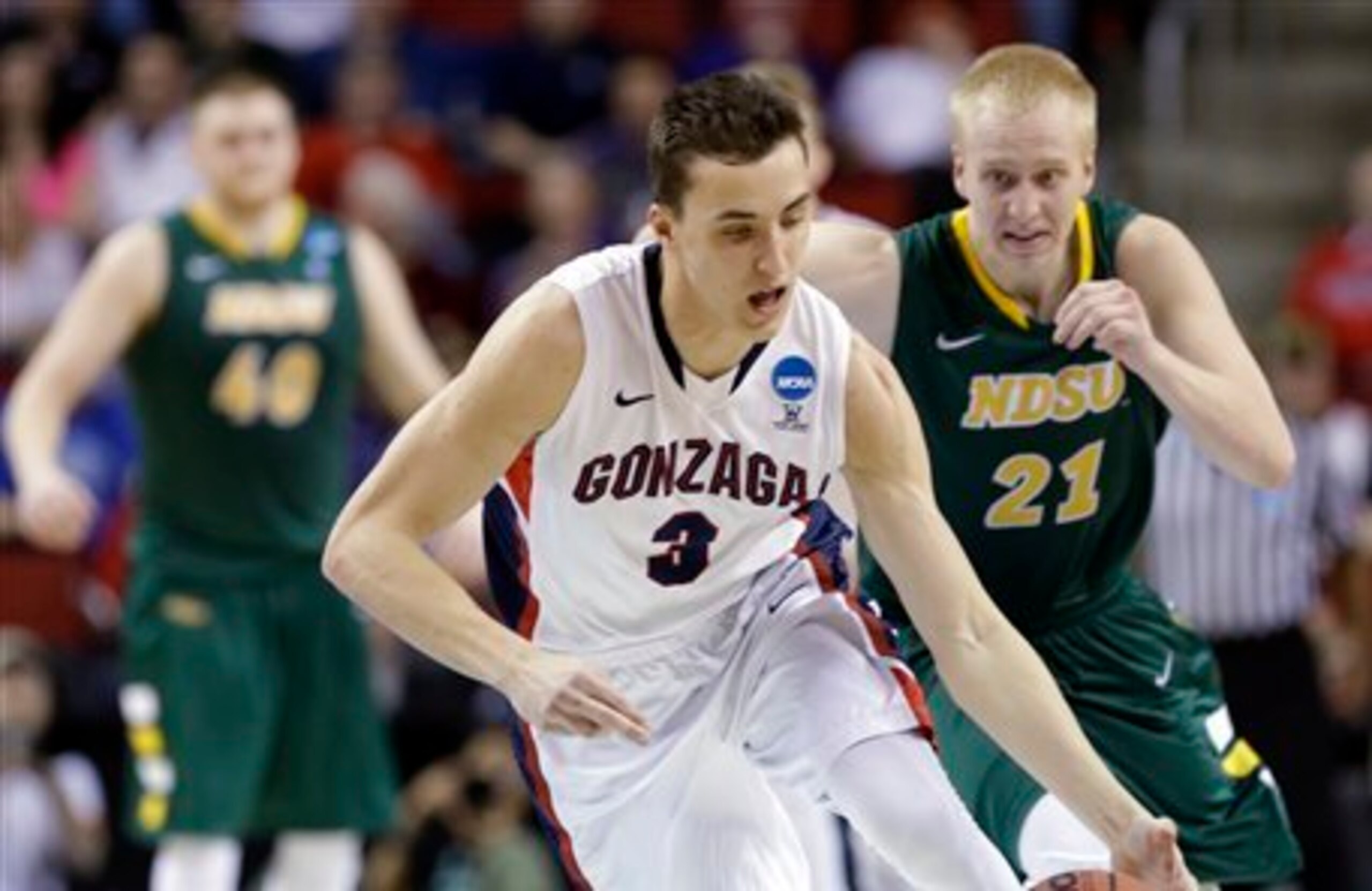
Considering the depth Gonzaga has been blessed with in recent years, Kyle Dranginis isn't that far removed from a starter's type of playing time.
He played in all 38 games on the way to the Elite Eight and averaged about 17 minutes. That was lowest among Mark Few's eight-man rotation, and he never started.
The Idaho product brings a heady style of play, and he knows how to pick his spots. According to KenPom, he had a high-caliber offensive rating despite a limited selection of shots. That could be even more vital this year as GU returns a lot of players but loses its two starting guards (Kevin Pangos and Gary Bell Jr.) to graduation.
Two years ago, Dranginis saw extended time when Bell Jr. went down with a broken hand.
Few called him a "jack-of-all-trades kind of guy," according to Jim Meehan of the Spokane Spokesman-Review. "You can’t really pinpoint one aspect he does great, but he does everything really well. If you watch us when he’s on the floor, we’re flowing better, the ball moves better. He probably has the best feel for the game of anybody on the team.”
He sounds like as good a sixth man as anyone out there.
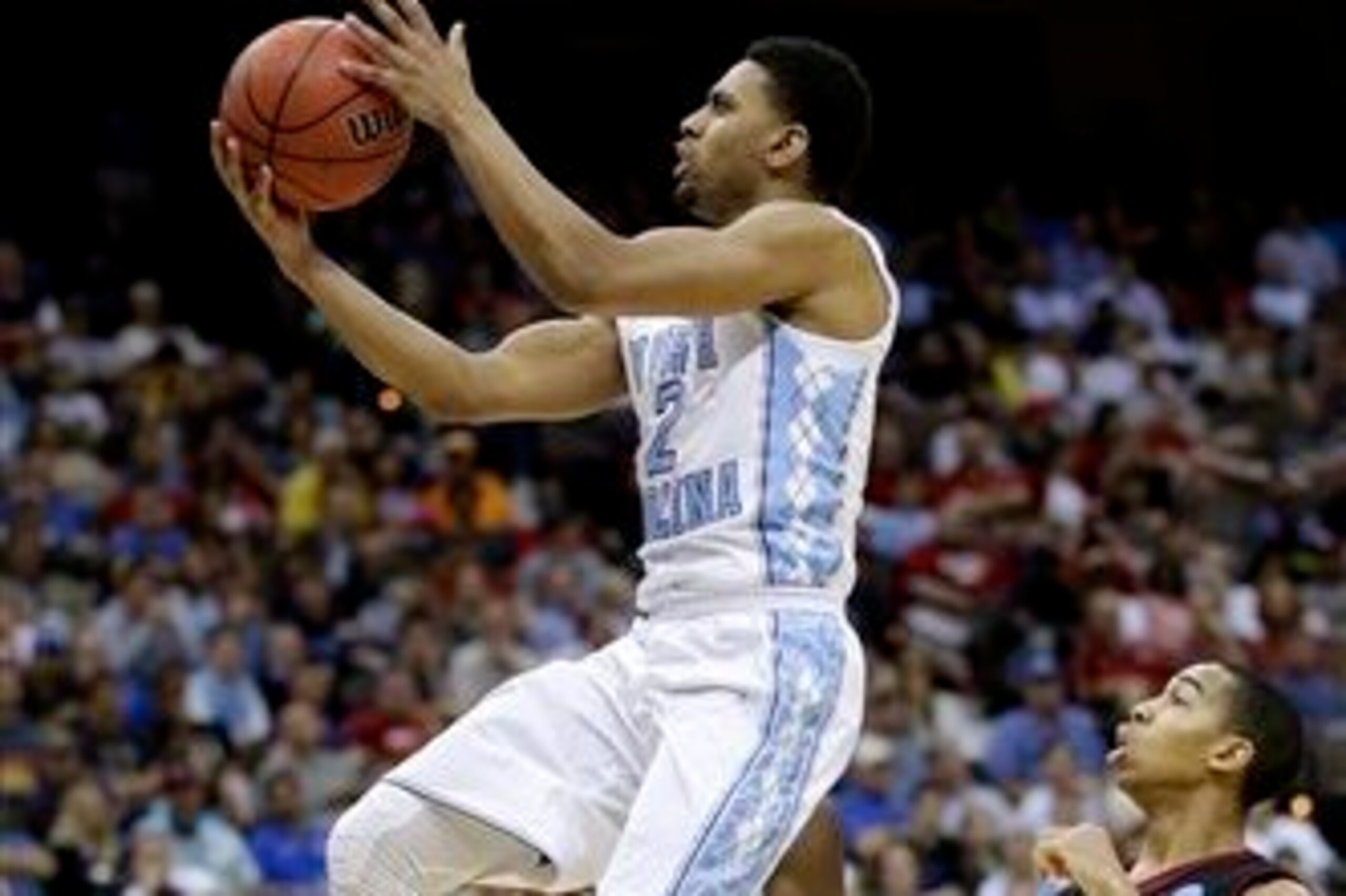
Joel Berry II, North Carolina
11 of 11
It was less than two years ago when Bleacher Report was already high on the Joel Berry bandwagon.
A backup point guard last year, as a freshman, the 6-footer still made some big impact. He had nine points and three assists in a mere nine minutes against Wisconsin in the Sweet 16. He put up seven and four in the ACC championship game against Notre Dame.
The Tar Heels return four starters, and starting point guard Marcus Paige saw his scoring numbers dip by three points as a junior.
Should Paige struggle, Berry will be ready. He averaged about 15 minutes during the last 14 games, after missing seven in a row because of an injury.
His numbers are appealing: 46 assists compared to just 21 turnovers, and he went 10-of-20 from three-point range in his last 10 games.
It's no wonder people are so high on his ability. He could see far more than reserve-type minutes.
It'll be very interesting to see how Roy Williams juggles depth on this team. Isaiah Hicks averaged about 15 minutes last year off the bench, and his average of 6.6 points should be bolstered in some fashion. The 6'8'' forward could see more time but perhaps not starter minutes.