Can We Kiss Triple Crown Droughts Goodbye After American Pharoah's Win?
When American Pharoah romped to a 5 ½-length win in the 147th Belmont Stakes on Saturday and subsequently became the 12th winner of the Triple Crown, it was 37 years in the making.
His performance transcended the sport. People with little affinity for sport, let alone this sport, were captivated by what he did at Belmont Park on June 6, 2015.
Twelve other horses—great horses—won the Kentucky Derby and Preakness Stakes only to lose in the third, final and most challenging leg, hence the Test of the Champion.

.jpg?w=2560 "Seahawks Chiefs Football")

Here are a few names who came up short: Spectacular Bid, Sunday Silence, Pleasant Colony, Alysheba, Smarty Jones and Big Brown. Many of these horses are Hall of Famers and they couldn’t pull off what American Pharoah was finally able to do.
Following the landmark accomplishment, one burning question remains: Will we start seeing Triple Crowns with greater frequency based on American Pharoah’s blueprint? Or will we go another 30 or 40 years before we—well, I’ll likely be dead, so you—see No. 13?
Can other trainers copy American Pharoah’s trajectory, or is the son of Pioneerof the Nile, who will be—and, let’s face it, already is—the 2015 Horse of the Year, just a freak, a statistical outlier, or, like Keanu Reeves in The Matrix, simply the One?
Racing at Two
American Pharoah, like all of the three-year-olds who ran in the Triple Crown, was very talented as a baby, or two-year-old. These colts all show a certain degree of zip and panache on the farm as they graduate from yearlings to broken juveniles. They have an “it” factor.
Even if they prove precocious, their flame could burn too bright too early. This is why we have only seen one winner of the Breeders’ Cup Juvenile go on to win the Kentucky Derby (Street Sense, 2007). That precocity rarely carries over. Other horses catch up. Think of the giant 12-year-olds in the Little League World Series. They develop faster than others, but the others soon catch up. The same goes for horses.
Pharoah raced just three times as a two-year-old, enough to get the racing base, but not enough to burn him out.
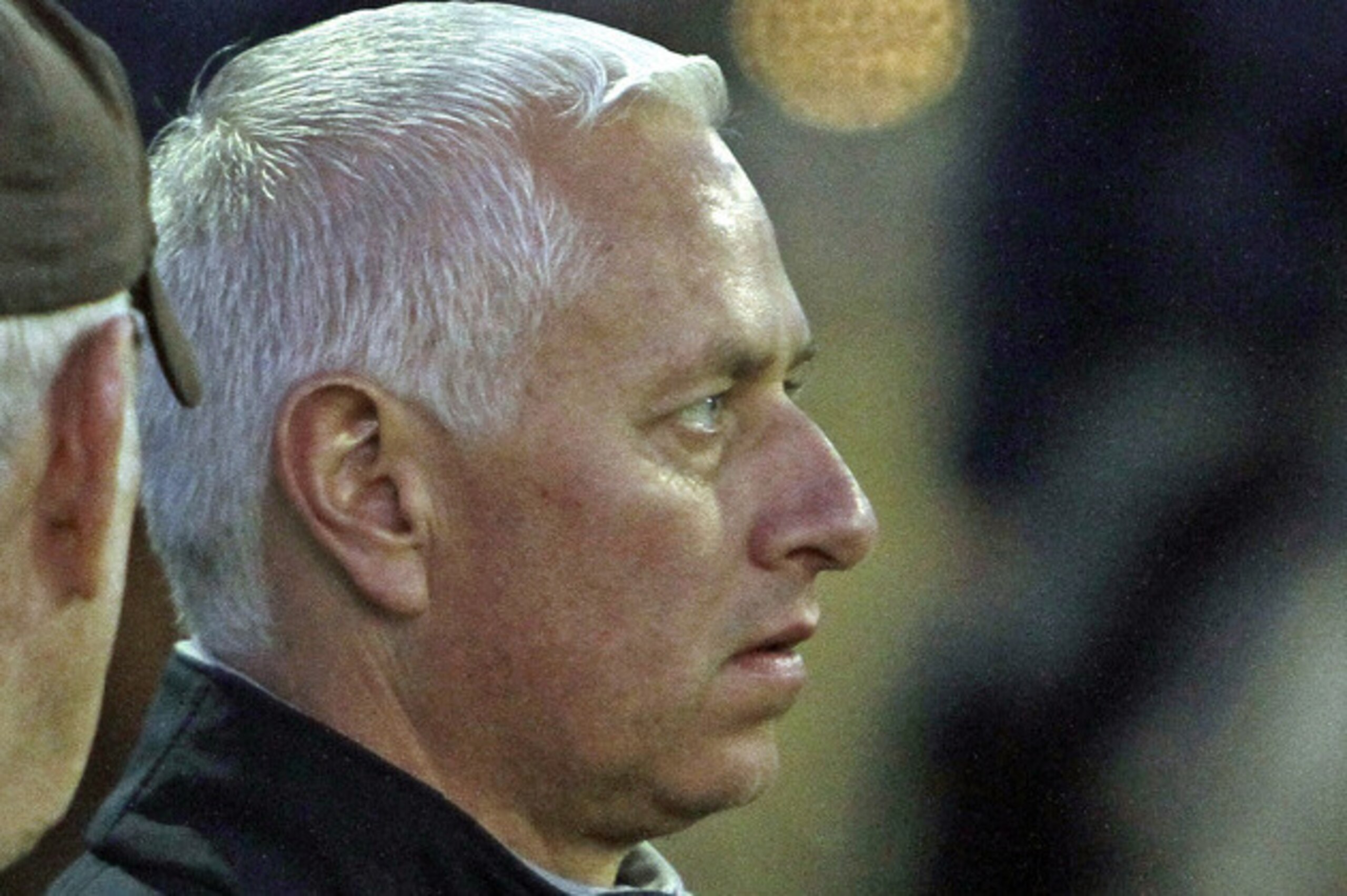
Some trainers, like future Hall of Famer Todd Pletcher, try and win the Derby with horses who have never run at two. Materiality was his latest try, but he had also done that with Dunkirk in 2009. There’s a reason why no horse since Apollo in 1882 (yes, that long ago) has won the Derby without having run as a two-year-old.
American Pharoah, despite suffering a minor foot injury that kept him out of the Breeders’ Cup, still went on to become the Champion Two-Year-Old Male in 2014. That’s high praise, a great accomplishment, but only one step in the recipe for Triple Crown greatness.
Just How Much Prep Does a Horse Need for the Derby?
Looking at this year’s Derby crop, which many believed the deepest in years, the average amount of prep races was 2.65. Four horses had four preps, 10 horses used three preps and six horses had two, the idea being that they start slow and ramp up the distance hoping to peak on Derby Day.
Therein lies the big challenge. Peaking for Derby Day itself throws into limbo the two succeeding races, but you have to win the first before you can worry about the Preakness and Belmont.
Something odd happened while training up to the Belmont Stakes: It looked like American Pharoah might have been getting better over the entirety of the Triple Crown, not worse.
“Watching him train, American Pharoah may be peaking for the Belmont Stakes,” Jerry Bailey, NBC horse racing analyst, said during Saturday’s broadcast.
Donna Barton Brothers, a former jockey and on-horse reporter, mentioned that American Pharoah kept his weight up, which is a golden indicator of a horse’s relative fitness.
American Pharoah only had two Derby prep races, both of which he won without having to shift into fourth gear. He made his 2015 debut in the Grade 2 Rebel Stakes in the precarious mud and won by 6 ¼ lengths. Four weeks later, he relinquished the lead for the first time and then drew away in a hand-ride to win by eight lengths.
Two races, barely contested, and he became the deserving Derby favorite.
Firing Line, second in the Derby, prepped just twice as a three-year-old, so two may be the magic number.
Stay Away from Belmont Park
Trainer Bob Baffert did a smart thing with American Pharoah following his wins in the Derby and the Preakness: He kept his horse away from the heat of the spotlight. The horse has a sweet temperament and doesn’t get too excited, but being the celebrity he is, people are always going to want a piece.
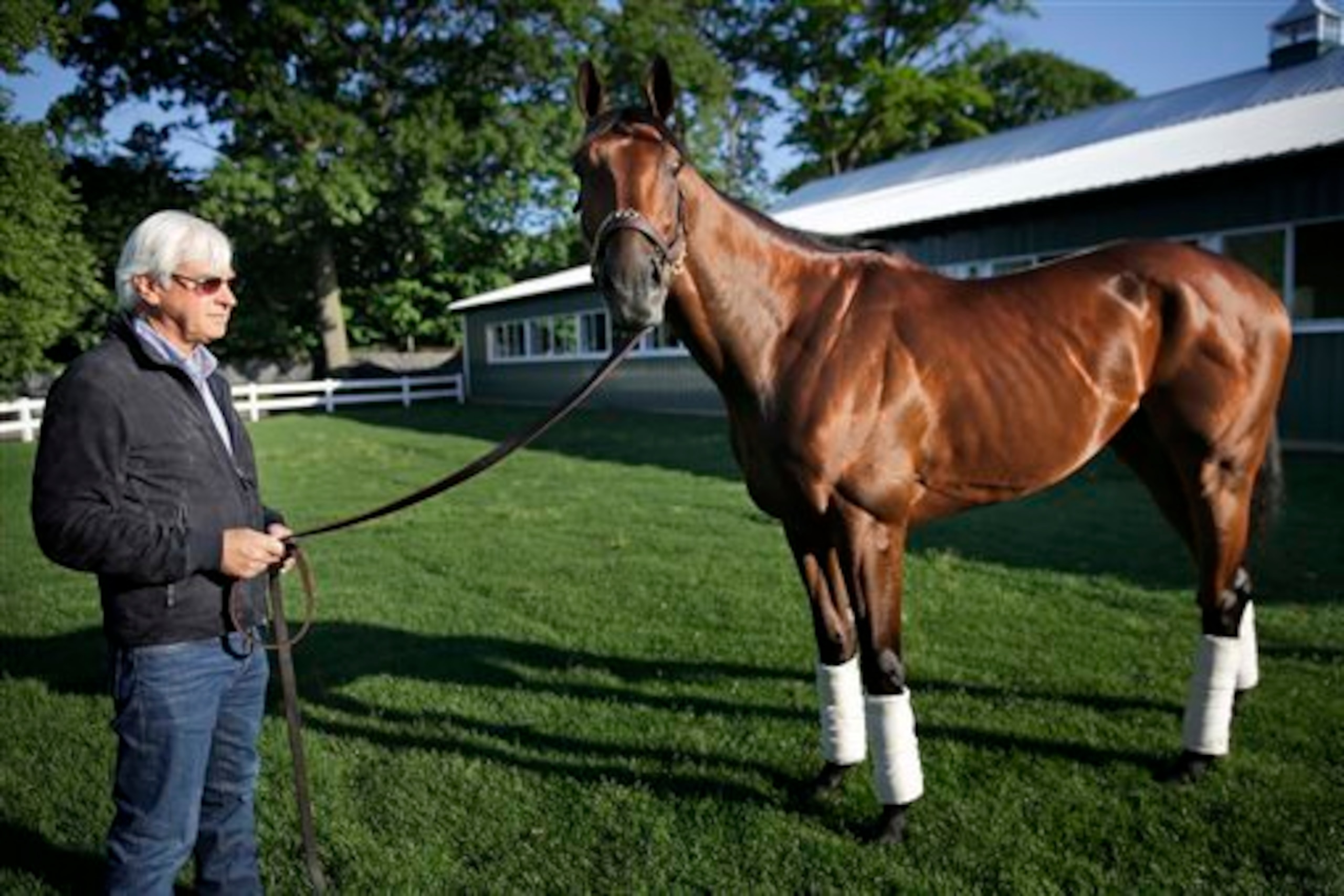
As a result, Baffert kept training him up at Churchill Downs. He didn’t arrive in New York until the Tuesday before the Belmont Stakes. He trained beautifully at Churchill and only had to gallop around Belmont Park to get acclimated.
Baffert said in an NYRA release following the arrival of Pharoah at Belmont Park:
"I think he looked really well for what he's been through—all of the shipping. He's keeping his weight the same; I don't think he's lost any weight. He looks like a horse that's run in two big races, but I think his energy level is good. I could tell by walking him around the barn that he still feels pretty strong. Hopefully he'll just keep that through the next few days.
"
What Nobody Can Control
American Pharoah’s talent is undeniable, but what can’t be overlooked was how lucky he was in each and every leg of the Triple Crown.
In Kentucky, he drew Post 18 when Post 1 was still a high possibility. It allowed him to stay outside of the traffic and get a clean trip. Materiality, a horse thought to want the lead, missed the break and got pinched back. American Pharoah found his easy stride after a quarter-mile.
He was tested for the first time all year in this race, and he got a boost in fitness that he’d need over the next five weeks.
In the Preakness, the deluge that swept through Baltimore forced jockey Victor Espinoza’s hand. Breaking from Post 1, he blasted out like buckshot and was the only horse without a spot of mud on his muzzle. He proved he could handle mud at Oaklawn in his 2015 debut, and he carried that experience with him at Pimlico.
That mud also took other horses like Firing Line and Dortmund out of their games, paving the way for American Pharoah to win by daylight.
And at the Belmont Stakes, where horses like Big Brown were affected by the weather and Smarty Jones was attacked by three other horses, American Pharoah benefited from temperate weather and set the pace with no competitive urging from Materiality or anybody else, for that matter. He had the easiest trip imaginable in what was supposed to be the hardest of all the three races.
His 1 ¼-mile fraction in the Belmont Stakes was nearly a full second faster than his winning Kentucky Derby time. His winning time of 2:26.65 was the sixth-fastest of all time in the Belmont Stakes and the second-fastest of all time by a Triple Crown winner (Secretariat will forever own the record at 2:24 flat).
He had the talent to make the most of the luck he was dealt, and he was dealt 37 years worth of good karma.
The Verdict
Will we see the end of Triple Crown droughts based on American Pharoah’s blueprint? The answer: maybe.
Secretariat ended a 25-year drought in 1973, and then Seattle Slew won the Triple Crown in 1977 and Affirmed in 1978. Spectacular Bid nearly did so in 1979. During the NBC broadcast, Bailey mentioned that, at the time, they thought they’d have to make the Triple Crown harder. Little did they know.
Thirteen horses in the 37 years since Affirmed had their shot before American Pharoah managed the feat. Real Quiet came within a hand’s length of winning it in 1998. Smarty Jones came within a length of winning it despite getting assaulted by three horses in the middle mile of the race.
It’s possible we won’t see a drought quite as long, but as we’ve seen over the past four decades, you can have the horse, but you also need a lot of luck. For the first time in nearly 40 years, everything came together like a Rubik's cube and clicked into place.
There’s no blueprint for that.
All quotes, unless otherwise noted, came via releases received firsthand. Statistics regarding prep races came via author-purchased Daily Racing Form past performances.