
College Basketball Coaches Who Wish They Hadn't Left Their Previous Job
This might be the most depressing college basketball slideshow you'll view all offseason.
It's about what was, and what could've been still. We're talking about regrets.
Mind you, we mention these guys out of love. But there are certain coaches who just shouldn't have let their patience run out, or the future opportunities (sometimes read: paychecks) lure them from grass that was plenty green.
They should've stuck to their guns, stuck around the previous gig. Because it hasn't worked out the same in new adventures.
While these coaches' decisions aren't perfect, our hindsight is.
The criteria is pretty simple: We looked at the 351 Division I head coaches and examined who hasn't fared as well in current days as they have in the past—sometimes we skip back two jobs to view their career arc—and who most shouldn't have left a good thing.
It's a tough call in some cases. Some coaches obviously yearned to be head coaches for the first time or again. Some made what appeared to be upward climbs (in prestige and salary), but it just hasn't worked out like that.
We didn't consider anyone who was fired from a good or successful reign, nor did we speculate on recent decisions to jump ship for supposedly better opportunities. We also didn't consider Larry Brown—who has left so many jobs for so many reasons, human records can't keep track.
What we've got left is a group that has seen better days. And we say this out of love: We miss those days.
Keno Davis
1 of 10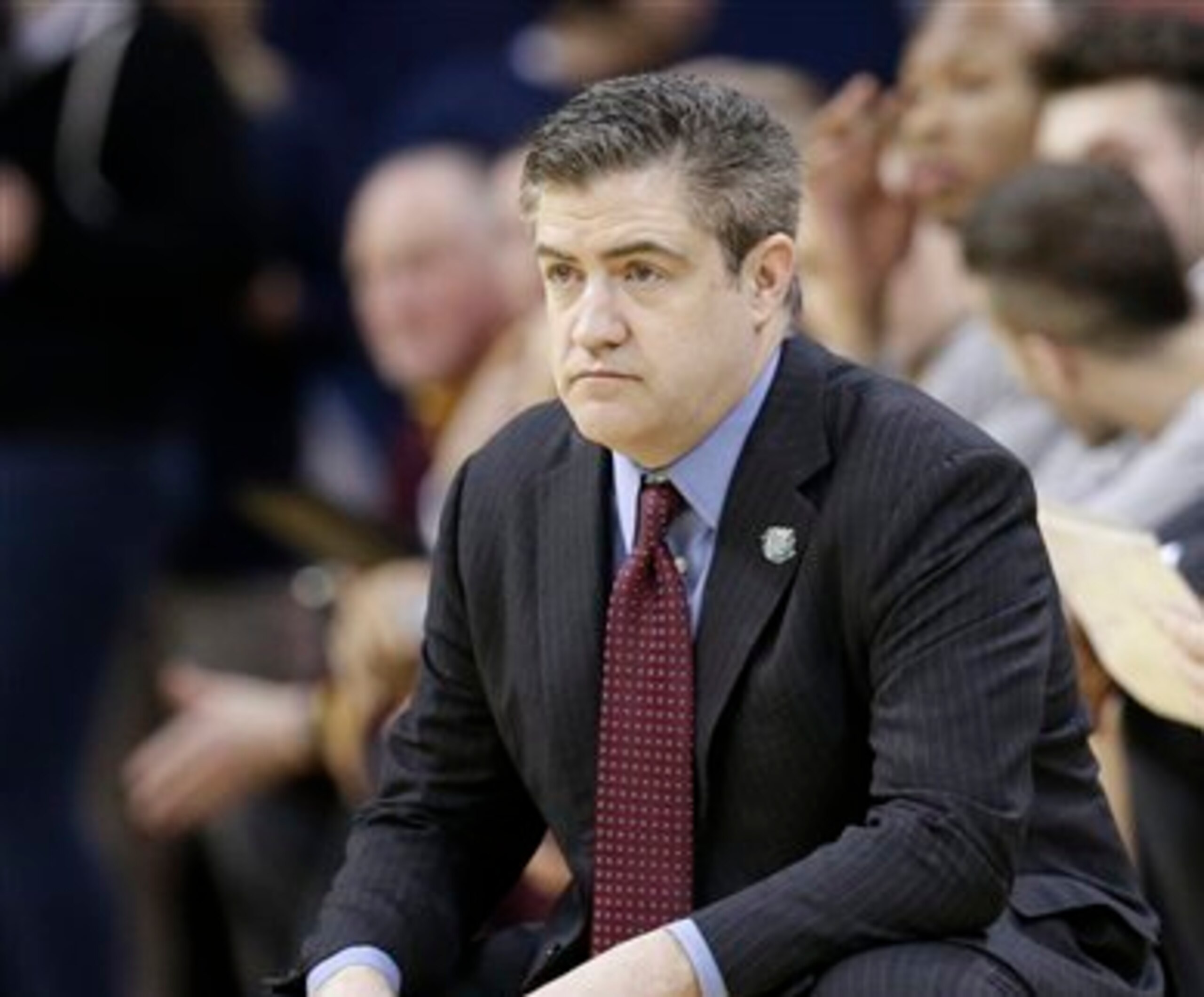
Keno Davis had our attention once upon a time at Drake. He led the Missouri Valley program to a 28-5 record and the NCAA tournament in 2008 and probably could've used more than that one year to figure out what he wanted next.
Instead, he jumped for a tough job in the Big East and swooned the next three years at Providence.
Ed Cooley is thriving as coach of the Friars now. But let's be honest: This is a wholly different Big East than the one Davis entered nearly a decade ago.
Besides that obvious point, Davis and Cooley are basically about the same age (Davis is 43, Cooley is 45). That is noteworthy because Davis had just finished his first year as a head coach when he made a big leap.
Cooley was the head coach at Fairfield from 2006-11 and went through some losing seasons before his fifth and final year produced an NIT bid and a 25-8 record before he jumped to Providence.
Davis at least appears to be on a better track these days at Central Michigan. After posting two losing records, last year's team went 23-9 and made the NIT.
Joe Scott
2 of 10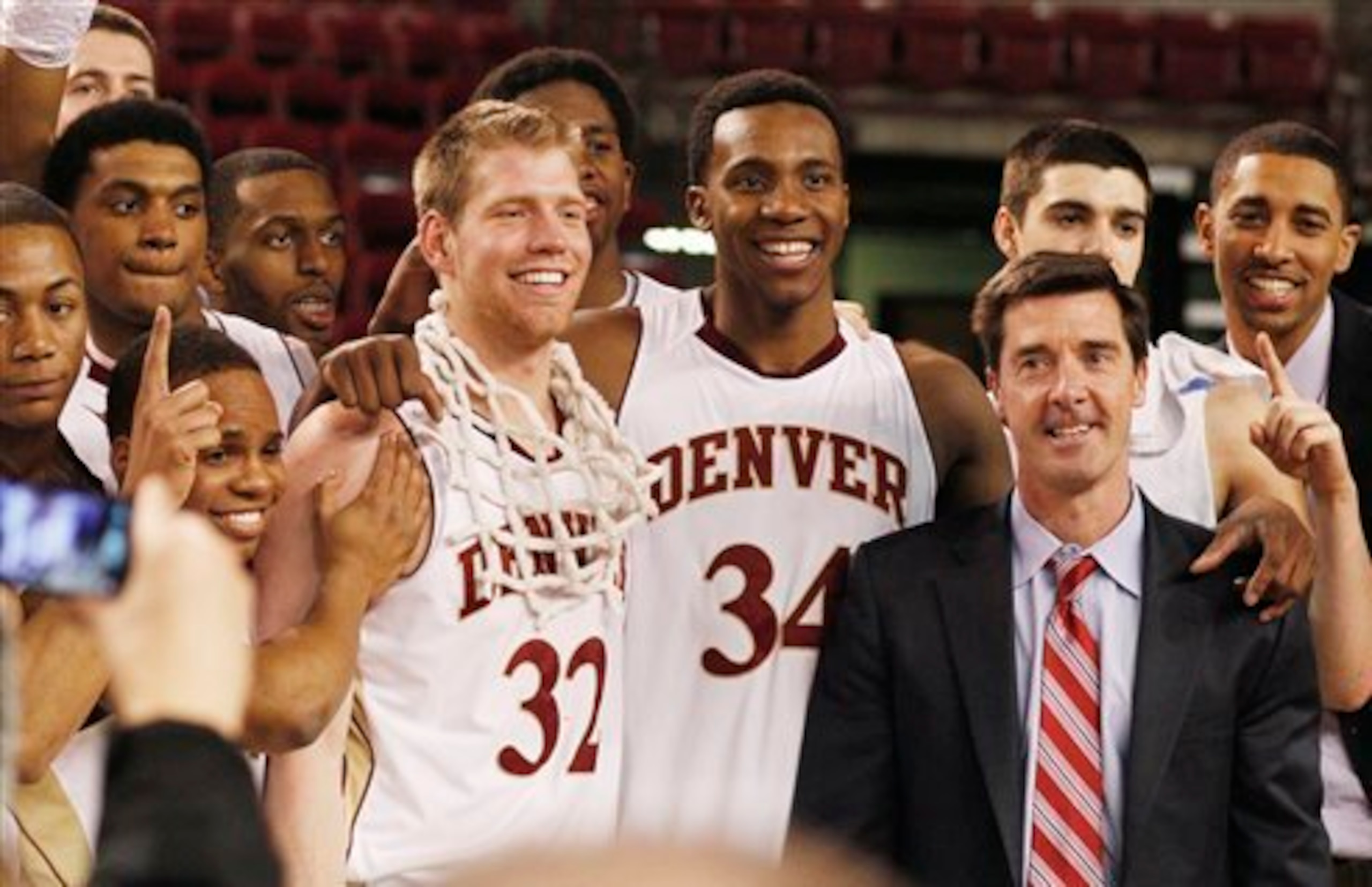
Full disclosure here: This author covered the Mountain West Conference when Joe Scott was in charge of Air Force, creating one of the great program turnarounds in NCAA history.
The Princeton graduate (and Pete Carril pupil of disciplined offense) took over a program and produced 28 wins in his first three years, then exploded for a 22-7 campaign, a MWC regular-season title and a first-round NCAA tournament bid.
At the academy of all places, where it's basically impossible to have a player above 6'8'' because of the height restrictions for pilots.
Scott brought a significant home-court advantage to the 5,800-seat Clune Arena and a fun style of play to boot. (Well, that is if you could appreciate late-shot-clock ball.) Scott won the league's COY award while Nick Welch and BYU's Rafael Araujo (a future NBA lottery pick) were selected as Co-Players of the Year.
But after that fabulous year, Scott couldn't resist returning to Princeton for the head job. He went 38-45 in three seasons and added a notch to the adage that you can't go home again.
He's now at Denver, which has flip-flopped conferences a few times, and Scott's produced just one postseason bid (the NIT in 2013).
Niko Medved
3 of 10
This is an unfair one in some ways.
Niko Medved was due for a head coaching job after helping Tim Miles turn around Colorado State, even producing 2012 and 2013 NCAA tournament appearances (the latter of which came with Larry Eustachy in charge).
Medved returned to Furman in 2013 after spending seven seasons (2000-06) as an assistant coach.
The big question with him is whether he should've kept Furman at a distance and stuck with Miles' shooting star all the way to Nebraska.
Medved is 20-43 in his first two seasons, which isn't too far off course for a program that hasn't been to the NCAA tournament since 1980. Medved may have stepped into a job/location he holds dearly, but that doesn't necessarily keep it from being called a dead end.
.jpg?w=2560 "Seahawks Chiefs Football")


Brian Gregory
4 of 10
Brian Gregory knows all about down-and-out programs that can make a splash. He actually has played in the Elite Eight, and he did it at Navy, so perhaps he figured he could find some of that magic in a sporadically successful program like Georgia Tech.
Problem is, that Navy team featured David Robinson. Gregory hasn't had that kind of fortune in Atlanta in his four years since leaving Dayton coming off two NCAA bids in eight seasons.
Gregory's teams are 55-71 and a harsh 19-51 in ACC play.
Dayton won the NIT in 2010 and popped off a 22-win season the following year (and another NIT bid) when he opted to leave.
Then 44, Gregory said all the tools were in place to restore the Yellow Jackets to national prominence, including a strong recruiting base, membership in a leading basketball league and a prominent history.
It could potentially click this year. Bleacher Report's Kerry Miller notes Tech could become a breakout team next season, citing an experienced team that had 15 of its 19 losses decided by seven points or fewer, including a road game against Duke and a pair of games against Notre Dame.
But this could be his last year to help the Yellow Jackets find their typical rhythm in history, after producing Final Four bids in 2004 and 1990.
Tom Crean
5 of 10
From the "Was it worth it?" category, you can't help but bring up Tom Crean.
He won as many NCAA tournament games in 2003, when he led Marquette to the Final Four, as he's won at basketball blue blood Indiana since he took over in 2008. The Hoosiers went to back-to-back Sweet 16 appearances before a 17-15 record two years ago and a staggered 20-14 season last winter that has Crean feeling all sorts of fire.
So much for appreciation of that colossal rebuild, starting with a 6-25 campaign in 2008-09, when perhaps any five editors/writers from Bleacher Report could've earned playing time.
In his nine years with Marquette, Crean's teams earned five NCAA tournament bids.
He's at 3-in-8 at Bloomington, though this could be a strong season with all of the parts returning. James Blackmon Jr. and Yogi Ferrell came back. Heralded recruit Thomas Bryant will help inside.
But it's a guess here that there was no one booing Crean's kids at Marquette. He must miss those days sometimes.
Barry Hinson
6 of 10
It's understandable why any assistant would want to become a head coach, especially if they've been there before.
But Barry Hinson left a pretty cush job at Kansas and hasn't exactly been rewarded for taking the plunge at Southern Illinois.
All three seasons have produced losing records, and he's had a tough time replicating his mojo at Missouri State, when his often-successful teams were tortured into NIT bids.
But that's still a far cry from his time at Carbondale, which has become most memorable for his 2013 postgame meltdown. It's not easy being the head coach.
Hinson was let go at Missouri State then spent four years at Kansas with old friend Bill Self, before getting the itch to return to the head seat. Known as "Hin-Dawg" to the Jayhawks, as ESPN.com's Dana O'Neil wrote in 2010, Hinson was the director of basketball operations—in charge of all the minutiae like travel and meals.
Not exactly how he plotted his coaching course, to be sure, but SIU under him is just 19-35 in a top-heavy Missouri Valley Conference where it seems like catching up to another Kansas school—Wichita State—will be awfully tough to do anytime soon.
Dan Monson
7 of 10
We go back in time for this one, wondering with Dan Monson what could've been if he turned down the sirens at Minnesota.
Some younger college basketball fans may not know this, but Monson was effectively the first great Gonzaga coach. His teams in two years produced a 52–17 record and went to the Elite Eight in 1999.
Do the math: He won three NCAA tournament games that year.
Since then, Monson has produced none in a combined 16 years at Minnesota and Long Beach State.
Monson doesn't harbor any bitterness about leaving Gonzaga, but it would've been interesting to follow the career paths of him and now-longtime coach Mark Few had Monson opted not to leave so early for the Golden Gophers job, which continues to be an awfully tough place to win the Big Ten.
The Gophers had a five-game losing streak early in the 2006-07 season, prompting Monson to resign. It was the school's worst skid in 40 years.
He has gone on to Long Beach State, where he's known for playing anywhere against anyone. But eight seasons against stiff nonconference competition have still only led to one NCAA tournament bid after squaring off with the Big West, which can't be considered much less formidable than the West Coast Conference with Gonzaga.
The big difference, of course, is the resources at hand. It's amazing, looking back, Monson ever decided to leave them rather than build what Few (then a longtime assistant) has created.
Danny Manning
8 of 10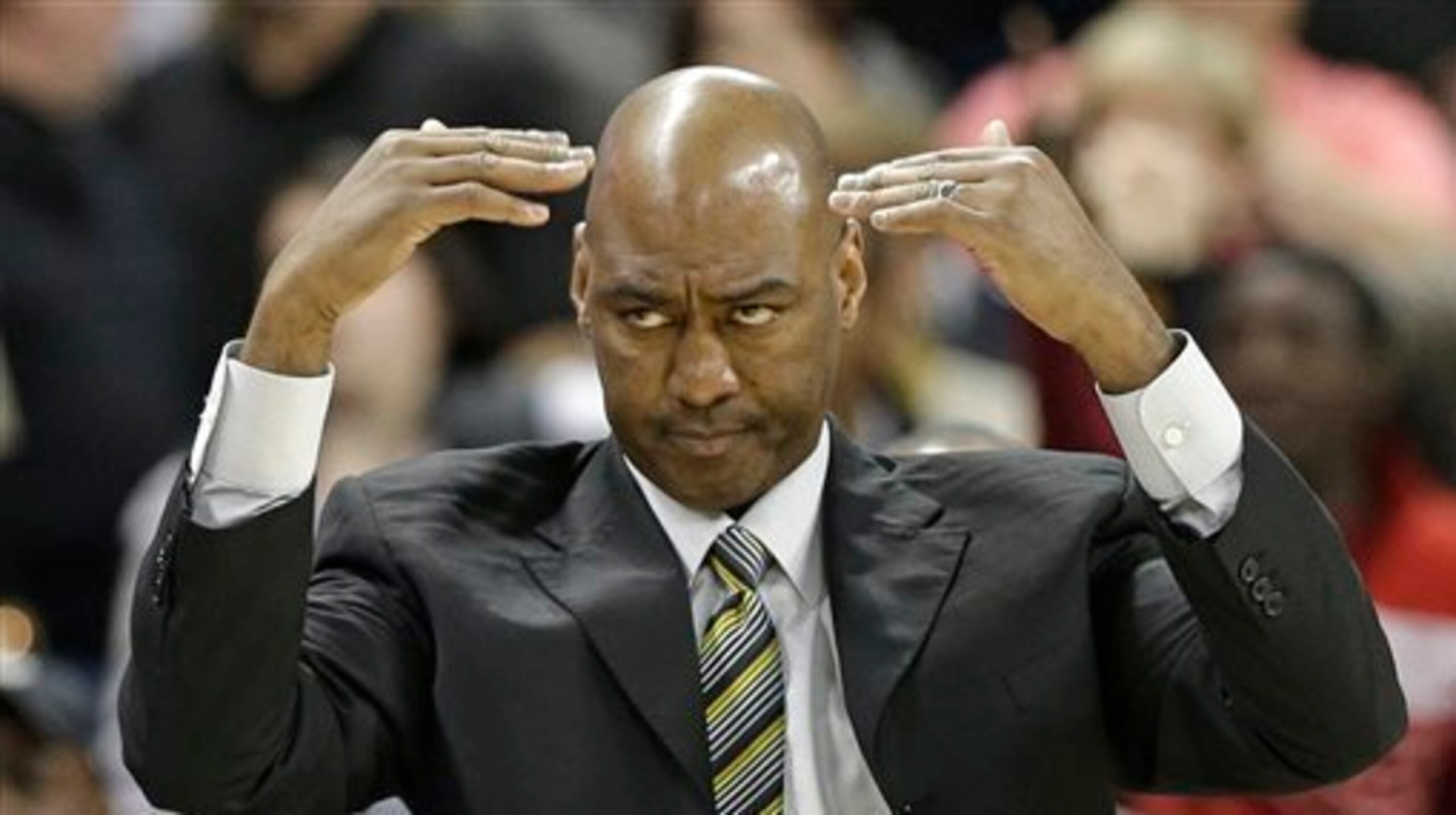
Give Danny Manning a lot of credit. He could've just rested on his NBA fortunes and laurels. Instead he did grunt work at his alma mater, Kansas, and worked his way up to being a staffer and eventually a head coach.
But did he really need to leave thriving Tulsa for outmatched Wake Forest?
"Remember, it's a process," North Carolina coach Roy Williams told Manning in a Bleacher Report profile by Jason King of the Demon Deacons first-year coach last winter. "You'll get there. But it's a process."
Manning went 38-29 in his two years at Tulsa (including 21-13 and an NCAA bid two years ago) before returning to his state of North Carolina roots to take the Wake job, which has become a major letdown since Skip Prosser's death in 2007—just two NCAA appearances since then.
There's plenty of legacy at Wake. Tim Duncan and Chris Paul went there. The 2009 team featured a boatload of talent like current Atlanta Hawks star Jeff Teague.
But it's going to be a major climb in a conference that isn't easy to gain ground. Wake went 13-19 last year, but the team produced more wins than that in just two of the previous five seasons.
At least Manning knows hard times. He was, after all, a former No. 1 pick of the Los Angeles Clippers—back before they had Paul.
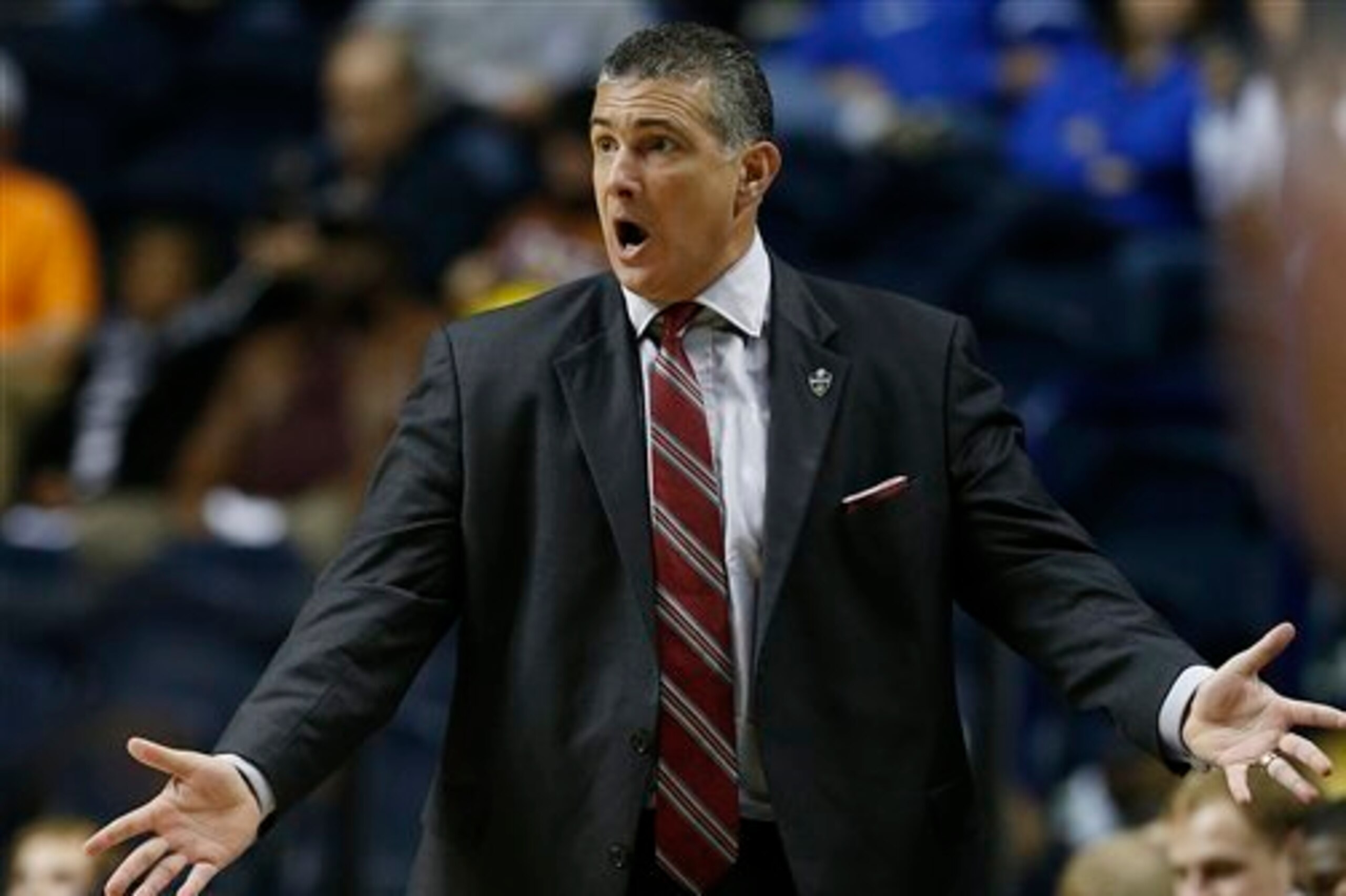
Frank Martin
9 of 10
From the "It hasn't worked out like we expected" Dept. comes Frank Martin.
He took a $600,000 per year pay raise in 2012 to leave a successful but often tense run at Kansas State to return closer to his Miami roots with South Carolina.
Martin's known for his fiery, in-your-face style. Three years in Columbia couldn't exactly be good for his vocal cords or blood pressure.
South Carolina is 45-54 in his tenure and a downright ugly 15-39 in SEC play. C'mon, the Gamecocks aren't playing Kentucky every night...and factor in Martin's 50-32 mark in Big 12 play in his time, either the USC job is crazy tough or Martin is really underachieving.
Martin had four NCAA bids in five years at K-State, including an Elite Eight trip in 2010, but has no postseason experience with the Gamecocks.
Buzz Williams
10 of 10
To hear Buzz Williams tell it, he's obsessed with getting fired.
But that still makes us wonder: Why leave tradition-rich Marquette for a historically bad product like Virginia Tech?
Williams' teams in Milwaukee made five NCAA appearances in his six years, advanced to the Sweet 16 three times and the Elite Eight once.
He did that all before age 40, then made an interesting decision. He basically opted to view it as if his initial success with Marquette couldn't be duplicated there. So he hopped to a job with much lower expectations and a similar salary.
The Hokies play some scrappy ball but still went 11-22 last year.
It's understandable why Williams might want to flip the script—he has to have a lot less external pressure in Blacksburg—but it remains to be seen if he didn't do it at a far greater expense of reaching his potential, especially in the ACC.