Any number of different things can raise an NBA draft prospect's stock—overstuffed stat sheets, freakish physical gifts, well-spoken interviews...the list goes on and on.
But only one thing is required to send those same stocks spiraling in the wrong direction: the dreaded red flag.
It's admittedly a vague term that essentially groups together warning signs of all types. Attitude issues and health concerns are probably the first two areas that come to mind, but alarm bells can also sound over underwhelming production or uninspiring measurements (lack of size or too much of the wrong kind).
Remember, the league's annual talent grab is about more than simply identifying potential. A lot of this deals with risk assessment. That's why most scouting reports—the good ones at least—typically touch on both a ceiling and a basement. With the possibility of a worst-case scenario always in play, teams need to prepare for just how bad things could potentially get.
Luckily, we're here to help with that step. We have flagged the biggest potential problems of the 2015 NBA draft class, with each prospect listed in ascending order of his placement on the most recent top-50 big board from Bleacher Report's Jonathan Wasserman.
With our parameters in place, let's get those red flags waving.
Rashad Vaughn, SG, UNLV
1 of 10
Age: 18
Measurements: 6'5", 199 pounds, 6'7" wingspan
Big Board Ranking: 34th
2014-15 Notable Numbers: 17.8 points, 4.8 rebounds, 1.6 assists, 43.9 field-goal percentage
Some nights, Rashad Vaughn can score like a star. In 23 games at UNLV—his freshman campaign was cut short by a torn meniscus in his left knee—he cleared the 20-point mark nine different times.
But his lack of consistency and underwhelming efficiency won't allow him to fill that type of role in the big league. The problem is, as DraftExpress' Jonathan Givony explained, Vaughn might not embrace the complementary role that almost certainly awaits him:
"Vaughn's skill set dictates he would be best suited operating as a role player at the NBA level, but his mentality and body language often looks like that of a star. While he's clearly very talented, and many laud his work ethic, there are quite a few question marks about his lack of discipline and whether he's unselfish enough to thrive in a competitive team setting, particularly when playing time needs to be earned.
"
If Vaughn buys into being a bench spark, the 18-year-old could immediately help any squad in need of second-team scoring. He's capable of creating his own shot and comfortable spacing the floor as an off-ball three-point threat (38.3 percent long-range shooting), though his shot selection and decision-making both leave plenty to be desired.
Great NBA role players often earn that status by fully embracing what they're asked to do and not straying too far out of that lane. Vaughn is young enough to eventually master that art, but adjusting to something significantly less than a primary role and rounding out his game could take some time.
Delon Wright, PG, Utah
2 of 10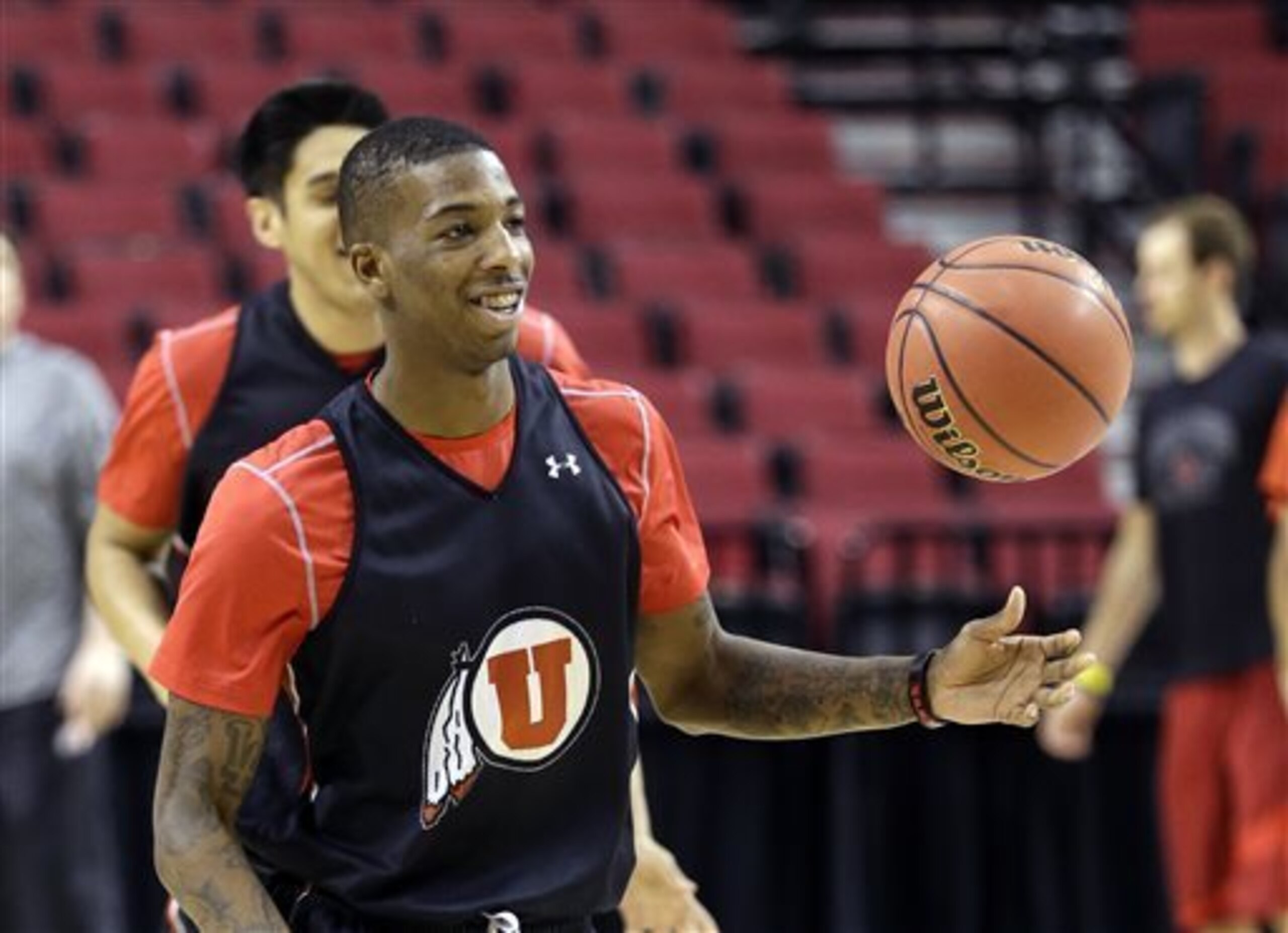
Age: 23
Measurements: 6'6", 181 pounds, 6'7.5" wingspan
Big Board Ranking: 31st
2014-15 Notable Numbers: 14.5 points, 5.1 assists, 2.1 steals, 50.9 field-goal percentage
There isn't much mystery surrounding Utah point guard Delon Wright, the younger brother of Portland Trail Blazers forward Dorell Wright. And in this case, that's not really a good thing.
The glaring weakness in Wright's game is one that's getting harder for NBA guards to hide: He can't shoot. During two seasons with the Utes, he connected on just 38 of his 127 three-point tries (29.9 percent).
That's going to limit how effective he can be at the pro level, even when accounting for the fact that he's a trustworthy playmaker and disruptive defender.
"Delon Wright could have trouble scoring in the pros without much of a perimeter-scoring attack," Wasserman wrote. "...[At 23], the fact that he's still a non-shooter (26 threes as a senior, no real pull-up game) suggests he'll remain one."
Wright didn't have the three ball at Utah, and he still shot 53.5 percent from the field during his two seasons in Salt Lake City. So he obviously has other ways of finding offense. But NBA defenses are bigger, stronger and better built than the ones he's been going against. And they're all going to muddle up the middle for Wright and his teammates if he can't demand respect from distance.
His herky-jerky style, strong defense and shooting woes may remind fans of Orlando Magic point guard Elfrid Payton, but there are some big differences between the two. Payton won't turn 22 until next February, and he's a tremendous athlete.
Wright won't get drafted early enough to be considered too big of a risk, but his shooting problems could make him tough to keep on the floor.
Chris McCullough, PF, Syracuse
3 of 10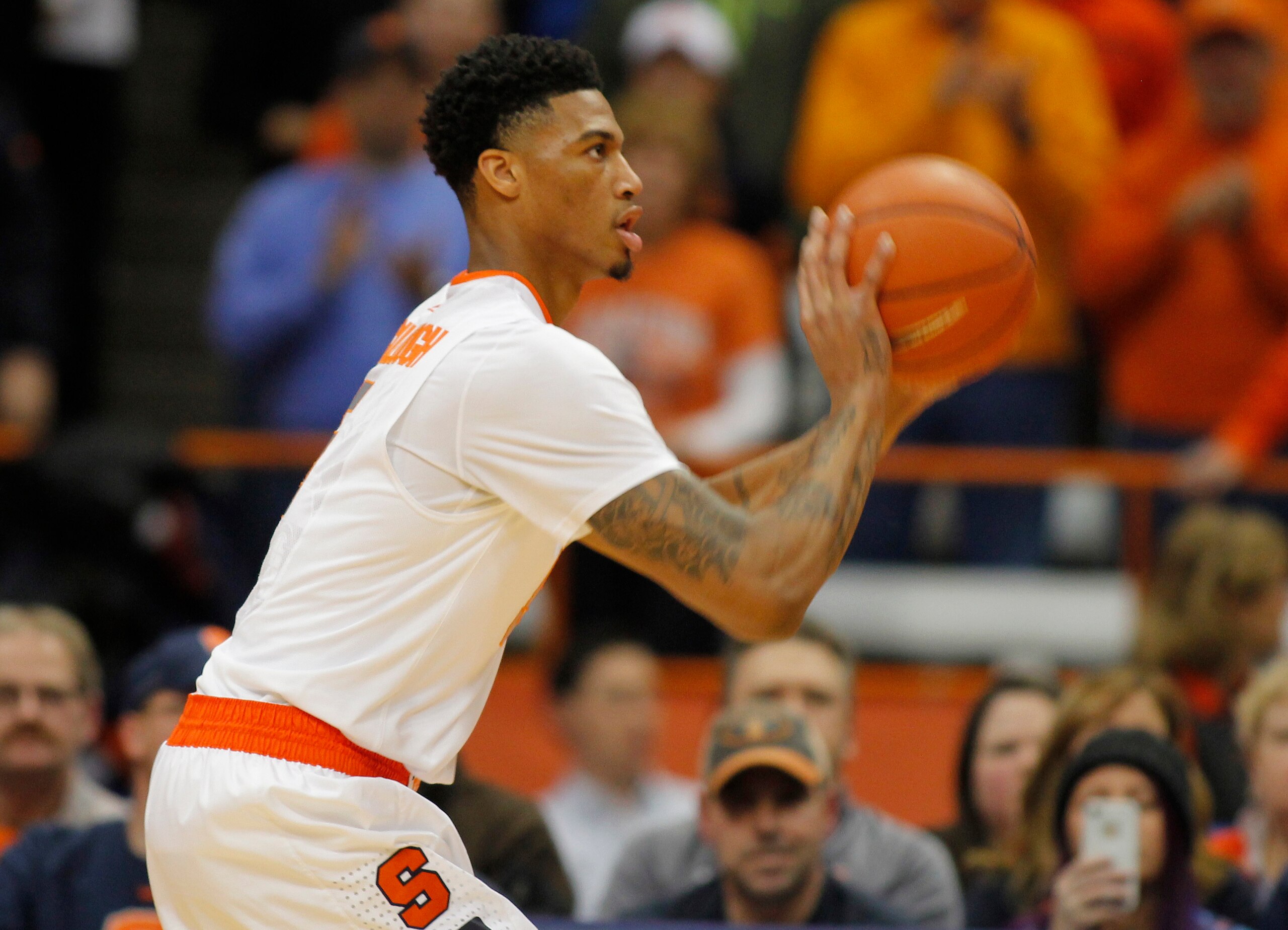
Age: 20
Measurements: 6'10", 220 pounds, 7'3.25" wingspan
Big Board Ranking: 29th
2014-15 Notable Numbers: 9.3 points, 6.9 rebounds, 2.1 blocks, 47.8 field-goal percentage
One glance at Chris McCullough's stat sheet might lead you to assume it's the reason he's featured here.
It's not. Or not the only reason, anyway.
McCullough started his freshman year strong with the Orange, posting double-digit points in each of his first eight games and averaging 14.4 points and 8.8 rebounds per night over that stretch. Then, he hit a wall. He never had double-figure points or rebounds again, putting up just 4.3 points and 5.0 boards per game over his final eight outings.
That's when disaster struck. During his 16th game of the season, he suffered a torn ACL. And despite having both forgettable production and the injury, McCullough still opted to enter the draft.
Scouts have been scratching their heads over his decision ever since.
"I can't see him making a team's opening-day roster," an Eastern Conference scout told Syracuse.com's Mike Waters. "He's going to have to do what he does in the D-League. He's not going to get any NBA shot. If he's good, he'll get called up from the D-League."
McCullough is long, athletic and skilled in a lot of different areas. He can cause havoc at the defensive end, move well in the open court, attack off the dribble with straight-line drives and bury shots from the mid-range.
But that ability didn't translate to the box score often. Plus, his frame needs to fill out quite a bit, and he obviously needs to get healthy. He has the talent to get right at the NBA level, but there are a lot of different ways for this to go wrong.



Cliff Alexander, PF, Kansas
4 of 10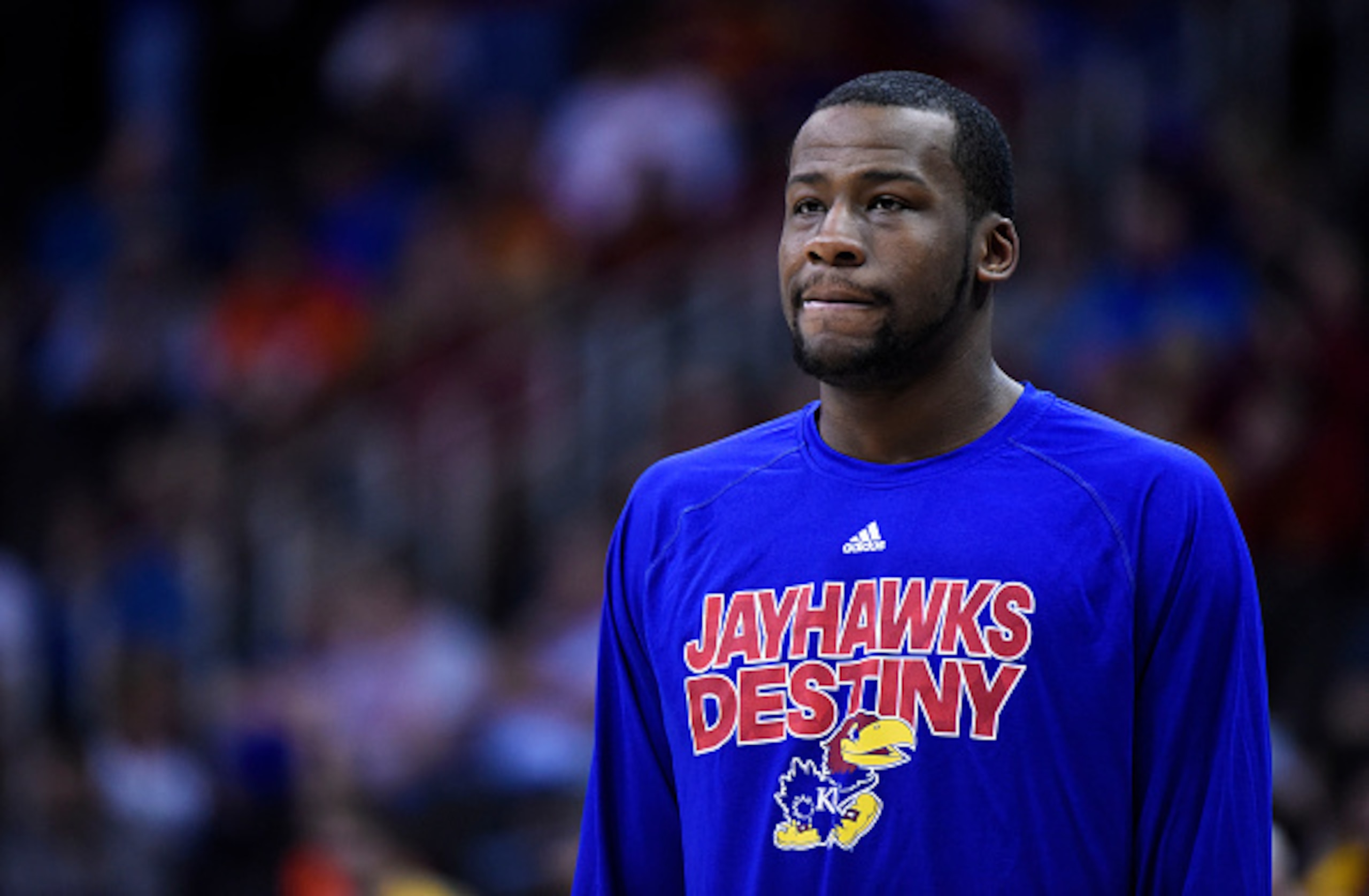
Age: 19
Measurements: 6'8", 240 pounds, 7'3.5" wingspan
Big Board Ranking: 27th
2014-15 Notable Numbers: 7.1 points, 5.3 rebounds, 1.3 blocks, 56.6 field-goal percentage
In today's position-less NBA, traditional designations don't always describe what a player brings inside the lines. But power forward pretty well sums up Cliff Alexander's game.
Nearly everything he does revolves around brute force: setting solid screens, bullying his way to the basket and battling on the boards. He's not the most explosive player by any stretch, but his length, strength and intensity help him play bigger than he is.
Still, his size isn't great for the NBA post. It didn't even always seem adequate for the collegiate game. He logged fewer than 20 minutes during 16 of his 28 outings, before he was suspended for the final eight games of the season over an issue of impermissible benefits received by his mother.
"My mom got tricked into something, she didn't know what she was doing and we needed money at the time," Alexander told 120Sports.com's Michael Kim.
A crowded Kansas frontcourt limited Alexander's playing time, but his unpolished skills didn't help either. The adjustment to no longer being the biggest and strongest player on the floor exposed a number of holes in his game.
His immediate future will likely require him to rely on his toughness and determination to outwork larger, more developed players. It's going to be a humbling process for a player whom ESPN.com ranked No. 3 in the 2014 high school class, and he'll have to convince a club that his potential is great enough to accept the inevitable growing pains lying ahead just to get that chance.
Robert Upshaw, C, Washington (Dismissed)
5 of 10
Age: 21
Measurements: 7'0", 250 pounds, 7'5.5" wingspan
Big Board Ranking: 26th
2014-15 Notable Numbers: 10.9 points, 8.2 rebounds, 4.5 blocks, 59.3 field-goal percentage
Robert Upshaw is the personification of a red flag.
Think about the value of rim protection in a league that incessantly beats the pick-and-roll drum. Now, consider that Upshaw projects as a supreme rim protector both in terms of his physical attributes and on-court production.
He's a mountain of a man. At the combine, he had the top wingspan and biggest hands in terms of both length (10") and width (11"). Only Kentucky's Willie Cauley-Stein and Wisconsin's Frank Kaminsky—both potential lottery picks—stood taller than Upshaw.
And Upshaw's shot-blocking numbers are even better than they look. He averaged 4.5 rejections in only 24.9 minutes per game. His 17.4 block percentage easily surpassed what Anthony Davis (13.7) and Nerlens Noel (13.2) did during their one-year stays at Kentucky, via Sports-Reference.com.
But look at Upshaw's big board ranking. Clearly, something is going on when a player this massive an effective could potentially fall out of the first round.
Unfortunately, it is. Upshaw was dismissed from two different teams during his collegiate career: first by Fresno State in 2013 and then by Washington in January.
"It's been a long process," Upshaw told Wasserman at the combine. "I've had a lot of education around drugs and alcohol. A lot of things I've been through—I haven't kept that a secret. I've just been working on myself with a team of people that are really close to me and building a structure so I can have success at the next level."
If Upshaw has truly turned a corner, he could wind up being one of the draft's biggest steals. But there's a major difference between saying the right things and actually doing them. Even a late first-round pick is a fairly big gamble that Upshaw is capable of doing the latter.
Kevon Looney, PF, UCLA
6 of 10
Age: 19
Measurements: 6'9", 220 pounds, 7'3.5" wingspan
Big Board Ranking: 23rd
2014-15 Notable Numbers: 11.6 points, 9.2 rebounds, 1.3 steals, 47.0 field-goal percentage
If UCLA's Kevon Looney pans out, the NBA team that drafts him will be getting a mismatch forward with the ability to create his own shot and light the lamp from distance.
If he doesn't, it will get a glorified hustler whose fuel tank ran low more often than the Bruins would have liked.
"Looney tends to tire fairly easily and often looks fatigued as the games move on, grabbing onto his shorts and really struggling with his effort and awareness," wrote DraftExpress' Jonathan Givony. "This was increasingly an issue as the year moved on. ... It's not clear if this was due to a lack of conditioning or something more deeply-rooted."
Raising any red flags yet? Unfortunately, that isn't the only concern.
He has neither the bulk nor the post game of a typical power forward. And he doesn't have the athleticism or the quickness to slide out to the wing, either. And while his shooting mechanics and accuracy rate both look promising, his sample size as a three-point sniper is small (22-of-53).
He plays hard, rebounds well and rarely looks out of place, but he needs to find his NBA position, fill out his frame and continue expanding his offensive arsenal.
Christian Wood, PF, UNLV
7 of 10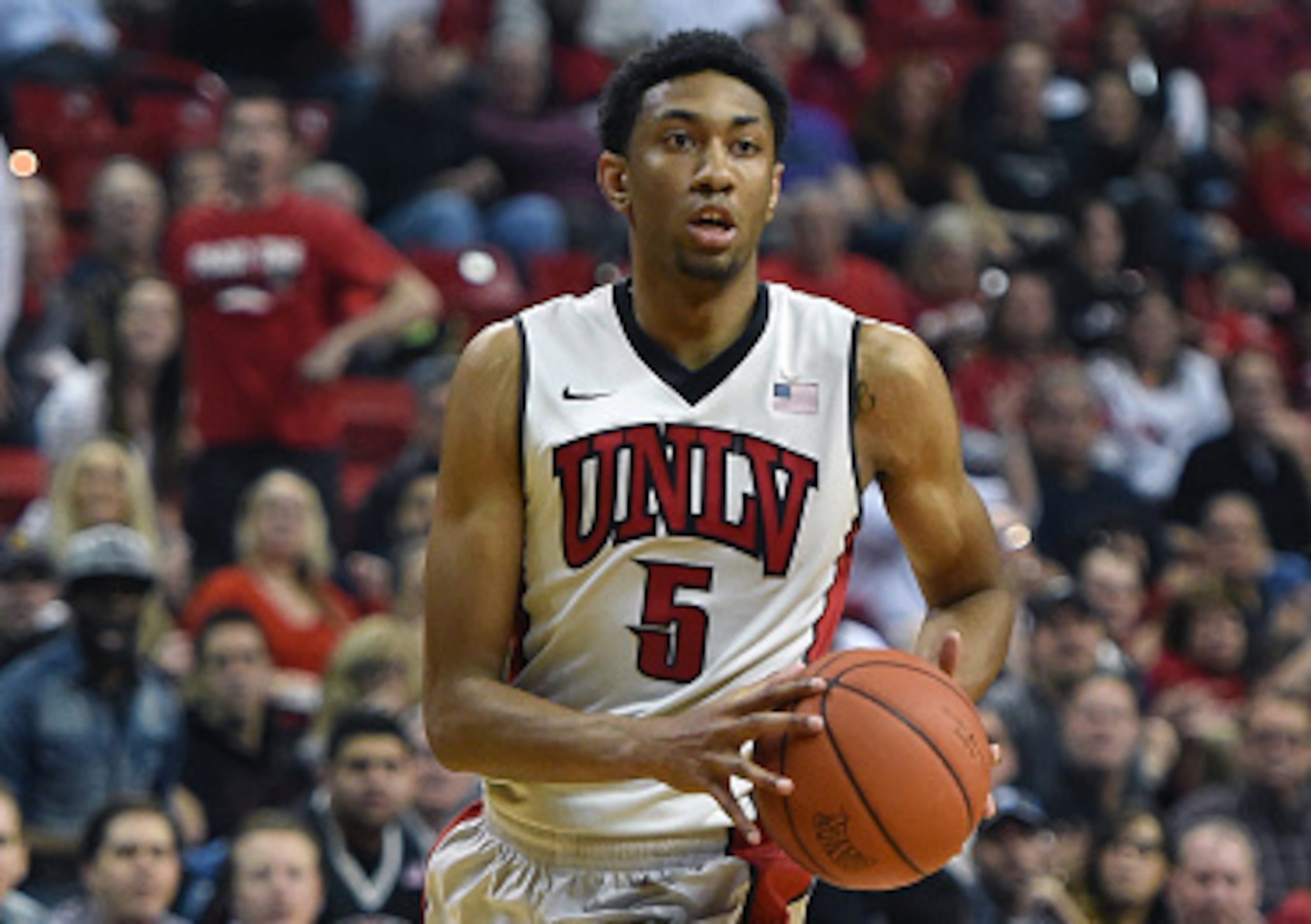
Age: 19
Measurements: 6'11", 220 pounds, 7'3.25" wingspan
Big Board Ranking: 19th
2014-15 Notable Numbers: 15.7 points, 10.0 rebounds, 2.7 blocks, 49.7 field-goal percentage
The intrigue surrounding lanky forward Christian Wood is less about the player he is now and more about what he might become.
While that's true of many draft prospects, the guessing game with Wood deals in the extremes.
"As one NBA scout told me, 'In five years, he'll either be an NBA All-Star or out of the league,'" ESPN.com's Fran Fraschilla wrote. "That may be hyperbole, but the point is that Wood is a big man with tremendous athleticism and the offensive ability to play inside and out. However, his motor and strength are two major red flags."
The all-star upside comes from his potential to do things few players can: block shots and hit perimeter jumpers. Wood is also a fluid, explosive athlete who can fill a transition lane or run the break himself, beat defenders off the dribble, finish plays above the rim and defend multiple positions.
But he needs to bulk up considerably if he's going to play the 4. At 220 pounds, he's lighter than shooting guard J.R. Smith (225 lbs). And those obviously aren't the players Wood will be guarding.
Strength isn't the only thing Wood needs to add, though. Not by a long shot. If he's going to be a prominent rotation player—let alone a star—he has to greatly improve his fundamentals, floor awareness, intensity, decision-making and shot selection.
Kelly Oubre, SF, Kansas
8 of 10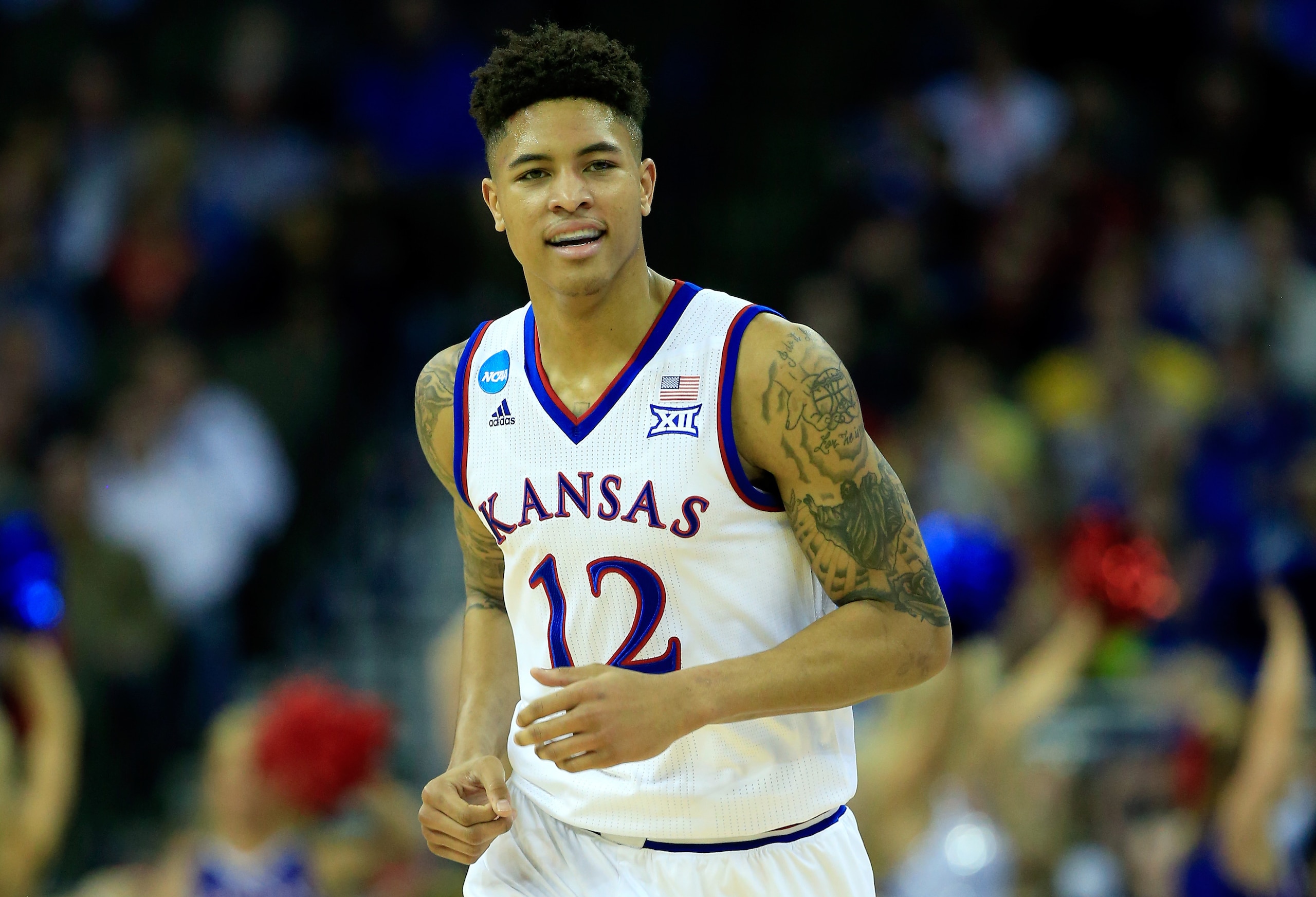
Age: 19
Measurements: 6'7", 200 pounds, 7'2.25"
Big Board Ranking: 16th
2014-15 Notable Numbers: 9.3 points, 5.0 rebounds, 1.1 steals, 44.4 field-goal percentage
Kelly Oubre aces the eye test from a physical standpoint.
His frame seems like it was built for the NBA wing, as his hawkish wingspan was the longest of any perimeter player at the combine. Couple that with his good (albeit not great) athleticism and the smoothness in his game, and Oubre looks like something of a basketball natural.
At times, he plays like one too. He had 11 different games with at least 12 points and six boards during his one-and-done campaign at Kansas. When he's rolling, he can change a game with his soft shooting touch and disruptive defense.
But he's raw on both sides of the floor and limited when it comes to creating for himself. And not every executive is convinced Oubre will lift himself up to his lofty ceiling.
"I think he has a chance to be a three-and-D guy in the league and his best NBA skill will probably be on the defensive end," one general manager said, via ESPN Insider. "... It's the in-between stuff that I'm not sure he'll ever get. I don't think he can really dribble the basketball. But the biggest issue is his head. Is he ready to put in the work?"
Oubre's focus wavered at times, and his mental mistakes cost him minutes. He played 30 or more in six games but 10 or fewer in another six.
The 19-year-old is still a project. And he'll need a more consistent approach to realize anything close to his full potential.
Myles Turner, C, Texas
9 of 10
Age: 19
Measurements: 6'11", 240 pounds, 7'4" wingspan
Big Board Ranking: 11th
2014-15 Notable Numbers: 10.1 points, 6.5 rebounds, 2.6 blocks, 45.5 field-goal percentage
Myles Turner could make us look foolish for having him on this list. He has a skyscraper's ceiling—a chance to become the rare intimidating interior defender who routinely buries long-range buckets.
That upside pushed Turner to the No. 2 spot on ESPN.com's 2014 high school rankings, but his stock has been sliding ever since.
He didn't dominate any particular area during his lone season at Texas and only made seven starts in 34 games for the Longhorns. He had some major moments as a rim protector and difficult defensive cover, but he also disappeared at times (22 total points over his final five games). And for all the buzz about his shooting, he hit just 17 of his 62 three-point attempts (27.4 percent).
His running style is awkward; ESPN Insider Chad Ford compared it to "an old man with two bad knees playing pickup ball at the YMCA." Given Turner's size, some have wondered whether his ungraceful movement might lead to injury problems down the line. But it doesn't sound like that's the case.
"Turner's awkward gait is most likely caused by a minor, and fairly common, muscular imbalance in his thighs," wrote the Cauldron's Jonathan Tjarks. "It's the type of thing that an NBA training staff can easily correct once they’re made aware of it, and there is no reason to assume it will cause any long-term problems."
But the struggles with his shot—which was supposed to be one of his best selling points—aren't as easy to write off. Texas didn't help him with proper spacing, but he didn't always take the smartest shots either.
And even if his lumbering running style isn't an injury risk, it's still an issue. Mobility is big for anyone in today's up-and-down game, and Turner needs more of that—along with more strength and polish in the low post.
Kristaps Porzingis, PF, Latvia
10 of 10Age: 19
Measurements: 7'0", 220 pounds, 7'3"-7'6" wingspan
Big Board Ranking: 9th
2014-15 Notable Numbers (Spain's ACB League): 10.6 points, 4.8 rebounds, 1.1 blocks, 47.1 field-goal percentage
Listen to the right scouting report, and it isn't hard to think that Latvia's Kristaps Porzingis is one of the best players in this draft.
"I think he's a lock for the top five, and I wouldn't be surprised to see him go as high as top three," one executive told NBA.com's Scott Howard-Cooper. "... We all like to do our comparables. He's like Dirk Nowitzki or Pau Gasol."
Future Hall of Famers Dirk Nowitzki and Pau Gasol? It doesn't get much better than that, right?
Well, it might actually—with Porzingis. Not only does he impress with feather-soft shooting, fancy footwork and sound fundamentals, but he also moves well for his size and finishes above the rim with ease.
So, what's the problem? Well, there are quite a few of them.
His awareness isn't great, he offers almost nothing as a passer and he doesn't make the most of his height. He needs to get a lot stronger, as he doesn't play the post well at either end. He seems to shy away from contact, though it's hard to tell if that's an issue with his demeanor or simply a result of his frail frame.
And as exciting as his comparisons sound, it's hard to forget that Andrea Bargnani was supposed to be the next Dirk, too. (And before Bargs, Nikoloz Tskitishvili was touted as perhaps the next Nowitzki.)
Their struggles shouldn't be held against Porzingis, but their stories remind us that success is never guaranteed for a prospect. He could certainly boom like those players never did, but he won't shake his red flags without substantial growth in his body and game.
Unless otherwise noted, measurements used courtesy of NBA.com and DraftExpress.com.

.jpg?w=2560 "Raiders Could Start Mendoza")

.jpg?w=2560 "Rodgers Iced Out on Plane 💎")
.jpg?w=2560 "Packers Safety Slams Refs 🤬")
.jpg?w=2560 "🚨 Week 8 AP Top 25 Poll")