
Predicting the 10 Most Productive Freshmen in the 2015-16 NCAA Basketball Season
Recruiting services are tasked every year with trying to rank the most talented players in each class.
The goal is to predict future success, but it's difficult to project how good players will be as freshmen without considering which school each player picks and his role in that program.
D'Angelo Russell, for instance, was not in the top 10 of any of the recruiting rankings last year, but Ohio State was in need of a go-to guy, and he ended up putting up better numbers than any freshman in the country.
Now that *almost every top prospect has picked a school, I went through and examined the opportunity and how each of the top players fit in their respective programs.
*Thon Maker and Jamal Murray—if he reclassifies from the 2016 class to 2015—are the two valuable chips still out there.
So this list is not rankings of who I think are the best players; it is the 10 players who figure to be the most productive as freshmen based off talent, opportunity and fit.
10. Allonzo Trier, Arizona
1 of 10
Arizona is in need of some scoring after losing its four leading scorers from last season. Boston College transfer forward Ryan Anderson should help, but someone is going to have to replace the scoring on the perimeter from Stanley Johnson, and Allonzo Trier is the best candidate from the shooting guard spot.
Trier is just an average outside shooter, but he's an excellent driver and good finisher around the rim. He led Nike's EYBL circuit in scoring last year at 29.7 points per game. He also showed that he can be a scorer on a stacked team last summer, averaging 12.6 points per game playing for the United States' under-18 team last summer.
It's not a given that Trier will start for the Wildcats. He'll battle for one of the two wing spots with fellow freshman Ray Smith and senior sharpshooter Gabe York. Whether he starts or not, Trier is going to get plenty of run, and he'll find a way to be one of the team's top scorers.
9. Caleb Swanigan, Purdue
2 of 10
Caleb Swanigan wanted to play power forward, and he'll get that chance at Purdue playing next to two true centers in A.J. Hammons and Isaac Haas.
It's rare to have two low-post threats on the floor anymore in college basketball. Most coaches are using lineups with at least one big man who can knock down perimeter jumpers to stretch the floor, and the Boilermakers could have some spacing issues considering they're short on shooters.
But Swanigan's understanding of who he is and how to use his body should make him an instant-impact guy. He's a throwback big man who likes playing with his back to the basket and embraces contact. Look for him to be Purdue's most productive post-up threat and to get to the free-throw line frequently.
He's also an elite rebounder—he led EYBL in rebounding last year at 11.9 boards per game—and that should help Purdue on the defensive end. His presence should give Hammons the freedom to try to block everything in the paint with rebounding protection.
8. Diamond Stone, Maryland
3 of 10
Diamond Stone is arguably the best low-post scorer in the 2015 class, and that's exactly what Maryland was missing.
The Terps appear to have it all now, and their potential starting lineup of Melo Trimble at point guard, Duke transfer Rasheed Sulaimon at shooting guard, Jake Layman at small forward, Georgia Tech transfer Robert Carter at power forward and Stone in the middle is the best lineup in college basketball on paper.
Stone should have plenty of space to operate with those four on the floor with him. The big question is how much opportunity he will get in Mark Turgeon's system.
Turgeon has had solid big men through the years, but his offenses usually see the perimeter guys taking most of the shots. Not since 2005-06 when he was at Wichita State has Turgeon had a true low-post scorer led his team in scoring. Alex Len, a lottery pick, has had the best season of his Maryland bigs when he averaged 11.9 PPG two years ago, but Dez Wells was the go-to guy on that team.
It'll be interesting to see how these pieces end up fitting together, but Stone has such good hands and feel for how to use his body that no matter the system, he should put up good scoring and rebounding numbers.

.jpg?w=2560 "Steelers Saints Football")
.jpg?w=2560 "Rams Raiders Football")
7. Cheick Diallo, Kansas
4 of 10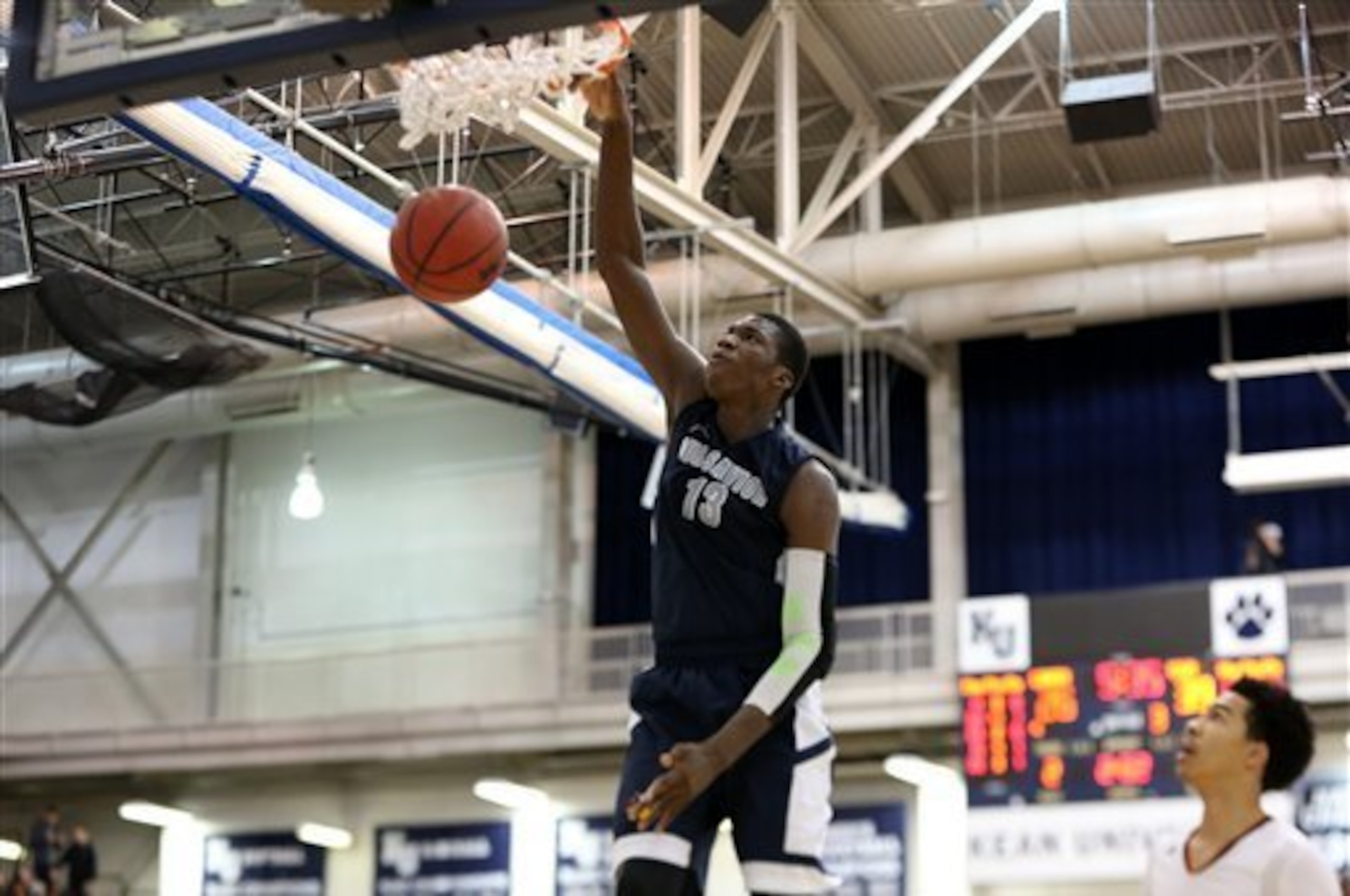
Bill Self has already expressed some regret this offseason over his team not playing more inside-out last season like his teams have done so traditionally in the past.
The issue had as much to do with personnel as it did execution. The Jayhawks just didn't have a legit low-post threat with Cliff Alexander turning out to be a dud.
There's no doubt that Self will make it a priority to play through his bigs again, and that's great news for Cheick Diallo. He is still a work-in-progress skill-wise, but he has the size and athleticism to thrive in Self's system and get easy buckets if he learns how to play angles.
Diallo's greatest strength is his motor and ability to run the floor. He has the chance to be what KU had hoped Alexander would be.
6. Jaylen Brown, California
5 of 10
Jaylen Brown is regarded as one of the top three players in this class, but he joins a roster that already had three talented scoring perimeter players and doesn't have as much opportunity as some of the other top incoming prospects.
Tyrone Wallace is the Pac-12's leading returning scorer at 17.1 points per game; Jordan Matthews averaged 13.6 points and shot 44.3 percent from deep last year and Jabari Bird, a McDonald's All-American two years ago, averaged 10.5 points. Cuonzo Martin also signed Ivan Rabb, one of the most talented big men in the class.
There are only so many shots to go around.
Brown's game shares some similarities to Stanley Johnson. He's a big and physical wing who is known for playing extremely hard. Last season, Johnson joined a roster that also had plenty of experienced talent returning, and he ended up leading Arizona in scoring.
I'm not sure Brown can displace Wallace as Cal's go-to guy, but he's just too talented not to produce solid numbers.
5. Brandon Ingram, Duke
6 of 10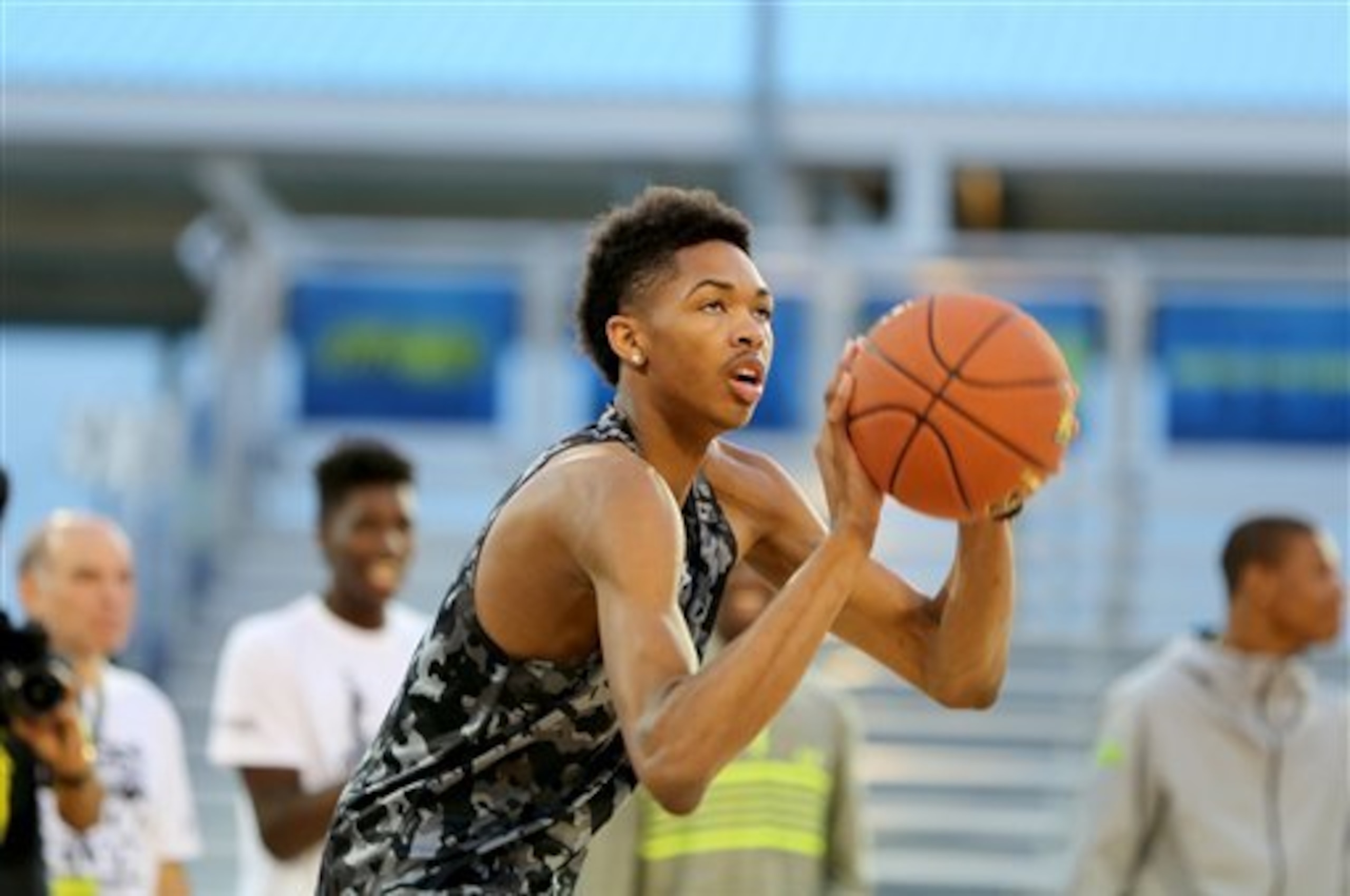
Mike Krzyzewski has had no hesitation running his offense through a star freshman. He's done so the last two years with Jabari Parker and Jahlil Okafor.
The Blue Devils will have a much different look next year, with most of their scoring coming from the perimeter. They have plenty of bigs (Rice transfer Sean Obi, freshman Chase Jeter, Amile Jefferson and Marshall Plumlee), but none of the four are natural scorers. Returning starting wing Matt Jones is a good shooter but not a great scorer.
That will likely put the scoring onus on Brandon Ingram, Grayson Allen and freshman point guard Derryck Thornton. It'll be interesting to see how and where Krzyzewski uses Ingram. His natural position is the 3, but the last two years he's gone small with Parker and Justise Winslow at the 4. Ingram has the height (6'8") to play there but is much more slender than Parker and Winslow.
Coach K is one of the best at molding his offense around his talent, and no one is more talented on the roster than Ingram. That's why it's a good bet with Coach K's creativity and need for a go-to guy that Ingram will carve himself out a big role.
4. Henry Ellenson, Marquette
7 of 10
The Golden Eagles struggled in Steve Wojciechowski's first year, winning only four games in the Big East.
The offense was the worst in the league but will have the chance to take a significant leap with the ability to build around the uber-skilled Henry Ellenson.
Ellenson can score over either shoulder from the blocks and also has the jump shot and ball-handling ability to step away from the bucket. Pairing Ellenson with former Indiana big Luke Fischer will give Marquette arguably the best frontline in a league that isn't exactly stacked with talented bigs.
The challenge will be finding shooters to put around those big men. Matt Carlino was the team's best shooter and leading scorer last year, and he graduated. If sophomore Duane Wilson (11.9 PPG as a freshman) improves and another shooter emerges to help space the floor for those bigs, Marquette has the goods to finish in the top half of the Big East after finishing tied for last in Wojciechowski's first season.
3. Skal Labissiere, Kentucky
8 of 10
Had John Calipari somehow pulled a rabbit out of his hat and convinced Karl-Anthony Towns to stay in school, Towns would have put up monster numbers in a platoon-less world. Now being the go-to big man falls on the shoulders of Skal Labissiere.
Not since DeMarcus Cousins in Calipari's first season in Lexington has a big man had the chance to be such a high-usage scorer—Cousins used 31.3 percent of possessions when he was on the floor that season, per kenpom.com. Assuming the roster stays like it is now, Labissiere should get that chance.
Returning forwards Alex Poythress and Marcus Lee are great athletes but not natural scorers, and point guard Tyler Ulis is more of a distributor than a scorer. The UK frontcourt also isn't nearly as deep as last year, and none of the incoming perimeter players figure to be high-volume scorers.
You could see a lot of two-man game with Ulis and Labissiere. Pairing a big man who can step out on the perimeter and also score around the bucket with Ulis will be tough to defend. Expect a lot of pick-and-pop game from those two. How well Labissiere can assume that role as the go-to man could have a big impact on how successful UK can be.
2. Malik Newman, Mississippi State
9 of 10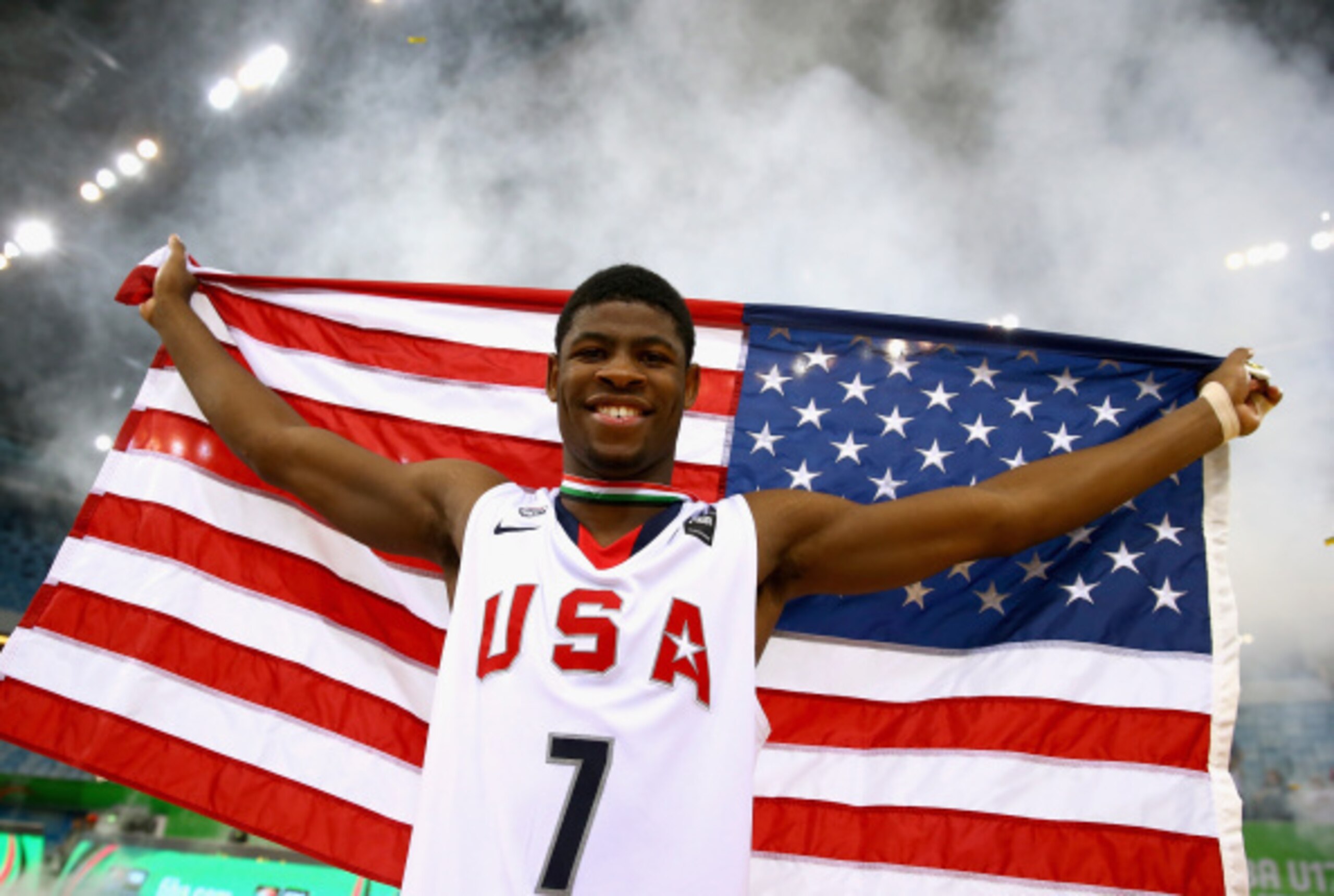
Malik Newman is the most gifted scorer in this class, and he's going to a program in desperate need of some star power. The Bulldogs have not made the NCAA tournament since 2009 and haven't had a winning SEC record since 2011.
They might not be as far off from contending in the SEC as you'd think, however. They return four starters who all averaged 8.2 points per game or better last year, and that core group was trending upwards by doubling their SEC win total from three in 2013-14 to six last season.
Newman and senior Craig Sword will form one of the more talented backcourts in the league to pair with a solid low-post scorer in Gavin Ware. After a slow start last year, Sword averaged 14.4 points in SEC games.
New coach Ben Howland has also said that he plans to play uptempo, similar to his final year at UCLA. Most of Howland's former teams have played slow, but there was a real philosophical change in his final year at UCLA when his team went from went from 174th in adjusted tempo to 30th, per kenpom.com, and led the Pac-12 in scoring. Newman is never hesitant to pull up an early-clock jumper and should thrive in an uptempo attack.
Howland teams have usually been relatively balanced in shot dispersion, but he also unleashed a high-usage, shoot-first guard in Shabazz Muhammad in that final year at UCLA. Muhammad averaged 17.9 points per game. Newman has the game to see his scoring prowess translate at the college level right away, and I'd expect him to put up similar scoring numbers to Muhammad.
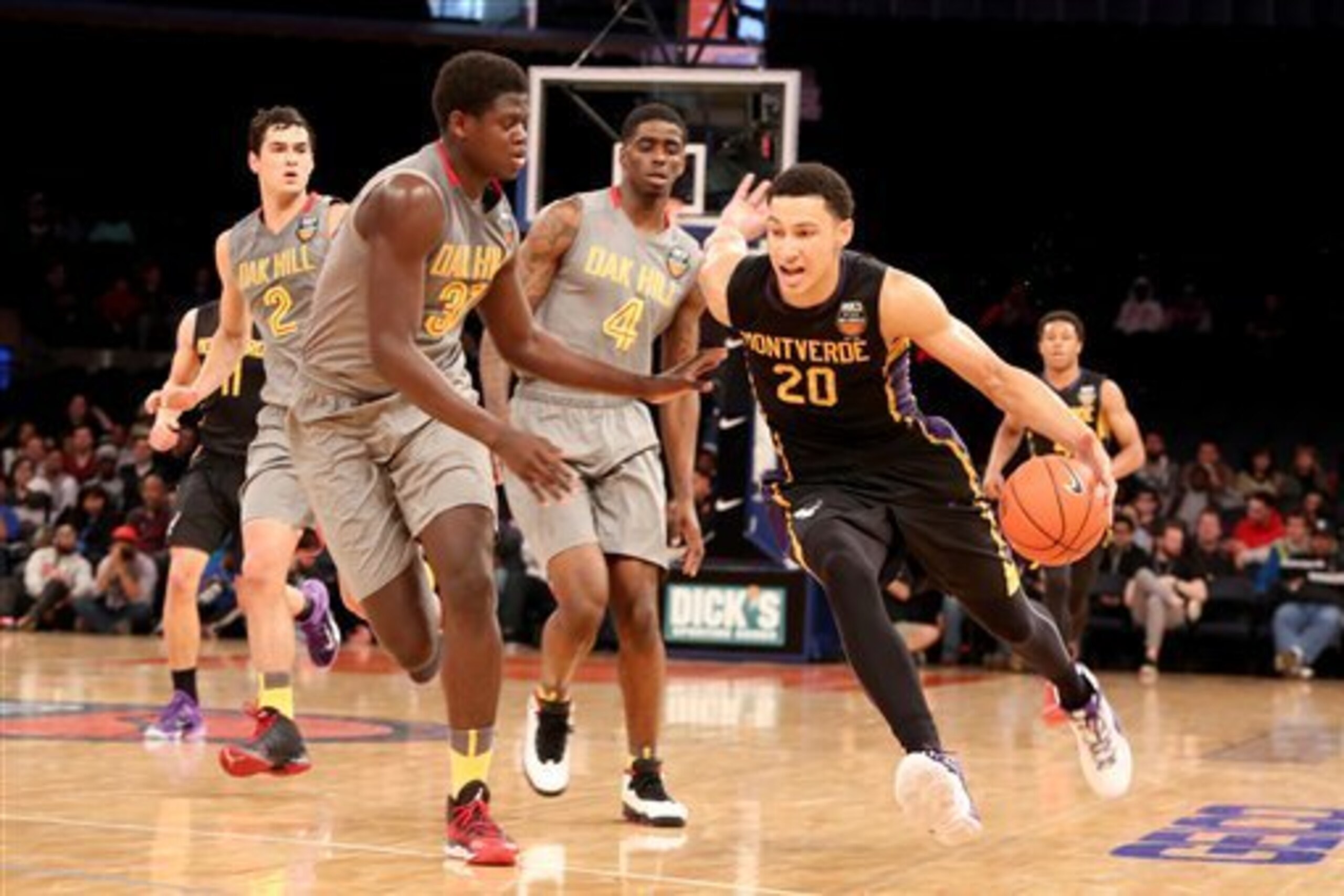
1. Ben Simmons, LSU
10 of 10
How successful Ben Simmons will be at LSU will fall, in part, on coach Johnny Jones. Simmons is such a rare talent with the size of a big man and the skill of a point guard that it will take some creativity to get the very best out of him. His role should be somewhat similar to how Iowa State coach Fred Hoiberg used Royce White a few years ago.
Jones has not exactly proven himself as a visionary offensive mind, but Simmons is so talented and has such an advanced feel for how to play the game that it might not matter who is coaching him. It seems like a no-brainer that Jones will put the ball in the hands of Simmons and let him create as a point forward.
This should lead to filling up just about every category on the stat sheet. With Jarell Martin and Jordan Mickey off to the NBA, Simmons will unquestionably be "the man" for the Tigers and play in an offense no longer built around two bookend forwards, but instead, built around his skill set.
With Mickey and Martin off the blocks, that opens up the lane and shifts the focus for the Tigers to surrounding Simmons with shooters—most notably senior sharpshooter Keith Hornby and fellow incoming freshman Antonio Blakeney.
LSU would be better off with Mickey and Martin still around, but their absence could force Simmons to score the ball enough to put him in the National Player of the Year race.
C.J. Moore covers college basketball for Bleacher Report. You can follow him on Twitter @CJMooreBR.

.jpg?w=2560 "AP Poll Top Five Week 9")
.jpg?w=2560 "Packers Safety Slams Refs 🤬")

.jpg?w=2560 "Lamar Being Out Shocked Ravens")

.jpg?w=2560 "Mahomes Told Teammate to Leave Meeting")