2015 NBA Mock Draft: 1st-Round Predictions After Lottery Results
Pingpong sales in Minneapolis just went through the roof. The Minnesota Timberwolves struck gold Tuesday, winning the 2015 NBA draft lottery and rights to (very likely) select their next foundational big man.
Minnesota had a 25 percent shot of winning it all after finishing 16-66 during the regular season. The Los Angeles Lakers and Philadelphia Sixers came up with the No. 2 and No. 3 picks respectively and should wind up with foundational talents despite the slight disappointment of coming up just short.
Based on everything we've known about this draft process, Minnesota will be selecting between Kentucky big man Karl-Anthony Towns and Duke center Jahlil Okafor.



Towns has generated real momentum dating back to March, with his two-way potential winning out over the proven production of Okafor. The Duke product still has a chance to land at No. 1 if the Wolves decide they want to make a quick playoff push, but Towns has the higher ceiling.
As for the remainder of the first round, that's still in flux. L.A. at No. 2 will be deciding between the leftover of Towns and Okafor and guards Emmanuel Mudiay and D'Angelo Russell, who cap off the true top four of this class.
With that in mind, let's take a look at how the first round should play out.
Mock Draft
| 1 | Minnesota Timberwolves | Karl-Anthony Towns, C, Kentucky |
| 2 | Los Angeles Lakers | Jahlil Okafor, C, Duke |
| 3 | Philadelphia 76ers | D'Angelo Russell, PG/SG, Ohio State |
| 4 | New York Knicks | Emmanuel Mudiay, PG, China |
| 5 | Orlando Magic | Justise Winslow, SF, Duke |
| 6 | Sacramento Kings | Kristaps Porzingis, PF, Latvia |
| 7 | Denver Nuggets | Myles Turner, PF, Texas |
| 8 | Detroit Pistons | Mario Hezonja, SF, Croatia |
| 9 | Charlotte Hornets | Willie Cauley-Stein, C, Kentucky |
| 10 | Miami Heat | Stanley Johnson, SF, Arizona |
| 11 | Indiana Pacers | Frank Kaminsky, F/C, Wisconsin |
| 12 | Utah Jazz | Kevon Looney, PF, UCLA |
| 13 | Phoenix Suns | Devin Booker, SG, Kentucky |
| 14 | Oklahoma City Thunder | Cameron Payne, PG, Murray State |
| 15 | Atlanta Hawks (via Brooklyn Nets) | Kelly Oubre, SF, Kansas |
| 16 | Boston Celtics | Sam Dekker, SF, Wisconsin |
| 17 | Milwaukee Bucks | Jerian Grant, PG, Notre Dame |
| 18 | Houston Rockets (via New Orleans Pelicans) | Trey Lyles, PF, Kentucky |
| 19 | Washington Wizards | R.J. Hunter, SG, Georgia State |
| 20 | Toronto Raptors | Montrezl Harrell, PF, Louisville |
| 21 | Dallas Mavericks | Bobby Portis, PF, Arkansas |
| 22 | Chicago Bulls | Tyus Jones, PG, Duke |
| 23 | Portland Trail Blazers | Christian Wood, PF, UNLV |
| 24 | Cleveland Cavaliers | Rondae Hollis-Jefferson, SF, Arizona |
| 25 | Memphis Grizzlies | Terry Rozier, PG, Louisville |
| 26 | San Antonio Spurs | George de Paula, PG, Brazil |
| 27 | Los Angeles Lakers (via Houston Rockets) | Cliff Alexander, PF, Kansas |
| 28 | Boston Celtics (via Los Angeles Clippers) | Robert Upshaw, C, Washington |
| 29 | Brooklyn Nets (via Atlanta Hawks) | Justin Anderson, SG/SF, Virginia |
| 30 | Golden State Warriors | Mouhammadou Jaiteh, C, France |
Lottery Analysis
1. Minnesota Timberwolves: Karl-Anthony Towns, PF/C, Kentucky
Towns is the top prospect in this class.
There really shouldn't be much question about that at this point. He's a near-perfect combination of size, athleticism and skill for today's NBA. He's a 6'11" center with range out to the three-point arc who can do work in the post on both ends of the floor. While not an Andre Drummond-level athlete, he's above-average and plays with an intelligence that portends well to the next level.
Town is not currently the best player in the class.
The skills we speak of sound better in theory than the level of production they've manufactured. Towns was a downright bad defender at times last season, with his flashes of shot-blocking brilliance offset by silly mistakes. His extended range resulted in exactly two made three-pointers. He needs to be more aggressive on both ends of the floor and realize he's the most talented player on the floor most of the time.
The time he'll be afforded in Minnesota should help that process.
2. Los Angeles Lakers: Jahlil Okafor, C, Duke
I'm going to Sharpie in Okafor as my Rookie of the Year choice now. He was arguably ready for the NBA before ever arriving at Duke, a ready-made offensive throwback in the mold of Al Jefferson. There isn't much you can quibble with offensively. Okafor has a vast array of post moves, passes willingly on the block and has enough of a mid-range game that you have to respect it.
For two straight years the Lakers should wind up with the draft's most NBA-ready big.
What he doesn't have is much of a defensive ceiling. Okafor was below-average at best on most nights. He doesn't have elite athleticism or quickness, and he lacks the natural instincts he has on the other end. Even if you're being generous, Okafor tops out as an average defender.
That said, he's capable of 15 points and eight rebounds walking out of a locker room from Halloween on. Like Jabari Parker last year, there is little debate about who is the most pro-ready guy in this class.
3. Philadelphia 76ers: D'Angelo Russell, PG/SG, Ohio State
When I watch D'Angelo Russell, I see a young Brandon Roy. When D'Angelo Russell watches D'Angelo Russell, he sees Stephen Curry.
“I don’t want to sound like I’m overdoing it since he’s the MVP of the league,” Russell told reporters at the combine. “But when I watch his game, I see myself. The plays he makes, the shots he takes and passes he makes, I see it before it even happens. I feel like that’s what separates me from a lot.”
The distinction is a little overzealous given Russell's skill set but admirable nonetheless. Russell played point guard in college but projects much better at the 2 over the long term. His ball-handling and passing skills are major pluses for a shooting guard. To a point, they're much closer to sloppy. Russell has potential to be an elite secondary ball-handler who can play true point in a pinch.
Other than the position debate, there's not much to complain about offensively. Russell is a three-point bomber who can create separation off the dribble and pull up from anywhere with confidence. He'll be a perfect fit with the Sixers, who need someone to ignite their offense.
4. New York Knicks: Emmanuel Mudiay, PG, China
Mudiay's camp is following the Dante Exum plan, shielding him from public events like the combine in hopes of keeping his stock high. Unlike Exum, though, we have quite a bit of game tape from Mudiay's high school and Chinese playing days to fall back on.
What shows up is a player with superstar and bust potential. Built in the Russell Westbrook/John Wall mold, Mudiay is a blur in the open court. He's quick, strong, aggressive and will do things so awesome that you reflexively punch another human being. There hasn't been a player drafted since Wall who is more dangerous in transition.
Unfortunately, there's the whole thing where Mudiay can't shoot a lick and borders on out of control when he's not popping off the screen. Controlled chaos creates superstars. Uncontrolled chaos creates Reggie Jackson's last two months in Oklahoma City. It's a fine line Mudiay walks, and it'll be interesting to see which side he falls on.
Also: LOL if you think this dude is running the triangle.
5. Orlando Magic: Justise Winslow, SF, Duke
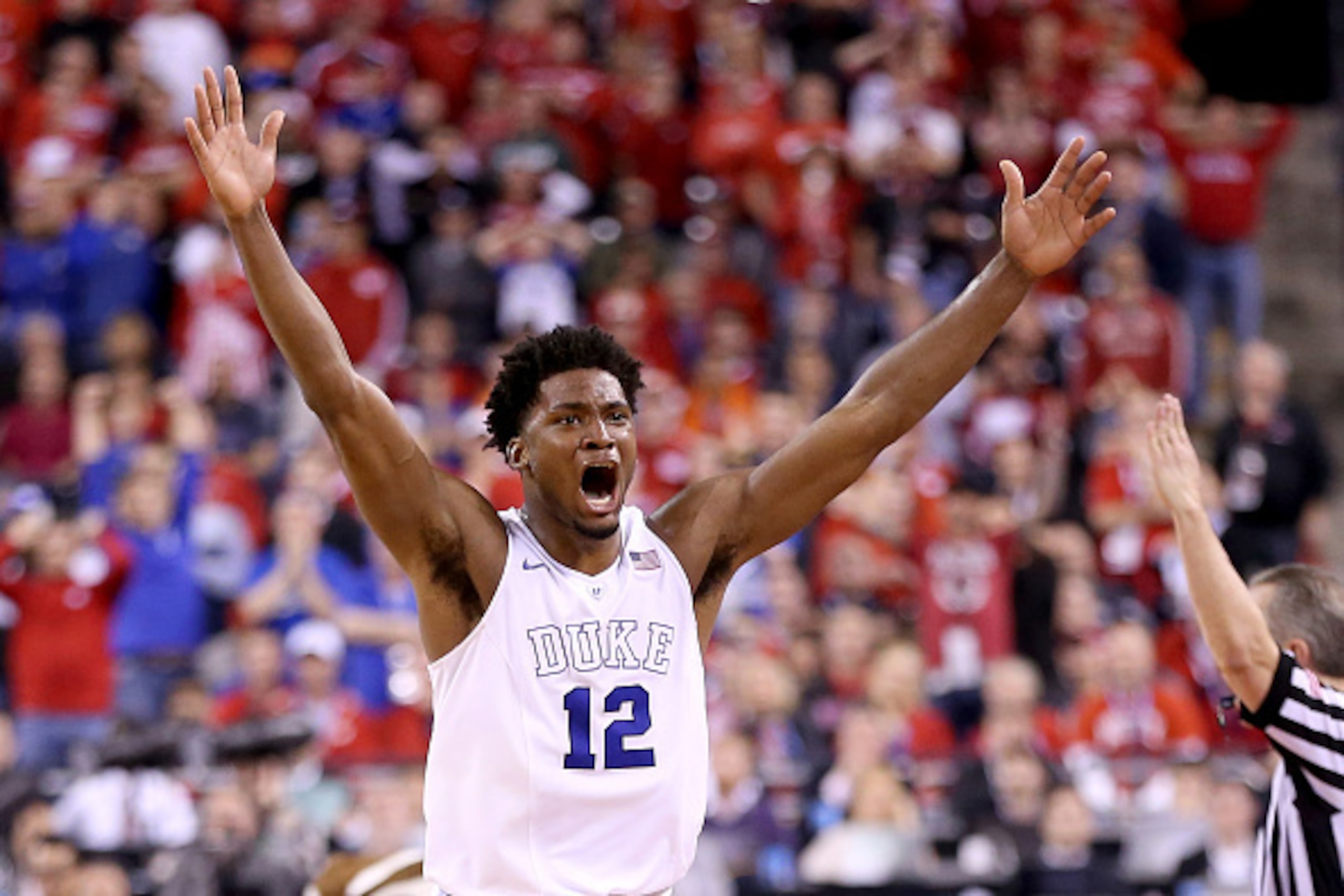
No lottery pick helped himself more in March than Winslow, who separated himself from other wing prospects and pushed his way into the top-five conversation. A two-way maniac with elite athleticism, Winslow is what happens when you shave a couple of inches off Michael Kidd-Gilchrist and add offensive skills.
The 6'6" swingman essentially has two aspects to his offensive game at this point: the hard drive to the rim and the set three-pointer. Off-the-dribble jumpers and the entire mid-range are his "nope" spots on the floor. Maybe he'll get there someday. It's not all that catastrophic if he doesn't. Squint a little bit, and you'll see some Kawhi Leonard-level potential here.
Orlando is a bit of an awkward fit with Elfrid Payton and Victor Oladipo still developing their shots. Throwing Payton, Oladipo, Winslow and Aaron Gordon on the same defense, though? Good lord. That's scary.
6. Sacramento Kings: Kristaps Porzingis, PF, Latvia
Porzingis might be in the top-three conversation if he'd have made a one-year stop at a U.S. university. He's a 6'11" athlete who handles the ball, has range out to the three-point line and is a plus shot-blocker. No one in this class—not even Towns or Okafor—can combine all those skills.
Porzingis is a victim of the NBA's mostly dreadful history of developing foreign talent and his own physical shortcomings. The whole being 6'11" thing sounds great until you realize it comes in a rail-thin frame (220 lbs). And don't mistake Porzingis' shot-blocking ability for true defensive prowess; players who are stronger and tougher regularly outgun him.
Still, there's a lot to like here. Porzingis was a potential lottery pick last year before pulling out and is arguably a better prospect than 2014 Sixers draftee Dario Saric.
7. Denver Nuggets: Myles Turner, PF/C, Texas
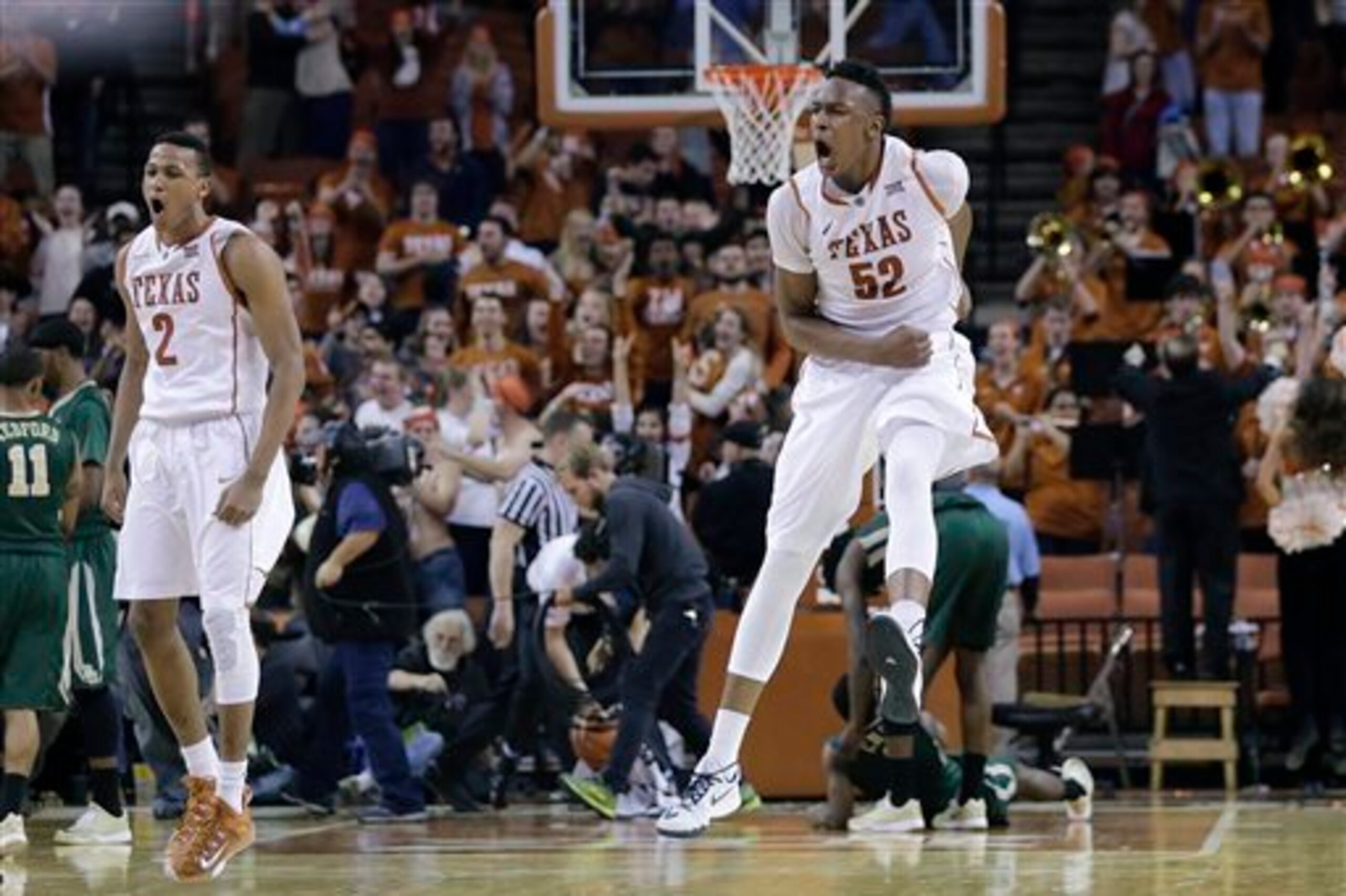
After getting a clean bill of health from doctors, per Sports Illustrated's Chris Mannix, Turner has a real shot to keep rising as the process continues. There is some concern about his weird running gait, but everything checks out OK so far.
"It's a little awkward. It's something I'm working on to get better at," Turner said, per Sam Vecenie of CBSSports.com. "I don't want to say I never really learned how to run, but it's not something I ever put a lot of effort into when I was younger. I just put all my efforts into basketball. I'm working on my core a lot. Doing a lot of physical therapy. Yoga-type exercises. Holding poses."
Turner has the body type and athleticism combo that makes scouts drool. He measured at 6'11 ½" at the combine with a 7'4" wingspan, which makes his explosive leaping ability pop on film. At Texas, he flashed a willingness if not necessarily an ability to stretch beyond the three-point line. There are some Serge Ibakaish tendencies that are going to make a lot of teams look long and hard at him in the top 10.
With the Nuggets heading into an uncertain offseason, their pick can really go anywhere. Putting Turner here is a bit of a place holder.
8. Detroit Pistons: Mario Hezonja, SG/SF, Croatia
Out-of-this-world potential as an offensive difference-maker, Hezonja can really do just about everything. He can knock down shots off the dribble or stationed beyond the arc, is quick with the dribble and can finish at the rim when he gets there. It's a bit disconcerting that he rarely draws fouls—and defense is an issue—but there aren't many holes to poke offensively.
Projecting him as a gunning sixth man type is natural. Getting him in the right situation with a smart coaching staff will be essential. That's true for every prospect, but I see things either going really well for him stateside or really poorly. There isn't a scenario on the table where Hezonja is a happy-go-lucky ninth man.
Being brought along by a coach like Stan Van Gundy is perfect.
9. Charlotte Hornets: Willie Cauley-Stein, C, Kentucky
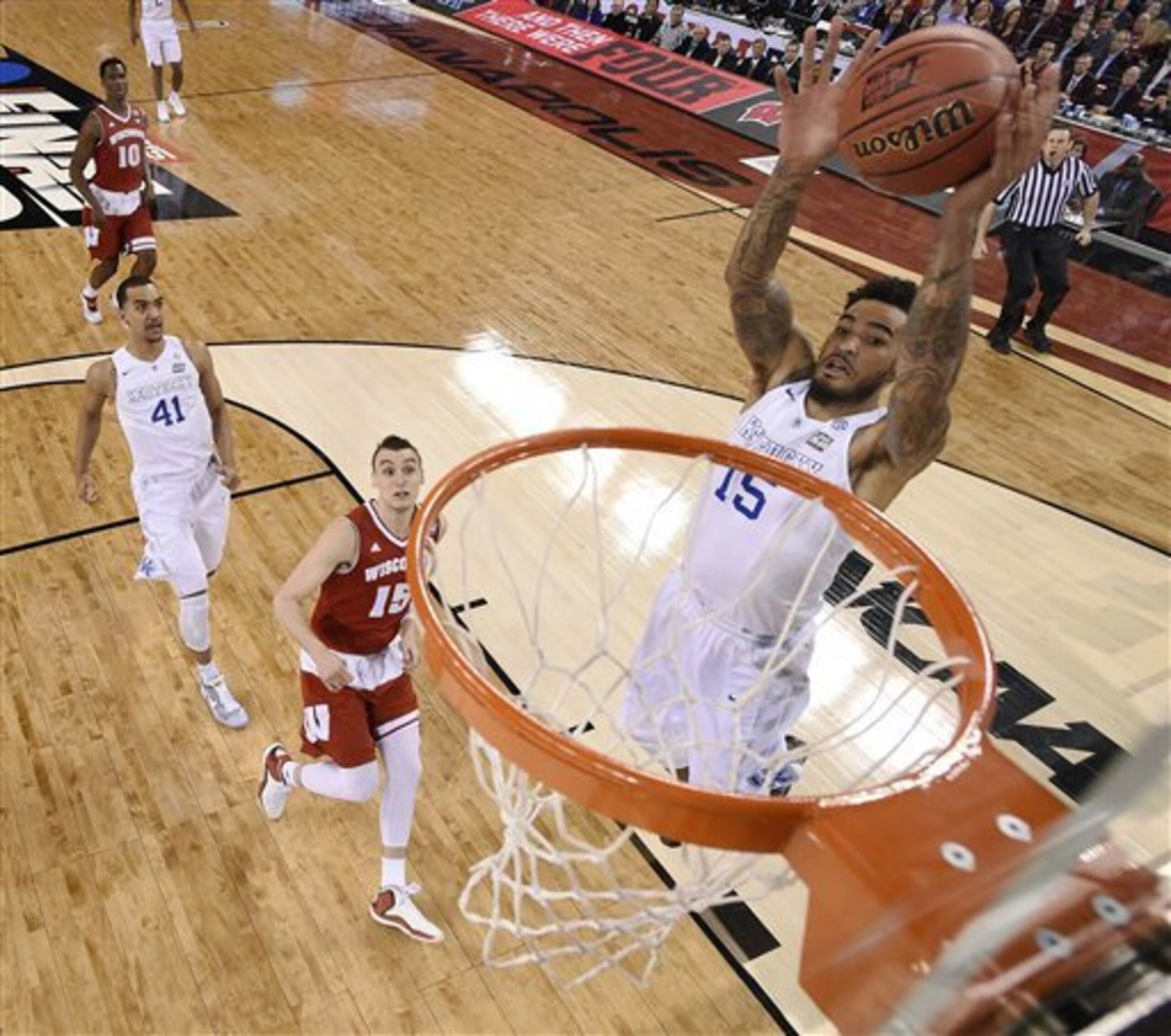
Some team is going to fall in love with Cauley-Stein (7'0", 242 lbs) and select him higher than this. I'm already writing up my bad grade of the pick.
We've watched Cauley-Stein play basketball on a big stage for three years. Frank Kaminsky, 22, who we've all agreed is "old" for a lottery pick, is only five months older than Cauley-Stein. If we're going to throw around limited-upside criticisms of Kaminsky, should we not be doing the same thing with WCS?
For that reason, I tend to grade him as though he'll be who he is at this point.
Cauley-Stein's weaknesses are the same now as they were after his freshman season. His offensive game is a dunkfest, and he's a below-average rebounder despite being perhaps the best athlete in this class. A taller, quicker version of Larry Sanders is a top-10 pick, but the praise many are throwing around—even by some legends—is a little heavy.
10. Miami Heat: Stanley Johnson, SF, Arizona
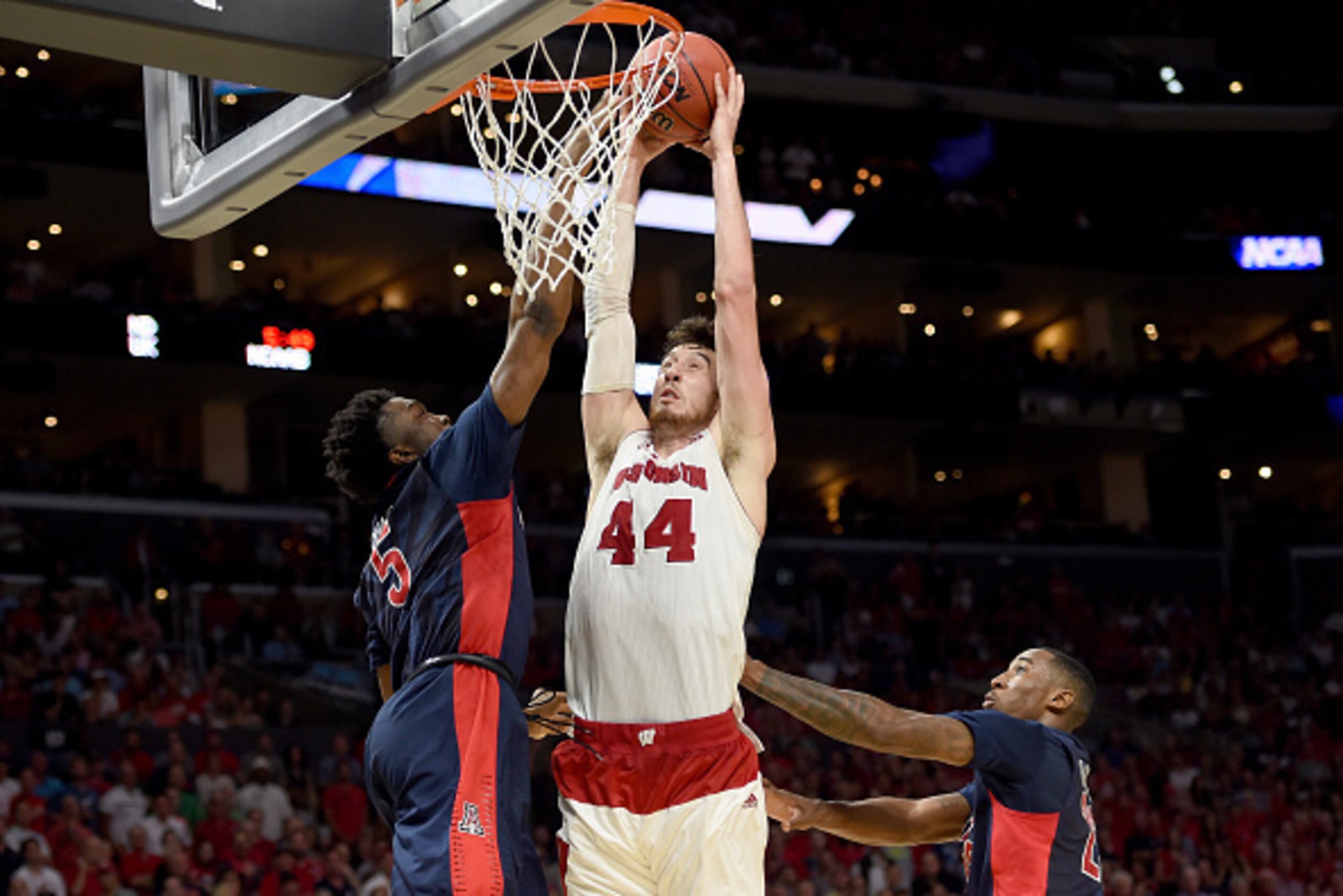
If you like defensive basketball, you love Johnson. Dude's a bully. He's an aggressive, tough defender who plays with a bit of a mean streak. Measuring with a 6'11 ½" wingspan will do a ton to help concerns about his size—he's 6'6 ½" in shoes—and there's some optimism about his jumper after shooting 37.1 percent from three at Arizona.
A young Ron Artest without the Metta World Peaceness, he'll have some growing pains on the offensive end and is closer to Old Ron than Young Ron from a lateral-quickness perspective. As one of the youngest players in the class, though, there is plenty of time for Johnson to develop into a solid two-way piece.
The Heat could install Johnson immediately if Luol Deng opts out. If Deng, one of the NBA's best locker room guys, sticks around, Johnson will have an excellent mentor in his ear.
11. Indiana Pacers: Frank Kaminsky, PF/C, Wisconsin
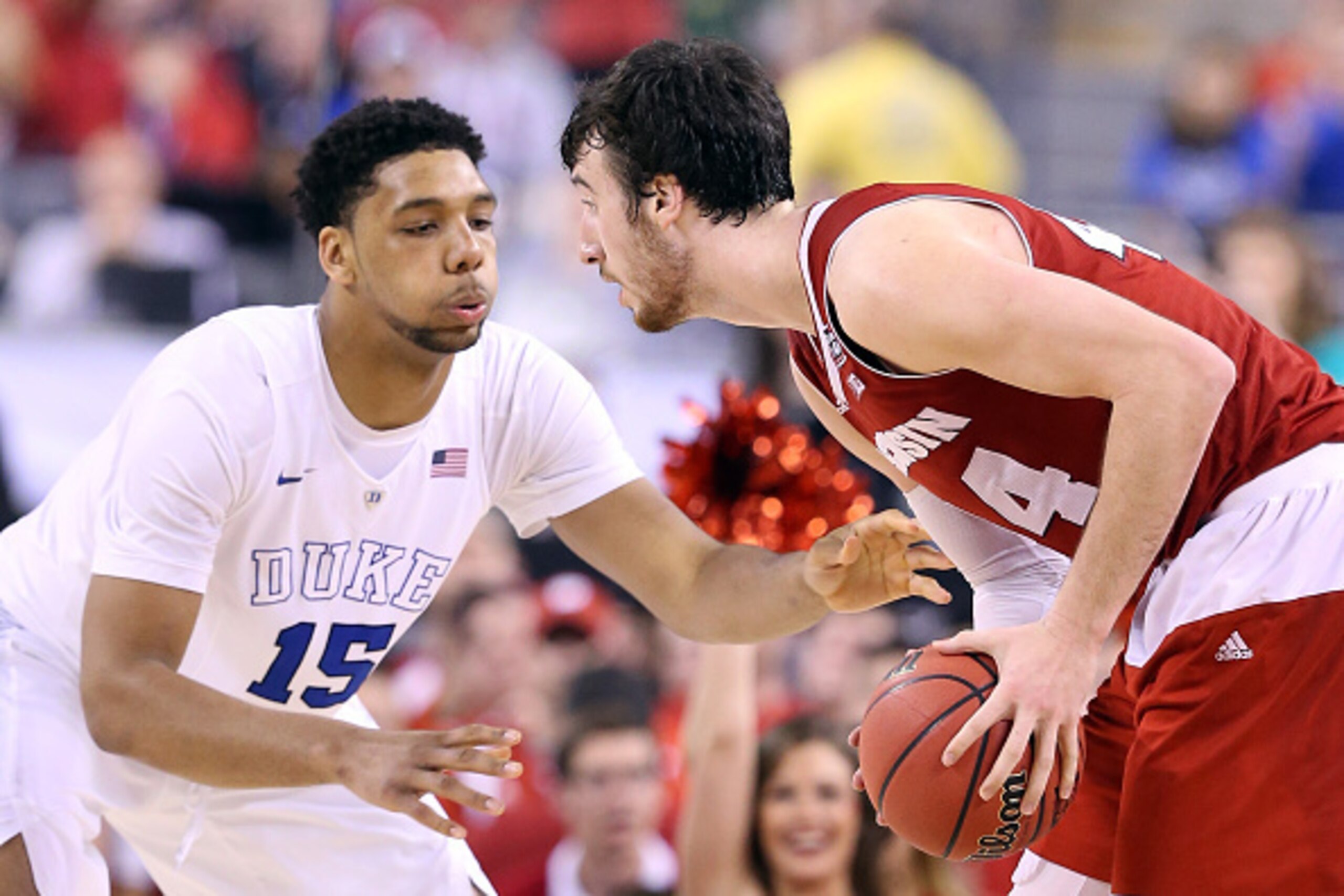
There is nothing about Kaminsky we don't already know. The chances of him ever becoming a plus-NBA defender are nil. The athleticism isn't there, and he's not strong enough to attend the Roy Hibbert School of Verticality.
Kaminsky's NBA future is wholly dependent on how high he ascends on the offensive end. The skill set is there to make him the best version of Andrea Bargnani. The Knicks forward is a punchline now, but there was a four-year stretch in Toronto when he was a truly unique offensive weapon. Kaminsky stretches the floor, has a vast array of post moves he can use against 4s and can even put the ball on the deck a bit.
At worst, he can become a pick-and-pop beast in the mold of Channing Frye. With the Pacers vowing to revamp their offense, per the Indy Star's Candace Buckner, they'll need guys like Kaminsky going forward.
12. Utah Jazz: Kevon Looney, PF, UCLA
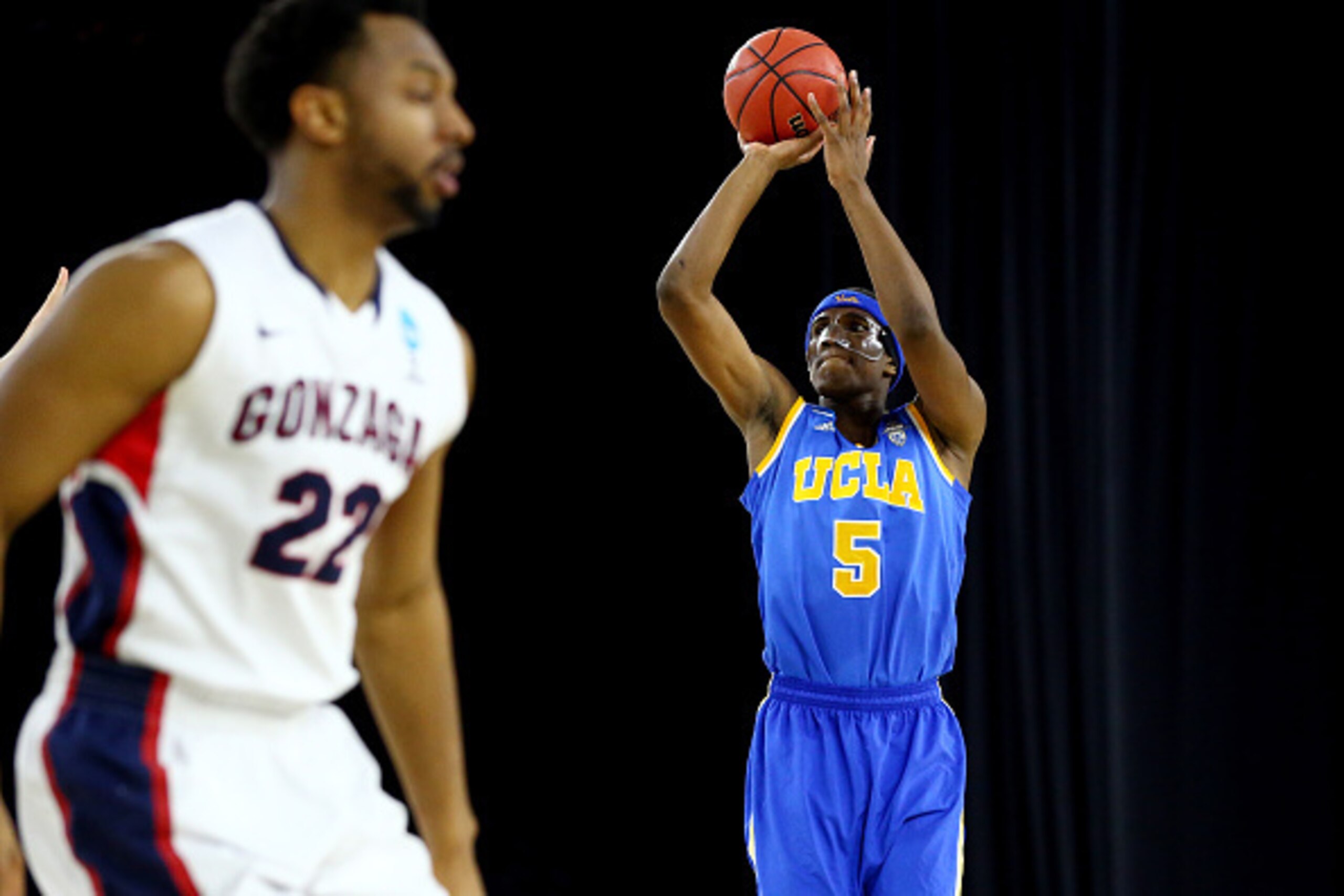
The Jazz are a strange team in that they don't need much and need a ton at the same time. They found an identity late this season with Rudy Gobert and Derrick Favors manning a top-notch defensive outfit, but they're not a playoff-bound team in this Western Conference. None of their players has the foundational upside to make that push happen unless Dante Exum makes a huge leap.
No one Utah can get at No. 12 will be that player either. Looney is probably the closest bet. He's what I like to call a tools player. You can see him developing into a solid three-point shooter; it isn't there yet. You can see his length becoming a deterrent at the rim; it isn't there yet. His thin frame (6'9", 222 lbs) makes him look like Kevin Durant. His game is clearly closer to an NBA power forward.
With Favors and Gobert in place, the Jazz can afford to give Looney time to grow.
13. Phoenix Suns: Devin Booker, SG, Kentucky

Booker's a three-point bomber who would fit well with Phoenix's go-go style. After being labeled a below-average athlete, Booker went out and killed at the combine. His elite lateral quickness and solid top-end speed mean he has a higher potential than most expected on the defensive end. No one was looking for him to throw down massive dunks or block a ton of shots, so his mediocre leaping ability isn't a detriment.
Gerald Green's impending free agency opens a spot in the rotation. Neither Reggie Bullock nor Archie Goodwin has done nearly enough to dissuade Phoenix's front office from taking a shooting guard if it likes one.
14. Oklahoma City Thunder: Cameron Payne, PG, Murray State
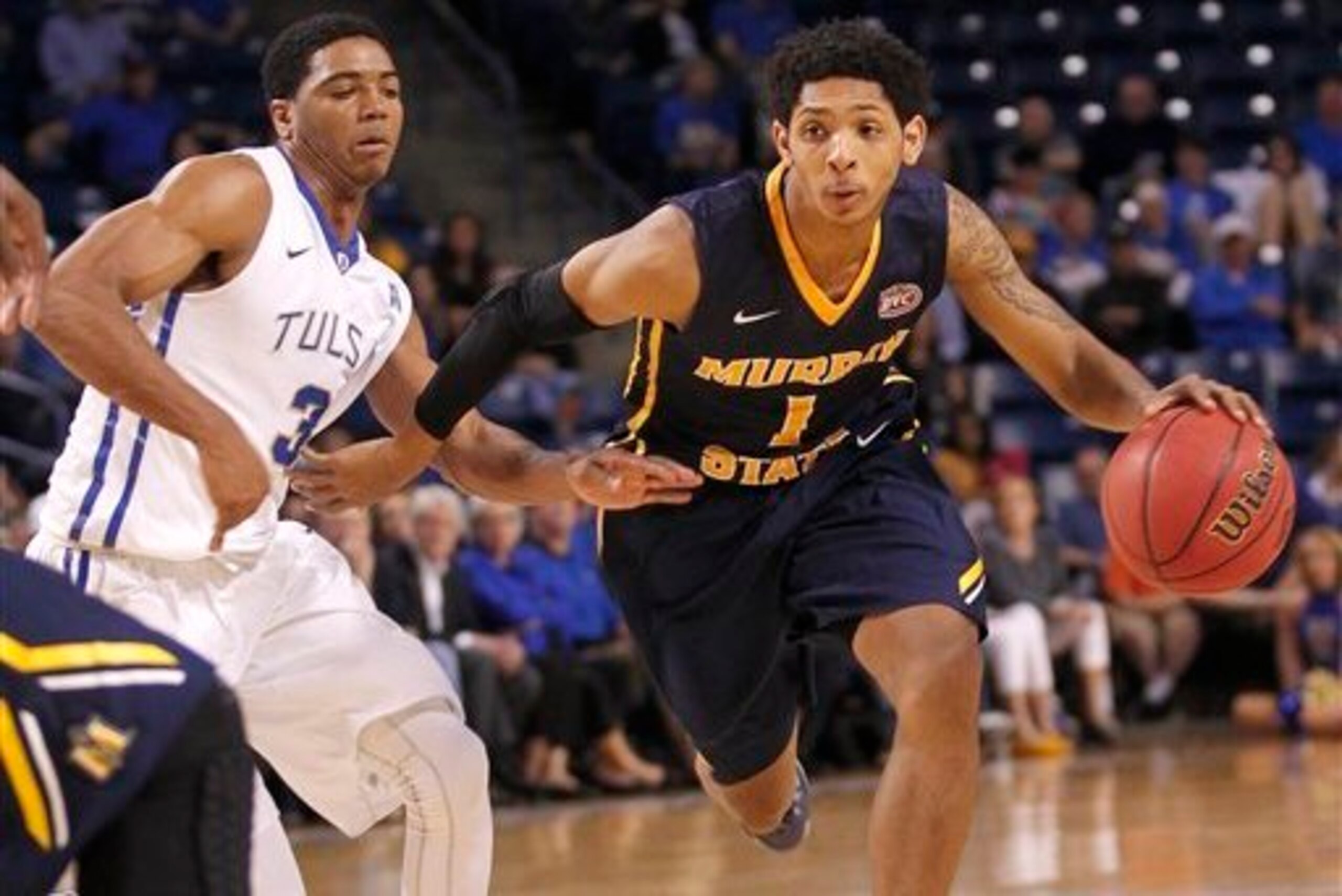
One of the lottery's easiest picks. The Thunder miss Reggie Jackson's scoring ability off the bench even if they don't miss Reggie Jackson. Payne is a good scorer and a natural point guard, something that should help him and Russell Westbrook play together in certain lineups. He's a good enough shooter that you need to pay attention.
Look for Payne's buzz to increase as the process moves along. He is already moving his way into the lottery conversation and might wind up inching in on the top 10 with an impressive workout or two. Point guard, for once, is shallow in a draft class. The Thunder would be doing backflips if Payne's here in June.
Follow Tyler Conway (@tylerconway22) on Twitter.
All combine stats courtesy of NBA.com.

.jpg?w=2560 "Raiders Could Start Mendoza")

.jpg?w=2560 "Rodgers Iced Out on Plane 💎")
.jpg?w=2560 "Packers Safety Slams Refs 🤬")
.jpg?w=2560 "🚨 Week 8 AP Top 25 Poll")