Changes the NCAA Basketball Rules Committee Should Consider for 2015-16 Season

If we're lucky, the state of college basketball will undergo a significant face-lift this week when the NCAA rules committee meets in Indianapolis from May 12-15.
I love college hoops. If you're reading this in mid-May—a month dominated by every professional sport under the sun—you do too.
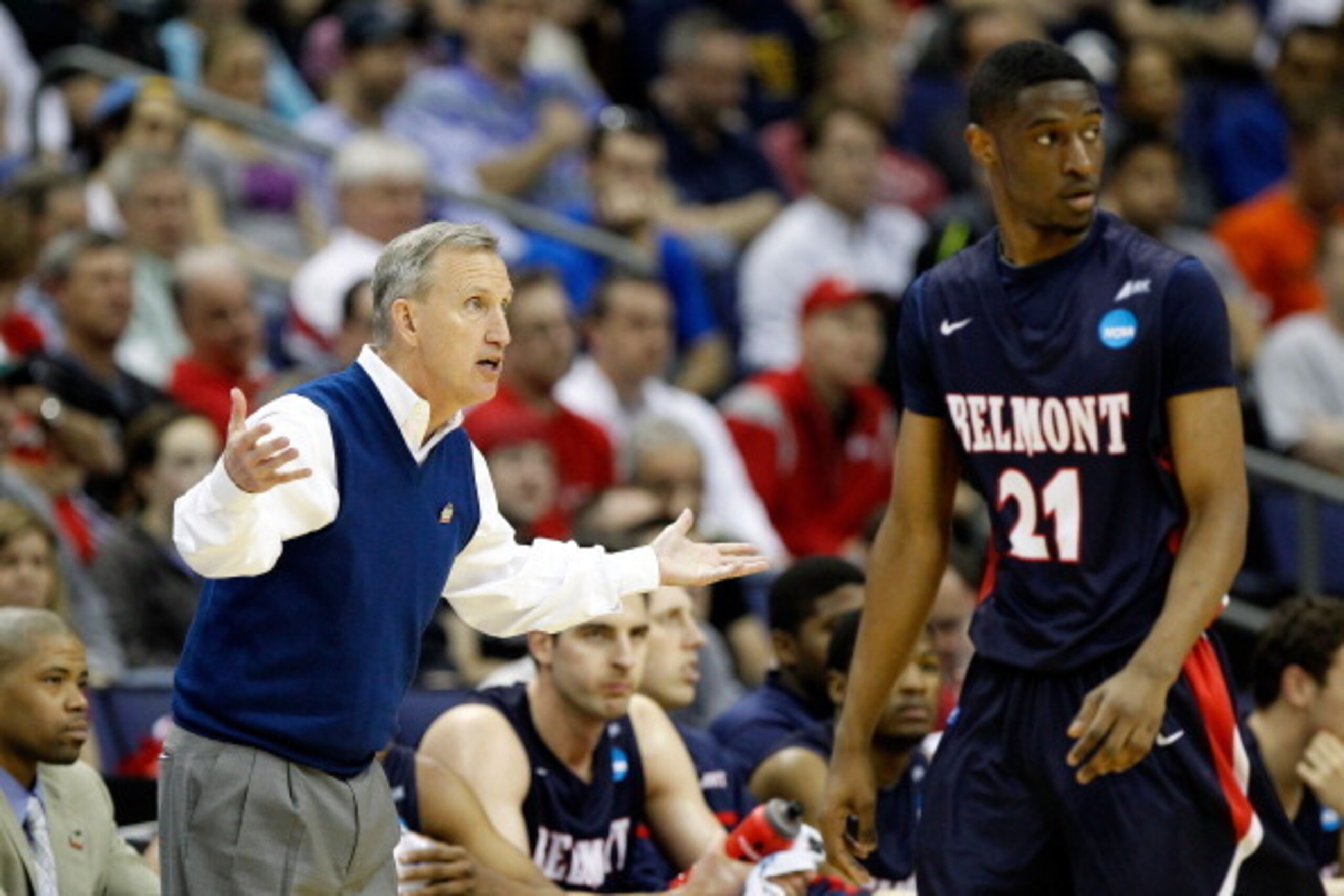
That doesn't mean we have to blindly accept all of its shortcomings and pretend it's better than ever. Quite the opposite actually. We need to let Belmont's Rick Byrd (the NCAA rules committee chairman) and Company know what they can and should improve about the game we adore. Otherwise, nothing will change.

.jpg?w=2560 "Rams Raiders Football")

Based on what we all watched this past season, here are a few changes the NCAA should immediately implement for 2015-16.
Reduce the Shot Clock
The good news is that our constant griping about the pace of play seems to have made an impact.
According to ESPN.com's Andy Katz, Byrd said one year ago that the chances of us seeing a shorter shot clock were just 5 percent, but two weeks ago he said: "Now there's a real decent chance. It's pretty evident a lot more coaches are leaning that way. The opinion of coaches on the shot clock has moved significantly to reducing it from 35 to 30. And all indicators are pointing toward that."
Assuming it happens, bravo, rules committee.
A 30-second shot clock was used for the NIT, CBI and CIT. Ken Pomeroy dug into the inconclusive results for Deadspin in early April, deducing, "We can't know for sure how a shorter shot clock would impact the sport over a full season. ... But given that college basketball is as slow-paced and as low-scoring as it's ever been and that initial results don't point to a brick-laying catastrophe, there's not much to lose."
In other words, why not? There may not be any concrete evidence that it made the game better, but, more importantly, there's no evidence that it made the game less watchable. If it helps add a few possessions while also theoretically slightly postponing the point in the game at which coaches decide to employ the "desperately foul to prolong the game" strategy, sign me up.
Let's take it one step further, though.
No, I'm not suggesting we cut the shot clock all the way down to 24 seconds. Maybe one day, but that's too radical a change for one offseason. Rather, let's also reduce the time allotted to cross midcourt from 10 seconds to eight seconds.
One big difference noted while watching the NBA playoffs over the past few weeks is that it's pretty hard to walk the ball into the frontcourt in eight seconds. Point guards consistently jog the ball across midcourt and immediately go into their offense instead of taking a start-stop-start again approach.
Not only would it potentially jump-start offenses earlier in the shot clock, but it would also lead more coaches to use a full-court press, thanks to the drastically increased likelihood of actually causing a backcourt violation. This would lead to more easy buckets off turnovers and more urgency on offense to break the press and beat the defense down the court for odd-man rushes.
In essence, a rule change that encourages more defensive schemes like those currently in place at Louisville, VCU and West Virginia would be a good thing.
Defensive Three-Second Violations
Another thing that's readily apparent after making the viewing transition from the NCAA tournament to NBA playoffs is that you don't have players loitering in the paint waiting to draw charges in the professional game.
They can change the language all they want in the block vs. charge rule. However, whether the defensive player is required to establish position before the offensive player releases the shot, leaves the ground, makes an upward motion or thinks about making the upward motion, it's always going to be a judgment call.
In a coin-flip situation, what sane coach wouldn't repeatedly risk a blocking call against a small cog in his offensive machine for the potential reward of a foul called against one of the opposition's stars?
Arguably the best way to reduce the number of those judgment calls is to keep defenders from setting up camp in a position where they barely even need to shift their weight in order to get in the path of drivers.
This may not seem like a huge change, but think about how much of a negative impact that charbage hashtag—that's "charge" plus "garbage" if you aren't hip on the Twitter lingo—has on college basketball.
Not only is it an empty possession for the offense, but it frequently results in a critical foul that sends an assertive scorer to the bench for several minutes—subsequently and directly leading to a length of time in which that team isn't anywhere near as crisp or cohesive on offense.
If we could disincentivize drawing charges just enough to reduce the number of offensive fouls called per game by one or two, you might be surprised by how much scoring would increase.
Revamp the Review Structure
Getting the call right is crucial, but so is keeping fans from falling asleep in the final two minutes of every game.
Even college hoops beat writers like Iowa State's Travis Hines have seen enough of the interminable reviews.
It's bad enough that timeouts and fouls extend college basketball's endgame to the length of a half-hour sitcom, but it is beyond insufferable when there are automatic reviews that take several minutes each—especially since the officials still manage to get the call wrong half the time anyway. (Cut to thousands of nodding Wisconsin fans still furious about the Justise Winslow play in the national championship game.)
Then you have the behavior of the players in the final two minutes of the game, routinely screaming at the refs to review a play and undermining their authority by always getting their wish. Pomeroy's tweet on this matter was pretty perfect:
"The way replay works in last 2 minutes of college hoops: Players initiate reviews, and they have unlimited challenges.
— Ken Pomeroy (@kenpomeroy) March 2, 2015"
Worst of all, though, is that the officials will review any close call in the final two minutes and absolutely nothing before it. Is a debatable out-of-bounds call with 1:59 remaining really any different from one with 2:01 remaining? If getting every call right is important, why not actually get every call right?
We can kill multiple birds with one stone here by allowing coaches to initiate challenges at any point in the game and by only reviewing plays when challenged by a coach.
As with football, failed challenges result in a lost timeout. This would theoretically discourage coaches from challenging borderline calls early in the game while simultaneously encouraging them to save at least one timeout until the bitter end instead of burning them after every made bucket in a comeback situation.
The exact details are open for debate, but something needs to be done.
Something—Anything—to Reduce the Endgame Foul Bonanza

Improvements to the first 38 minutes of the game would be wonderful, but it's the final two minutes that are simultaneously the most watched and the most unwatchable.
When I try to convince family, friends and complete strangers to watch more college basketball, it's the momentum-murdering free-throw shooting contest they can't get past.
"If I wanted to watch darts or bowling, I would just watch darts or bowling," said one acquaintance this past season, for which there isn't much of a rebuttal.
College basketball devotees have come to accept it as part of the game—it would correct itself if kids would just work a little more on their free throws, but it's a perfectly viable strategy until that happens. But it's a pretty big hurdle to get over for people trying to invest in the game for the first time.
At its core, it is a pretty silly practice, right? What would its application even look like in another sport? Forcing a football team to repeatedly kick 25-yard field goals in hopes of giving yourself enough time to score the necessary touchdowns to take the lead? Allowing a baseball opponent to hit off a tee in exchange for extra at-bats on offense?
One option for fixing it would be to add a triple bonus after the second foul committed in the final two minutes. It might seem counterintuitive to try to reduce the free-throw shooting contest by adding more free throws, but it stands to reason that coaches would be much more hesitant to foul when the amount of points sacrificed increases by 50 percent.
Another potential option is to give the fouled team the choice of either shooting the free throws or retaining possession while resetting the shot clock to 20 seconds. With a one-possession lead, maybe you take the free throws rather than risking a game-changing turnover, but most coaches would simply take the ball in situations where they're hoping to grind out a multi-possession lead—when the intentional fouling strategy is especially painful to watch.
Whether it's one of those approaches or a completely different one, it would be great to see the rules committee experiment with something that keeps people from comparing crunch-time college basketball to a "sport" that is usually played while drinking.
Kerry Miller covers college basketball for Bleacher Report. You can follow him on Twitter @kerrancejames.

.jpg?w=2560 "Steelers Saints Football")

.jpg?w=2560 "Packers Safety Slams Refs 🤬")
.jpg?w=2560 "🚨 Week 8 AP Top 25 Poll")