
NFL Draft 2015: The Biggest Steals of This Year's Event
Even though each of the league’s 32 teams put countless hours of work into their preparations for this year’s NFL draft, there are always players who prove that they should have been selected much earlier than they were. The 2015 draft will be no exception.
Ultimately, only time will tell who the true steals of this draft are. Players can fall down draft boards for any number of reasons, and as such, players who were projected to be earlier picks but get drafted later will not necessarily be the players who prove to have the best value for their teams.
The following 10 picks, however, look as though they could prove to be home runs for the teams that selected them. All of these players could have been selected significantly earlier without being considered reaches. By getting them where they did, the teams who selected each of these players could end up looking smart for being mindful enough to select them and lucky enough for the board to fall their way.
Alvin “Bud” Dupree, OLB, Pittsburgh Steelers (No. 22 Overall Pick)
1 of 10As one of the the top three edge defender prospects in this year’s draft, Alvin “Bud” Dupree was widely projected to be a top-16, if not a top-10, overall pick. The Pittsburgh Steelers, meanwhile, came into the draft in need of a pass-rushing outside linebacker after the shocking retirement of Jason Worilds earlier this offseason.
Given that, the board fell perfectly when Dupree slid all the way to the No. 22 overall selection—even though only two edge players came off the board before him—and that allowed the Steelers to address one of their biggest problem areas with one of the best talents in the draft.
To simply say that Dupree is explosive would be an understatement. At 6’4” and 269 pounds, Dupree is a ridiculous athlete, which he proved by running a 4.56-second 40-yard dash, vertically jumping 42 inches and broad-jumping 11 feet, six inches at the NFL Scouting Combine.
That athleticism shows up on Dupree’s game film. A player who spent time at both defensive end and strong-side linebacker at Kentucky, Dupree demonstrates an ability to not only explode forward off the line of scrimmage toward the backfield, but also to move laterally in space and chase down runners in pursuit.
Dupree is a project whose game needs some refinement, and that could be why he ended up dropping out of the top 20. He only recorded 23.5 sacks in four years at Kentucky and needs to be able to utilize his hands more effectively to execute moves around blockers.
A big reason Dupree’s sack totals at Kentucky were relatively low, however, is that he was not consistently lined up as a pass-rusher for the Wildcats.
Since he played both on the line and off the ball, Dupree was often asked to hang back in space and/or drop back into coverage. That in itself is an asset to the Steelers, as he is more prepared to make the conversion to playing outside linebacker in a 3-4 defense than most 4-3 defensive ends they could have drafted.
Landing Dupree with the No. 22 overall pick was a perfect confluence of getting great value and filling a need, and it also might have landed Dupree with the perfect team for his development.
Given that the Steelers’ rich history of developing pass-rushers, including James Harrison, LaMarr Woodley and most recently Worilds, Dupree is with an organization that will coach him up technically and enable him to maximize his potential to be a 3-4 outside linebacker.
Malcom Brown, DT, New England Patriots (No. 32 Overall Pick)
2 of 10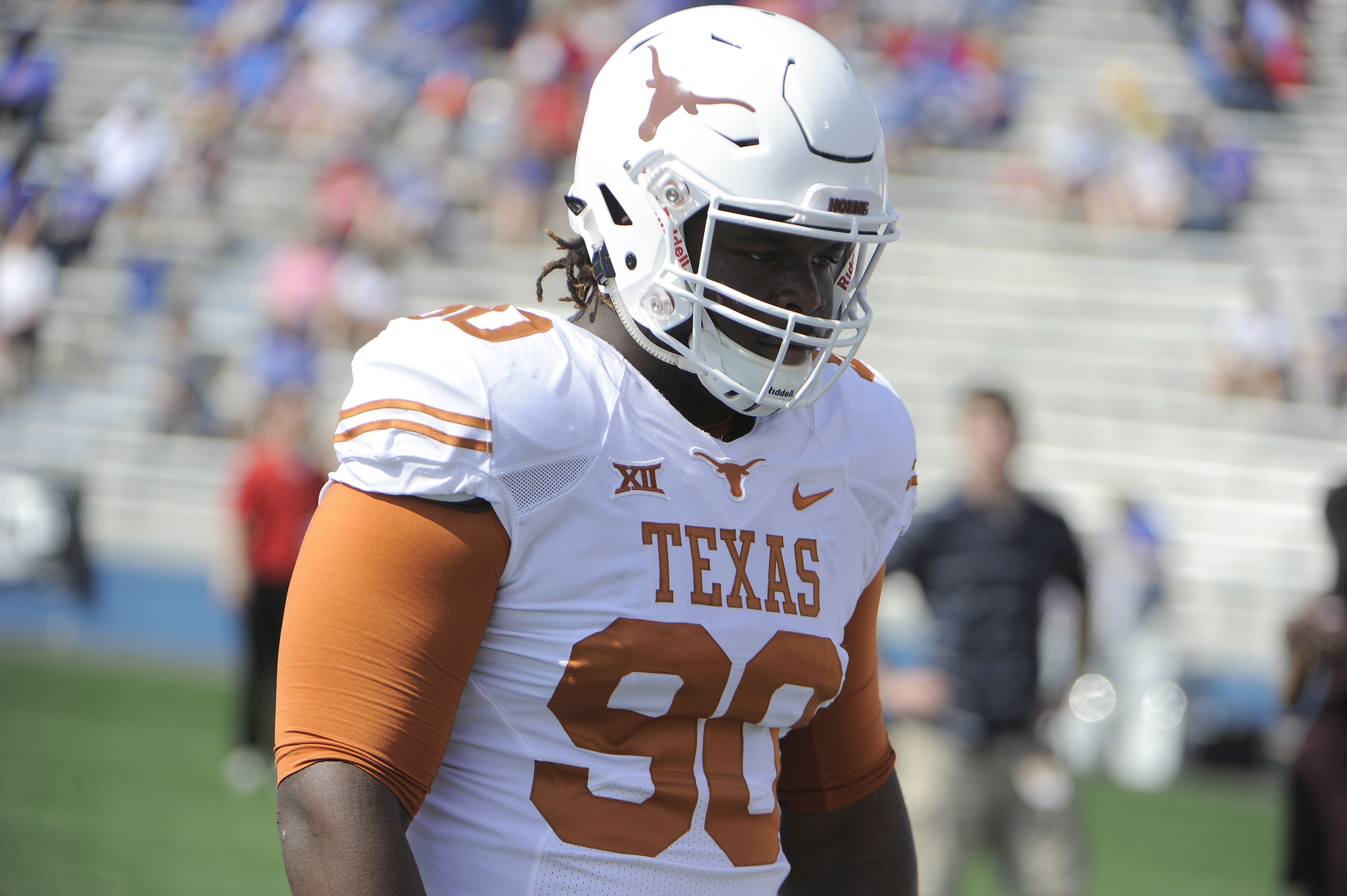
Going into the 2015 NFL draft, the New England Patriots had to know that if they were going to land a top-notch nose tackle to replace departed free agent Vince Wilfork, they were going to have to do it in Round 1. As it turned out, they were able to land that replacement while selecting the best player available when Texas defensive lineman Malcom Brown fell to the No. 32 overall pick.
Widely projected to be selected by the Cincinnati Bengals at the No. 21 overall pick or the Detroit Lions at No. 23 overall, Brown was a legitimate top-20 talent in the 2015 NFL draft class. A good athlete for his size at 6’2” and 319 pounds, Brown is a large defensive tackle who plays with power at the point of attack, but he can also use his burst and strong hands to split gaps between blockers and penetrate.
Brown is not exactly the same type of player as Wilfork—he is not quite as capable of holding his ground against double-team blocks and simply overwhelming opponents with his size and strength—but to some extent, he could be even more valuable because of his movement skills and ability to rush the passer.
The Patriots love to mix things up defensively, making adjustments to their defensive schematics every week, and the addition of Brown only increases their ability to do that. Having played both nose tackle and defensive end at Texas, he will be able to play both of those positions in three-man fronts and multiple different interior alignments in four-man fronts.
It would have made sense, as they came into the draft with a wealth of picks and needed a big man in the middle, for the Patriots to trade up into the middle of Round 1 to secure a chance to draft Brown.
Instead, they reportedly had interest in trading down, according to NFL Media’s Ian Rapoport, but proved smart to stay put when Brown fell into their laps. He has all the tools to be the Patriots’ next great nose tackle and could, in tandem with 2014 first-round pick Dominique Easley, form a great young tandem of interior defensive linemen for years to come.
In a post-selection conference call, Brown said his message for Patriots fans was that he is “the best player y'all have ever drafted.” That will almost certainly prove to be hyperbole—it’s hard to imagine any Patriots draft selection ever being better than the No. 199 overall pick in 2000—but it should come as no surprise if Brown proves to be one of the best picks of the 2015 NFL draft.
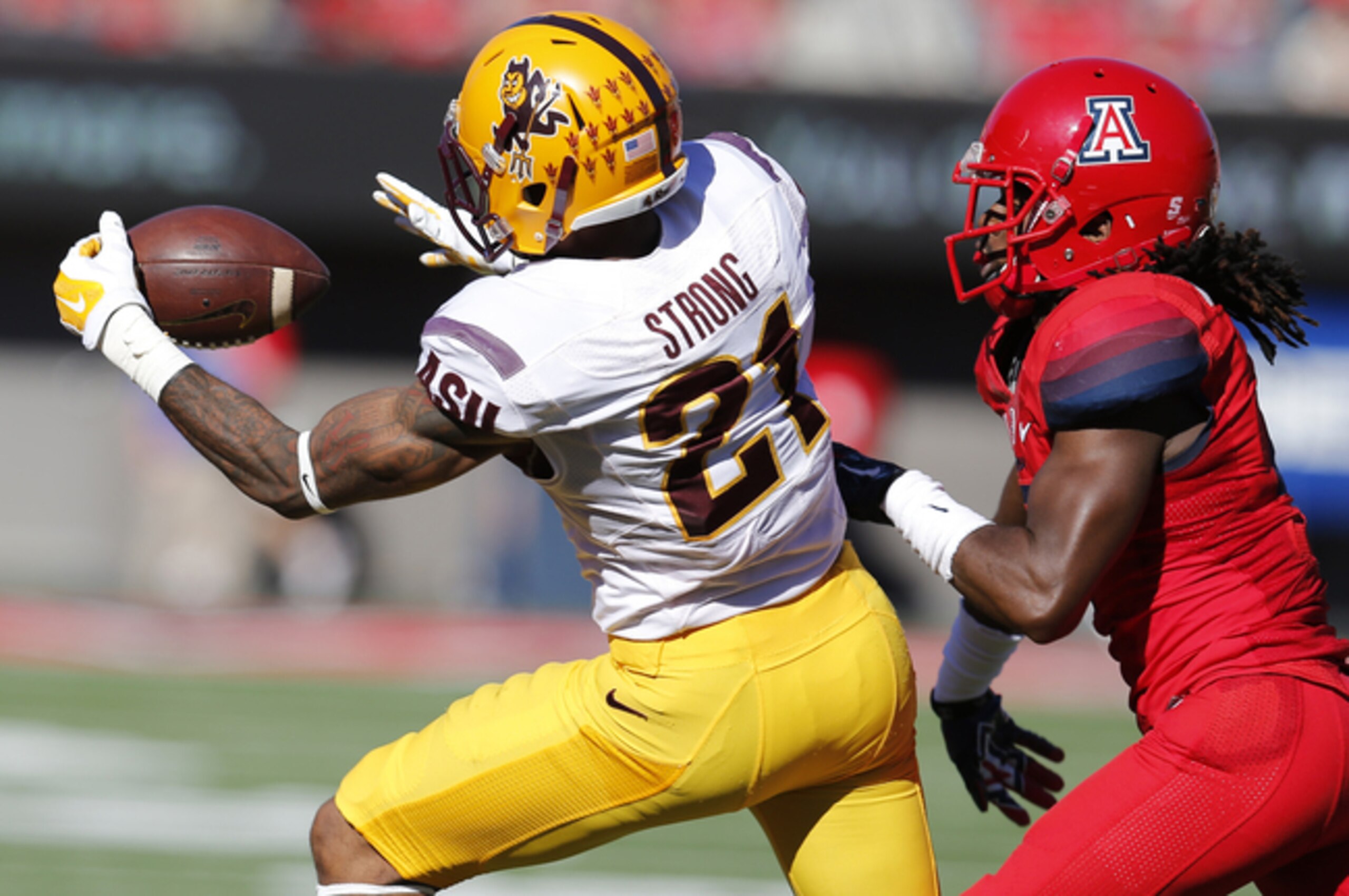
Jaelen Strong, WR, Houston Texans (No. 70 Overall Pick)
3 of 10Many mock drafts projected that the Houston Texans, needing to replace longtime star wideout Andre Johnson after releasing him earlier this offseason, would select a wide receiver in the first or second round. Instead, they were able to wait until the third round and still come away with a first-round-caliber talent.
At 6’2” and 217 pounds, Jaelen Strong is a big pass-catcher with good all-around athleticism for his size. He doesn’t quite play to his 4.44-second 40-yard dash speed, and questions about his ability to separate from coverage might have spurred his fall to Round 3, but from a physical standpoint, he has all the tools to be a No. 1 wide receiver.
Strong also has the skills on the field to be a star player at his position. Throughout his two seasons at Arizona State, Strong became known for his ability to make spectacular catches, whether that meant leaping high into the air, adjusting his body to a misplaced ball and/or playing with strength to make a play through coverage.
The biggest area in which Strong will need to improve is his route-running, which will be imperative for him to get open consistently against bigger, faster cornerbacks in the NFL. It’s also likely that his draft stock was damaged by a wrist injury. According to NFL Media’s Ian Rapoport, teams were “frustrated” that Strong decided not to attend the NFL Scouting Combine’s medical recheck.
Assuming that wrist injury is nothing that will linger going forward, however, this Texans third-round pick is one they are likely to feel good about for quite some time. For a team that needed to add another receiving playmaker to start opposite Andre Johnson, but also needed to use its early-round picks to address needs on defense, landing a wideout of Strong’s caliber in Round 3 was a best-case scenario.
.jpg?w=2560 "Rams Raiders Football")

.jpg?w=2560 "Steelers Saints Football")
Owamagbe Odighizuwa, DE, New York Giants (No. 74 Overall Pick)
4 of 10With the No. 74 overall pick in the 2005 NFL draft, the New York Giants selected Justin Tuck, who went on to be a star for their defensive line for nine years to come, including two seasons when that defensive line led the Giants to Super Bowl championships.
Ten years later, the Giants used the No. 74 overall pick to select UCLA defensive end Owamagbe Odighizuwa, who could go on to have a similar impact for the next decade of Giants football.
If you watched Odighizuwa’s game tape prior to the draft and were asked to make a comparison for him, you might have gone with Tuck, as Matt Waldman of The Rookie Scouting Portfolio did more than two months ago. Much like Tuck, Odighizuwa is a long, strong and athletic defensive end who can also kick inside to rush the passer from the defensive tackle position.
Like Tuck, Odighizuwa will never be a player who flies around the outside of offensive tackles on the edge, but he is a player who will use his hands effectively and his upfield burst to work his way through blockers and create disruption. This enables him to be an effective pass-rusher working toward the middle, while he is also a strong run defender who holds his ground well at the point of attack.
From a measurable standpoint, Odighizuwa stacks up as one of the most impressive athletes in the draft class, having run a 4.62-second 40-yard dash at 6’3” and 267 pounds at the NFL Scouting Combine.
His production at UCLA was not outstanding—he had just 12.5 total sacks in four seasons—but that was in part because he was utilized mostly as a 3-4 defensive end, where his role was often to occupy blockers, rather than work upfield toward the quarterback. When he has been put in positions to attack forward, he has shown that he can wreak havoc.
Projected to be a late first-round pick or early second-round pick in most mock drafts, the most likely reason Odighizuwa fell to Round 3 is that he might have been medically red-flagged. He had surgery on both of his hips prior to the 2013 season, and teams might have been wary of investing in a top-64 selection in Odighizuwa fearing that he could have recurring hip problems.
If Odighizuwa can stay healthy, however, he should play a fantastic role in continuing the tradition of the Giants having a dominant defensive line.
Eli Harold, OLB, San Francisco 49ers (No. 79 Overall Pick)
5 of 10Whether he was truly worthy of it or not, there was reason to believe that Eli Harold would be among the 32 first-round picks in this year’s draft. Pass-rushing prospects who are star athletes typically do come off the board on Day 1, and Harold is as athletic as any edge-defender in the draft class.
At 6’3” and 247 pounds, Harold ran a 4.60-second 40-yard dash at the NFL Scouting Combine, giving him one of the fastest times among defensive front-seven players. Explosive coming forward off the snap, Harold is also able to move laterally and change directions with ease, making him a natural fit to make the transition to 3-4 outside linebacker from 4-3 defensive end.
Given that, the San Francisco 49ers must have been ecstatic when it became clear that they would have the opportunity to select him with the draft’s No. 79 overall pick.
Harold is light for an NFL edge defender, so he will need to add some strength to his frame, and he must continue to work on developing his pass-rushing moves. He only had 17.5 sacks in his three-year career at Virginia, so while he has the physical tools to be a great pass-rusher, he isn’t quite there yet.
Nonetheless, it is rare for a team to be able to get an edge player with Harold’s physical qualities—especially when that player has no off-field or medical red flags—in the middle of Round 3. His abilities to accelerate out of his first step, naturally bend around the corner and close with speed toward the ball all rank him near the top of the class, and that should have warranted a draft opportunity no later than Round 2.
Harold said that his unexpected fall into Round 3 is only increasing the chip on his shoulder. “I feel like I’m going to use this as motivation to push me through my NFL career,” Harold said Friday, according to Matt Maiocco of CSNBayArea.com.
If Harold truly does that and continues to get stronger and more polished technically, the 49ers will have another difference-maker to add to a talented group of edge players already highlighted by Aldon Smith and Aaron Lynch.
Carl Davis, DE/DT, Baltimore Ravens (No. 90 Overall Pick)
6 of 10
Coming away from the draft with steals has become an annual tradition for the Baltimore Ravens. Known for employing a “best player available” strategy of drafting, the Ravens seemingly always land at least one or two players who were expected to be drafted higher, then prove they should have been on the field.
The Ravens had numerous picks again this year that could fit that criteria, including second-round selection Maxx Williams, a talented pass-catcher out of Minnesota who went No. 55 overall despite being the top tight end in the class. Their best value selection of the draft, however, might have been landing Carl Davis with the No. 90 overall pick in Round 3.
The Most Outstanding Practice Player at this year’s Senior Bowl, Davis can be close to unblockable when he is on his A-game. At 6’5” and 320 pounds, he is a very good athlete for his size who has long arms (34 5/8”) and is able to convert his explosive burst off the snap into power against his opponents.
One reason Davis might have dropped in the draft is that he did not consistently play up to his ability in his senior season at Iowa. As impressive as he looked at the Senior Bowl, his impact over the course of most four-quarter games for the Hawkeyes was much more tepid.
Still, it’s evident that Davis has all the tools to be a dynamic disruptor on a defensive line. If he can improve his stamina and continue to polish his technique, the Ravens will have themselves a difference-maker up front that can help them replace Haloti Ngata.
Davis’ most natural fit might have been as a 4-3 defensive tackle, but his attributes enable him to be versatile to play both nose tackle and defensive end in Baltimore’s 3-4 front. Coaching will be key in maximizing Davis’ upside, but if the Ravens can do that successfully, their third-round pick might prove to be a top-32 talent.
Josh Shaw, CB/S, Cincinnati Bengals (No. 120 Overall Pick)
7 of 10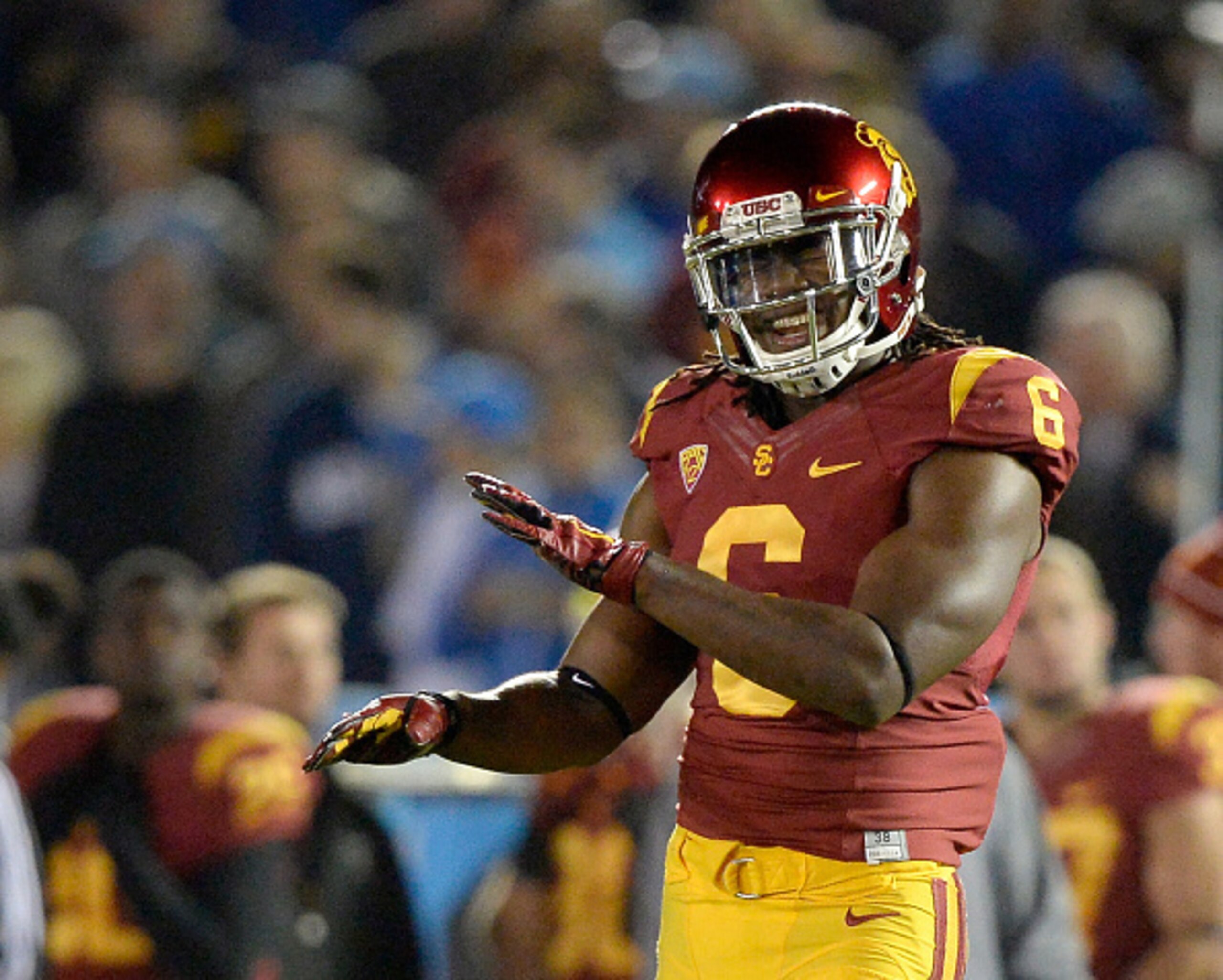
As has consistently been the case for the Cincinnati Bengals in recent years, most of their 2015 draft class—especially of the Day 3 picks—has been comprised of players who were projected by media draft analysts to come off the board much earlier than they actually did.
Any one of those players could end up being a steal, but where the Bengals tend to really strike gold year after year is by taking chances on players who have the tools to be successful on the field, but carry some baggage off the field that other teams are less willing to ignore.
That’s why it came as no surprise when the Bengals made the call to select Josh Shaw with the No. 120 overall selection in Round 4.
At 6’0” and 201 pounds with 4.44-second 40-yard dash speed, Shaw has one of the best size/speed combinations among defensive back prospects in this year’s draft class. A physical cornerback who is tough in press coverage, Shaw fits the mold to play the position in a league where size is increasingly becoming valued on the outside of the secondary.
With that being said, Shaw also has experience playing safety and could project to playing there in the future for Cincinnati. One of two safeties drafted by the Bengals on Day 3 (the other, sixth-round pick Derron Smith, was also considered to be a great value selection), Shaw gives the team insurance at that position, where starters Reggie Nelson and George Iloka are scheduled to become free agents in 2016.
Given his size, athleticism, versatility and toughness, the only real weaknesses on the field for Shaw are that he needs to tighten up his technique and become better at finding the ball in the air. Those flaws are coachable, however, and his raw tools are among the best in the draft class for all defensive backs.
Shaw was a second- or third-round-caliber talent who was probably only available in Round 4 because of his embarrassing incident last summer, when he fabricated a story about saving a drowning nephew in his pool in an attempt to cover up an incident that caused him to suffer high ankle sprains.
Beyond that one cringe-worthy mistake, however, Shaw appears to be a man of high character. Assuming he has learned his lesson from that ordeal and works hard on the field to play up to his ability, the Bengals could end up with one of the draft’s top DBs at a low price.
Brett Hundley, QB, Green Bay Packers (No. 147 Overall Selection)
8 of 10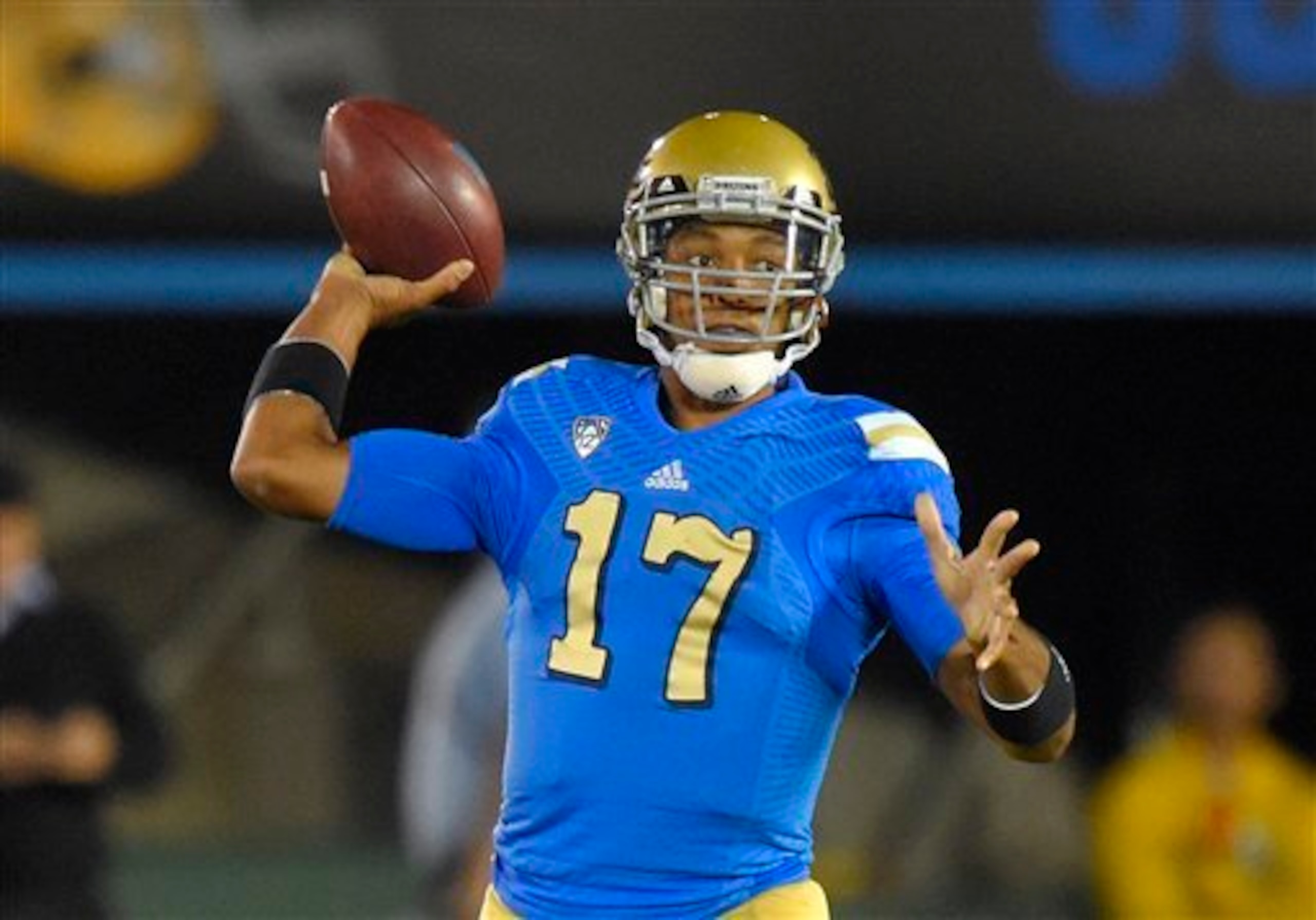
We might never truly get the chance to see what Brett Hundley can be, at least not with the team that drafted him. Barring an injury to superstar quarterback Aaron Rodgers, it’s unlikely Hundley will take any meaningful snaps for the Green Bay Packers anytime soon.
Whether the Packers even needed to draft a quarterback—and trade up to get one—is questionable. The reason they did, however, is because they knew they were getting great value by being able to draft the UCLA quarterback in the fifth round.
At the cost of only a seventh-round pick, No. 247 overall—a selection who would have had a tough time making the team—the Packers were able to move up 19 spots with the New England Patriots, from No. 166 overall to No. 147.
They drafted a player who would go on to be the last quarterback selected until the compensatory section of the seventh round, where the Denver Broncos drafted Northwestern’s Trevor Siemian at No. 250 overall.
While Hundley was projected by some prognosticators (or at least by me) as a potential first-round pick, there are legitimate issues with his game that caused him to fall in the draft.
He has a tendency to take too many sacks, as he lacks pocket presence and is slow through his progressions. Although he completed 69.1 percent of his passes in 2014, he did not take advantage of wide-open targets and struggled with his ball placement on downfield throws.
However, in a spot where Hundley is a developmental backup who will only have to play in an emergency situation, the Packers need not worry too much about those concerns.
They made the move to draft him because of his strengths—great size, high-level athleticism and a big arm—that give him the potential to develop into a franchise quarterback down the line.
Because his contract with the Packers will only last four years, it’s uncertain whether his long-term future will be in Green Bay. It’s possible the Packers could end up grooming him into a starting-caliber quarterback, only for him to depart for another organization and make that franchise better.
But even with that risk, when a team has the opportunity to draft a quarterback with major upside in the fifth round, it should take that chance if it doesn't have a litany of needs. That is especially true when that quarterback is the last one widely considered draftable to still be on the board, and when numerous other signal-callers with inferior tools—in this case, Garrett Grayson, Sean Mannion and Bryce Petty—have already come off the board.
Michael Bennett, DT, Jacksonville Jaguars (No. 180 Overall Selection)
9 of 10
No player’s slide in this year’s draft was more stunning than Michael Bennett dropping all the way to the sixth round. A key player on this year’s national championship-winning Ohio State team, Bennett was expected to come off the board as early as the late first round, but instead was left to wait until the No. 180 overall selection, when the Jacksonville Jaguars scooped him up.
There are numerous factors that might have led to Bennett being passed upon for more than five full rounds. As documented by Sports Illustrated’s Andy Staples, Bennett battled groin and hamstring injuries during the predraft season that left him unable to compete a full workout for teams. Additionally, he might not have been considered a fit by organizations that run 3-4 base defenses, because at 6’2” and 293 pounds, he lacks the length desired to play as a defensive end in that scheme.
Either way, in an NFL that has become more pass-happy than ever, a player with Bennett’s skill set can be very valuable. Combining an explosive burst off the snap with quick hands, he is an impactful inside pass-rusher who can shoot through gaps or work his way through blocks to bring heat up the middle toward the quarterback.
Given his limited size and strength, Bennett could struggle to be an every-down presence against the run and might be best suited to play in a rotational capacity. Even if NFL teams believed that to be the case, though, drafting him in Round 3 or 4 would have still made a great deal of sense because of his ability to make plays behind the line of scrimmage.
By taking him in Round 6, the Jaguars found a steal. So long as he is able to fully recover from his injuries, Bennett is one of the most athletic defensive linemen in the draft class and will be able to make plays all along the line of scrimmage.
In Jacksonville’s hybrid scheme, Bennett could potentially play some defensive end in addition to defensive tackle and should be a valuable asset—especially for a player chosen nearly three-quarters of the way through the draft—on a unit that had already added veteran Jared Odrick and first-round pick Dante Fowler to its defensive line this offseason.
Hayes Pullard, ILB, Cleveland Browns (No. 219 Overall Selection)
10 of 10For as much flak as the Cleveland Browns took for their first-round selections of Justin Gilbert and Johnny Manziel last year, they did as well as any team in the NFL in regard to finding other players—from second-round pick Joel Bitonio to a bevy of undrafted free agents, including running back Isaiah Crowell—who could come in and make immediate contributions as rookies.
A likely candidate to follow in those players’ footsteps and make plays for Cleveland in 2015 is seventh-round draft pick Hayes Pullard.
Pullard did not regularly make impact plays at USC—and that’s probably why he fell all the way to the No. 219 overall pick—but he was a consistently solid four-year starter who accumulated 377 total tackles in his Trojans career.
There is nothing spectacular about Pullard physically in terms of size or speed, but he is a fluid mover who instinctively gets himself in the right positions to make plays. He is a sound tackler against the run and is able to smoothly drop back into coverage from the second level.
At the very least, the 6’0”, 240-pound prospect should be able to emerge as a standout on the Browns’ special teams units, while he can also provide quality depth and rotational play at inside linebacker. A player who can do all of that should be worth more than a seventh-round pick, and Cleveland will be glad in short order that the rest of the NFL gave the Browns the chance to select Pullard when they did.
All measurables courtesy of NFL.com unless otherwise noted.
Dan Hope is an NFL/NFL Draft Featured Columnist for Bleacher Report.
.jpg?w=2560 "Cowboys Packers Football")




.jpg?w=2560 "🚨 Week 8 AP Top 25 Poll")