
Minnesota Vikings Mock Draft: Final 7 Round Predictions
It's the first day of the 2015 NFL draft, which means it's the perfect time to drop the last, wildly inaccurate mock draft—this time for the Minnesota Vikings, a team that is already difficult to predict before getting into the vagaries of the NFL draft.
While not technically the last chance to add critical talent to the roster, it's going to be the best chance to improve the team before the season starts and in a big way.
In order to capitalize on this mock, we'll attempt to stick to consistent tendencies general manager Rick Spielman has displayed over the past three years, as well as the schematic fits of players who can be added on the roster.
The best way to do that is to include trades, though there's no reason to be overly specific by identifying key partners so much as likely compensation for a generic trade—like trading down to the mid-teens or up into the late twenties.
Though the Vikings have made very clear statements about their plans to keep Adrian Peterson, we also will evaluate how the plans change in the draft if he is traded.
If done right, Minnesota can not only contend in the conference by the time the new stadium opens, but immediately contend for the division.
Round 1
1 of 7
Athletes.
The Minnesota Vikings don't just love football players—they love athletes.
Looking at their past three drafts with first-round picks, one can see a consistent pattern. Looking at just 40-yard dash times, a loose but demonstrative measure of athleticism, all but one (Harrison Smith) ran faster than the expected 40-yard dash time for a player of their weight and position (as determined from regression of combine scores between 2005-2014 and the best available times from either the combine or pro day).
| Year | Player | Expected 40 | 40 | Difference |
| 2012 | Harrison Smith | 4.54 | 4.57 | -0.03 |
| 2012 | Matt Kalil | 5.19 | 4.96 | 0.23 |
| 2013 | Cordarrelle Patterson | 4.51 | 4.33 | 0.18 |
| 2013 | Xavier Rhodes | 4.48 | 4.39 | 0.09 |
| 2013 | Sharrif Floyd | 4.92 | 4.87 | 0.05 |
| 2014 | Teddy Bridgewater | N/A | N/A | N/A |
| 2014 | Anthony Barr | 4.78 | 4.41 | 0.37 |
There are of course, other dimensions to athleticism.
Kalil's other numbers place him as an average athlete (and depending on who you ask, his 40-yard dash wasn't quite as fast—NFLDraftScout.com has it as 5.13 seconds, and Russ Lande, a former front office executive, has it at 4.99), while Smith's other numbers propel him above average.
Bridgewater doesn't have an "expected" dash time because he's a quarterback, but his 4.79 was faster than average for a quarterback—not that it really motivated the pick.
The point remains, especially at skill positions, that the Vikings like athletes, and there are more than a few intriguing options in this year's draft.
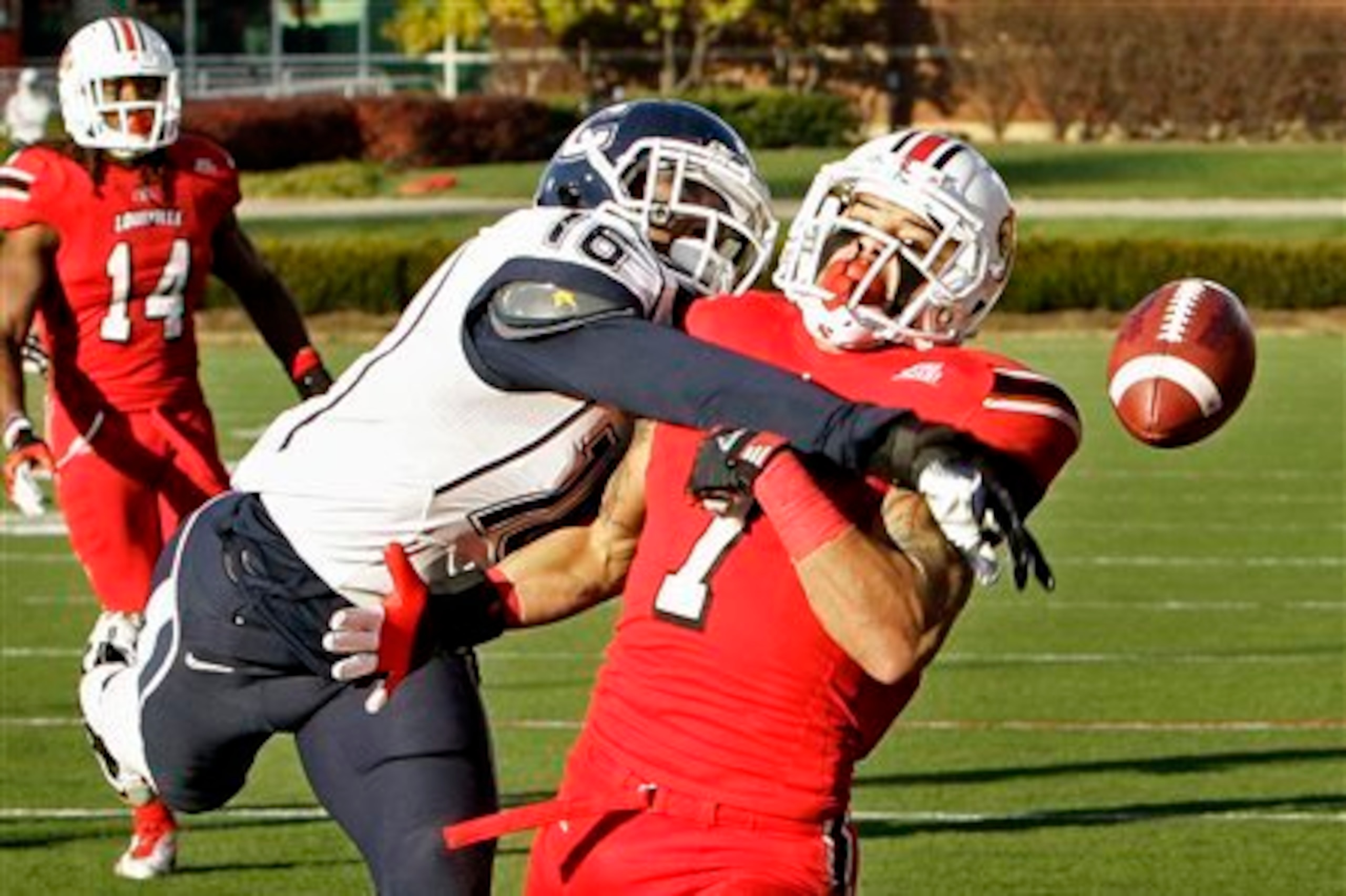
Don't be surprised if the Vikings pass on DeVante Parker from the Louisville Cardinals if he's available, instead opting to trade down just like Spielman indicated he would, choosing to grab a player like Byron Jones from the Connecticut Huskies. This trade down would likely net a third-round pick.
The knocks on Jones are either easy to fix or praise in the disguise of soft criticism. It's not much of an insult to say that Jones doesn't play to his testing numbers. Frankly, nobody plays to Jones' testing numbers—he set a world record in the broad jump and ran a sub-4.40 at his pro day.
All of his numbers were in the upper echelon of athlete, and he is only the fifth player since 1999 to be a "3-sigma athlete," one that tests three standard deviations away from average in Nike's SPARQ metric. The other four: Evan Mathis, Calvin Johnson, Lane Johnson and J.J. Watt.
Aside from being in good company, it also is a demonstration that Jones can perform as an elite athlete and still fall short of his testing numbers. Not living up to one's athletic potential in this case could still mean multiple Pro Bowls.
Before getting ahead of ourselves, there are, of course, other aspects to cornerback play. The ones that are tougher to teach, such as instinct and recognition, are things Jones has demonstrated over his three years of play as the starter for Connecticut at both the cornerback and safety positions.
An extremely intelligent player who shows his ability in the film room and on the field, Jones has some issues translating his burst into closing speed, but otherwise, he has the ability to do everything asked of him. He has technique problems in terms of footwork and press coverage, but otherwise, he's a sound player.
His injury history is a little bit of a worry, as well, but the Vikings have historically taken chances here, and Jones' injury is very minor.
After that, the Vikings would likely trade up into the end of the first round by trading away their second-round pick and one of their third-round picks to get into the bottom of the first (meaning they traded down to get the ammunition to trade up their second-round pick—all of which matches the draft value chart).
That would allow them to select the most athletic big linebacker in the draft in Stephone Anthony, who has incredible length, strength and speed. While he has issues (all the linebackers do), his fluidity and raw instincts provide coachable tools for a mentor like head coach Mike Zimmer to mold.
He needs to figure out his footwork and play diagnosis, but his best skills are coincidentally more highly prioritized in the Zimmer scheme than many others, including a reliance on linebackers to cover screen passes from the middle of the field and A-gap blitzing. He seems to have ball skills (though his highlight plays in this regard seem fluky), but his length saves him, functionally giving him an extra step—just like with Barr.
In a world where the Vikings trade Peterson for a late first-round pick, don't expect them to avoid this strategy. They can still trade down in the first round and trade up from the second round. In that scenario, however, the Vikings would likely either grab the next-best running back on the board, such as Ameer Abdullah or Melvin Gordon, with their first first-round pick and a falling cornerback, such as Marcus Peters or Kevin Johnson—though neither are high-level athletes in the same way as Rhodes.
Round 2
2 of 7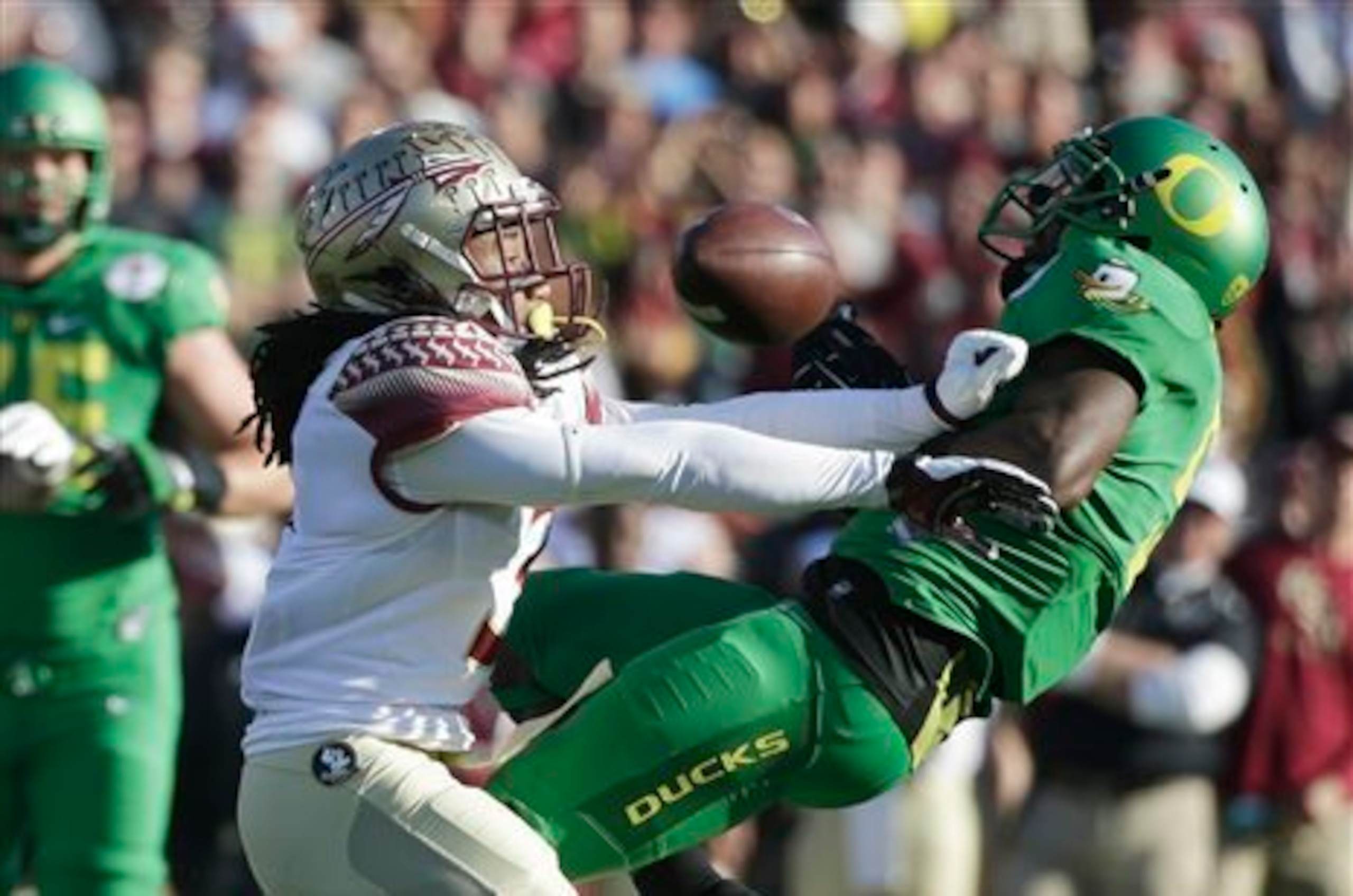
In the event of a Peterson trade, it may be that the Vikings are in fact content with two first-round picks instead of three and won't trade up out of the second round. In that case, the picks would be a running back and Anthony.
In that contingency, the Vikings would select a cornerback in the second round, such as Ronald Darby of the Florida State Seminoles.
A former gold medalist in track, Darby has the speed to keep up with almost any receiver in the NFL (one of the only exceptions, of course, now plays for the Vikings after being traded from the Miami Dolphins) and the physicality to match.
What's exciting is that he still played fast on tape in 2014, despite a lingering hamstring injury he dealt with throughout the season and didn't lose explosion.
Darby has phenomenal short-area quickness and recognition to match, reacting well not just to receivers but offensive concepts. His technique in press is excellent, too—important because the kinds of players that traditionally win against quick cornerbacks (big, physical receivers) also tend to win at the release. Darby can avoid those kinds of matchup problems.
There are character concerns for Darby—not only was he one of the passengers who fled the scene of a hit-and-run in P.J. Williams' car, he refused to provide testimony in the Jameis Winston investigation.
On the field, he has issues with grabbiness (in a class full of them, though he's not as bad as many others) and can get pushed off his mark too easily in-route. He needs to add some weight to his frame and work on his footwork in transition. He also lacks in run support for all the willingness he has to mix it up with receivers.
Once again, this is contingent on one of two possibilities—either a Peterson trade means that the Vikings do not move their second-round pick into the first round, or they choose not to draft a defensive back early while simultaneously standing pat in the second round.
Round 3
3 of 7
So far, the Vikings have gained a third-round pick and lost it in a trade up into the first round, leaving them with their original pick.
It's high time they add an offensive skill player because they might have a need at receiver and historically haven't added those players in the later rounds. The third round is perhaps the best place to take advantage of the deep receiver class, where second-round talents can be had for a bargain.
If we stick to the mantra of adding athletes, the two best athletes at the receiver position in the 75-100 range, where the Vikings would draft, are Sammie Coates and Chris Conley. Both are extremely tempting and offer fantastic ability for what they do and the kind of value one can find in the third round, but it may be Conley who has more upside.
The reason for this judgment is not an evaluation of Coates as an athlete, but rather, his limited growth curve over that time. Meanwhile, Conley has shown more development as a technician, even if his offense didn't feature him (after all, when you have Todd Gurley and Nick Chubb...).
From a size perspective, the two are comparable—Coates is 6'1 ⅜" and 212 pounds with 9 ⅜" hands and an extremely lengthy 33 ⅜" arms. Conley is 6'1 ⅞" and 213 pounds with 9 ⅞" hands and 33 ¾" arms. Better in every category but not enough to consider it a tiebreaker.
Conley has exceptional character and multidimensional intelligence, excelling in the classroom and on the field when it comes to smarts. He has exceptional work ethic and has won awards among the Georgia Bulldogs football squad for it.
He has excellent acceleration and burst, but he needs to play with more precision and deception in order to create separation in his routes. He doesn't have excellent after-the-catch vision, but he does have underrated hands and catching ability, as well as an enormous catch radius, even if he doesn't quite match his combine-record vertical leap.
Conley is an excellent blocker and does well to hold on to the ball after contact.
.jpg?w=2560 "Chiefs Giants Football")
.jpg?w=2560 "Colts Football")
.jpg?w=2560 "Titans Colts Football")
Round 4
4 of 7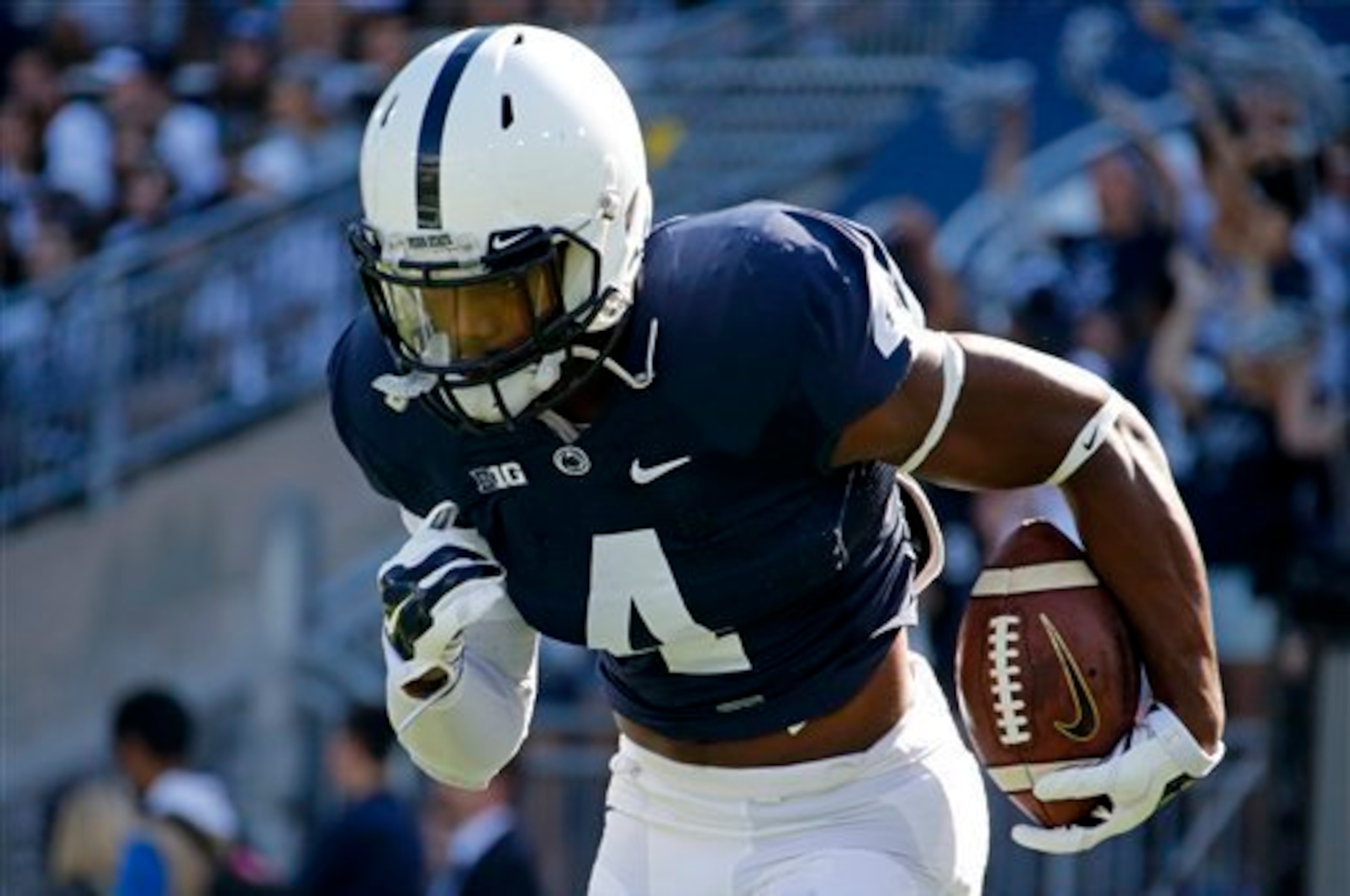
If the Vikings are adding athletes—and in fairness, safety is the one position they tend not to care about athleticism as much for—then there's going to be some sacrifice of talent in favor of that upside.
That means forgoing a good but athletically limited player like James Sample in the fourth round and going for a raw player like Adrian Amos.
Range is the name of the game in today's NFL, where safeties like Eric Weddle and Earl Thomas have helped define the position in part because of their incredible speed. Amos has that kind of speed, though there is a reason both Weddle and Thomas were first-round picks, and Amos is stuck in the fourth round.
Still, starting with his positives paints a more accurate picture than figuring out how he can overcome negatives. Aside from his speed and on-field ability to move from sideline to sideline in a flash, Amos is both technique-sound and explosive when tackling, willing to lay the wood.
His diagnosis in the run is top-notch and he knows where the ball is going in the run game. In addition, the Penn State Nittany Lions product—like Harrison Smith—is an experienced and talented blitzer for a defensive back on third downs, allowing Zimmer to rotate the safeties instead of being forced to keep Smith in the box.
Amos has ball skills to spare and when he gets his hands on the ball (and arms 32 ¼" long help), he usually holds on to it.
From a character and football intelligence standpoint, Amos has what teams are looking for, winning routinely in the film room and quick to recognize and communicate with the rest of the defense presnap about what the offense will do.
However, despite Amos' weight (218 pounds) and his proclivity for hitting, he can get outmuscled at the catch point relatively easily, and when manned up against receivers or tight ends, he loses a lot of ground to more physical players.
Though he is quick to identify which gap to attack (or hold) in the running game, he overpursues far too often and consistently plays with poor tackling angles. Though he is smart and instinctive, he doesn't quite trust his instincts in the passing game, slow to close on the ball in zone situations—perhaps the most important skill a safety should have.
Amos hits well and wraps up his tackles, but he doesn't seem to have the upper body strength to avoid missed tackles and can be a liability there if the initial contact doesn't take down the ballcarrier. In the fourth round, that's not a bad package.
Round 5
5 of 7
In this mock draft, the Vikings will not pick in the fifth round. Spielman's presser specifically talked about the value at the top of the fifth round, where the Vikings will pick as a result of trading away Matt Cassel and trading for Mike Wallace.
It's generally a spot that teams like to target in trades up, and it comes right after a dry spell of compensatory picks that teams cannot trade into, creating a value vacuum that Spielman is all too willing to exploit.
In this case, he trades down for a sixth and two sevenths. Perhaps there is no specific team that has that combination of picks at the moment, but by the time the third day rolls around, there very well could be.
At worse, Spielman could simply trade down twice and get the same package of picks.
Round 6
6 of 7
The Vikings did not have a sixth-round pick before trades, and they get one here, in addition to the two they gained in the seventh round.
That brings the Vikings up to nine picks (10 with a Peterson trade), which will have to do.
At this point, we'll want to pick up a guard (a perennial late pick for Minnesota), a linebacker (same) and a developmental quarterback.
The guard market is always at risk of dropping off, so here, the Vikings can take advantage of a small value cliff and select Mark Glowinski from the West Virginia Mountaineers.
No surprise, Glowinski was one of the top combine performers at the position with a dominant broad jump for an offensive lineman and a very quick short shuttle. Beyond that, Glowinski often played up to his competition, with standout games against the Texas Longhorns (and potential first-round pick Malcom Brown), as well as a very good showing in East-West Shrine Game practices.
Unfortunately, the Mountaineer has shown balance issues and doesn't have the same quickness on the field as he does in the weight room. He didn't show consistent ability to block at the second level, and he obviates a lot of his strength with poorly timed and placed punches in pass protection.
There's a lot to develop with him but also a lot to work with.
Round 7
7 of 7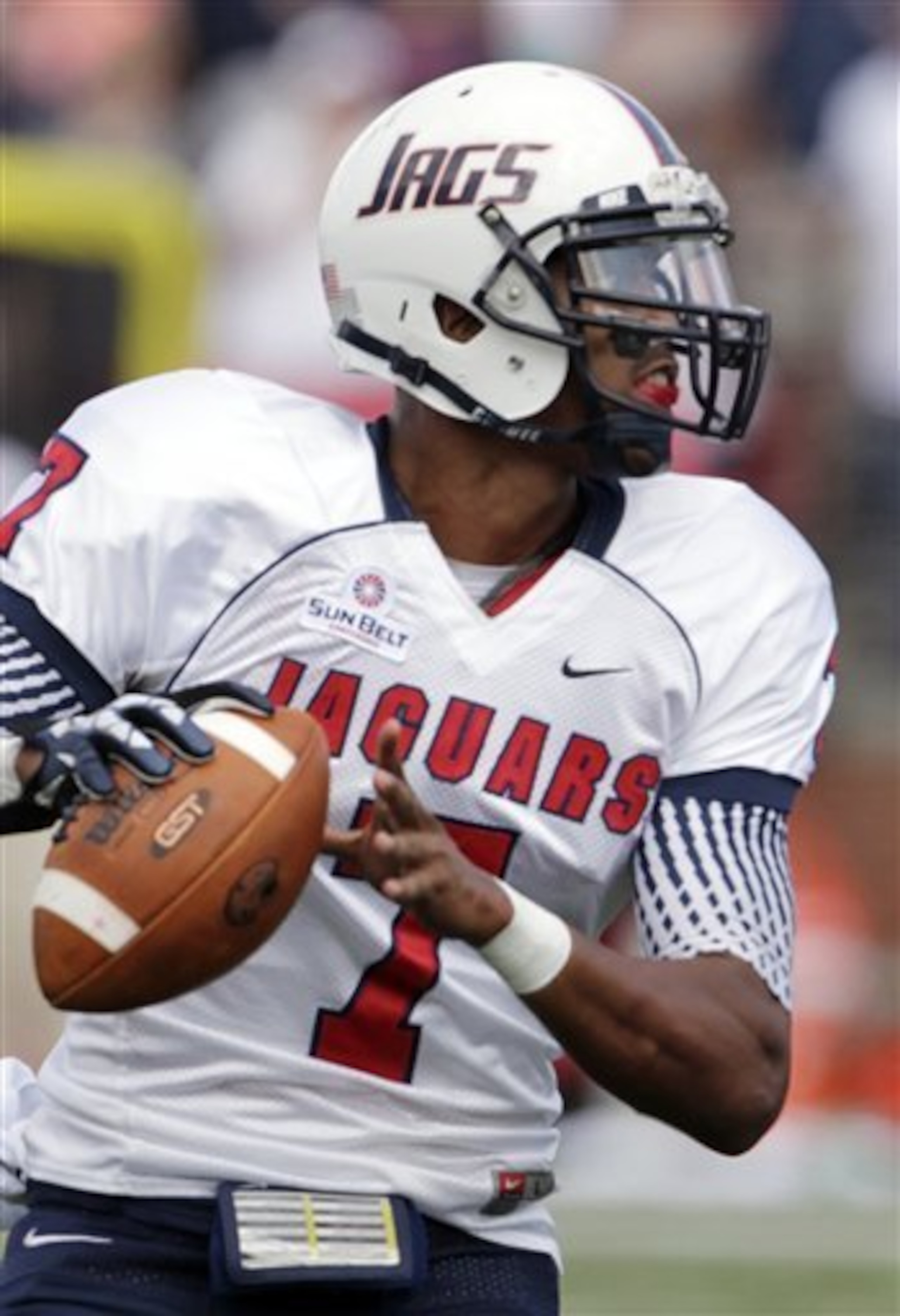
The Vikings have four picks here. In addition to getting that quarterback and linebacker, they'll grab another defensive back for depth and special teams play, as well as another offensive tackle because the positions are sorely lacking for depth at the moment.
It doesn't matter what order they do it in—in part because that order will be defined by the teams picking around them and who they might pick, something we won't know at this point, anyway.
At quarterback, the question is whether one should find a rhythm pro-style passer, a passer with accuracy or a passer with an arm because it will be difficult to get even two of those three late in the draft at a position that gets exhausted early.
We'll go with Brandon Bridge, quarterback from the South Alabama Jaguars. There are two non-football reasons for this synergy. First, having a QB duo named Bridge and Bridgewater is too tempting to pass up, and second, having two quarterbacks with theoretically small hands who need gloves seems karmically appropriate. Their hands are the same size.
They do diverge in pretty big ways, of course. Bridge has a cannon for an arm, with the precision of a cannon to match. He's an athletic player who doesn't rely on his athleticism but recognizes it as an asset. His rawness may not be set in stone, however. Unlike other big armed QBs with accuracy issues, Bridge is definitively still growing and only spent one year at quarterback at South Alabama.
Quicken his release and delivery and there may be a backup-quality quarterback there and one without bad habits that need to be broken.
At linebacker, the Vikings want a player who can contribute on special teams and seem to want athletes even in late rounds here. The most athletic late-round linebacker, Bryce Hager, will be gone by then, so it's between Alani Fua and Edmond Robinson.
Let's say the Vikings draft Robinson because he's slightly younger (though unlike most BYU grads, Fua didn't have to go on a mission trip because he married young), bigger and faster. There also is more room for development from a small-school player.
At 246 pounds, Robinson was often split out wide as the slot defender because he was their best cover guy, his Newberry Wolves coaches told scouts, per Nolan Nawrocki in his 2015 NFL Draft Preview. That's a pretty impressive fact, even at the small-school level. With long arms and a fantastic vertical leap, there are a lot of tools to develop for Robinson, even if he looks thin-legged. Good in pursuit and with solid tackling, he could contribute immediately on special teams as he adds take-on strength and ability.
There aren't very many athletic defensive backs late in the draft, so going with former Auburn Tigers quarterback Nick Marshall could make some sense for a staff that not only has a history of developing cornerbacks but confidence in that ability. With only dime snaps in limited play at Georgia at cornerback, Marshall has a long way to go but a lot to offer as an athlete and in the locker room.
The best athletes at offensive tackle late in the draft are Jamon Brown from Louisville (likely to have been taken at this point), Rob Crisp from the North Carolina State Wolfpack and Laurence Gibson from the Virginia Tech Hokies, though Trenton Brown of the Florida Gators is massive enough to consider an athletic outlier, as well.
They all meet the Vikings' history at offensive tackle, with long arms and a good set of athletic tools. We'll go with the big guy because they have a preference for that to some degree and grab Brown, whose test numbers are deceptive, given that he ran only slightly slower than the average offensive tackle but weighed 40 pounds more. Players at his weight (355 pounds) run 5.60 40-yard dashes, so running a 5.29 is impressive.
He beat the average marks for his weight in every category but the vertical, and he has the longest wingspan of the draft, stemming in part from 36" arms.
It took him a long time to crack the starting roster at Florida, and he still was subbed out somewhat often. He's extremely raw as a technician and needs to improve his core strength, hand fighting, balance and punch.
Whatever. He's unique.
.jpg?w=2560)
.jpg?w=2560 "Cardinals Giants Football")






