"He's a winner."
It's a sports cliche that doesn't offer any tangible proof of how one athlete is better suited to produce positive results on the field of play more than any other.
Yet the description is often used, whether it's at the collegiate or professional levels of play.
TOP NEWS
.jpg?w=2560 "Titans Colts Football")
5 Teams Eyeing Jonathan Taylor
.jpg?w=2560 "Chiefs Giants Football")
Mahomes Told Teammate to Leave Meeting
.jpg?w=2560 "Colts Football")
Jonathan Taylor Landing Spots 📍
But what separates winners from every other player on the field? Can something tangible be derived about someone who won at a high level in college and transitions to the professional game?
These are questions that should plague all NFL decision-makers and draft analysts.
How can being a "winner" translate to the next level?
Full disclosure: I hate the descriptive term, "He's a winner." It's nearly impossible to attribute wins to a single player in the world's greatest team sport. In football, 11 men are required to work cohesively to get a desired result.
Attributing wins to any singular player undermines a team's effort that resulted in a victory.
Certain players and positions can produce bigger impacts on the outcome than others, but those same standout performers still need help from others.
The New England Patriots' Tom Brady doesn't capture his fourth Super Bowl ring without the help of an undrafted cornerback from West Alabama. The Carolina Panthers' Luke Kuechly isn't the best linebacker in football if his defensive tackles don't do the dirty work up front which allows him to freely roam.
These are merely two of an endless amount of examples.
After discussing the issue with multiple athletes who recently won a championship at some level, there are physical manifestations of being a "winner" that teams can evaluate during the draft process.
These are the little things players do behind the scenes that fans aren't privy to, but NFL teams are. And these lesser-known traits can help determine whether a prospect will succeed or fail as a professional football player.
Work Ethic

A prospect's work ethic is on display every time a scout measures his stature or records his athletic feats.
The NFL combine is essentially the culmination of a player's lifetime of work and what they've set out to achieve.
“Discipline. Hard work. Dedication. And consistency," former Florida State Seminoles center Cameron Erving said when asked to describe a winner. "Those things you work on from the day you begin playing sports. Nobody ever wants to lose, but we all know that's a possibility when you compete in sports. These are the things you develop over a period of time. Some people have intangibles they're born with others don't have. But these things can be developed."
Erving, who is considered a potential first-round pick in next week's NFL draft, contributed to three straight ACC titles and won a BCS national championship with the Seminoles in 2013.
The offensive lineman's discipline, hard work, dedication and consistency were apparent every time he stepped onto the football field.
Florida State's coaching staff decided to convert the former defensive lineman to offensive tackle prior to his redshirt sophomore campaign. Erving went on to become a two-time winner of the Jacobs Blocking Trophy as the ACC's top offensive lineman. As a senior, Erving moved from left tackle to center midseason. In doing so, he was named to the All-ACC First Team as an offensive tackle and All-ACC Second Team as a center in the same year.
But the Moultrie, Georgia, native didn't develop a winning personality until he played for the Seminoles.
“In high school, I kind of felt helpless," Erving said. "We then won 11 games my senior year and went to the finals of the playoffs. We always worked hard, and we wanted to do more. But something just wasn't there. Once I went to Florida State and experienced a little success in high school during my final year, I was hungry for those wins. I wanted to be relevant. I wanted to be on a good football team and in a good program. We changed the culture at Florida State
"I learned at Florida State that you don't go into a game with the thought of possibly losing," Erving added. "When someone describes me, they do describe me as a winner. I've had success personally and as part of a team in college. I'm going to whatever team selects me in the NFL with the mindset, 'I'm a winner.' I will bring a winning mentality to wherever I go."
A winning mentality was eventually cultivated through all of the traits Erving originally described, and it helped create a new culture in Tallahassee—a culture that allowed Florida State to win 29 straight games between 2012 and 2014.
A measuring tape can't be used to determine a player's work ethic, but the results speak for themselves, whether it's on or off the field.
“You see the guys that have the drive and make the sacrifices for what they want," former Ohio State Buckeyes defensive tackle Michael Bennett said. "There are some that aren't willing to give up what it takes to be successful. At the end of the day, they're not winners, because it always catches up to them. If they're willing to work hard and give up what people are willing to give, those are the guys that are winners."
Bennett helped the Buckeyes capture the program's eighth national championship in January, the first in the College Football Playoff era.
The disruptive defensive tackle didn't simply talk the talk during an interview days before the NFL draft. Bennett already proved himself to be a player who is willing to make sacrifices to achieve the ultimate goal.
A groin injury could have derailed Ohio State's magical run. Bennett strained the muscle prior to the Big Ten Championship Game, according to MMQB.com's Andy Staples. He still went on to have his best game of the season against the Wisconsin Badgers. Bennett registered four tackles for loss, two sacks and two forced fumbles in the Buckeyes' 59-0 victory.
Bennett continued to play and help his team in the Sugar Bowl against the Alabama Crimson Tide and the national championship game versus the Oregon Ducks.
Teams won't have to look too far or ask around for long to discover Bennett's dedication to winning.
Multiple resources do exist, though, to help determine a player's work ethic.
Coaches—particularly those in charge of strength and conditioning—team trainers and teachers are all resources to mine information from to determine how much a prospect is willing to give.
Some, as Bennett mentioned, are willing to give more than others.
For example, Clemson's Vic Beasley, who was already considered one of the premier pass-rushers in this year's draft class prior to the NFL combine, showed up 11 pounds heavier in Indianapolis than he was listed on Clemson's official site. The school's all-time leading sack artist not only added bulk, but it became immediately clear that his hard work paid off with 35 repetitions on the bench press and a stellar all-around workout.
On the flip side, a player's dedication can be called into question by one of his own coaches, like at LSU prior to the 2013 NFL draft.
It's the willingness to go above and beyond for teams to ascertain a player's true work ethic. Sometimes, it's playing through injury. Other times it can be found during a predraft evaluation. It should also be apparent throughout a prospect's career. These qualities aren't hard to find. All a team needs to do is look beyond the basic evaluation tools.
Preparation
What separates the best from the rest isn't raw physical ability.
Peyton Manning's career is built on prolific passing stats, but he doesn't own the NFL's strongest arm, nor is he considered an elite athlete behind center. His preparation for opponents, however, is absolutely legendary.
A prospect doesn't need to be blessed with elite tools to succeed. Technique and understanding of the game can go a very long way.
“I know how to prepare and the type of preparation it takes to be successful," former Kansas State Wildcats quarterback Jake Waters said. "I'm not 6'5” and able to throw it 80 yards, but I'll study as hard as I can to find tendencies in a defense and just prepare the best way I can."
Waters won a pair of Iowa state titles at St. Albert High School before leading the Iowa Western Reivers to a JUCO national championship in 2012. During his two seasons under Bill Snyder's supervision, the quarterback led the Wildcats to a 17-9 record.
The Council Bluffs, Iowa, native wasn't invited to the NFL combine, though, and he's generally considered a late-round option or preferred free agent.
Why?
Waters stands 6'1" and weighs 210 pounds. He lacks prototypical size, which offsets all of his previous success in the eyes of some.
His diligence in preparation, however, will provide an opportunity with a team. It's then up to the quarterback to take advantage of that opportunity.
Preparation doesn't simply apply to on-field play. It's needed to get ready for the future. Preparation can be a week-by-week process for upcoming opponents or a set of long-term goals.
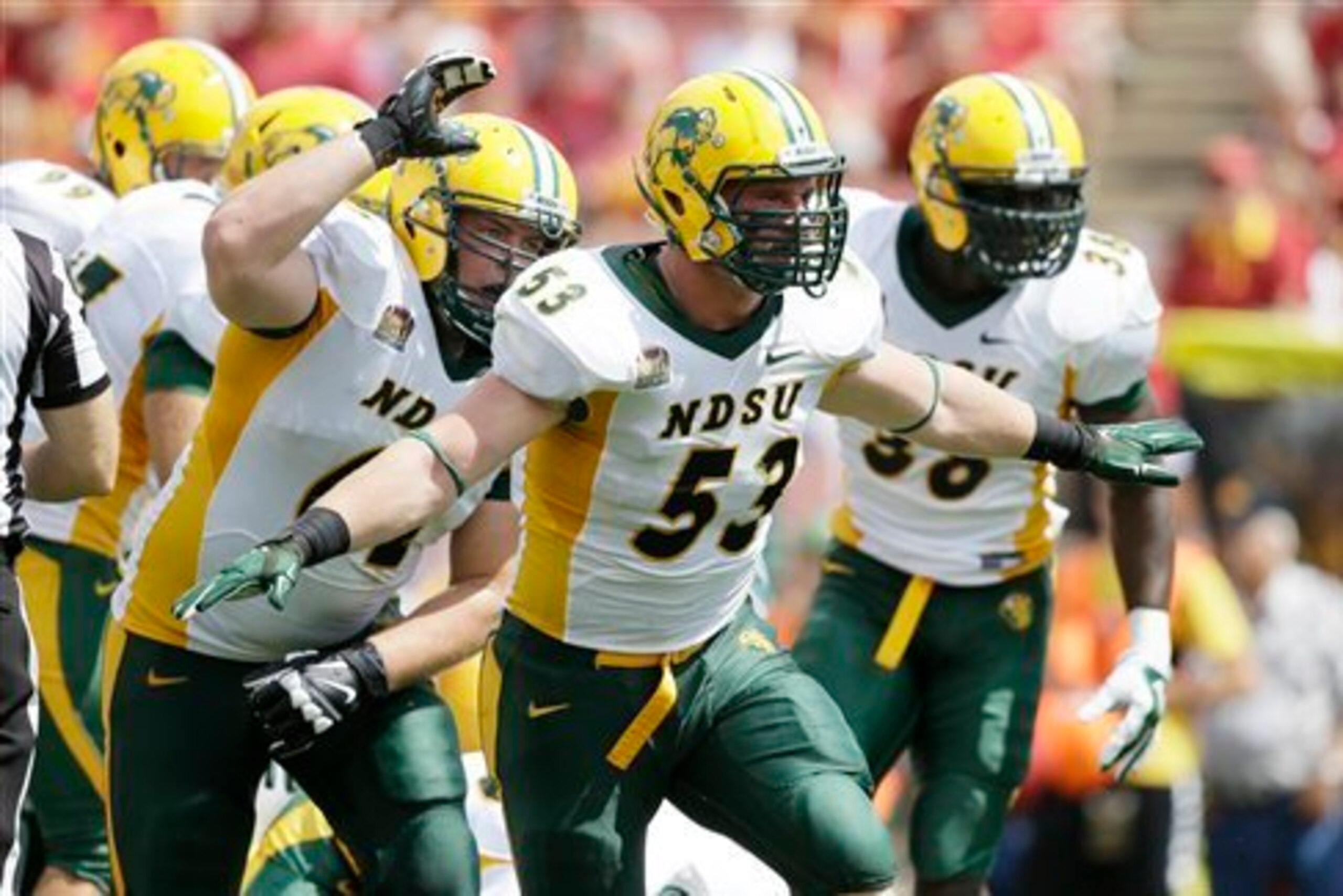
North Dakota State Bison defensive end Kyle Emanuel won an FCS national championship each of his four seasons in Fargo. It's a very special achievement, but it's also just a starting point.
“In my senior year, I started doing extra things in the weight room and pushing myself there and in conditioning," Emanuel said. "Just getting my body right. The strength program is really the foundation of our football program. Once you get into the season, it's all about film work, studying your opponent with coaches, getting in extra time, eating right and getting enough rest. It's a culmination of everything when it comes to preparing."
A player's preparation culminates during the predraft process for all teams to see.
It's not simply about physical preparation, which is an obvious part of that player's work ethic. Proper preparation also applies to how a prospect addresses teams during interviews and answers questions when asked to describe offensive or defensive plays on a dry-erase board.
Fans and NFL draft analysts never get to see exactly what happens behind closed doors, but it's an absolutely crucial part of the evaluation process.
Physically, it's easy to see when a player's weight fluctuates, for example, which raises a red flag. Yet that same correlation can't be made regarding a player's preparedness for the next level.
No quantifiable proof exists to determine how prepared any player truly is, but it's easy to determine which of them put in the work on and off the field to ready themselves once the two parties sit down together and discuss the game.
Leadership
An NFL scout once confided in me, "It's amazing any player is successful after they're drafted due to all the mitigating factors that come into play once they're with a team."
Too much emphasis is placed on draft pick accuracy or arbitrary value throughout the draft process without considering the player's situation after they've been selected.
Coaches, schemes, family, overall lifestyle, etc. all come into play and have an effect on individuals. Players aren't commodities to be passed around in a billion dollar industry.
A player's situation is absolutely crucial in his success. A winning culture in the right locker room can mean all the difference in the world.
For a fresh-faced draft pick who enters that locker room with a blank slate, the ability to establish himself as a leader with a desire to continue the same type of winning culture he might have experienced in college can be very difficult.
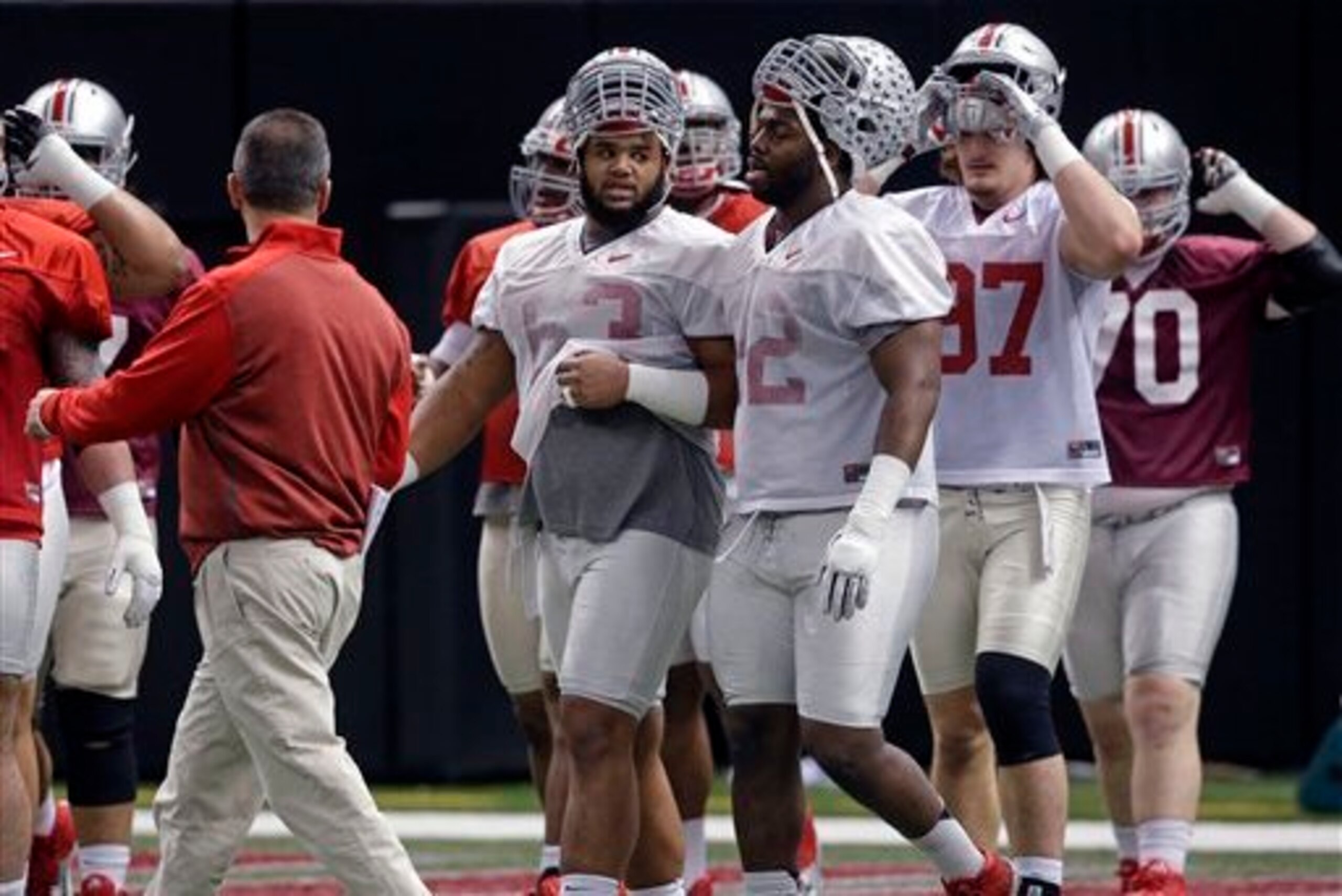
“(Ohio State defensive coordinator Luke) Fickell said something I love about leadership," Bennett said. "He said, 'To be a leader is the most selfless act you can do.' To take on that responsibility means you can't still do all the fun, reckless stuff that other people want to do. You can't be weak when everyone else is weak. You have to be strong. It's hard to continuously do.
“You just have to bring in a good work ethic right off the bat," Bennett added. "You can't expect to lead men who have been in the league for multiple years. They're veterans. You have to learn how to follow and just work your butt off. That's part of being a leader. You can lead by example without saying anything to anybody."
Greg Scruggs was drafted by the Seattle Seahawks in the seventh round of the 2012 NFL draft. The defensive lineman experienced some success and a good locker room vibe as a member of the Louisville Cardinals under then-head coach Charlie Strong. However, his transition from college football to the NFL was eye-opening.
“In the NFL, the culture can have a big effect, and it can go either way," Scruggs said. "It might let you be who you are. Some teams might not. That can open up or suppress a player's potential. In Seattle, the culture allows you to open up and be who you are, because every facet of your game is exemplary of a facet of your life.
“Coach Strong taught me to be humble and not put the wagon before the horse," he continued. "Being a draft pick—even as a first-rounder—meant nothing. In a college, you could be a senior, but it meant nothing. If you have the drive or ability to do something, you can do it. By taking that mentality to an NFL locker room, I kind of understood his message, but it wasn't until I got around (Seahawks head coach) Pete Carroll that I realized it didn't matter what your paperwork said. If you could come out, work and display the ability to compete at the highest level, you're going to play even if that's over a guy who is making $60 million or whatever the case may be. If you have the ability to do it then you'll do it."
Scruggs became an immediate contributor as a rookie, a part of a Super Bowl-winning team—albeit on injured reserve—and remained a part of the Seahawks as they made a second consecutive run to the title game.
Here is an instance where an undervalued draft prospect was immediately placed into one of the NFL's best locker rooms, and it allowed him to blossom as a professional.
Not only can young players benefit from a winning culture and strong veteran leadership, but they can plant the seeds early in their career to continue that trend as they mature and grow into their roles.
“(Jacksonville Jaguars head coach) Gus Bradley was just up here talking about culture," Emanuel said. "As a young rookie, you either know right away or not. You can be an assertive leader. For me, I give my best and try to help people out with no agenda. I want to show them I care, and I want the best for the whole team. It's a small step, and something I think is easy as a starting point."
That starting point begins long before the young man's name is actually called on draft day, though.
Leadership can hard to define. Each of the players interviewed for this piece provided a different answer, but all agreed it's the little things that matter. NFL coaches, scouts and general managers notice these things, too.
Is a player still trying hard long after a game is out of hand? How do his teammates react to him when they're on the field? Is he the first to arrive and the last to leave during workouts? How much extra time is he putting into studying the team's opponents?
All of the work ethic and preparation discussed earlier starts to develop into leadership traits that eventually lend to winning at a high level.
“Point blank: you are who you are," Erving said. "It's a mindset. Wherever I go, I will go into that locker room and not be outrageous or over-the-top but just be me. I know how to win. In the NFL, it's so competitive that it's just a different game than college. If you know how to win, though, you don't want to accept loss. In the NFL, you will lose some games, but it becomes about how you process and handle those losses. I'm going to go into whatever locker room, and I'm going to be myself. I'm going to be the guy that works hard and does the little things."
Some wonder why an event like the NFL combine is important in today's sports landscape when information can so easily be passed between teams, workouts are still conducted after the fact and everything is televised and taped.
It's important for those in the NFL to see up close how players react to each other in adverse conditions. Who becomes the alpha male among a group of alpha males? These leadership qualities may not be tangible, but they become obvious very quickly.
Where the NFL Fails
Far too often a player's physical ability overrides common sense. Teams, like fans, can become transfixed with a blazing 40-yard dash time, a through-the-roof vertical jump or a world-record broad jump. These things only tell part of the story.
A player's physical tools are merely the baseline on which everything else is built. But teams will still become enamored with certain quantifiable traits and causes them to pass on better overall football players.
“I don't know if they necessarily miss as much as they overlook," Scruggs said. "I think they get it. But if your physical capabilities outweigh whatever internal thing you have, most people, coaches included, have that same arrogance. 'Oh, we can get that out of him. If that's his only flaw and he runs a 4.2, we can handle that.' I don't think they miss as much as they overlook, because of what some athletes can do on the field.
"At the end of the day, it's about winning," Scruggs explained. "If a player can help a team win but he comes with some red flags—maybe he was known as being a little lazy or wasn't as driven but when he's got money on the line and he's playing for his family—he'll pick it up. If he doesn't, that's when you see a guy get cut. Initially, most people overlook it due to what a young man can do physically. It goes back to that same self-confidence or arrogance.
"There are a lot of people in the league with a lot to offer, but it's not always shown because most of the time they just want to know how fast your 40 is, how high you jump or how productive you were," he continued. "The internal stuff is just icing on the cake to become a core part of their team. Otherwise, they'll just chew you up and spit you out for what you have and go home.
"Welcome to the NFL."
The best teams at evaluating talent look beyond tantalizing workout numbers to see if there is more substance to each player.
Those franchises obtain "winners," players who are willing to work beyond what's required of them, prepare to their fullest and present leadership qualities to realize their true potential.
All quotes obtained firsthand by Brent Sobleski, who covers the NFL draft for Bleacher Report. Follow him on Twitter @brentsobleski.
.jpg?w=2560 "Eagles Jaguars Football")
.jpg?w=2560)