
Pro Player Comparisons for College Football's Top 25 Stars
As we look forward to watching today's college football stars play on Saturdays this fall, we can't help but wonder how they'd look if they were instead performing one day later each week.
In projecting what kind of pro career a collegiate standout would have, it's common to compare his skills, size and mindset to those of someone who's currently in the NFL or was one of the more notable players at his position. This isn't a foolproof method, but it is one that pro scouts use to assess talent and at least gives us some idea of how the best college players would handle the next level.
Take a look at our pro player comparisons for college football's 25 best players, chosen based on their rankings in Bleacher Report's list of the country's top sophomores and juniors and the top overall players heading into spring practice, listed alphabetically.
J.T. Barrett, QB, Ohio State
1 of 25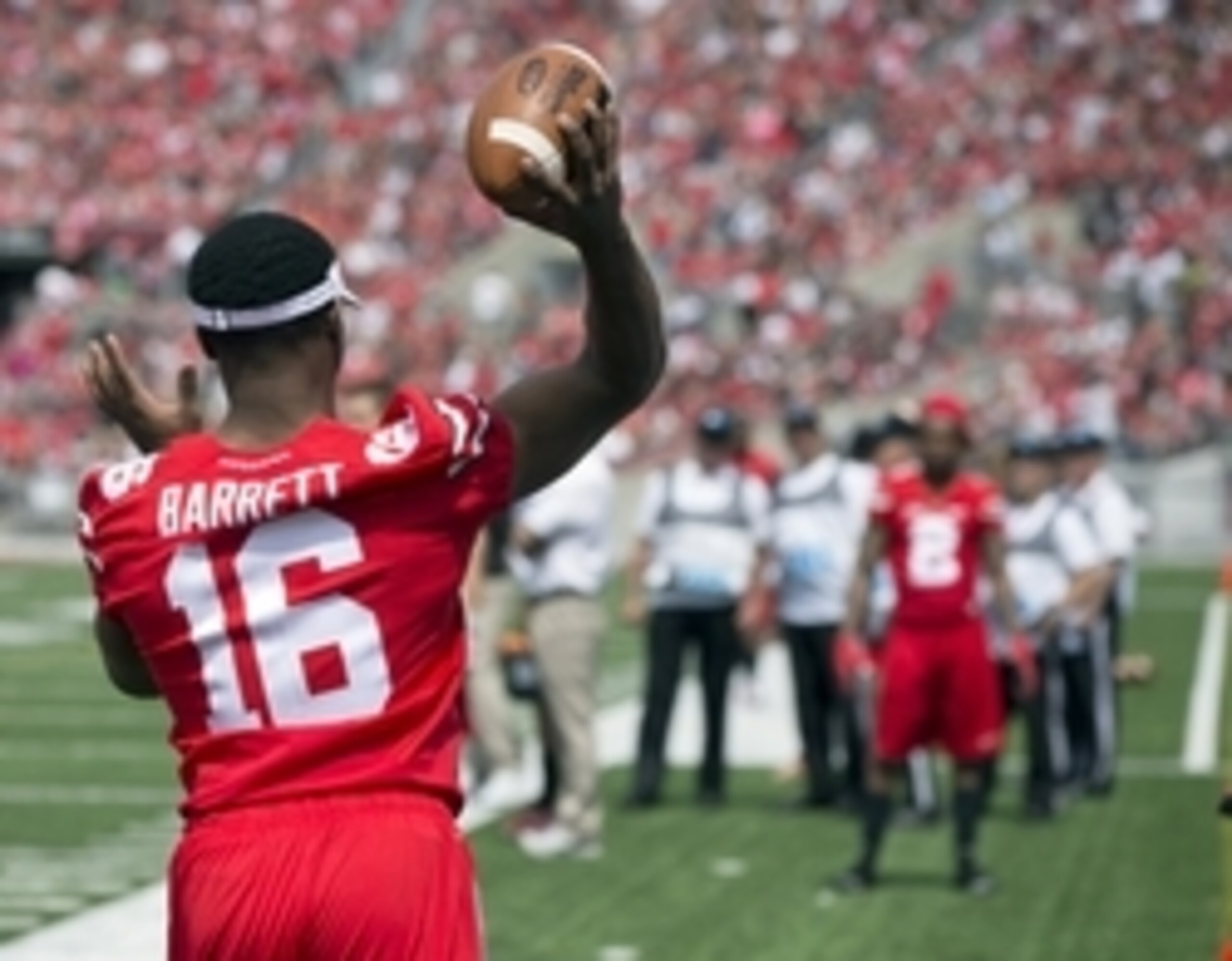
Pro comparison: Alex Smith, Kansas City Chiefs
With his mobility, his knack for avoiding trouble in the pocket and his presence of mind to know when to wait for a man to get open and when to tuck it and run, J.T. Barrett is similar to several of the dual-threat quarterbacks whom Urban Meyer has coached at the college level. However, he's closest to the one who's had the best pro career to this date.
While Alex Smith hasn't shown this as much in the NFL, at Utah he was a master at deciphering the defense and making the quick read of run or pass. Barrett showed this in spades during his redshirt freshman year and was as essential as anyone in getting Ohio State from out of the mix to into the hunt for a national title.
"He shares similar traits to Alex Smith when he was playing in Urban Meyer's system at Utah, with his ability to make quick and efficient decisions while also showing the mobility to move the chains with his legs," ESPN.com's Steve Muench and Kevin Weidl wrote.
Joey Bosa, DE, Ohio State
2 of 25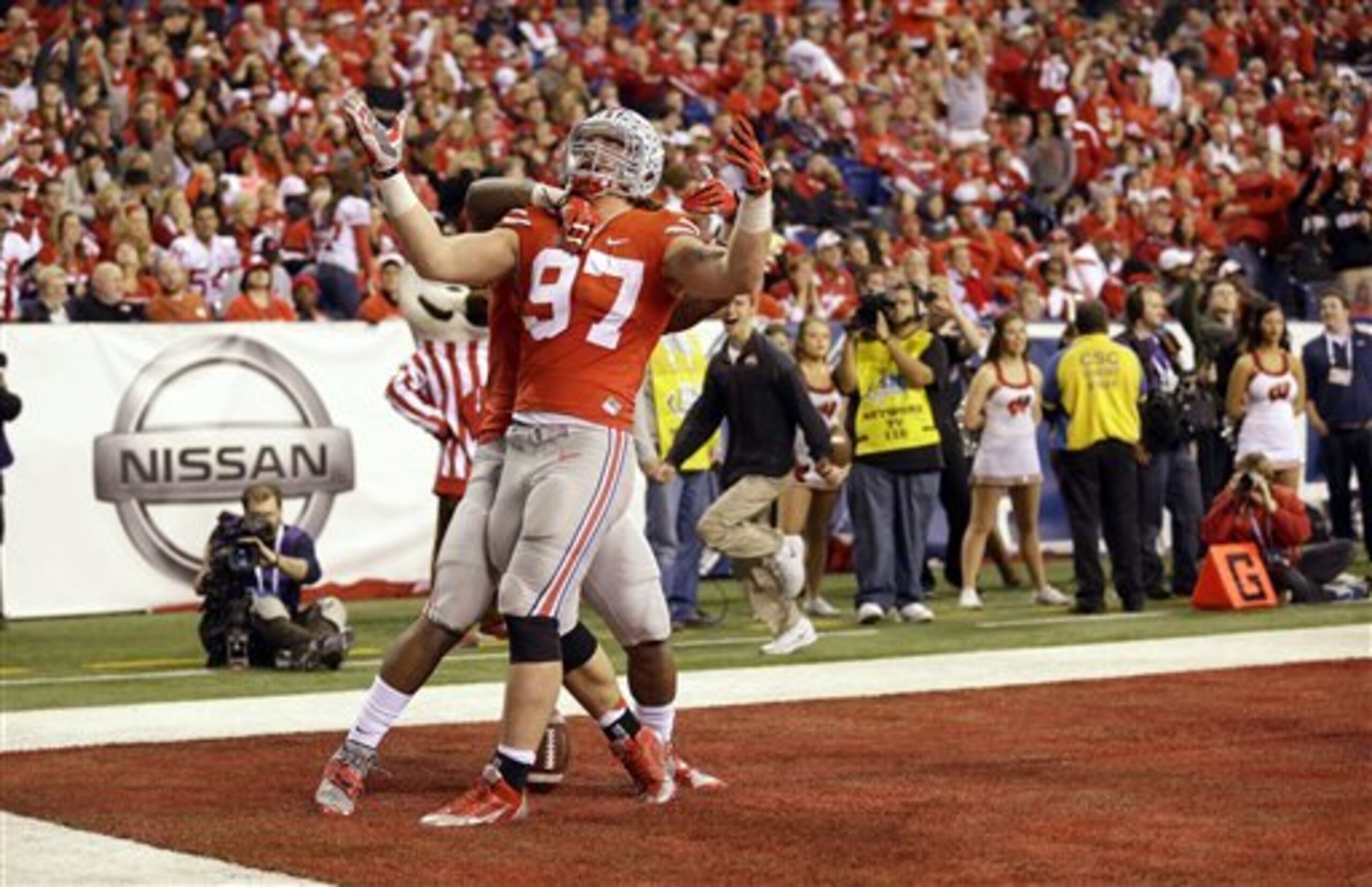
Pro comparison: J.J. Watt, Houston Texans
If there were a current college player whom we could envision guest-starring on the TV show New Girl, as J.J. Watt did earlier this season, it would be Joey Bosa. But it's more than the free-spirited approach to life that has us comparing the two; there's also the fact that their games are similar, and they both wreak havoc on opposing backfields in the same manner.
Both players are freak athletes for their size—Bosa is listed as 6'6" and 275 pounds, compared to Watt at 6'5" and 289 pounds—who manage to attack all over and aren't limited to being edge-rushers. This has led to amazing production for each, and for Bosa, it's why he's projected to be among the first players taken in the 2016 draft.
Bosa might not have yet developed Watt's knack for batting down passes, as he only had one pass breakup in 2014, but he still has quick hands that led to four forced fumbles last season.
Tyler Boyd, WR, Pittsburgh
3 of 25
Pro comparison: Larry Fitzgerald, Arizona Cardinals
This one is almost a given, as ever since Tyler Boyd set foot on the field for Pittsburgh, he's been compared to the school's greatest all-time receiver. And so far, he's shown a strong resemblance in both his production and his reliability.
Boyd has already surpassed Fitzgerald's career reception total at Pitt, which he did in two seasons, and he's less than 250 yards from topping him in receiving yards while only 569 away from the school's career record. The touchdown mark—Fitzgerald had 34, compared to 15 for Boyd—will be difficult to match, but Boyd is on a more balanced team than the one Fitzgerald played for at Pittsburgh.



Trevone Boykin, QB, TCU
4 of 25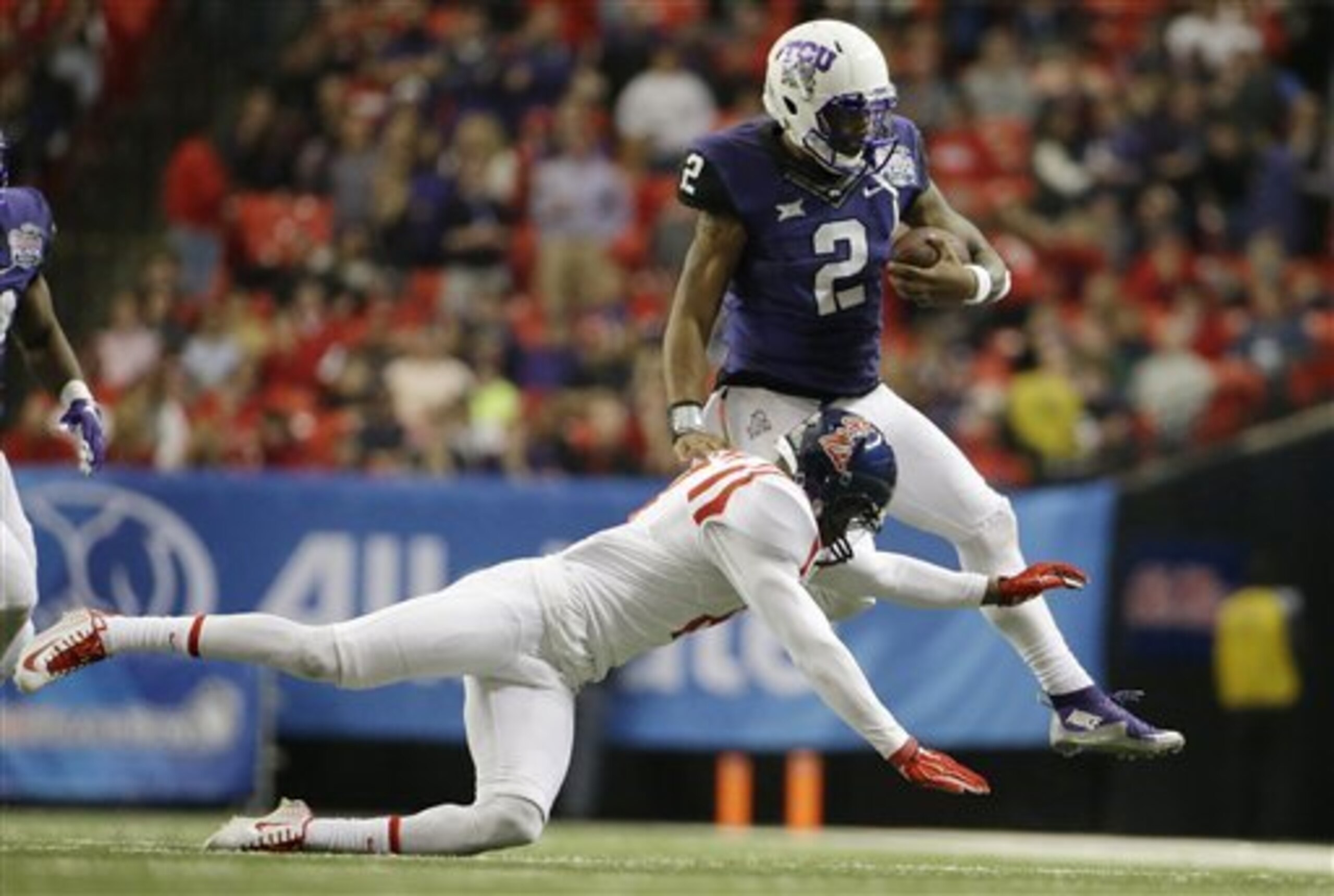
Pro comparison: Russell Wilson, Seattle Seahawks
When Russell Wilson got to the NFL, he had to prove that he was more than an elusive mobile quarterback and that he could lead an offense with his arm as well as his feet. That's what Trevone Boykin had to prove last season at TCU, and he thrived.
For both players, the key was finding an offensive scheme that enhanced their strengths. Seattle built its offense around Wilson, while at TCU, co-offensive coordinators Sonny Cumbie and Doug Meacham took the best parts of Boykin's game—such as his strong arm and ability to extend plays—and turned them into one of the best attacks in the country.
Boykin is still working on accuracy when it comes to short and intermediate routes, but his deep-ball passing is already ahead of Wilson's.
Shilique Calhoun, DE, Michigan State
5 of 25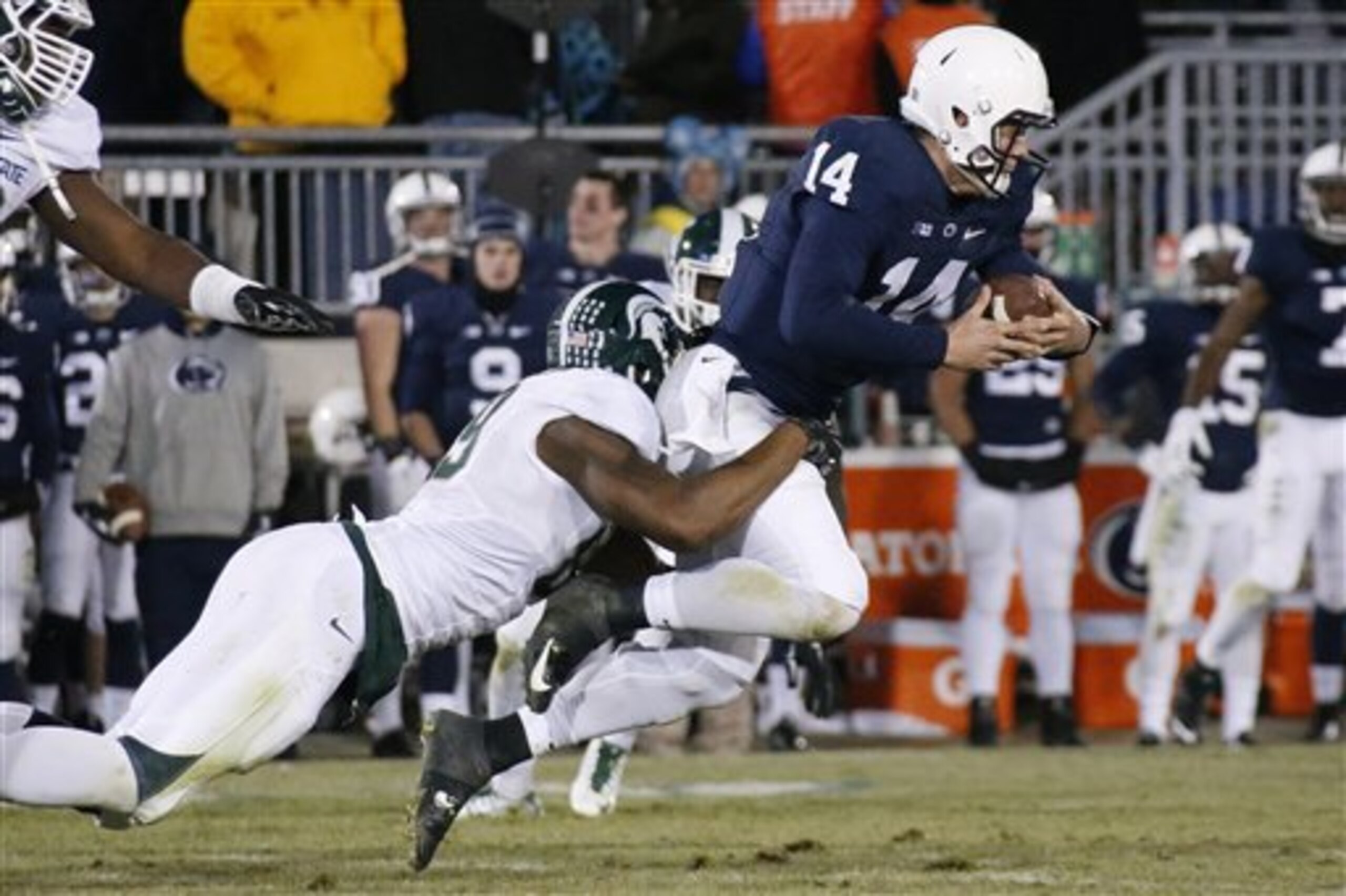
Pro comparison: Michael Strahan (retired)
Shilique Calhoun was a surprise returner to college, forgoing what would have been a high draft slot for the chance to produce another strong season for Michigan State while also improving his individual game for the pros. His last two seasons have been massively successful and made him look like the next Michael Strahan. He's able to fly off the left side as an edge-rusher but also command a presence in the middle of the defensive line in run-stopping situations.
And when football is over, Calhoun seems like he'd have the stage presence to handle a TV career like the one Strahan has gone onto since retiring. He's already shown the wit, joking with reporters when he announced his return for this season that the NFL advisory committee had told him he'd be the No. 1 pick in 2015, as noted by Joe Rexrode of Michigan.com.
Nick Chubb, RB, Georgia
6 of 25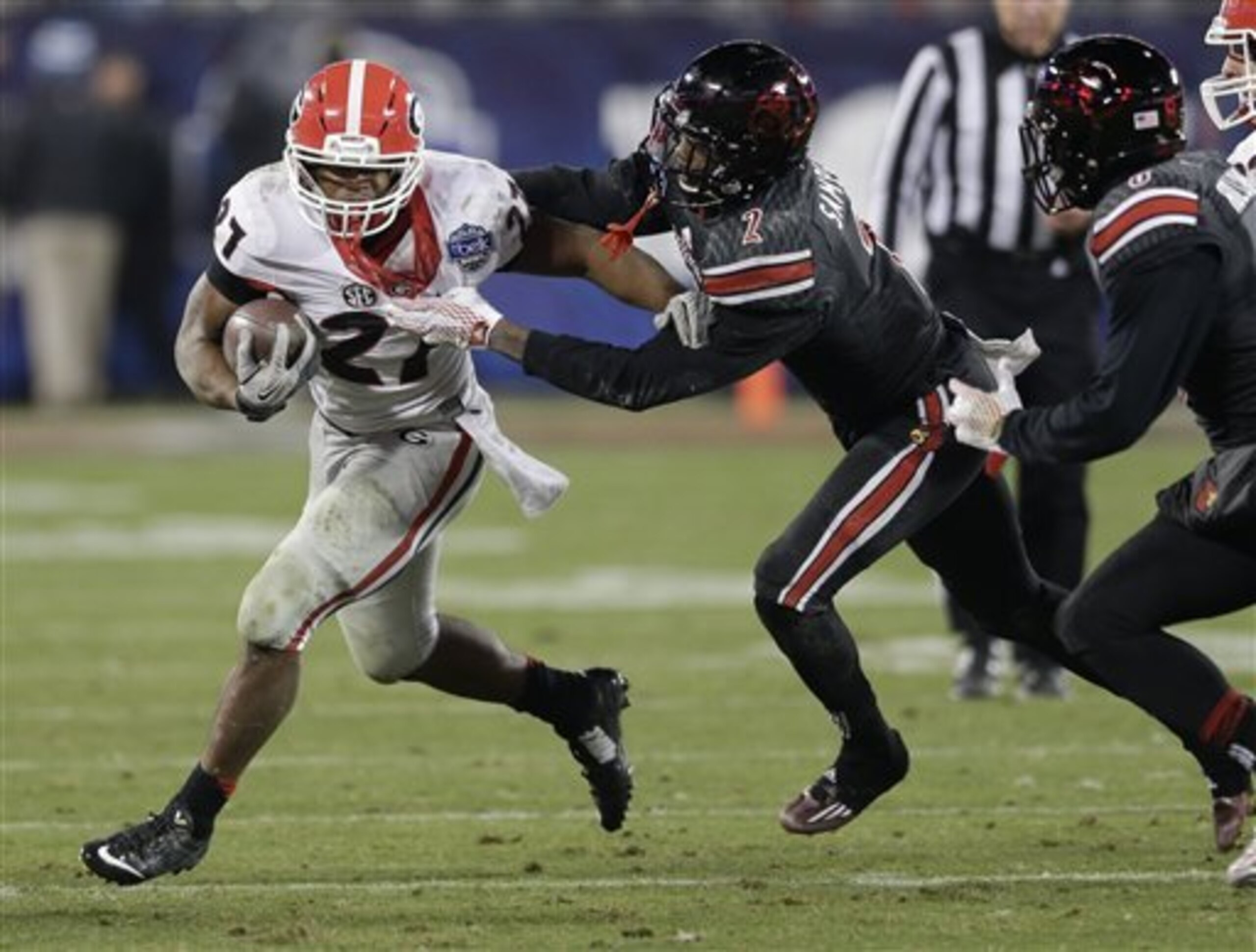
Pro comparison: Frank Gore, Indianapolis Colts
After a monster first season at Georgia, Nick Chubb is getting compared to former Bulldogs great Herschel Walker and could end up being the school's best running back since the Heisman winner. But in terms of pro potential and impact, the bar is even higher.
Much like Frank Gore, who has run for more than 11,000 yards in his 10 NFL seasons, Chubb is a compact but powerful back who doesn't look fast at first but then is by his defenders in the blink of an eye. Those who manage to get the angle on him or meet him head-on, though, have found that Chubb doesn't go down easily, the same way that Gore has gained notoriety as one of the hardest rushers to take down with the first hit.
James Conner, RB, Pittsburgh
7 of 25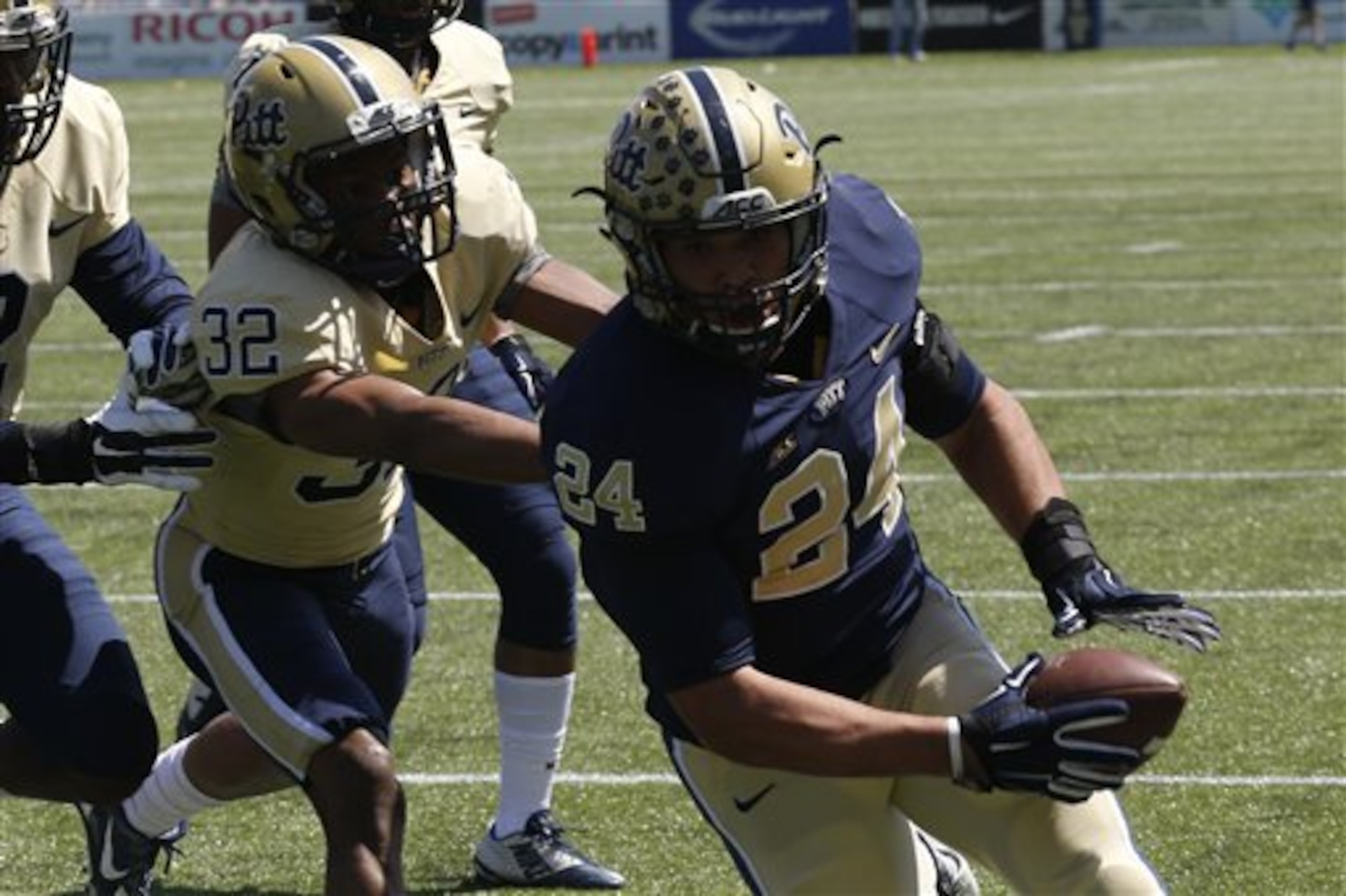
Pro comparison: Eddie Lacy, Green Bay Packers
The prototypical running back is one who has the strength of a linebacker but the body of someone much faster and more elusive. But James Conner has shown that big bodies work fine, especially if they make for a tough day trying to take down.
Conner is coming off one of the best rushing seasons in Pitt history, topping NFL Hall of Famer Tony Dorsett's school record with 26 touchdowns to go along with 1,765 yards. At 6'2" and 250 pounds, the converted defensive end is a beast with the ball in his hands.
This is similar to how former Alabama star Eddie Lacy bowled over defenders both in college and in the pros. A pro scout told NFL.com that Conner plays the same way as Lacy in how he "is a run-and-scatter-the-bodies type of player."
Connor Cook, QB, Michigan State
8 of 25
Pro comparison: Andy Dalton, Cincinnati Bengals
Connor Cook's college career has been one of steady progress, to the point where he's now considered one of the top quarterback prospects for 2016 and might have been a high draft pick this year had he decided not to return to college for his senior year. Andy Dalton took a similar arc at TCU, which propelled him into the second round in 2011.
Though Cook is two inches taller than the 6'2" Dalton, each is similar in his presence as a pocket passer who can scramble for yards when needed. Cook's arm might be better at this point than Dalton's was in college, but he has to work on being more accurate with his throws.
Dalton has completed 61.6 percent of his passes in the NFL, while Cook is hitting at a 58.3 percent clip for Michigan State.
Su'a Cravens, LB, USC
9 of 25
Pro comparison: Troy Polamalu (retired)
When he first entered college, Su'a Cravens' pedigree as a top-flight safety had him projected to develop into someone as great as Ed Reed was. But now that Cravens has bulked up and morphed into a hybrid linebacker/defensive back, the comparisons have shifted to an even more ferocious hitter who has ties to USC.
"That's who I model my game after," Cravens told Lindsey Thiry of the Los Angeles Times.
Troy Polamalu, the former Trojans and Pittsburgh Steelers star who retired earlier this month after 12 seasons, could cover any part of the field and made the most of his opportunities to lay out defenders. Cravens has been doing that during his college career, racking up 17 tackles for loss along with three interceptions last season.
Ezekiel Elliott, RB, Ohio State
10 of 25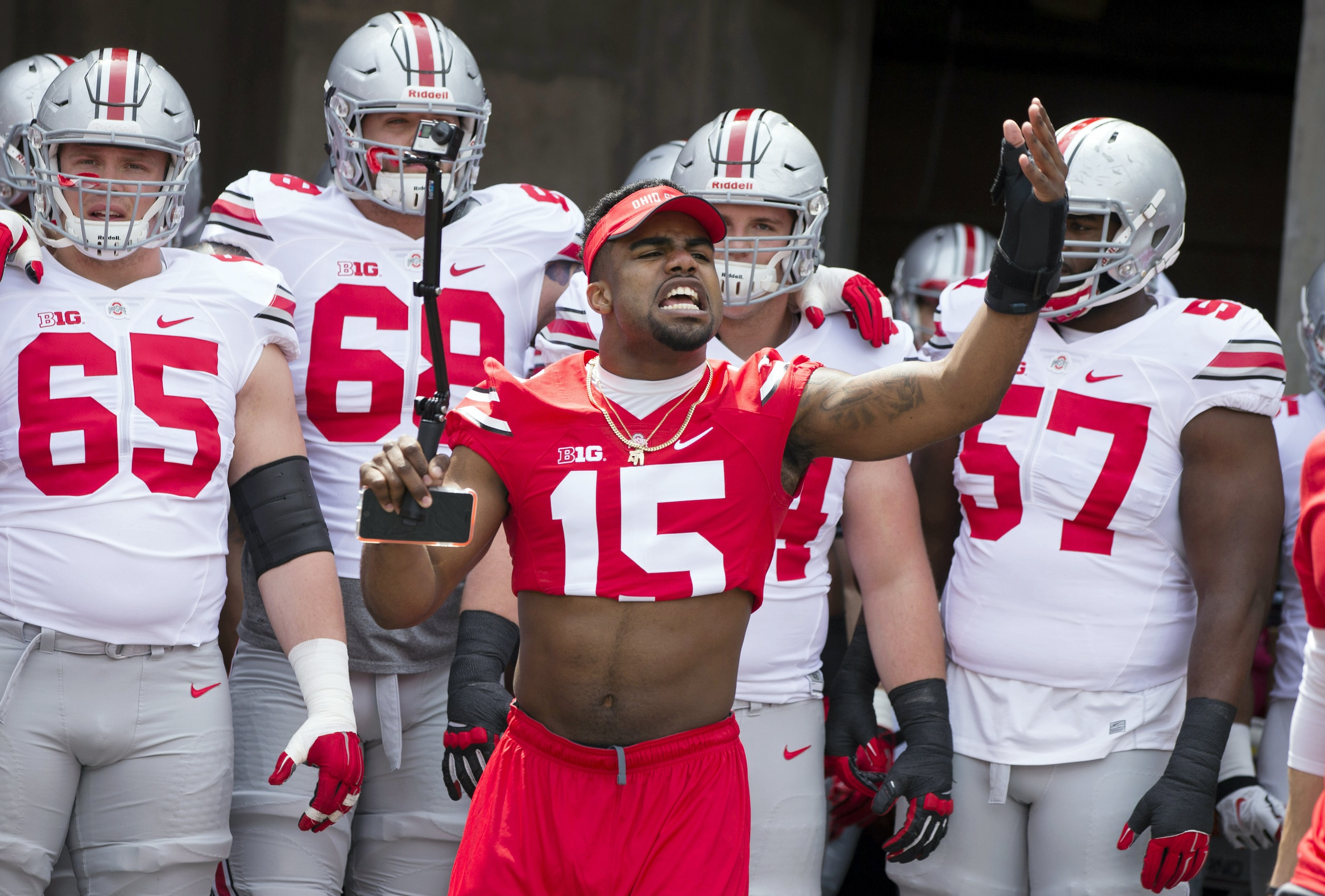
Pro comparison: C.J. Spiller, New Orleans Saints
As amazing as Ezekiel Elliott's running was during Ohio State's run through the postseason last year, in a way it overshadowed a skill that was more prevalent earlier in 2014. Prior to becoming a workhorse running back, averaging 25.3 carries per game in December and January, Elliott was one of the most adept pass-catching backs in college.
Elliott had 28 receptions for 220 yards last year, catching at least four passes in four different games.
C.J. Spiller made a name for himself as a dual threat both as a runner and as a receiver at Clemson, which has continued in his NFL career as he's averaged nearly 41 receptions per season.
Leonard Fournette, RB, LSU
11 of 25
Pro comparison: Adrian Peterson, Minnesota Vikings
The hype surrounding Leonard Fournette existed long before he got to LSU, and it was for more than what he was expected to do in college.
"Leonard Fournette is a cheat code in a video game," Bleacher Report's Adam Kramer said in June 2013, more than a year before he'd made his collegiate debut. "He reminds me of a young Adrian Peterson."
A year into his time with the Tigers, there's no reason to switch that comparison. Though Fournette didn't put up the same kind of monster numbers that Peterson had as a freshman at Oklahoma, he still set LSU's freshman rushing record and showed off his unique blend of power and speed in a 6'1", 230-pound body.
Myles Garrett, DE, Texas A&M
12 of 25
Pro comparison: Jadeveon Clowney, Houston Texans
If not for injuries, Jadeveon Clowney might have ended up as the NFL's defensive rookie of the year in 2014. Myles Garrett figures to be in line for a similar award when he gets to the pros in a few seasons, and he's already on pace to match (or top) Clowney's college achievements after just one year.
Garrett recorded 11.5 sacks as a freshman, blowing away Clowney's SEC freshman record that he set at South Carolina in 2011. What makes Garrett's success more impressive, though, is that he accomplished it without much help on the defensive line, while Clowney was part of a far better unit up front.
Christian Hackenberg, QB, Penn State
13 of 25
Pro comparison: Andrew Luck, Indianapolis Colts
As he entered college and then excelled as a true freshman starter, it seemed like Christian Hackenberg was on pace for the kind of career that would rank up there with the best in history and put him in line with some of the NFL's greatest quarterbacks. That includes one of the best young passers to enter the game in recent years in Andrew Luck, partly because of their similar bodies but also because of their performances on the field.
Then came the sophomore slump, when mobility issues and poor decision-making led to a major drop in production.
"Hackenberg isn't a statue...at times he has shown great pocket awareness," Bleacher Report's Brian Leigh wrote. "It just happens that those times came mostly back in 2013. He regressed when facing pressure as a sophomore, struggling to feel the rush and take advantage of space."
Hackenberg is still projected to be one of the first quarterbacks taken in the 2016 draft, assuming he turns pro after his junior year, but he has to show vast improvement in recognizing when the pocket is breaking down and stop forcing throws.
Vernon Hargreaves, CB, Florida
14 of 25
Pro comparison: Darrelle Revis, New York Jets
Hargreaves Island might not have as nice a ring to it, but there's no denying that Florida's junior cornerback has shown the ability to cover an entire side of the field like Darrelle Revis has during his storied NFL career.
Revis has intercepted 23 passes and defended 124 passes in the pros, numbers that would undoubtedly be higher if more teams threw in his direction. The same goes for Hargreaves, who in two years for the Gators has picked off six balls and defended 24 passes in 24 games.
Derrick Henry, RB, Alabama
15 of 25
Pro comparison: Eddie George (retired)
At 6'3" and 241 pounds, Derrick Henry often looks like a man among boys when he gets the ball and heads toward the line of scrimmage. It seems impossible to take him down with just one (or even two) defender, especially when a player that big and tall has the kind of footwork you'd expect from a scatback or a slot receiver.
That's how Eddie George ran on his way to the Heisman Trophy at Ohio State, and he continued to do so for the Tennessee Titans to the tune of more than 10,000 rushing yards.
Without the low center of gravity that many big backs rely on, Henry has had to ensure that he's constantly moving his feet in order to run through tackles rather than just trying to go around them. He does that, too, but when hit, he doesn't stop moving.
Rashard Higgins, WR, Colorado State
16 of 25
Pro comparison: Michael Crabtree, Oakland Raiders
Amid his breakout season in 2014, Rashard Higgins put together an amazing run of performances that hadn't been seen at the college level in seven years. In October, he had three straight games with at least 175 receiving yards, the first player to do so since Texas Tech's Michael Crabtree in 2007.
Higgins didn't prove to be a fluke, going for 174 yards in the following game and leading the FBS with 1,750 yards and 17 touchdowns along with 96 receptions. In 2007, Crabtree had 134 catches for 1,962 yards and 22 touchdowns, all FBS bests, though Texas Tech threw 713 times during that season, compared to the 447 pass attempts that Colorado State had last season.
Both players come from the Dallas area, though because of a lower profile at the prep level, Higgins had to leave the state to make a name for himself.
Myles Jack, LB, UCLA
17 of 25
Pro comparison: Anthony Barr, Minnesota Vikings
When UCLA's Anthony Barr went to the NFL in 2014, it required the rest of the Bruins linebackers to step up and fill his void. Myles Jack was already a force in that unit, but this past season, he had to take on a greater role both as a run-stopper and as a pass defender.
Barr had a solid first season in the NFL, playing 12 games before suffering a knee injury that required minor surgery. Before getting hurt, he showed that he was capable of translating his standout play in college to the pro level, and the same is expected of Jack when he gets to the NFL as soon as 2016.
Cody Kessler, QB, USC
18 of 25
Pro comparison: Drew Brees, New Orleans Saints
People praised Cody Kessler's decision to return to USC for his senior year for many reasons, including the fact that it would give him another chance to show that he could develop into an NFL-level passer despite lacking the size of a prototypical pro quarterback. Even with one more season, though, Kessler's 6'1", 210-pound frame is going to be looked at as a negative—much like it was for Drew Brees, who at 6'0" and 209 pounds slipped to the second round in 2001 despite one of the most prolific and successful college careers ever.
Kessler is on pace for a similar run, as he enters this fall having thrown for nearly 6,800 yards with 59 touchdowns in the past two seasons.
Robert Nkemdiche, DT, Ole Miss
19 of 25
Pro comparison: Ndamukong Suh, Miami Dolphins
Recruited as a defensive end, Robert Nkemdiche has spent most of his time inside at tackle for Ole Miss, but he is frequently shifted back outside to set up better matchups. Wherever he's put, though, he draws plenty of attention, which often leads to other Rebels defenders getting through for the tackle or sack.
As Nkemdiche continues to develop, he'll start getting there himself rather than serving as a space-eater or decoy. In doing so, he'll become more and more like one of the most dominant defensive linemen in the NFL.
"He's getting so much better at understanding blocking schemes," Ole Miss assistant Chris Kiffin told Fox Sports' Bruce Feldman last year, also comparing Nkemdiche to Ndamukong Suh, whom he coached at Nebraska.
Shawn Oakman, DE, Baylor
20 of 25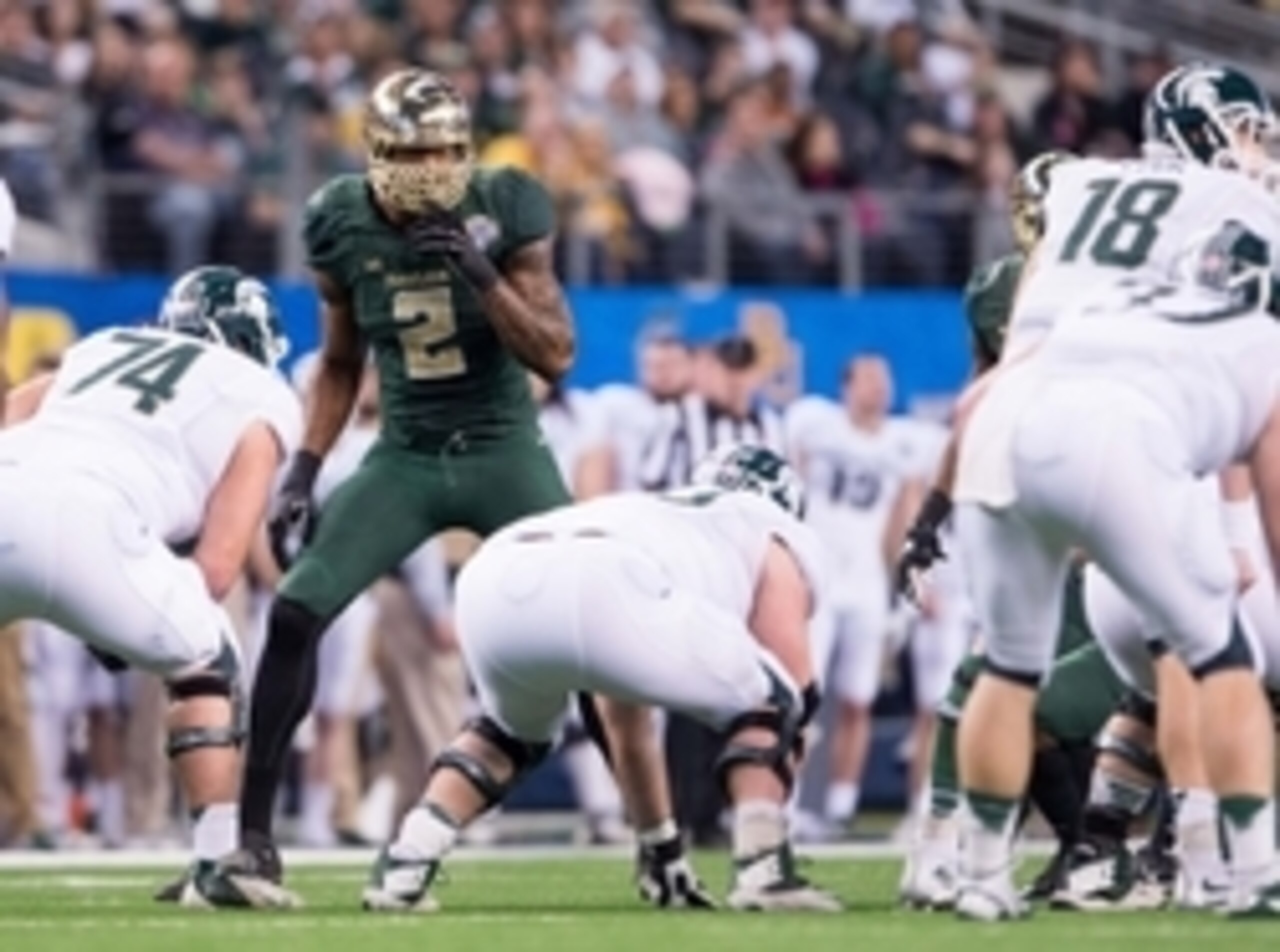
Pro comparison: Ed "Too Tall" Jones (retired)
It might be easier to match Shawn Oakman up with a professional wrestler of similar stature and ability to induce fear, as there are few NFL players who come close to Oakman's 6'9", 280-pound frame. Former Dallas Cowboys great Ed "Too Tall" Jones was 6'9" and 270 pounds and cut just as imposing a figure as a defensive end during his 15 pro seasons.
Jones was the No. 1 overall pick in 1974 out of Tennessee State and went on to dominate on the Cowboys line until the late 1980s. He seemed to never play with anything less than a top-speed motor, something Oakman has shown at times but not on a consistent basis, which is among the reasons why Oakman was advised to return to college for his senior year.
"He appears to be just scratching the surface of his potential," said Rob Rang of CBS Sports.
Samaje Perine, RB, Oklahoma
21 of 25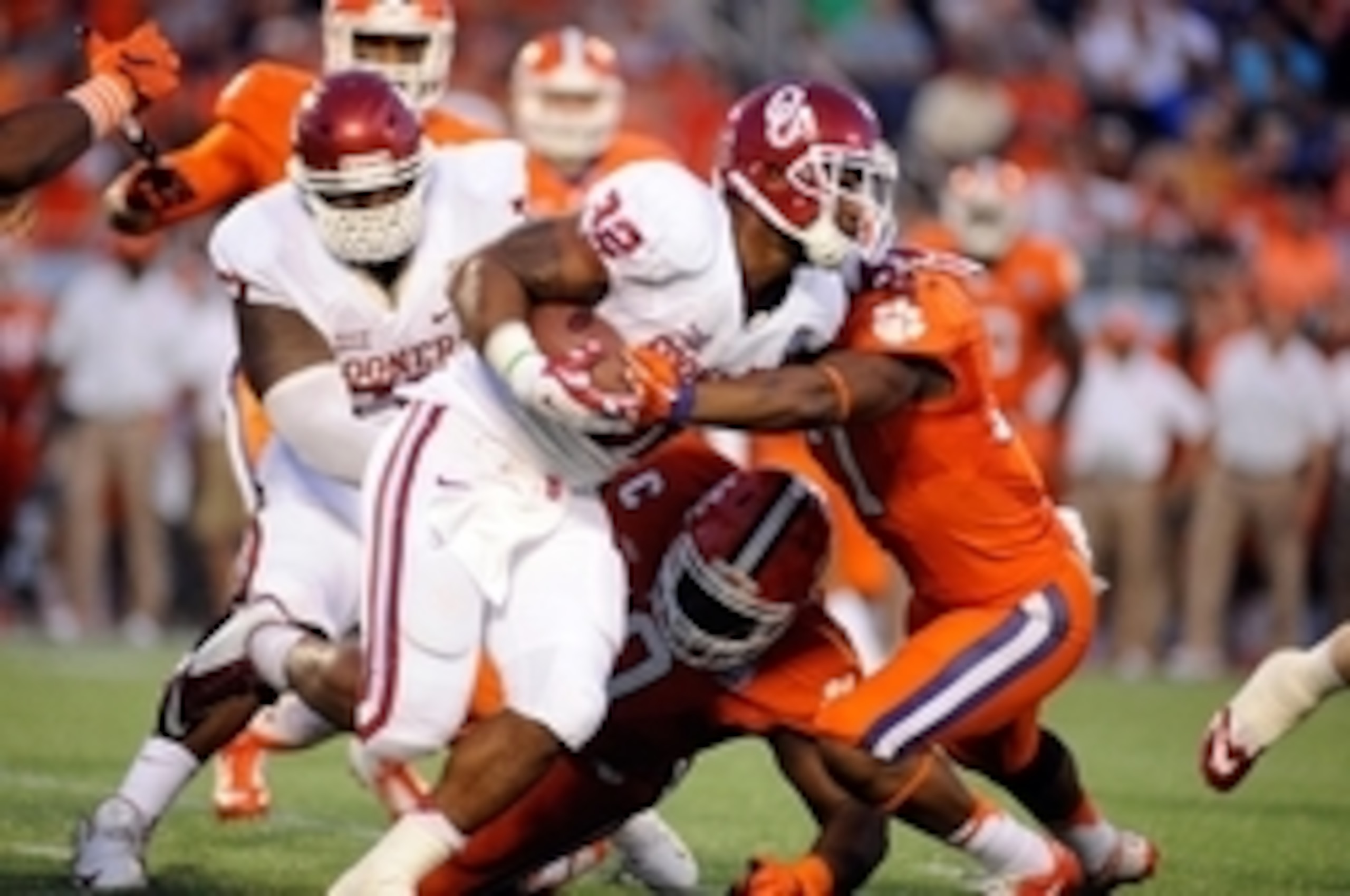
Pro comparison: Jerome Bettis (retired)
He's only had a single college season, one that went far better than expected, but after Samaje Perine had the best year for an Oklahoma running back since Adrian Peterson, it's hard not to think about what kind of pro player this bruising sophomore could be.
Jerome Bettis seems like a good fit, not just because both players are 5'11" and have played at more than 240 pounds, but both have also run with the same kind of fire and unstoppable motor, enabling them to be workhorses.
Bettis carried the ball more than 300 times in five different NFL seasons, finishing with more than 13,000 rushing yards in his Hall of Fame career. Perine emerged from a crowded backfield at Oklahoma in 2014 to carry it 263 times in 13 games, with five games of at least 25 touches.
Eric Striker, LB, Oklahoma
22 of 25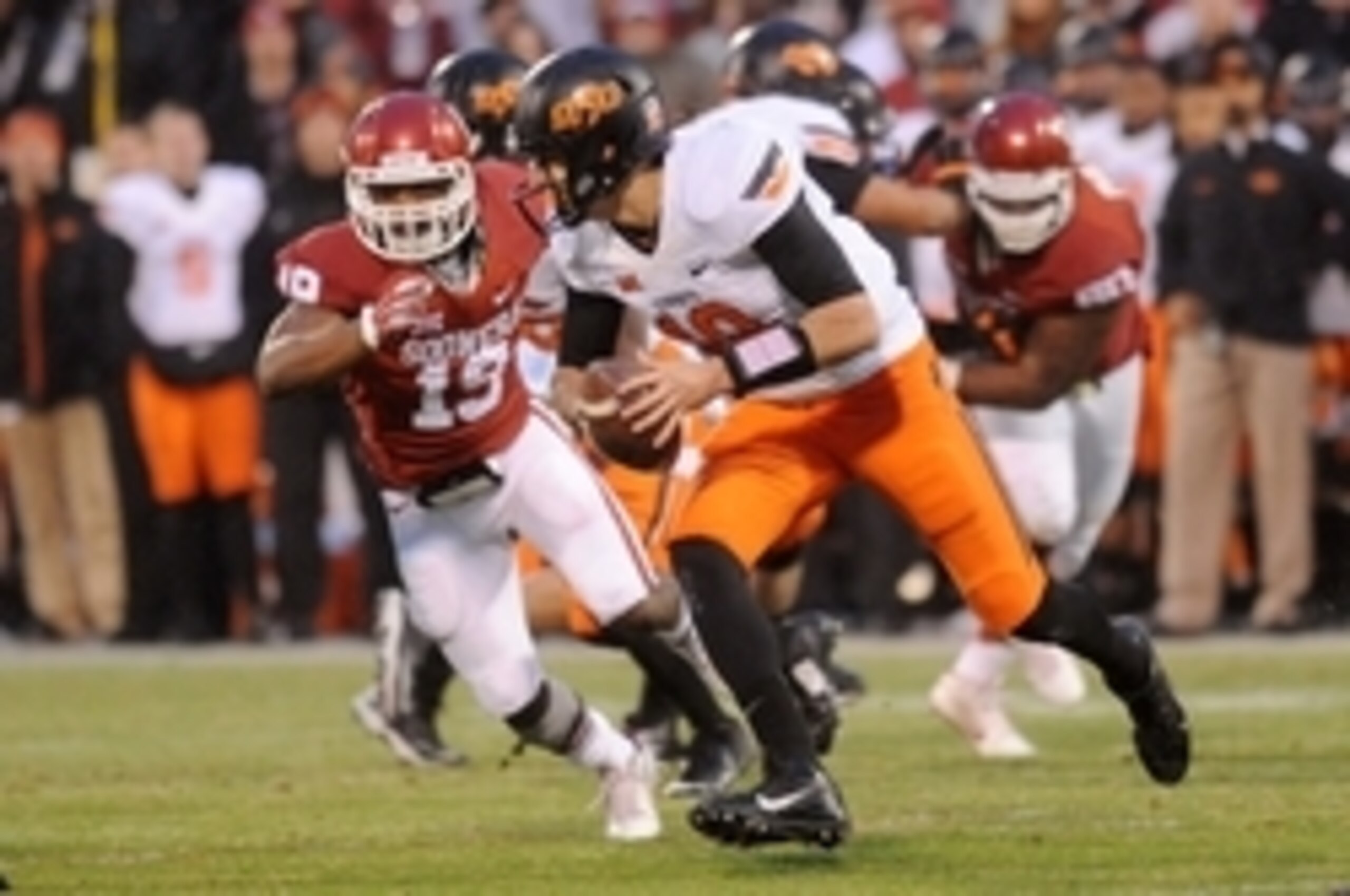
Pro comparison: Roy Williams (retired)
They may not play the same position, but current Oklahoma linebacker Eric Striker has reminded coach Bob Stoops of one of his best defensive players ever. Roy Williams was a safety for Oklahoma in 2000-01, though as a nickel back he frequently played a hybrid role as a linebacker.
Striker has done it the opposite way in his three seasons, starting at outside linebacker but regularly ending up in pass coverage in what Stoops called "out there, where a lot happens and he's involved in it a lot," per John Shinn of The Norman Transcript.
At 6'0" and 221 pounds, Striker probably fits more as a safety or rover at the next level, another reason he compares favorably to Williams.
Deshaun Watson, QB, Clemson
23 of 25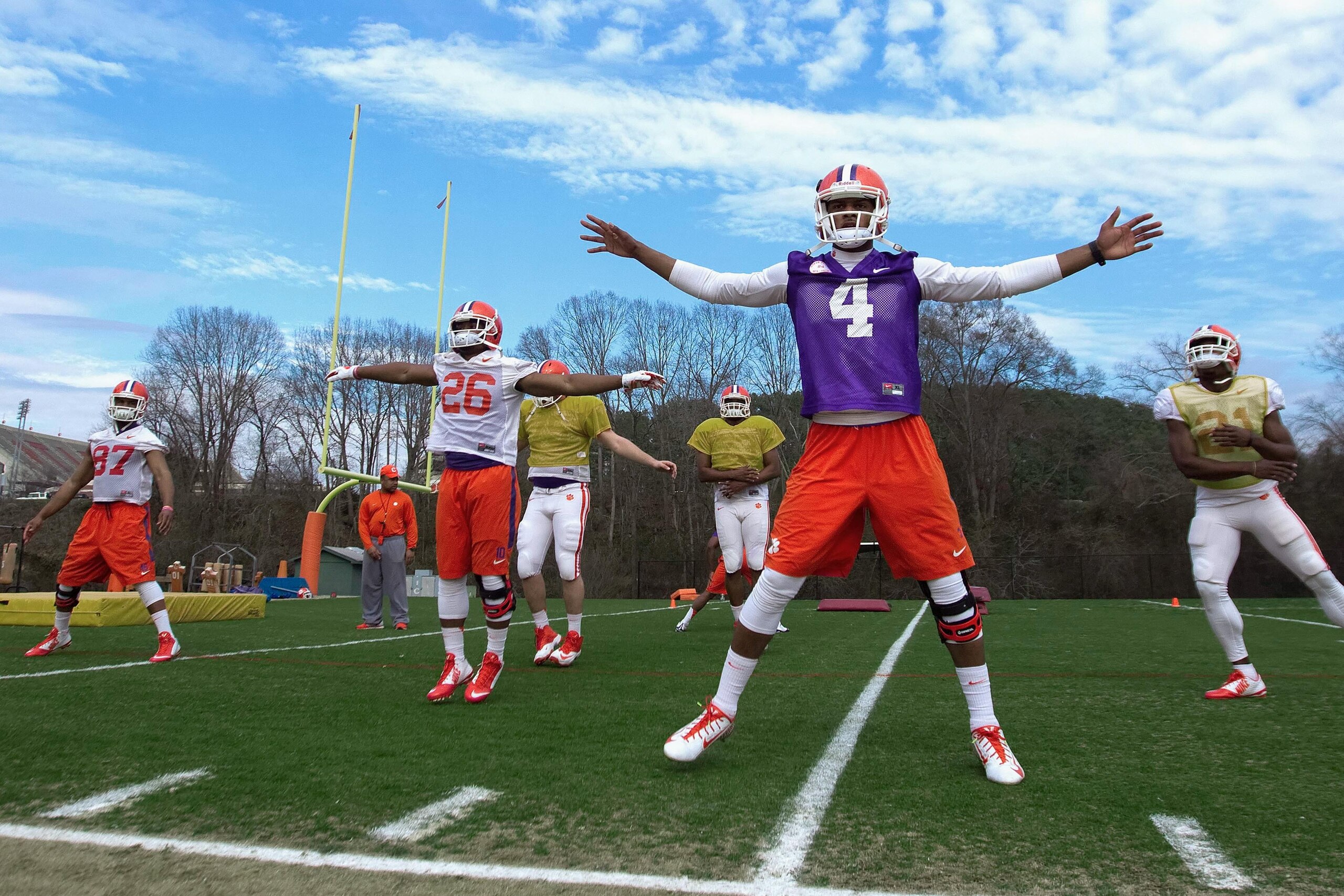
Pro comparison: Robert Griffin III, Washington Redskins
Before you ask, no, this comparison is not based on both players' propensity for getting injured, at least not directly. It's just a coincidence that college's closest thing to Robert Griffin III since he won the 2011 Heisman at Baylor is a quarterback who appeared to be unstoppable when he was able to stay on the field.
Both were insanely accurate in college, as Watson completed 67.9 percent of his passes for 14 touchdowns and two interceptions, while Griffin's Heisman-winning season saw him complete 72.4 percent for 37 touchdowns and only six picks. Each also showed great elusiveness when tucking it, with Watson scoring five touchdowns on 63 carries while Griffin scored 10 times in 2011.
Griffin posted similar numbers during his NFL rookie season in 2012, both as a passer and as a rusher, and only major knee injuries and their lingering effects have prevented this from continuing.
The hope is that the same fate will not befall Watson, who last year missed time because of a broken hand and a pair of knee injuries, the last of which required surgery and kept him out of spring ball.
D'haquille Williams, WR, Auburn
24 of 25
Pro comparison: Alshon Jeffery, Chicago Bears
It's difficult to accurately peg what kind of NFL player D'haquille Williams could be with such a limited sample size to look at. A junior college standout prior to his time at Auburn, last season Williams averaged more than 16 yards per catch but had only five touchdowns in 10 games. Injuries knocked him out of two games, and he was also suspended for the Tigers' bowl game.
Playing in a run-first offense, Williams didn't get many opportunities to shine, though that figures to change in 2015 as Auburn goes with Jeremy Johnson and his strong arm at quarterback. Given the chance to do more in the attack, Williams will start to resemble another former SEC receiver who needed more opportunities to make his presence felt.
Alshon Jeffery had 46 catches as a freshman for South Carolina in 2009, then exploded the following season for 88 catches, 1,517 yards and nine touchdowns.
Scooby Wright, LB, Arizona
25 of 25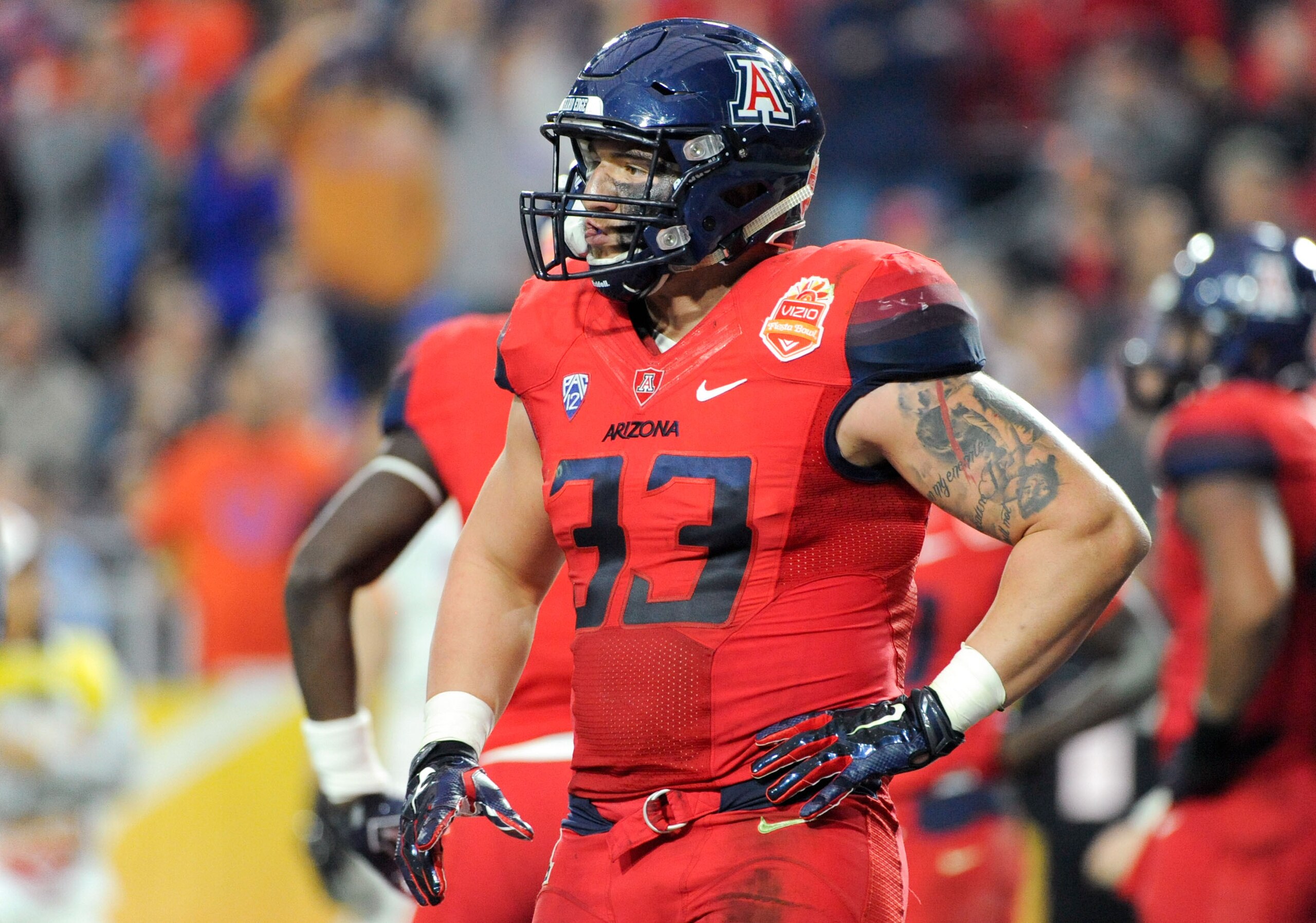
Pro comparison: Brian Urlacher (retired)
An unheralded recruit whose only FBS offer was from Arizona, Scooby Wright has defied the experts in his two college years to rise to his place as the nation's top defensive player. Last season, Wright won the Bednarik, Lombardi and Nagurski awards and led the country in several defensive categories.
Yet entering his first year of draft eligibility, NFL Draft Scout has him as only the third-best inside linebacker in the 2017 class, and many 2016 mock drafts don't include him as a first-round selection.
It also took Brian Urlacher a while to get the respect of draft experts and scouts while at New Mexico, where, like Wright, he played in the middle of a 3-3-5 alignment. Urlacher eventually became a first-round draft pick and had a monster NFL career for the Chicago Bears.
Follow Brian J. Pedersen on Twitter at @realBJP.

.jpg?w=2560 "Mahomes Told Teammate to Leave Meeting")
.jpg?w=2560 "5 Teams Eyeing Jonathan Taylor")


.jpg?w=2560 "NFL investigating Eagles")
.jpg?w=2560 "Jonathan Taylor Landing Spots 📍")