
2015 NFL Draft: The Most Important Trait to Have for Every Position
With the NFL draft on the horizon, it’s a good idea to take a look at the most important traits of each position and which prospects best exemplify those qualities from the 2015 class.
One of the best things about football is the chess match that goes on between two teams. And like chess, each position offers its own unique set of traits that help them to succeed.
I’ve had the opportunity to play football at every level of competition before spending the years after my football career scouting draft prospects.
Bringing these experiences together, I’ll break down why these traits are more important than others. In addition, I’ll provide names of prospects to keep an eye on for this year’s crop of potential rookies.
Quarterback
1 of 11Trait: Intelligence
When it comes to quarterback play in the NFL, it’s better to have a quarterback with an average arm and elite intelligence rather than an elite arm and average intelligence.
Strong-armed quarterbacks have come and gone in the NFL with names like Jim Druckenmiller, JaMarcus Russell, Ryan Leaf and Kyle Boller, but it’s often the less physically talented and more mentally gifted guys who end up thriving in this league.
There’s no question that intelligence trumps all other traits when talking about the quarterback position, which is also why it’s so difficult to assess a quarterback’s true potential in the NFL.
The Wonderlic test is the NFL’s version of an IQ test, but it is not known to be very predictive of NFL success. This is because football intelligence is nothing like the questions asked on a 100-question exam.
2015 prospect that best exemplifies this trait: Jameis Winston, Florida State
According to one team’s personnel man, via Bleacher Report’s own Mike Freeman, Winston could be “the smartest player I've ever interviewed.”
In that same piece, Freeman described a story where a scout was so impressed with Winston’s knowledge of X's and O's that the scout said, “There was a moment where we kind of looked at each other and said, 'Oh, OK, wow.'"
According to Freeman, Winston is constantly being compared to Peyton Manning in terms of football intelligence. That’s quite an honor considering Manning’s brain is widely considered as one of the most dangerous weapons in football.
While we’re on the subject of Manning, he offers the best example of why intelligence is the most important trait a quarterback can have. In fact, it’s darn near the only trait left in Manning’s arsenal these days.
Running Back
2 of 11Trait: Elusiveness/break tackles
There are several critical traits required to play running back. Speed, power, vision and the list goes on. But the most valuable trait a running back can possess is the ability to evade defenders and shed tackles.
Breaking tackles can be the product of power, but it can also be achieved with speed and balance.
Many people tend to think speed makes a running back the most dangerous, but this is merely just a useful tool. Some of the fastest running backs to play in this league never ended up becoming the best.
Powerful backs are also important and can contribute to a player’s ability to break tackles, but this tool is not as vital as overall elusiveness.
Let’s just think about some of the greatest running backs in history and what they all had in common—their ability to make something out of nothing and create offense on their own.
Barry Sanders serves as a perfect example of a running back who could go down as arguably the best running back to ever play the game, yet his only elite trait was really his ability to avoid and shed tacklers at will.
Sanders wasn’t overly fast, big or strong, but he managed to become one of the hardest guys in NFL history to tackle—nor was Sanders a good blocker or receiver. This shows you what the elite version of this trait can produce even when the rest of his game is mediocre at best.
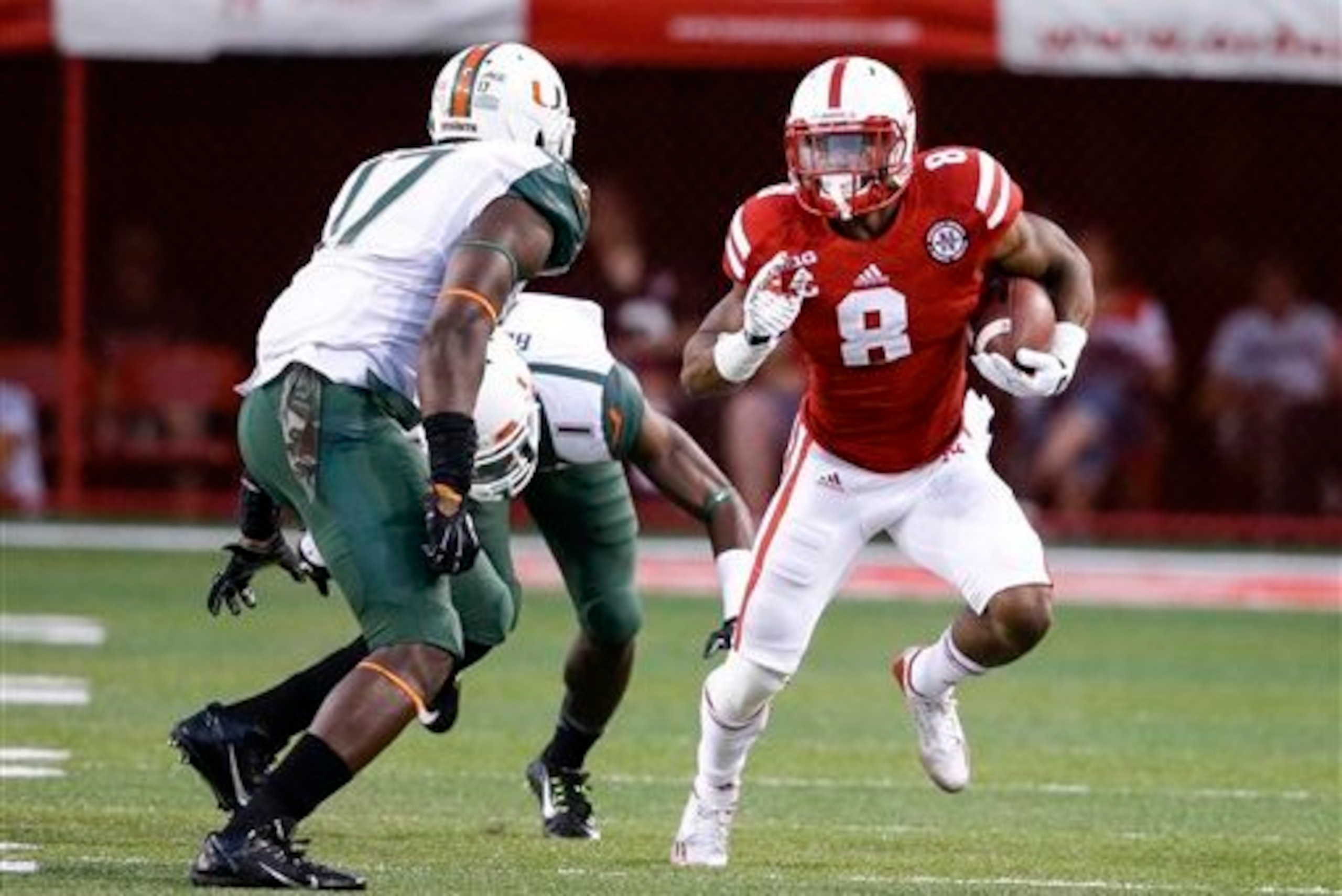
2015 prospect that best exemplifies this trait: Ameer Abdullah, Nebraska
Nebraska running back Ameer Abdullah "is one of the more elusive and versatile backs in this class," wrote ESPN's Steve Muench and Kevin Weidl.
According to the National Football Post: “Abdullah’s main strength is being able to bounce off of tacklers and run through the resulting holes. Not many backs can avoid getting stopped when three different defenders are trying to wrap you up, but Abdullah makes it look easy.”
I couldn’t agree with this more. This is why I expect Abdullah to be one of the best running backs to emerge from this draft class.
Wide Receiver
3 of 11Trait: Focus
The NFL is a big-play league and wide receivers are the position most counted upon for teams to generate those big plays. However, trying to determine the most important trait for an NFL wideout is not that simple.
Obviously a receiver has to have some ability to catch the ball and either the size or strength to get separation from the defender. But what trait can turn an average athlete into a star receiver?
Focus is a critical trait for the receiver position because it ties into so many aspects of what he needs to do during a game. Focus is what allows him to catch a ball in traffic before getting upended by a defender.
Focus allows for him to understand where he needs to be on each play call and how to manipulate the defender at the line of scrimmage. Focus is also what helps a receiver make those impressive sideline catches where the toes barely scrape the sideline in acrobatic fashion.
It’s a key trait involved in tracking a deep ball into your hands with the game on the line and an opponent closing in.
Speed and size are always great qualities to have, but true talent at the position will come when a prospect can demonstrate a high level of focus in various ways it can manifest itself at the position.
2015 prospect that best exemplifies this trait: DeVante Parker, Louisville
He’s not the biggest or the fastest receiver prospect in this draft, but one of the reasons I think DeVante Parker could end up being the best receiver drafted this April is because he appears to demonstrate elite focus.
Parker’s movements are deliberate and always seem impressively controlled.
I’ve mentioned this a few times on Twitter because there are several similarities—but Parker reminds me more of Jerry Rice than any receiver I’ve seen. Keep in mind, this is in no way a suggestion that he is going to have the career Rice had, but it does say something about what he brings to the table.
Like Rice, Parker runs his routes sharply and shows the smooth body control to catch the ball while the rest of the body carries on uninterrupted.
It’s a weird type of body control where he can run completely straight while his upper body is completely turned sideways to track the ball into his hands.
Focus is a difficult skill to articulate but in a variety of ways you can see it manifest itself in Parker more than any other receiver I’ve watched this year.
.jpg?w=2560 "Titans Colts Football")
.jpg?w=2560 "Chiefs Giants Football")
.jpg?w=2560 "Colts Football")
Tight End
4 of 11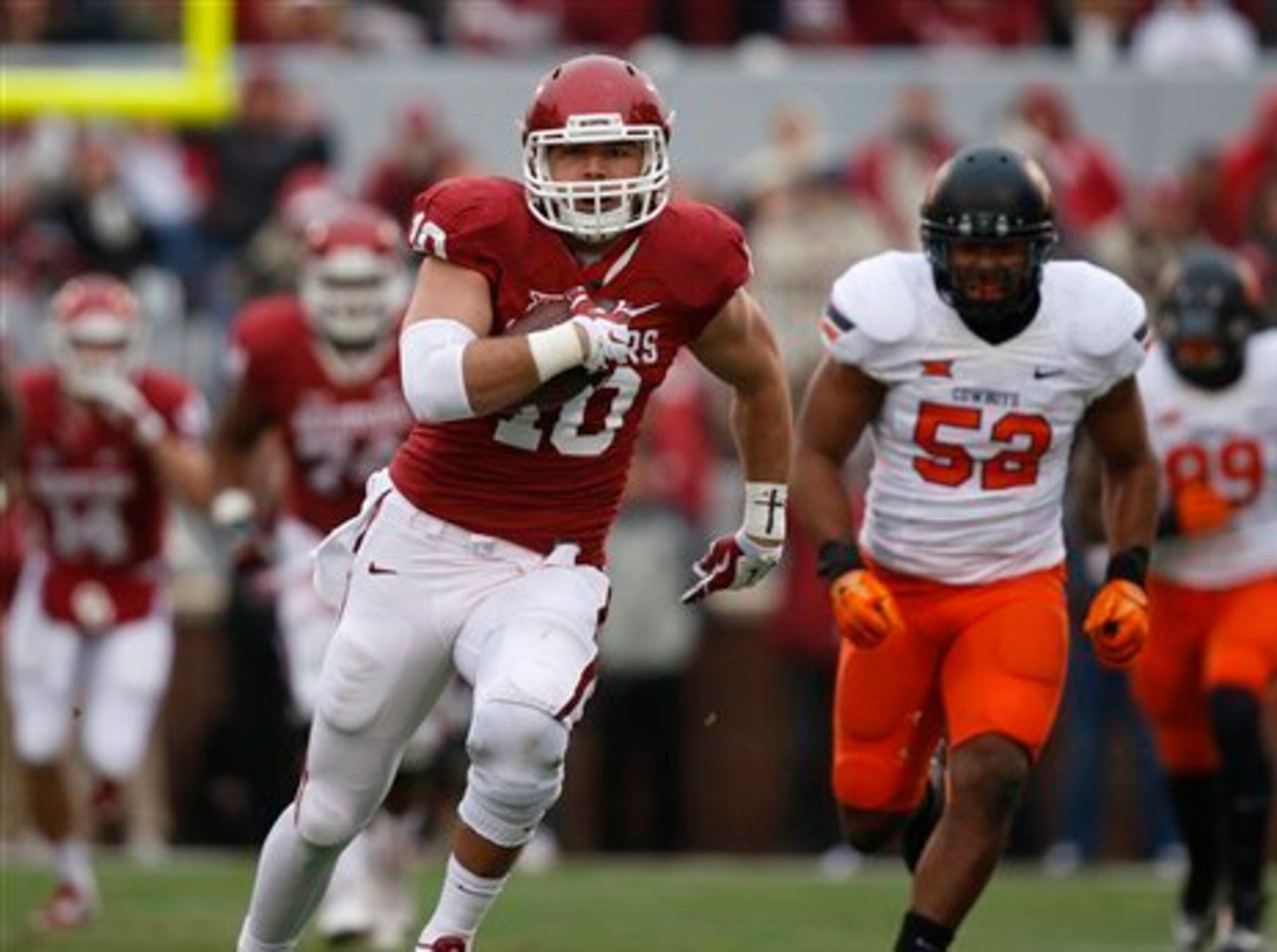
Trait: Versatility
The tight end position is essentially a hybrid between a wide receiver and an offensive tackle. The more a prospect can successfully execute the skills required at each position, the more valuable he becomes.
Rob Gronkowski is the ideal tight end primarily because of his versatility.
Gronk is a physically imposing run-blocker when he needs to be but also has the ability to attack the defense downfield as a receiver.
This is one of the few positions where it might be better to be a jack of all trades and a master at none. But it’s also why there are so few really gifted players at the position.
A tight end doesn’t have to be great at any one thing—instead, his most valuable quality is the very thing that defines his position. Versatility is an absolute necessity for the position.
2015 prospect that best exemplifies this trait: Blake Bell, Oklahoma
The first evidence of Blake Bell’s versatility is the fact that he actually played quarterback at Oklahoma for a few years before switching over to tight end. This means he is likely to be somewhat raw in technique, but his overall awareness for offensive schemes and how to sit down in passing windows should be aided by his experience as a QB.
Bell has the size to be a solid blocker in the NFL but also the speed to get open. Evidence of this can be seen by him ranking as one of the most physically gifted prospects in this draft class.
Offensive Tackle
5 of 11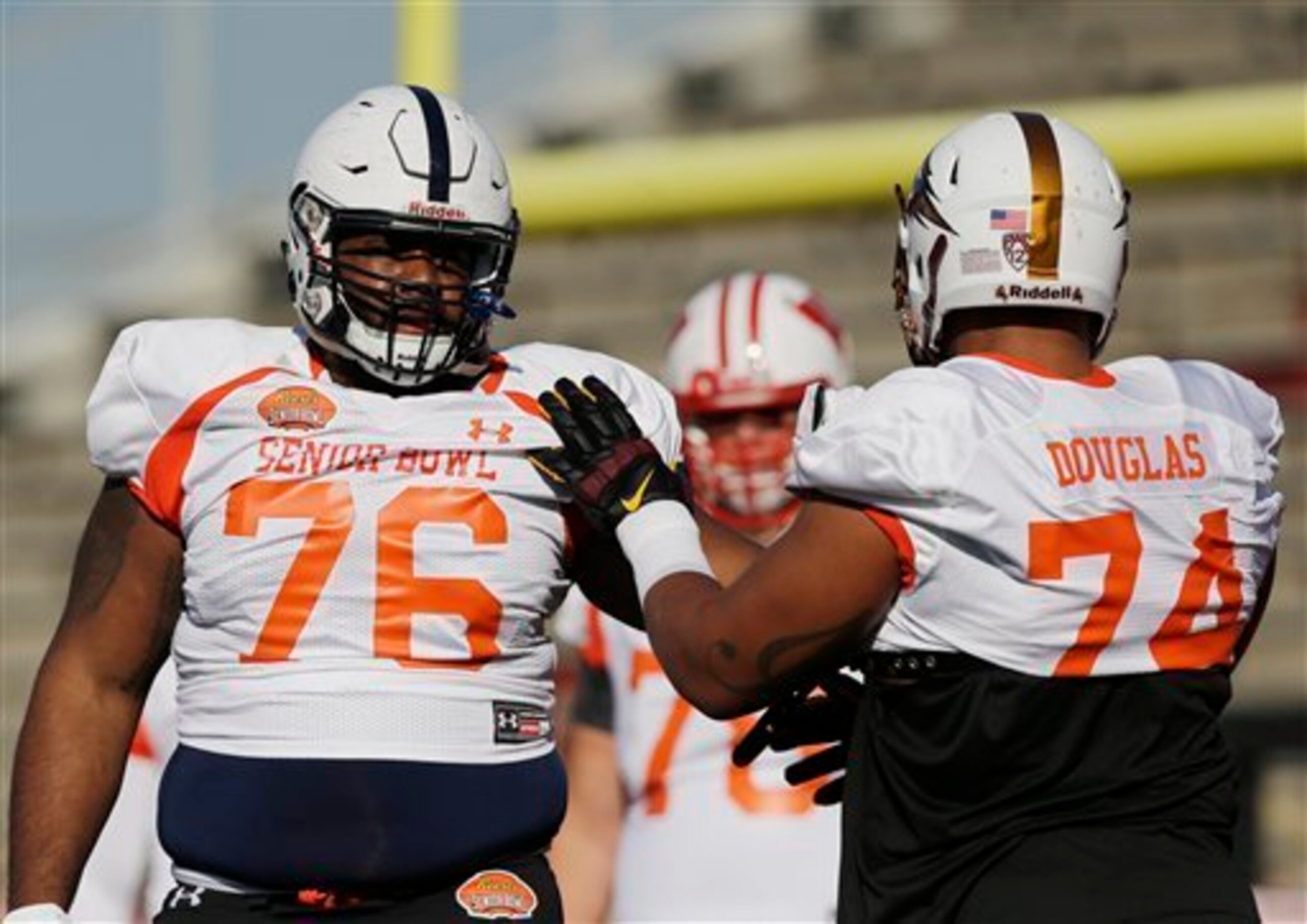
Trait: Anchor
It’s been said of the tackle position that if you can’t anchor, you can’t play the position. This is absolutely true.
Many successful offensive linemen have fallen short in the height, weight and length requirements yet went on to have success at the position. Even slow-footed tackles have found success in the NFL. However, this cannot be said about an offensive tackle who fails at anchoring.
Anchoring is defined as a player’s ability to hold his ground while another opponent physically tries to move him.
Why is anchoring so important? Because if a pass-rusher discovers that he can just bull right over you, he doesn’t even need to have any other moves to dominate you. This is why anchoring is a fundamental trait for the position.
2015 prospect that best exemplifies this trait: Donovan Smith, Penn State
Andrus Peat of Stanford is nearly tied with Smith in terms of anchoring against a power rush. But when I studied tape a little closer to break the tie, Donovan Smith stood out a bit more in this particular area.
To start with, Donovan Smith is one of the biggest and most physically imposing offensive tackles in this draft, measuring in at 6’6” and 341 pounds at the combine.
Smith is projected to be drafted in the third or fourth round this year, according to CBSSports.com. If he lasts that long, I predict he’ll be a steal.
During the Senior Bowl, Smith stood out to me more than any other offensive tackle. He constantly looked like one of the best blockers during one-on-one pass-protection drills, displaying incredible strength and the athleticism to keep up with a quicker pass-rusher.
Then, against Nebraska’s Randy Gregory, Smith showed off his impressive array of abilities while completely destroying one of the most highly touted edge-rushers in this draft class using his strength and dominating size.
Interior Offensive Line
6 of 11Trait: Leg drive
Anchoring is extremely important for both an offensive guard and center. However, it’s less important than at the tackle position because defensive tackles don’t generate the momentum that edge-rushers can because they’re operating in a condensed space.
In other words, edge-rushers get a running start to bull rush offensive tackles, whereas guards and centers can control a defensive tackle right at the snap of the ball.
The true value of an offensive guard generally comes in his ability to create holes in the running game. The best way to create holes for runners is to have the physical strength and willingness to move your opponent out of the way.
You can see this value in Mike Iupati, who left the 49ers this year to join the Arizona Cardinals. For years Iupati was perhaps the most important contributor in the 49ers’ dominating running game.
This is one of the many reasons why leg drive is the most valuable trait to look for in an offensive guard or center.
Leg drive incorporates a combination of leverage, power and effort into a vital yet rare skill—and when you find a player capable of doing this to opponents consistently, you should value him highly. Conversely, guards who struggle with this skill should not be overvalued. This single trait is likely what will truly separate a guy from the pack.
With all of the spread offenses in college football, this trait is becoming increasingly hard to find when scouting prospects. In addition, offensive linemen in general seem to be losing the discipline and desire to finish their blocks or play till the whistle blows. This can and does hurt the value of the position.
2015 prospect that best exemplifies this trait: Brandon Scherff, Iowa
Brandon Scherff played offensive tackle most of the time while at Iowa, but many personnel guys project him to be a much better guard—I tend to agree with this.
Scherff excels at driving his opponents backward and makes it a healthy habit. The tape of the other top guards in this draft tends to show guys who are a satisfied with just getting in the opponent’s way rather than going that extra mile to move them out of their spot. Scherff is not one of these players.
As mentioned earlier, these traits are not to be taken for granted, especially when they come from a guy who also happens to be one of the more physically gifted blockers in years, though that aspect of his game is often overlooked because his style of play is rarely pretty.
Defensive Tackle
7 of 11Trait: Motor
What many people don’t realize is one of the most tiring things in football is trying to move a 300-pound lineman out of the way on every given snap. Not only does this take strength, but the primary reason a defensive tackle produces in the NFL is because of a relentless motor.
There’s a long list of talented prospects with all of the physical gifts in the world but fail to produce. Just look at Albert Haynesworth when he’s motivated versus once he lost his motivation. The difference there is the difference between one of the best defensive players in the NFL and a guy who doesn’t even belong on an NFL roster.
Aaron Donald of the Rams showed us how valuable a motor was when he dominated his rookie year with nine sacks in 12 starts despite being undersized at 285 pounds.
One of the better defensive tackles of the '90s was John Randle of the Vikings. He was also undersized for the position, but his motor is what made him so great.
2015 prospect that best exemplifies this trait: Leonard Williams, USC
There are a lot of reasons Leonard Williams is widely considered the best defensive prospect in this draft, but one of the more underrated traits he possesses is a great motor.
Williams is rarely seen taking a play off and makes a habit of giving maximum effort. This is why he ranks as the most productive interior lineman of this draft class, according to my research.
Edge
8 of 11Trait: Closing speed
There are 40-yard dash times and then there’s closing speed. Though a fast 40 can be an indicator of good closing speed, it’s important to understand that these two things are not the same.
Closing speed for edge-rushers often involves turning a corner and bending around a massive offensive lineman in pursuit to closing in on a quarterback before he throws the ball. This path is rarely a straight line and it’s rarely achieved without getting around or over a few obstacles on the way. It also requires tracking down a quarterback who often is very capable of out-running or evading most defenders.
This means that several overlapping skills are required to have good closing speed—skills such as agility, balance and short-area quickness.
There are several pass-rushers who can move blockers and get around them, but that often only ends with a quarterback hurry rather than a sack. Elite closing speed is the difference between a sack and a hurry in the NFL.
2015 prospect that best exemplifies this trait: Vic Beasley, Clemson
Vic Beasley is not a perfect edge-rusher and he might not even be the best in this class, but if you’re looking for a guy with elite losing speed, he is certainly the best available at that valuable trait.
It’s this trait that has allowed Beasley to be one of the most productive pass-rushers in the last four draft classes. Beasley has amassed 33 quarterback sacks in 48 games at Clemson and he has done it mostly with his incredible speed and quickness. He is also very difficult to escape in pursuit.
Linebacker
9 of 11
Trait: Awareness
Awareness is the most important trait for a linebacker, because speed and strength mean nothing if the player fails to anticipate and read the keys in front of him.
Guys who may not run fast 40 times could also be incredibly slow at seeing the play develop—whereas a player who runs a slow time can supplement that with fast reactions and the ability to beat blockers to the point.
We’ve seen numerous examples of this with recent guys like Vontaze Burfict and Chris Borland, who tested slow at the combine but play at an entirely different speed.
2015 prospect that best exemplifies this trait: Paul Dawson, TCU
There are many linebackers in this draft class who are better athletes than Paul Dawson but none who possess the capabilities to sift through traffic and find his way to the ball-carrier like he can.
This type of ability requires elite awareness.
Dawson was criticized after he ran a 4.93-second 40-yard dash at the combine and jumped only 28 inches for his vertical.
Nevertheless, Dawson managed to be one of the most productive linebackers in this draft by utilizing his outstanding instincts.
Cornerbacks
10 of 11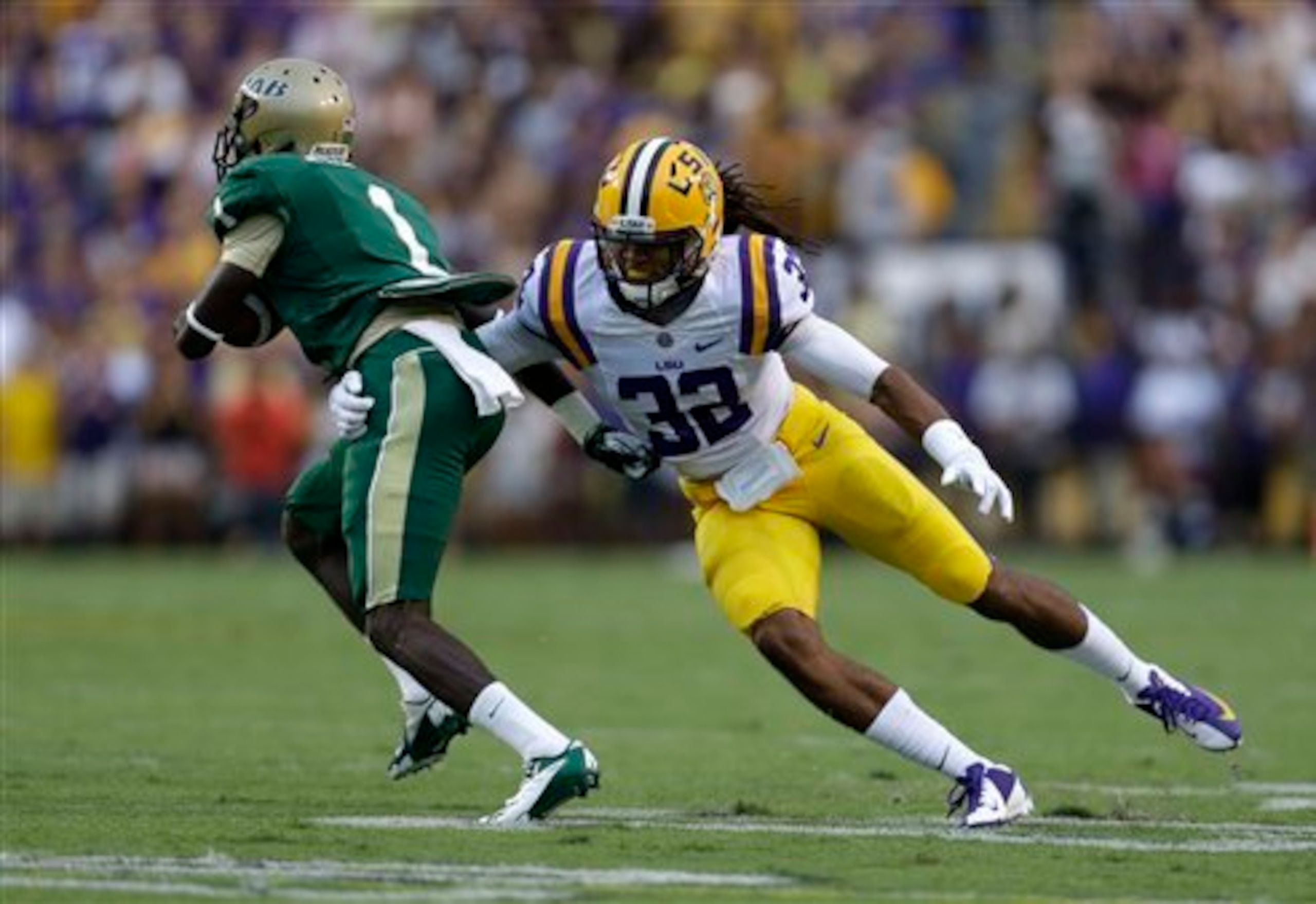
Traits: Foot quickness
I’ve noticed over the years that draft analysts tend to overvalue a fast 40-yard dash time, especially when dealing with cornerbacks. However, something that is more important than a fast 40 is quick feet.
Quick feet can be tested in a three-cone drill and short shuttle, but the best way to truly identify this trait is through watching film of the prospect.
Quick feet allow cornerbacks to change directions suddenly, which is critical in man coverage and breaking on balls. Corners have one of the toughest jobs in football because they’re asked to mirror and run with some of the most freakish athletes in the world and they have no idea which direction they’re going in.
If you had to choose between a cornerback with top-notch change of direction or top-notch straight-line speed, you’ll likely have more success with a guy who has better change of direction.
Cornerbacks are beaten far more often from their lack of suddenness and change of direction rather than from a lack of pure straight-line speed. A perfect example of this is Richard Sherman.
Sherman is widely considered one of the best at the position, yet he only ran a 4.56 at the combine, which is very average for the position. The 2015 class of cornerbacks averaged 4.5 seconds in the 40-yard dash.
As we well know by now, Sherman is far from just an average cornerback. We can get a sense of his quick feet with his 6.82 three-cone time. The average time for this drill in 2015 for draft-eligible cornerbacks is 6.95.
2015 prospect that best exemplifies this trait: Jalen Collins, LSU
Many of you are probably wondering how I could pass up Byron Jones for the quickest feet considering the way he tested at the combine and his pro day, but his tape doesn’t quite fit his testing times from what I see.
LSU cornerback Jalen Collins’ quickness shows up on film more than any other prospect I watched this year, so he gets the nod here. This trait alone should help justify a case for Collins to be drafted in the first round of this draft.
Collins not only excels with straight-ahead speed, like when he caught Melvin Gordon from behind, but he also shows incredible change of direction and lateral quickness in a football setting. This helps him stay in the hip pockets of receivers and contest nearly every throw his way.
Safety
11 of 11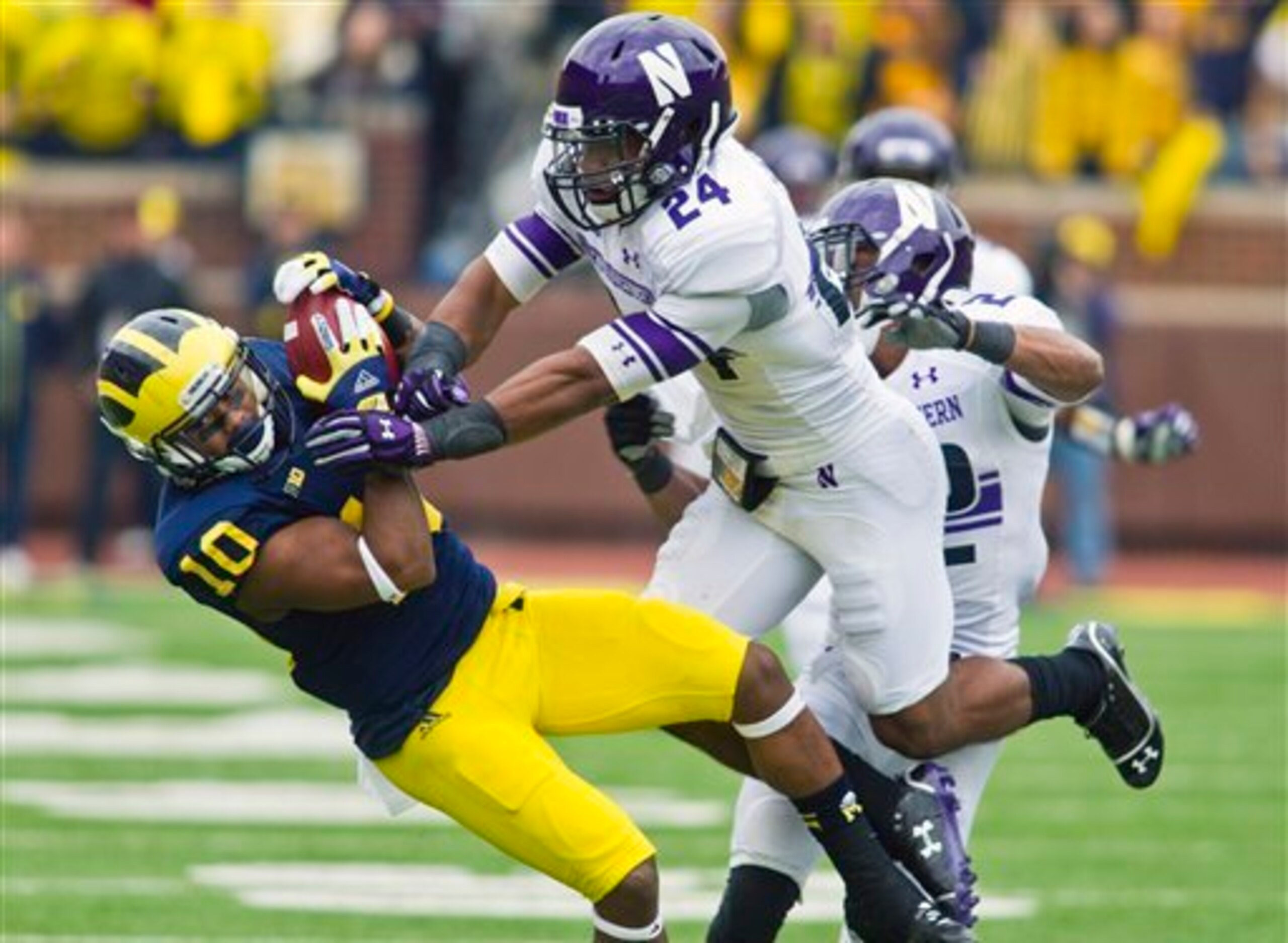
Trait: Anticipation
If you’re looking for a safety who has great speed and size, you might have fallen in love with a guy like Taylor Mays, who played in Cincinnati for several years. That should tell you that these traits can often steer you wrong in terms of properly valuing the position.
So what is the most important trait for the safety position?
To me, there’s no trait that is more beneficial for a safety than the ability to anticipate. This trait comes in handy when breaking on the ball and reading the offense.
A truly gifted safety, like Ed Reed when he was in Baltimore, can jump a throw before the ball even leaves the quarterback’s hands. This is the product of anticipation.
Anticipation is part instincts and part preparation. Having the speed to help cover ground is important, but not nearly as vital as anticipation.
San Diego’s Eric Weddle ran 4.56 seconds in his 40-yard dash coming out of Utah, but has been one of the best ball hawks in the NFL and also happens to rank as the No. 1 safety at Pro Football Focus.
2015 prospect that best exemplifies this trait: Ibraheim Campbell, Northwestern
I don’t think Ibraheim Campbell will end up being the best safety from this draft class, but he could end up being the most underrated.
Campbell’s ability to anticipate is the first thing that stands out about his tape even though he looks to be an average athlete at best.
Campbell finished third in solo tackles and also led all safeties in this draft class in forced fumbles throughout his career.
Ryan Riddle is a former NFL player who writes for Bleacher Report.
.jpg?w=2560 "Eagles Jaguars Football")
.jpg?w=2560)