
Duke vs. Wisconsin: X-Factors to Watch in 2015 NCAA Championship Game
Even though Kentucky won't be playing in Monday's NCAA tournament championship game, the contest between Duke and Wisconsin offers plenty of intrigue.
The matchup in the middle between 7'0" Wisconsin senior Frank Kaminsky and 6'11" Duke freshman Jahlil Okafor is the main attraction, since they finished first and second, respectively, in the Associated Press Player of the Year (h/t Sporting News) voting. On the wing is a matchup of the two versatile, athletic players who have been each team's driving force in the postseason: Sam Dekker of Wisconsin and Justise Winslow of Duke.
The teams even faced each other during the regular season, and Duke's 10-point win over the Badgers back on Dec. 3 is another element to consider.
But besides these obvious storylines, what are the variables that might be the deciding factors in the game? What underlying issues or less publicized players could make the difference one way or another? We identify six X-factors for the game, including a pivotal player for each team and four other issues that may have an impact.
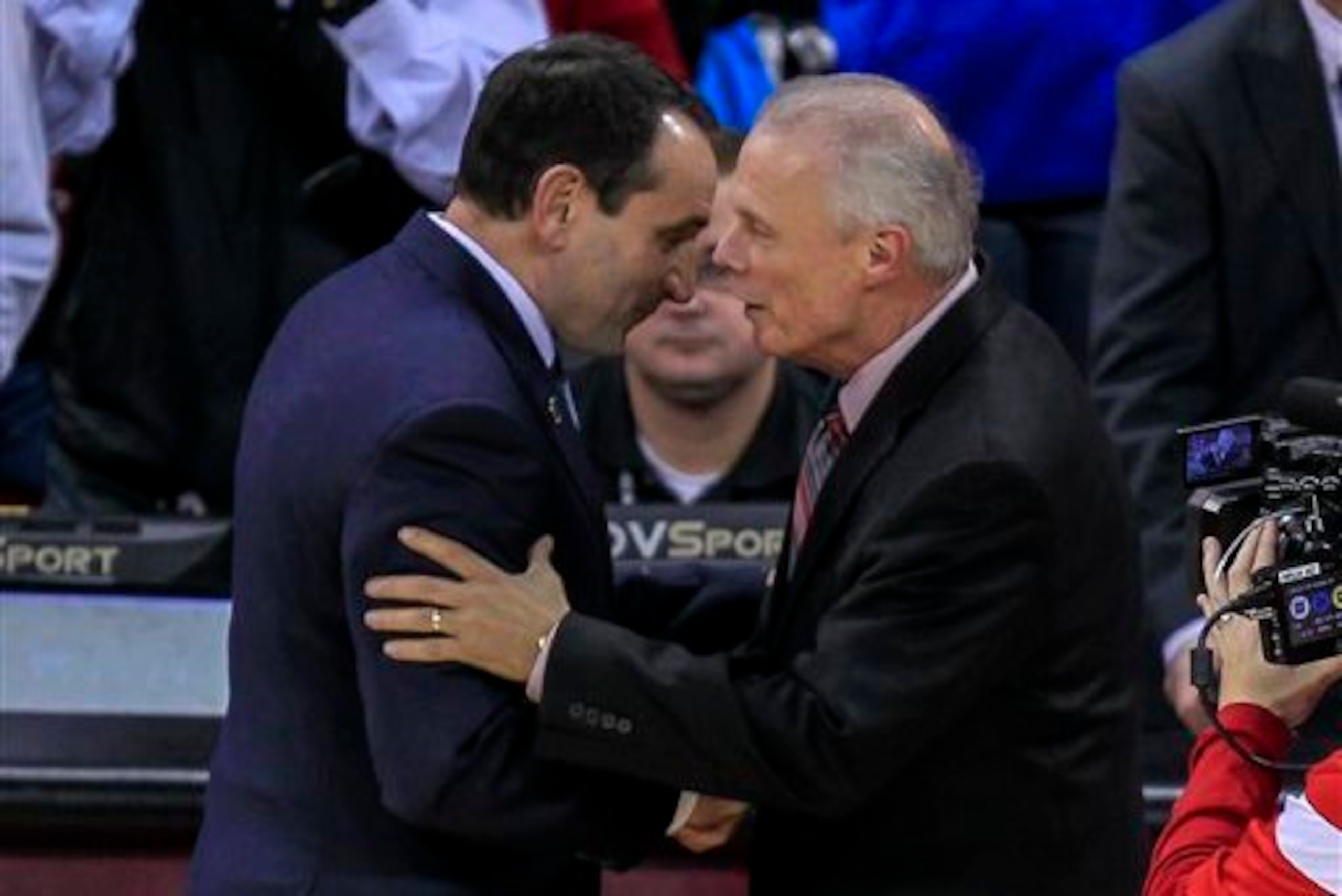
Duke Guard Tyus Jones
1 of 6
Duke center Jahlil Okafor is a first-team All-American, and forward Justise Winslow has been the Blue Devils' postseason star, projected by both NBADraft.net and DraftExpress.com to be the fifth player taken in this year's NBA draft.
However, it is freshman point guard Tyus Jones who provides the best barometer for Duke's success.
The Blue Devils proved they could beat quality opponents without a big game from Okafor when they got by both Utah and Gonzaga even though Okafor failed to score in double figures in either. Two of Duke's best wins this season were road victories over Wisconsin and Louisville, and Winslow scored just five and three points in those games, respectively.
Although Jones is only fourth on the team in scoring, the Blue Devils have seldom fared well against top competition unless he has a solid game.
In consecutive losses to North Carolina State and Miami, Jones scored just 10 points combined, shooting 3-of-15 from the field and 0-of-6 from deep and recording nearly as many turnovers (four) as assists (six). He was 4-of-13 from the field with four turnovers in the Atlantic Coast Conference tournament loss to Notre Dame.
Jones has been a star in the Blue Devils' noteworthy victories, though. When the Blue Devils handed Virginia its first loss of the season, Jones scored 17 points, including nine in the final 10 minutes when Duke overcame an 11-point deficit on the Cavaliers' home floor. He had 22 points in the road win over Wisconsin and 17 in the road victory over Michigan State. In the two victories over North Carolina, Jones totaled 46 points and 15 assists.
In Duke's best game of the season, a 30-point victory over Notre Dame, Jones had just 12 points, but he was 3-of-4 from the floor (including 2-of-3 from three) while handing out seven assists with no turnovers.
Jones had moderate scoring success in the Blue Devils' two most recent tournament games, collecting just 24 total points against Gonzaga and Michigan State. But he totaled 10 assists with just one turnover in those two contests.
Wisconsin Guard Bronson Koenig
2 of 6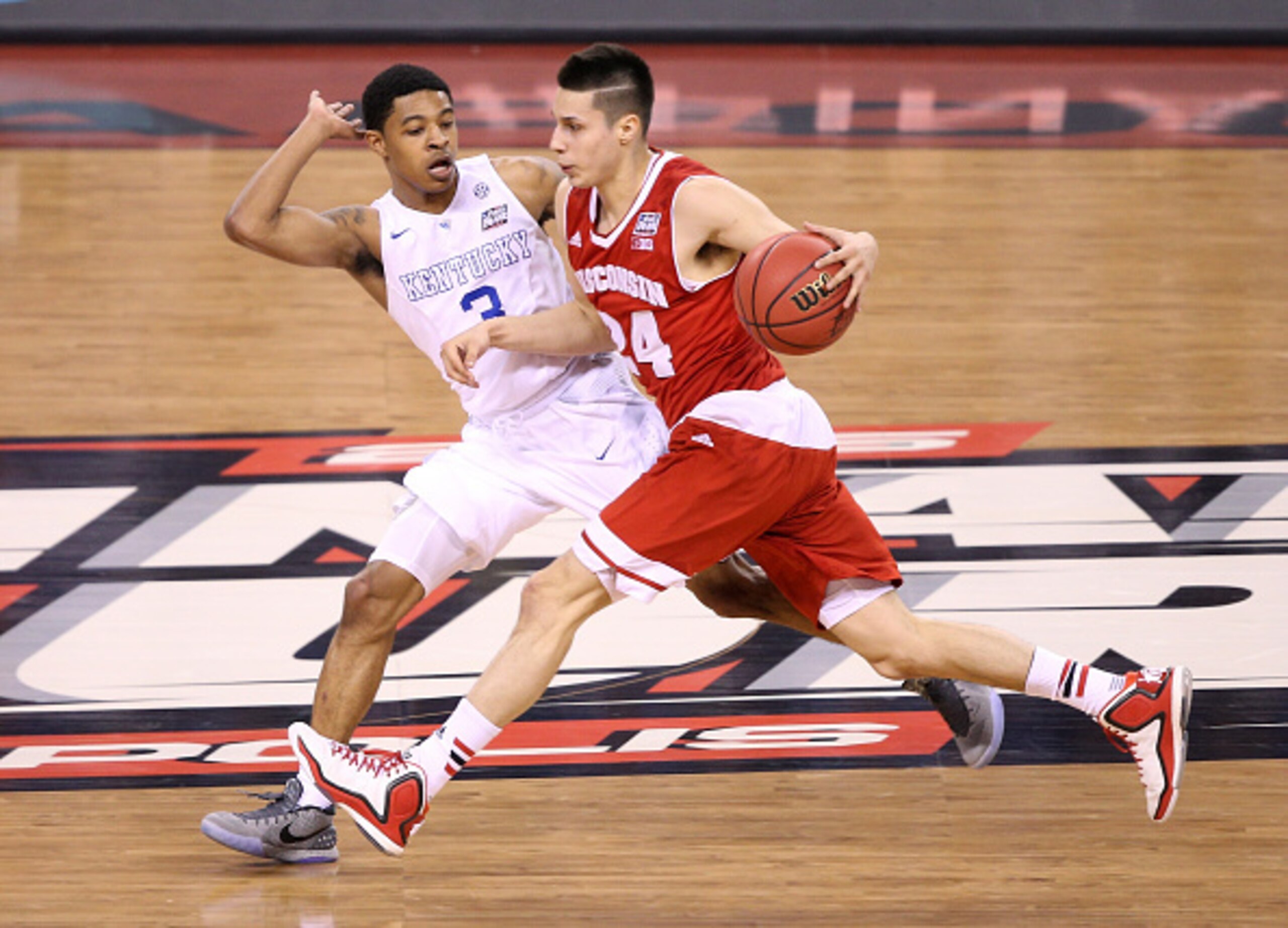
Center Frank Kaminsky and forward Sam Dekker are Wisconsin's stars, and they have been the catalysts behind the Badgers' run to the championship game.
To beat Duke, though, the Badgers will need someone to augment their production. That person could be Bronson Koenig.
Wisconsin is 21-1 since Koenig became the Badgers' starting point guard, replacing the injured Traevon Jackson. Koenig has a knack for making important shots and avoiding the mistakes that lose games.
Koenig's backcourt partner Josh Gasser has taken notice and said (via Jeff Potrykus of the Milwaukee Journal Sentinel), "When we need a big play, he's willing to step up and be the guy. He's grown a lot obviously as a player, but I think more mentally.
His shot just inside the three-point line at the end of the first half produced a tie game in the semifinals against Kentucky. He had a key three-pointer early in the second half, then made two free throws with 13 seconds left in the second half to push the Badgers' lead to four points. Perhaps most important was the fact that he didn't commit a turnover against Kentucky's outstanding defense, preventing the Wildcats from getting out in transition.
Over his past 10 games, Koenig has made 45.7 percent of his three-point shots (21-of-46), and don't be surprised if he makes a three-pointer at a crucial moment in the final on Monday.
Fouls and Free Throws
3 of 6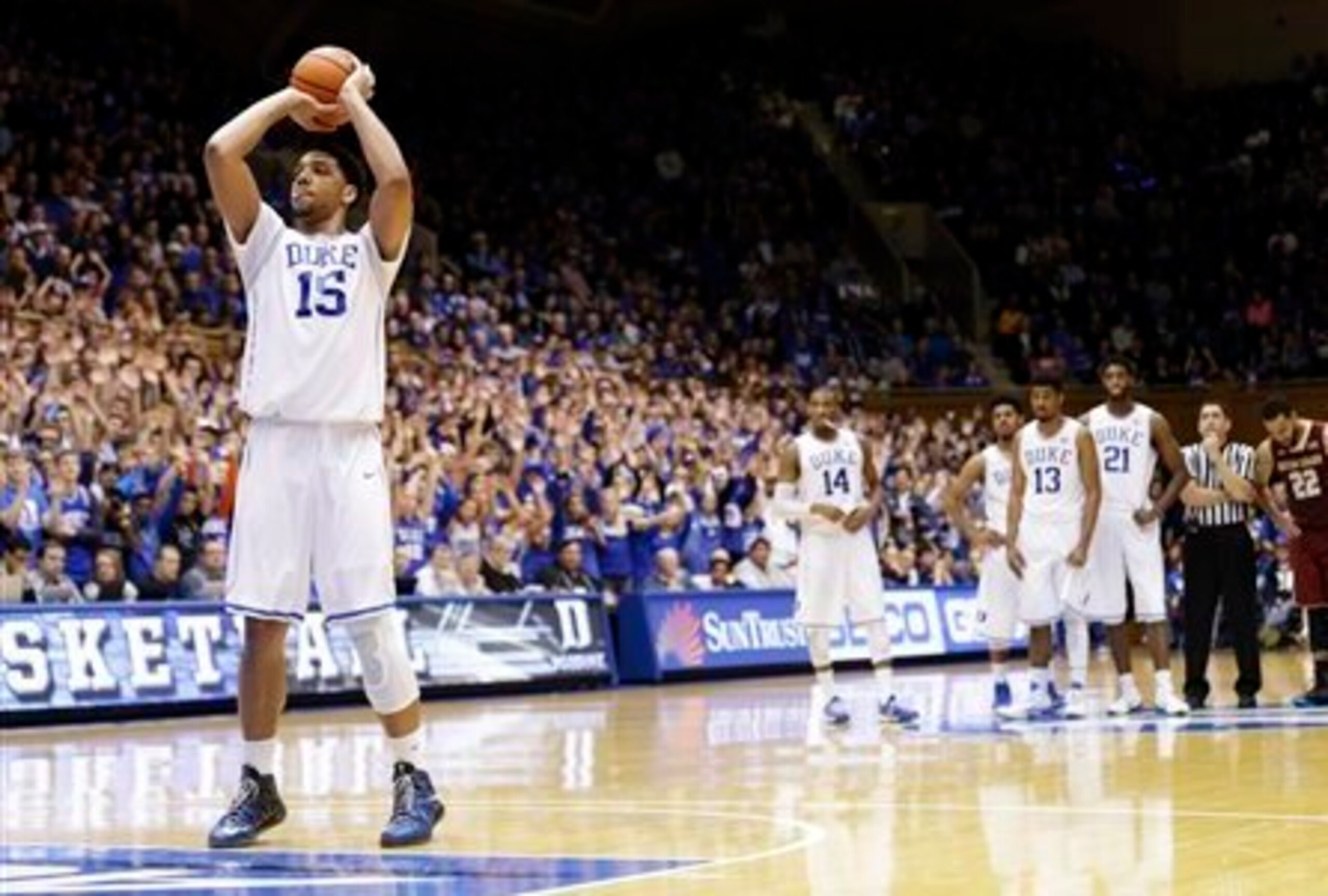
Fouls and free throws could very well be the deciding factors in Monday's game, although it's anybody's guess how those issues will play out.
First of all, officiating will dictate the flow of the game. Whether the game is called close will determine if players get into foul trouble, and both teams suffer significantly if forced to rely on their reserves.
More interesting and probably more influential in deciding the outcome are two related statistics: Several key Duke players do not shoot free throws well, but that may not matter because Wisconsin very seldom fouls.
The Badgers commit an average of just 12.5 fouls per game, the fewest in Division I. As a result, Wisconsin players rarely get into foul trouble and seldom give up free points to the opponent.
But it might not be advisable to avoid fouling certain Duke players. Starting Duke guards Tyus Jones and Quinn Cook are outstanding foul shooters, but Jahlil Okafor, Justise Winslow and Amile Jefferson are not. The latter three rank first, third and fifth, respectively, on the team in free throws attempted, but their free-throw percentages are 51.3 percent, 64.4 percent and 55.4 percent, respectively.
Head coach Mike Krzyzewski took Okafor out in the closing minutes of Saturday's game when Michigan State was forced to foul, and Duke is not the same team when Okafor is on the bench.
Meanwhile, all five Wisconsin starters shoot better than 70 percent from the foul line, and the Badgers shoot 76.6 percent as a team.
Poor free-throw shooting seems to bite a team at the most inopportune times. It caught up to Houston in the 1983 title game and caused Memphis to lose the 2008 championship.
In at least one case, fouls and free-throw shooting were an equalizer. In the 1985 championship game, Georgetown made seven more field goals than Villanova in an era before the three-point shot. How did the Hoyas lose? They made six of eight free throws, and Villanova made 22-of-27.
.jpg?w=2560 "Chiefs Giants Football")

Bench Production
4 of 6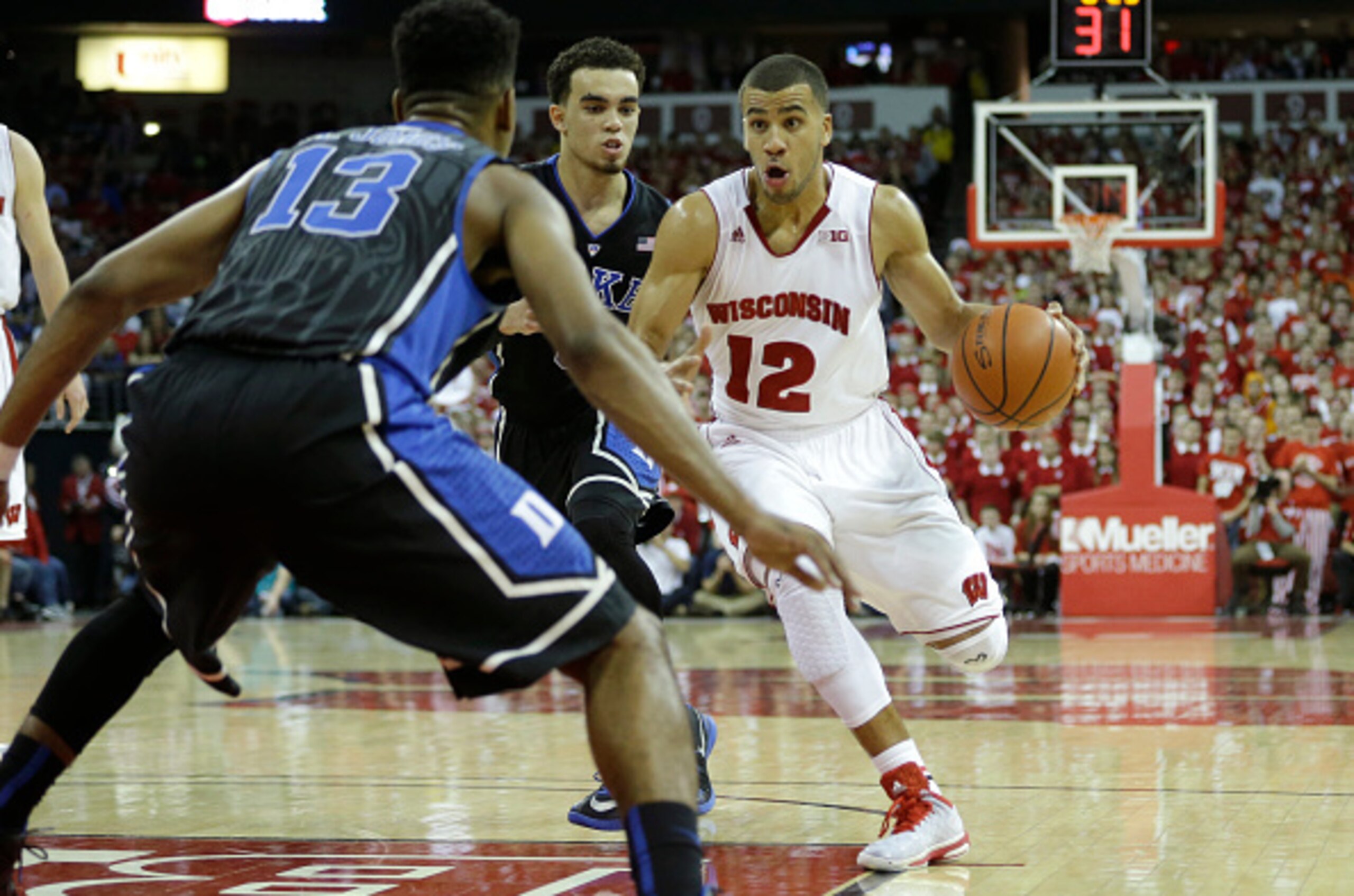
Certainly the starting fives will have the biggest hand in the outcome of Monday's game. But it is often the case in championship games that one or two players off the bench provide a pivotal lift.
In each of the past four NCAA title games, the team that had more scoring from its reserves won the game.
Perhaps the best example of the importance of bench production came in the 2013 championship game. Michigan stayed close in that game only because Wolverines freshman guard Spike Albrecht had the game of his life, coming off the bench to hit four of his five three-point attempts and score 17 points.
However, Louisville won the game because Luke Hancock came off the Cardinals bench to make all five of his three-point shots and score a game-high 22 points.
Duke uses just eight players, and forward Amile Jefferson is usually the only non-starter to get significant minutes. Depth supposedly is Duke's weakness.
However, in the first half of Saturday's semifinal game, Jefferson had a game-high six rebounds, and Duke's bench outscored Michigan State's reserves. Michigan State was supposed to be the deeper team but got just two points from its bench in the first half. That was part of the reason Duke led by 11 points at intermission.
Wisconsin uses only two or three players off the bench, too, but one of them is Traevon Jackson, who was a starter until he suffered a broken foot midway through the season, causing him to miss 19 games. Jackson is the kind of fearless, aggressive player who is apt to make a big play at a critical moment.
Foul trouble could make bench players particularly important.
Whichever team gets bigger and more timely contributions from its bench will gain a sizable advantage on Monday.
Wisconsin Letdown
5 of 6
Wisconsin will have just one day to get its feet back on the ground and get ready for Duke. That won't be easy.
The Badgers spent the past seven days focusing all their energy on Kentucky, and they celebrated the victory as if they had won the championship. Beating previously unbeaten Kentucky, a team that was drawing comparisons to the best in history, merited that kind of elation. But regaining the intensity and focus needed to beat a team as talented as Duke in just 48 hours will be difficult, even for a team as experienced as Wisconsin.
History tells us such letdowns are possible.
In 1983, Houston beat Louisville in a semifinal game between the nation's No. 1- and No. 2-ranked teams. With the hard work apparently done, the Cougars then lost the title game to a North Carolina State team that was seeded No. 6 and had squeaked by nearly every postseason opponent.
In 1985, Georgetown's semifinal game against St. John's was seen as a de facto title game. The then-Redmen had beaten the Hoyas during the regular season and were ranked No. 3 in the country. The No. 1-ranked Hoyas got past St. John's but were upset in the final by a Villanova team that was unranked, seeded No. 8 and had lost twice to Georgetown during the season.
In 1997, No. 1-seeded Kentucky beat No. 1-seeded Minnesota in the semifinals, only to lose to an Arizona team that was seeded No. 4 and had finished fifth in the Pac-10.
On the other hand, Duke showed in 1991 that a team can refocus quickly after a monumental win. Wisconsin's victory over Kentucky was a significant upset, but it was not as surprising as the Blue Devils' 1991 semifinal victory over unbeaten, No. 1-ranked UNLV, which had embarrassed Duke by 30 points in the 1990 championship. The Blue Devils then regained their intensity in time to beat a pretty good Kansas team in the championship game.
Having experienced players like Frank Kaminsky, Sam Dekker and Josh Gasser will certainly help the Badgers refocus on Duke quickly. But emotions are a funny thing. Even head coach Bo Ryan probably doesn't know whether his team can play with the same passion and purpose on Monday that it had on Saturday.
Duke's Perimeter Defense
6 of 6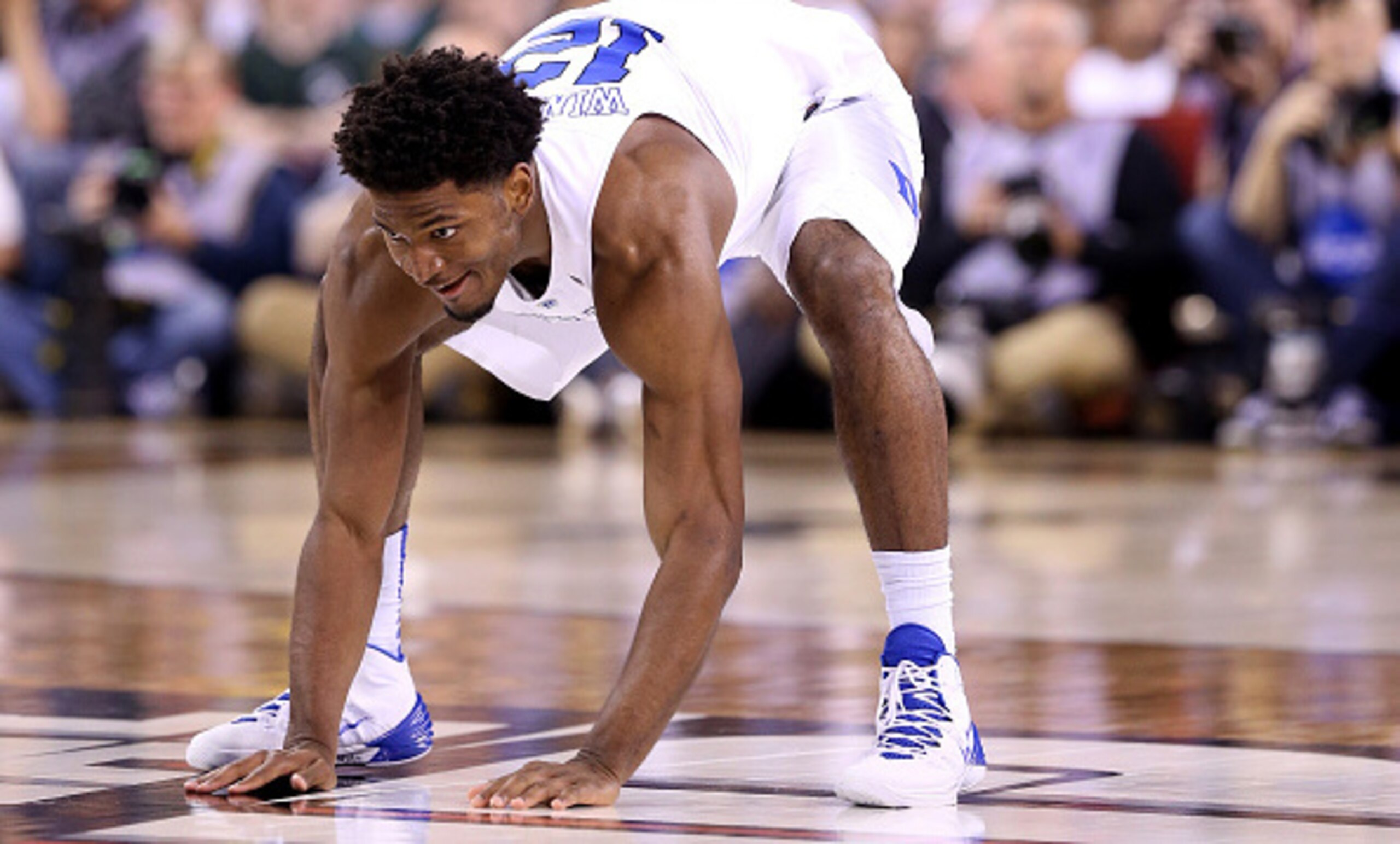
At midseason, Duke was labeled a poor defensive team, and with good reason. Opponents were pumping in three-pointers with ease and penetrating with little resistance, making the Blue Devils' perimeter defense look feeble. The Blue Devils' man-to-man defense was so porous that Mike Krzyzewski went to a zone defense at times, something that had to make his skin crawl.
On Jan. 16, after the Blue Devils' consecutive losses to North Carolina State and Miami, ESPN.com's Eamonn Brennan wrote a story on how Duke's defensive shortcomings could doom the Blue Devils' season.
But something happened over the last few weeks, something some people still are not recognizing: The Blue Devils have become an outstanding defensive team, particularly on the perimeter in the half court. Duke still has some issues with its transition defense, but when it has time to set up its man-to-man defense these days, scoring is a major challenge for opponents.
Just how good that defense has become will be tested by Wisconsin, which may have the most efficient offense in the country. Perhaps more important, every player in the Badgers' starting five can hit three-pointers.
Despite being 7'0", Frank Kaminsky leads the team in three-point shooting at 41.2 percent, and his ability to also maneuver inside will put enormous defensive pressure on Jahlil Okafor, who presumably will start out guarding him. The 6'9" Sam Dekker has made seven of his nine three-point shots in the Badgers' past two games, and 6'7" Nigel Hayes and guards Bronson Koenig and Josh Gasser are capable long-range shooters as well.
But Duke's defense against three-point shooting has been outstanding during the tournament. After Michigan State made its first four three-pointers on Saturday, the Spartans converted only 3-of-16 the rest of the way. Gonzaga, one of the best three-point shooting teams in the country, was only 2-of-10 from beyond the arc against Duke. Utah was 4-of-16, and San Diego State was 2-of-13.
The ability of Duke's perimeter defense to continue its recent efficiency will have a major impact on the outcome of Monday's game.
.jpg?w=2560 "Titans Colts Football")



.jpg?w=2560 "NFL investigating Eagles")
.jpg?w=2560 "Jonathan Taylor Landing Spots 📍")