

History Indicates an All-Wildcats Saturday with Dual-Threats UK, Arizona Rolling

On Saturday night in the Elite Eight, we'll have two instances of the age-old question: What happens when an unstoppable force meets an immovable object?
In the first of the two battles, Wisconsin will bring the most efficient offense in the country, as measured by KenPom.com, up against Arizona's third-most efficient defense. Round 2 will bring about more of the same as Notre Dame's third-best offense tries to topple Kentucky's nation-best defense.
So, what does happen when a top-10 offense faces a top-10 defense at this stage in the tournament?
TOP NEWS
.jpg?w=2560 "Chiefs Giants Football")
Mahomes Told Teammate to Leave Meeting
.jpg?w=2560 "Titans Colts Football")
5 Teams Eyeing Jonathan Taylor

Jokic says booing fans not welcome in Denver
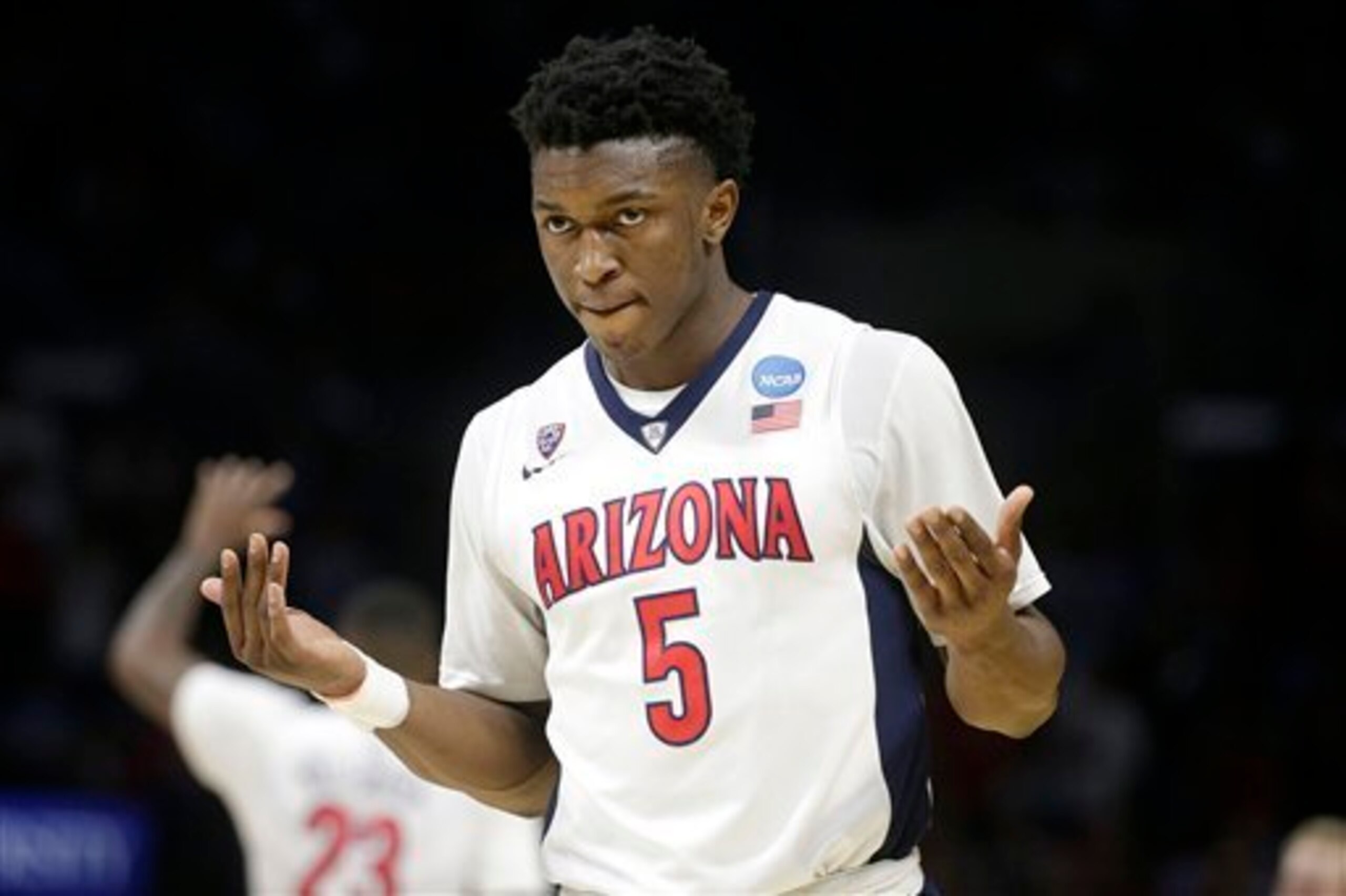
Recent history is exceptionally inconclusive.
From 2005 to 2014, there were 49 such meetings in the Sweet 16 or beyond. The superior defense has been better by the slimmest of margins, going 25-24 in those games.
Pretty boring analysis, right? Flip a coin and be done with it?
Not so fast. Dig a layer deeper and history actually bodes extremely well for both sets of Wildcats.
For you see, not only are Kentucky and Arizona top-10 defenses, but they also boast top-10 offenses. And when those dual threats go up against top-10 offenses late in the tournament, they have a significant upper hand.
Excluding the two games played between Kansas, Memphis and UCLA in 2008—because all three of those teams incredibly boasted top-10 offenses and defenses—there have been 15 instances in the past 10 years in which a dual threat faced a top-10 offense in the Sweet 16 or later.
As you can see below, they went 13-2 in those games and are undefeated since 2008.
| Year | Dual Threat (O/D Rank) | Great Offense (O Rank) | Round | Result |
| 2005 | Illinois (3/4) | Arizona (10) | E8 | Ill 90-89 (OT) |
| 2005 | Illinois (3/4) | Louisville (7) | F4 | Ill 72-57 |
| 2005 | Illinois (3/4) | North Carolina (2) | NC | UNC 75-70 |
| 2006 | Florida (3/6) | Georgetown (10) | S16 | FLA 57-53 |
| 2007 | North Carolina (4/10) | Georgetown (2) | E8 | GT 96-84 (OT) |
| 2008 | Kansas (2/1) | Davidson (5) | E8 | KU 59-57 |
| 2008 | Kansas (2/1) | North Carolina (1) | F4 | KU 84-66 |
| 2008 | Memphis (6/2) | Texas (3) | E8 | Mem 85-67 |
| 2008 | UCLA (8/5) | Xavier (9) | E8 | UCLA 76-57 |
| 2010 | Duke (1/8) | Baylor (3) | E8 | Duke 78-71 |
| 2012 | Ohio State (5/7) | Syracuse (7) | E8 | OSU 77-70 |
| 2012 | Kentucky (2/8) | Indiana (4) | S16 | UK 102-90 |
| 2012 | Kentucky (2/8) | Baylor (8) | E8 | UK 82-70 |
| 2013 | Louisville (4/3) | Duke (5) | E8 | Lou 85-63 |
| 2013 | Louisville (4/3) | Michigan (1) | NC | Lou 82-76 |
| 2015 | Arizona (7/3) | Wisconsin (1) | E8 | TBD |
| 2015 | Kentucky (6/1) | Notre Dame (3) | E8 | TBD |
In the two losses by the dual threats (highlighted in yellow above), Illinois and North Carolina delivered one of the best national championship games of my lifetime, and Georgetown stormed back from an 11-point second-half deficit to shock the Tar Heels in overtime.
Since then, things have been significantly less interesting in these highly anticipated pairings. Even including Davidson's near upset of Kansas, the dual threat has won the last 10 games by an average margin of 12.3 points.
It makes sense, though, doesn't it?
A team with both great offense and great defense should beat a squad with great offense and mediocre defense. Translating the idea to a different sport, wouldn't you expect a baseball team with a great lineup and pitching staff to beat a club with a great lineup and a so-so pitching staff?
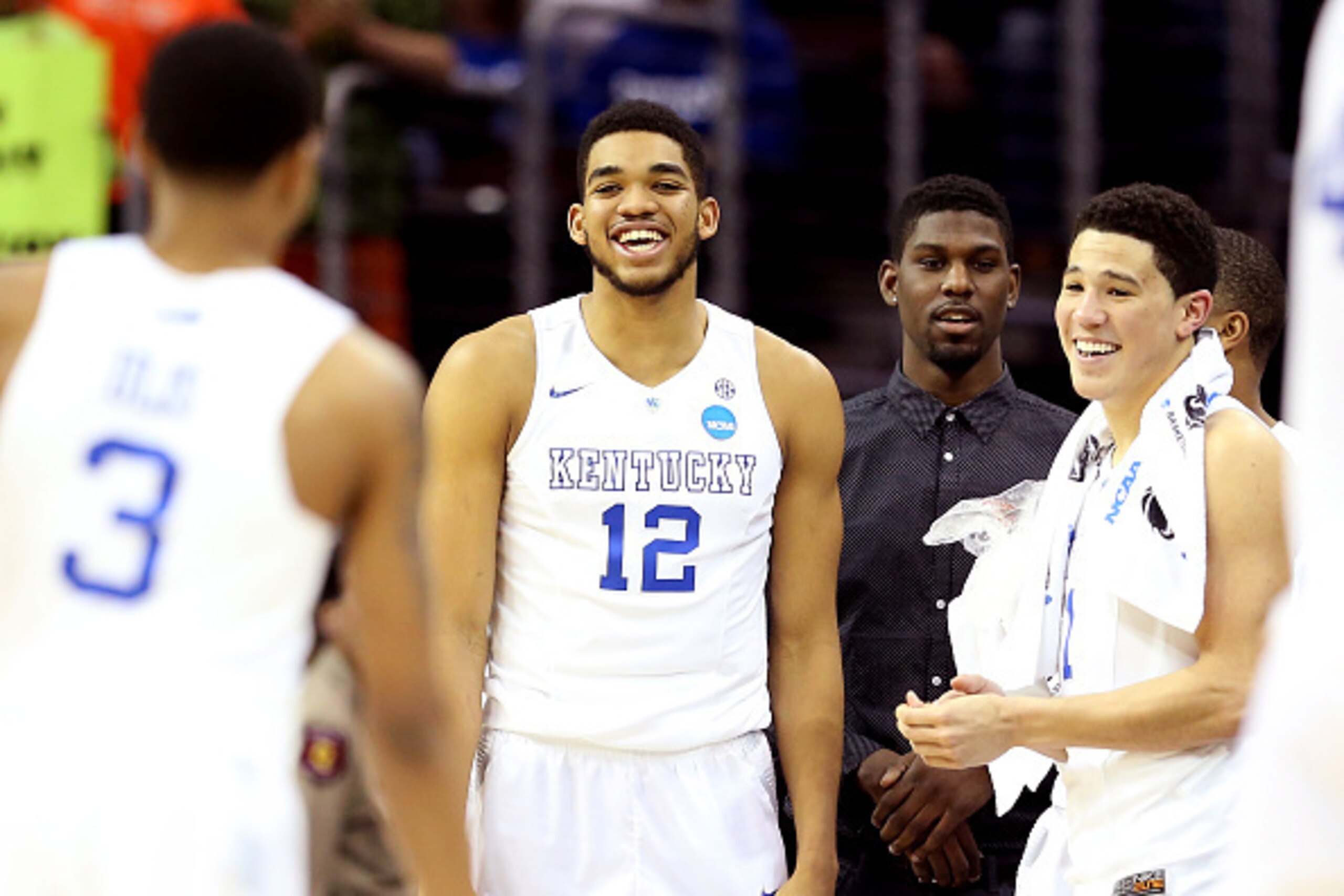
Even we looked at this historical trend, it was readily apparent when we dove into the analysis on each game that the dual threat held the advantage.
Maybe Notre Dame's offense and Kentucky's defense play to a stalemate, but it seems highly unlikely that Notre Dame's defense will be able to earn a draw against Kentucky's offense—particularly given the ridiculous size disparity. Per KenPom.com, Kentucky ranks No. 1 in effective height, nearly seven full inches taller than an average team. Meanwhile, Notre Dame ranks 213th.
The West Region's final isn't nearly as cut and dried in favor of Arizona. However, in a battle between evenly sized teams who infrequently commit turnovers, rarely have shots blocked and rank among the best in the nation at defensive rebounding, the edge figures to go to an Arizona team that has done a much better job of defending the three-point arc than Wisconsin has.
Look, we're not betting our lives on the Wildcats in either of these games. This is still March Madness, after all.
It would be a surprise if Wisconsin's Zak Showalter or Notre Dame's V.J. Beachem comes off the bench and does something magical, but it would almost be more of a surprise if something completely unexpected didn't happen.
The safest prediction in these games is that something unforeseeable will happen and that Jon Rothstein of CBS Sports will offer the following Twitter analysis of said happening: "This is March."
Need we remind you that it was in the 2014 Elite Eight that Kentucky's Marcus Lee had 10 points, eight rebounds and two blocked shots against Michigan. It lead many to wonder if Lee might be giving a whole new meaning to one-and-done after he scored more points in that game than he did in Kentucky's previous 30 combined.
And it was in the Final Four that Wisconsin's Bronson Koenig became a cult hero with 11 first-half points against Kentucky.
That said, it's pretty hard not to like the chances of an Arizona vs. Kentucky Final Four game given the recent history when these dual threats face elite offenses.
One thing's for sure, though: We're going to get one heck of a fun matchup between whichever two teams are still standing after Saturday night.
Kerry Miller covers college basketball for Bleacher Report. You can follow him on Twitter @kerrancejames.
.jpg?w=2560 "Colts Football")
.jpg?w=2560 "Baker Gets Glove From Rays 🧤")

.jpg?w=2560 "NFL investigating Eagles")

