The Road Less Traveled: Life as a 'Fringe' NFL Prospect
Over the next month or so, there will be literally hundreds (if not thousands) of articles written about the 2015 NFL draft.
Millions of words will be used to describe this year's top prospects, their talents and flaws. There will be a lot of speculation surrounding when stars like USC defensive tackle Leonard Williams and Heisman winner Marcus Mariota will hear their names called in Chicago on April 30.
However, for hundreds of young men across the country, the question isn't when they'll be drafted. In fact, although these youngsters have put in the same sweat and effort as any first-round prospect, there's no guarantee they'll even be drafted.
.jpg?w=2560 "Broncos Chiefs Football")
No, when you're living on the fringes of the NFL's radar, the question is often whether you'll get a chance to play in the league at all.
The Dream
It doesn't matter if you're a consensus top-five pick or just trying to get a NFL team to notice you. The dream remains the same—playing on Sundays.
Just ask Colorado State's Max Morgan. The 6'1", 231-pounder rode 105 tackles in 2014 to an All-Mountain West Conference honorable mention nod. The Greeley, Colorado, native ranks seventh all-time in tackles for the Rams, with 339 career stops over a career that included 31 starts.
And Morgan wants nothing more than to continue his playing career.
"Words can't describe it," Morgan said. "It's a dream that every kid has if they play football. If you're a college athlete you're blessed to be at a university and have them pay for your schooling and to have that opportunity. But to go on (and play in the NFL)...words just really can't explain how exciting it is or how awesome it would be."
Utah State's Rashard Stewart echoed those sentiments. The 5'11", 185-pound cornerback (who also played some safety for the Aggies) grew up in South Florida, playing against the likes of Alabama wide receiver (and potential top-10 draft pick) Amari Cooper.
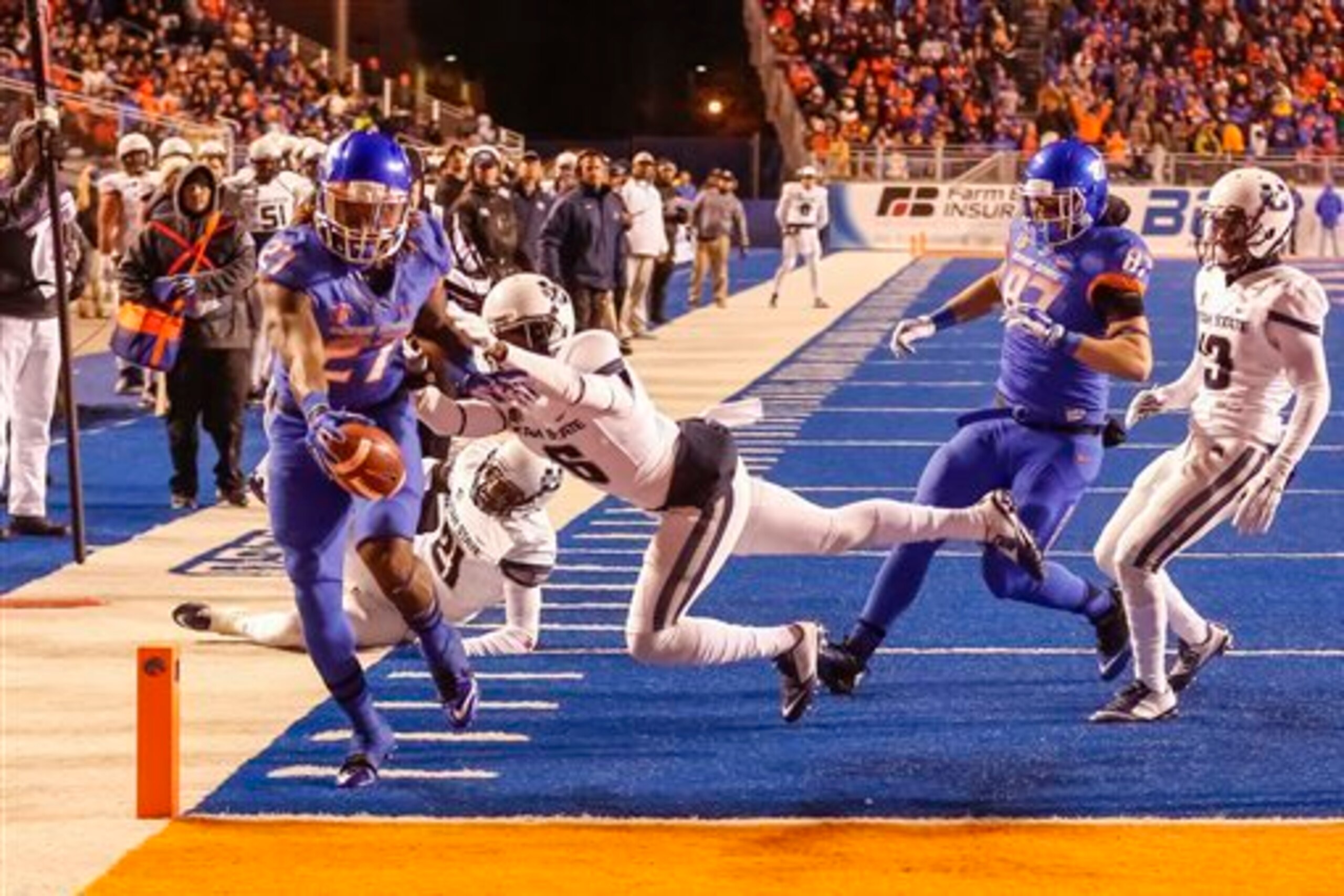
Now, Stewart is hoping for another shot at his old high school nemesis. "Growing up in Miami and playing football as a boy, you play all over the place all the time. The NFL is the true dream."
Then there's Mississippi State defensive back Justin Cox. The former 4-star JUCO transfer, per 247Sports, was the highest-profile young player I spoke to for this piece. Cox made nine starts at free safety for a Bulldogs team that spent much of 2014 perched atop the SEC and college football.
The 6'1", 191-pound Cox, whom Lance Zierlein of NFL.com wrote possesses "eye-catching timed speed," is rated as a top-20 cornerback in this year's draft class by Rob Rang of CBS Sports. Rang projects him as a fourth- or fifth-round pick.

Just like Morgan and Stewart, Cox said taking the field for an NFL team this fall would be the culmination of a lifelong dream. However, he also conceded that not every player gets a chance to make that dream come true.
"There are a lot of people who want to play in the NFL," Cox said. "But not everyone gets to do it."
The Math
In many respects, the NFL is a numbers game, and when's the last time you had a good dream that involved a lot of math?
The simple fact is, there are far, far more players who want to play in the NFL than there are spots for them to play there.
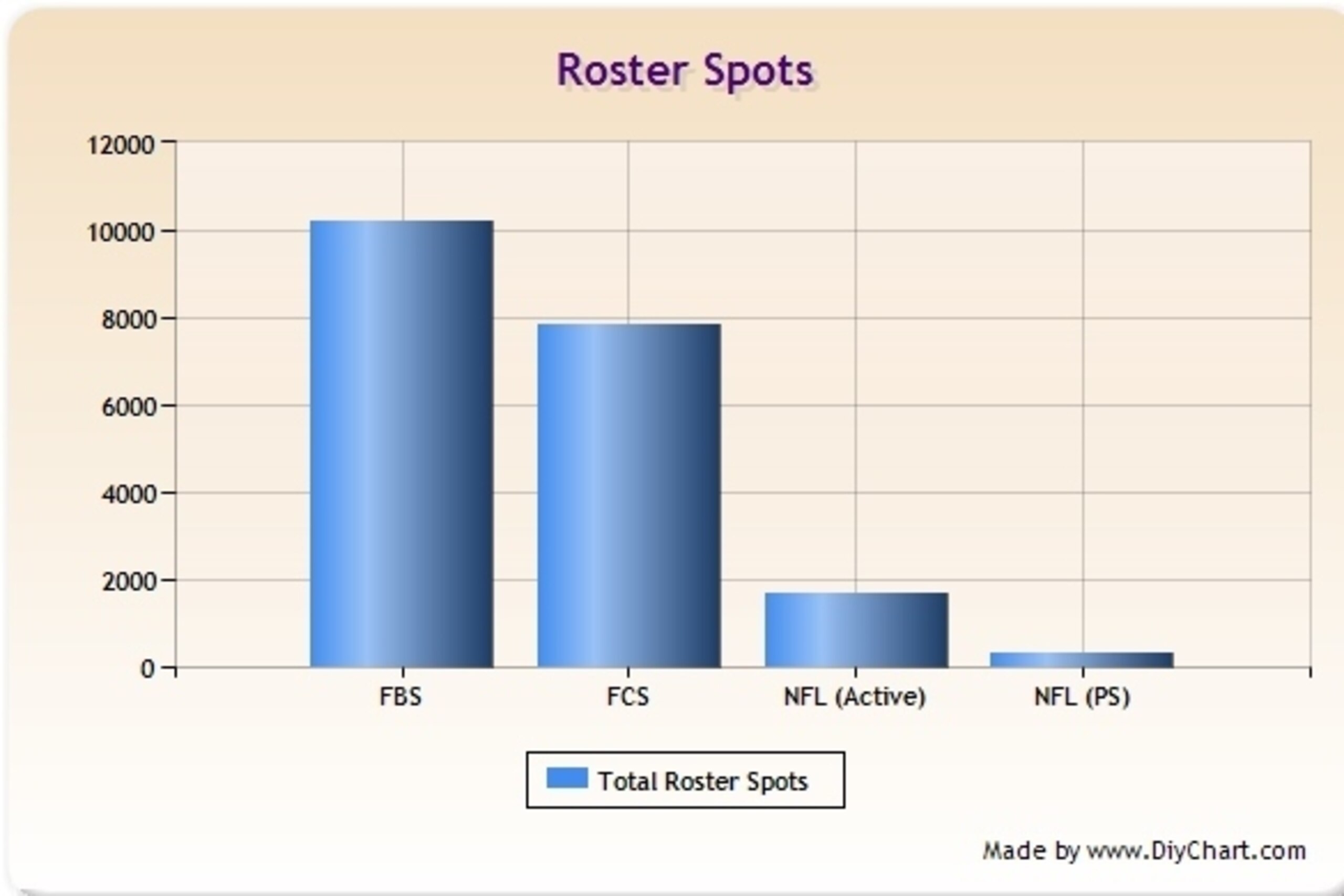
Yes, at first glance the 2,880 players who will report to NFL training camps this year seems like a lot. However, by the time teams cut down to 53-man rosters, more than 1,000 of those players will be cut. Just over 300 of them will find a second chance on practice squads—at a minimum salary of $6,300 per week.
So, roughly what Tom Brady pays his barber. Sorry, his "stylist"...sheesh.
Compare that to 85 scholarship players on each of the nation's 120 FBS universities. And 63 scholarship players at each of America's 124 FCS colleges.
That's more than 18,000 young football players, without even getting into Division II. Or Division III.
Sure, not all of those players are leaving school this year, and only some of those who are have ambitions of playing in the NFL. Still, even a fraction of a fraction leaves a whole lot of young players fighting for not many spots.
How many? According to Ben Volin of The Boston Globe, there were just over 250 rookies on NFL active rosters at the outset of the 2013 season. Assuming that the top 100 picks or so survive camp, that number becomes more like 150.
There are 157 draft picks on the third day of the draft alone in 2015. Never mind the hundreds of rookie free agents who will be signed in the hours and days after the draft.
For first-round prospects like Jameis Winston, it's mentally counting signing bonus coin. For players like Morgan and Stewart, it's counting available roster spots.
Their counting isn't as much fun.
The Reality
When the numbers are against you, every little bit counts. Every workout and interview question carries added weight.
With that added weight comes added pressure to stay in tip-top shape, both mentally and physically. As Morgan relayed, that can make for some long days.
"(My agents) put me up in a place down in Denver," Morgan said, "and had me working out at Sport Xcel in Centennial. By 9 a.m. I'd be in there, working with one of their PT people on my flexibility, mobility and little things (nagging injuries) that may be bothering me. We'd do that for about an hour.
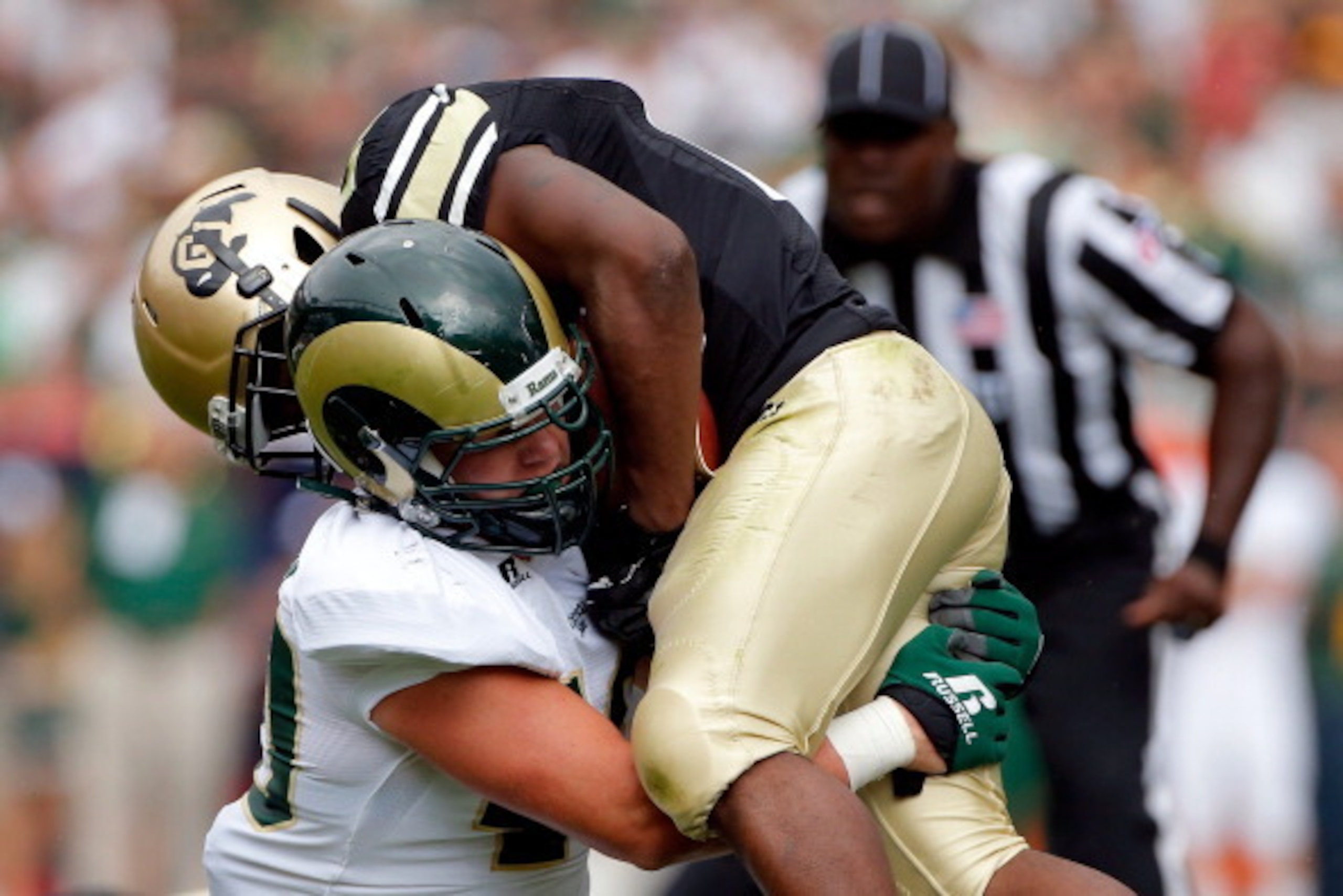
"Then we'd do speed training for about two hours, working on the running portions of the pro day and all the specific drills—40, three-cone and the pro shuttle.
"Then we'd go back to our condo (one Morgan shared with three other prospects) and get some lunch. That's one thing I learned from this whole experience. What you eat really does matter, so now I eat a lot more fruit, vegetables and healthy proteins."
"Then I'd come back in about 2 p.m. for a weight session. Working on my bench primarily, but also to supplement my speed training. A lot of lunges—stuff just to make us faster.
"Then go home, and they'd have dinner prepared for us," Morgan continued, "and then me and a roommate would go do some nighttime yoga."
The specialized workouts, nutritionists and yoga sound very much like the regimens followed by elite prospects in advance of the NFL Scouting Combine.
However, only about 250 players or so are invited to Indianapolis each year. Some others are invited to regional combines (and from there to super-regionals). However, for players like Stewart and Morgan, all this work is often in advance of just their pro days—one shot.
In fact, only one of the players I spoke to for this piece attended the combine in Indy. And he went there with plenty to prove.
Cox's 2014 season at Mississippi State came to an abrupt end in November, when he was suspended from the team after being arrested and charged with domestic violence and burglary. The former charge was dropped, while the latter was reduced to misdemeanor trespassing.
Still, given the NFL's current climate, the damage was done. According to Lance Zierlein of NFL.com, at least one NFC team pulled Cox from its draft board entirely, with an unnamed scout citing "character" as a big reason why.
Cox told me the adversity he's faced in recent months has caused him to "grow as a man" and that "he'd learned a lot from his mistakes."
Back in February, J.T. Johnson, Cox's agent, told Brandon Walker of The Columbus Dispatch the combine represented a big opportunity for his young client to move on from the past: "The combine is the start of that. Time heals all wounds. Right now, he is focusing on training. All he does is get up, train, go back to his condo. He doesn't go out, he doesn't party. He's focused on being a better football player."
In that respect, Indianapolis paid off for Cox. A few days at Lucas Oil Stadium won't make NFL teams completely forget what happened, but he excelled in drills, finishing at or near the top of his position group in the 40-yard dash, vertical leap, broad jump and shuttle drills.
| 40-yard dash | 4.36 | 2nd* |
| Bench press | 15 reps | 21st |
| Vertical leap | 38 inches | 8th |
| Broad jump | 129 inches | 7th |
| 20-yard shuttle | 4.07 seconds | 10th |
| 60-yard shuttle | 11.20 seconds | 3rd |
Once the combines, pro days and workouts are in the rearview mirror, the players have done just about everything they can to try to impress NFL teams. Then, it's just a matter of waiting for the end of April.
Of course, as Stewart pointed out, there's still work to do, especially if you welcomed a daughter into the world right in the middle of this process.
"Well," Stewart said, laughing, "the first thing I do now is make sure my daughter isn't crying and that she has breakfast. My day doesn't start until hers does.
"By 9 a.m., though, I go to my school to work out, hit the field and look at some film. I'll also look at some NFL highlights, things like that.
"Teams that might have shown an interest in me at my pro day, I try to study their coverages," Stewart said. "That way, when I get in their camp I can be on point."
Bleacher Report's Ryan Riddle, who was a sixth-round pick of the Oakland Raiders back in 2005, said this bit of a slowdown affords prospects a chance to do one more important thing.
"Once the major things are done you finally get a chance to take a giant breather before the biggest challenge of your life commences," Riddle said "Predraft training is intense. Which is why I think rookies were able to thrive the year they had the lockout while negotiating the new CBA (in 2011)."
However, while things may be slowing down a bit for the prospects, the fun has only just begun for their agents.
The Agents
"I'd say that of the 30 (prospects we represent in 2015), we'll have five or six drafted."
Those were the words of agent Ryan Smith, who is the CEO of 7 Sports Group in Carlsbad, California. Smith, who played professional baseball in the Minnesota Twins organization and spent some time in the Canadian Football League with the Winnipeg Blue Bombers ("I was 28 and coming off Tommy John surgery," Smith said. "I didn't have much of a shot."), told me that with borderline prospects, it's a matter of beating the bushes.
"Leave no stone unturned," Smith said. "They might be 'fringe' guys because they didn't play at a Power Five conference school, or they're coming from the FCS or Division II level. So, our job is to make sure we market their value to teams.
"We need to do a good job of doing our own due diligence, so far as breaking down teams and rosters and where these particular players will fit best at that next level."
Smith won't get any argument from J.T. Johnson of Atlas Sports Agency in Gadsden, Alabama, whose clients range from "fringe" prospects like Stewart to established NFL players such as San Diego Chargers wide receiver Keenan Allen and Washington Redskins cornerback David Amerson.
"With the higher-round kids, your phone rings off the hook from teams wanting to set up visits and workouts, Johnson said. "It can be a nightmare just trying to keep it all coordinated.
"With the later-round guys, you have to do the calling. You really have to sell the guy. Show teams that he does have the attributes, that he can play in the NFL."
And it isn't just time that agents are investing in these young prospects. That training from earlier, with the flexibility training and speed training and weight training and nutritionist and housing...
That all costs money. A lot of money.
With some prospects, the agent will "front" the costs of that training, with the hopes of recouping the money after his client makes it to the NFL. For others, the agent will pick up part of the bill. For others still, those costs fall solely on a 20-something kid fresh out of college.

"It depends on the player's financial situation," Johnson told me. "It's normally a certain percentage mixture between me and the player. Full training and travel can average well over $20,000."
Not surprisingly, early-round prospects (who are much more likely to land an NFL contract) usually receive more of these "perks," and Johnson said that can create some hard feelings among players who are footing their own bill.
"They (the "fringe" prospects) see the predraft monetary things some of the higher-round guys get. Everyone believes they're good, so some of them think they should get the same treatment. It's just how it goes."
Of course, if that player doesn't make the NFL at all, then it doesn't really matter where the money came from.
It's just gone.
The Scenic Route
Josh Bredl knows all about a football career spent on the road the less traveled. He's been taking the scenic route since high school.
As a high schooler in Colorado, Bredl wasn't a 5-star prospect, but he was ranked inside the top 100 tight ends nationally by ESPN. A number of FBS schools, including Arizona State and Washington, showed interest in him.
A shoulder injury his senior year cooled that interest, and Bredl wound up at Division II CSU-Pueblo.
That wasn't the end of the adversity—by a long shot. After redshirting as a freshman, Bredl played sparingly in 2010. In the spring of 2011, the coaching staff approached him about a move to defensive end (a position he played some in high school). He agreed, only to see a knee injury wipe out the entire 2011 season.
From there, though, things picked up for the 6'7", 295-pounder. Oh yeah—he got a bit, um, bigger in college.
Playing as a 3-4 end for the Thunderwolves (how great is that nickname?) in 2014, Bredl racked up 24 tackles, four sacks and two fumble recoveries, helping to propel CSU-Pueblo to a Division II national championship.
Still, when the time came, the agents didn't come to Bredl. He went to the agents.
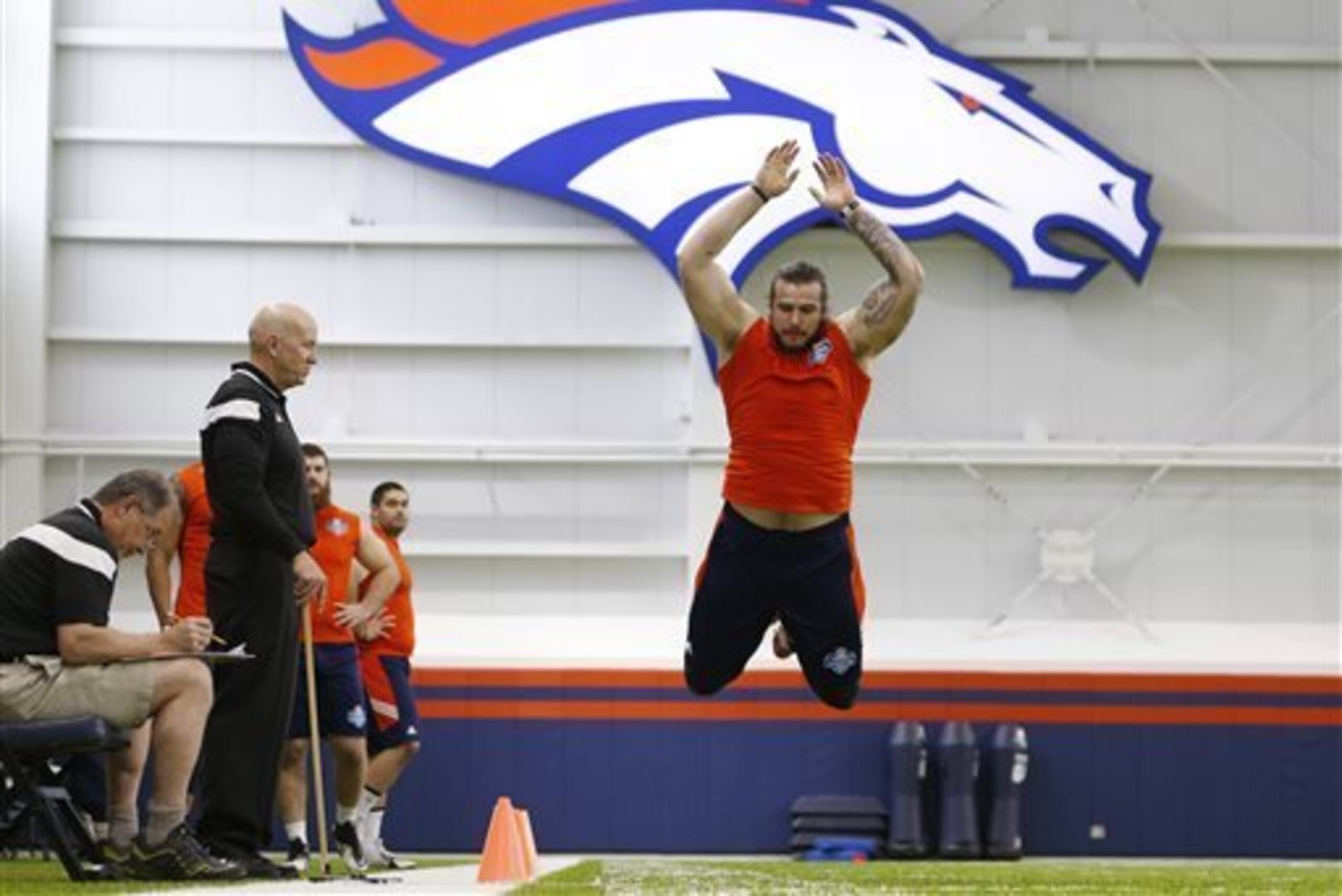
"He came to us," 7 Sports Group Executive Vice President Ted Willoughby said, "and said, 'Hey, I don't have an agent. I've been overlooked. Will you represent me?'
"So we evaluated him (he was already working out), and now it's turning out that he's really important to us."
Bredl made himself important, because he's spent the past several weeks ensuring that he isn't overlooked again.
His combination of size, strength and speed opened eyes at both the University of Colorado's pro day and the regional combine.
Those performances earned him a trip to the Super Regional Combine in Phoenix and an opportunity to work out for more scouts, and even a few NFL head coaches.
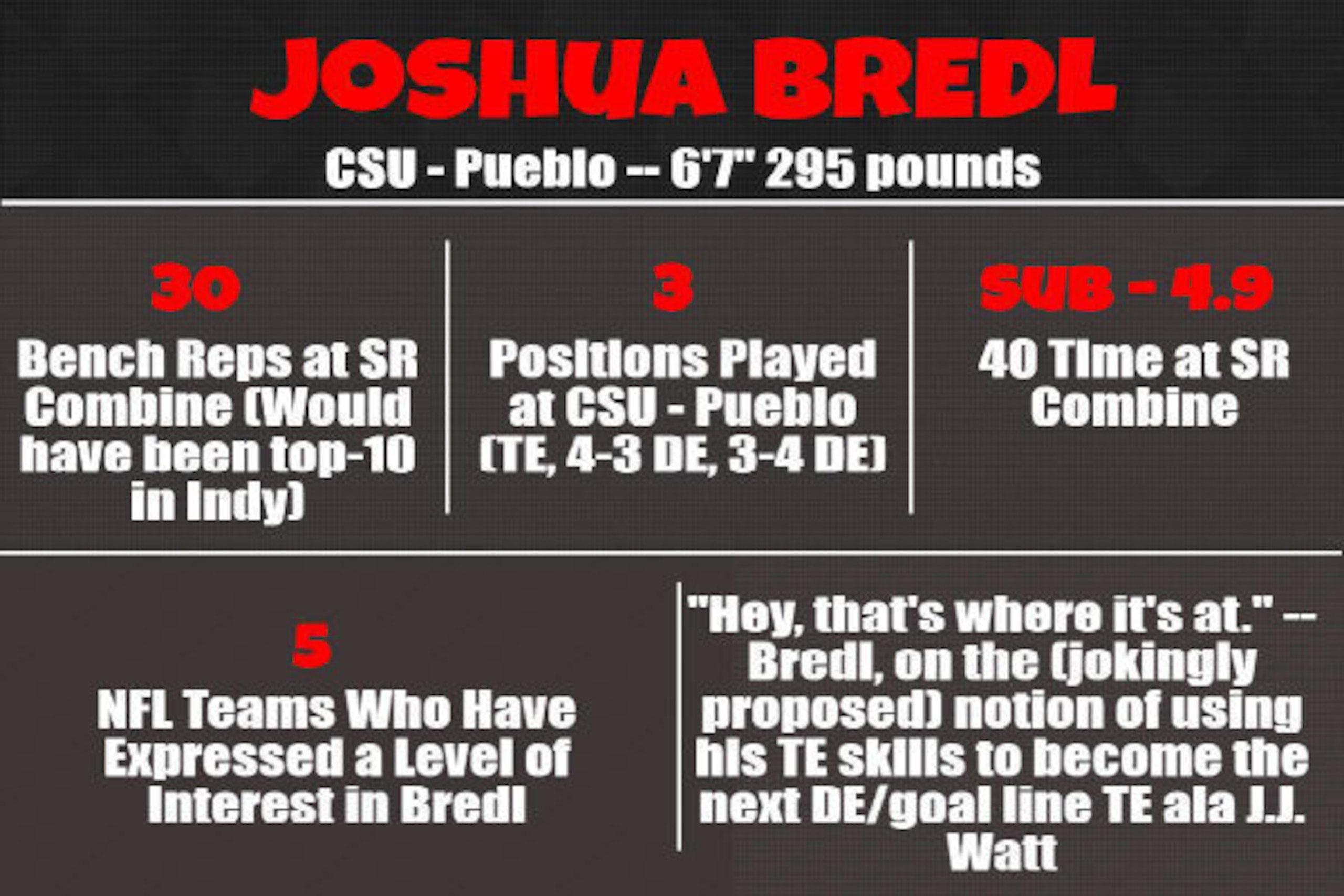
"It was a cool experience, man," Bredl said. "We flew in on Friday, and that day we had meetings and the Wonderlic. They took about 12 (of the 120 or so) guys aside to test for HGH/PEDs, so they did blood work. Right when I got there it was crazy—Wonderlic, meetings and then someone said 'Hey, you're giving blood today.'
"That night I benched 30 reps and felt pretty good.
"The next day I was in the second position group. We ran our 40s first, and then we went outside for our position work. At that point there were maybe 40 to 60 scouts in the bleachers and along the field. We did about six drills, and then went back inside for a few more.
"Then they said, 'If we call your name please step outside. There are some people who would like to talk to you some more.' I was one of about five names called," Bredl said.
Bredl strolled outside where a perennial AFC playoff contender and at least one high-profile NFL head coach were waiting to speak with him.
He was on the radar.
Staying on the Map
Unfortunately, getting on the radar and staying there are two different things.
"My first year in the business, we got a call in the seventh round that one of our 'fringe' players was going to be drafted," Smith said. "The team said, 'If he's available at this pick we're going to take him.' Well, that pick comes and goes and he's still not taken.
"Shortly after the draft we were able to get him a free-agent deal, but you learn very quickly this is a business."
And that's the path many "fringe" prospects take. Riddle was one of the relatively lucky ones—he got to hear his name called on draft day.
"When I got the call, it felt like a dream come true," Riddle said "I was highly emotional after three days of waiting and watching guys go ahead of me that I believed I was better than. But when that moment finally came, it was a weird combination of anger and elation."

However, for many more youngsters, the draft will come and go without a phone call. It might come later that day or even the next—an NFL team offering a small free-agent deal and an even smaller widow in which to make the active roster.
As Riddle said while offering a bit of advice, it leaves precious little margin for error when camp rolls around.
"You will be given very minimal opportunities for reps," Riddle said. "When those opportunities come, make sure you are confident and have a firm understanding of what your assignment is on every play you're a part of. Rise above the drafted rookies by being more prepared and thus, more confident than all of the other rookies out there. This will take incredible work and dedication during your time after practice. Don't get caught up in sightseeing and hanging out with the other youngsters who are independent and finally have some coin in their pocket."
There will be a few rookie undrafted free agents (or "high-potential free agents," as Smith called them) who beat the odds and land on a 53-man roster. For most of the "fringe" prospects, however, the best chance at spending 2015 on an NFL roster likely lies with the 10-man practice squad.
And that's just fine with Morgan.
"I'm a football player who wants to play football," he said. "Whether it's in Canada, Arena Ball, an NFL practice squad, whatever. Obviously, the NFL is the goal, and that's where I think I can play."
Morgan looks to former teammate Shaquil Barrett, who spent his rookie year moving back and forth from the practice squad to the active roster for the Denver Broncos after winning Mountain West Defensive Player of the Year honors in 2013, as inspiration.
"If that's the path God's chosen for me to take," Morgan said, "then Shaq's someone who I think handled it and did very well."
Stewart, on the other hand, pointed out that little-known rookies can still make a big impact.
"You've got a guy (New England Patriots cornerback Malcolm Butler) who made the game-sealing interception in the Super Bowl who wasn't drafted," Stewart said. "So the inspiration is there.
"Being a free agent just gives you that drive, that motor."
The Finish Line
I'd love to be able to say that Stewart will one day be a Super Bowl hero. That Bredl will be the next 3-4 end to start reeling in touchdown passes. That Cox will be the next Devin McCourty. That Morgan will go from small(er) Western school to All-Pro a la Bobby Wagner.
I really would. All four were an absolute pleasure to speak with. Their love for the sport of football is palpable when they talk about the game.
However, the reality is that for all their talent (and make no mistake: They're all talented. Three started for FBS colleges, the fourth for the Division II champions) and hard work, Cox is the only player of the bunch with a better-than-average chance of being drafted in 2015.
At least one of these young men is probably going to be left on the outside looking in when September rolls around. Each mentioned to me that at least one NFL team has expressed some interest, but as Smith said before, that may not mean much when the dust settles.
To their credit, each of the players I spoke to has considered the possibility that this is it for their playing careers.
Bredl and Stewart are the fathers of young children, and they remarked to me that they realize they may have to put aside their dream at some point for the sake of their kids.
"Having a family, you have to think about (life after football)," Bredl said. "It's something I thought about a lot more in the past, but right now I'm just focused on the task at hand."
Plans have been made in that regard. Three of the players I spoke to mentioned they've already obtained their degrees. In addition to his degree in exercise science, Bredl has also completed firefighter training in Colorado.
If that doesn't work out, maybe The Avengers are hiring. A football-playing firefighter superhero—"The Sackmaster"—why not?
Still, those are plans. Playing in the NFL is a dream. For now at least, that dream lives on.
And as Johnson told me, "The best part of my job is seeing a young man's dream come true."
Even if it takes the road less traveled to get there.
Gary Davenport is an NFL Analyst at Bleacher Report and a member of the Fantasy Sports Writers Association and the Pro Football Writers of America. You can follow Gary on Twitter at @IDPManor.

.jpg?w=2560 "Week 1 Fantasy Duds 👎")