

Ranking the 2015 Impact of the Minnesota Vikings' Free-Agent Signings So Far
The Minnesota Vikings have been as slow as molasses when it comes to free agency, and though that may be OK, it does mean that ranking their free-agent moves thus far is somewhat difficult. But at the very least, the exercise should provide us with some sense of how the Vikings are forming their roster.
The six free-agent signings don't include the Mike Wallace trade but do include re-signings—which may not look sexy (after all, maintenance is hardly more exciting than augmentation) but are as important to a successful free agency as signing new players.
For the most part, players are ranked according to raw talent, the terms of the contract signed and expected role and impact—though one of those categories may overshadow any of the others if it is sufficiently overwhelming.
1. Tom Johnson, DT
1 of 6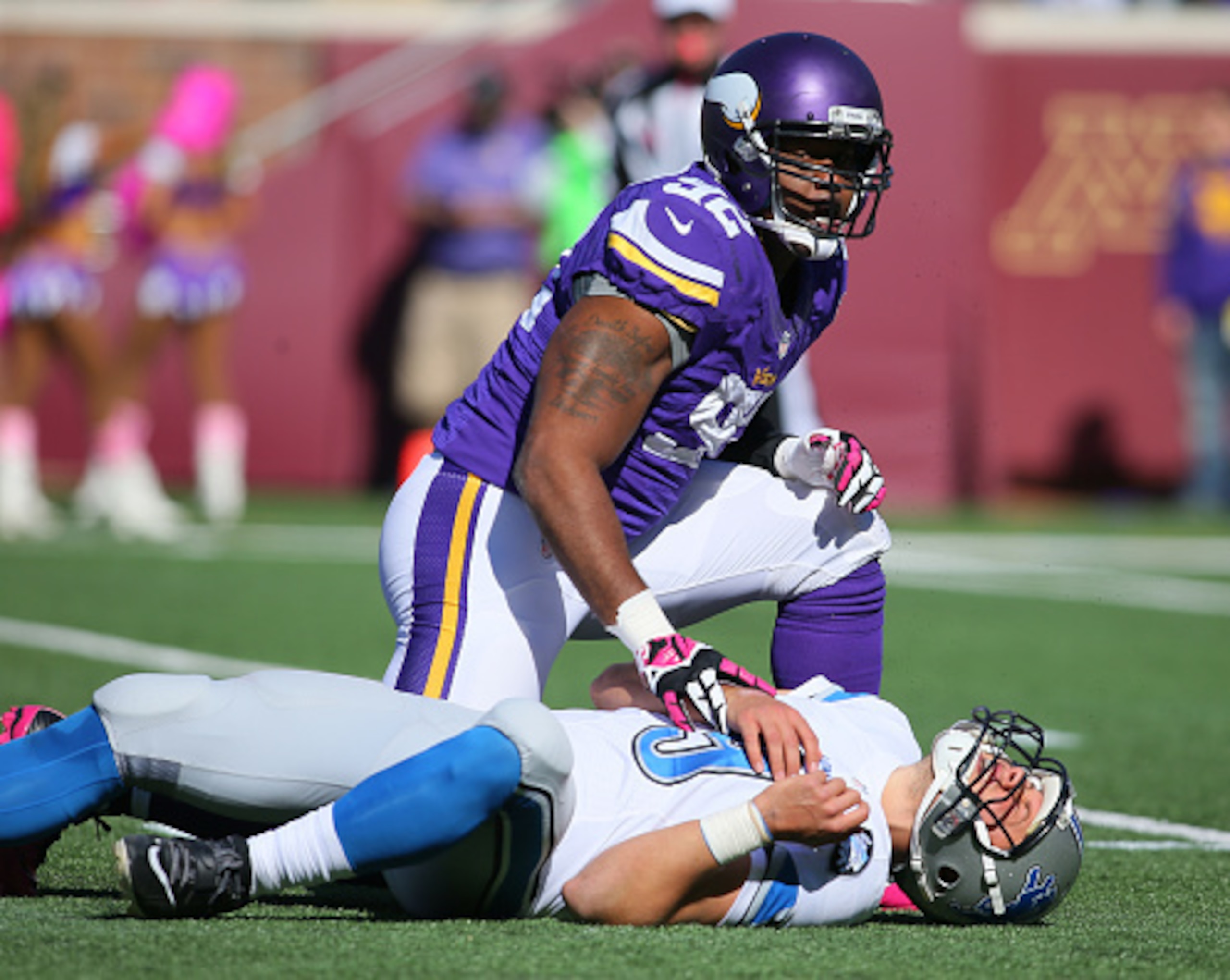
Re-signing the aged Tom Johnson was a coup for the Vikings, who were able to secure him on a three-year deal worth $7 million, per OverTheCap.com.
Only $2.25 million is guaranteed—the first year's base salary and a roster bonus—and the second year's salary doesn't become guaranteed until the third day of the league year, giving the Vikings ample time to evaluate whether or not Johnson's age is catching up with him.
The third year isn't guaranteed at all, making it very easy for the Vikings to make a decision on a player who will be 33 by the time the league year starts in 2017.
Looking at players who have similar average salaries at the same position (who aren't on rookie contracts), the Vikings got away with a very good deal, even if they had to negotiate with an older player to do it.
Players who are bigger risks (like Henry Melton, who produced as many sacks as Johnson did in Dallas but has injury concerns) or may not be system fits (like former Pittsburgh Steeler and current Jacksonville Jaguar Ziggy Hood) are earning more money, as are players who haven't put together a single year as good as Johnson's 2014 (like Jacksonville's Roy Miller or Arizona's Corey Peters).
It's not just Johnson's sack production that stands out—prodigious alone for having more sacks per pass-rushing snap than all but eight defensive tackles with at least 250 pass-rushing snaps, per Pro Football Focus—but also his consistent ability to pressure the quarterback and alter the passing game.
Accumulating 30 total quarterback pressures is good for any defensive tackle, but for a rotational player, it's astounding. In that same set of defensive tackles with at least 250 pass-rushing snaps (37 total), Johnson again ranked ninth in pressures per snap behind Aaron Donald, Henry Melton, Johnathan Hankins, Ndamukong Suh, Stephen Paea, Kyle Williams, Gerald McCoy and Jay Ratliff.
Though a rotational player who will be expected to match his snap count from last year (about 450, per PFF), his impact and the cheap, risk-free nature of the deal earns him the top spot.
2. Joe Berger, G
2 of 6
Joe Berger's re-signing with the Vikings took a little more time than many expected, particularly for a career backup. Berger's previous showing in Miami wasn't nearly as impressive as it has been in Minnesota, and it seemed unlikely that another team would compete heavily for the aging lineman's services.
But the holdup may have been Berger's desire to seek "starter money,", per Chris Tomasson of the St. Paul Pioneer Press, a prospect that initially could be ludicrous. With the reasonable deal they struck—two years at an average of $1.1 million—the Vikings may have struck a perfect balance.
Berger may earn more if he wins the starting job, which means at worst he'll paid like a high-quality backup.
His performances with the Vikings have actually been quite good, and he hasn't given up too many sacks, hits or hurries over his career while playing more than passably in the run game. Though his best games for the Vikings were at center, spelling John Sullivan in injury and working in tandem with a guard on most blocks, he still held his own as a guard lined up one-on-one against defensive tackles.
It would be unfair to say he hasn't flashed starting-quality play with the Vikings, even though his career before arriving in Minnesota was poor at best, and he could earn the starting spot for a year or two before retiring, giving the Vikings the protection they need there.
Even if he doesn't earn the spot, he'll be a high-quality backup in a league that can't find them at his position, one who will be slightly overpaid at most.
His deal fails to surpass the Johnson signing in part because his impact will be unknown—he could play zero snaps or 1,000—and because Johnson has excelled at his projected role already, something Berger did not do. If Berger fails to earn the starting spot, the Vikings will have slightly overpaid him, which won't be true for Johnson, who represents (based on last year's play) true value for talent.
Regardless, it's a great move by the Vikings.
3. Shaun Hill, QB
3 of 6
The Vikings are lucky in that there's real reason to believe they've found their long-term franchise quarterback. No matter the skill of the starter, however, the backup behind him can steady the boat in times of crisis.
At no position is that more important than quarterback. Though the Vikings shed Matt Cassel and added some draft picks in the process, they may have gotten a better deal outright by adding Shaun Hill to their roster.
There's a very good argument to be had that Cassel is a better overall quarterback than Hill, but Hill is likely a better game manager. The distinction is unimportant when talking about starters—the better quarterback is the one who should play—but when discussing backups, a quarterback who can avoid costly risks and seal a victory is more important.
The luxury of such a quarterback is also that there's a smoother transition when allowing other offensive pieces to carry the load if need be. Riskier quarterbacks diminish this ability by increasing the likelihood of turnovers on otherwise routine plays, while game managers can let the offense do the work for them.
It isn't just Hill's consistency from season to season or game to game that's superior to Cassel's, but also his lower interception rate in tougher defensive divisions. Though Cassel is more likely to throw touchdowns (though their career touchdown rates aren't far apart) and more likely to generate yards, the propensity for turnovers limits his ability as a backup.
Hill's deal is also superior from the Vikings' perspective. With a cap number of $3.25 million over the next two years, only the first of which is in any way guaranteed, per OverTheCap.com, Hill's deal is less burdensome than Cassel's deal would have been at $4.75 million.
Compared to the veteran-backup market, it's also friendly. Veteran backups like Matt Moore and Chad Henne earn $4 million average per year, and Mark Sanchez earns $4.5 million. Matt Hasselbeck has a deal that averages $3 million.
The added benefits of having another strong presence in the film room and on the sideline to help Teddy Bridgewater make this deal well worth it for the Vikings, even though he shouldn't take any snaps if things go according to Minnesota's plans.
.jpg?w=2560 "Chiefs Giants Football")
.jpg?w=2560 "Steelers Buccaneers Football")
.jpg?w=2560 "Steelers Saints Football")
4. Matt Asiata, RB
4 of 6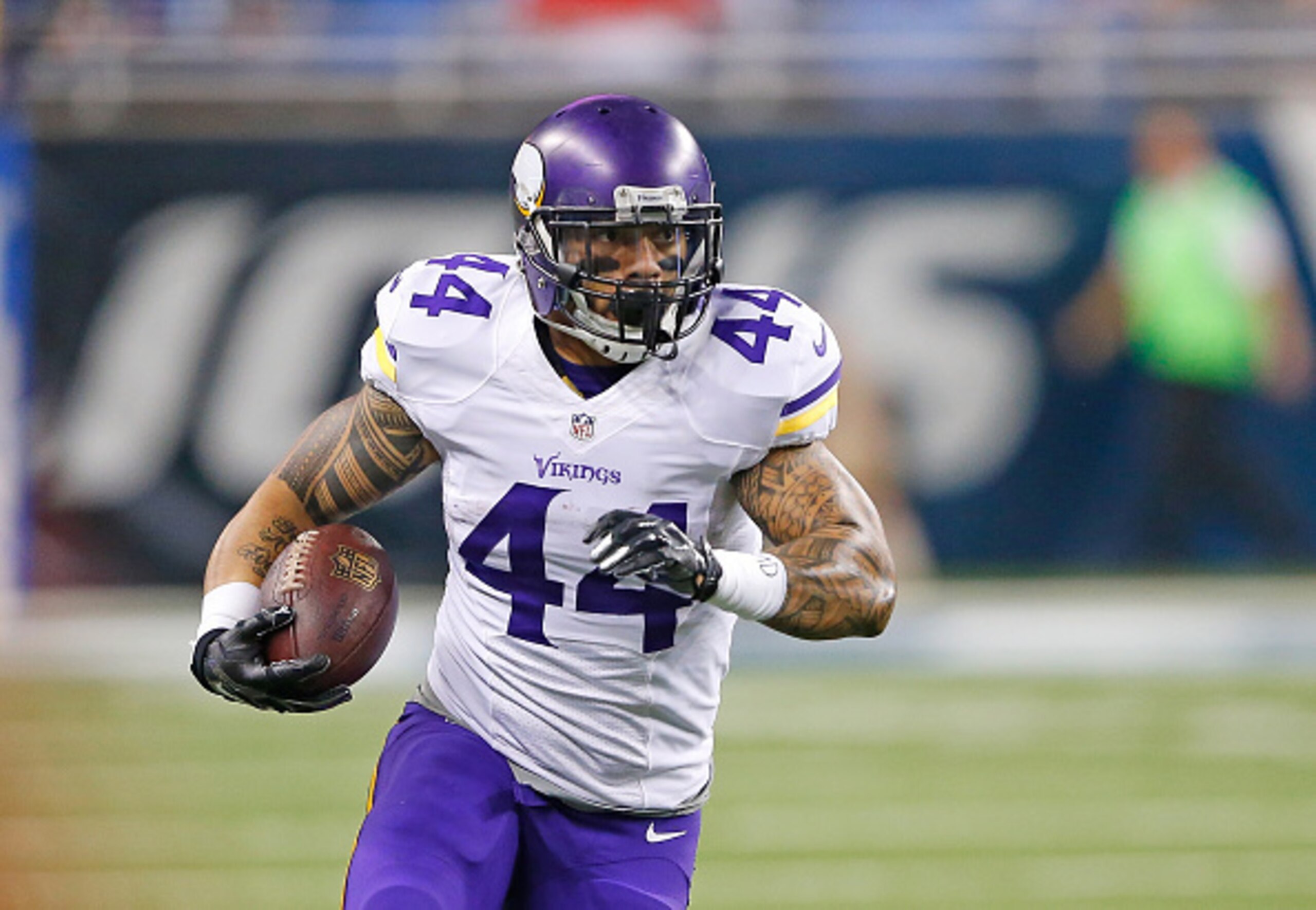
Never an explosive player for the Vikings, Matt Asiata still holds value for the franchise. He's a running back who wins with vision and patience more than acceleration, and his power improved over the season as he ran with consistently better leverage as time went on.
That allowed Asiata to compile positive yards at an efficient rate. He had the lowest percentage of runs for loss of any running back with at least 100 rushing attempts, according to Pro-Football-Reference.com's Play Finder, a set that includes 46 players. Of runners with at least 80 attempts (or five per game), only Shonn Greene beat him out, placing him second out of 57 players.
In runs of at least two yards or more, he ranked 17th out of 57 players with at least 80 attempts and 16th out of those with at least 100.
Similarly, a measure called "success rate" is favorable to him. Used to gauge how often a running back is "successful" with his runs (typically 40 percent of the yardage needed to convert a new set of downs on first down, 60 percent on second down and 100 percent on third and fourth down), it helps measure whether or not that back can keep the offense on schedule and how consistent he is.
Asiata ranked sixth per Football Outsiders, out of the 43 listed in their measurements.
That's not to say Asiata can carry an offense or add wins; he merely won't take them away. For a running back expected to be second or third on the depth chart (depending on how the Vikings intend to approach the Adrian Peterson situation and/or add another running back to the 53-man roster), that's pretty spectacular.
Add in his pass-blocking (already very good, and growing), and he's a big asset. There are things he can work on (his pass-catching needs improvement, even when taking away a fatal deflection that led to an interception against Green Bay) and a ceiling he likely won't be able to break (his overall athleticism), but as a backup on an incentive-laden contract that right now is worth less than $1 million per OverTheCap.com, it's a great deal for the Vikings.
His position as a backup is less important than Hill's even though he'll likely seeing more snaps in the Vikings' season-long plan (if only because the quarterback position is so important), but he can still provide the marginal improvements over other backup running backs that may mean the difference between winning and losing a tight game.
5. Mike Harris, G
5 of 6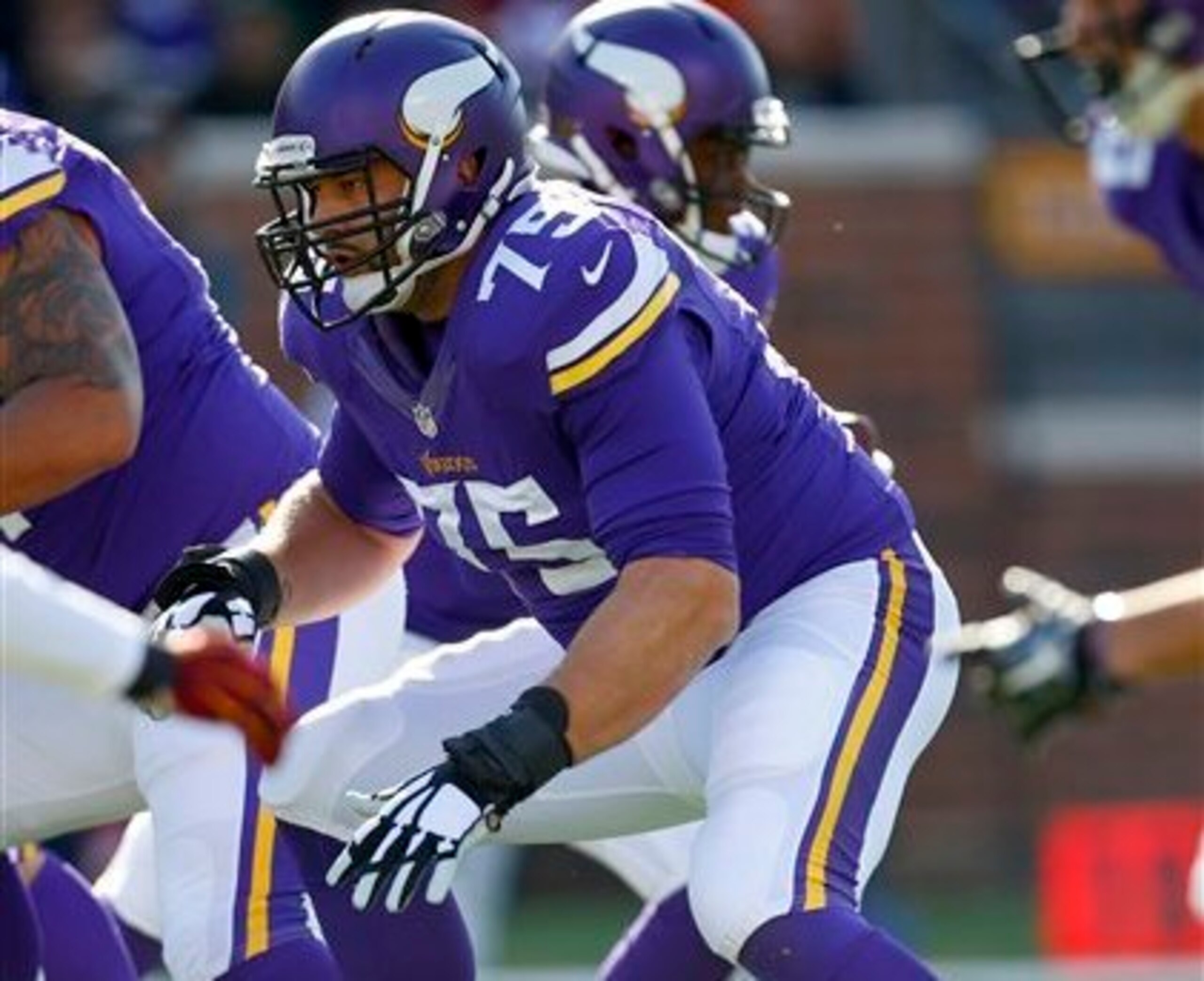
Though Mike Harris played largely at tackle for the Vikings last year, he looks to be in the competition for the guard spot this year; that may be a better fit for him. He did a poor job meeting defensive ends at the edge and couldn't prevent speedy rushers from affecting quarterback play.
Beyond that, balance issues at times caused bull-rushers to get into his pads and push him into the pocket, affecting both the passing and running games.
Harris has excellent functional strength and has improved his leverage since his time starting for the San Diego Chargers in 2012, but that doesn't make him a good player, at least not yet.
Not all bad tackles can convert to guard and do a functional job there. The Vikings had a better tackle in Charlie Johnson, and his conversion to guard was well-anticipated by Viking fans, though a disappointment to most of them.
While Johnson's play was perhaps underrated (he was bad, but never among the league's worst at guard), it's illustrative of the fact that sometimes players who are not good at offensive line play do not necessarily improve by switching positions.
All is not lost, however. At the professional level, Orlando Franklin improved drastically after moving inside. In college, Cameron Erving restored his falling draft stock after switching to center from tackle and now looks dominant there.
For the most part, however, it may be more of a fool's errand to chase position conversion as a means of sustaining ability if it's never there. Harris will still need to overcome his slow anticipation and issues with balance in the interior. And though he has good strength, it is not good enough to paper over other problems.
The Vikings seemingly intend to have as many candidates as possible for the left guard spot, so it makes sense that they would retain someone not only familiar with the roster with but the blocking scheme they intend to use.
Still, the odds of success for Harris are low, and he has limited swing ability despite his experience at tackle. A roster spot may be more valuable in the long run. An unknown quantity like a different undrafted free agent or even a draft pick may be more valuable than a known quantity with low odds of success.
Add to that the fact that the deal is not particularly friendly (he signed a restricted free-agent tender worth $1.5 million) for a marginal backup with an outside shot of starting—more than Joe Berger, who has a much better shot—and the Vikings come out behind, albeit not fatally so.
6. Cullen Loeffler, LS
6 of 6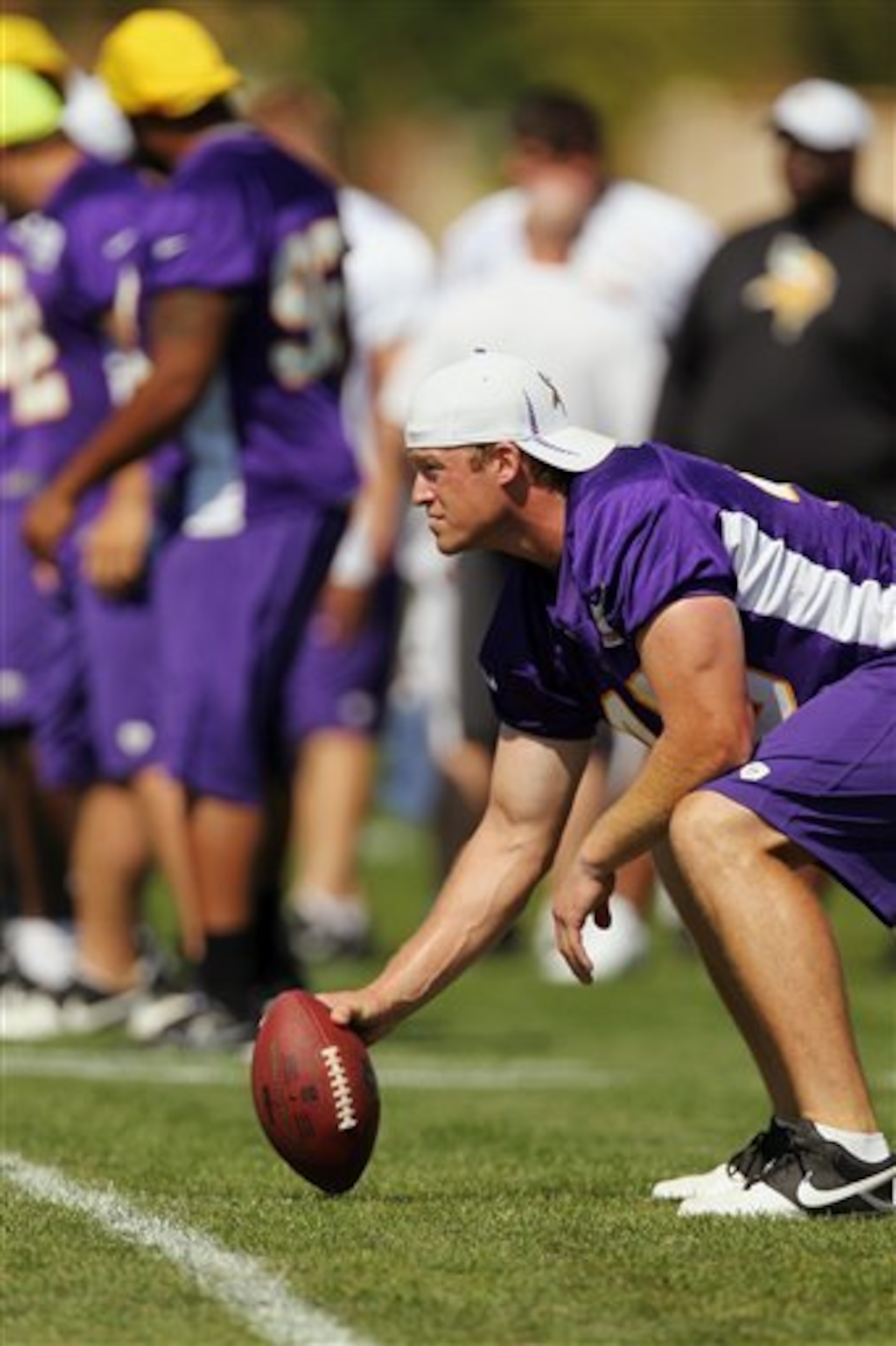
It may not ultimately be impactful in the long run, as long snapper Cullen Loeffler's deal is only guaranteed for $300,000 per OverTheCap.com, but the Vikings have to move on sooner than later.
Loeffler's age (he's 34 years old) is a big concern, but there are signs that he has already declined. Long snappers must be accurate, consistent and powerful, and Loeffler has been none of those this past season.
While his highest-profile moment was a botched snap leading to a safety against the Miami Dolphins, he had a number of snaps this year that punter and holder Jeff Locke had to adjust to, contributing to Locke's continued underperformance and placekicker Blair Walsh's worst year yet with the Vikings.
There were a number of long snappers on the market who had a better year than Loeffler whom the Vikings could not or chose not to pursue. That includes those signed after the free-agency period opened, like Ravens long snapper Morgan Cox (who, per OverTheCap.com, signed for less than Loeffler with less guaranteed) or Seattle's Clint Gresham (who, per Spotrac, signed a three-year deal averaging $900,000).
Despite that, the Vikings signed Loeffler before either Gresham or Cox signed, agreeing to terms before free-agency opened at all.
He finished as the very worst special teams player in Pro Football Focus' grading, which encompasses over 1,200 players. Loeffler's down season isn't far from his poor 2013 showing, where he ranked 1,131 out of 1,188 graded players.
Though he plays very few snaps, his impact on important plays is significant—an error from him can mean the difference between pinning the opponent at its 10-yard line and giving up the ball at one's own 10-yard line. That was literally the difference between a win and a loss against Miami.
One must have a long snapper on the roster, and the past few years have shown that not just any player can fill in. But signing Loeffler should have been a last resort in the name of competition, not an early deal with a higher salary and more money guaranteed than for others at the position.
At 34, Loeffler doesn't have much upside either (unlike with Mike Harris), and improvement can be expected to be marginal.
.jpg?w=2560 "Eagles Jaguars Football")
.jpg?w=2560 "Titans Colts Football")
.jpg?w=2560 "🚨 Week 8 AP Top 25 Poll")
.jpg?w=2560 "Updates from EVERY Game")