

5 Wide Receivers Who Need to Make a Second-Year Leap
What do we talk about when we talk about young wide receivers making the leap?
Not so long ago, a receiver’s third season in the NFL was considered the launching point. That’s still true for some, sure, but in 2014, four rookie wideouts finished among the top 25 in receiving yards. All four were first-round picks who generated immediate returns on that investment: the Bills’ Sammy Watkins, the Buccaneers’ Mike Evans, the Giants’ Odell Beckham Jr. and the Panthers’ Kelvin Benjamin.
It seems we’re starting a new era, one when the wide receiver position no longer has a learning curve that's actually a 90-degree angle. So what does a bounding jump forward look like now during a receiver’s second year? Mostly, progress that matches increased expectations.


.jpg?w=2560 "Cardinals Giants Football")
A leap is made when a depth-chart opening presents an opportunity to rise, and it’s seized. A leap is made when rookie production is parlayed into an even greater role, and the receiver leaves his coaching staff with little choice but to feed him the ball more often.
But most importantly, a leap is made when potential turns into growth.
With the significant free-agency shuffling largely fizzled now, it’s a good time to step back and take a look at which receivers will be relied upon to ascend in their second seasons.
So let’s do that, beginning with a Pittsburgh Steelers receiver who had two receptions for 80 or more yards in 2014.
Martavis Bryant (rookie season: 10 games, 368 snaps, 548 yards, eight touchdowns)
This is your daily and completely unnecessary reminder that NFL wide receivers can jump higher than you...
That’s Martavis Bryant going full human grasshopper and jumping approximately 25 feet (slight exaggeration). Whether you’re watching fun viral videos or actual game film, it doesn’t take much to find yourself nodding approvingly as Steelers offensive coordinator Todd Haley talks about slotting Bryant into his No. 2 receiver hole.
That means more Byrant, more targets and more leaping grabs.
“We are looking for him to come in and make a push against Markus Wheaton for that No. 2 spot and continue to give us big-time production,” Haley said during a recent fan-forum session (via Mark Kaboly of the Pittsburgh Tribune-Review). “Specifically in the red area where a big target like him can make a big impact.”
Sure, Bryant is large at 6’4”, and that led to five touchdowns over just his first three games. Even more remarkably, he finished with eight scoring grabs on only 26 receptions while being inactive until Week 7. The math on that shows he was rather efficient: Bryant caught a touchdown pass once every 3.25 receptions.
But he’s so much more than just another lanky red-zone monster. The excitement about Bryant’s future—both immediate and long term—is grounded in his blissful blend of height and speed.
I’ll just leave this here for now, as it’ll also come in handy when we discuss a few other expected second-year booms.
| Brandin Cooks | 5'10" | 189 | 4.33 |
| John Brown | 5'10" | 179 | 4.34 |
| Donte Moncrief | 6'2" | 221 | 4.40 |
| Paul Richardson | 6'0" | 183 | 4.40 |
| Martavis Bryant | 6'4" | 211 | 4.42 |
New Orleans Saints wide receiver Brandin Cooks is stupid fast. But consider that Bryant is 12 pounds heavier and six inches taller, and therefore has to carry around a fair bit more, well, body.
Suddenly there’s not much of a gap at all between Cooks and Bryant, especially with how the latter’s combination of physical assets can be utilized. The speed part looks like this, with a full two-stride gap while waiting for the ball to descend…
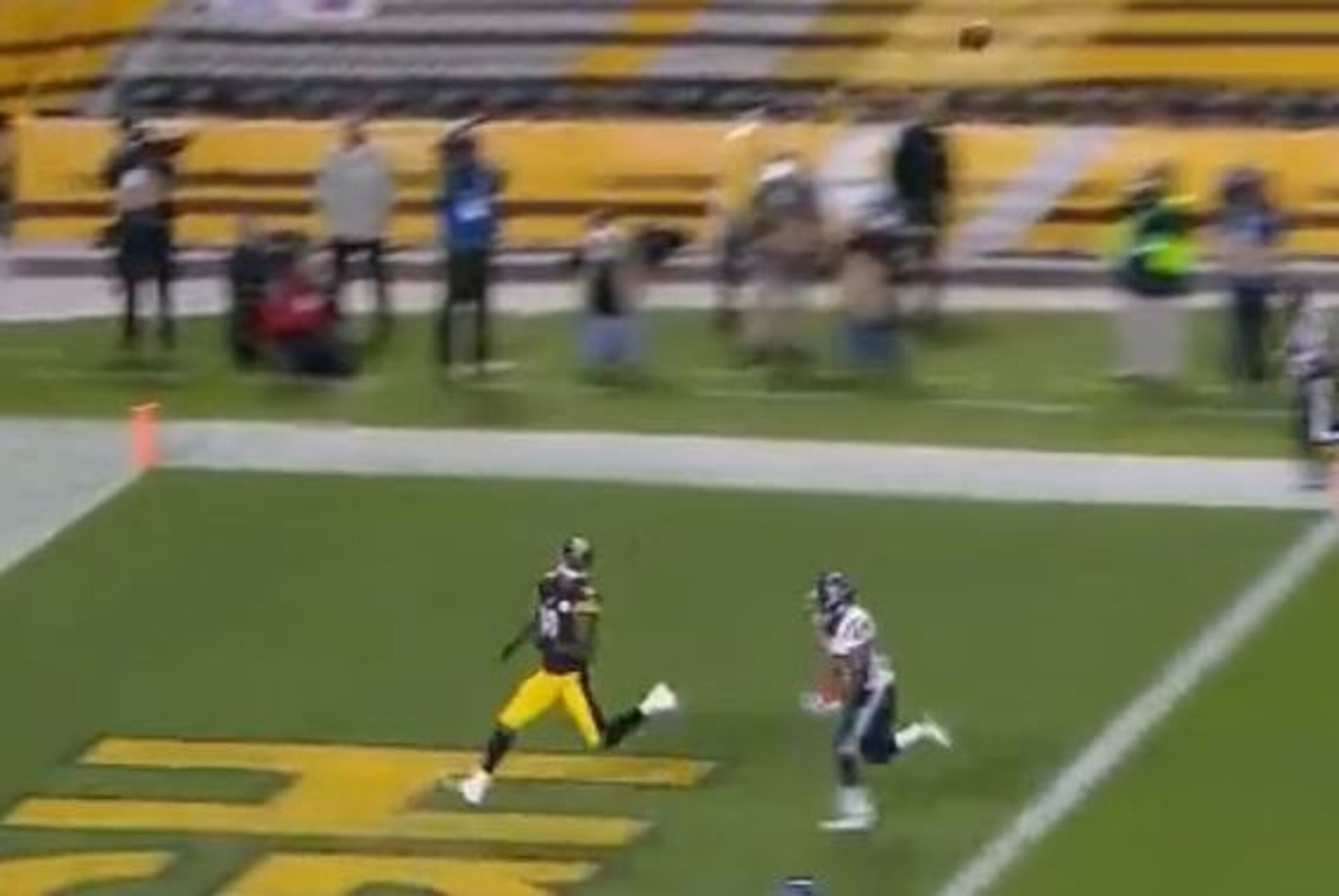
That reception marked a trio of firsts for Bryant: His first career catch, his first career 20-plus yard catch (it went for 35 yards) and his first career touchdown.
And the height? That looks like this, with Bryant able to adjust to an underthrown ball deep downfield, and then elevate to meet the ball at its highest point while boxing out New York Jets cornerback Phillip Adams.

Bryant’s unique athletic tools resulted in an incredible average of 21.1 yards per reception in 2014, which was first among receivers on the field for at least 25 percent of their team’s snaps, according to Pro Football Focus.
It’s not difficult to see a near future when Bryant’s production is alongside those who led his draft class, even though he waited until the 118th overall pick to hear his name.
Jarvis Landry (rookie season: 16 games, 702 snaps, 758 yards, 5 touchdowns)
Playing in the slot as a receiver and doing it consistently at a high level requires a certain set of skills.
You need speed, sure, but a slot receiver also needs the body control to halt that speed abruptly, bending a route while shaking a defender.
You need precise route running, sure, but a slot receiver also needs the vision to read coverage in sync with his quarterback. Hopefully both receiver and quarterback see the same thing on option routes.
You need to be the Giants’ Victor Cruz or the Packers’ Randall Cobb, two of best young slot receivers. Or you can also be Jarvis Landry.
| Jarvis Landry | 78 | 63 | 80.8 |
| Wes Welker | 56 | 42 | 75.0 |
| Anquan Boldin | 70 | 51 | 72.9 |
| Cole Beasley | 40 | 29 | 72.5 |
| Golden Tate | 65 | 47 | 72.3 |
The Miami Dolphins receiver’s steady hands and ability to find open space led to 623 receiving yards from the slot. In his first season, that already gave Landry a fifth-place perch among every receiver who lined up from the slot for even a single snap. He also finished third in slot receptions with 63 (all per PFF).
Landry’s shifty, elusive footwork created an immediate connection with quarterback Ryan Tannehill. He was at ease while feeding Landry on short-to-intermediate routes that the 22-year-old then turned into long gains.
The sight of Landry juking and weaving for yards after the catch will grow in frequency, just as it will for another similarly gifted slot receiver.
Jordan Matthews (rookie season: 16 games, 779 snaps, 872 yards, 8 touchdowns)
Let’s talk some more about efficiency, because that’s a fun topic with the Eagles’ own darting slot man, Jordan Matthews.
He became the ideal weapon for Eagles head coach Chip Kelly: A slot receiver who can accelerate off the line of scrimmage to reach top speed fast and take advantage of the holes in coverage opened up by play action.
Matthews clicked right away in Kelly's system, making his time on the field matter. He posted the second-highest yards per route run among receivers who ran at least 50 percent of their routes from the slot.
| Randall Cobb | 501 | 2.13 |
| Jordan Matthews | 447 | 1.87 |
| Jarvis Landry | 335 | 1.86 |
| Golden Tate | 368 | 1.85 |
| Anquan Boldin | 345 | 1.80 |
That number and ranking shows how much potential Matthews has as the twinkling jewel in Kelly’s offensive-wizard eye.
Kelly identified a specific player in the second round of his first draft and a specific use for said player. Matthews ran 92.4 percent of his routes from the slot in 2014, the NFL’s highest rate, per PFF.
Matthews is slippery, finishing 15th overall in yards after the catch among all receivers. He's one of the transcendent receivers in his draft class, and now with Jeremy Maclin gone—along with his 143 targets, putting him on the other end for 23 percent of the Eagles’ throws in 2014—the next step for Matthews should be a giant one. That's especially true if he’s elevated and featured more often in two-receiver sets, as Birds 24/7’s Sheil Kapadia suggests.
Donte Moncrief (rookie season: 16 games, 547 snaps, 444 yards, 3 touchdowns)
There’s a constant streak of blue when receivers Donte Moncrief and T.Y. Hilton are on the field together for the Indianapolis Colts.
Moncrief entered the league a little raw after being selected in the third round (90th overall), and he needed to develop his route running. That’s partly why he was brought along slowly in his first season, appearing on the field for only 39.4 percent of the Colts’ offensive snaps. Learning the entire route tree for offensive coordinator Pep Hamilton’s playbook—one that doesn’t designate X, Y and Z receivers—also slowed Moncrief’s progress.
But you can only hold back a naturally blessed athlete for so long. Moncrief flashed that ability in his brief opportunities, with two 100-plus-yard games despite only 32 regular-season receptions on 46 targets including the postseason.
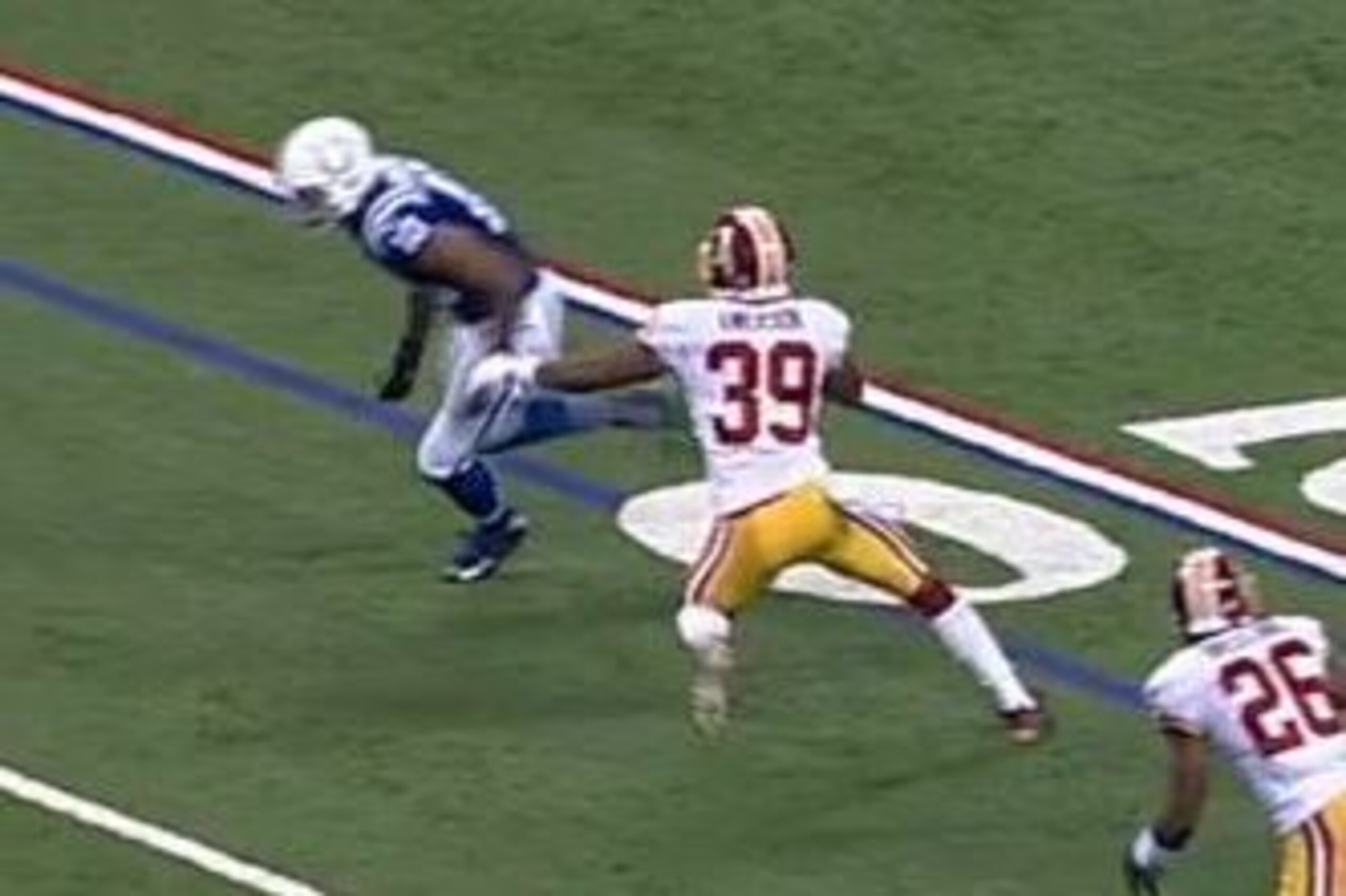
Those moments of brilliance included a 79-yard touchdown reception in which Moncrief pretty much needed only one step to get open. It came against the Washington Redskins in Week 13.
First he stutter-stepped off the line, then he broke quickly to his right with a wide stride…
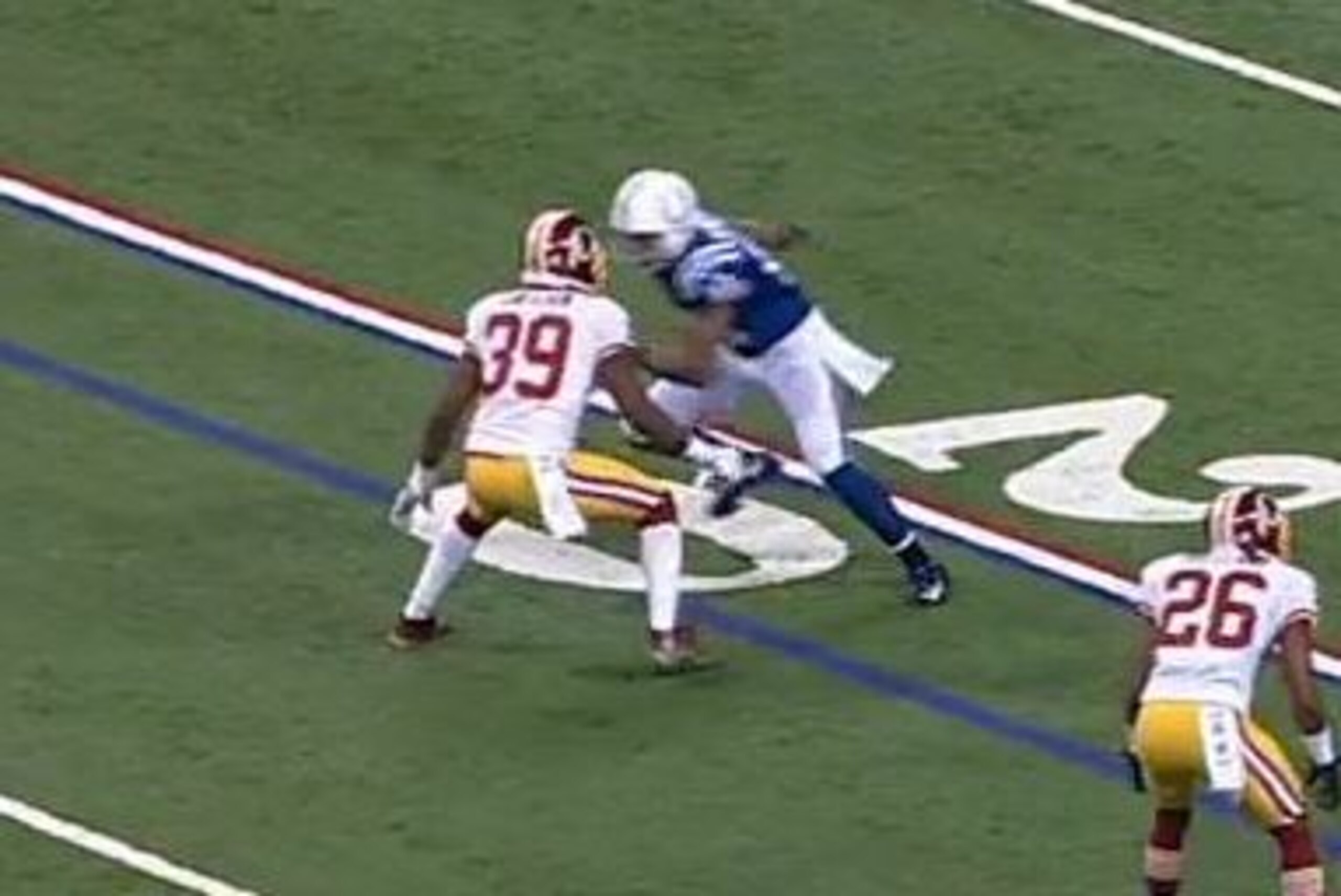
An instant later, he was gone. In the face of press coverage, Moncrief avoided contact and was free to run in the open field.
The Colts are overflowing with weapons for quarterback Andrew Luck now, especially after the addition of receiver Andre Johnson during free agency. He’ll be the trusted set of veteran hands, while Moncrief and Hilton are the future.
Brandin Cooks (Rookie season: 10 games, 545 snaps, 550 yards, 3 touchdowns)
The New Orleans Saints dismantled their core offensive identity when they traded away tight end Jimmy Graham. But a still-shiny and new (though slightly damaged) toy remains: wide receiver Brandin Cooks.
The fastest receiver at the 2014 scouting combine is versatile and has the skill set to excel in space, which is why the Saints primarily used him on short underneath routes during an injury-shortened season (he suffered a thumb injury in Week 11). Of Cooks' 53 total receptions, 35 came either behind the line of scrimmage or within 10 yards, per PFF.
The Saints will have a run-oriented offense without Graham in 2015, which is why an effort was made to retain running back Mark Ingram in free agency. But between Cooks and newly signed running back C.J. Spiller, they’ll also have a passing offense that focuses on those intermediate areas, seeking opportunities to create plays and yards after the catch.
An offense that leans heavily on mismatches in space falls into Cooks’ wheelhouse. Please recall that during his final season at Oregon State he totaled 1,947 yards from scrimmage, 217 of which came on the ground from 32 carries.
The wide receiver revolution will continue
We watched history in 2014.
The last time more than one rookie receiver topped 1,000 receiving yards came in 1986, according to NFL.com’s Chris Wesseling. Three did it in 2014, and a record nine rookies caught at least five touchdown passes.
I only scratched the surface here. Cardinals receiver John Brown caught three game-winning touchdowns, tying him for the most in single-season history. The Jaguars’ Allen Robinson took off with 548 receiving yards for a weak offense before his season ended early after 10 games. And the Packers’ Davante Adams emerged late in the season, highlighted by 117 yards on seven receptions during a playoff win over the Dallas Cowboys.
One of the best wide receiver draft classes of all time will grow quickly, starting with bounding steps forward in year two.
.jpg?w=2560 "Jets Dolphins Football")
.jpg?w=2560 "Ward Nearly Walks Out of Presser ▶️")
