
Teams on Upset Alert on Day 3 of 2015 NCAA Tournament
March is all about upsets.
Shocking early-round results in the NCAA tournament are almost inevitable, and that's what captivates campuses, bars and offices across America. The opportunity for a little-known college to eliminate a powerhouse begins Thursday, when the frenetic round of 64 gets underway.
It should be a very lively day. At least seven lower seeds look like they have a chance to prevail. And we're not counting the 7-10 or 8-9 games, or even Texas (No. 11), which is the Las Vegas favorite against No. 6 Butler.
We're ranking these from most likely to least likely to happen, starting with spry Eastern Washington putting a first-day smackdown on Georgetown, because the Hoyas have to travel so far—and because EWU is already talking about a win. We're basing this in large part on the "eye test." If it works for the selection committee bringing in UCLA, it should work for this, too. We're also considering matchups, tournament dynamics and history.
There should be a lot of good stuff for the eyes today, especially if you're into higher seeds going down.
A couple of No. 3 seeds highlight a Day 3 of the NCAA tournament buzzing with upset alerts. And then there's No. 12 Stephen F. Austin trying to replicate its damage from last year against a talented but tournament-unproven No. 5 Utah.
Three times in the past three NCAA tournaments a No. 15 seed has taken out a No. 2 seed. Mercer was a No. 14 seed last year and took it to Duke.
So, something's going to happen. Read on to see what higher seeds are at the most risk of heading home early.
All stats via KenPom.com unless otherwise stated.
Georgetown
1 of 7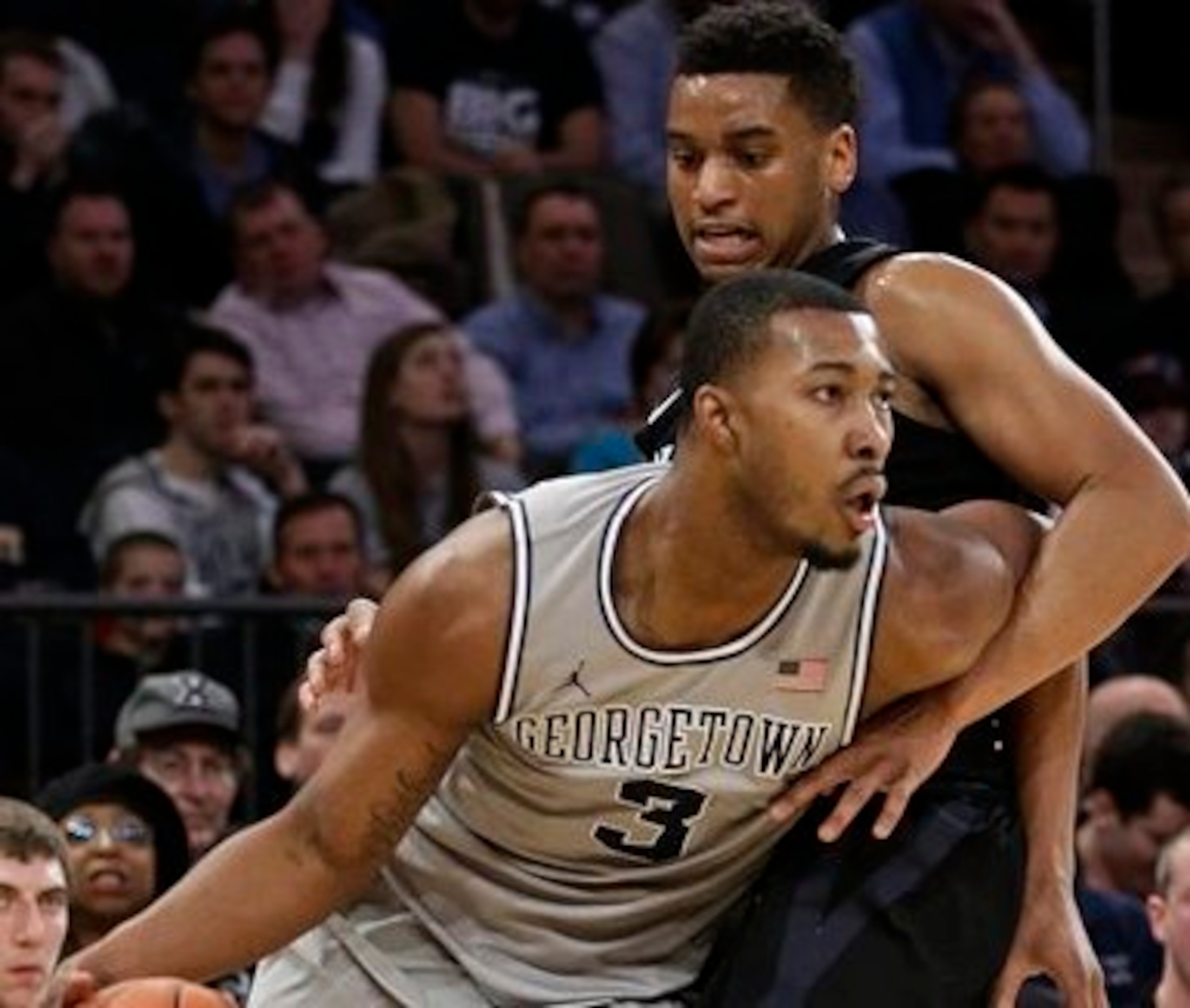
No. 4 seed Georgetown vs. No. 13 seed Eastern Washington (South Region)
Sometimes higher seeding isn't all it's cracked up to be.
Georgetown is presumed by many pundits to be over-seeded (Joe Lunardi had the Hoyas as a No. 6 seed). Now they have to travel to Portland, Oregon (approximately 2,800 miles), for a 10 p.m. ET tipoff and face the nation's leading scorer in front of a road-like crowd.
If that's not enough, they also have to try to overcome a nasty history of losing in the first NCAA game (three of the last four years).
Eastern Washington won at Indiana, connects on 40 percent of its three-point tries and loves to push tempo with Tyler Harvey (23.1 PPG). Get used to hearing the 6'4" sophomore's name. Can GU shake the jet lag and keep up?
D'Vauntes Smith-Rivera is a terrific guard, but he's surrounded by four true freshmen. The group ranked No. 87 nationally in scoring offense (70.7 PPG) and snoozes at defending the three-point line.
GU seems to have gotten bonus-seeding points for close losses to Wisconsin and Kansas, as it went 1-5 against RPI Top 25 teams and 4-10 against the Top 50.
It also doesn't get any more "upset alert" than the lower seed's coach, Jim Hayford, already bragging that his team is going to win.
Xavier
2 of 7
No. 11 Ole Miss vs. No. 6 Xavier (West Region)
Xavier will be playing a team that has already felt the NCAA tournament atmosphere and will be loaded with supreme confidence. Perhaps too much?
The Musketeers defense isn't exactly Kentucky, but it's still about three times better than BYU's.
The challenge is obvious.
Stefan Moody put the hot in the Ole Miss "Hotty Toddy" on Tuesday night. Now with just one day of rest and more travel—from Ohio to Florida this time—Xavier will have to contend with a fascinating team that shot 60 percent from the floor in the second half. Moody went 10-of-18 for the game, erasing a 17-point deficit and scoring 26 points. Mississippi has scored more than 80 points in three of the past four games.
The arc will determine this one, and Xavier isn't exactly a stopper there—ranked 210th nationally.
It is similarly constructed physically to BYU, but the difference is 6'10" senior Matt Stainbrook, a big and solid inside-scoring presence. Xavier won't just settle for long jumpers. He had 59 points over three games before going cold (2-of-8) against Villanova last Saturday in the Big East tournament championship.
Xavier will try to mix up defenses a lot to keep Ole Miss out of rhythm. The best thing the Musketeers do is keep opponents from getting offensive rebounds.
SMU
3 of 7
No. 6 seed SMU vs. No. 11 seed UCLA (South Region)
If you put stock in KenPom.com's overall team rankings, this looks exactly like a 6-11 game, but results—and all the angst about the Bruins—make it more deceiving.
SMU is 21st, and the Bruins are 42nd. Odds Shark actually has it as a close spread (SMU favored by four points), but we'll include it because of the disparity of the seeding.
SMU is certainly talented—Nic Moore leads the charge—but it may be just as over-seeded as the Bruins, who had just two victories against at-large tournament teams.
Still, SMU's big challenge is facing a 20-13 team that can play a poker hand's worth of "disrespected" cards and managed to win four in a row before losing a six-point decision to Arizona in the Pac-12 tournament semifinals. It has a first-team All-Pac-12 player, Norman Powell (16.4 points, 4.7 rebounds), in the deck, too.
SMU ranks No. 7 in field-goal defense (38 percent), which is good—the Bruins are averaging 72 points a game. The question is whether SMU's faced enough quality teams in the regular season.
SMU's RPI is in the top 15, but its five best wins all came against Temple or Tulsa. Larry Brown's team only went 2-5 against the NCAA field, defeating Wyoming and Eastern Washington—a No. 12 and No. 13 seed, respectively.
But SMU does have formulas on its side—a top-50 efficiency team at both ends of the floor, which averages about seven more offensive rebounds per game than its opponents. Yanick Moreira and Markus Kennedy are bigs who provide balance around leading-scorer guard Moore, each averaging about 11 PPG and six RPG.
.jpg?w=2560 "Chiefs Giants Football")
.jpg?w=2560 "Titans Colts Football")
Utah
4 of 7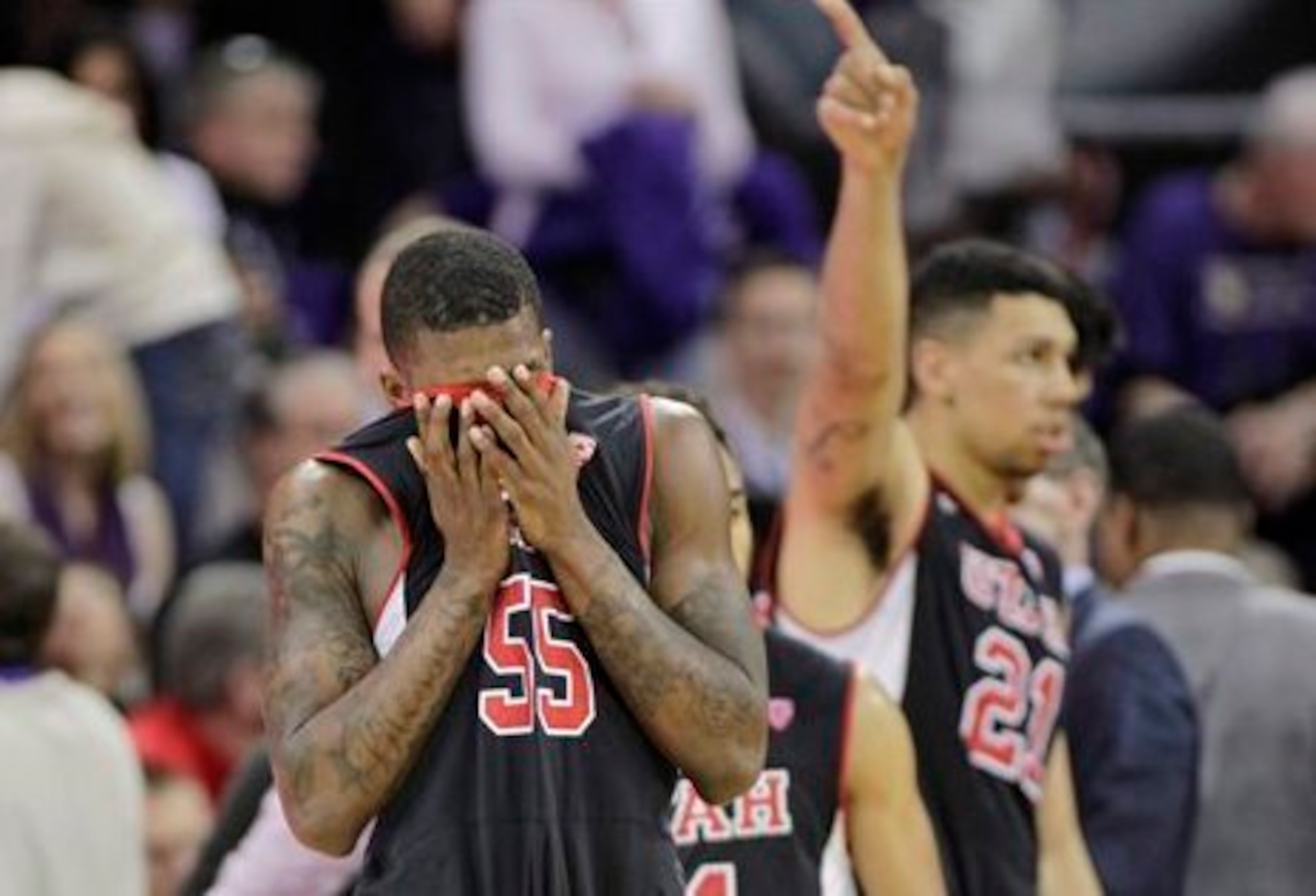
No. 5 seed Utah vs. No. 12 seed Stephen F. Austin (South Region)
If this choice were any trendier, it'd be titled "Uptown Funk."
Utah's biggest problem, from an upset perspective, is the Lumberjacks just feel so veteran and familiar.
Utah hasn't been to the NCAA tournament in six years, while Stephen F. Austin has most of the names back from last year's big upset of VCU—and it's a No. 12 seed again.
Utah has lost three of its last five and now faces an ultra-confident team that shoots 49 percent from the field (fifth nationally) and moves the ball crisply. A versatile, deeper-than-last-year team leads the country by averaging nearly 18 assists.
SFA's big issue for this matchup is size. It doesn't have a true center, while the Utes have 7-footers Jakob Poeltl and Dallin Bachynski in the rotation. Utah will have to find the balance of when to go big and when to play SFA's game.
This will be a fascinating tug-of-war for tempo. Lately, Utah's struggled to leverage the rope.
Utah's second-half defense in its last two losses has been atrocious, as Washington and Oregon each hovered around 60 percent shooting. SFA has a top-10 effective field-goal percentage.
Utah needs star Delon Wright's scoring, passing and, most importantly, his 6'5" wingspan on defense to also keep SFA out of rhythm. Otherwise, Utah will become another notch in what's virtually become an annual 12-5 upset, including six in the last two years.
Arkansas
5 of 7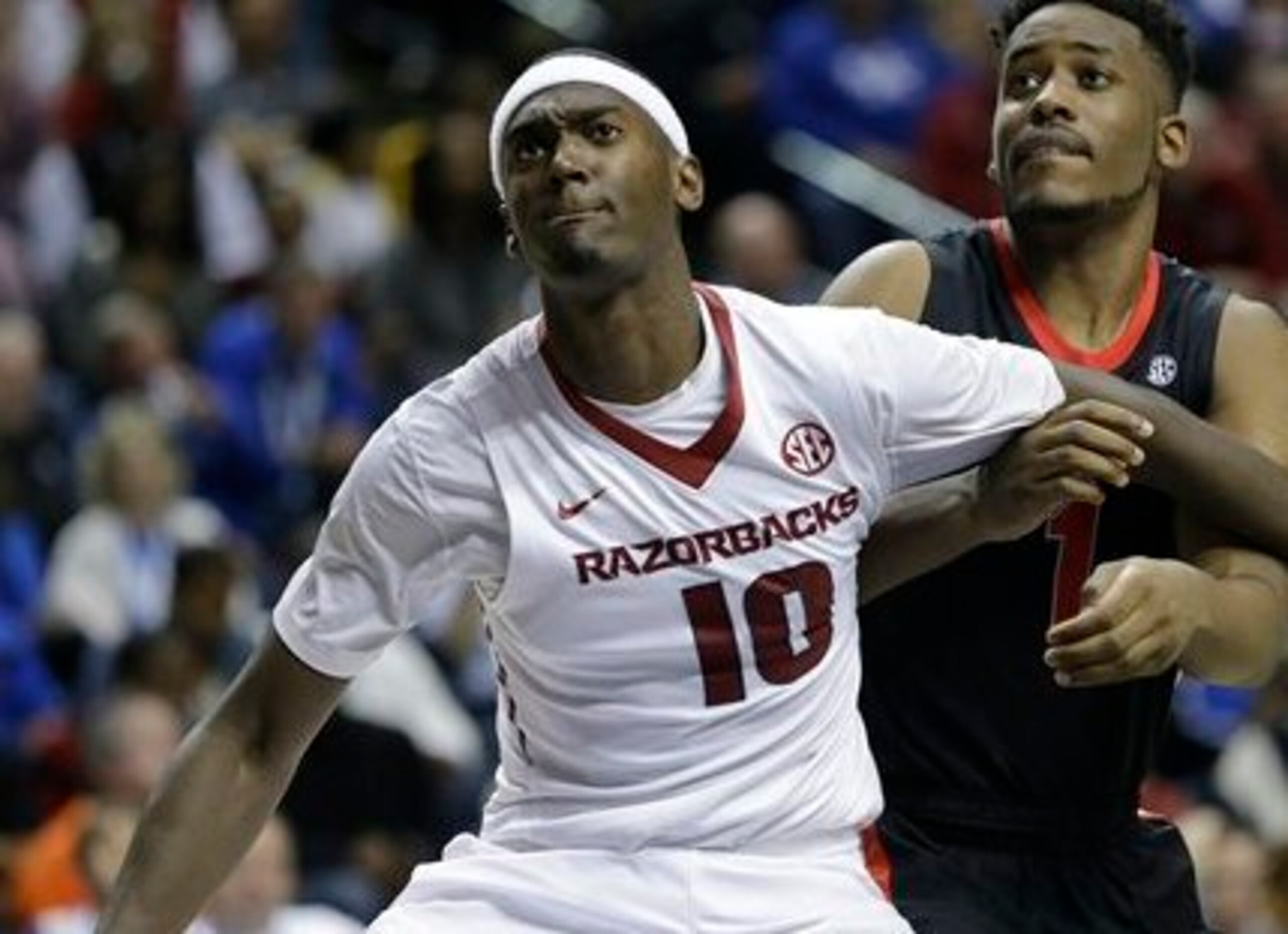
No. 5 seed Arkansas vs. No. 12 seed Wofford (West Region)
Arkansas has Bobby Portis, his 6'11" size and top-tier SEC skills serving as a terrific advantage the Terriers cannot replicate.
The Razorbacks also like to run, but that won't be quite the same edge. Wofford has seen that all before with VMI—a fellow Southern Conference team that is No. 1 by KenPom.com's adjusted tempo rating, 10 spots higher than Arkansas. The Terriers controlled the pace and committed an average of 11.5 turnovers in two wins.
More important than beating an 11-19 team, Wofford is no stranger to high-level competition. It won at North Carolina State by a point in mid-December and had nine offensive rebounds, producing 14 more shots.
Arkansas is dealing with a deliberate offense that thrives with shot selection. The Terriers will try to learn from last year's stiff performance (57-40) against Michigan, when it was a No. 15 seed and had just one senior.
Arkansas is new to this game, but it will try to even the field with skill and athleticism. It averages about seven steals a game. Between their speed and size—about 270 spots higher on effective height—the Razorbacks will figure they can disrupt whatever Wofford has up its sleeves.
And Mike Anderson's team is hopeful for steady scoring to keep up with Wofford. Bob Holt of the Arkansas Democrat-Gazette notes this Arkansas team has four players with more than 1,000 career points. That hasn't happened since 1990-91, during Pig Sooie's great legacy.
Notre Dame
6 of 7
No. 3 seed Notre Dame vs. No. 14 seed Northeastern (Midwest Region)
Not long after Saint Patrick's Day and we're already discounting the Irish?
Notre Dame features Jerian Grant and a group that just went into the heart of ACC country, defeated Duke and North Carolina on back-to-back nights and won the conference tournament title. The Irish are incredibly efficient and skilled as can be on offense. Confident as heck and deservedly so. But there are some lingering doubts.
Certainly, it's fair to roll your eyes at the history argument. But note that Notre Dame hasn't reached a Sweet 16 since 2003 and missed the tournament last year. This team is ranked 112th in adjusted defensive efficiency.
Northeastern will spread the ball on the perimeter, like Notre Dame, and the Irish's greatest fear is 6'8" senior Scott Eatherton (14.6 PPG, 6.4 RPG), who becomes the Huskies' version of Grant. Northeastern shoots 48.6 percent from the field, ninth nationally, and connects on nearly 39 percent of its three-point shots (6'6" junior David Walker is at a team-best 39.4).
And a matchup zone it uses is something the Irish will need to handle better than during a Feb. 24 loss to Syracuse. Notre Dame missed 19 of its 22 three-point attempts.
If coach Mike Brey's rock-solid team can get in such a big funk against an inferior opponent at home, an upset like this is certainly possible in Pittsburgh.
Baylor
7 of 7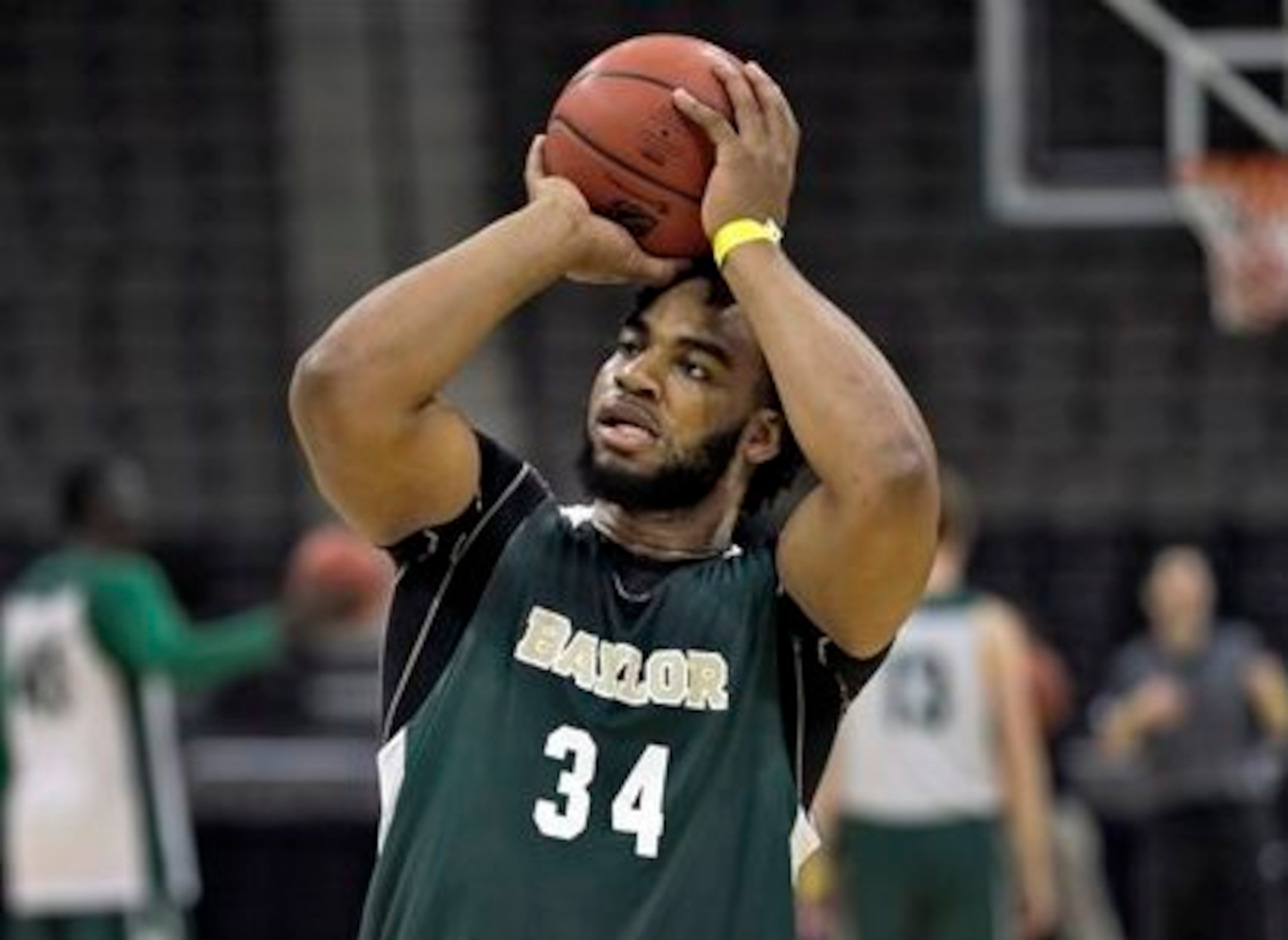
No. 3 seed Baylor vs. No. 14 seed Georgia State (West Region)
This will be one of the hardest upset alarms to sound, but Georgia State does bring some history and current success to raise some Baylor concerns.
The Panthers are among the top 15 teams in the NCAA in opponent field-goal percentage and held 11 opponents under 30 percent.
Georgia State ranks sixth in the nation in steals and 14th in field-goal percentage. R.J. Hunter (19.8 PPG, 4.8 RPG, 3.6 APG) and Ryan Harrow (18.7 PPG, 2.1 RPG, 3.7 APG) lead the charge, and former Louisville guard Kevin Ware is dying for a chance to become more than just a gruesome NCAA tournament injury story.
His team won this year's ugly Sun Belt tournament championship game, 38-36, but Ware found a way to score 18 points, and Harrow didn't play because of a lingering hamstring injury.
That sets up a lot of interest with 6'8", 280-pound Rico Gathers, Baylor's giant rebounder. The Panthers will have a big proving ground for senior Curtis Washington, who has two inches on Gathers but still gives up 50 pounds.
Baylor's defense also might be too long and strong for the Panthers in general. Scott Drew's teams is the only NCAA tournament team to hold all opponents under 75 points this year. Baylor's current 60.3 PPG allowed is its lowest season average in 56 years.

.jpg?w=2560 "Steelers Buccaneers Football")
.jpg?w=2560 "🚨 Week 8 AP Top 25 Poll")
.jpg?w=2560 "NFL investigating Eagles")
.jpg?w=2560 "Steelers Roll Saints in Paris")
