

NCAA Tournament 2015: Ranking the Toughest Regions
The debates and picks can begin now that the committee has made the 68 NCAA tournament selections.
But there's one fact that can't be debated: Everyone feels like there's a weakest region, a strongest region and two somewhere in the middle.
There's the overseeded and the underseeded—try as it might, the NCAA men's basketball selection committee faces an impossible task of balancing out all four regions of the tournament field into equal quadrants. This year it seemed to do a solid job of finding balance among the first four seed lines.
Gotta feel bad for Kansas, though, which drew the dreaded No. 2 seed in Kentucky's region. But otherwise, it looks wide open everywhere—some places more than others.
In determining our rankings for the regions, we look for hot hands and which teams are cooling off. We look for differences in schedule and opposites in style. We look for anyone to give Kentucky a game.
Collectively, America wonders about UCLA.
But the speculation about who's in and who's out is all over and done, and now all that's left is to analyze everything from the smoothest roads to the bumpiest.
4. East Region
1 of 4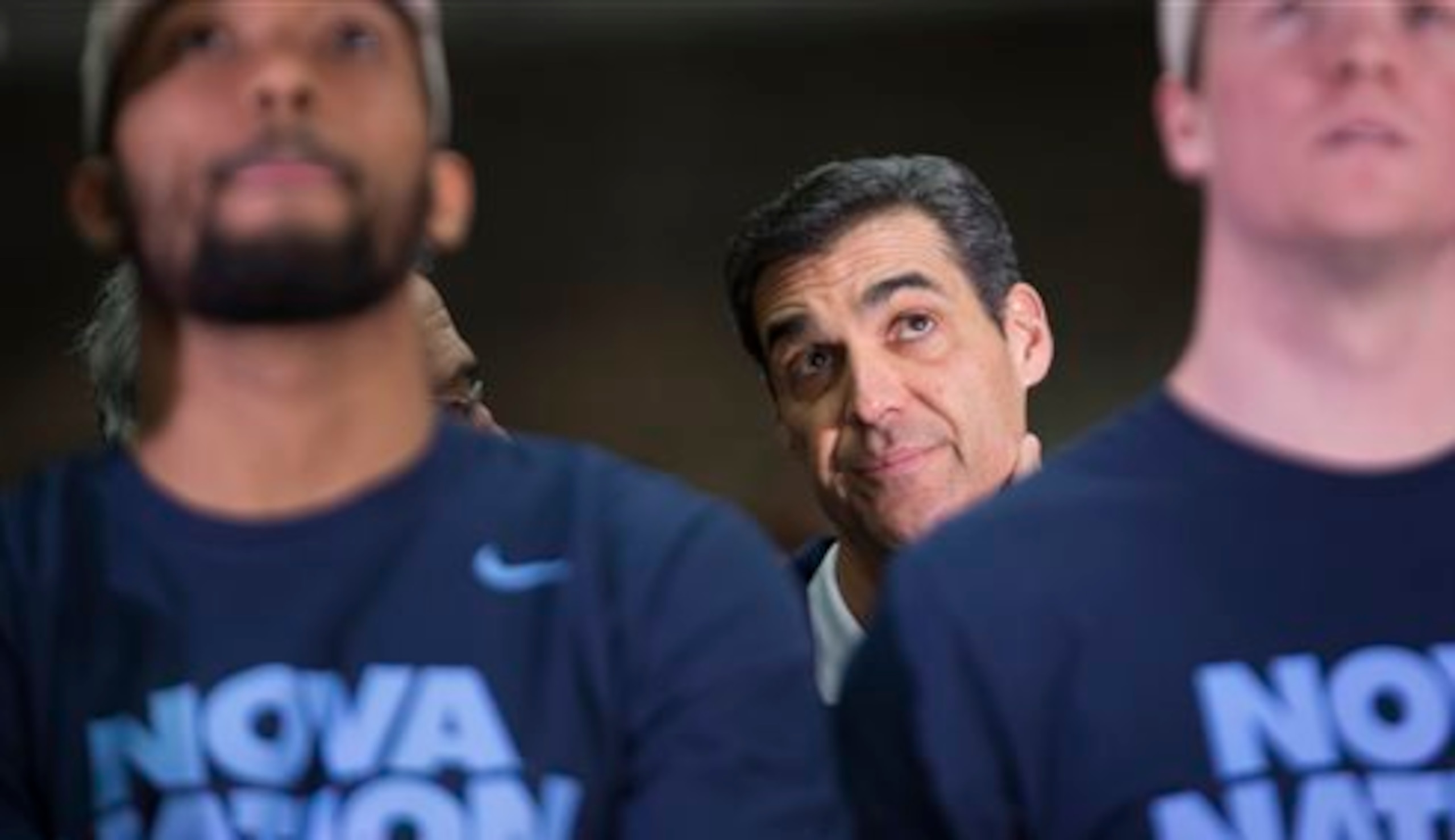
Top Seeds
No. 1 Villanova (32-2), No. 2 Virginia (29-3), No. 3 Oklahoma (22-10), No. 4 Louisville (24-8)
Who’s Underrated?
North Carolina State (20-13) is a No. 8 seed that will get a lot of attention considering the way it rallied in the ACC to get into the field with an easy at-large bid. Anthony “Cat” Barber has averaged 16 points in his last 11 games.
Barber had 34 in the ACC tournament's first round against Pittsburgh, the kind of game NC State had to win to assure itself a spot in the field. That performance came at the biggest time, and the Wolfpack are fortunate Barber’s been cleared for further action after some neck issues in last Friday’s loss to Duke.
Sleeper to Watch
Wyoming (25-9) has blossomed into an NCAA qualifier for the first time in more than a decade. This could go one of two ways: it could freeze in the spotlight, or it could take advantage of a nice matchup with a mid-major No. 5 seed like Northern Iowa. The Panthers are no joke, but Wyoming survived an oddball Mountain West championship game (45-43 against San Diego State) and has Larry Nance Jr. playing rejuvenated ball after a midseason battle with mononucleosis.
Why It’s the Weakest Region
Villanova hasn’t gotten out of the first weekend in the last three years, which virtually guarantees the region is up for grabs. Factor in Virginia's Justin Anderson making an ACC tournament return after an eight-game absence (broken finger, appendicitis), plus the issues Louisville has had...a lot can, and will, happen in the East.
There are potential matchups all over the board that could keep this from being a “chalk” region.
3. Midwest Region
2 of 4Top Seeds
No. 1 Kentucky (34-0), No. 2 Kansas (26-8), No. 3 Notre Dame (29-5), No. 4 Maryland (27-6)
Who’s Underrated?
Buffalo (23-9) lost both of its games against top-level competition this year. But it had a halftime lead at Kentucky and also gave Wisconsin a scare right before the new year. The Bulls lost by 12 and required Wisconsin star Frank Kaminsky to be on the floor for 38 minutes. Sure, he had 25 points and 11 rebounds, but the point is he had to work a little more than UW fans probably figured.
Justin Moss is only 6'7", but he shoots better than 50 percent from the floor, and he leads a team that can score—four players around the 10-per-game mark and two who shoot better than 45 percent.
The big issue will be a spotty defense that changes styles mostly because it doesn’t offer a whole lot of resistance in any particular form. Buffalo earned its first league title with Bobby Hurley, a focused coach who led Duke to consecutive national championships in 1991 and 1992.
Sleeper to Watch
Wichita State (28-4) has recent tournament history, and a fresh start, on its side. The Shockers picked up a No. 7 seed and get to start with an overrated Indiana before likely getting to face a banged-up Kansas that plays the kind of helter-skelter ball that works in Wichita coach's Gregg Marshall’s favor. So does playing the “underdog” card. Now WSU can finally get back to its mantra of playing angry. It's been dying to play the Jayhawks, who refuse to schedule them, and this could be a prime shot.
Why It’s the Second-Weakest Region
When one looks at this with face-value glasses, UK has a tough ride. The best team in the Big 12. The hottest team in the ACC. Don’t forget Maryland ready to strike as a No. 4.
But based in part on the possible loss of Cliff Alexander, this Jayhawk team isn’t a whole lot better than the one the Wildcats obliterated in November. Brannen Greene has gone cold from three-point range (two for his last 20), and Perry Ellis appears a little bothered in his new knee brace.
It just feels like Notre Dame’s run is close to done, considering past tournament fades. That may be unfair when one takes into account the roll the Irish are on, but coach Mike Brey hasn't been to a Sweet 16 since 2003. This is the year to reform reputations, but doing it against Kentucky at any point doesn't seem possible.
Maryland has been stronger than anyone could’ve expected, but its Big Ten semifinal loss to Michigan State showed the margin for error is really thin.
From the other 15 teams' perspective (and most fans) this is the toughest bracket. Someone has to get through Kentucky. But if you look at it from UK's perspective, it's not the worst march.
2. South Region
3 of 4
Top Seeds
No. 1 Duke (29-4), No. 2 Gonzaga (32-2), No. 3 Iowa State (25-8), No. 4 Georgetown (21-10)
Who’s Underrated?
UCLA (20-13) and SMU (27-6) are two teams that could reasonably get this award.
SMU, led by legendary coach Larry Brown, has the ability to play better than its slot as a No. 6 seed. But oh, what an “upset” charge Steve Alford can build in Westwood with UCLA, which is the clear laughingstock, besieged by virtually all pundits about not belonging. The NCAA committee made a head-scratching choice concerning the Bruins.
Some reputations of the 10-person committee and the Pac-12 are riding on UCLA showing well.
However, even Doug Gottlieb's calmed-down analysis on CBS' broadcast pointed out later that, now that the Bruins are in, they’re fully capable. UCLA won four of its last five and only lost by six points to Arizona. Yes, you’re still laughing. That’s not a bad thing for UCLA, although it is 2-8 against the NCAA tournament field. But stranger runs have been produced this time of year.
Sleeper to Watch
Stephen F. Austin (29-4) has more tournament experience than its first-round opponent, Utah, and is just going to have to find ways to get over its size disadvantage against the Utes, who feature the inside presence of Dallin Bachynski (7'0") and Jakob Poeltl (7'0"). Utah hasn’t been to the tournament since 2009.
SFA as a No. 12 seed features a four-guard rotation that is better than last year’s unit, which pulled the upset on VCU. Thomas Walkup is a junior guard who averages nearly 16 points per game. It's a wicked No. 12 vs. No. 5 game, especially as Utah has slumped with three losses in five games, and not an Arizona to blame.
Why It’s the Second-Toughest Region
Duke has a nice chance to run through the region, but it should face some interesting obstacles along the way. There’s the potential to give the Blue Devils some chaos among the other top-four seed lines. The question is whether the three highest seeds right behind Mike Krzyzewski’s team have the postseason experience or (in best Bill Raftery voice...) the "onions" to be fully recognized as threats quite yet.
Gonzaga’s athleticism is questionable at this level, even if its efficiency is terrific (No. 2 effective field-goal percentage, says KenPom.com). It's not a wildly better team than the 2013 group, which also had terrific big presence (led by future first-round NBA pick Kelly Olynyk) and earned a No. 1 seed but was bounced by No. 9 Wichita State.
And Iowa State appears as if it will really struggle with Duke freshman big man Jahlil Okafor. The flip side is the three-point versatility the Cyclones have. They're a fast drive-and-kick team. Those groups have generally caused the Blue Devils' perimeter defense fits for a few months.
No. 4 Georgetown just feels overseeded. Perhaps that's because of a recent string of early exits. Or because center Josh Smith is arguably the most mercurial piece of the region's puzzle, even as D'Vauntes Smith-Rivera is one of the best guards in the country.
.jpg?w=2560 "Chiefs Giants Football")
.jpg?w=2560 "Titans Colts Football")

1. West Region
4 of 4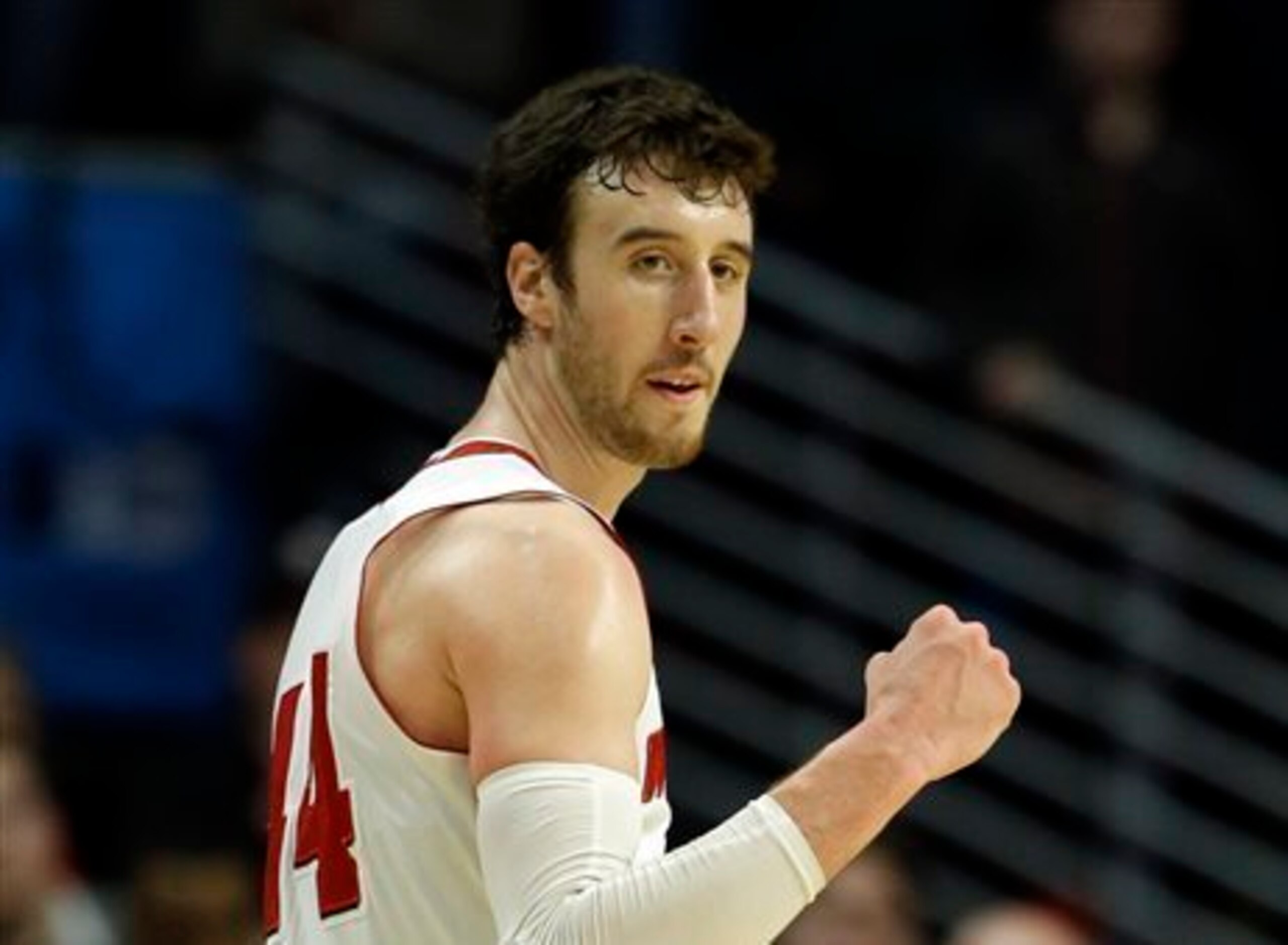
Top Seeds
No. 1 Wisconsin (31-3), No. 2 Arizona (31-3), No. 3 Baylor (24-9), No. 4 North Carolina (24-11)
Who’s Underrated?
BYU (25-9) didn’t get prime position—it’ll have to go to Dayton, Ohio, for the First Four in a No. 11-seed meeting. But the Cougars bring a nice bit of tournament experience and a couple of unique producers in senior scoring threat Tyler Haws and triple-double master Kyle Collinsworth.
Haws is now in the final stage of his career. He became the school's all-time leading scorer, and the Cougars are motivated to send him out with at least a Jimmer Fredette-like appearance in the Sweet 16. BYU's pace and conditioning can be difficult to prepare for, but a lack of interior size is the big question mark.
Sleeper to Watch
VCU (26-9) remade itself and won its last five games, including the Atlantic 10 tournament championship. Briante Weber’s absence (ACL) clearly changed the Rams, especially on defense, but Treveon Graham and JeQuan Lewis are finding themselves and teammates high-quality shots.
VCU has undergone a rebirth that still focuses on a uniquely paced defense that is hard to prepare for. The Rams' experience has produced two tournament wins during the past three years after the Final Four run of 2011, and it smacked down an ultra-hot Davidson in the Atlantic-10 semifinals.
Why It’s the Toughest Region
One of those top four teams just isn’t like the other. That would be North Carolina, which is an offensive team, while Wisconsin, Arizona and Baylor are all going to bludgeon opponents (and likely each other) with pace and sturdy defense.
There are big coaches and a horde of talent dying to reach a Final Four.
Wisconsin picking up that No. 1 seed was a coup, because at least it kept the Badgers away from an Elite Eight matchup with Kentucky (shame on the committee if it had gone with the keep-them-close concept). The Badgers’ rally Sunday against Michigan State was a confidence boost.
Going to Los Angeles for the second weekend is a small price to pay for the Badgers. And the rest of this region has the chance to play very much to seed in the early rounds. But as for the top four, that will be a battle.
Arizona has won 11 in a row and gets to stay in the West, where it’ll have a fanbase.
Then there’s North Carolina, which has shown glimpses of greatness but couldn’t beat Duke and went 3-7 against the RPI’s top 25 teams. Roy Williams' crew just doesn't seem to have that extra gear. Same with zone-defense-minded Baylor, which fell three times to shaky-shooting Kansas.
But there’s one ultrafast gear we haven’t even talked about: a certain freshman at Ohio State. The Buckeyes’ value (1-7 against the RPI top 50) isn’t the best, but they have D’Angelo Russell, and he could make this his tournament interesting—or at least one heck of an NBA draft showcase.
Frank Kaminsky, Russell and Arizona’s Stanley Johnson make this a delicious bracket to keep eyes on if you're an NBA fan. And whichever team advances to Indianapolis for the Final Four will have earned it the most.
Unless someone upsets Kentucky, of course.
.jpg?w=2560 "Colts Football")
.jpg?w=2560 "Baker Gets Glove From Rays 🧤")

.jpg?w=2560 "NFL investigating Eagles")

