

NCAA Makes Right Call in Not Changing Ineligible Receiver Downfield Rule
The NCAA Playing Rules Oversight Panel announced Friday that it will not change a rule dictating how far ineligible offensive linemen can block downfield on passing plays.
For the second straight year, they got it right.
The current rule allows pass-blockers to move three yards downfield while unengaged with defenders. The proposed change would have reduced that to one yard. But the panel agreed to table discussions for another year and reassess the rule next offseason.
TOP NEWS

Updated CFP Bracket Projections 🔮

Week 5 AP Top 25 Poll 🔢
Top Overreactions after Week 5 of CFB Season 😧
From the official press release:
"Panel members, who met on a teleconference Thursday, felt more discussion about the rule should take place within the college football community before a final decision is made. Additionally, the panel was concerned about the lack of participation in the rules process by head coaches, both in the survey process and comment period. Specifically, while 57 percent of Football Bowl Subdivision head coaches supported this proposed change in the initial survey, only 65 FBS head coaches participated in the survey. Also, while 54 percent of FBS head coaches were supportive of the rule change in the comment period, only 46 FBS head coaches offered comments.
The proposal from the NCAA Football Rules Committee would have allowed ineligible receivers not engaged with an opponent to advance only 1 yard past the line of scrimmage at the time a pass is released. It is the same rule used in the NFL.
"
The NCAA Football Rules Committee passed the proposal in February, believing the change would lead to more consistent officiating.
While true, however, that is no reason to alter the rulebook. Neither is the unsound reasoning that "the NFL uses the same rule."
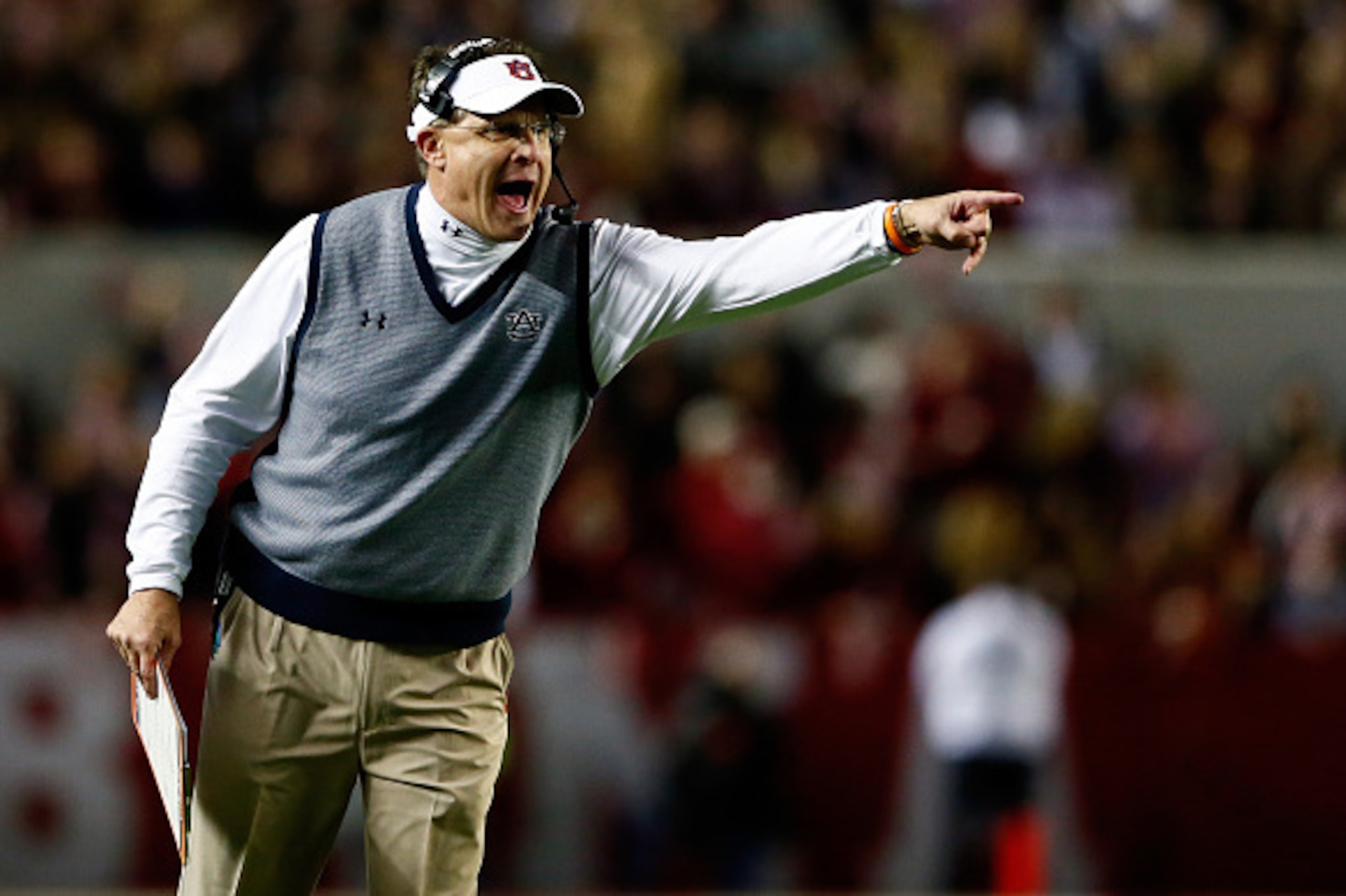
The three-yard rule emboldens offensive creativity, and offensive creativity defines the current era of college football. Ambitious playbooks like those of Auburn and Ohio State distinguish the college game from the pros.
Changing the rule would pare down those offenses into the same homogeneous machines we watch on Sundays.
"It’s going to change the way we do things, those of us who are run-pass offenses, and when you look around college football right now, that’s a lot of us," said Auburn head coach Gus Malzahn, who feared the proposal would pass, according to Chris Low of ESPN.com.
"You’re always looking for ways to be creative, and I don’t think you should ever change the rules to take creativity out of the game unless it’s a safety issue," Malzahn continued. "This is not a safety issue."
Bruce Feldman of FoxSports.com spoke with an anonymous coach who echoed Malzahn's feelings:
It's well-known that officials struggled to enforce the three-yard rule last season. And it's obvious that inconsistent officiating is bad for college football (or any other sport).
But the rules should never be changed to make the referees' jobs easier. The result of such a change would lead to a dangerous slippery slope. Know what else officials can't call consistently? Offensive pass interference. Should we help them by making push-offs legal?

If we train refs to call the three-yard rule properly, we can have our cake and eat it too. We can keep our imaginative offenses and receive consistent officiating.
If we can't train refs to call the three-yard rule properly—well, we have serious problems. But in that case, fine, change the rule.
Presumably, that's why the proposal will come up again next offseason. According to Andy Staples of SI.com, another year of sloppy officiating would compel the panel to pass the rule in 2016:
Give the refs one more chance.
Essentially, that's what the NCAA is doing. And considering the potential impact of this rule change, it's taking a smart risk.
"Scoring will be down," Malzahn said of how the change would affect college football. "You’re not going to see teams scoring as many points, and when it’s getting harder all the time to get fans to come to games, is that something that college football wants?"
On Friday, college football answered, "No."
Follow Brian Leigh on Twitter: @BLeigh35
_0.png?w=2560)


.jpg?w=2560 "Love's Body Already 'Tired'")
.jpg?w=2560 "Tyreek Deal May Come Soon")
.jpg?w=2560 "Ward Nearly Walks Out of Presser ▶️")
