
2015 NFL Draft: 10 Mid-Round Prospects Worth the Risk
NFL draft coverage is focused mostly on the first two rounds and for good reason. After the first 75 picks or so, the success rate for players significantly drops to the point where the value of those selections is almost treated as a lottery ticket more than an asset that should be relied on as a hit in the future.
Still, though, players do slip through the cracks into the mid-rounds, between the third round and Day 3 of the draft. Some teams hit there at a higher rate than others. For example, the Green Bay Packers built the best offensive line quarterback Aaron Rodgers has had in his career in 2014. The result? A second MVP award. Of those five players, four of them went in the fourth round or later, including a fifth-round rookie center.
The key part to drafting in the middle rounds is identifying specific roles in which those prospects can thrive. If they didn't have glaring or multiple flaws, they wouldn't be on the board at that point.
When looking at the talent pool of the 2015 class and where players are currently slated to be drafted, there are 10 prospects who stand above the rest in this area.
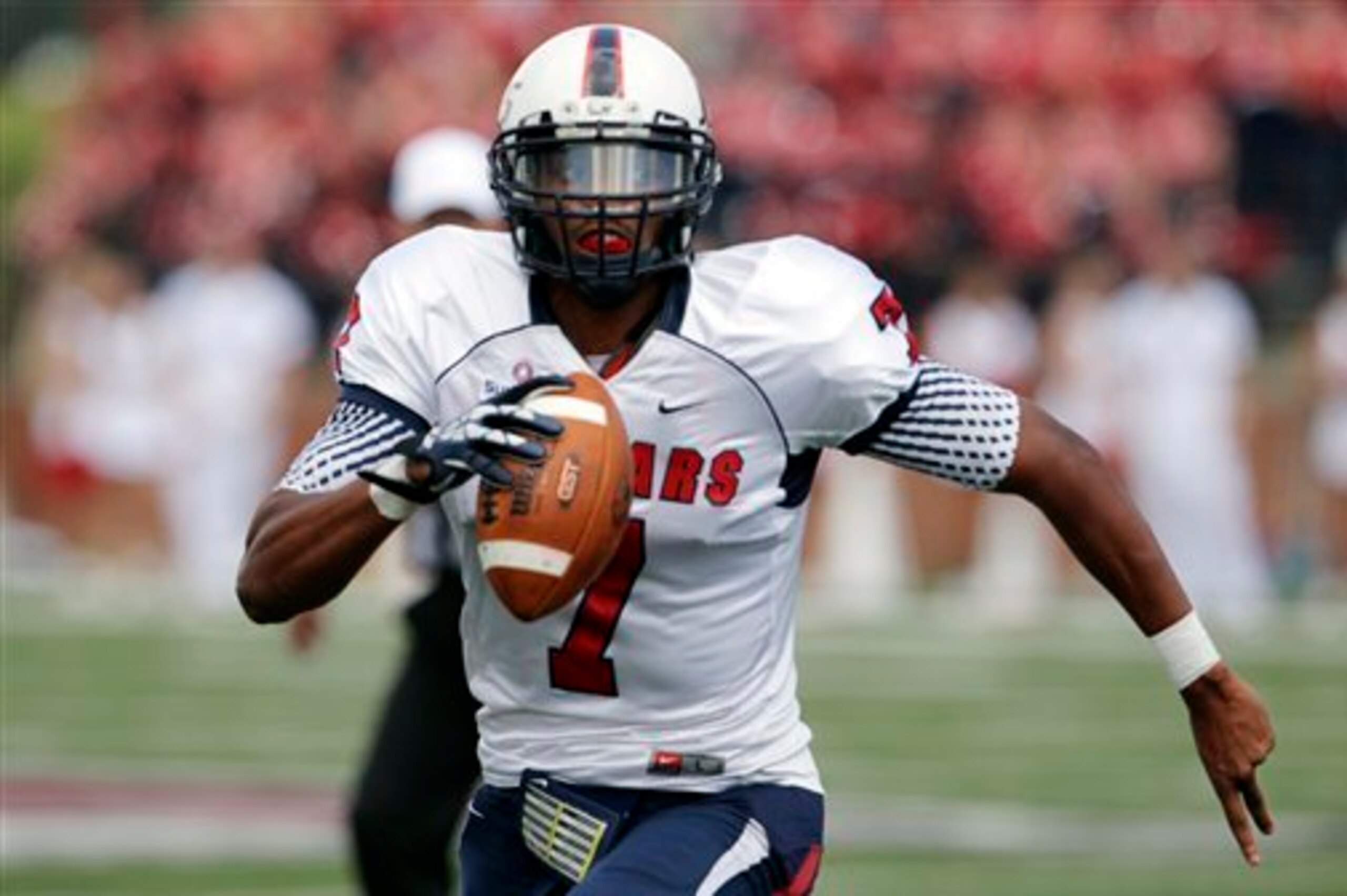
Justin Hardy, WR, East Carolina
1 of 10
Justin Hardy stands at only 5'10", which, in the past, would have been a larger issue than in today's league. With the New England Patriots basically perfecting how to use slot receivers, these smaller pass-catchers are no longer "limited" to an inside role, but thrive there.
At the combine, Hardy had a great three-cone score, which can be correlated to the change-of-direction skills these interior receivers absolutely need to have to find space in the middle of the field. His time of 6.63 seconds was good for the top five percent at the combine since 1999, per Mock Draftable. He also has large hands, notching him in the top 15 percent. So, on paper, he's a player who's quicker than fast and has hands that connote not dropping the ball. That sounds like an ideal slot player.
Teams are always looking for boundary players, because height is a premium in the red zone, but it seems like every season the smaller targets are overlooked. For example, Randall Cobb, who was 5'10" as the 64th overall selection in 2011, scored 12 touchdowns in 2014 from the slot, per Pro Football Focus. That type of production is overlooked when pigeonholing positions to stereotypes.
Hardy can be that Cobb, Victor Cruz or Percy Harvin type of player, a guy on the smaller side of the bell curve who can produce at a high level if used correctly. In the end, he's probably a second-round talent who finds himself drafted on Day 3 because teams will overanalyze his size. For a smart team, though, there's value to be had.
Henry Anderson, DL, Stanford
2 of 10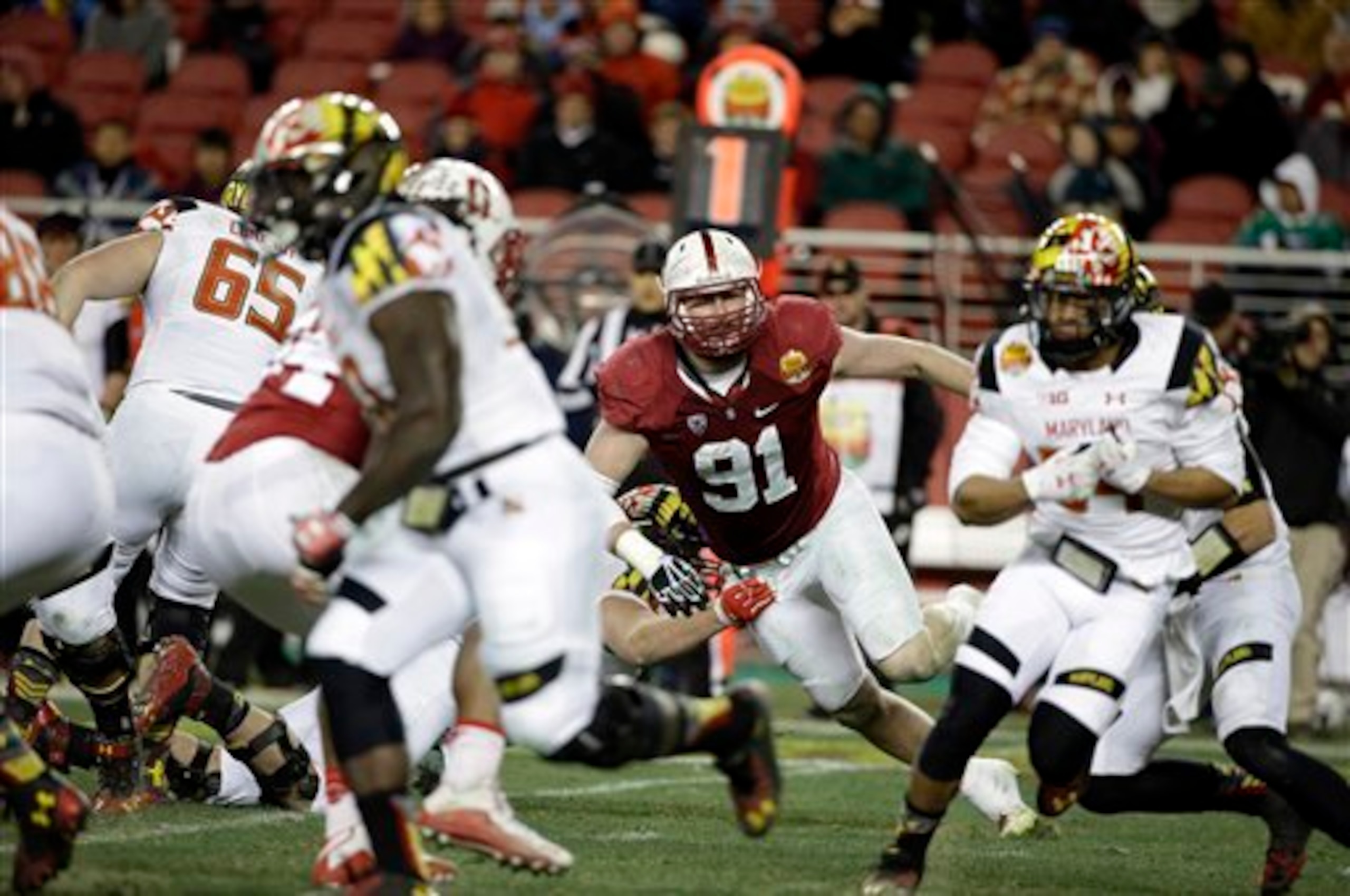
Most teams don't truly run a 4-3 or 3-4 defense anymore. They either run some sort of a hybrid or essentially use their nickel defense, which used to be a subpackage, as their effective base look. This hurts certain players in the process. Because of the lack of traditional 3-4 two-gapping defenses, 5-techniques have taken a hit over the years.
The NFL is so built around getting after the passer that run defense almost becomes an afterthought. Instead of lining up over a tackle and stacking and shedding, 3-4 defensive ends more and more are lining up in the B-gap, told to burst into the backfield rather than control the point of attack. This is how players like Henry Anderson of Stanford get overlooked.
If you pop in his tape against Oregon State, you'll struggle to find better footage of a 6'6" giant. He can be a Chris Long or J.J. Watt type of talent in the run game, but he lacks the ability to get after the passer. For a 4-3 team, he should pretty much be tossed off the board. He's not quick enough to play under tackle, and he's not stout enough to play nose tackle. Built like an offensive tackle, his one spot in the league is a base defense 5-technique.
For a team running a hybrid scheme, though, like the 4-3 that the Seahawks, Jaguars and now Falcons use, he could slot in as a strong-side defensive end, as the strong-side linebacker drops near the line of scrimmage and acts more like a pass-rusher, basically turning the even front into a 3-4 defense.
For either a hybrid or 3-4 scheme, Anderson is a run-stopper who can stick on the roster for years and give a team quality reps. His limitations will cause him to "drop," based on where he would have gone in the past, but his role is still valuable.
Ali Marpet, IOL, Hobart
3 of 10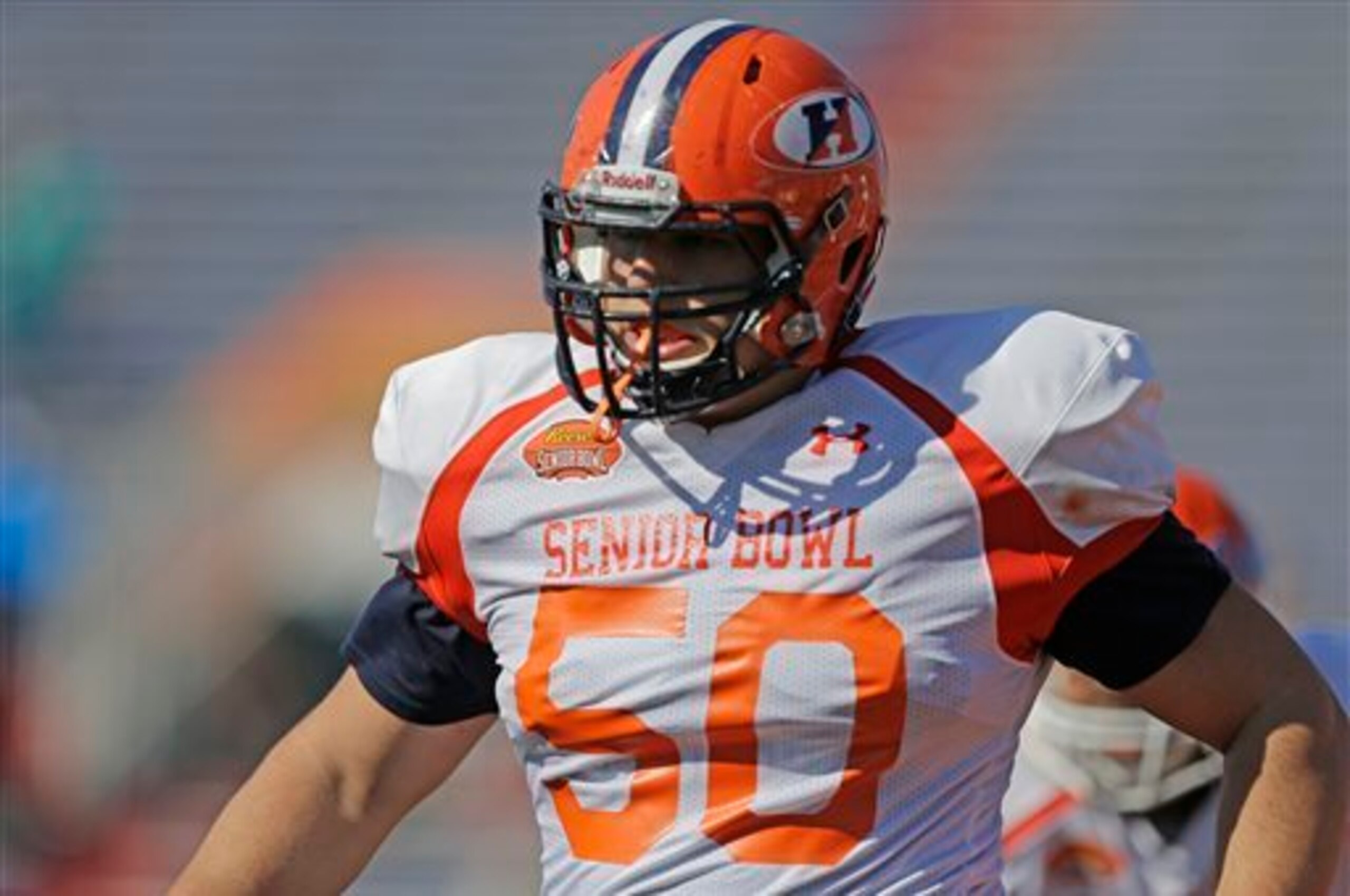
Ali Marpet was a virtual unknown in January. A Division III player whom nobody had ever heard of playing non-scholarship football is a feel-good story. Entering the Senior Bowl, some thought he was a cliche invite.
Marpet displayed amazing technique down in Mobile, Alabama, leading those same doubters to consider him as a legitimate prospect. Phil Savage, who runs the event, nailed this one on the head, though.
Per the official Senior Bowl website, Savage said of Marpet, "He has light feet, plays with balance and did not back down at all against the bigger school competition. Arguably the most intriguing player in the game..."
At the combine, he measured in with 33 ⅜" arms, below average for a tackle. Joel Bitonio, a left tackle at Nevada, had the same issue when he went through the draft process. Instead of playing as a book end, like Marpet did for Hobart, Bitonio moved inside to guard and instantly made an impact for the Cleveland Browns, becoming a part of one of the two best offensive lines in football.
That's the early projection on Marpet. He'll more than likely end up a Day 3 selection because of the transition from non-scholarship play to the professional level, despite proving he was worthy of playing on the same field as the all-star talents in Alabama.
Marpet told Bleacher Report's own Dan Hope:
"There’s not much I can do about the level of competition that I’ve played against at the Division III level, to be honest. All I can do is control how much work I’m putting in and how much effort I’m putting out on each play, so at the end of the day, I think I’ll be able to play at the next level, just because I have the physical tools to do so.
"
If a team doesn't force him outside and naturally lets him play as a guard, where he can use athleticism, his anchor and hand usage to control the line of scrimmage, he can be a great left guard who can develop. Josh Sitton is a perfect example of a player who went from an unknown left tackle to being drafted in the fourth round before turning into a Pro Bowl left guard. There's no reason why Marpet can't replicate that, on paper.


David Johnson, RB, Northern Iowa
4 of 10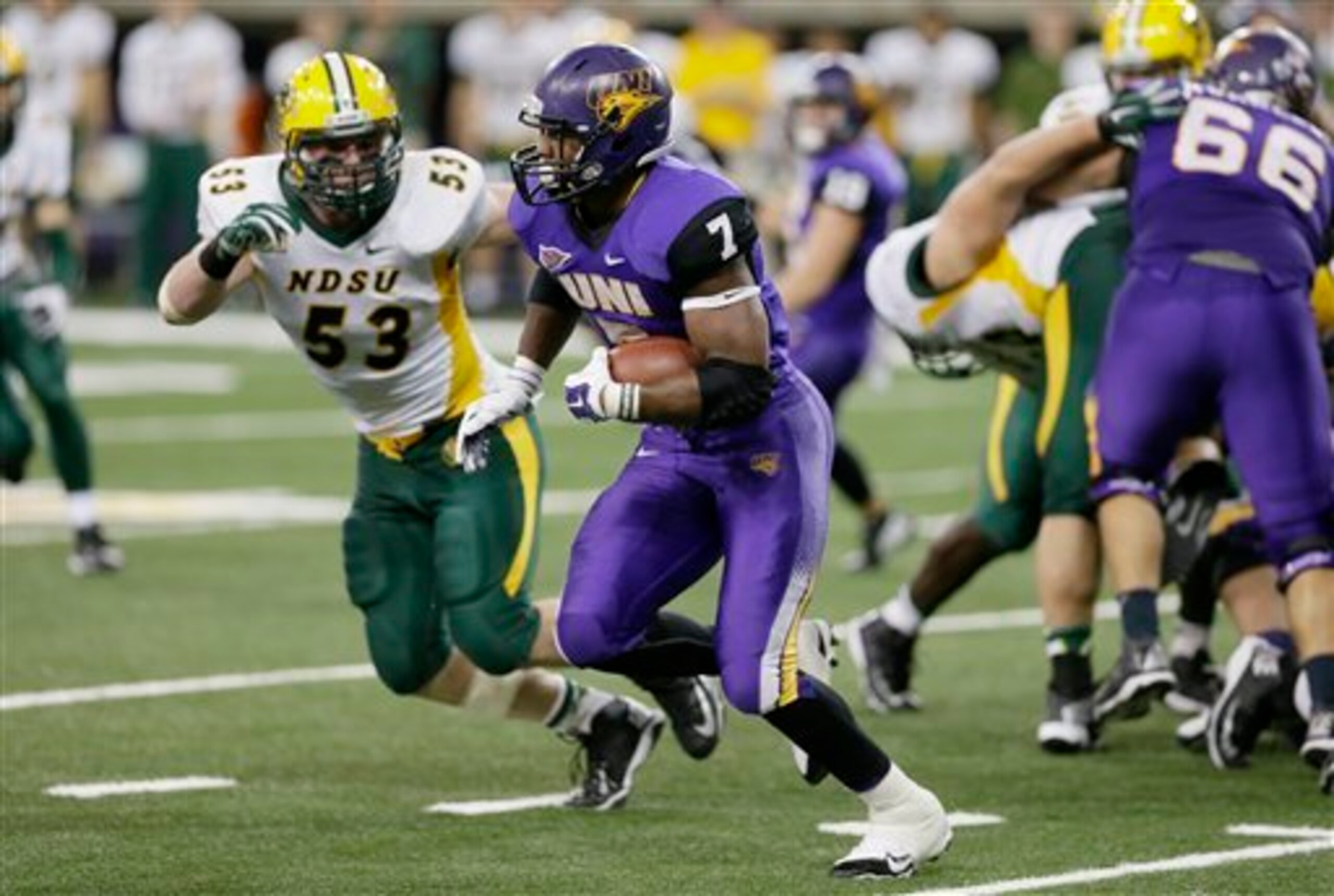
It's been well-documented at this point that the running back position has gradually lost its value over the past decade or so—in part because teams can now find starting backs or key contributors later than they once could. One of those backs this year is Northern Iowa's David Johnson, who scored 20 total touchdowns at the FCS level last season as a fifth-year player.
At 6'1" and 224 pounds, he's both tall and big for a back in the league. His Mock Draftable spider chart also displays that he's well above average in 10 of the possible 11 categories he was measured or tested for at the combine last month. There will be questions about how he'll translate from a lower level of college football to the NFL, but all the numbers would suggest he's worth that risk.
On the field, his comparison is a plus James Starks, who has been a streaky player in the NFL but vaulted the 2010 Green Bay Packers to a Super Bowl when they needed him to step up in the playoffs. Johnson is a fast, long-striding runner who is best as a zone back and can also catch out of the backfield. Overall, it wouldn't surprise me if he were a three-down star back at the next level a la DeMarco Murray.
Very underrated so far, a running back-needy team could shock the draft world by taking him much earlier than expected. That's the kind of potential he has. Some may shy away because he's a fifth-year back with wear on his tires coming out of a non-FBS school, but the film and combine did him well.
Mitch Morse, OT, Missouri
5 of 10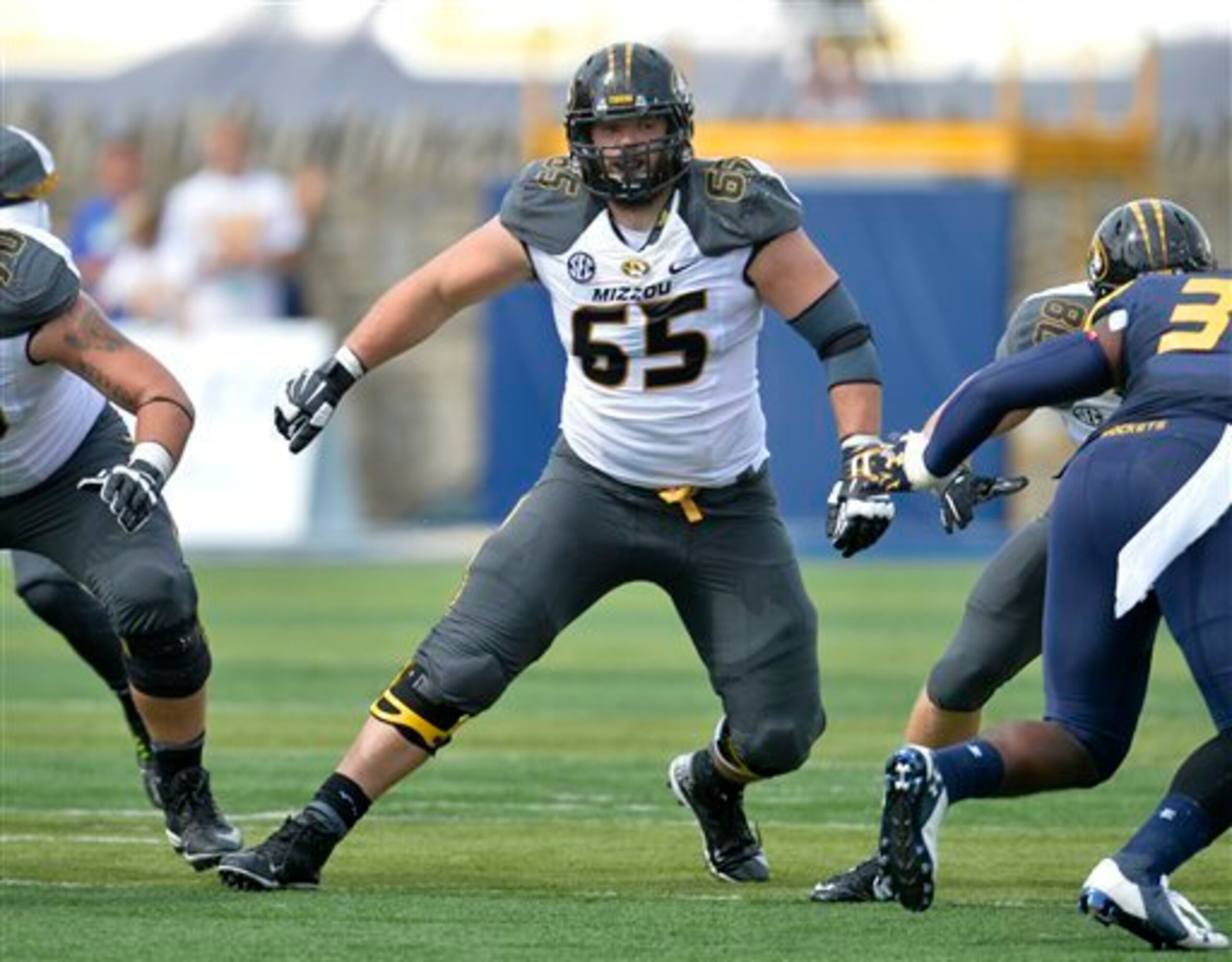
Like Justin Britt last season, Mitch Morse of Missouri is a great right tackle prospect who played for the Tigers. During the 2014 draft, Britt was a surprise second-round selection by the Seattle Seahawks, one of the teams that leans on the run game the heaviest in the league. Unless something as shocking occurs a second year in a row, Morse is more than likely going to be a Day 3 pick.
He lacks the athleticism to keep up with high-level athletes on the edge, but that isn't always a death sentence. At the next level, if he's able to flip to the strong side with a tight end on the edge, he can do more than enough to have an impact early. Britt was a rookie starter, and there's nothing to say that Morse couldn't have the same fate.
Because of his "right tackle only" tag, he's going to be looked at as a limited player, but for a team that needs a functional starter but can afford to wait a little longer than teams searching for a premium player, he can be a great asset. A strong run-blocker, he's a plus player when said team needs to grind the ball out late in a game.
Darren Waller, WR, Georgia Tech
6 of 10
Oddly enough, Georgia Tech has had some success pumping out receivers in recent years, dating back to even before its option days, when Calvin Johnson was catching balls from Reggie Ball. Now in the triple-option system, Yellow Jackets receivers rarely get to catch passes as often as wide-open air-raid teams do. Darren Waller might have been a statistical victim because of this.
He ended his career with only 51 receptions, but that was enough to get him to the East-West Shrine Game. From there, he parlayed his time in Florida to a combine invite, where he measured in at 6'6" and 238 pounds, nearly standing like a tight end. His 4.46-second 40-yard dash time is nothing to overlook, either.
Was he an underutilized asset for the Yellow Jackets, who preferred to run the ball than get it to their potential freak athlete? Is he just a height, weight, speed player? There's inherent risk in drafting Waller, because teams have to project him almost completely, as he had very limited experience in college. That investment could turn out to be the next Demaryius Thomas, though. To me, that's well worth the gamble from the third round on.
Zack Hodges, LB, Harvard
7 of 10
Every season there's one player from the Ivy League who is a cut above the rest. This year, that's Harvard's Zack Hodges. As a pass-rusher, he's good but undersized at 6'2". That's not the end-all, be-all for the position, but he might be better suited as a true linebacker, considering he weighed in at the combine at only 250 pounds.
The best way to describe his play is like a 90 percent version of Jamie Collins, who was a pass-rusher at Southern Mississippi but transitioned to a linebacker position at the next level with the New England Patriots. Even Collins, a freak athlete himself, was drafted in the second round. Considering Hodges played in a non-scholarship FCS conference, it's hard to imagine he's going to go higher than that.
As an off-the-ball defender, he can play a strong-side linebacker role. For a 4-3 under team, where the player is closer to the line of scrimmage, he probably fits best. He's able to play like a pass-rusher without having to force contact, which compensates for his lack of length. Teams like the Jacksonville Jaguars and Atlanta Falcons should be looking closely at Hodges either late Day 2 or early Day 3.
Louis Trinca-Pasat, DL, Iowa
8 of 10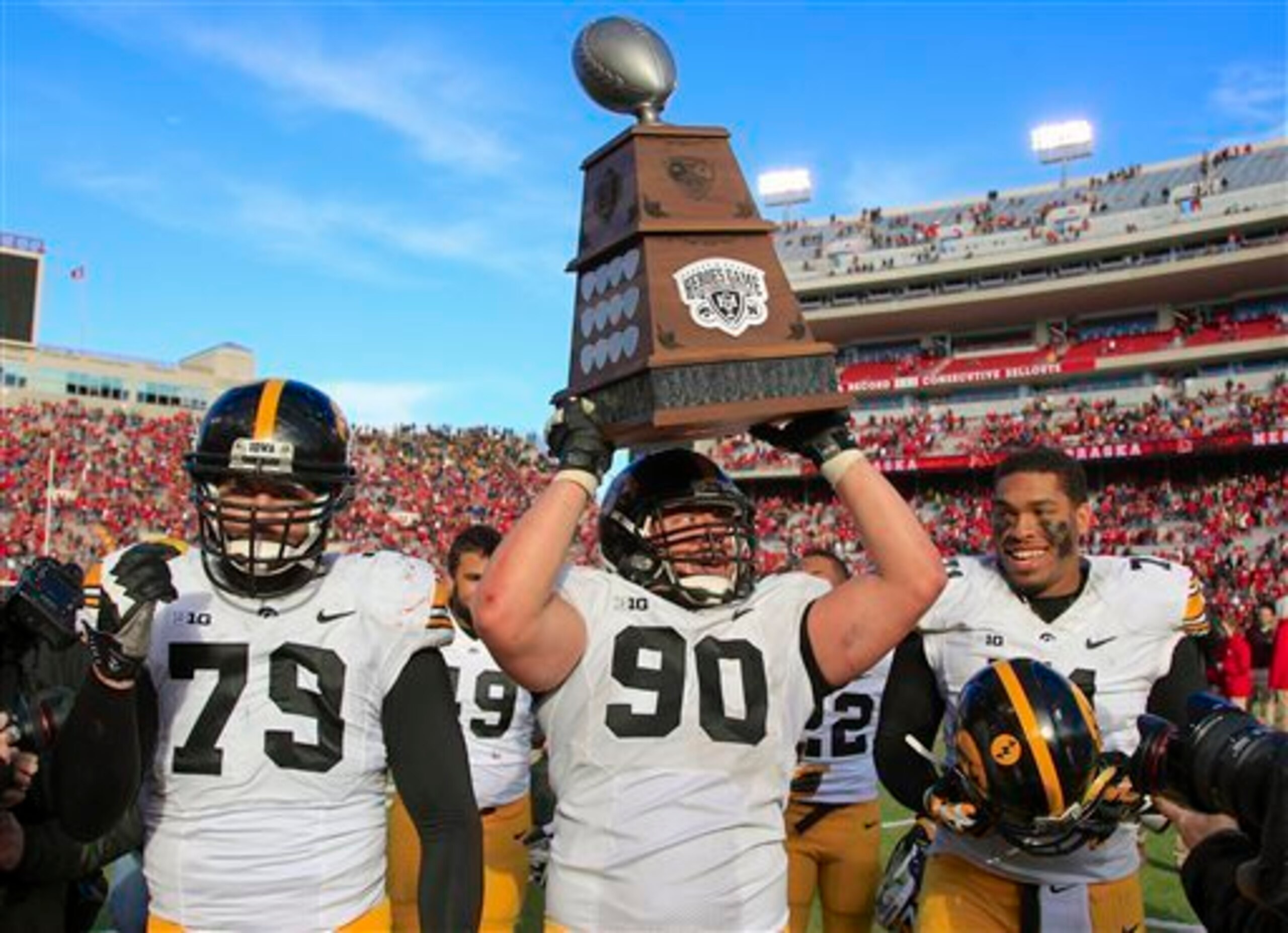
Louis Trinca-Pasat is the fairly unknown defensive tackle who played next to potential first-rounder Carl Davis, who seems to be getting all of the hype for that line. Trinca-Pasat still deserves his burn, though. As an under tackle prospect, he's more than good enough to deserve a selection in this coming draft. As a 6'1", 290-pound player, he does have limitations, but he also has clear ways in how he wins.
If you've seen Iowa film from 2014, it's hard not to notice him. He flies to the ball on every play, using his closing to make up for his size. According to Mock Draftable, he ranks in the top 15 percent in 40 time for a defensive tackle and the top six percent in the 20-yard shuttle, a measurement of change of direction and short-area burst. He's not exactly Geno Atkins right now, but he flashes potential that others in this class don't when getting after the passer.
For a 4-3 team, he can be a very good rotational 3-technique early on and can get starter reps down the line if he develops correctly. He lacks a bit of strength at the point of attack, but he should be a player who ideally is told to pin his ears back every time he's on the field anyway. He can also contribute downfield as a non-stop motor player who will chase down offensive skill players with the ball, a rare trait for a defensive lineman.
Anthony Chickillo, EDGE, Miami
9 of 10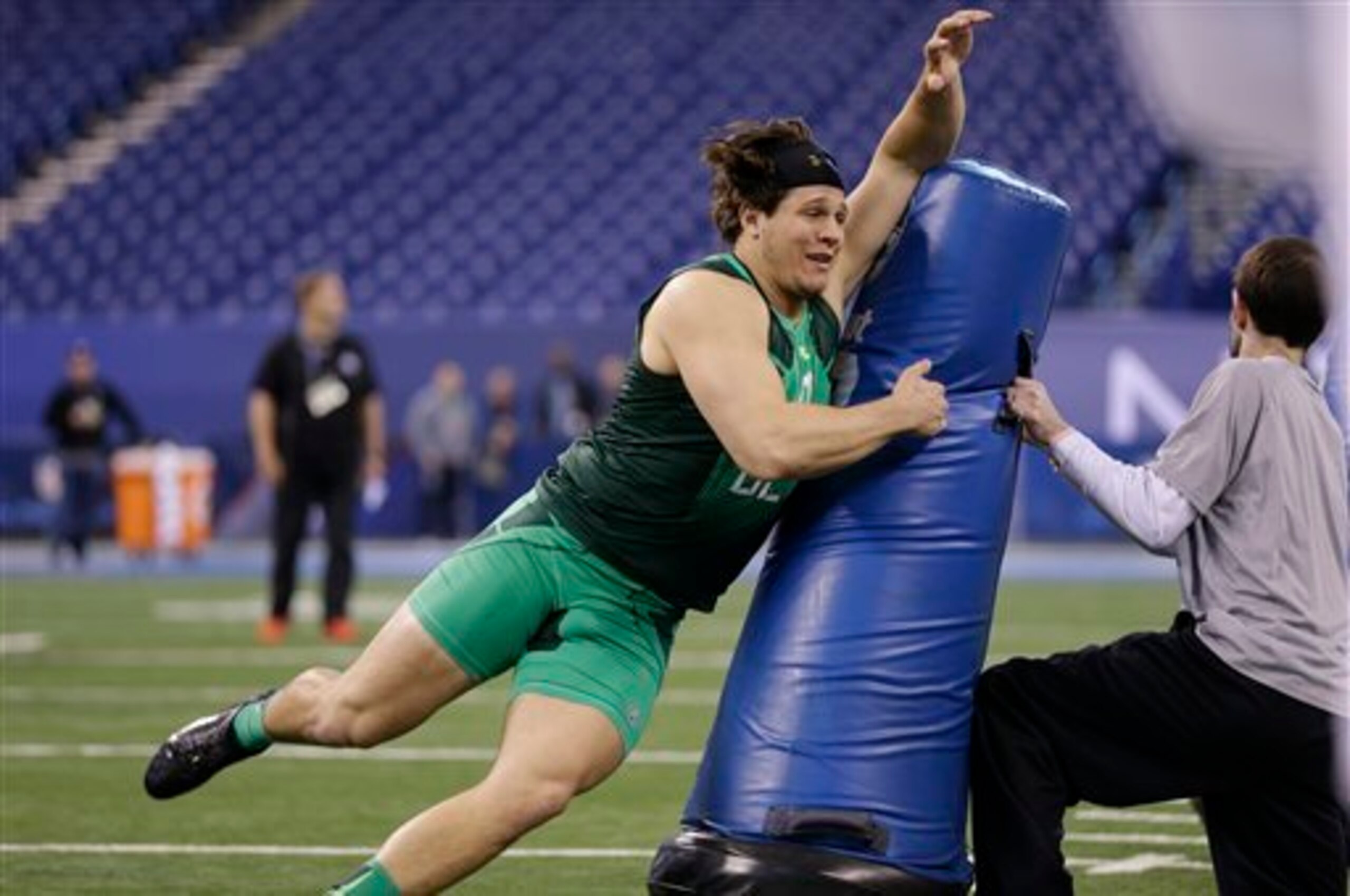
Anthony Chickillo is one of the most fascinating players in this class based off his narrative. At the University of Miami, he was told to be a two-gapping 5-technique, a standard role in a 3-4 defense. That's the total opposite of how he should have been utilized.
When given the opportunity to play in a 4-3 system at the East-West Shrine Game, Chickillo opened eyes as a one-gap defensive end, doing well in both practices and the game. On top of that, he also performed very well at the combine, putting up scores that separated him from the rest of the mid-range pack.
Chickillo's postseason performance almost makes you want to throw out the former blue chip recruit's entire college tape, as it doesn't relate to how he'll play in NFL. This is a very interesting concept that will lead to teams having a vast difference in how they grade him on their draft boards. Teams that can wait and develop a player will see him as a pass-rusher who can be special as a 4-3 defensive end on either the strong or weak side of the field. Teams that need to win now, though, will see someone who probably can't contribute much other than on special teams for his first year.
Chickillo is a boom or bust prospect, but he has potential that few possess after the first two rounds at the most important position on the defensive side of the ball.
Brandon Bridge, QB, South Alabama
10 of 10
Not everyone takes the traditional route to get to the NFL. Some go to small schools, and some have to deal with transfers. Brandon Bridge had to do both. He started at Alcorn State, but an injury led him to fall out of the lineup, and he eventually landed at South Alabama.
In his first year at South Alabama, as a junior, he was used as a running threat and situational thrower behind an incumbent senior. When the starter graduated, Bridge had one year to show what he had to NFL scouts. Tabbed as a poor man's Colin Kaepernick by some, he possesses all the tools one asks for out of a quarterback.
If you're not a Tom Brady- or Peyton Manning-level game manager, the only way you earn a ring is through some luck on third downs down the stretch, leaning on your athletic tools. This is how passers like Joe Flacco or Eli Manning can claim they are Super Bowl worthy. You either need an arm or legs to give yourself a chance. Fortunately for Bridge, he has both.
With only a year of starting-caliber FBS tape under his belt, he's still an unknown commodity. As far as the value for a prospect at that position goes, though, an unknown commodity might have more worth than a known commodity who has defined flaws. If Bridge can land with a team that can develop a passer and wait two years before he sees the field, he has a shot at being that Kaepernick-level player, which would be a great investment.
.jpg?w=2560 "Cardinals Giants Football")
.jpg?w=2560 "Commanders Eagles Football")

.jpg?w=2560 "Mahomes' Wife Trolls Kubiak 💀")